VI
VI


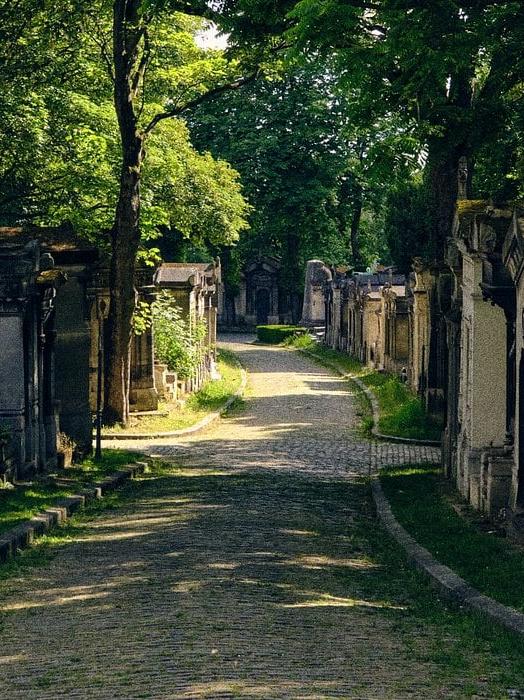
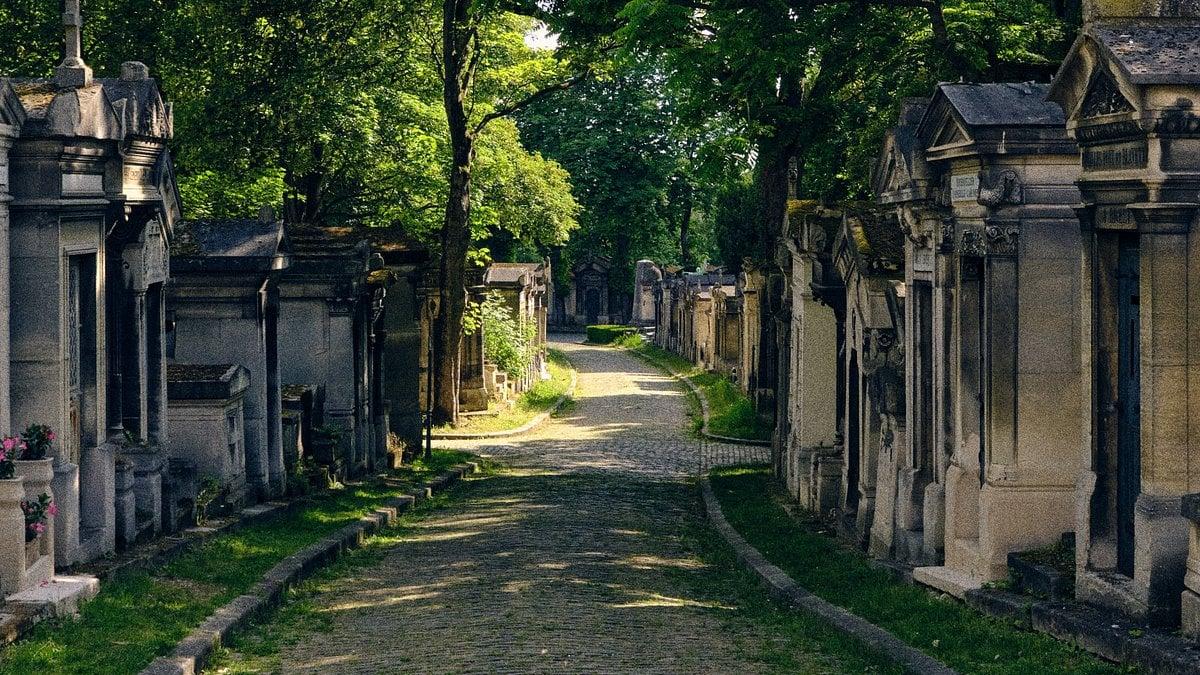
Stepping into Père Lachaise on a chilly morning, visitors can easily spot people pausing by the tomb of the painter Théodore Géricault – where a bronze statue depicting his famous work “Le Radeau de la Méduse” (The Raft of Medusa) stands beside the headstone. This is one of the symbols that demonstrates how art and memory continue to exist after death within this unique cemetery.

Located in the 20th arrondissement of Paris, Père Lachaise Cemetery is considered one of the city's most special destinations. Spanning approximately 44 hectares (440,000 m²), it is not only the final resting place of over a million people but also a vibrant "archive" of French history, art, and culture. From renowned figures in music, painting, and literature to love stories, tragedies, and urban legends, Père Lachaise has long transcended the concept of a mere cemetery.
Anthony Schmitt, a high-end travel agent in Paris, said: “Père Lachaise is not just a cemetery; it’s a repository of Paris. It preserves the city’s history through the graves of great minds, moments of struggle, and the artistry of the tombs themselves. It is a culturally significant site for Parisians.”
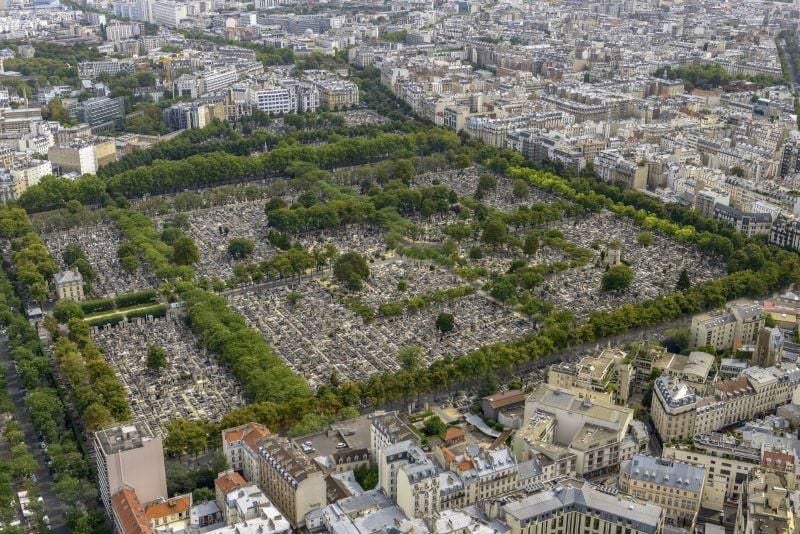
The Père Lachaise Cemetery in Paris is considered an open-air museum due to the large number of sculptures and monuments scattered throughout its 44-hectare grounds.
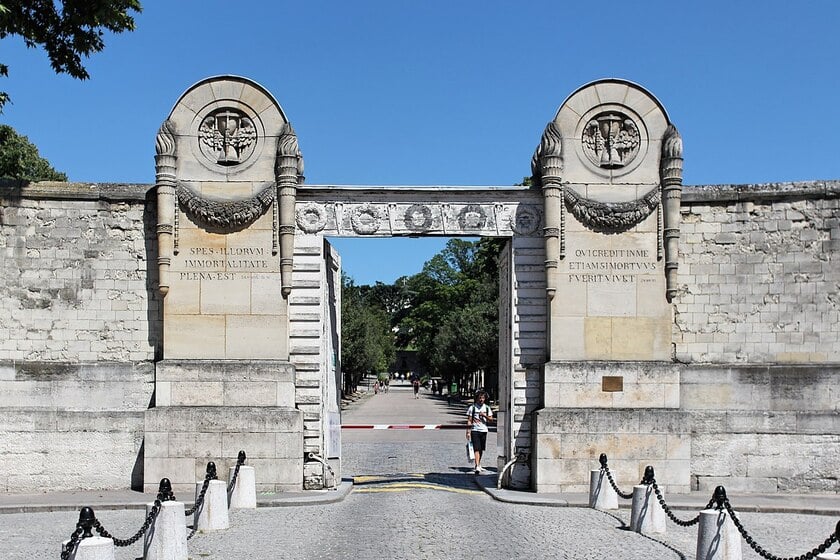
Père Lachaise is currently the most visited cemetery in the world.
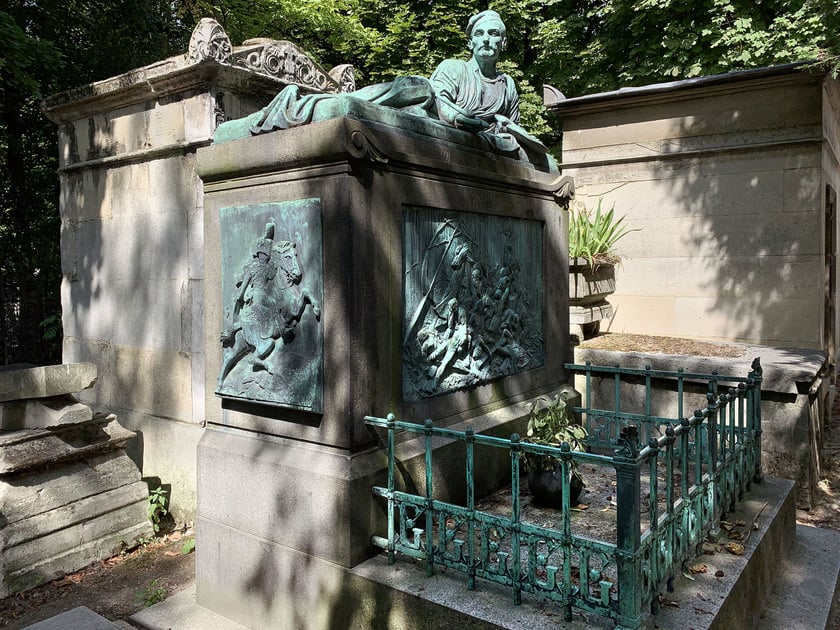
The tomb of the French painter Théodore Géricault (1791-1824)
Besides Géricault, this place is also the resting place of many famous figures such as singer Edith Piaf, composer Frédéric Chopin, painter Modigliani, writer Oscar Wilde, and singer Jim Morrison - the frontman of the band The Doors.
History of Père Lachaise
The name Père Lachaise originates from François de La Chaise, a priest and confessor to King Louis XIV. He lived in this area, formerly known as Mont-Louis, after the king visited the region during a turbulent period in Paris.
However, when the cemetery opened in 1804, it was not well-received by Parisians. According to tour guide Alberto Rigettini, who has led English-language tours there since 2010: “At that time, Parisians usually buried their loved ones in their yards or church grounds. This area was far from the center and located in a district considered to have social problems, so no one wanted to be buried there.”

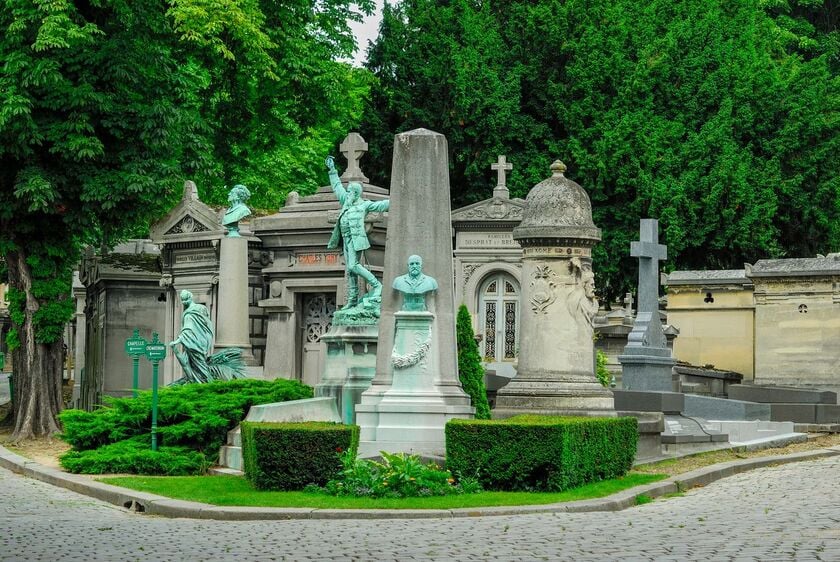
There are approximately 70,000 graves in the cemetery, many of which are adorned with elaborate sculptures, ranging from busts and reliefs to full-body statues.
In the first year, only 13 people were buried at Père Lachaise. Faced with this situation, the city authorities implemented a symbolic strategy: transferring the remains of the poet Jean de La Fontaine and the playwright Molière there, as a way to build its image. By 1817, the remains of the famous medieval couple, Héloïse and Abelard, were also brought there, creating a powerful media impact.
Abelard was a 37-year-old theologian, and Héloïse was his young pupil. They fell in love in 1115, had a child out of wedlock, and married in secret before being tragically separated. Later, both became nuns, but maintained contact through heartfelt letters. They were reunited after death, and their shared grave remains the most visited spot in the cemetery to this day.
Thanks to these developments, Père Lachaise gradually became more attractive. By 1830, the cemetery had approximately 33,000 graves; by 1850, its area had been expanded fivefold to meet the growing demand.
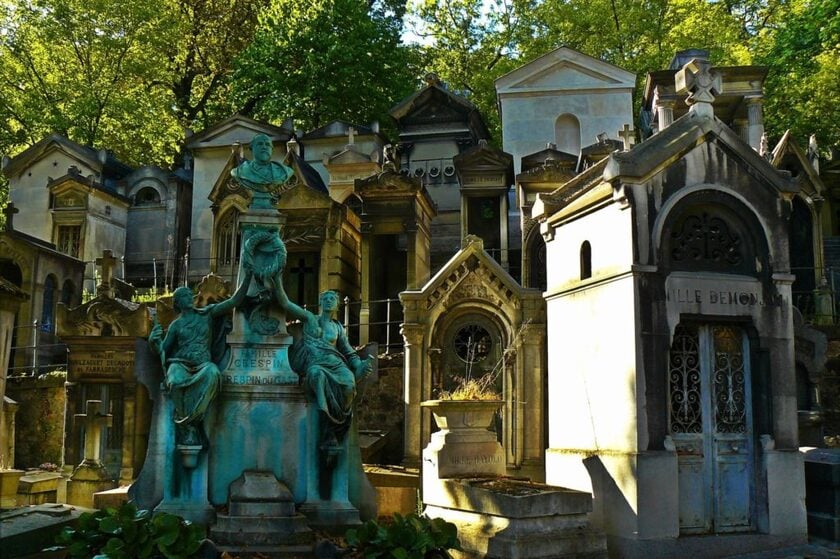
Once shunned for being located in a district plagued by social problems, the cemetery has gradually gained widespread recognition thanks to the local government's strategy, with increasing demand for burials there.
Figures associated with collective memory
One of the tombs that attracts a large number of visitors is that of Edith Piaf, the famous singer known for her distinctive husky voice and forever associated with the song "La Vie en Rose." She was born in nearby Belleville and died in Grasse, southern France, in 1963. It is said that her husband drove through the night to bring her body back to Paris so that fans would believe she breathed her last in her birthplace.
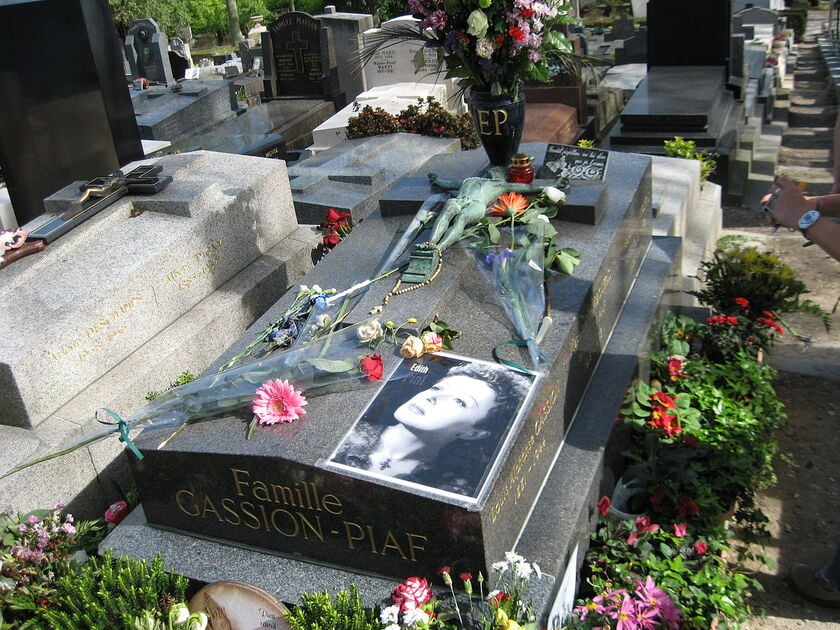
The tomb of French singer Edith Piaf (1915-1963)
In addition, the tombs of composer Frédéric Chopin and singer Jim Morrison are also among the most visited. These are both global cultural icons, contributing to making Père Lachaise an unmissable destination for anyone interested in modern art and history.
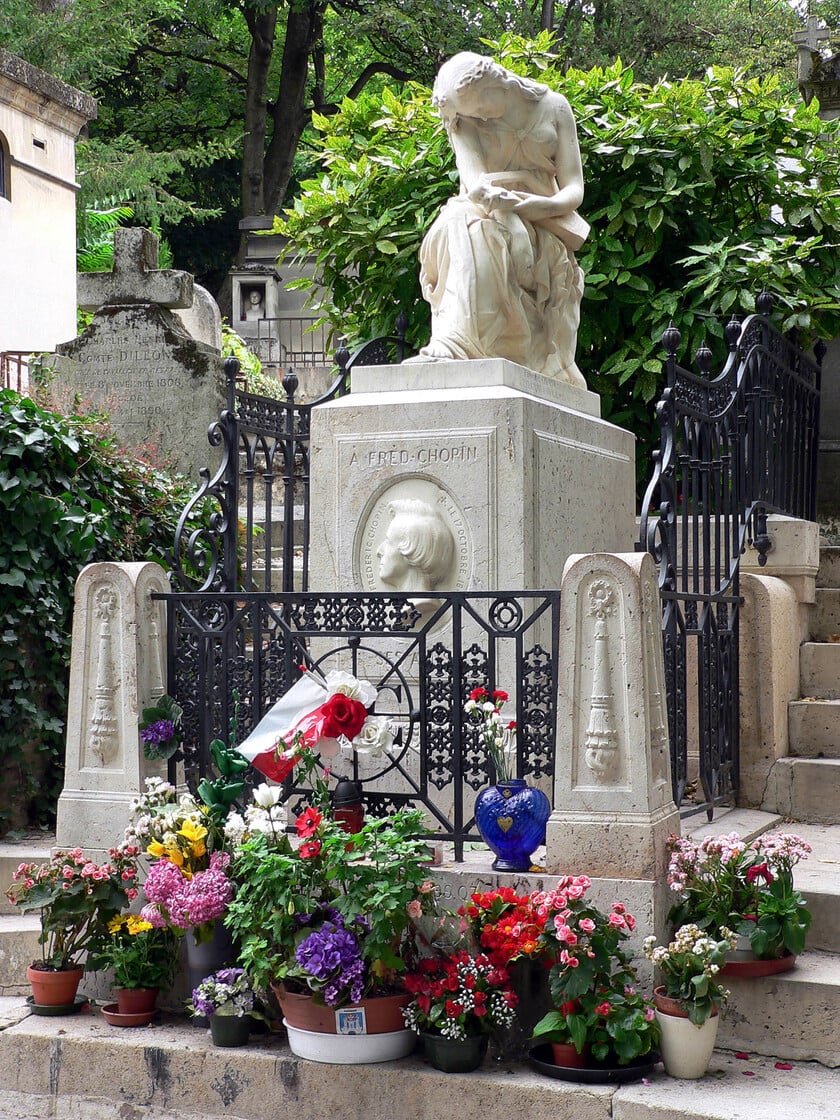
The tomb of the Polish composer Frédéric Chopin (1810-1849)
Another figure associated with particular urban legend is Victor Noir, a young journalist killed in a duel with Pierre Bonaparte – a relative of Emperor Napoleon III – in 1870. His death sparked a wave of protests against the government and led to a funeral attended by over 100,000 people. From then on, he became a political icon and a legendary figure. Victor Noir's tomb, sculpted by Jules Dalou, depicts him lying on his back, having fallen where he was shot.
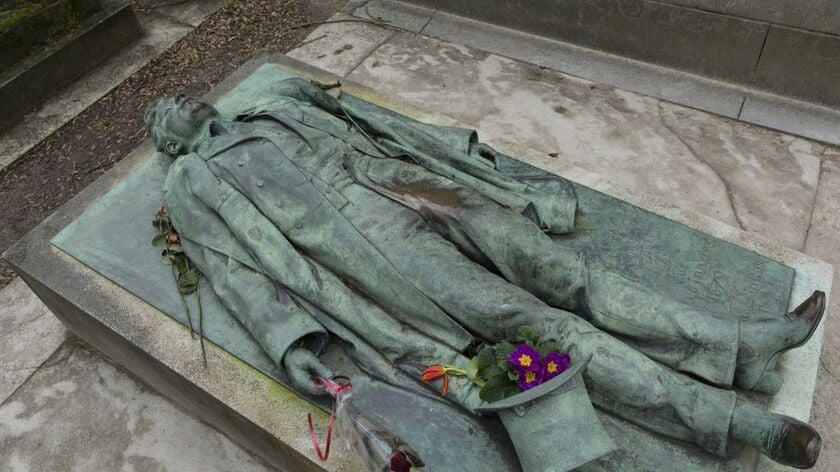
Victor Noir's urban legend
According to guide Thierry Le Roi, who has worked at the cemetery for over 25 years, the lips, boots, and genitals of the statue are the most worn areas due to frequent touching by visitors. “Some people believe that if they lie on the Victor Noir statue, with their feet pointing towards the boots, and kiss the lips or touch the genitals, they will soon become pregnant,” he recounts. “Legend also says that touching the right foot will result in a child, while touching the left foot will result in twins.” Although he has never tried it himself, he says: “I have a friend who prayed and then had children.”
An "open-air museum" that captures the spirit of Paris.
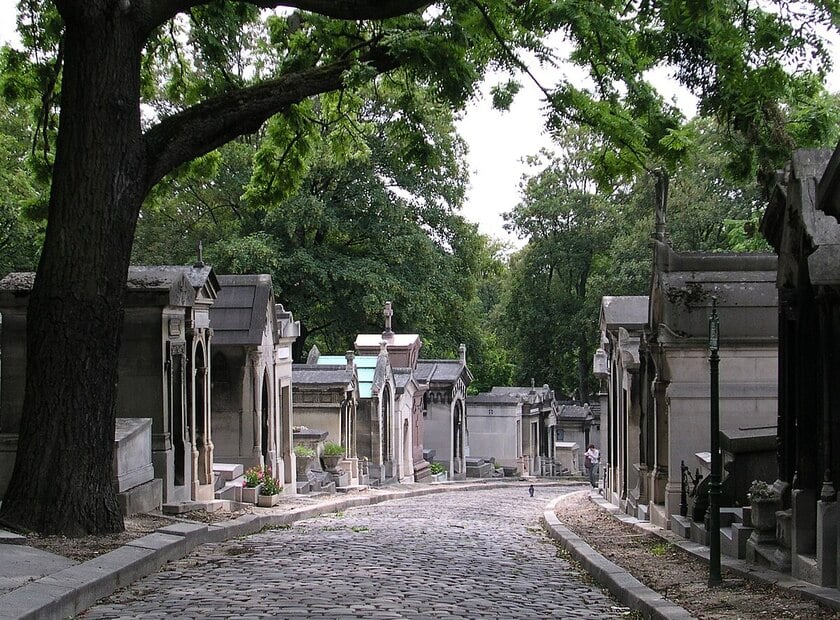
Père Lachaise is not only of historical or religious significance, but also a unique public cultural space, with its system of cobblestone streets, tree-lined pathways, and numerous exquisite sculptures. The tombs here bear a strong personal imprint; many are designed as works of art, reflecting the status, religion, lifestyle, and aesthetics of the deceased.
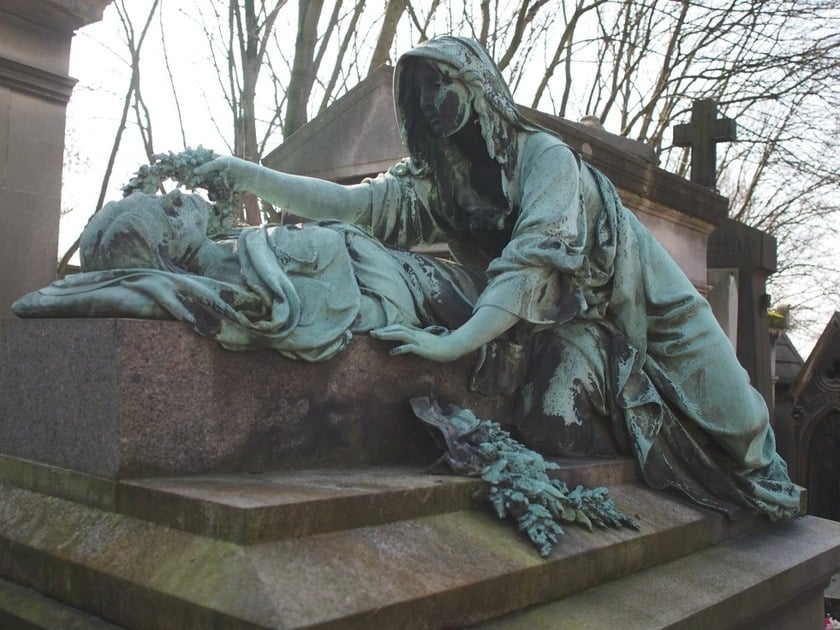
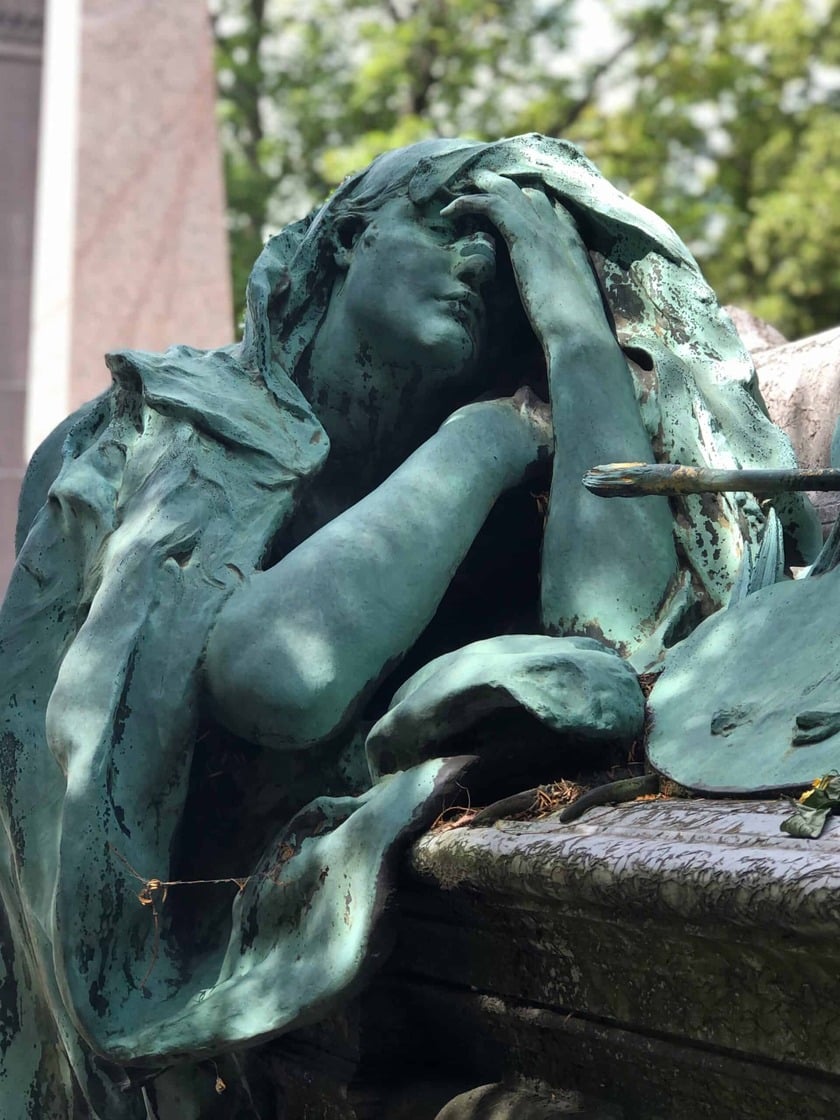
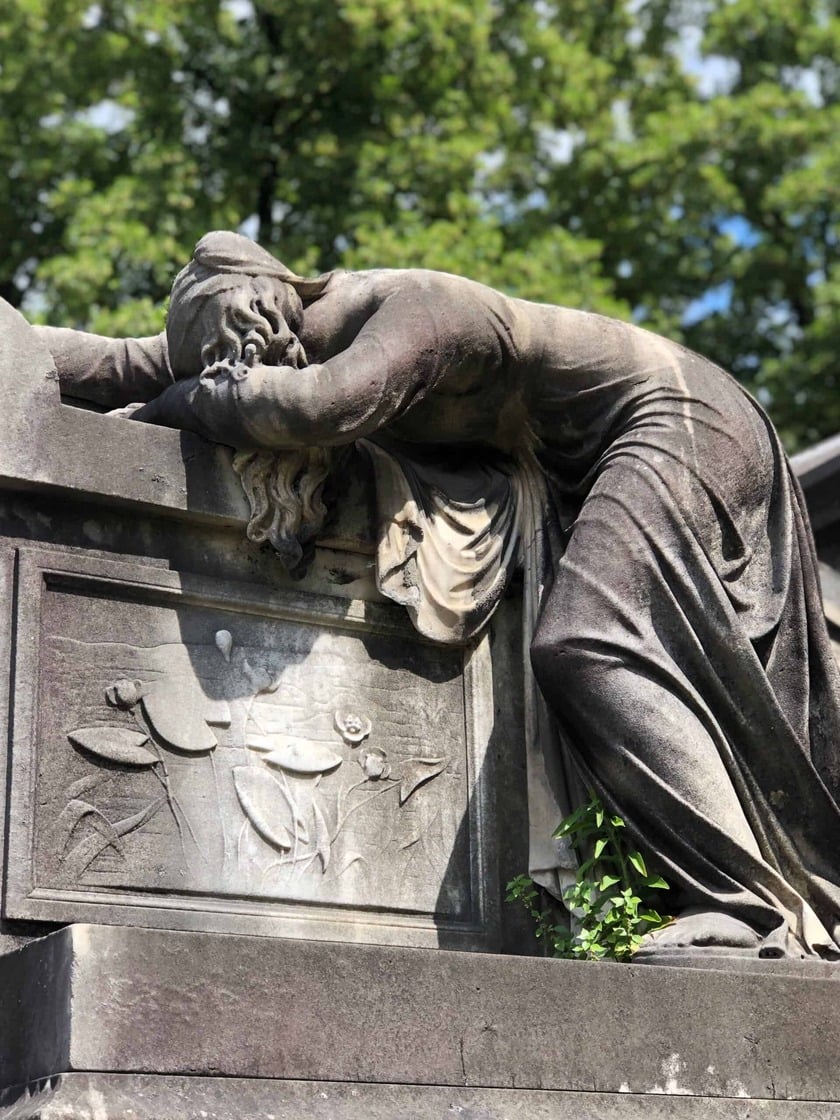
Being buried at Père Lachaise today is no easy feat. Besides the high cost, there is almost no available space in the cemetery. In the 21st century, demand far exceeds the number of available plots, meaning waiting times can extend for years. However, this only increases the symbolic value of Père Lachaise in the minds of Parisians. After visiting the Eiffel Tower or exploring famous museums, many choose to stop here to enter the "city of souls," where the memories, art, and love of the deceased continue to be preserved.