VI
VI


Located in the heart of southern Vietnam, Saigon is a melting pot of cultural values from all regions, and a leading center for cultural exchange and integration with countries from both the East and the West. Therefore, Tet (Lunar New Year) in Saigon has a mixed flavor with many nuances, creating a diverse and unique cultural tapestry.
Regarding the Chinese New Year celebration hall
District 5 boasts a rich cultural history spanning over 300 years, a testament to its formation and development in the Saigon-Chợ Lớn area. When discussing the Lunar New Year customs of the Chinese community, it's impossible not to mention the community halls. The Chợ Lớn area is home to a large concentration of ethnic Chinese Vietnamese who have lived there for generations, and these community halls were built, existed, and developed alongside the community.
The assembly hall is a monument encompassing many historical and cultural meanings, most notably its architectural and artistic value influenced by the style of ancient Chinese temples and shrines, especially the shapes and decorations of the tiled roofs, which are distinctly characteristic of the Fujian people.
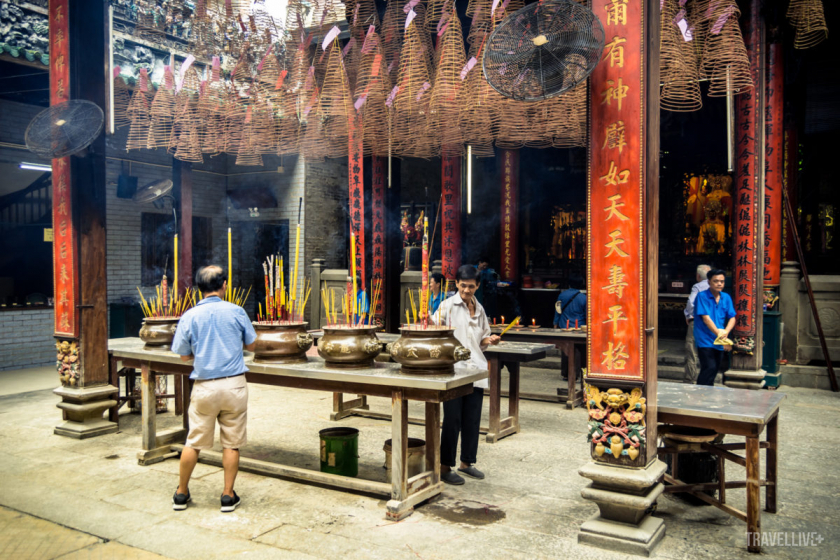
When discussing the customs of the Chinese community in celebrating Lunar New Year, it's impossible not to mention the community halls.
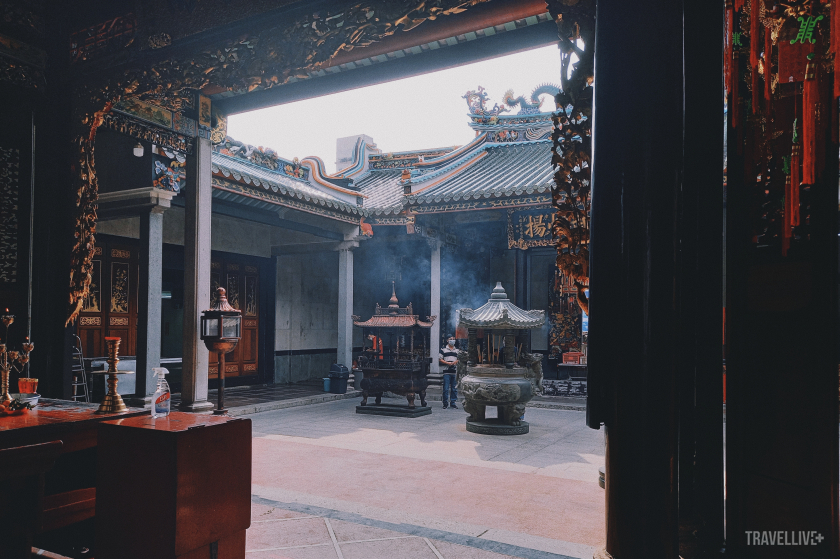
The assembly hall is a monument encompassing many historical and cultural meanings, most notably its architectural and artistic value influenced by the style of ancient Chinese temples and shrines.
During the spring season, visitors can follow the locals around the assembly halls and temples to admire the beauty of ancient architectural works such as Tue Thanh Assembly Hall (Thien Hau Temple), Nhi Phu Assembly Hall (Ong Bon Temple), On Lang Assembly Hall (Quan Am Temple), Phuoc An Assembly Hall, etc.
On New Year's Eve, many families gather at the community hall. Children receive lucky red envelopes. Adults exchange good wishes and hold hands as they welcome this sacred moment.

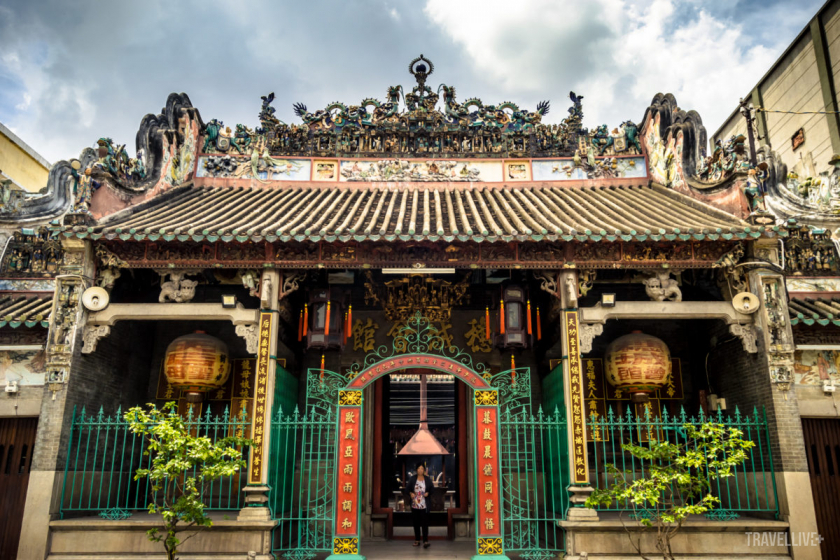
Tue Thanh Meeting Hall (Thien Hau Temple) is one of the prominent destinations for young people in Saigon.
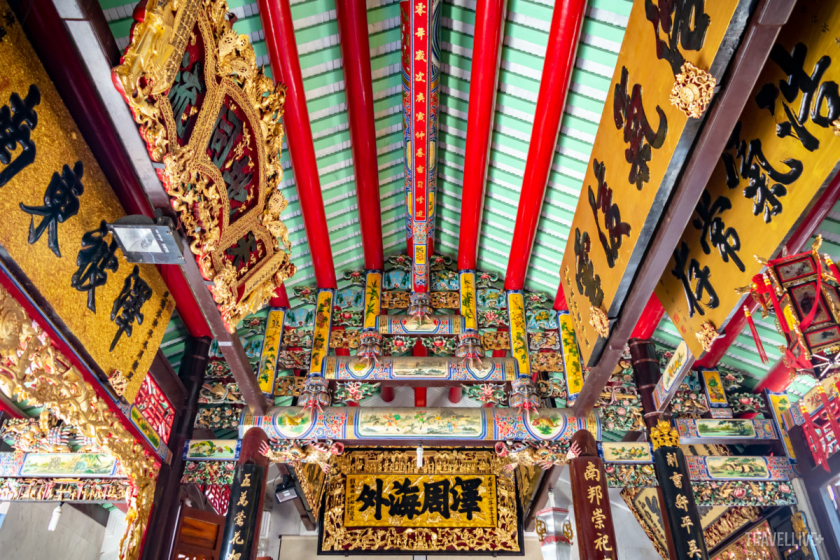
During the spring season, visitors can follow the locals around the assembly halls and temples to admire the beauty of these ancient architectural structures.
Visit Cho Lon Market to buy good luck.
On Hai Thuong Lan Ong Street, the section from Chau Van Liem roundabout to near Kim Bien market is bustling in the days leading up to the Lunar New Year. Many items, such as strings, figurines, gold coins, and red envelopes for decorating homes during Tet, are hung and displayed prominently on the storefronts. The dominant colors, red and gold, make the stalls stand out and attract attention. People come and go, buying and selling in droves, everyone hoping to bring good luck home.
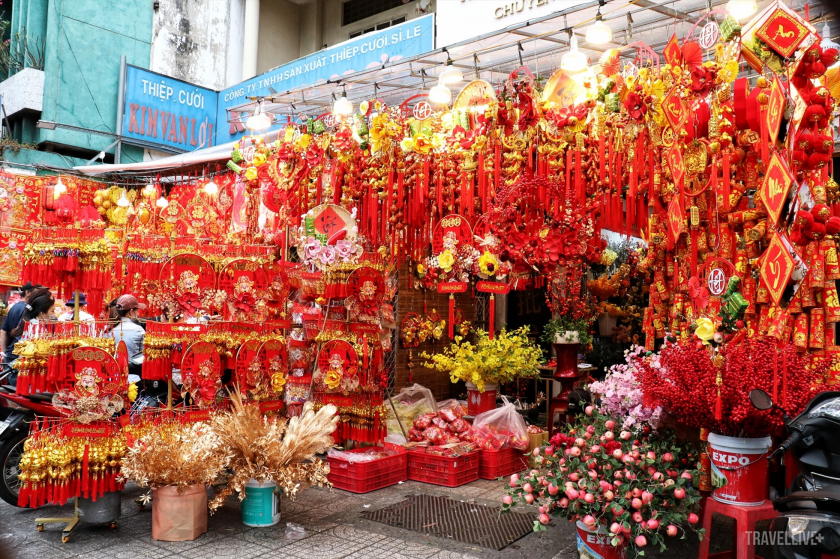
Many items, such as strings, figurines, gold coins, and red envelopes used for decorating homes during Tet (Lunar New Year), are hung and displayed all over the storefronts of shops.
From the days leading up to Tet (Lunar New Year), simply walking along the streets of Cholon Market, visitors will easily spot bright yellow rice cakes with red patterns being sold. The name "nian gao" is pronounced in Chinese. "Nian" means "sticky" and "gao" means "cake." "Nian gao" is a homonym with a different meaning from "year high," and eating "nian gao" symbolizes self-improvement in each new year, signifying that the new year will bring more good things than the previous one. Therefore, rice cakes are an indispensable item on the altars of the Chinese community.
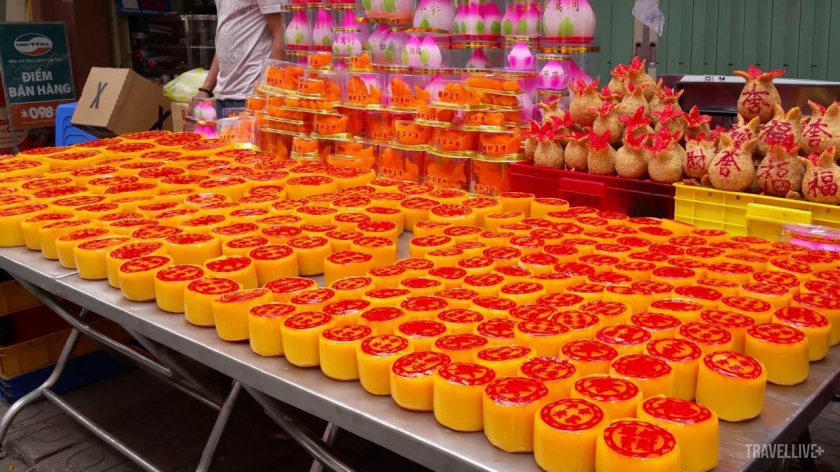
Just by walking along the streets of Cholon, visitors will easily spot bright yellow rice cakes with red patterns being sold.
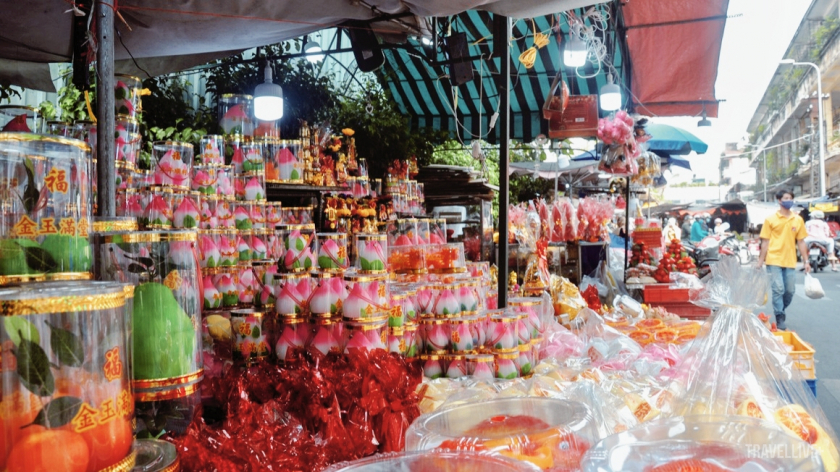
In addition, there are countless varieties of colorful cakes with diverse and eye-catching shapes that the people of Cho Lon offer to their ancestors.
The original Chinese rice cake (bánh tổ) is made with glutinous rice, red beans, and sugar, and is topped with the Chinese character for "fortune" (福). It is offered to ancestors during the spring festival. According to Chinese belief, offering sweet treats to ancestors will ensure that when they report to the Jade Emperor, their ancestors will speak kind and auspicious words.
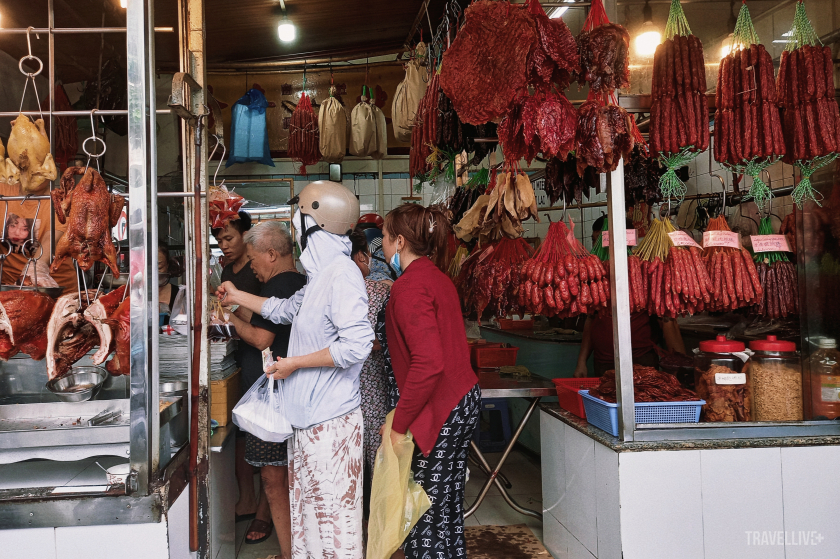
Restaurants selling cured duck, a traditional Chinese dish, are always crowded during the year-end holidays.
Visit the calligraphy shop and bring "Good fortune" home.
To prepare for the Lunar New Year, Chinese homes are often decorated with vibrant red. For them, this is the color of good fortune and happiness. Potted plants wrapped in red paper, red couplets on the altar, and red envelopes... all reflect their wishes for a lucky and happy new year.
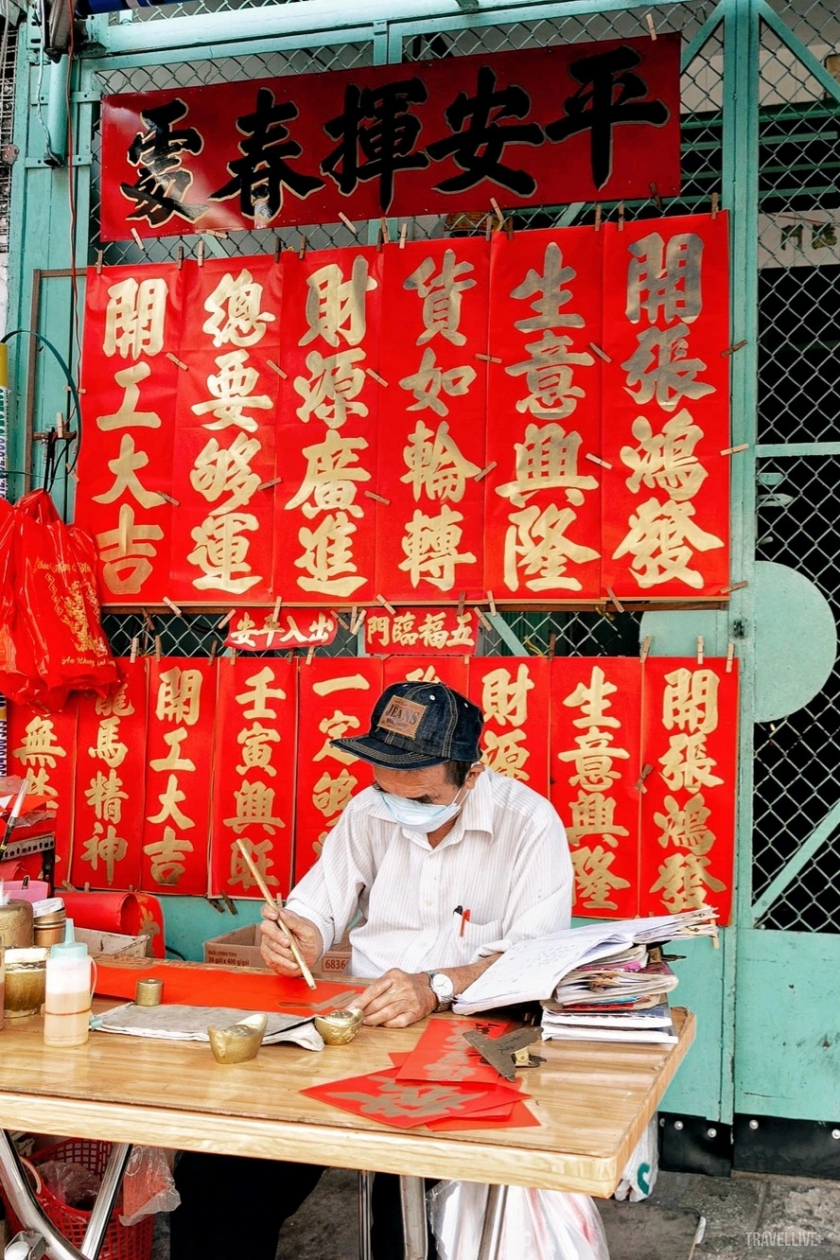
Couplets and scrolls often carry meanings of wishing good luck, prosperity in business, and peace.
Couplets and scrolls often carry meanings of wishing good luck, prosperity, and peace, such as "Five blessings entering the house," "Safe travels," "May all your wishes come true," "Welcoming spring and receiving blessings," "Increasing wealth and fortune," "Family peace," "Opening a prosperous business," and "Brilliant business." Additionally, people often paste the characters "Spring" and "Blessing" upside down on doors; the Chinese character for "upside down" is pronounced "dao," meaning "Spring has arrived, blessings have arrived." This cultural tradition of requesting calligraphy is still preserved by the people of Cholon Market in particular and Saigon in general during the New Year. Therefore, the calligraphy shops of calligraphers on Nguyen Trai and Hai Thuong Lan Ong streets are always bustling with people requesting calligraphy from the New Year until the 30th day of the lunar month.
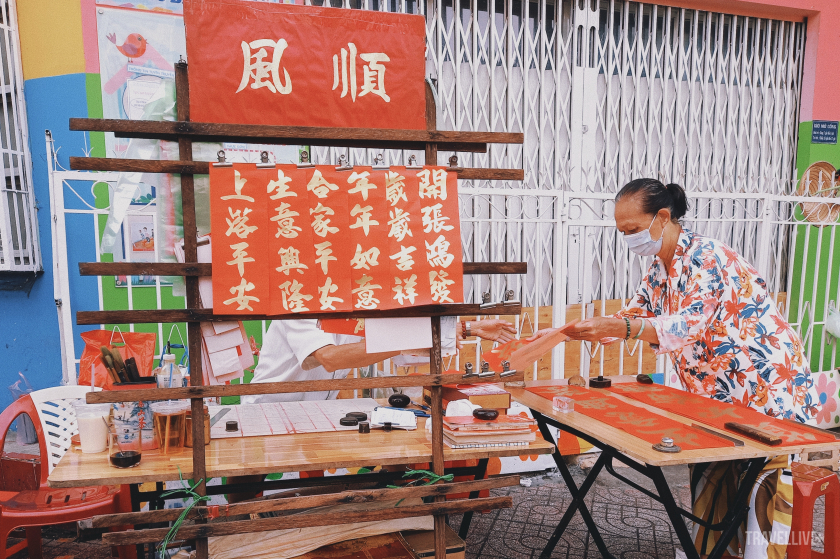
The cultural tradition of requesting calligraphy is still preserved by the people of Cho Lon market in particular and Saigon in general every New Year.
Visitors can ask calligraphers for suggestions or choose any phrase they like to have written on the scroll. Such a service costs between 30,000 VND and 50,000 VND, depending on the size of the characters.
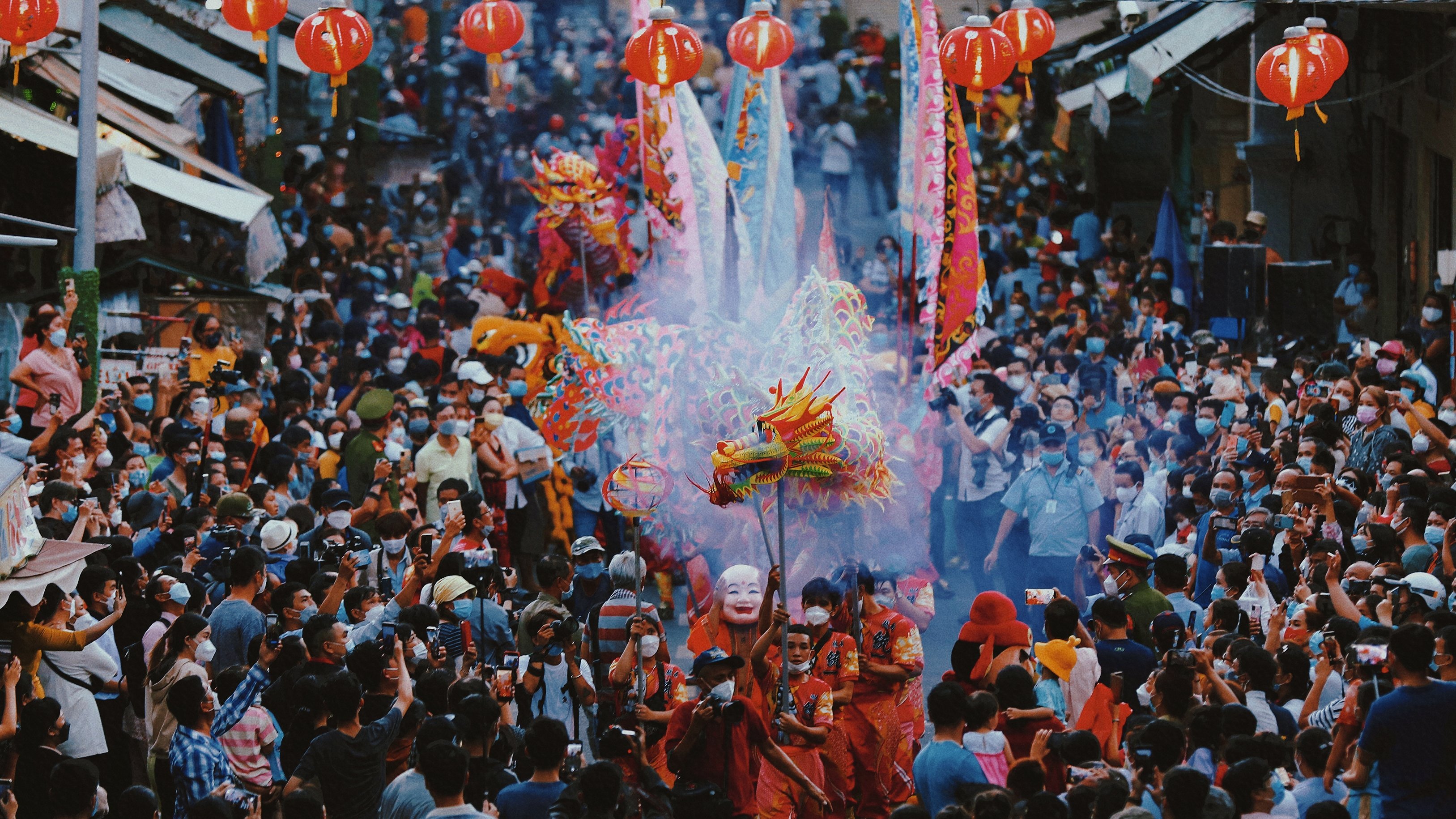
The lion and dragon dance troupe brings the Lunar New Year with its melodious sounds.
In the final days of the twelfth lunar month, Chinese temples and shrines are bustling with activity, filled with the spectacular performances of lion and dragon dance troupes after months of rigorous training. Lion dance carries profound symbolic meanings: blessings, prosperity, peace, and good fortune. The vibrant sounds of gongs and drums, the skillful and unique dances of this folk art form in temples and on the streets before and during Tet (Lunar New Year) create a distinctive flavor of "Chinese Tet" in Cholon, particularly appealing even to Vietnamese people.
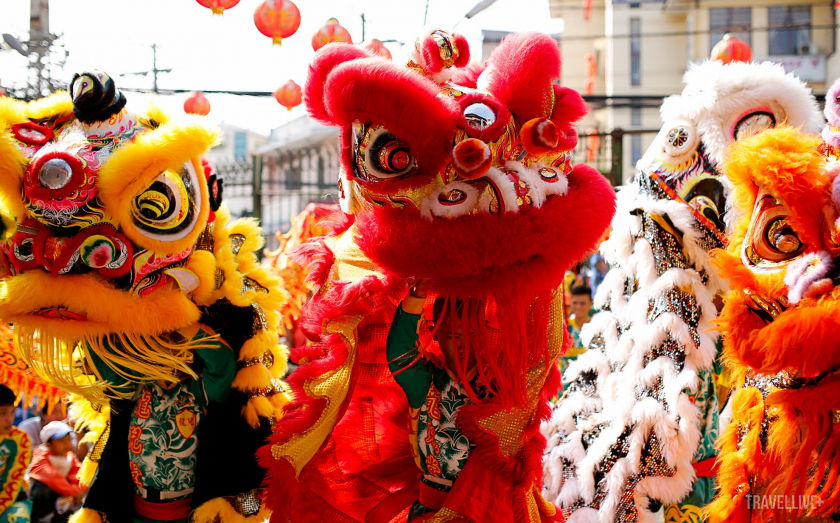
Lion dance carries many symbolic meanings: blessings, prosperity, peace, and good fortune.
From the flavors and colors to the sounds, Tet in Cholon has created a unique cultural aspect of Saigon. Whether you are Vietnamese, of Chinese descent, or a tourist from another land, the customs and traditions of this place will always captivate you with their distinct character.