VI
VI


It can be said that Ho Chi Minh City is a melting pot of culinary delights, and it would be a great oversight not to mention the traditional dishes of the Chinese community.
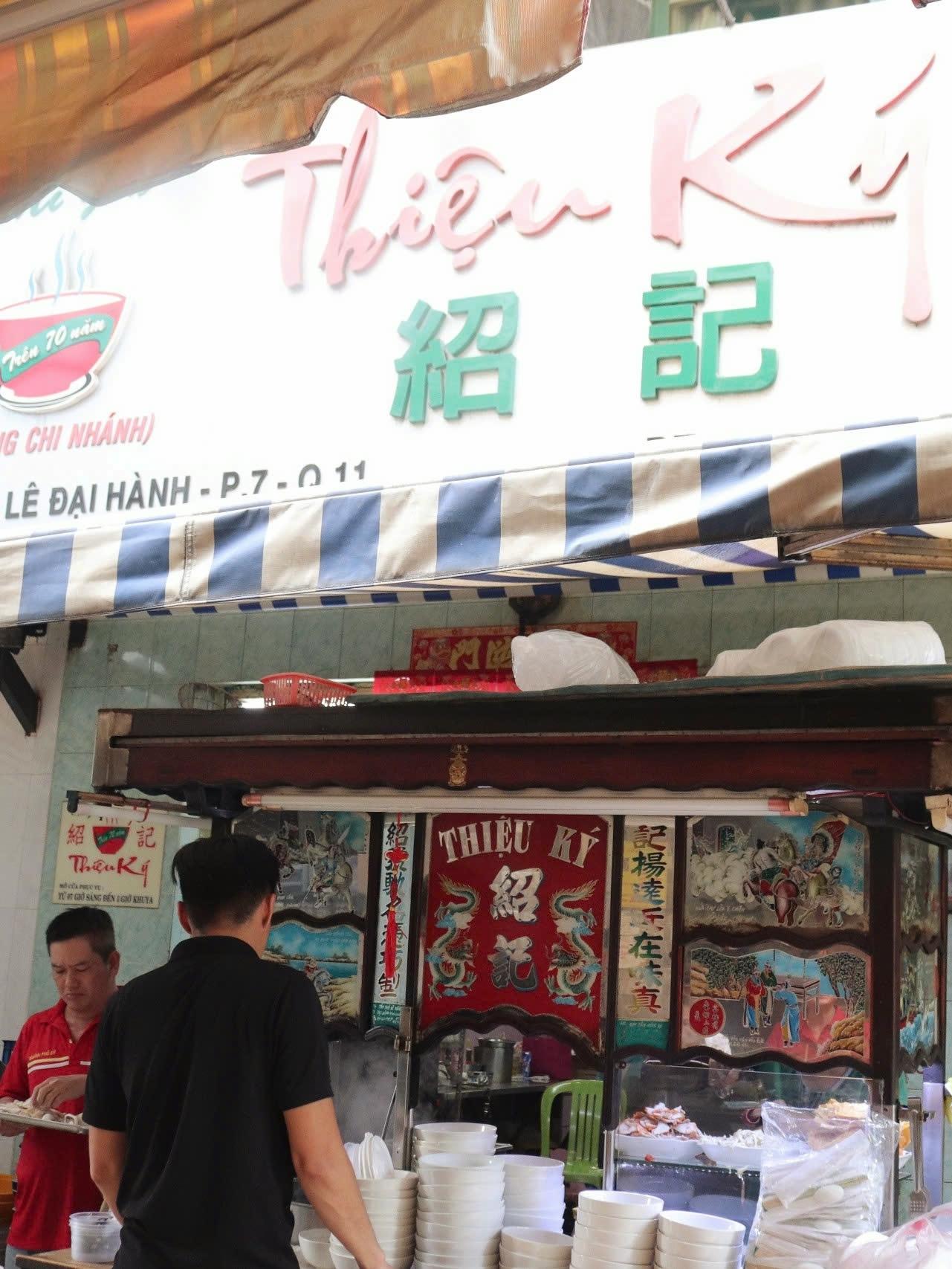
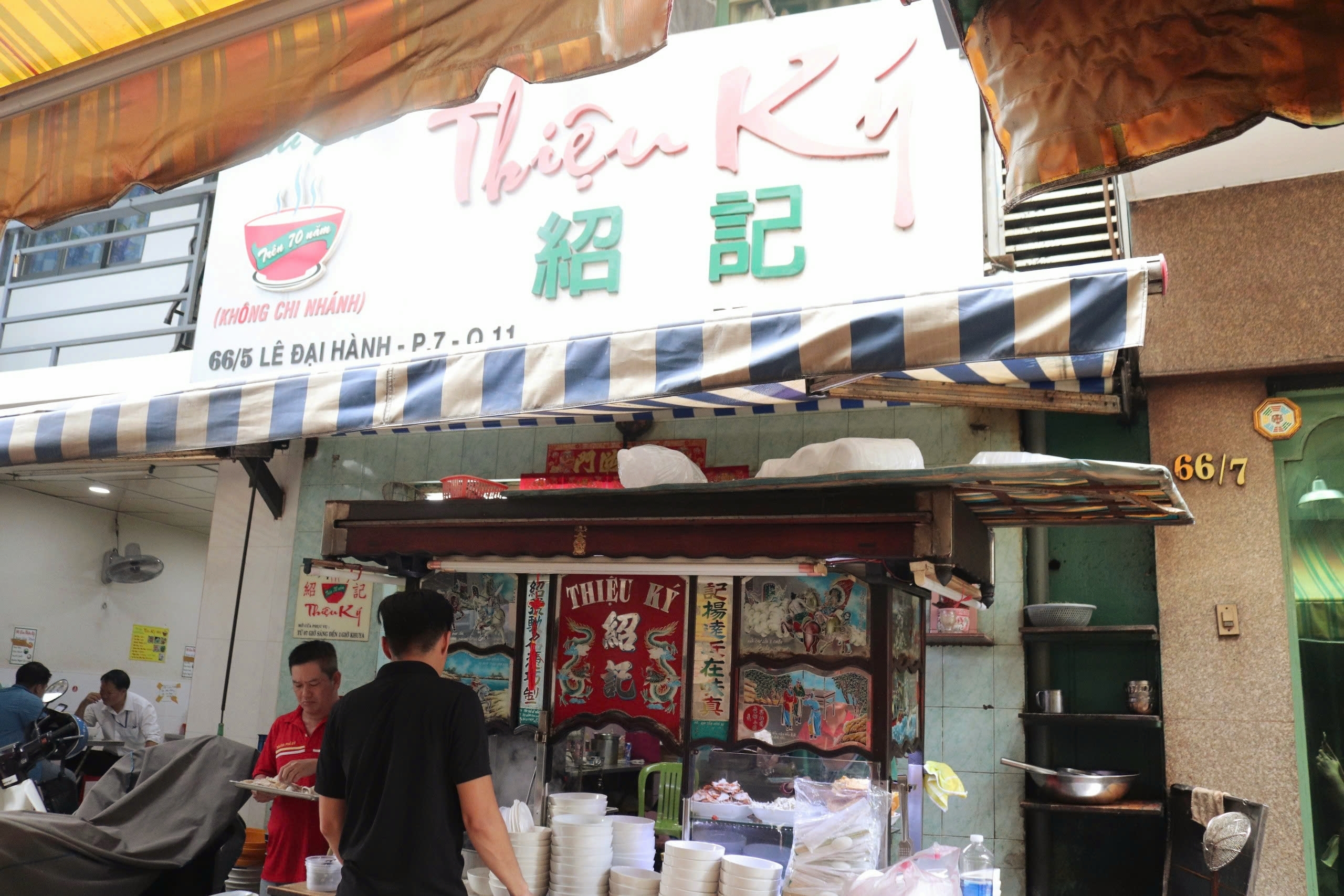
Located in a small alley off Le Dai Hanh Street, District 11, away from the hustle and bustle of the city, Mr. Duong Huy's Thieu Ky noodle shop attracts customers with its traditional flavors that his family has preserved for 90 years.
It would be a disservice not to mention the traditional Chinese dishes in Ho Chi Minh City.
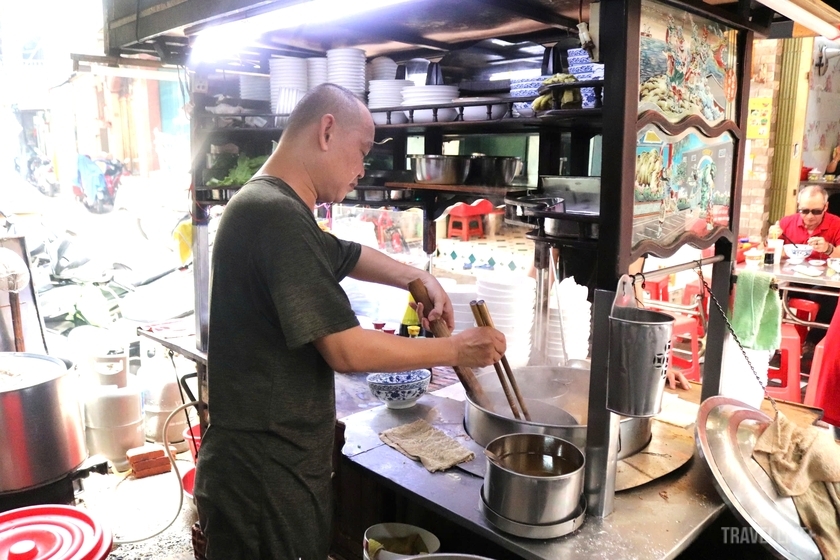
The shop's most distinctive feature is its traditional noodle cart, decorated with stained glass paintings depicting scenes from the Three Kingdoms, prominently displaying the name "Shao Ji." Here, visitors can admire the chef's skillful preparation of dishes, feeling as if they've stepped into a traditional Chinese restaurant. The front section, housing the noodle cart, is where the food is prepared, while the back section is where the fresh noodles are made and the family lives.
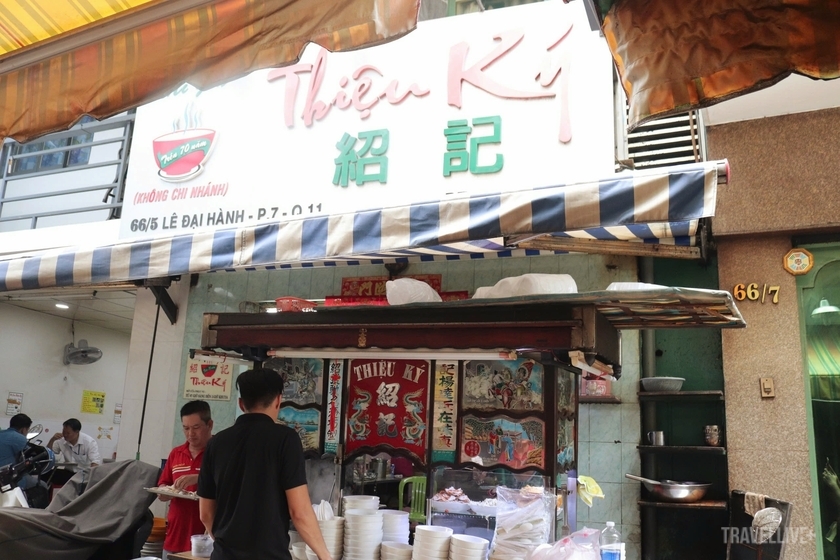
A distinctive feature of Thieu Ky noodle shop is its traditional noodle cart, decorated with glass paintings depicting scenes from the Three Kingdoms.
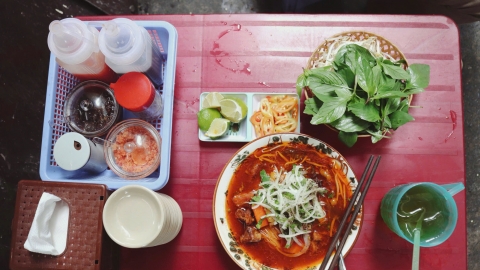
I ordered a bowl of mixed noodles and quickly received my portion, which had an incredibly alluring aroma. The noodles were chewy and had a very distinctive flavor because they were handmade by the owner – something hard to find in other noodle shops. The broth was made from bones simmered over low heat. The accompanying toppings, such as heart, liver, fish balls, shredded chicken, char siu, etc., were fresh and delicious, blending with the broth and noodles to create a unique flavor unlike any other Chinese noodle shop.
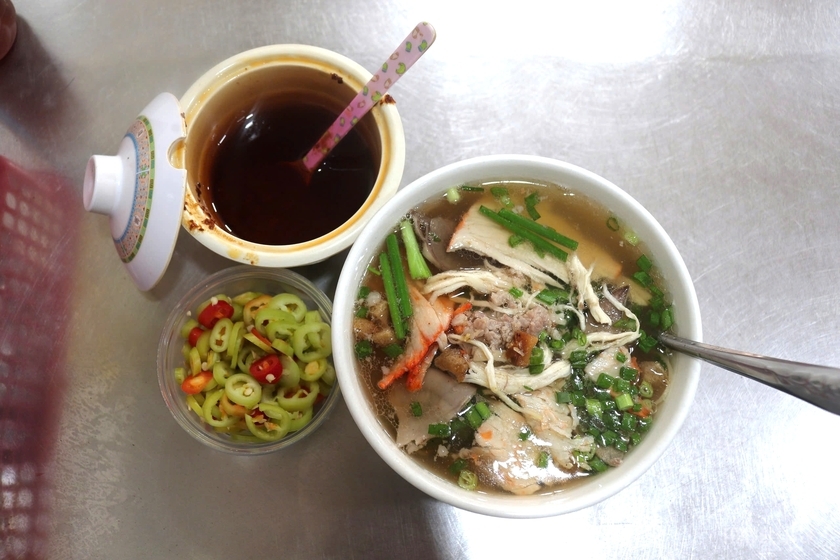
Mixed Chinese Noodle Soup
I slowly savored the flavors and also appreciated the traditions that the owner's family had preserved for the past 90 years. In the quiet atmosphere of the small alley, I heard the customer at the next table softly recommending the restaurant's dishes to his friend, and watched the staff quickly bringing food to diners.

The restaurant was crowded with customers, but it didn't lose its peaceful atmosphere as everyone was focused on enjoying the flavors of the food. The menu included traditional Chinese dishes such as: noodle soup (55,000 VND), beef and pork noodle soup (60,000 VND), braised beef (60,000 VND), dim sum (30,000 VND/portion), and shumai (30,000 VND/portion).
After my meal, the owner, Mr. Duong Huy, told me the story of his shop. In the peaceful setting of a small alley, the simple owner, with a constant smile on his face, spoke in a gentle voice, recounting how he was the third generation in his family to continue selling fresh noodles.
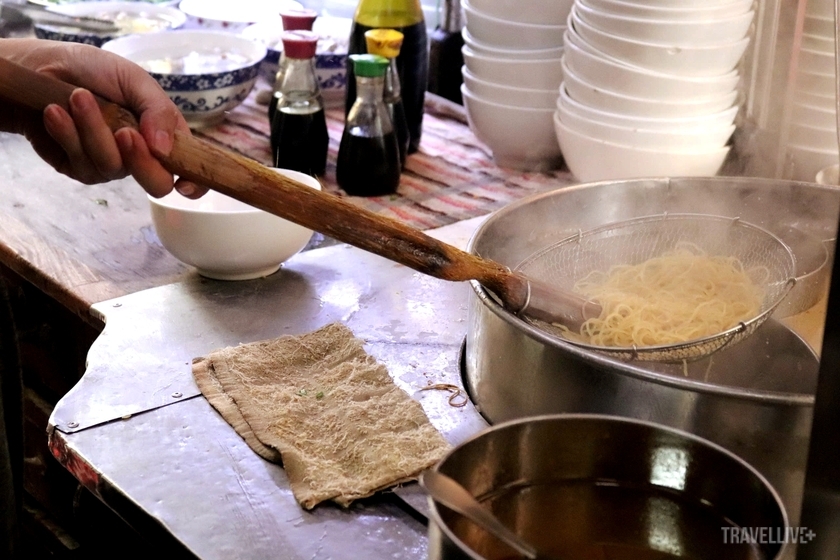
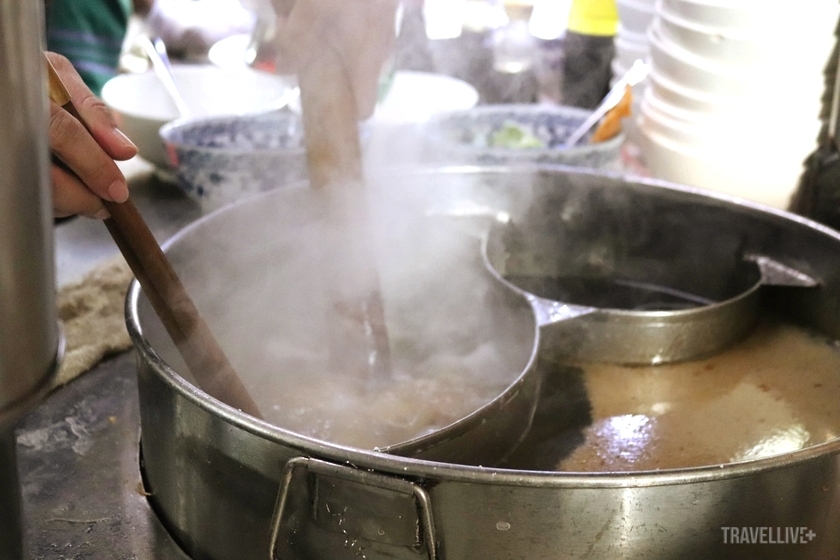
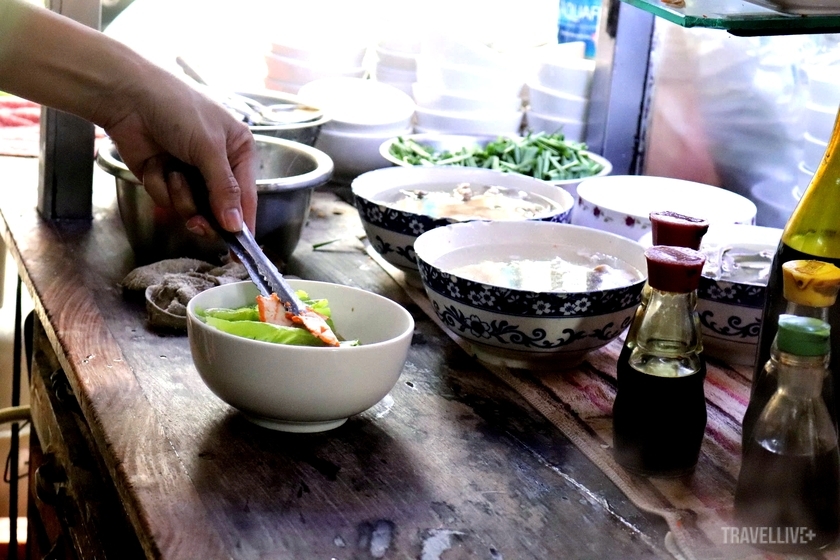
The noodle shop has been around since 1930.
"This noodle shop dates back to my maternal grandfather's time in the 1930s, before he emigrated from China to Vietnam. Later, my grandfather passed on the trade of making fresh noodles and other Chinese dishes to my mother. My mother passed it on to me, and now I'm gradually teaching it to my grandchildren, who are the fourth generation of the family," the noodle shop owner shared.
Mr. Huy gazed into the distance, as if lost in memories of bygone days. He recounted that in the 1980s and 90s, the shop was always busy, open from early morning until 2 or 3 in the morning. Sales slowed down a bit in the 2000s. For 90 years, the shop has preserved the original flavor passed down from its first owner.
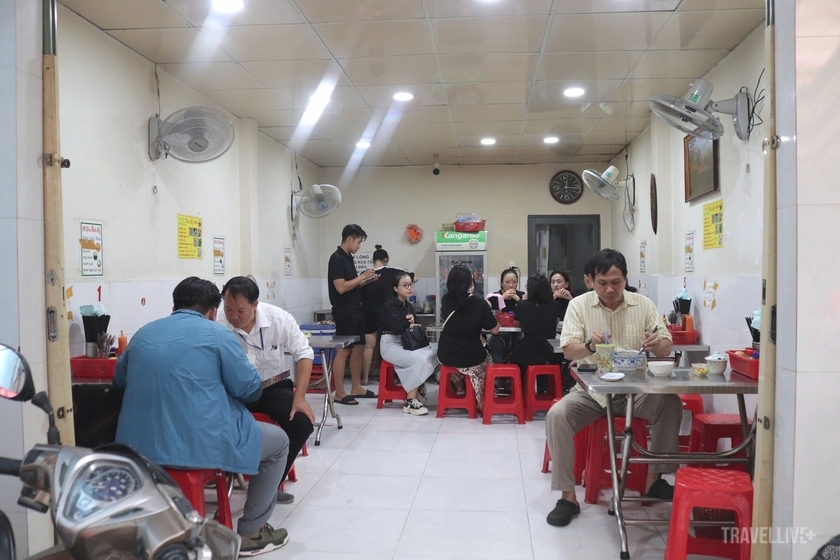
For 90 years, the restaurant has preserved the original flavors from the time of its first owner. Therefore, many regular customers come here to enjoy the food.
Each day, the shop spends about 2-3 hours producing 18 kg of fresh noodles, which are used up within the day. According to Mr. Huy: "We sell the noodles as soon as they're made; we don't make a lot at once. When we run out, we make more."
Ms. Pham Thi Dao Nguyen and Mr. Du Huy Hoang have been regular customers of the restaurant for many years. She shared: “I’ve been eating at this noodle shop for decades. My husband and I share a passion for enjoying and discovering delicious food. Our preference is to find traditional restaurants from the old days. In Saigon, there aren’t many shops like Thieu Ky left; you could count them on one hand. The noodles are homemade by the family. The broth is clear, subtly sweet, and made from bones. Even the noodle cart exudes tradition because it’s been in use for so long.”
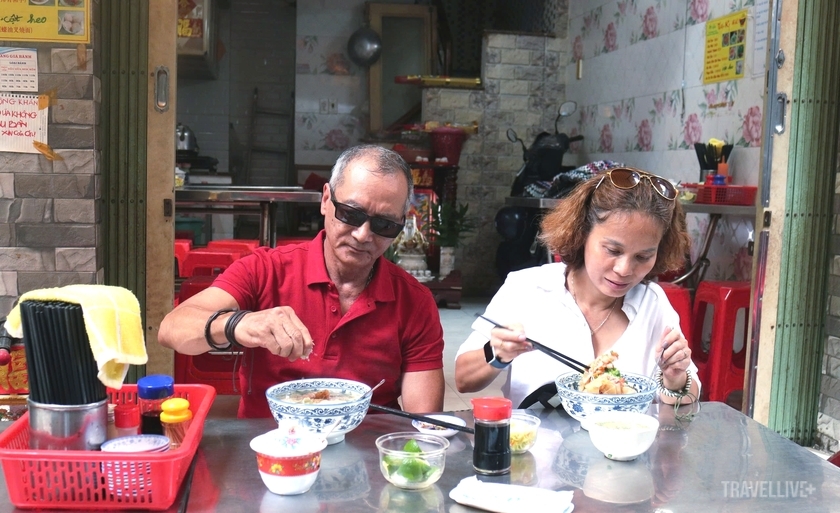
Ms. Pham Thi Dao Nguyen and Mr. Du Huy Hoang have been regular customers of the restaurant for many years.
Ms. Nguyen and Mr. Hoang sometimes visit the noodle shop in the morning, at noon, or even in the evening, and always find the place very crowded with customers. She recounts: “I’ve been eating noodles since the owner didn’t rent the shop next door, when they only had the indoor seating and sidewalk space in front. Every time I come to the shop, I still sit in my usual spot and order my favorite dish: dumpling noodles.”
Having enjoyed many traditional Chinese restaurants, Ms. Nguyen highly appreciates the traditional flavors that the restaurant has maintained over the years. “From noodles to dumplings, everything retains its traditional flavor. Even with changing times, rising prices, and market competition, the owner has managed to preserve the delicious taste. That's a major plus for me. I'm also particularly impressed by the owner's simplicity, hospitality, and humility,” Ms. Nguyen added.
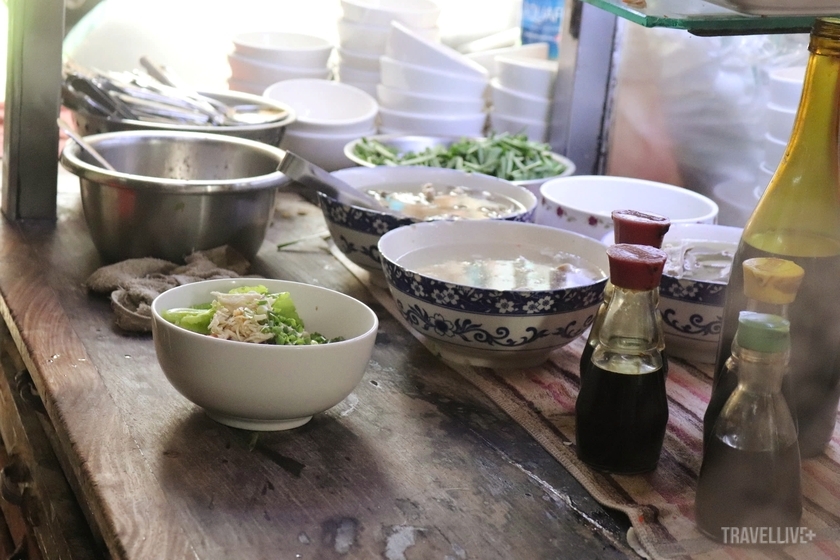
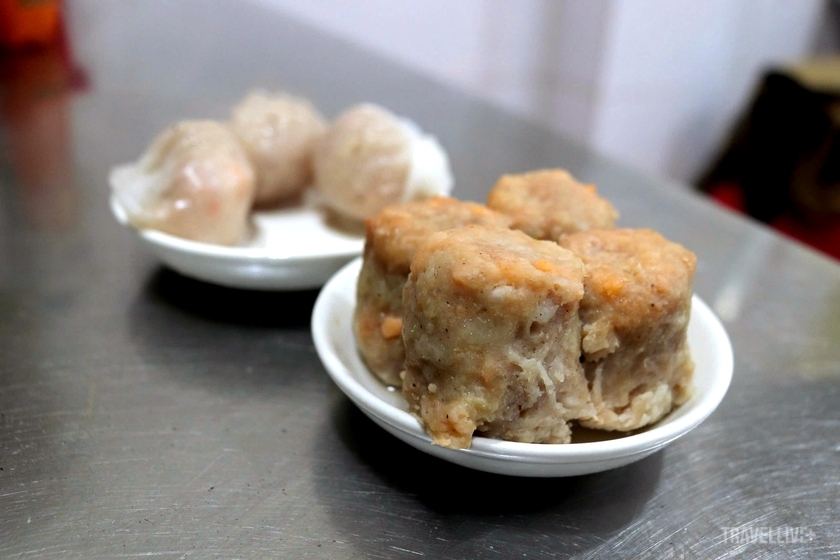
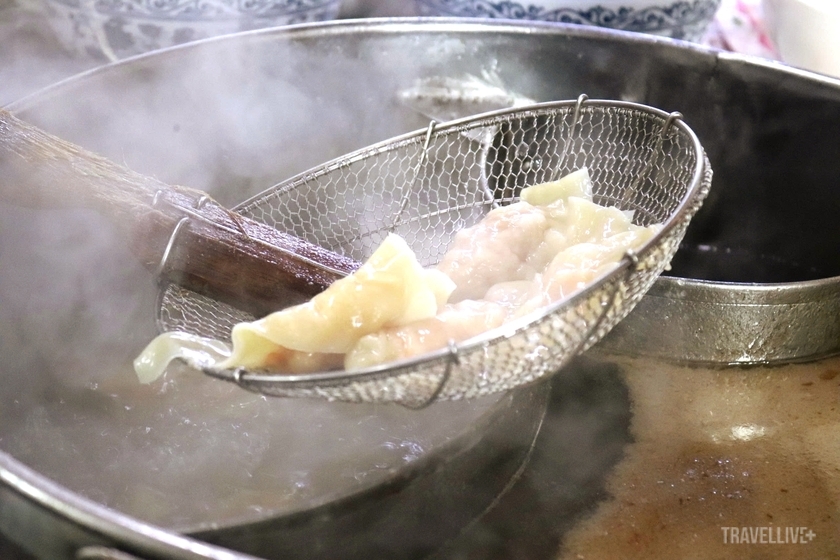
Uncle Du Huy Hoang suggested that if diners want to know the quality, flavor, and skill of a chef, they can try dry noodles and dumplings. Good dumplings are those that don't break or crumble when blanched in boiling water, and still retain a chewy and crispy texture.
The shop is open daily from 6 AM to 12 AM, with the family working in shifts. From around 5 PM each day, the family begins preparing the ingredients for noodles, dumplings, and wonton filling.