VI
VI


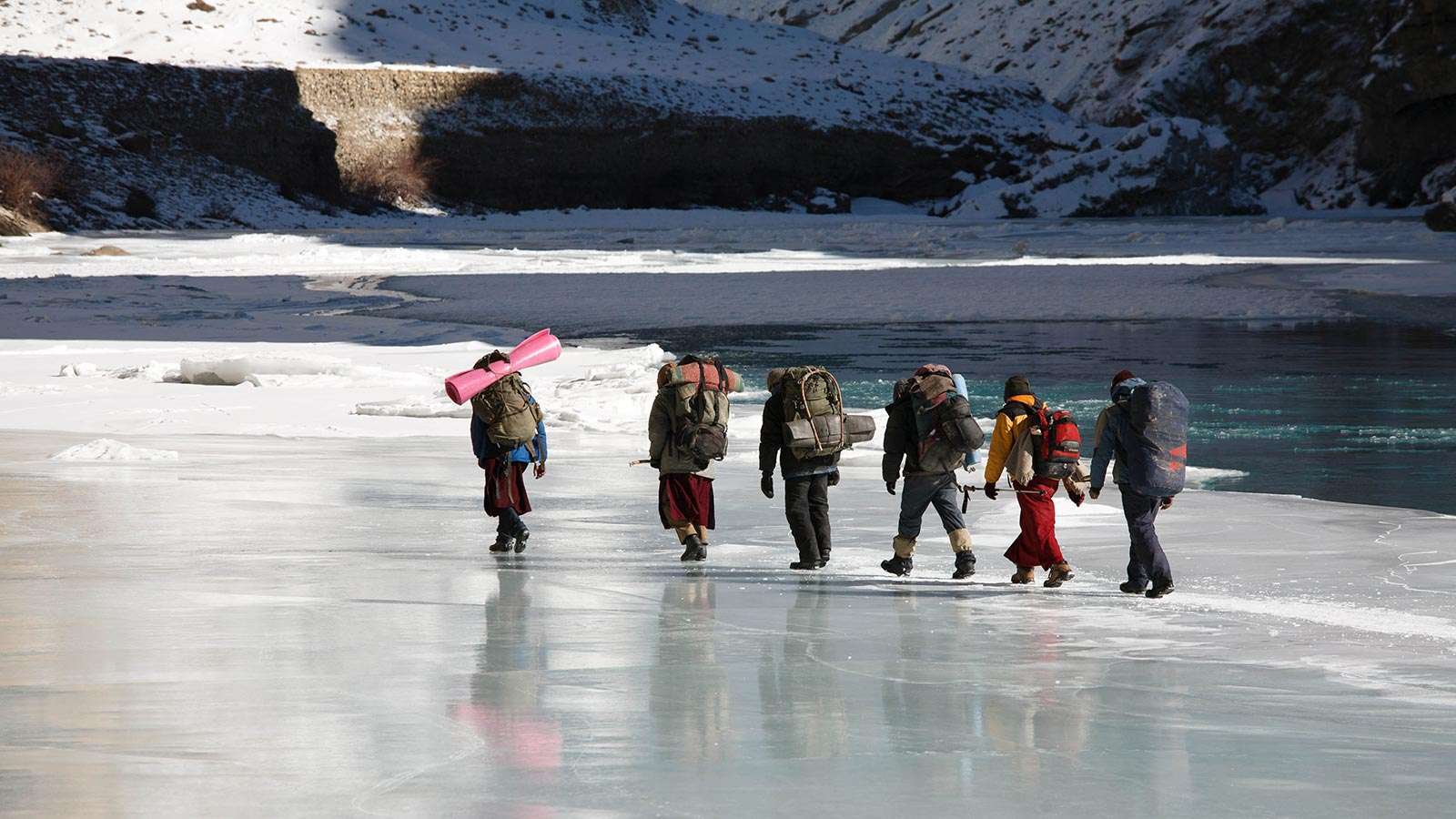
In Zanskar during winter, temperatures drop to -40 degrees Celsius. The river freezes, creating a thick layer of ice on the surface, forming a path through the gorge. The locals call it Chadar, meaning "blanket of ice and snow." According to CNN, Chadar is dubbed "the world's most challenging journey," with nearly 150 kilometers of icy terrain. This section of the mountain ridge leading to the summit offers stunning scenery but is extremely dangerous; even a slight misstep can lead to a fall.
Speaking to Travellive, Thao Tran, representative of IntoWild, a platform for booking adventure travel activities domestically and internationally, stated that trekking across the Zanskar glacier is a special journey for two reasons. First, travelers will experience all aspects of life – eating, sleeping, and playing – right on the frozen river. Second, currently, only the Zanskar region in the world has such an ice path, and it is also the only access point to the area during winter. Furthermore, the Chadar trekking route is at risk of disappearing completely in the future due to climate change.
"This route is only accessible for a month and a half in winter. However, due to the warming weather, the duration has been shortened to one month," Thao Tran said.
Experience walking on the Zanskar glacier.
When booking this trek, travelers will spend 7 days trekking in the Zanskar, including 5 days to the destination and 2 days returning to the starting point. From New Delhi, travelers fly to Leh and stay overnight at a hotel. On the first day, travelers will spend time visiting places in Leh such as Shey Palace, Thiksey Gonpa, and Stok Palace. This is also a good time to get used to walking slowly, breathing slowly, and the cold air.
"This trek has a huge number of porters, possibly the largest team I've ever seen. Only 5 of us went trekking, but there were 15 people following along to support us," Thao Tran shared.

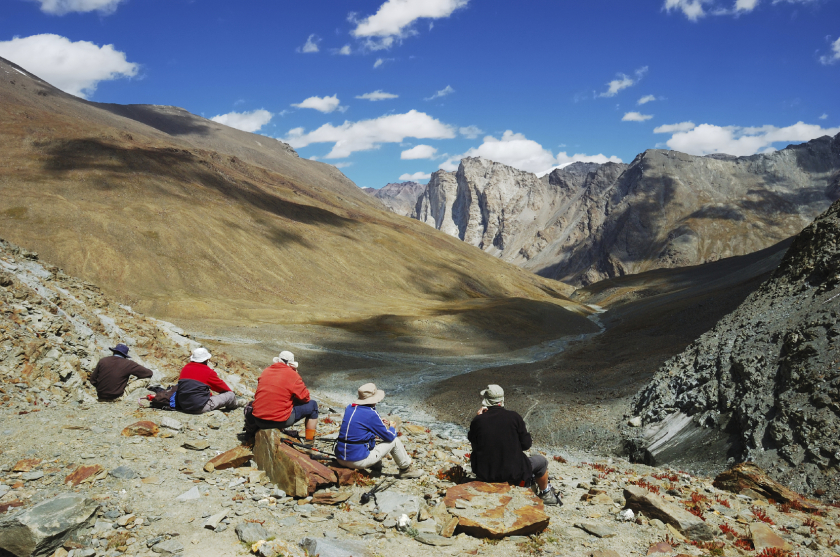
The Zanskar River during the dry season.
Before departure, the Ladakh government requires all tourists on this route to undergo a health check. You will be given a general health check, including blood pressure, body temperature, and heart rate measurements. For tourists with an SP02 level below 85, they are required to eat and rest properly before having another checkup the following day or be transferred to a different route.
The following day, travelers will be transferred to the confluence of the Zanskar and Indus rivers, from where they will turn left and drive along the Zanskar River until they reach Sumdou and then Bakula Cave. This is the day travelers officially walk on the glacier. Trekking routes in Nepal or Vietnam usually have teahouses along the way to provide supplies or necessary equipment. For the Chadar trekking route, you'll essentially be bringing an entire village with you, with many porters and carts carrying supplies.
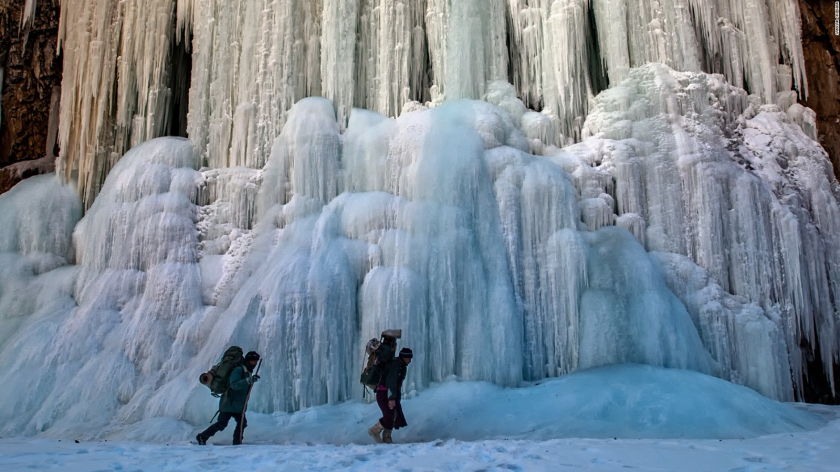
Frozen waterfalls in Zanskar.
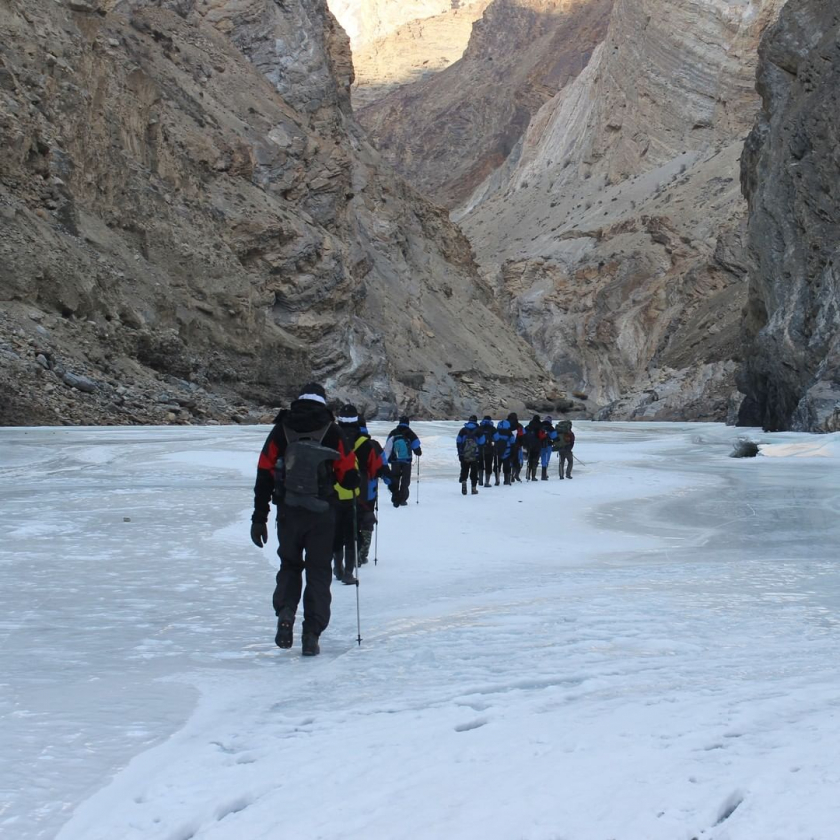
The group of trekkers are walking on the surface of the frozen river.
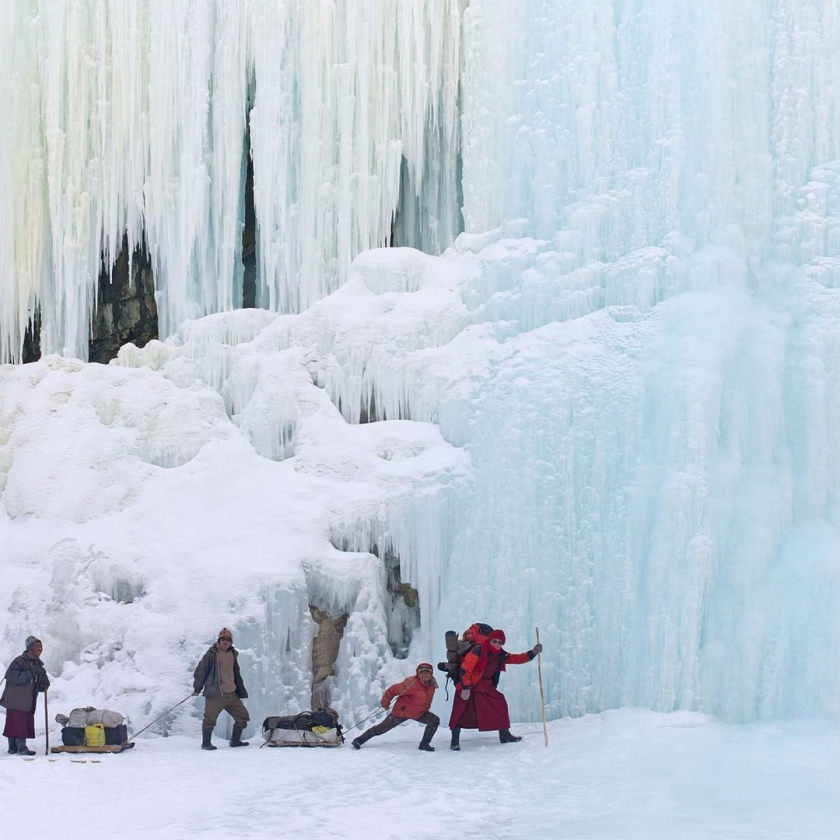
The porters pull the carts alongside the tourists.
"The atmosphere at the gathering point was very lively; at night, people sang and played music all along the riverbank. Some Western tourists even enthusiastically jumped into the icy river to swim," Thao said.
For the next three days, travelers will walk on the ice for 7-8 hours each day until they reach the final destination, Lingshed Monastery. On the last two days, you will walk all day back to the starting point, following the route from Hotong to Tsomo Do and then back to Leh.
What do tourists need to prepare?
"We will have to screen applicants very carefully; this route is suitable for those who have previously experienced altitudes above 3000 meters," Thao Tran said. In particular, the tour company does not accept tourists with lung, blood pressure, or cardiovascular problems because there are absolutely no medical facilities available. However, Chadar Trekk doesn't require too much physical fitness as it's just a straight line on the glacier. Tourists don't have to endure sudden changes in altitude like on other mountain climbing tours.
Before departure, travelers need to prepare all the necessary warm clothing to cover their entire bodies. During the trek, thanks to the sunlight and increased body temperature, you will feel very warm. However, at night, the temperature drops to -40 degrees Celsius, becoming bone-chillingly cold. To help everyone warm up, the porters will share glasses of rum and start singing.
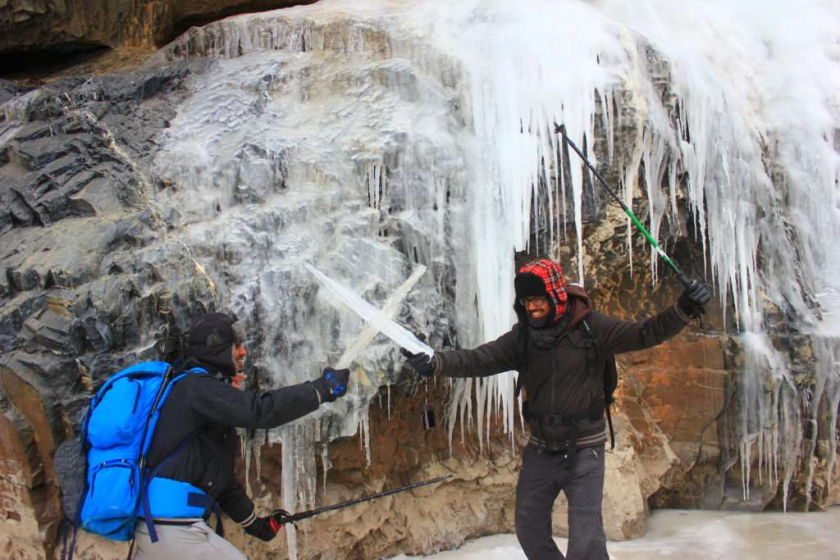
Tourists playfully use ice poles during the journey.
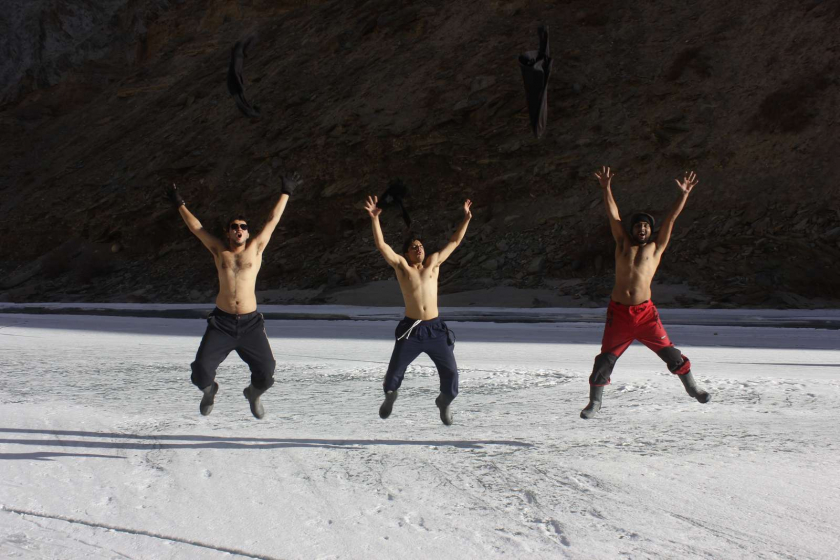
Tourists pose shirtless on the glacier.
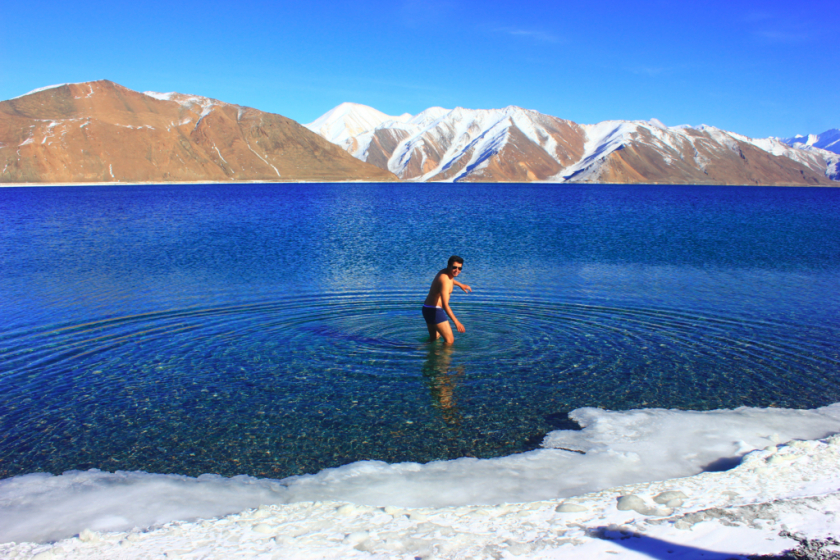
Tourists try their hand at swimming in the icy river.
"Everyone lit a fire and danced together to warm themselves up. After that trip, many of my friends and family members started liking Indian music," Thao said.
For this trek, regular rubber boots are sufficient, but higher-quality hiking boots may be necessary. Tourists will only be walking for hours on the flat terrain of the glacier, so advanced climbing accessories are not required. However, spiked soles are essential because the ice surface is very slippery.
"Winter in Ladakh is characterized by a cold, dry climate that makes your fingertips and toes numb. Wearing shoes that are too tight feels like needles are being stuck in your feet. That's why I switched to wearing fishing boots, which are soft and keep me warm," Thao Tran explained. She advises tourists to bring anti-glare glasses to protect their eyesight. In particular, to prevent frostbite, tourists should prepare a tube of moisturizing cream or use the local Tibetan beef fat.