VI
VI



Nargiz Issayeva had just returned from a manicure. Her freshly painted nails glided swiftly across her laptop keyboard. Although she runs an agency in Kazakhstan, the 32-year-old lives and works in Bali, Indonesia. She is one of over 3,000 digital nomads operating on this popular tourist island.
"This is the capital for anyone who wants to work while constantly exploring nature," she asserted.
According to DW, the archipelago is making efforts to attract foreign visitors, especially individuals like Issayeva. From the end of 2022, foreigners with at least $130,000 in their bank accounts will be granted a "second home" visa and allowed to stay there for 10 years.
Currently, Indonesia has begun offering visas to highly skilled or affluent workers from other countries. Widodo Ekatjahjana, head of Indonesia's immigration department, said this move aims to boost the country's economy after the Covid-19 pandemic.
Overcrowded with international tourists.
For remote workers, Indonesia is one of the most popular destinations. The country boasts reliable digital infrastructure and a high standard of living, while the cost of living remains relatively low. Furthermore, digital nomads don't have to deal with a lot of paperwork. Even those with new visas don't need to pay taxes on income earned outside Indonesia.
Additionally, the 211a, a basic visitor visa, also allows foreign nationals to stay here for 180 days while working for an international company. However, not everyone is aware of this. That's why most foreigners only apply for standard visas and face difficulties when engaging in digitally nomadic work.


Foreigners can easily pursue digital nomad careers in Bali thanks to the lenient visa policies.
Daniel (Belgium) lives in Canggu, a coastal village in southern Bali that has become a mecca for digital nomads. The most common sight he sees whenever he leaves his house is foreigners engrossed in working on their laptops, in restaurants or cafes.
“Everything about Bali is amazing. It’s very international, and I can make money anywhere thanks to the widespread WiFi coverage,” the 25-year-old said.
Anggiat Napitupulu, a representative from the local immigration agency, acknowledged that the monitoring of digital nomads or international freelancers is not very strict. Checks only occur when a complaint is filed. Otherwise, officers cannot search laptops or force visitors to disclose what they are doing.
Locals are having a headache.
However, after-work partying is booming on this paradise island, causing frustration among residents. Many have submitted petitions to the local authorities, claiming their sleep is being disrupted by loud music that lasts from afternoon until late at night. They even say the noise from the bars is shaking the windows of some nearby temples.
Additionally, a petition signed by over 8,000 local residents also highlighted the issue of public drunkenness, drug use, and public urination by international visitors.
“I completely understand this anger. In fact, many foreigners lack self-education. They come here and mess everything up. However, at this moment, the island is still reasonably balanced between peace and chaos,” Nargiz Issayeva shared.
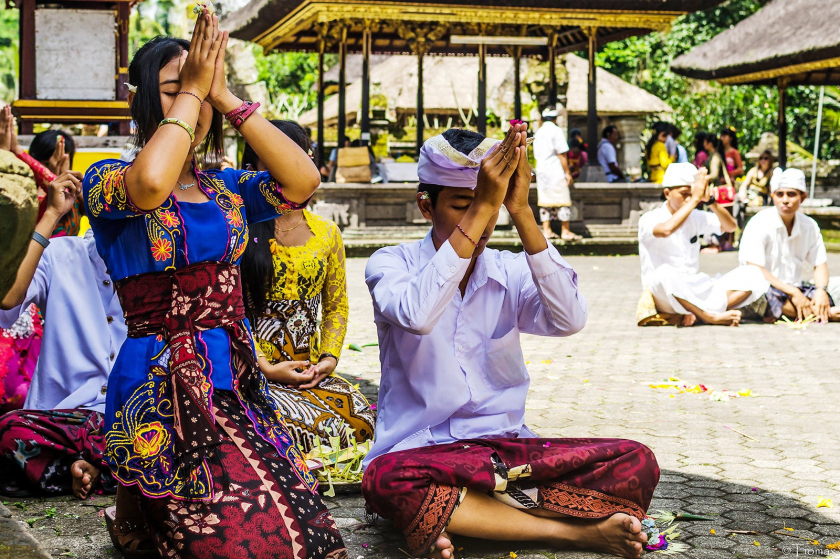
Local people are practicing a prayer ceremony in Bali.
Several hotel owners have expressed similar concerns. They fear that with the constant influx of tech-savvy nomads, the island could lose its natural beauty due to reckless behavior. However, they acknowledge their continued economic dependence on this group of tourists, whether directly or indirectly.
According to Professor Nyoman Sukma Arida of Udayana University (Bali), the island should take advantage of this period to diversify its economy. In reality, all activities are still focused solely on tourism.
“Bali is like a gamble. One volcanic eruption or terrorist attack, and no tourists will come here. Instead, the government should focus on agriculture and small industrial businesses to maintain revenue,” he asserted.
However, people in Bali now seem relieved to see the island recovering from the aftermath of the Covid-19 pandemic. The Indonesian Tourism Association predicts the island will welcome 6 million foreign visitors by 2025, including a large number of digital nomads.