VI
VI


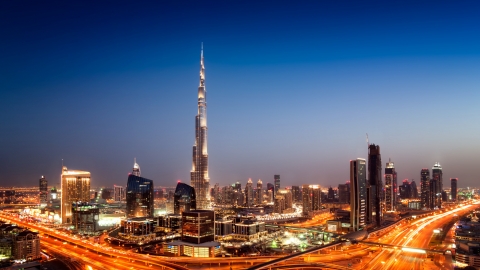
Traffic on Dubai's central avenues has begun to pick up again, the roar of supercars blending into the hustle and bustle of daily life. Top-tier luxury restaurants are brightly lit, attracting large crowds of diners. From the outside, life in the United Arab Emirates' (UAE) most vibrant economic hub seems to have returned to normal.


However, behind that picture, the Gulf tourism industry is facing a much less optimistic reality. International tourists' confidence has not yet fully recovered from the prolonged geopolitical turmoil.
Although drone attacks on UAE territory are now isolated and localized, and large-scale security alerts from the early stages of the conflict have officially ceased, psychological pressure on the market remains high.
In May, bustling shopping malls in Dubai were crowded with families from the Middle East celebrating Eid al-Adha. In Abu Dhabi, Zayed International Airport also saw crowds of passengers shopping around duty-free shops, while high-end beauty salons continuously welcomed affluent Russian tourists enjoying their holidays.
Many people still express absolute confidence in the local government's management capabilities, asserting that Dubai remains a safe destination and that the UAE's handling of crises and conflict control is highly reliable.

The service and hospitality industry in the UAE is suffering the direct consequences as hotel occupancy rates are projected to plummet.
Beneath the glitz and glamour of its skyscrapers and luxurious amenities, Dubai is facing its greatest challenge in modern history: restoring the world's trust to revive its core industries. The continued strict travel advisories from major governments such as the US, Canada, and Australia have created an invisible but incredibly strong barrier.
Although international airlines have largely resumed commercial flights, experts agree that rebuilding public confidence is far more difficult and time-consuming than simply reopening the skies. Dubai hasn't completely lost tourists, but the structure and flow of visitors have undergone a significant and fundamental change.

This dramatic decline stems directly from the psychological barrier customers face in the face of the overwhelming amount of information from international media. Prolonged security warnings have made expatriates hesitant, forcing them to carefully consider their options before traveling to the Gulf region.
Furthermore, fears of unexpected flight disruptions and escalating airfares driven by fluctuations in global oil prices have become major obstacles for households. During times of economic and political instability, global travelers are more sensitive than ever to cost. Instead of opting for lavish vacations in the Middle East, they are increasingly prioritizing cheaper travel destinations or areas closer to home to ensure maximum security for their budgets and personal well-being.
The repercussions of this crisis of confidence have spread widely and left alarming figures for the entire industry. The Arab Travel Market (ATM), the largest tourism trade show in the Middle East, has been forced to postpone its event until September.
According to official statistics from the Dubai Department of Economy and Tourism, the number of international tourists visiting the emirate has seen a sharp decline since geopolitical tensions escalated.
Notably, the reputable financial services firm Moody's also issued a challenging forecast, suggesting that hotel occupancy rates in Dubai risk a significant drop from a peak of 80% to a mere 10% in the second quarter, putting accommodation businesses at risk of partial shutdown.

To salvage the situation and support businesses, the city government immediately abolished the 7% service charge applied to restaurant and hotel bills.
To salvage the market and maintain its position as a leading destination, the Dubai government immediately implemented a series of extremely strong and unprecedented measures to stimulate tourism. The city decided to temporarily suspend the application of the nightly hotel tax on all high-end accommodations, and completely abolish the 7% city fee that was previously directly added to the bills of restaurants and hotels.
Furthermore, policies such as postponing sales fees and waiving event cancellation fees were also implemented to minimize pressure on organizers. Local travel and accommodation businesses were also granted the privilege of postponing public service fee payments for three months, a strategic move to ensure their cash flow remains uninterrupted.
Alongside macroeconomic policies from the government, an unprecedented wave of discounts on tours and accommodations, the largest since the pandemic, is sweeping across the UAE. Luxury destinations, known for their high prices and selective clientele, are now also joining the fierce promotional race to maintain minimum visitor numbers.
The Ritz-Carlton Dubai hotel continuously runs promotional campaigns for its afternoon tea package with a "buy one, get one free" offer, while the luxury brand Mandarin Oriental Jumeirah is willing to offer a 20% discount for guests staying two nights or more. Even more shocking, the Marina Byblos hotel launched a month-long, all-inclusive vacation package for just 3,800 AED (approximately $1,035 USD) – an unbelievably low price in one of the most expensive cities on the planet.
Dubai has proven its resilience by consistently weathering both the global financial recession and the health crisis stemming from the pandemic, thanks to its strong economic potential and world-class infrastructure. However, this crisis is entirely different, as it directly impacts public security awareness, the very foundation that has built Dubai's tourism brand over the past decades.
The current situation shows that tourists haven't completely lost faith in the UAE's governance, but they have drastically changed their consumption behavior. The trend of booking accommodations close to departure dates and adopting an extremely cautious, wait-and-see attitude until the region achieves long-term stability is posing a difficult challenge that will require Dubai to invest considerable time and a well-planned strategy to find a solution.