VI
VI


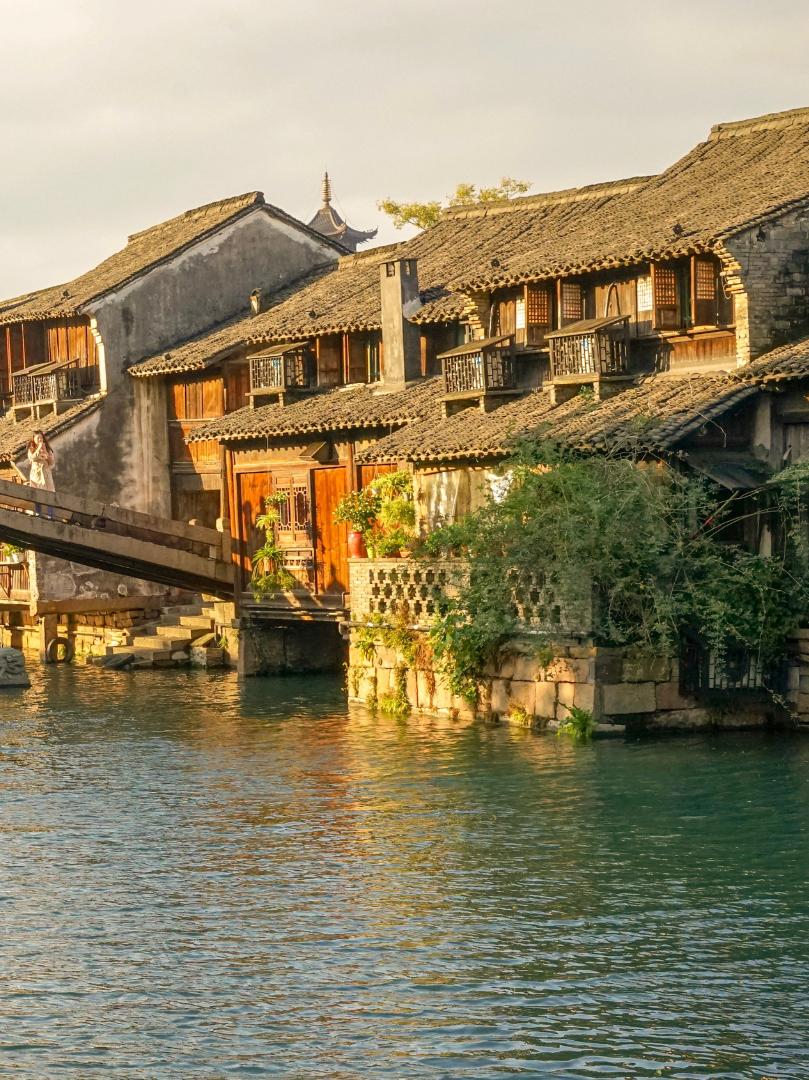
Jiangnan pillows by the water
Wuzhen in a dream
Wuzhen – a mystical land where architecture has undergone many changes over time. The unique ancient structures here are still very well preserved, giving visitors the feeling of stepping into a long-closed world. The peaceful life of the local people is also a particularly attractive feature, making every visitor want to explore the strangeness and uniqueness of this place.


The most beautiful ancient town in China.
Traveling down the Kinh Hang River, we arrive at the beautiful Wuzhen, a place where time-worn structures exude an ancient charm that captivates visitors from all over. Not only has the ancient architectural style been preserved almost intact, but the peaceful life of the local people also attracts tourists in a unique way.
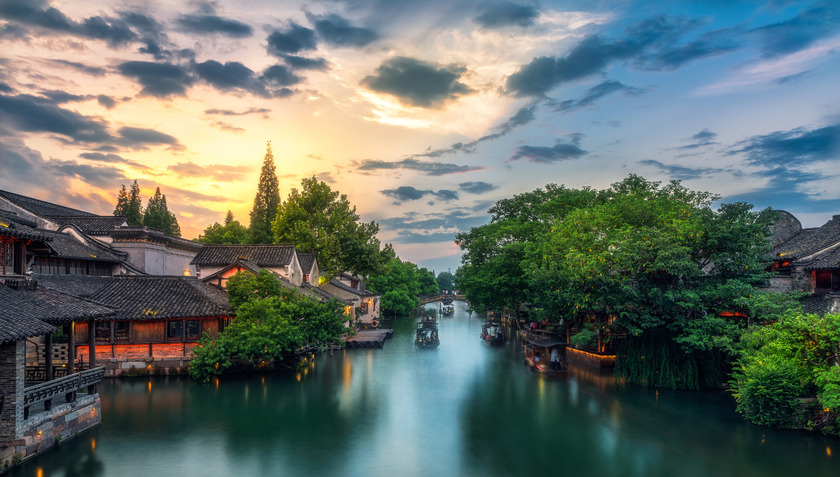
Wuzhen is one of the most beautiful ancient towns in China.
Wuzhen is an ancient town, built in 872, located in Tongxiang City, Jiaxing, Zhejiang Province, just south of the Yangtze River. This water town lies within the "Golden Triangle" of mainland China, between Zhejiang, Jiangsu, and Shanghai.

Over a thousand years ago, this charming canal was built to facilitate the trade of goods and culture between the eastern regions of China. Wuzhen, with its 1300-year history, is steeped in the many historical and cultural changes of China and proudly holds UNESCO World Heritage status.
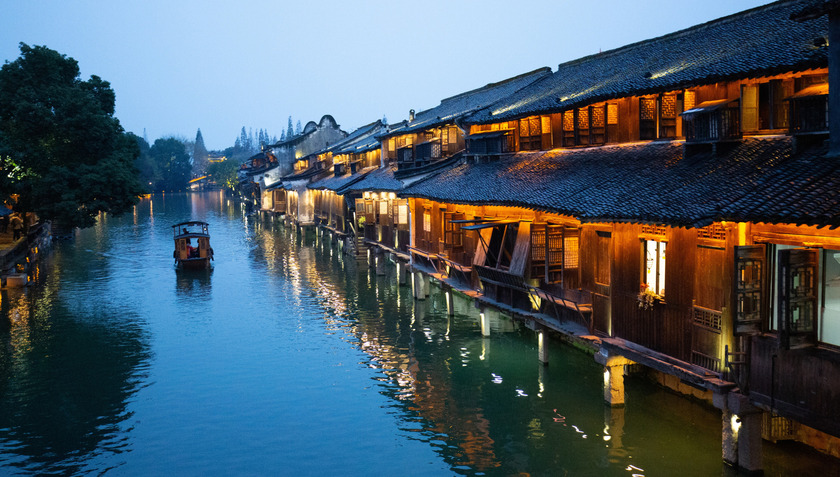
Wuzhen is one of the oldest ancient towns in mainland China.
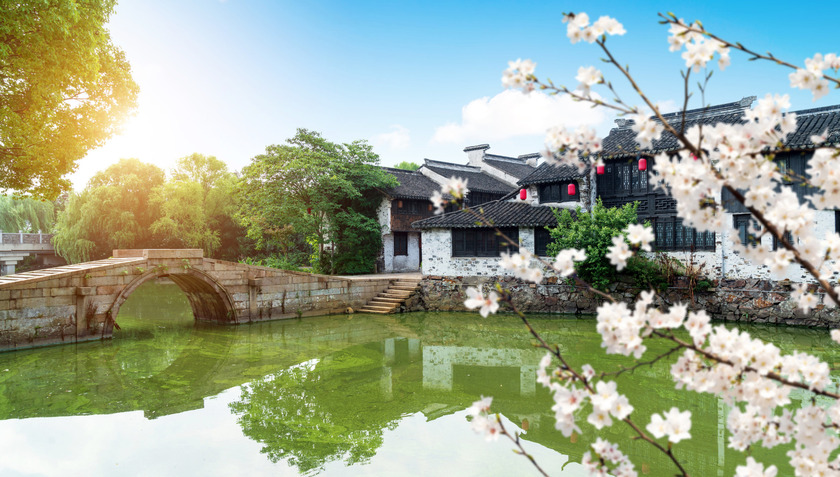
According to records, this ancient town began to form more than 7,000 years ago, during the Neolithic period.
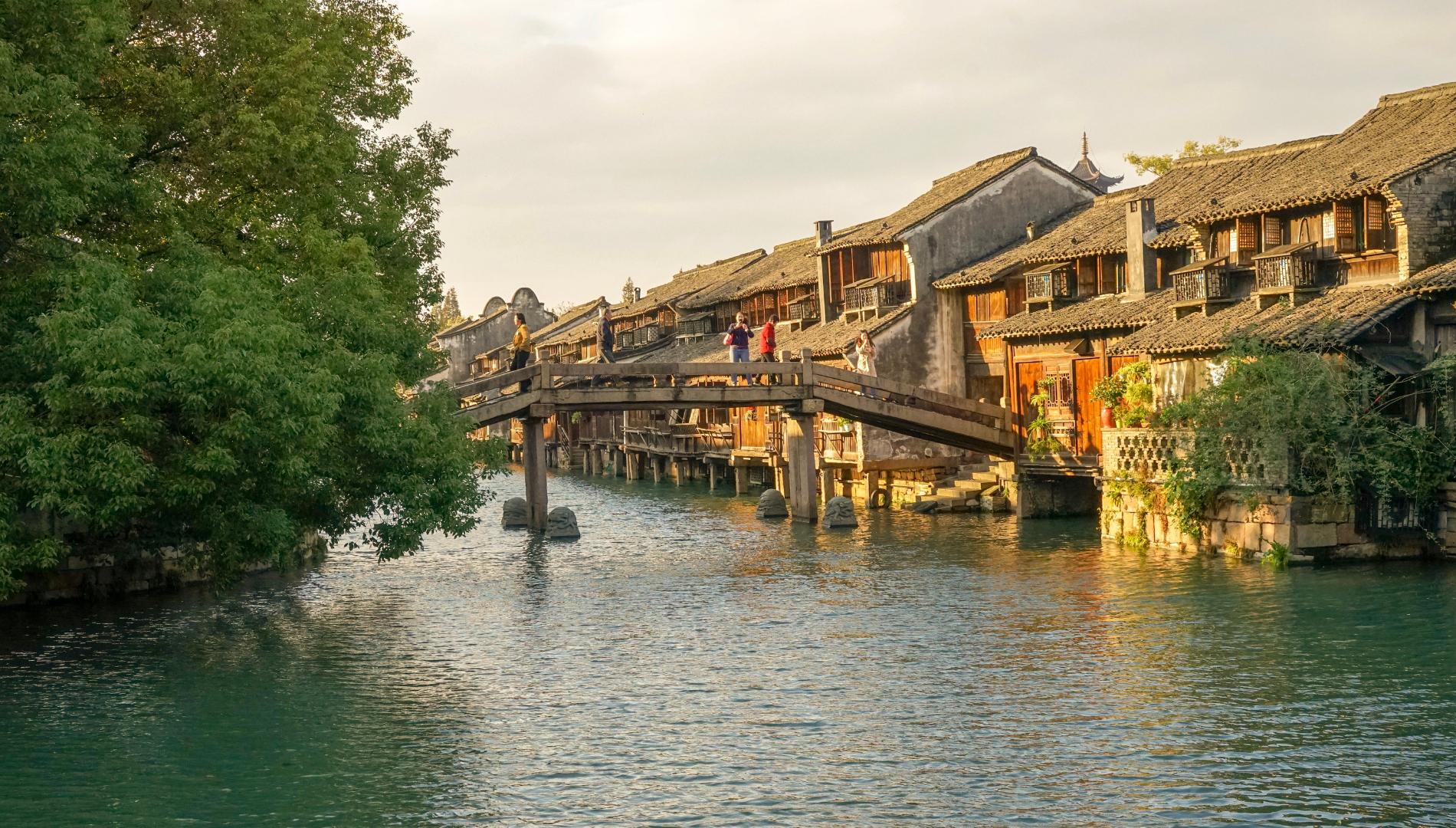
With a history spanning over a thousand years, Wuzhen in China stands out as a unique and unconventional highlight on the Chinese tourism map. This area lacks the dazzling neon lights that illuminate the streets day and night, the towering skyscrapers, and the bustling atmosphere of early mornings and late nights. Instead, Wuzhen offers only the winding green canals through its ancient town, with gracefully curved stone bridges spanning the banks, and a continuous line of traditional tiled-roof houses.
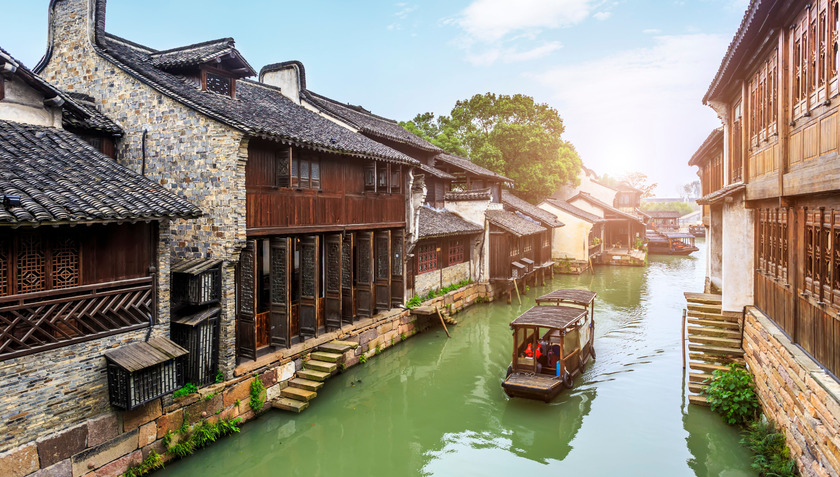
The town, covering an area of approximately 79 square kilometers, is known as the "land of fish and rice" or the "homeland of silk".
"The Venice of the East" is divided into two main areas: East Sach and West Sach, with the East Sach area being relatively larger and attracting more tourists. The total area stretches over 71 km.2With approximately 12,000 households living there, Wuzhen still retains the traditional customs and way of life of its local people. Therefore, Wuzhen is also chosen as the venue for international conferences such as the annual World Internet Conference, allowing countries to learn more about the rich cultural identity of this dreamy town.
The distinctive lifestyle of ancient Eastern civilizations
The profound philosophies of Confucianism are clearly evident in the architectural style and overall layout of the town, with its ancient stone bridges, cobblestone streets, and exquisitely carved wooden structures.
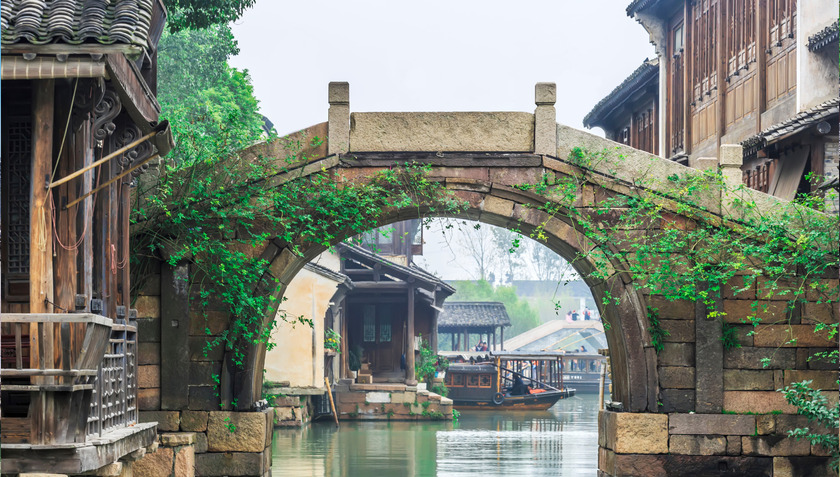
The East Gate is a prime example of the cultural identity of the Jiangnan region. It boasts countless ancient architectural structures, from museums and theaters to taverns and docks, all dating back hundreds of years.
It is even called a "living fossil of ancient Eastern civilization," highlighting the antiquity and cultural and historical importance of Wuzhen to future generations.
In the past, the banks of the intricate network of canals, besides residential areas, were also lined with factories and shops built in the style of ancient Chinese architecture. The architectural space and landscape were distinctly Jiangnan-style, preserving the ancient scenery of the late Qing Dynasty and early Republic of China. This included using the river surface as streets with nearly 100 stone bridges close together, houses built close together along the banks of the Han River, and wooden boats as the primary means of transportation. These time-worn architectural structures, blended harmoniously with nature, gave Wuzhen an irresistible, mystical charm.
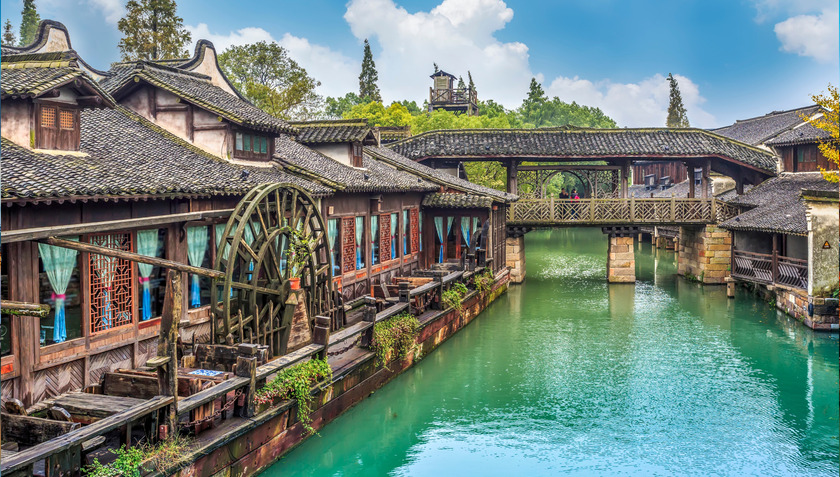
Strolling around the East Gate of Wuzhen, visitors will be immersed in a nostalgic atmosphere and have the opportunity to learn about folk culture and art.
Despite enduring thousands of years of ups and downs, the town has retained its ancient charm with its bridges, stone pillars, and intricately carved wooden windows. The houses and streets are arranged with a strong aesthetic and Confucian philosophy, characterized by "small bridges, flowing water, and human houses." From the main hall of each house, one can see the riverbank, a scene both picturesque and incredibly peaceful. Though not as luxurious or magnificent as the high-rise buildings, it is considered the soul of Wuzhen today.
Wandering through Wuzhen by the tranquil Yangtze River.
Taking a boat ride into Wuzhen, visitors will feel as if they have wandered into a fairyland with its picturesque scenery shrouded in a hazy mist. At different times of the day, Wuzhen presents different scenes. During the day, Wuzhen is gentle and demure, hidden in the ethereal mist. At night, this ancient town takes on a sparkling and radiant beauty, illuminated by the lights in each small house, reflecting brightly on the clear water.
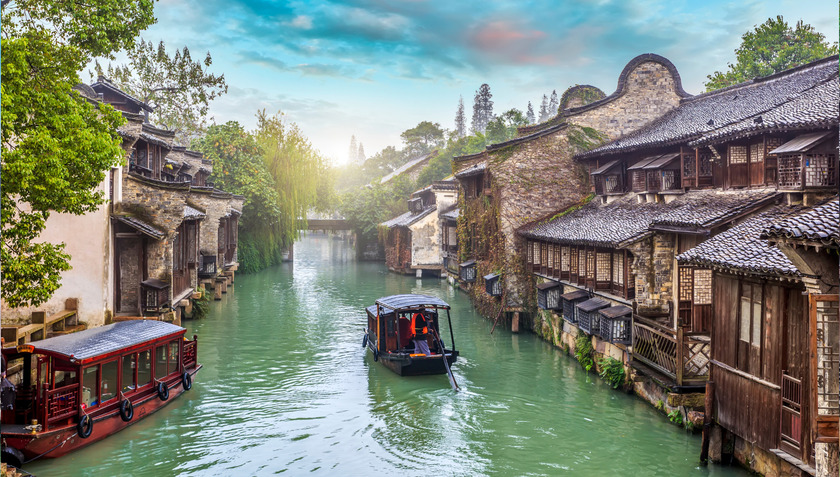
Taking a boat ride along the canals is an activity worth trying when visiting Wuzhen.
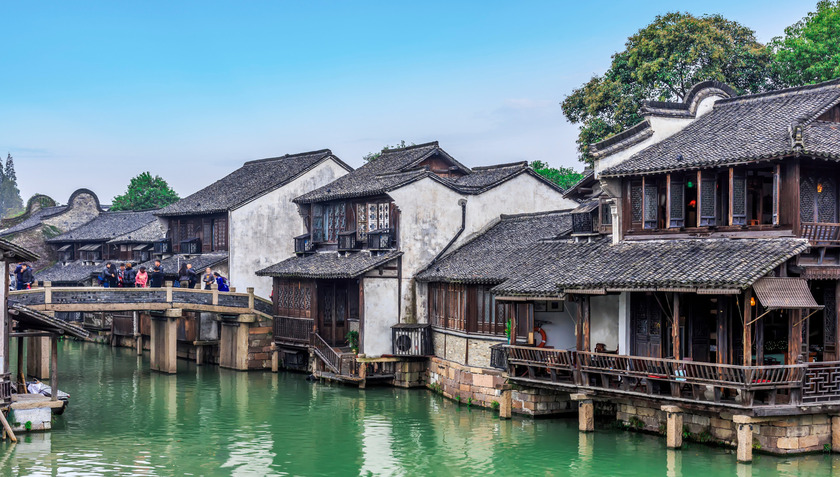
Drifting along the clear blue water, you feel as if you've been transported to ancient China, with its centuries-old houses, bridges, and stone pillars.
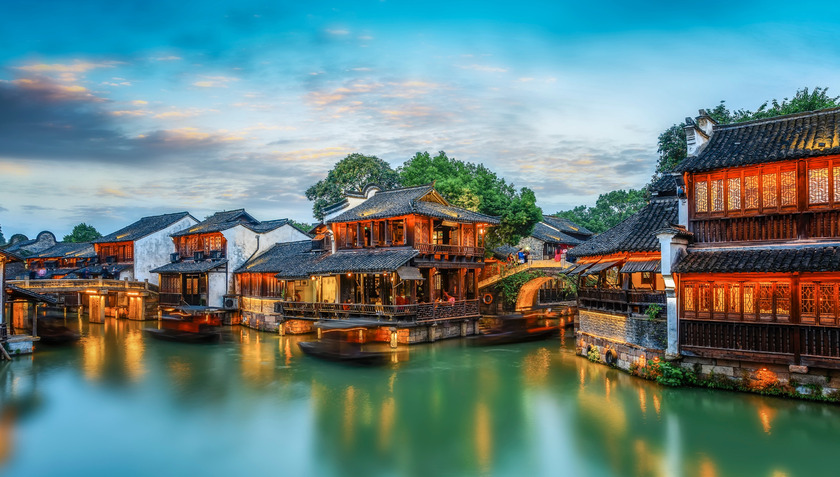
Although not extravagant or magnificent, it is captivating enough to make visitors want to gaze at it endlessly.
All transportation here is by small boats. Just sit by the window, then call a boat carrying goods over and buy fresh fruits and vegetables without having to go anywhere. The river blends with the town, boats alongside houses, creating a wonderful harmony between nature and daily life and commerce. It would be wonderful to enjoy a cup of tea or coffee while listening to the melodious sound of the zither or drifting along the water in a small boat, weaving through the town to feel the peaceful beauty of this place. It's also a way for you to relive the atmosphere of bygone years.