
 VI
VI


Recently, the prestigious New York Times officially included Vietnam in its list of "52 Places to Go in 2026," affirming that Vietnam is emerging as a new tourism powerhouse in Southeast Asia. It's clear that Vietnam is no longer relying solely on its natural beauty but has learned to create world-class attractions to draw affluent travelers from around the globe.

Accordingly, throughout 2025, the graph of international visitor numbers to Vietnam consistently maintained a green trend of stable growth month after month. While January started off enthusiastically with approximately 1.4 million visitors, by the peak period at the end of the year, such as November and December, this number approached and exceeded 2.2 million visitors each month. Total tourism revenue for the first time in history surpassed 1 trillion VND, a record figure affirming the pivotal role of the green economy in the national GDP structure. Vietnam has now risen to the group of countries with the fastest tourism growth rates in the world.

The New York Times' recognition is proof that Vietnam is no longer a "diamond in the rough" but will become a leading tourism powerhouse in Southeast Asia by 2026.
The biggest bottleneck for the tourism industry, transportation infrastructure, is being addressed through major projects. The most anticipated event in 2026 is the completion of phase one of Long Thanh International Airport in June. This is not just a construction project, but a strategic gateway connecting Vietnam with the global flow of trade and tourism.

The strategic "gateway" is expected to complete phase 1 in June 2026, ready to position Vietnam as a focal point on the regional aviation map.
With a projected capacity of up to 100 million passengers per year upon completion of all phases, Long Thanh will surpass major transit hubs in the region, laying a solid foundation for the goal of making Vietnam a focal point on the international aviation map. Images of the first test flights landing on the runway at the end of 2025 have ignited confidence in an era of unlimited connectivity.

Furthermore, the face of Vietnamese tourism is being revitalized by the influx of high-end services and luxury resorts. In tourism hubs like Phu Quoc, Da Nang, and Hanoi, world-renowned hotel brands are continuously opening new establishments, offering deeply personalized experiences for travelers.
For example, in Phu Quoc, where Western tourists are flocking in droves during the final days of 2025, the image of the Hon Thom cable car – the world's longest three-wire cable car with a length of nearly 8 km – has become a new symbol of systematic investment. Sitting in the cabin and admiring the panoramic view of the southern sea and sky of the island, tourists not only see the beauty of nature but also the stature of the intellect and creativity of the Vietnamese people.

The "Essence of Vietnam" live performance show in Phu Quoc.
Another key factor contributing to the appeal of this "rising power" is its flexible and open-door policy. The government has continuously eased visa policies, expanded the list of visa-exempt countries, and extended the length of stay for international visitors. Simplifying entry procedures is not just a technical measure, but a strong message about a hospitable Vietnam, ready to welcome friends from all over the world.
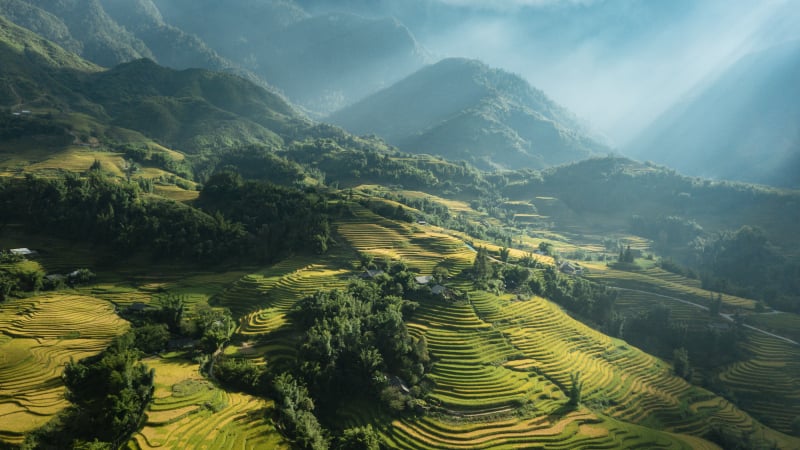
With the removal of administrative barriers, Vietnam naturally became a preferred choice in the travel plans of discerning travelers, especially high-spending groups from Europe and North America. What helps Vietnam retain tourists is its cultural depth and unique national identity. The New York Times has used many flattering words to describe its rich culinary traditions and diverse natural landscapes, from the majestic high mountains of the North and tropical rainforests to the long stretches of white sandy beaches.

Culture – a "sharp weapon" that helps Vietnam maintain its position as a tourism powerhouse and attract large groups of tourists.

In the era of sustainable tourism, Vietnam is skillfully integrating its millennia-old history into modern tourism products. Visitors come here not only for relaxation but also to experience a lifestyle and learn about the heritage values that have been preserved intact amidst contemporary life.
Entering a new phase, Vietnam's tourism industry has undergone a clear shift in direction: from focusing on quantity to concentrating on quality, professionalism, and sustainability. The goal of making tourism a truly leading economic sector is no longer a distant slogan but is gradually becoming a reality through each product and each groundbreaking support policy. Recognition from international organizations and major news agencies like the New York Times serves as a springboard for Vietnam's national brand to soar even higher.

The unique features of the "squatting" market in Can Tho.












