VI
VI


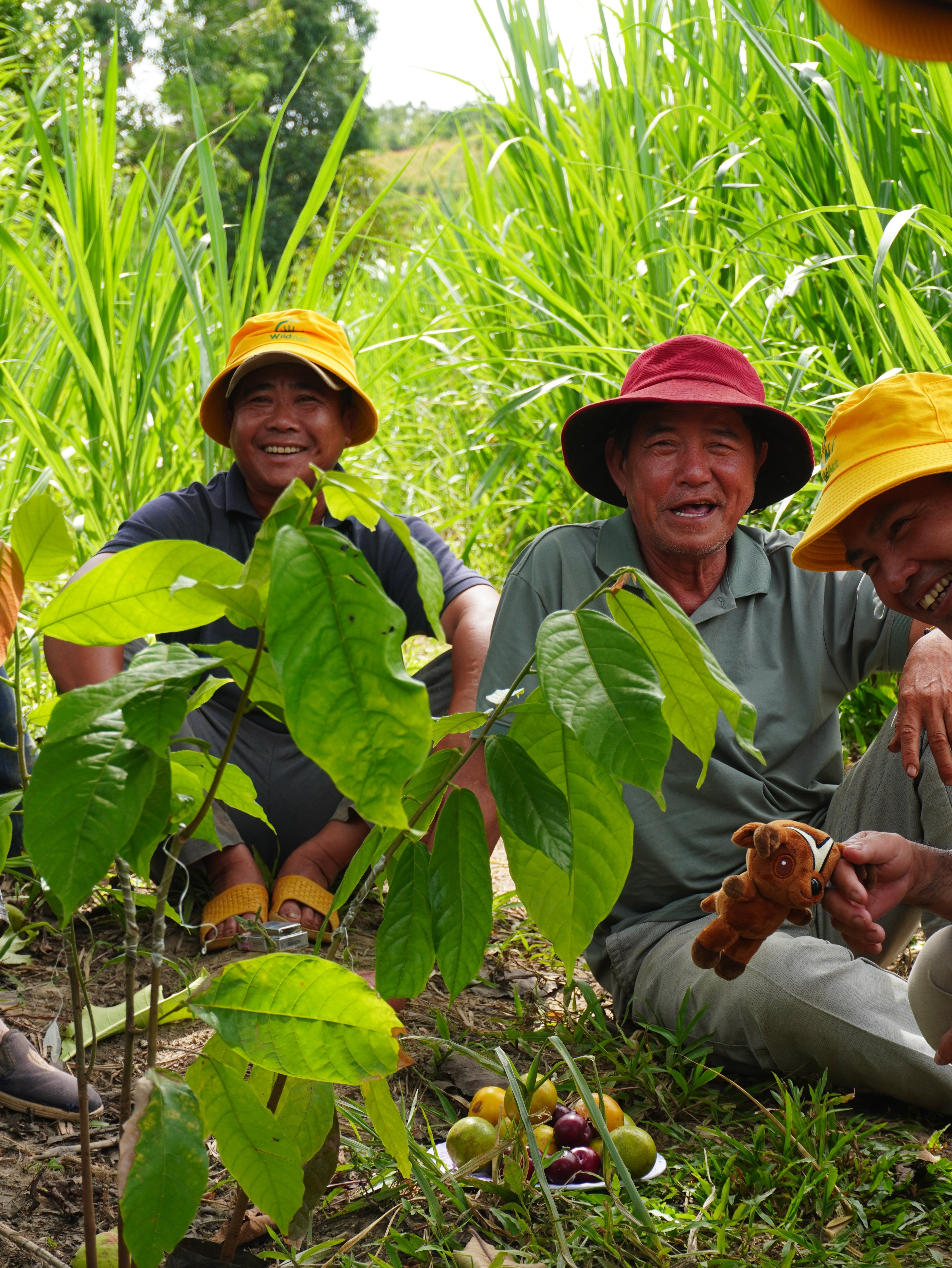
This is an economically disadvantaged area of Dak Lak province, with some communes having poverty rates as high as 39%. To make a living, many people are forced to rely on the unsustainable exploitation of forest resources, simply because they lack sustainable livelihood options.
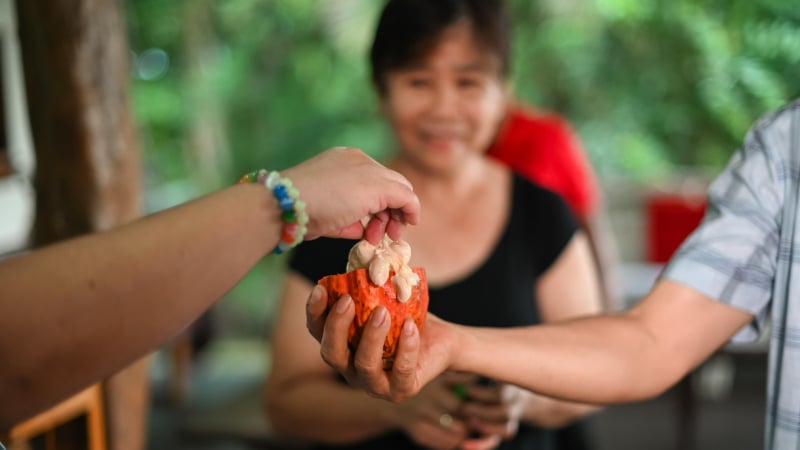
The poor soil conditions and arid conditions make it difficult for people to cultivate high-value agricultural crops or fruit trees. Meanwhile, long-term forestry species, although suitable for the natural conditions, require many years to generate income and cannot meet the immediate livelihood needs of households.
To help address this situation, WildAct has chosen cocoa as a suitable livelihood solution in an agroforestry model, planting cocoa interspersed with native tree species. Cocoa trees bring high economic value, helping to create stable income for local people, diversify agriculture, protect land, and at the same time reduce pressure on forest resources, increase forest cover, improve soil quality, and support landscape restoration in the buffer zone.
This activity aligns with the long-term vision of developing cocoa as a strategic crop in the green agricultural restructuring in Dak Lak.
Cocoa is well-suited to the natural conditions of Chu Yang Sin due to its ability to adapt to relatively arid soil. Furthermore, thanks to its shade-loving nature, cocoa can be intercropped under the canopy of native trees, creating a multi-layered farming system that closely resembles the natural structure of the forest. The fallen leaves from the cocoa trees and shade trees also help retain moisture, add organic matter, and improve soil fertility.

Economically, Vietnamese cocoa beans are recognized by the International Cocoa Organization (ICCO) as belonging to the world's best-tasting group; consequently, the chocolate industry in Vietnam is experiencing impressive growth. If cultivated and processed according to appropriate standards, cocoa in Chu Yang Sin will certainly have a stable market, contributing to increased income and improved livelihoods for the local community.
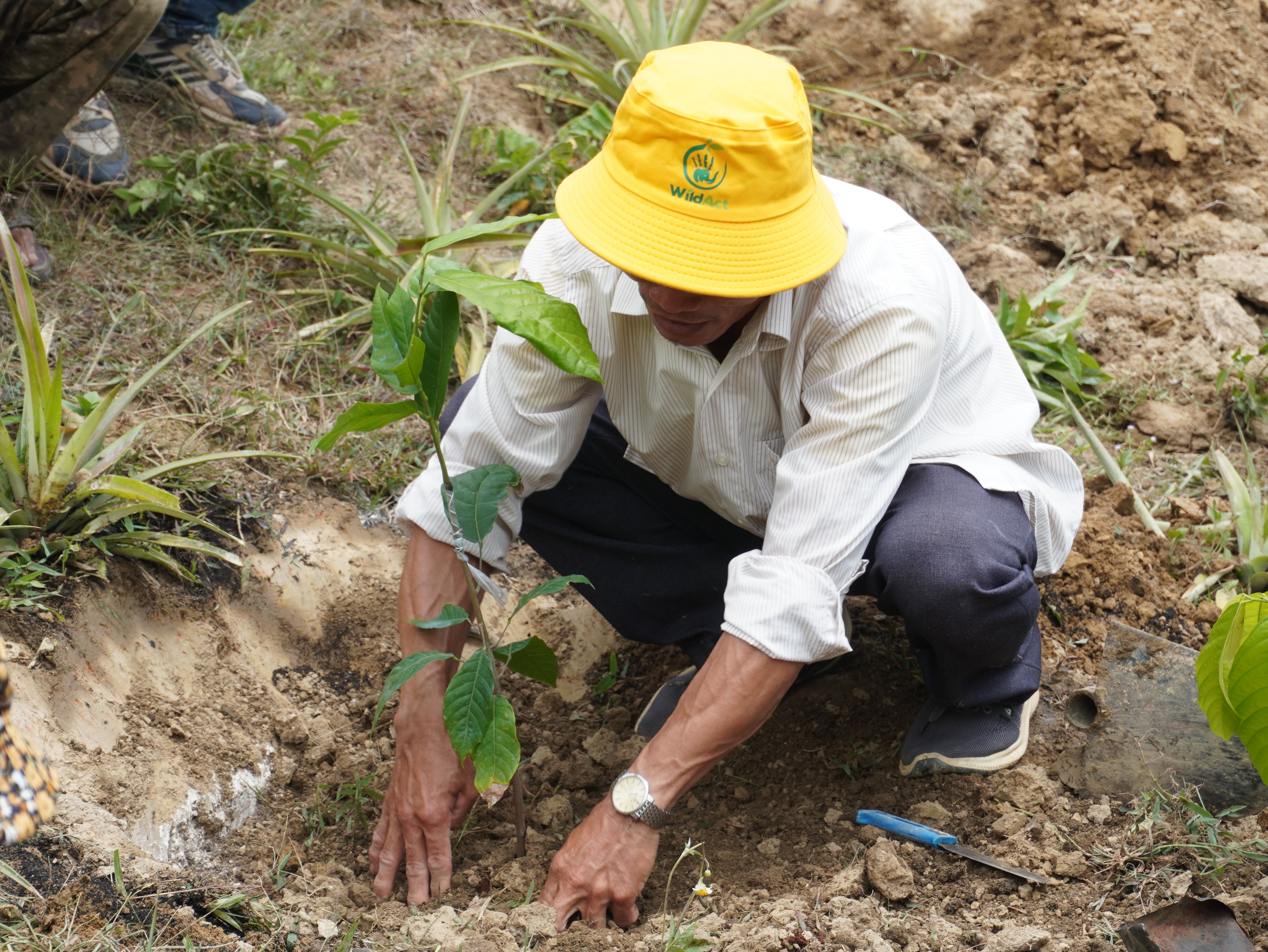
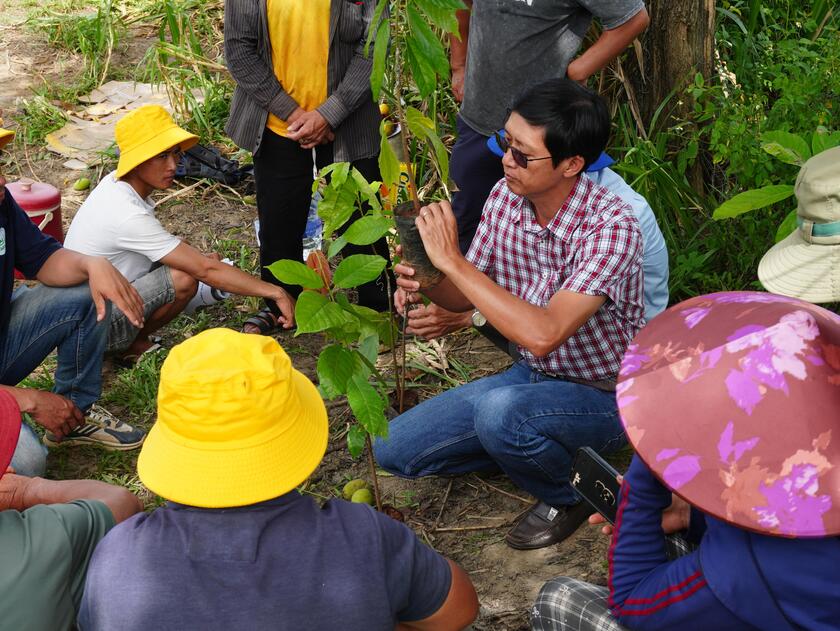
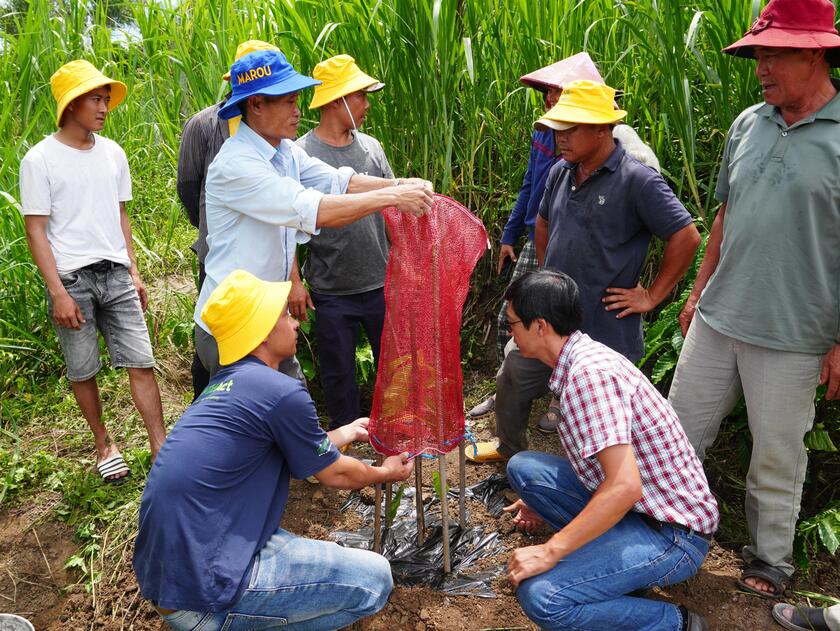
WildAct also collaborated with agricultural engineers to organize cocoa cultivation training in the two communes of Cu Pui and Krong Bong for nearly 20 households, more than half of whom are Ede people. The training sessions combined theory and practice, helping people master techniques for selecting varieties, preparing the soil, planting, and caring for cocoa trees in a sustainable manner.
Under the direct guidance of agricultural engineers, households practiced digging holes, planting trees, and handling real-life situations on-site, equipping them with knowledge for future tree planting and care. The activity also provided an opportunity for people to exchange experiences and learn about the potential for developing an agroforestry model in the locality.
Following the event, WildAct plans to distribute 4,400 free cocoa seedlings, increasing the coverage of 4.3 hectares of existing farmland and ensuring livelihoods for local households.
“The people in this area mainly live off rice farming and some forest tree cultivation, while others still rely on forest activities. If this model is replicated, it will help the people here earn more income, eliminating the need for deforestation or hunting. Successful cocoa cultivation will both boost the economy and help reforest the area. I am also calling on more people to participate in the program, possibly even from neighboring localities,” shared Mr. Nguyen Van Tu, one of the households in Krong Bong commune participating in the program.
Dr. Trang Nguyen, founder of WildAct, stated: “The cocoa planting project is one of the activities WildAct implements to improve sustainable livelihoods for indigenous people, thereby helping them reduce their dependence on forest resource exploitation. 100% of households participating in projects such as cocoa planting, the Community Fund, and career transition from hunters to forest patrols – have voluntarily committed to protecting Chu Yang Sin National Park alongside WildAct and relevant authorities. Nearly 1,000 households have gained more stable incomes, contributing to the protection of over 60,000 hectares of core forest for many years – and we hope this number will continue to grow in the future.”
With support from the local authorities and Chu Yang Sin National Park, WildAct will implement more similar projects, building more sustainable nature conservation models based on the strength of the local community.
WildAct is a non-profit organization working in the field of nature conservation in Vietnam. The organization focuses on community-based conservation activities, strengthening the capacity of wildlife law enforcement, research, and promoting community participation in biodiversity conservation.