VI
VI


The Thai Xoe dance art dossier was inscribed alongside 35 other dossiers worldwide. This is Vietnam's 14th intangible cultural heritage recognized by UNESCO, alongside other art forms such as Quan Ho folk singing from Bac Ninh, Central Highlands gong music, and Southern Vietnamese folk music.

The moment when Vietnam's Thai Xoe dance art was officially inscribed by UNESCO on the list of representative intangible cultural heritage of humanity at the Ministry of Culture, Sports and Tourism in Hanoi. - Photo: VNA/Thanh Tung
In Thai, "xoe" means dance, and it is often performed in ceremonies, weddings, festivals, and other community cultural activities. Besides dancing, Thai xoe performances are also accompanied by music, with melodies played on traditional instruments such as the tinh tau, ken loa, khèn bè, drums, and gongs.

The main participants in the Thai Xoe dance are the Thai ethnic community living primarily in the mountainous regions of Northwest Vietnam, regardless of age, gender, or occupation. Xoe is popular in four provinces: Yen Bai, Lai Chau, Son La, and Dien Bien. Different Thai communities share responsibility and play different roles in organizing and performing the Xoe dance.
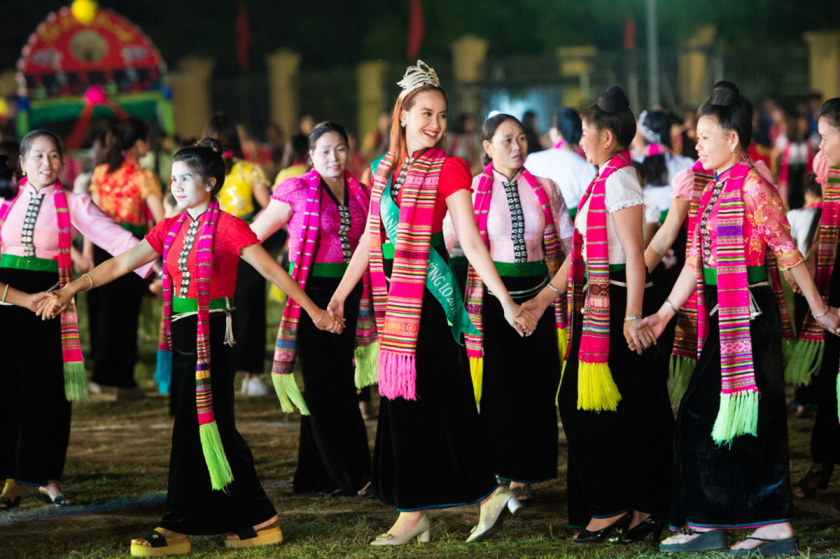
In 2013, the Thai Xoe dance was recognized by the Ministry of Culture, Sports and Tourism as a National Intangible Cultural Heritage. - Photo: Internet
Through this commemorative event, the art of Thai Xoe dance will be preserved and its value promoted more effectively in the cultural life of the Thai community in Vietnam, enhancing the pride of the local government and people in their traditional values, and contributing to affirming the diversity, value, and identity of Vietnamese culture within the broader cultural landscape of humanity.
According to the Vietnam National UNESCO Committee, the inscription of Thai Xoe dance as a Representative Intangible Cultural Heritage of Humanity affirms the international appreciation for Vietnam's cultural values, strengthens Vietnam's presence on the world's intangible cultural heritage map, and contributes to promoting the goals of conservation and development of UNESCO's heritage values.