
 VI
VI


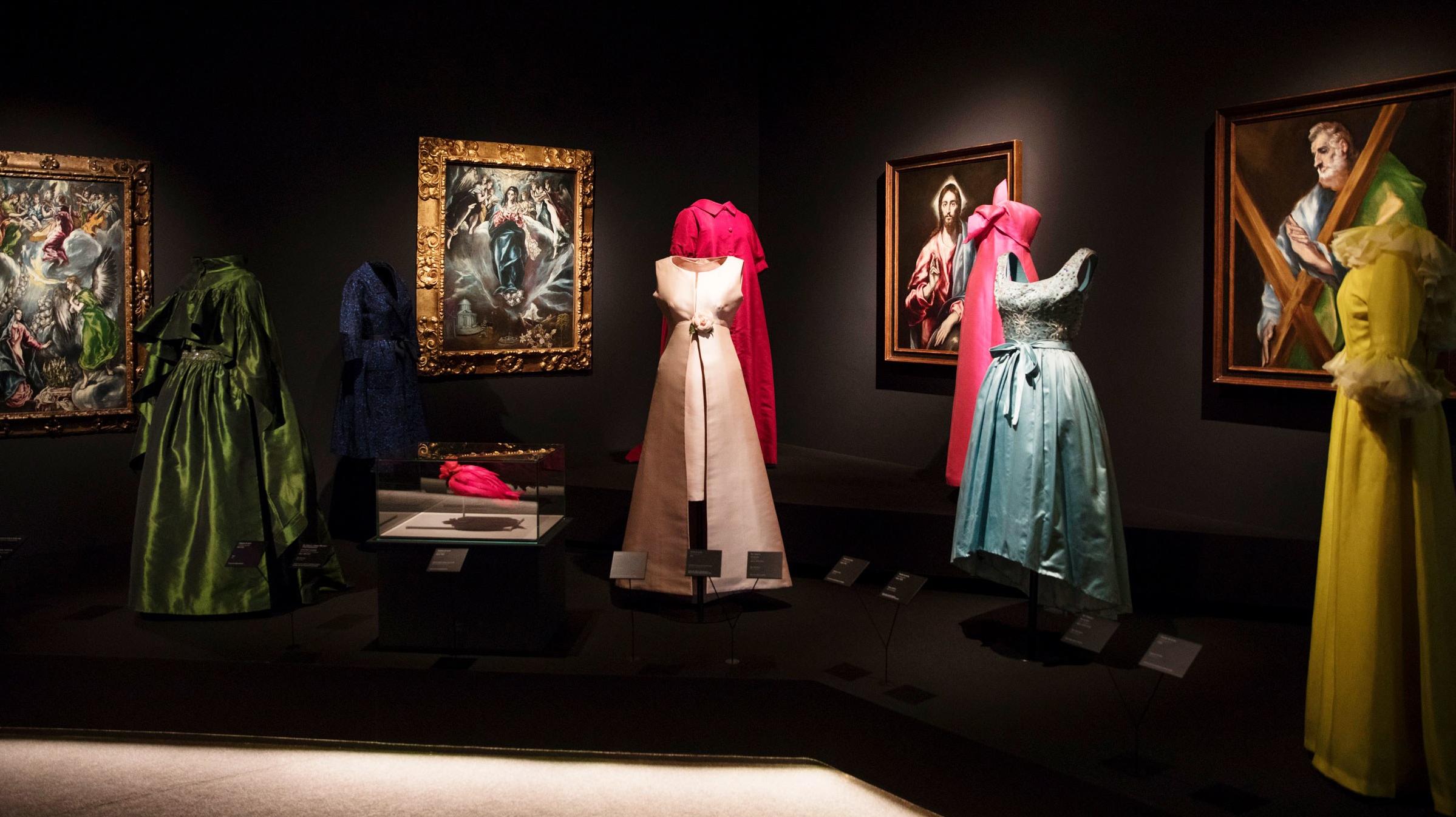
The Thyssen-Bornemisza National Museum (Thyssen for short) is an art museum in Madrid, Spain, located on one of the city's main avenues. Thyssen is one of the three largest museums in Madrid and is part of the city's famous "Golden Triangle."
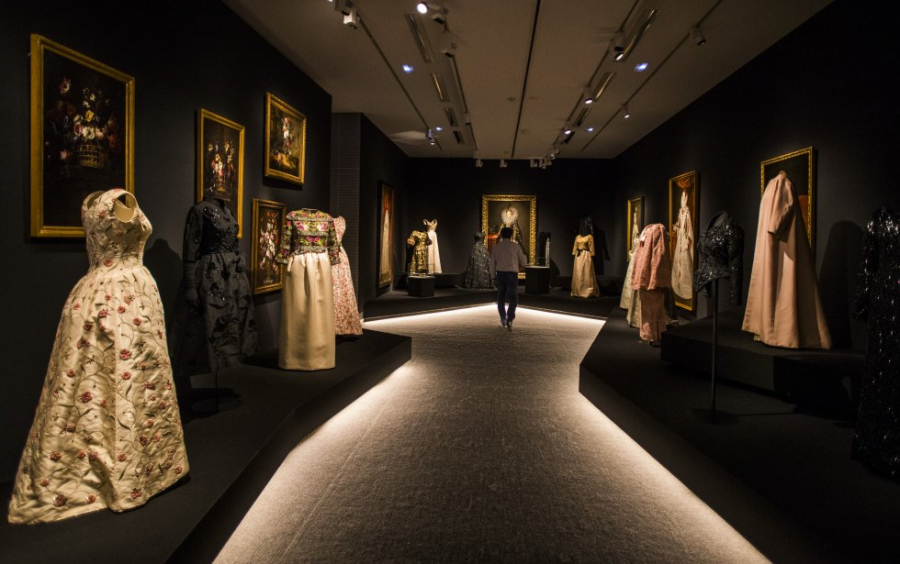
A corner of the exhibition "Balenciaga and Spanish Painting"
The magnificent exhibition "Balenciaga and Spanish Painting" at the Thyssen Museum officially opened on June 18th and will run until September 22nd. It showcases countless creative masterpieces by Cristóbal Balenciaga – works through which he seems to have created a vibrant conversation between fashion and painting.
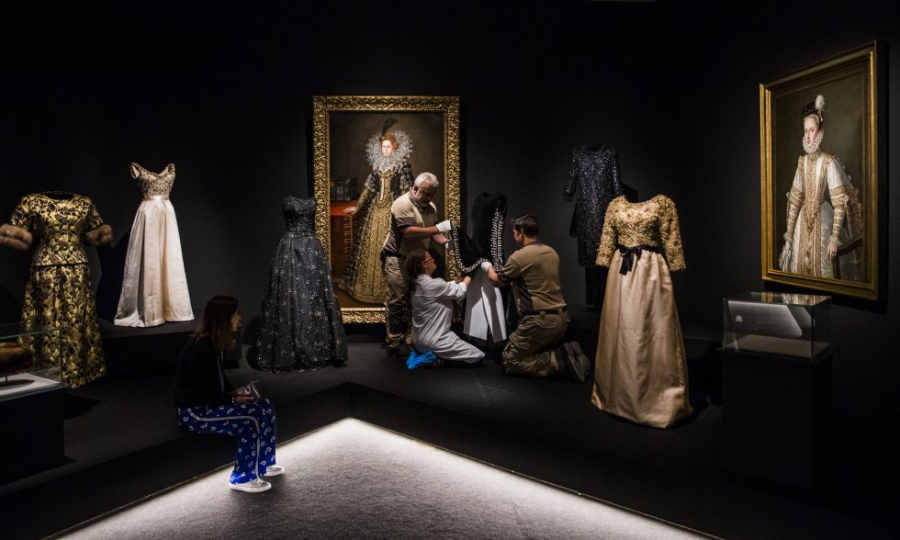
Final adjustments in preparation for the exhibition "Balenciaga and Spanish Painting"
When people mention Cristóbal Balenciaga, they always talk about designs that broke all the rules with unconventional cuts and tailoring that were ahead of their time. He created a new definition of form in women's fashion in the 1950s, eliminating boring silhouettes with historically significant innovations.
Cristóbal's tailoring is legendary, and his influence from sculpture and architecture has given him a distinctive way of thinking. This is clearly evident in his exquisite cuts, versatility, and superb proportions. It is said that any woman who wears a suit tailored by Cristóbal is unlikely to be satisfied by any other tailor.
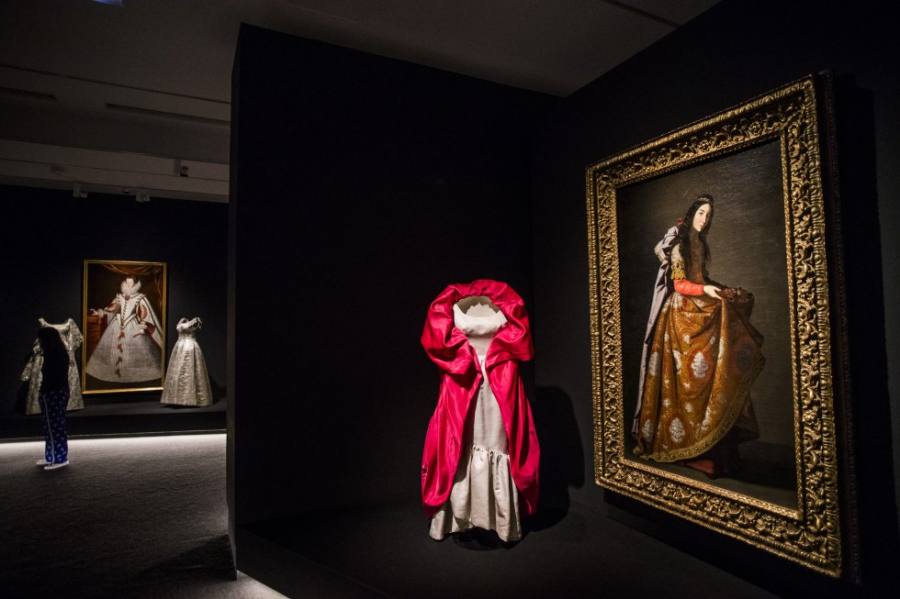
The painting "Santa Casilda," a saint in the series of paintings by artist Zurbarán, and the inspired outfit by Balenciaga.
This brilliant fashion designer has often drawn inspiration from Spanish paintings to create his garments. So, exactly how have Spanish art influenced Balenciaga's designs?

In 1936, at the age of 41, Cristóbal Balenciaga embarked on a pivotal journey: leaving Spain for Paris to pursue his career. Living amidst the glitz and glamour of the City of Lights, Balenciaga deeply missed his homeland.
Amidst the outbreak of the Spanish Civil War, Balenciaga abruptly changed the course of his career in his middle age and plunged into the throes of European haute couture. He sought inspiration by delving into his childhood memories of the small town of Getaria on the Basque coast – where he spent much of his time at his mother's company (she was a seamstress), and serving her aristocratic clients.
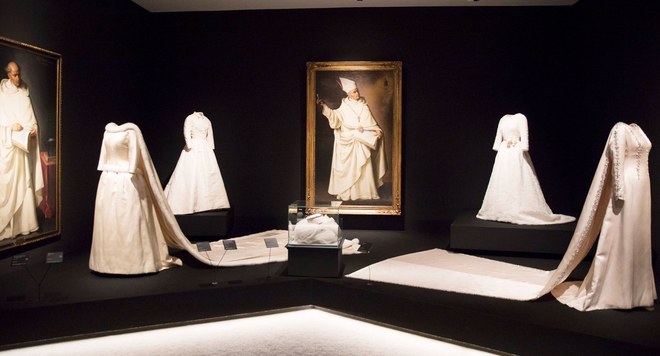
The wedding dress of Doña Fabiola de Mora and Aragón in 1960 (far left) and the wedding dress of María del Carmen Martínez-Bordiú and Franco (far right).
Spanish painting has always been magnificent and philosophical; remembering one's homeland means remembering its artistic heritage. With his exceptional talent and craftsmanship, Balenciaga has elevated fashion in a remarkable way by reinterpreting works of art in his most iconic clothing collections.
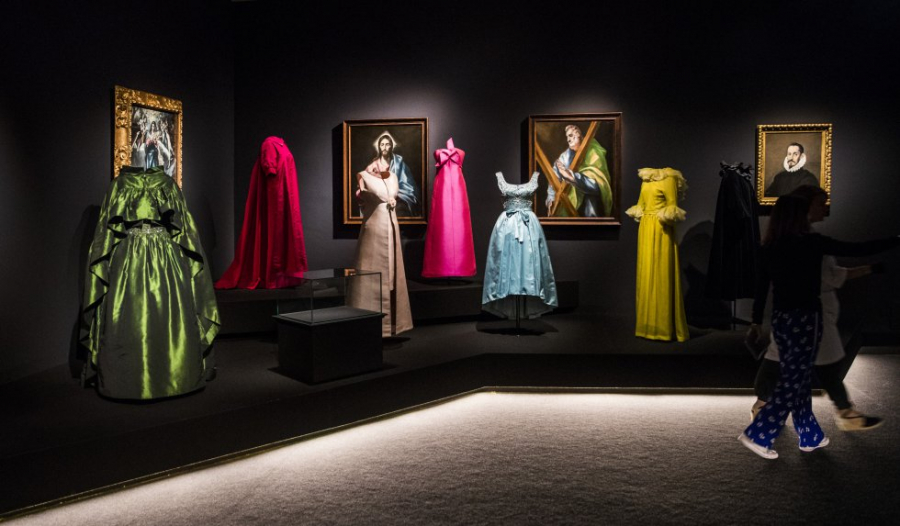
Some of Balenciaga's outfits are inspired by artwork displayed at the Thyssen Museum.
The influence of Spanish painting and culture is consistently present in Balenciaga's works. The simple, minimalist lines, under the influence of religion and architectural style, can be found in many of his designs: the layered folds like rolling waves in a Falmenco dancer's dress, the pleated lace details on some outfits, the shimmering reflections on a bullfighter's suit, the dazzling sequin embroidery on a Bolero jacket, or the aesthetic of Habsburg court attire, frequently seen in black velvet garments embellished with elegant black trim…
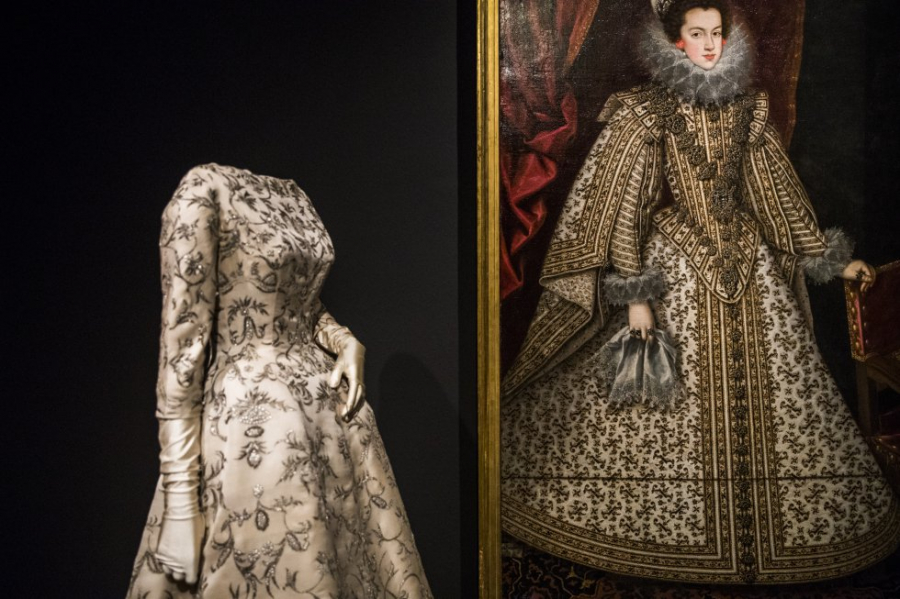
The oil painting "Isabel de Borbón, wife of Felipe IV," painted by Rodrigo de Villandrado (1620), along with the wedding dress inspired and designed by Balenciaga in 1957.
The Basque designer has constantly studied the history of painting, and it must be said that he knows how to make the most of what he has learned. This is clearly demonstrated in his strong and unique style throughout his career – even during his most liberal periods – reviving historical garments and presenting them in a remarkably modern way. Many of his designs bear the mark of great painters such as Zubarán, Velázquez, Goya, Zuloaga, and Picasso.
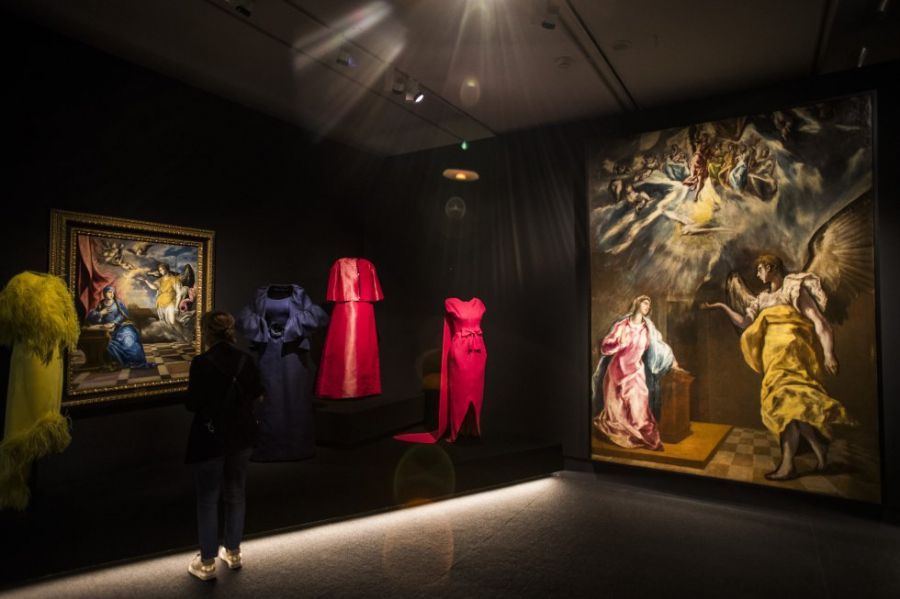
The exhibition also showcases a group of other important creative works by Balenciaga, some of which have never even been previously exhibited. These pieces are borrowed from a number of national and international museums, including the Balenciaga Museum in Guetaria, the Traje Museum in Madrid, other international institutions, and private collections.
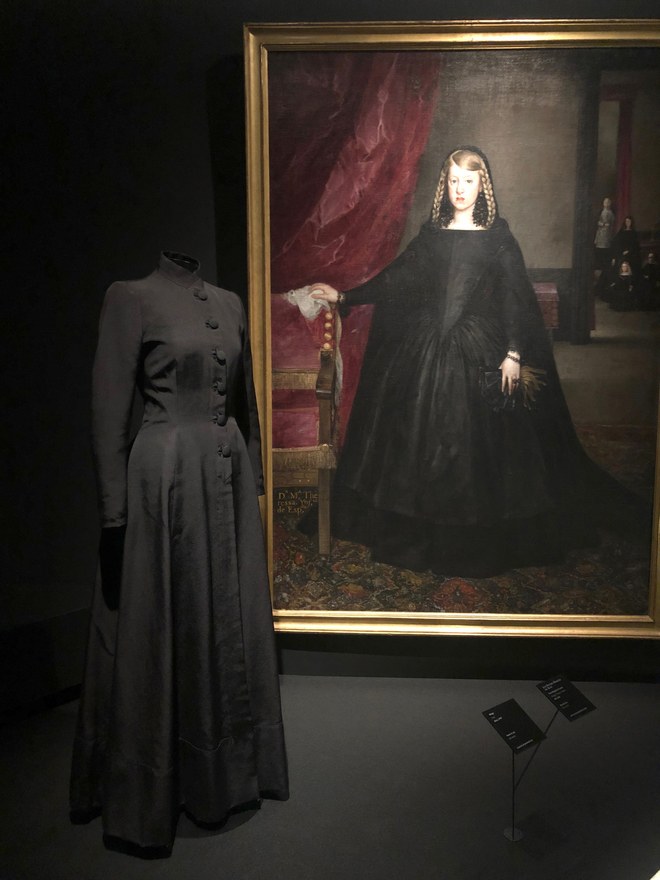
The painting "Margaret Theresa of Austria" was painted by Juan Bautista Martinez del Mazo in 1665-1666, and the wool coat was designed by Balenciaga in 1939.
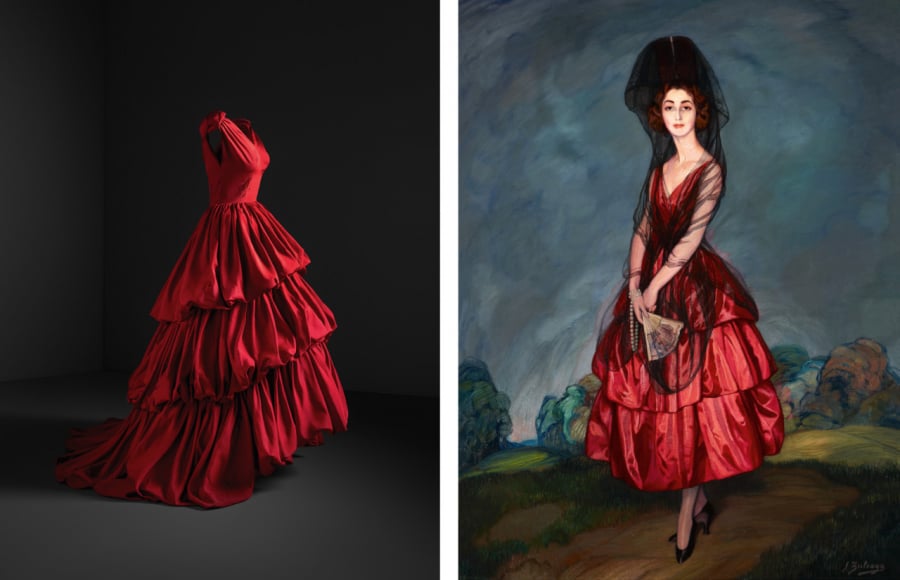
Another work that Balenciaga drew design inspiration from.
“Balenciaga and Spanish Painting” is a rare opportunity, not only to admire the outstanding masterpieces of the design master, but also to appreciate a glimpse of Spanish painting art, as they are arranged in such an impressive way, creating a truly breathtaking combination.
INFORMATION ABOUT THE EXHIBITION
Exhibition title: Balenciaga y la pintura Española (Balenciaga and Spanish painting)
Time: From June 18th to September 22nd
Location: Thyssen-Bornemisza Museum, Paseo del Prado, 8, 28014 Madrid, Spain
For more information, please visit: https://www.museothyssen.org/




.jpg.jpg)


TravelliveMagazine.jpg.jpg)


.jpg.jpg)


.jpg.jpg)






