Discussing the "price" of tens of millions of Vietnamese dong for Nam Nguyen's books.
18/02/2022
You may or may not know about Nam Nguyen, but he has – and continues to be – a record-breaker: selling Vietnamese language books at cover prices of tens of millions of dong – without any advertising or PR. Is it really true that the "price" of words can be that high?
Books worth tens of millions
A few months ago, in a story, a lawyer boasted that his book had sold several thousand copies, and another author had sold over 10,000 copies (each book priced at nearly 200,000 VND). I consider that a success, because the Vietnamese population is less than 100 million and the Vietnamese language is spoken very little in the world (translating it into English to reach a wider audience is a completely different matter).
After listening, the lawyer said, "So you haven't heard of Nam Nguyen's book: 'Eastern European Heroes' Stories'." Buyers have to register in advance and wait quite a while to receive the book; a set of three books costs 10 million dong. The author only sells the book through his personal Facebook page and doesn't announce any book launch events. Most buyers are between 35 and 45 years old. The book is about "real people, real events; they are 'heroes' returning from Eastern Europe, who have achieved success; along with stories related to sensational business deals or the formation of famous enterprises…".
However, those who haven't lived in Eastern Europe buy more than those who have, people from the South buy more than those from the North, and women buy more than men. The books are packed with information; you can read any page, any character. Many people read them over and over again. The writing style is unlike anyone else's, not flowery at all, just natural like life, as lively as Facebook's "writing," allowing readers to understand the story in the most direct way, interspersed with witty language that isn't vulgar... The author of the book series is Nam Nguyen, and he advises that if you buy the book and don't like it, you have the right to return it. The book is heavily pirated, but the author is also willing to buy back pirated copies at the correct price if the seller wants to buy the original.
Hearing the lawyer's words, I immediately thought of advertising. This lawyer was promoting Nam Nguyen. But after just a minute, the lawyer opened Nam Nguyen's Facebook page for me to see. I saw a bank receipt showing the successful auction price for the book set – 69 million VND. Of course, auction purchases sometimes inflate the value of goods beyond their true value, and vice versa. But there's no denying the quality of the three books.Eastern European Heroes' Tale(A Vietnamese) is the best-selling book of the past year. It's not only sold in Vietnam but also in many other countries such as Germany, Russia, the UK, Australia, the Czech Republic, the US, Poland, South Korea, Finland… Perhaps, wherever there are Vietnamese people living abroad, this book is their friend, sharing and empathizing with them the most.
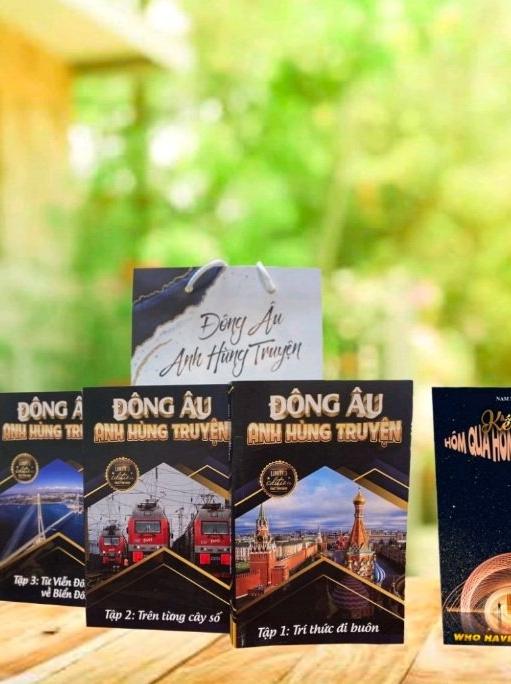
The three-volume set "Eastern European Heroes' Tales".
What's inside that book worth tens of millions?
Surprise and curiosity compelled me to investigate the truth. I knew that to write a book of hundreds of thousands of words, where each word has the potential to be bought, read, remembered, and even change one's life, the author must possess not only writing talent but also a remarkable life experience, a wealth of life experiences, and the ability to face death countless times. Therefore, a price tag of hundreds of millions of Vietnamese dong isn't expensive. The proof is that world-renowned authors are incredibly wealthy because they write in languages with billions of readers; while the Vietnamese language and its readership are vastly smaller. Even the most successful Vietnamese writers, despite their publishing success, often remain poor…
"A HAT," as its name suggests, is about the land and people of Vietnam who once lived there. Near-death experiences in gang wars, horrific lessons learned, sweat and tears, bruises and losses, fear and debt… The heroes we see today, respected and feared, once skipped school, engaged in smuggling, forged documents, bribed officials, engaged in reckless behavior, and vied for influence… all in Europe. But they overcame all of that as if it were inevitable, reaching their self-imposed goals with a resilience that even surprised themselves. Perhaps the author ofEastern European Heroes' TaleEven those who witnessed their characters firsthand sometimes wonder why Vietnamese people, one by one, are so talented and intelligent abroad, yet when they return to their homeland...
In *DA AHT*, there are stories of the mafia world, where the words of a robber carry more weight than a politician's promise. A single entry in a debt ledger is worth more than a bank loan agreement. Just try defaulting on your debt and see what happens…
In short, the book is about stories that happened in the West that everyone there knows, but no one has yet written about them in such detail and vividly as to be the most comprehensive. It includes real characters, not fictional ones, and although their names aren't fully revealed, everyone knows who they are.
Many people have used this technique, but why is AHT different and so well-received by readers?
Five reasons
In my opinion, the following reasons may apply:
1. The author is not affiliated with any organizations that have lost much of their prestige.
2. The author doesn't write about things he doesn't know.
3. The author uses everyday, vivid language that conveys the content most concisely, without forcing the reader to go around with "superfluous" words.
4. An unprecedented sales approach: Understand the buyer, sell only to those who want to buy. Sell what the buyer needs, not what the seller has. Willing to buy back what the buyer is dissatisfied with, even if the buyer has already enjoyed the value of the goods (after reading). In other words, the author has a high degree of confidence in the value of his goods.
In addition, the author also receives a deposit before writing. Once the book is finished, if the depositor is not satisfied, the deposit will be returned (and the author believes that any unsold copies will sell for a higher price than the original).
5. The book does not bear the label of any publishing house, to ensure that it has not been edited or abridged.
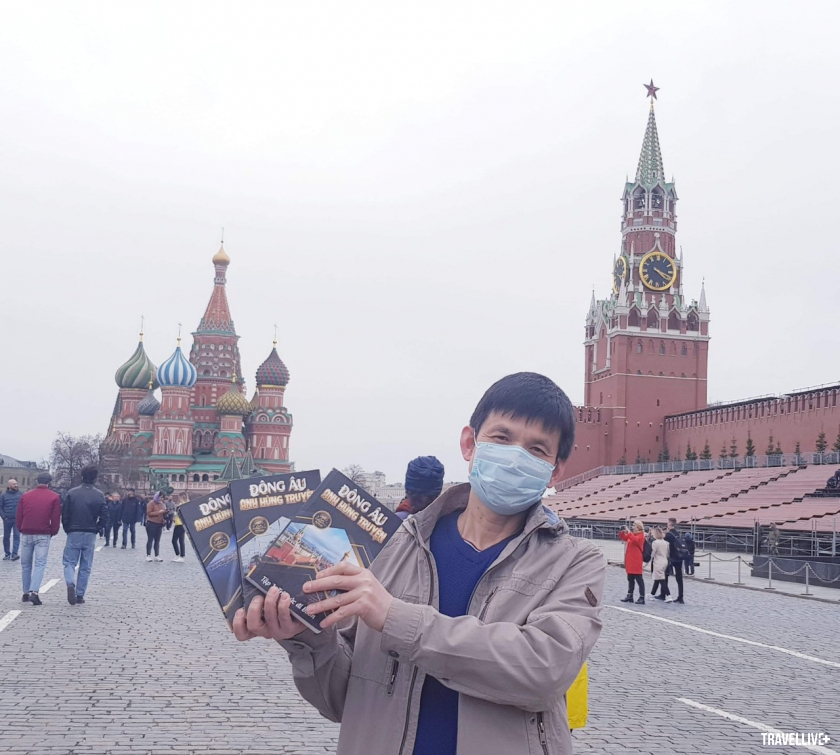
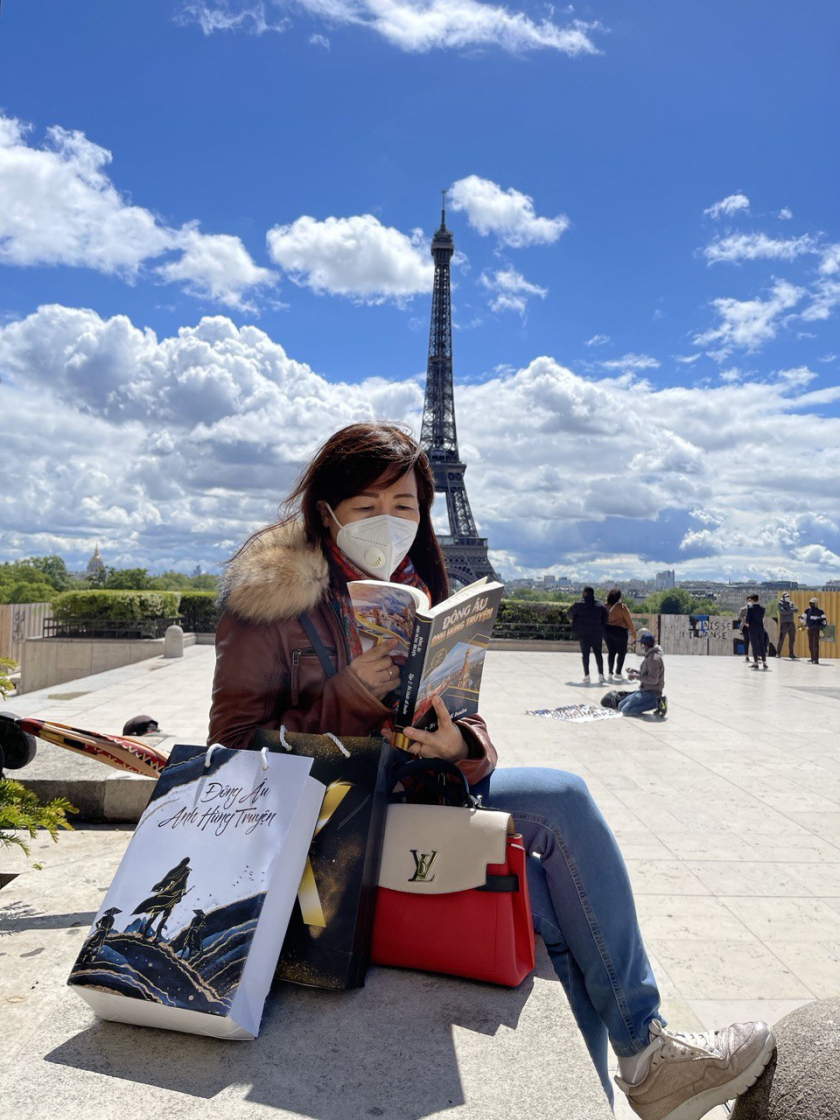
A Vietnamese reader with the book "Eastern European Heroes" in Europe.
In conclusion
Just recently, Nam Nguyen held an auction for a spring gift basket, which included the aforementioned set of books by the author, plus other books about members of his family such as Mr. Nguyen Xien, Ms. Nguyen Thuy An, Ms. Viet Huong… The final bid from a reader was 30 million VND.
Apparently, Nam Nguyen applied the same method to a book titled X.
It's hard to believe, but it's true.
Rarely appearing in real life or on Facebook, Nam Nguyen's more than a thousand articles over the past seven years – aimed at sharing knowledge – have garnered immense popularity among the online community. On Facebook, Nam Nguyen also conducted an experiment, perhaps unprecedented in Vietnam: paying to read his page. Readers joined the group, paid a symbolic deposit, and when they no longer wished to read Nam Nguyen's work, the deposit would be refunded. This, I believe, puts a lot of pressure on the writer. Poor writing that doesn't satisfy readers not only results in having to return the money but also risks alienating them. However, this pressure is also the driving force behind achievement.
Those who know Nam Nguyen say that the author, a former "playboy" who experienced all the ups and downs of life as a European businessman, eventually found solace in Buddhism and became a Buddhist with the Dharma name Tri Minh. Nam Nguyen says that writing is a driving force; his books can be sold or given away, but if he sells them, he sells them for their true value. (And he uses the proceeds for charity.)
About the author
Tran Thi Truong (born in 1950) is a prominent modern Vietnamese writer. She is known for her passion for writing about the plight of women. Her stories, short stories, and novels are often inspired by real life and experiences from her travels around the world.
In addition, she is also a painter with many works and exhibitions that have been well-received and loved by the public.
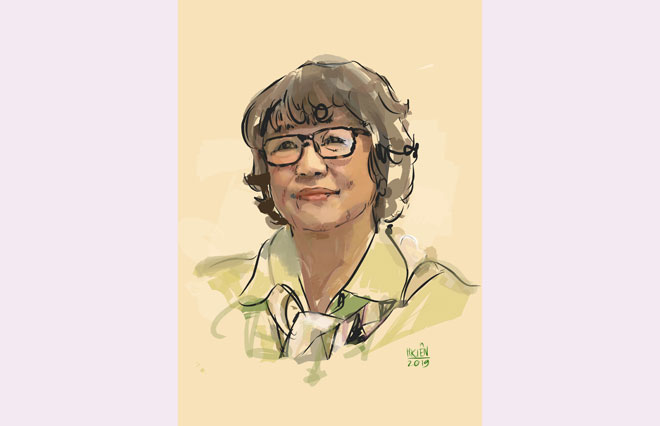
Portrait of Tran Thi Truong - painting by artist Hai Kien

 VI
VI