VI
VI


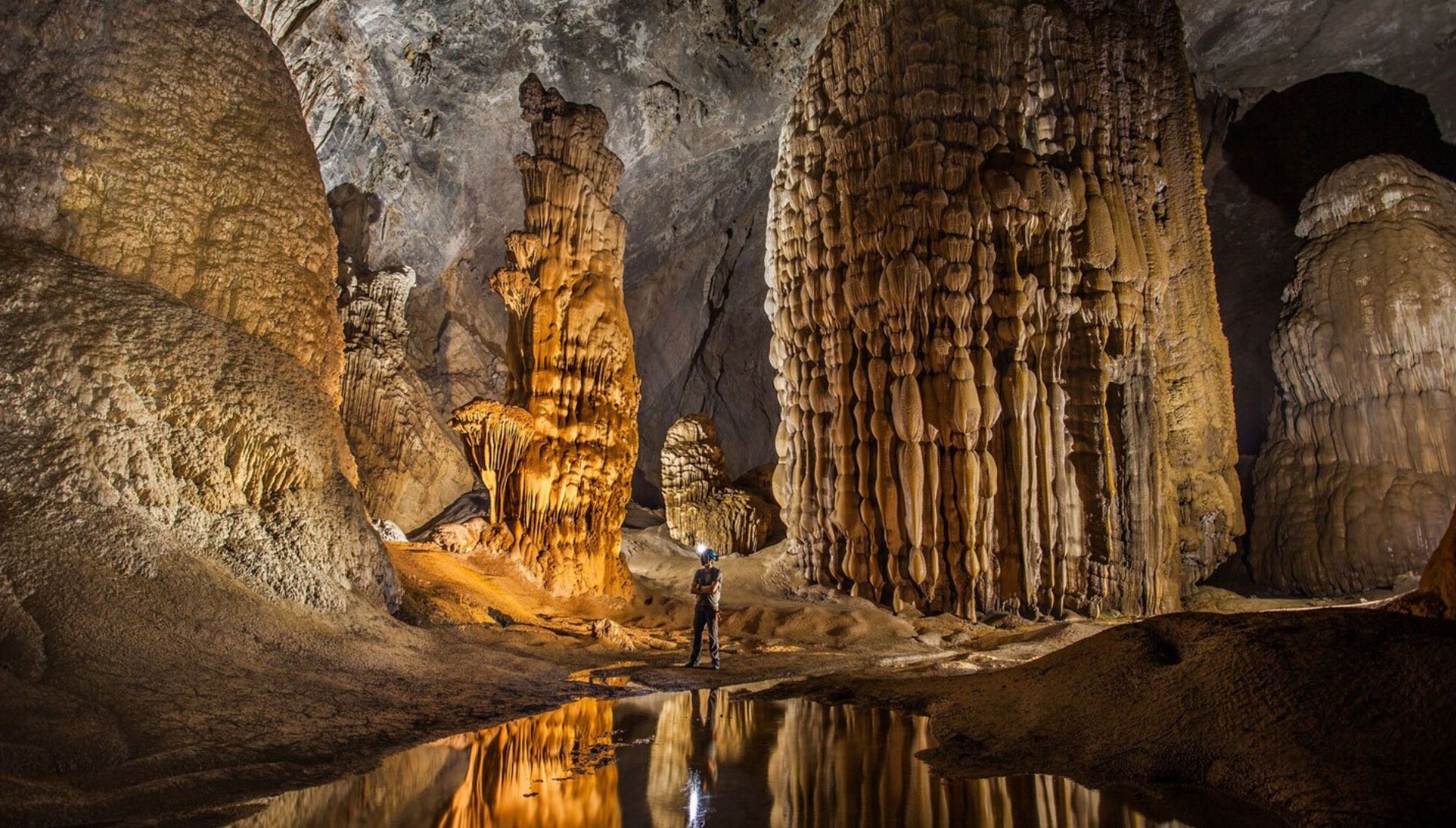
Son Doong Cave, a precious gem nestled deep within the Phong Nha-Ke Bang World Natural Heritage Site, has been the subject of an admiring article by the leading travel magazine Travel+Leisure (USA), describing it as an "unimaginable natural wonder" – an "underground world" possessing its own climate, forests, underground rivers, and even clouds that form right inside the cave.
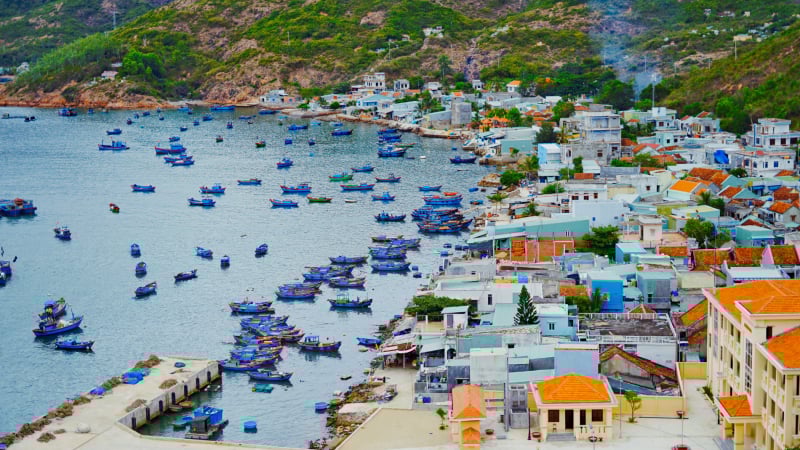
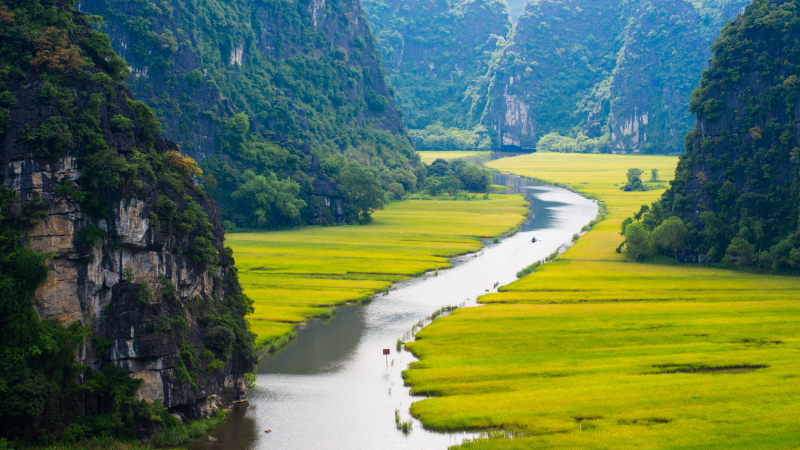
Son Doong Cave was first discovered in 1990 by Mr. Ho Khanh, a local resident, while searching for agarwood near the Vietnam-Laos border. Although he didn't venture deep into the cave, the biting cold and thick fog emanating from the entrance left a lasting impression on him. It wasn't until 2009, with the support of a British cave exploration team led by Howard Limbert, that Mr. Ho Khanh returned to the exact location, marking a significant milestone in the history of world cave exploration.
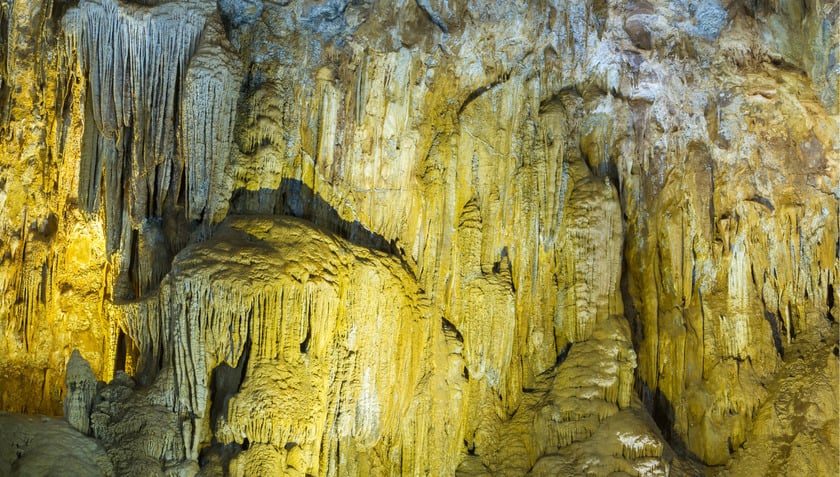
Son Doong Cave continues to amaze American media with its surreal beauty, unmatched anywhere else.
The name Son Doong, meaning "mountain river cave," was given to this colossal cave. Reaching a height of 200 meters, a maximum width of 160 meters, and a length of nearly 9 kilometers, the cave is large enough to contain an entire city with 40-story skyscrapers. With an estimated volume of at least 414 million cubic feet, Son Doong was recognized by the Guinness World Records as the world's largest cave in 2013.
What makes Son Doong unique is the distinct ecosystem that has formed inside the cave. Two natural "skylights" in the cave ceiling, also known as sinkholes, allow sunlight to penetrate, creating ideal conditions for an entire primeval forest to thrive underground. This creates spectacular scenery rarely seen in any other cave in the world.

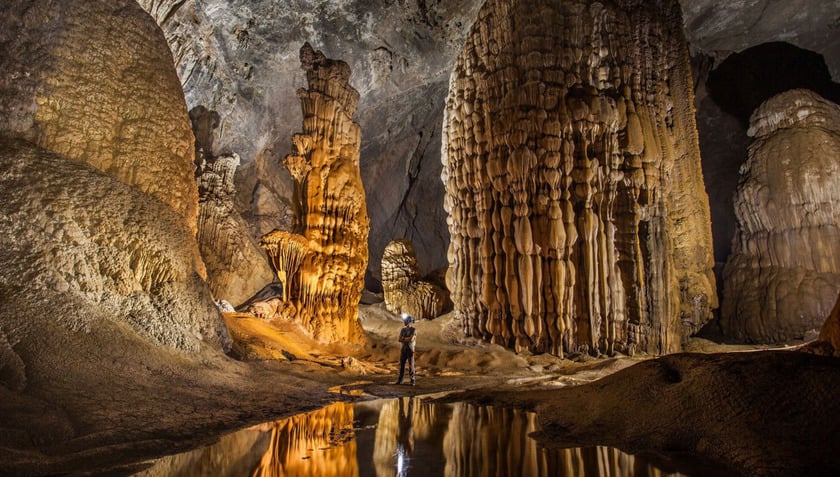
Son Doong Cave impresses with its impressive statistics, including a length of nearly 9km, a maximum ceiling height of 200m, and a maximum width of 160m.
Beyond its forests, Son Doong boasts a unique climate system, with swirling underground rivers (such as Khe Ry and Rao Thuong, which contribute to the formation of geological structures), fog, and even clouds forming within the cave itself. This is evidence of a vibrant, self-regulated world hidden deep underground.
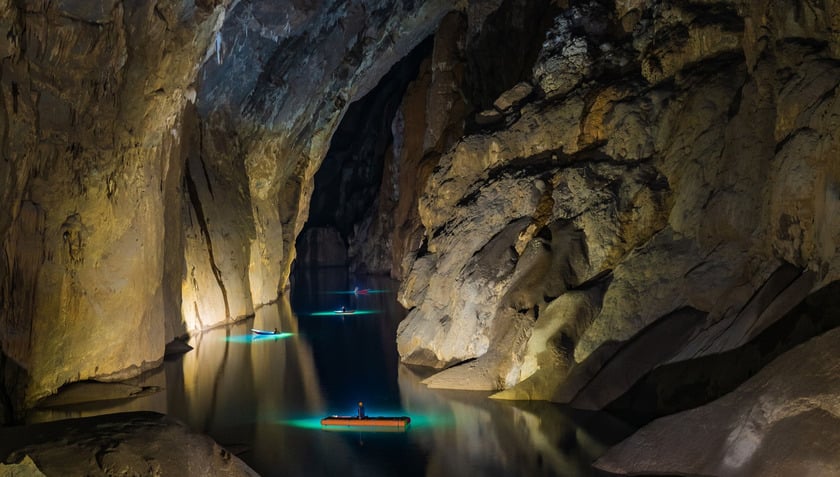
This place is also famous for its colossal geological formations, most notably the nearly 90-meter-high calcite wall, dubbed the "Great Wall of Vietnam".
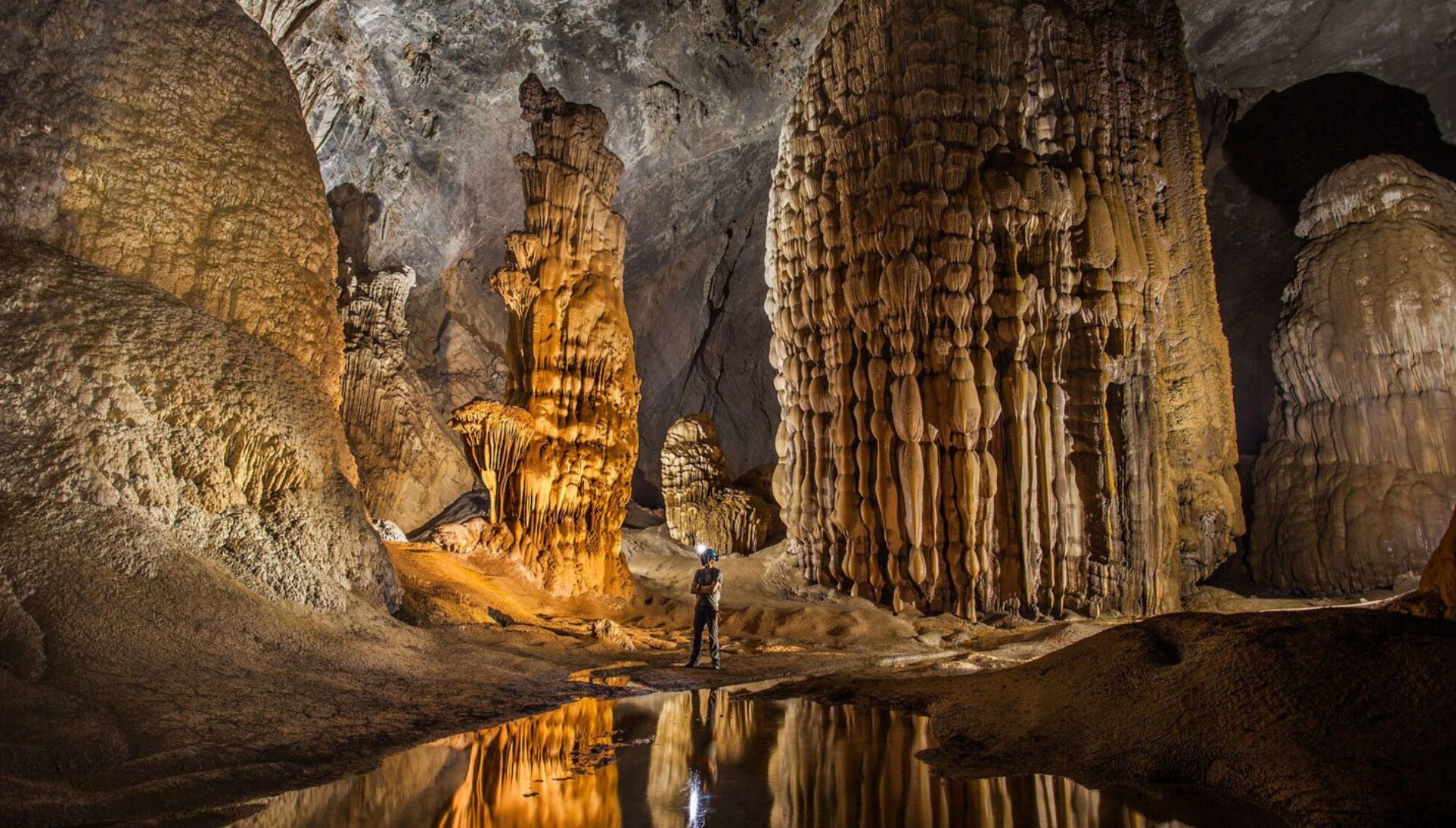
Millions of years of geological formation have created colossal and impressive geological structures within Son Doong Cave. Most notable is the nearly 90-meter-high calcite wall, dubbed the "Great Wall of Vietnam." Alongside this are countless stalactites and stalagmites, over 3 million years old, in a variety of magnificent shapes, sparkling like natural sculptures. Other famous spots on the cave exploration journey include the "Dog's Paw" stalactite and the "Beware of Dinosaurs" sinkhole, featured in the movie Pan and Neverland.
Exploring the magical world of Son Doong Cave is no easy feat. Currently, Oxalis Adventure is the only licensed operator for this cave exploration tour. The 5-day, 4-night journey is a real challenge requiring physical endurance and experience. Visitors must be between 18 and 70 years old, capable of hiking at least 8 km per day continuously for a year, running 5 km in 50 minutes, and climbing 5 levels continuously without rest.
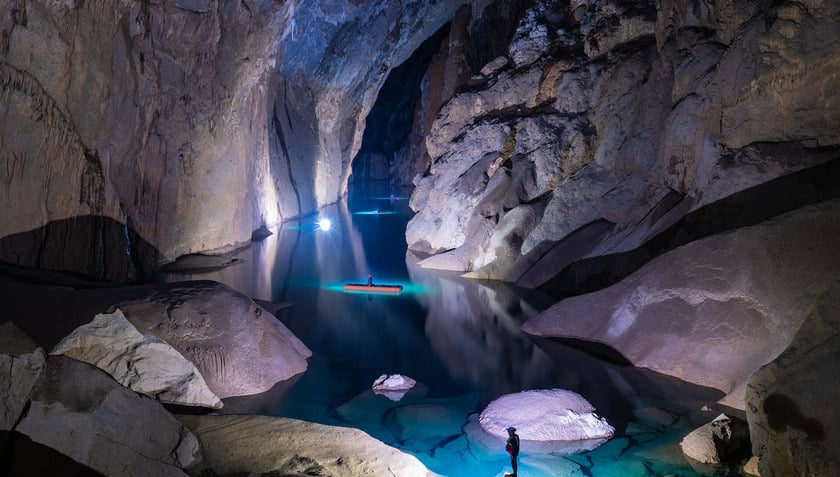
Exploring Son Doong Cave is not easy. Currently, only one company is authorized to organize tours – Oxalis Adventure – with a 5-day, 4-night itinerary.
The trip not only involves trekking through forests and wading through streams, but also includes adventurous rope ladder climbs, taking visitors deep into the mysteries of the cave. At $3,000 per person, this is a unique experience, one of a kind in the world. The next tour booking is currently for departures from January 2027, demonstrating the appeal and scarcity of this natural wonder.
With Travel+Leisure's detailed and impressive descriptions, Son Doong Cave will undoubtedly continue to be a dream destination for adventurers and travelers eager to explore the pristine and majestic beauty of nature.