VI
VI


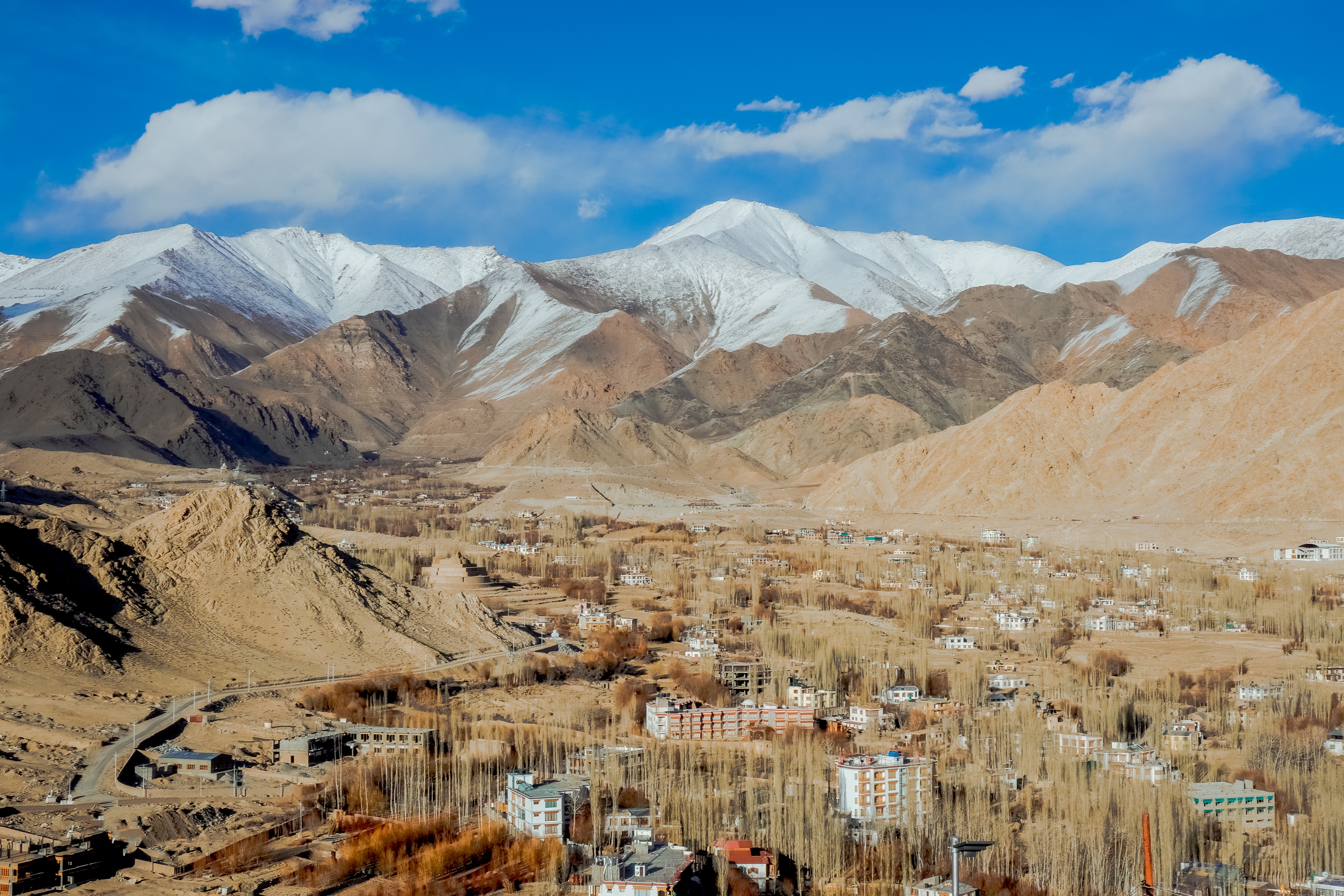

Ho Tuan Tai (Win Di), currently living and working in Ho Chi Minh City, shared his experience of a trip to Ladakh, India. His trip lasted 20 days, following the end of the pandemic and the reopening of international flights worldwide.
The inspiration for the trip came when he happened to read a book about Ladakh and watched many documentaries about the journeys of the Loka Ma people in the Himalayas, which he found very appealing. As soon as India opened up to the world, he immediately booked his plane ticket.
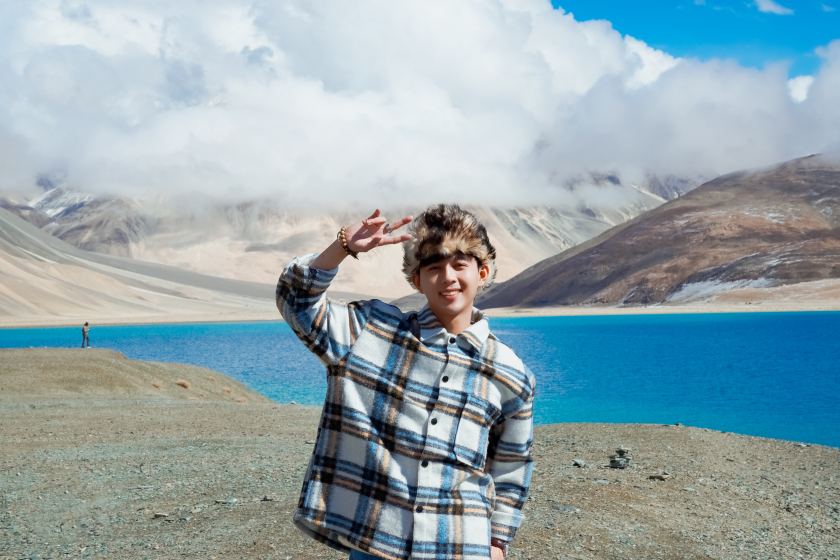
Win Đi spent 20 days exploring various destinations in Ladakh, the "Little Tibet" of India.
Dubbed the "Little Tibet" of India, Ladakh is a place where Buddhism flourishes, creating a rich and distinctive Buddhist culture. Along with the unique cultural characteristics of the Himalayan snow-capped mountains, this land is a blend of natural beauty and spiritual culture that any traveler would want to visit.
“Ladakh’s tourist season runs from May to November each year, however, September and October, when autumn arrives, are the most perfect months. You need to be in good physical condition because with the dry, cold climate and the different altitude compared to Vietnam, you can easily experience altitude sickness and will have to do a lot of walking and trekking,” Win Đi said.
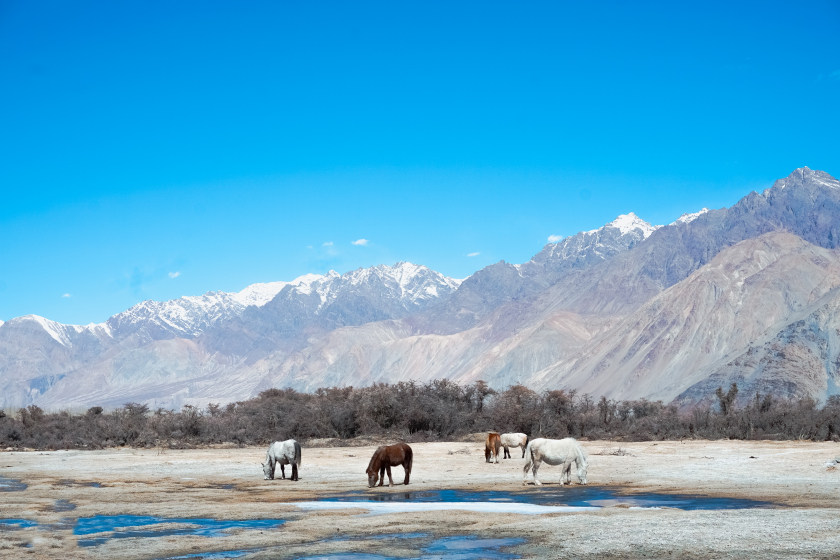
Ladakh is a pristine land in northern India that holds unexpected beauty.
Win Đi's itinerary was divided into stages: exploring Ladakh and the magnificent structures in Central India. In the Ladakh leg, Win Đi visited: New Delhi - Srinagar - Gulmarg - Srinagar - Leh - Nubra Valley - Pangong Tso - Tso Moriri - Leh - New Delhi. The Central India leg was: New Delhi - Arga - Jaipur - New Delhi - New Delhi.
Stage 1: New Delhi - Srinagar
The first place Win Di visited after arriving in Srinagar was Gulmarg – a small state of Srinagar. What caught his eye were the lush green meadows, the rolling hills, and the ancient houses of the local people, looking like something out of a fairy tale.
When visiting Gulmarg, you have two options: either ride a horse through the forest to the snow-capped peak, or take a cable car. Win Di chose to ride a horse. Although the trek through the forest, across streams and rocky slopes is quite dangerous, the reward is the opportunity to admire the diverse grasslands and vegetation. The area boasts mountains, grasslands, and villages of indigenous people nestled within the pristine old-growth forest, with lush green grass dotted with daisies.
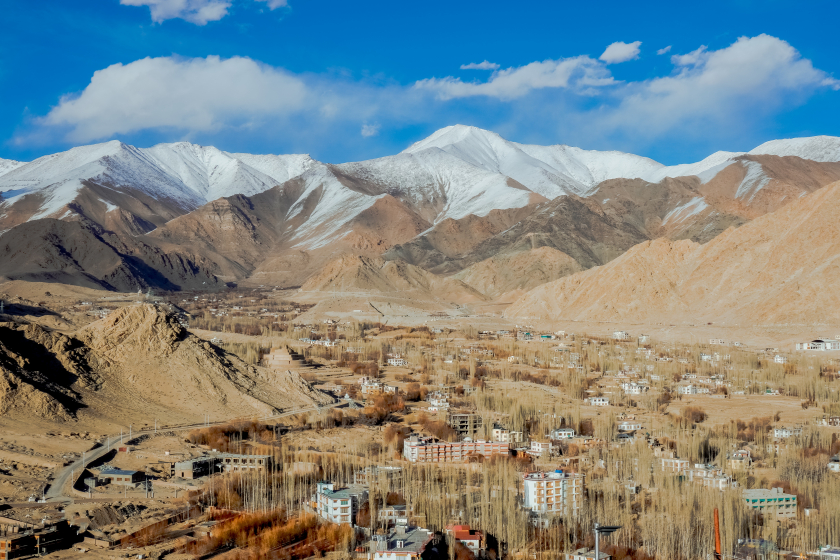
Old houses at the foot of the hill
In the afternoon, Win's group took a boat trip to watch the sunset on Dal Lake, which was incredibly relaxing. Along Dal Lake, there are many House Boats – a type of hotel on a boat. It sounds unusual, but the interior looks very "luxurious." However, the inconvenience is that the tap water is very dirty and can easily cause skin irritation. The sunset here falls between 6:30 and 7:00 PM. The shadows of the boats and the boatmen cast on the tranquil surface of Dal Lake resemble a very poetic ink painting.
Stage 2: Srinagar - Kargil
Early in the morning, the group was picked up by the driver at House Boat and set off straight for Kargil. The scenery along the way was fascinating: in the distance, rolling snow-capped hills, babbling streams along the roadside, and distant rows of birch trees—a stark contrast to the landscapes of the countries Win Di had visited before.
"Win opened the car window and took a deep breath; the cool mountain air rushed straight into his nose. It was a truly wonderful feeling. Nature here isn't just for looking at, but also for smelling and feeling with your whole soul to fully appreciate its beauty," Win said excitedly.
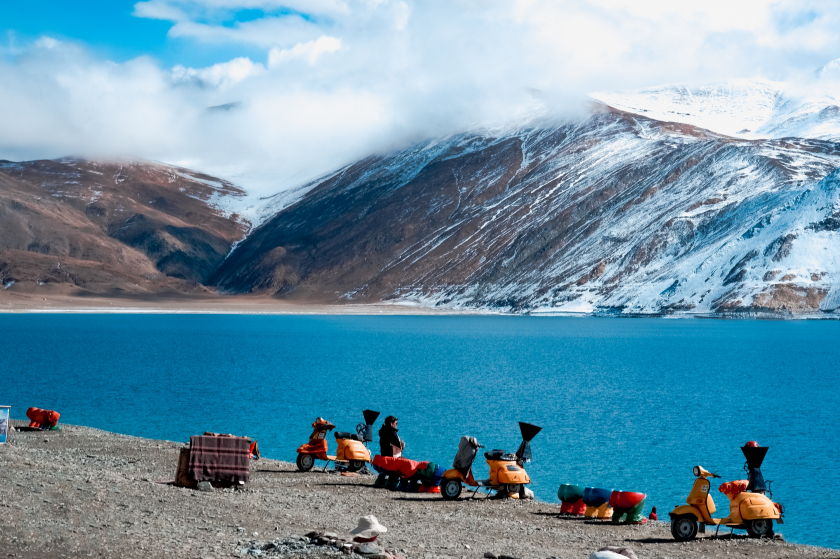
The locals have also set up many photo spots using yellow Vespa scooters or butt-shaped chairs in three different colors.
At one point, the group stopped to take photos; the scenery along the road looked just like Switzerland or Europe. The people here were very friendly. They even taught Win some traditional Indian dances, so the whole group got out and danced together in the middle of the road, which was very lively. Afterwards, the group traveled to a village in Kargil to spend the night. It looked like an ancient village from a Nordic film, nestled on a barren rocky hillside. The locals were incredibly kind.

The road from Srinagar to Leh is incredibly beautiful and will be one of the most memorable experiences of your Ladakh trip. The winding mountain passes, the distant valleys, and the glimpses of snow-capped peaks seem to transport you to a dreamlike realm.
Stage 3 from Kargil - Leh
On the journey from Kargil to Leh, Win Di stopped at a monastery housing the Mulbekh Buddha statue. The statue, a 9-meter-tall stone sculpture of the “Future Buddha,” also known as Mulbekh Chamba, is a blend of esoteric Saivite symbolism and Buddhist art. The monastery and statue are situated on a hilltop along the highway from Srinagar to Leh.
After visiting the monastery, the group went to the snowy hillside to ride snowmobiles. They all started to feel cold as the temperature dropped and the air thinned as they climbed higher.
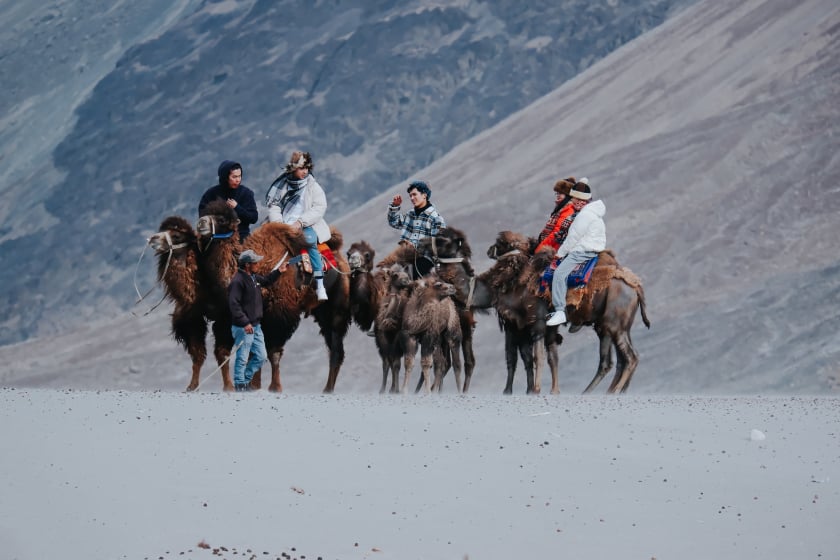
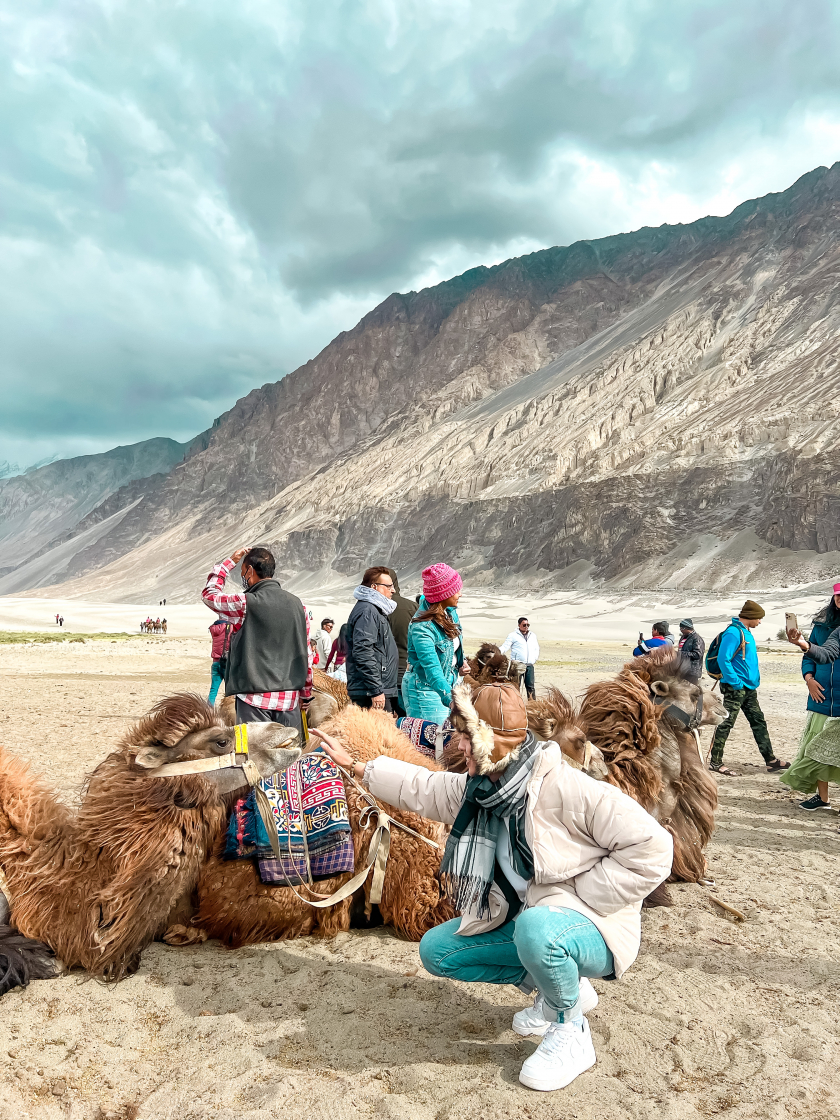
Experience a camel ride across the Nubra Valley.
The highway to Leh was very beautiful. The enthusiastic driver stopped at the moon-shaped landscape for the whole group to take photos. Due to the dry and cold climate at an altitude of over 3000 meters with little rainfall, high evaporation, and large temperature differences between day and night, the limestone quickly cracks, breaks into small pieces, and is eroded, gradually lowering the slopes and expanding into valleys, creating a desert landscape of rocks with unique conical and asymmetrical karst formations.
During his 20-day adventure in India, Win Đi traveled 220 km, bidding farewell to the small village of Kargil to reach Leh Ladakh – “Little Tibet in India and the land of the Lamas.” He traversed a variety of terrains, from the surreal, moon-shaped landscape of the Moonland region and sheer, treeless cliffs to tranquil moments with lush green valleys and villages below, and the snow-capped peaks of the Himalayas in the distance.
Upon arriving in Leh, despite being exhausted, all members of the group were excited by the city's rustic and poetic beauty, a beauty that Win Đi couldn't fully describe in words.
Stage 4 from Leh - Pangong Tso
"Pangong Lake, Ladakh - isolated from the outside world, breathtakingly pristine and seemingly at the ends of the earth."
The group arrived at Pangong at dusk, as the sun began to set. The journey from Leh to Pangong was long and treacherous, consisting only of steep mountain passes and cold daytime temperatures of only a few degrees Celsius. In the afternoon, Pangong Lake was beautiful and peaceful; the weather was very cold but there was no snow.
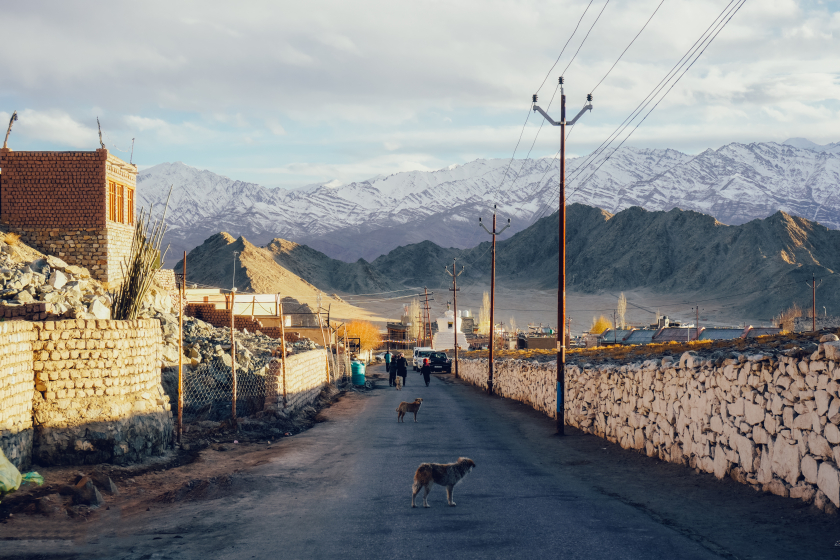
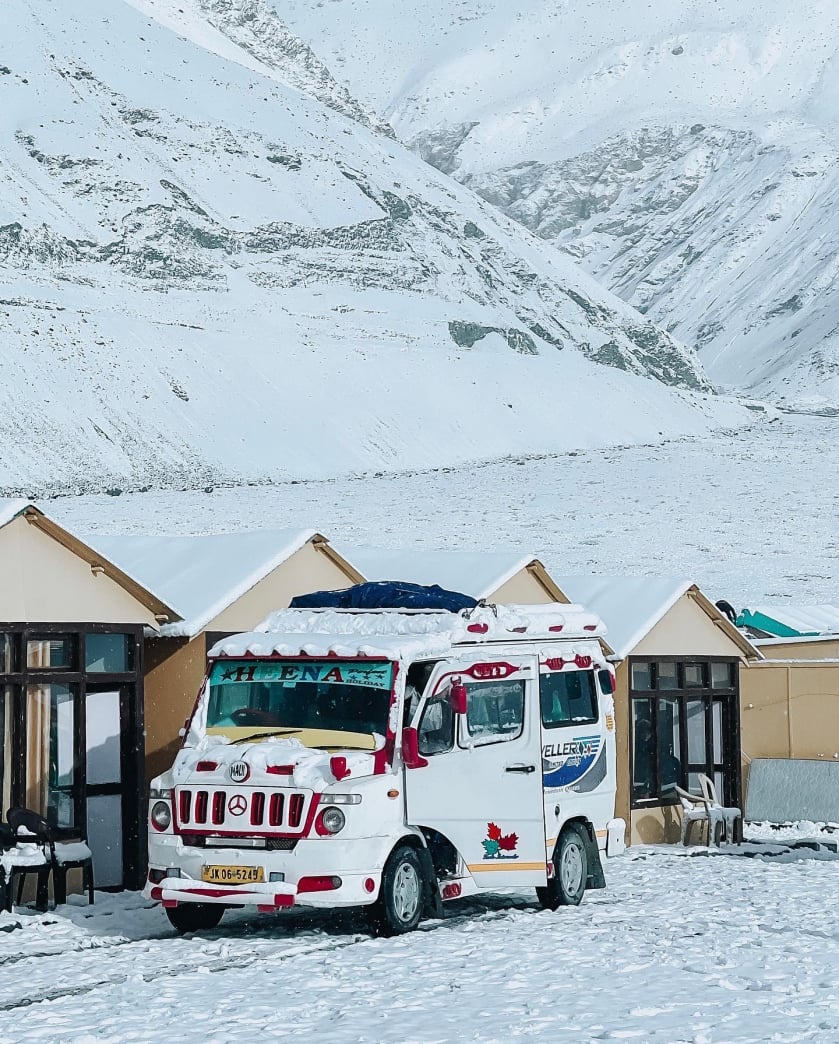
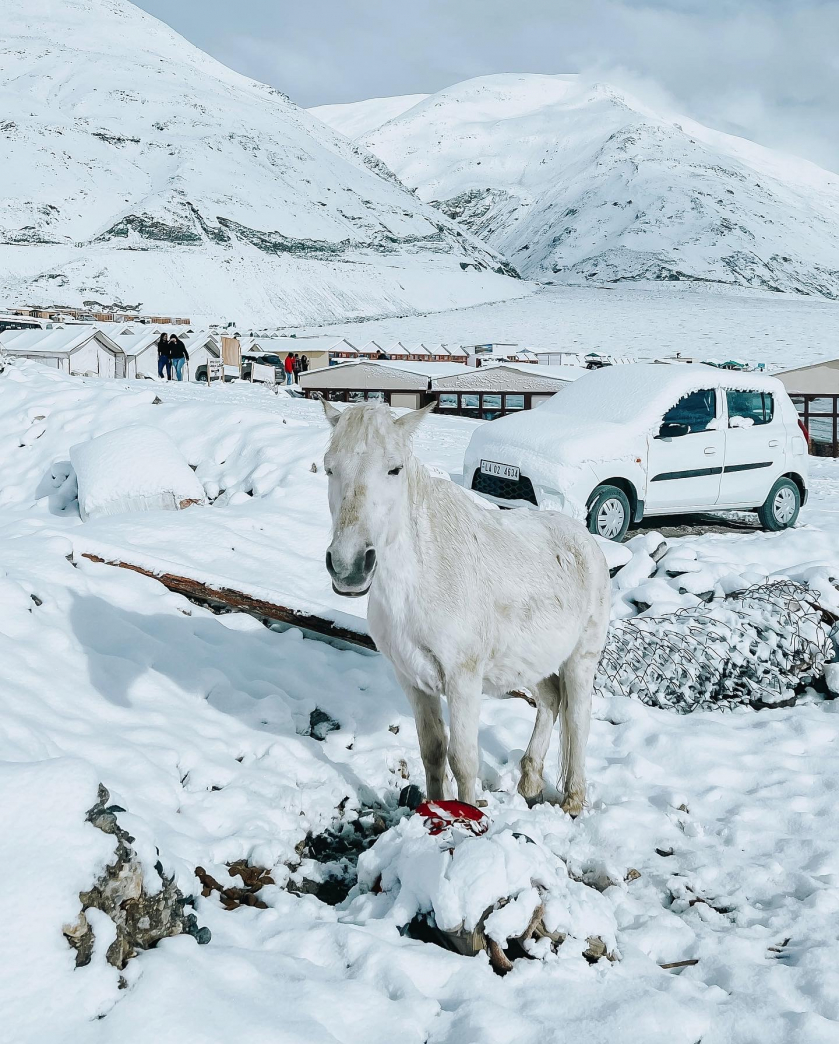
"At night, the temperature drops below freezing, so it's quite cold. Because we had to sleep in tents above the lake, the wind blew very cold at night, chilling my head even though I was wearing five layers of clothing and had many heat packs attached, but I still couldn't sleep," Win Đi said.
But overnight, everything turned strangely white. The blue color of Pangong Lake was mesmerizing and hard to look away from. Locals have set up many photo spots here, inspired by Rajkumar Hirani's film "Three Idiots".
Stage 5 from Pangong Tso to Tso Moriri
The road from Pangong Tso to Tso Moriri is very beautiful; it will be hard for tourists to take their eyes off the scenery whizzing by on both sides while riding in the car.
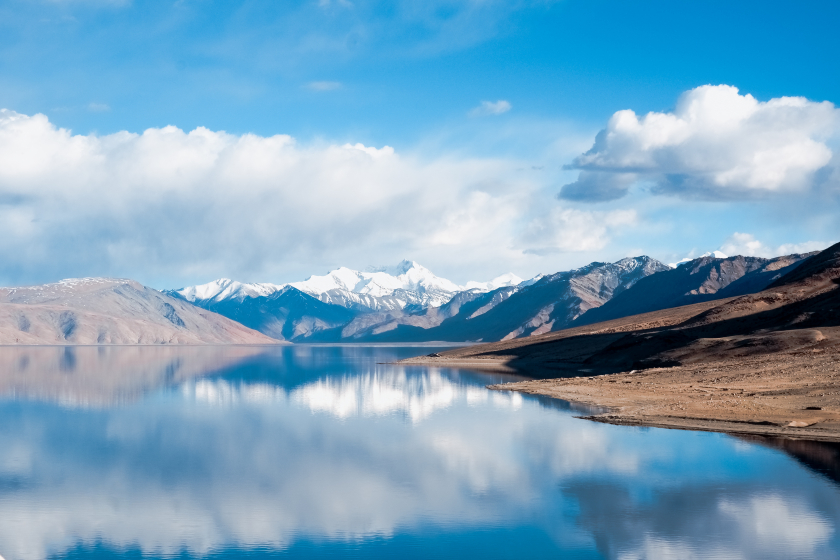
Tso Moriri Lake in the Changthang region of Ladakh is one of the highest, most tranquil, and sacred (to the people of Ladakh) lakes in India. Approximately 19 km long, Tso Moriri is part of a Ramsar wetland reserve. Tso Moriri presents itself as a stunning natural masterpiece, its waters shimmering in the evening light. Don't hesitate to ask your driver to take you to a Tso Moriri viewpoint.
Stage 6 is Tso Moriri - Leh
Tanglang La is the second highest mountain pass in the world that motor vehicles can travel on. On the way back from Tso Moriri, Win encountered snowflakes, not snowflakes, falling very quickly and heavily. The snow on both sides of the road was quite thick and beautiful, winding along the endless mountain pass.
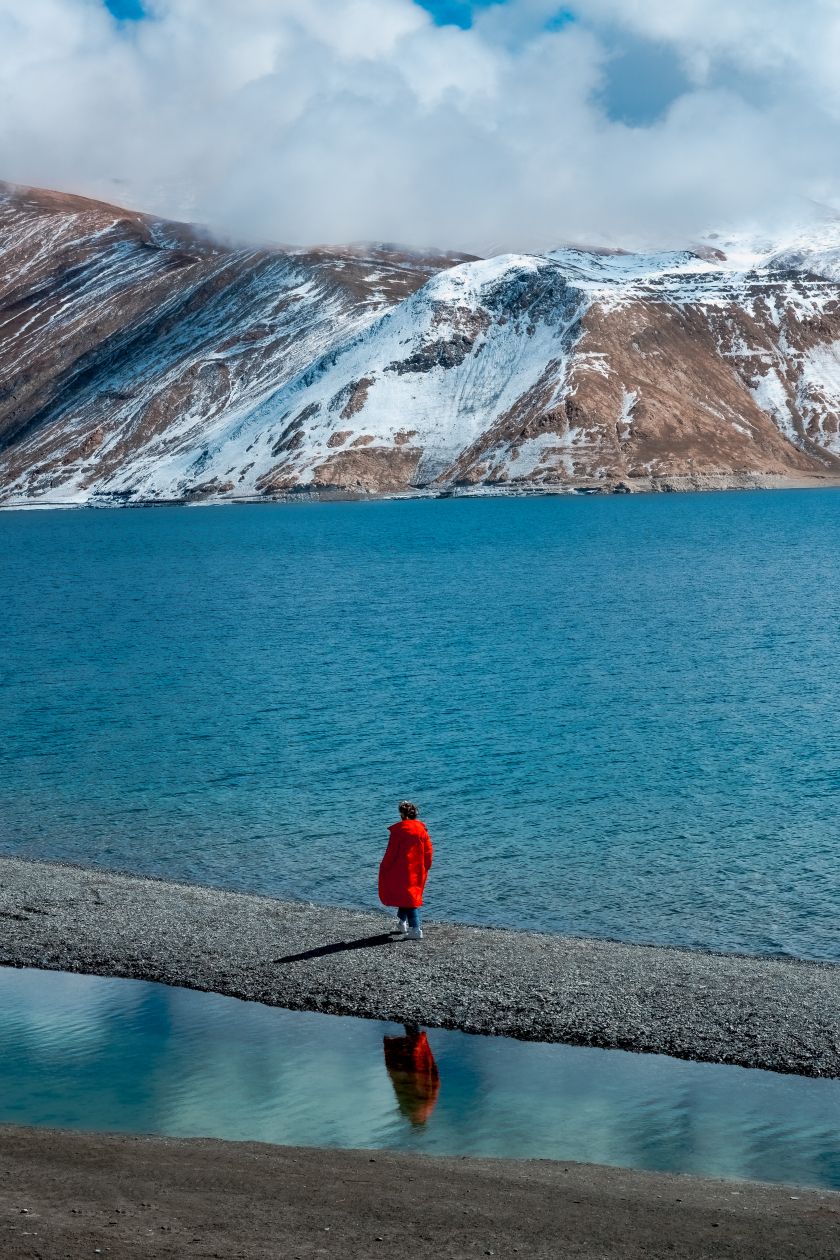
Ladakh is famous for its mysterious beauty and majestic natural landscapes, and for Win Đi, Pangong Tso Lake is the place that impressed him the most because of its romantic, breathtaking, and picturesque beauty.
Of all the destinations on our Ladakh exploration trip, Pangong Tso was the one that impressed Win Đi the most, with its romantic, majestic, and picturesque beauty. It even appeared in the Bollywood blockbuster, *Three Idiots*. This is a receding lake in the Kashmir region of Ladakh, India, and one of the largest lakes in the Himalayan area.
"I was lucky enough to be here on a snowy day, so I had even more opportunities to admire the changing colors of the lake at different times of the day. It's incredibly beautiful in person, beyond words," Win Đi shared.
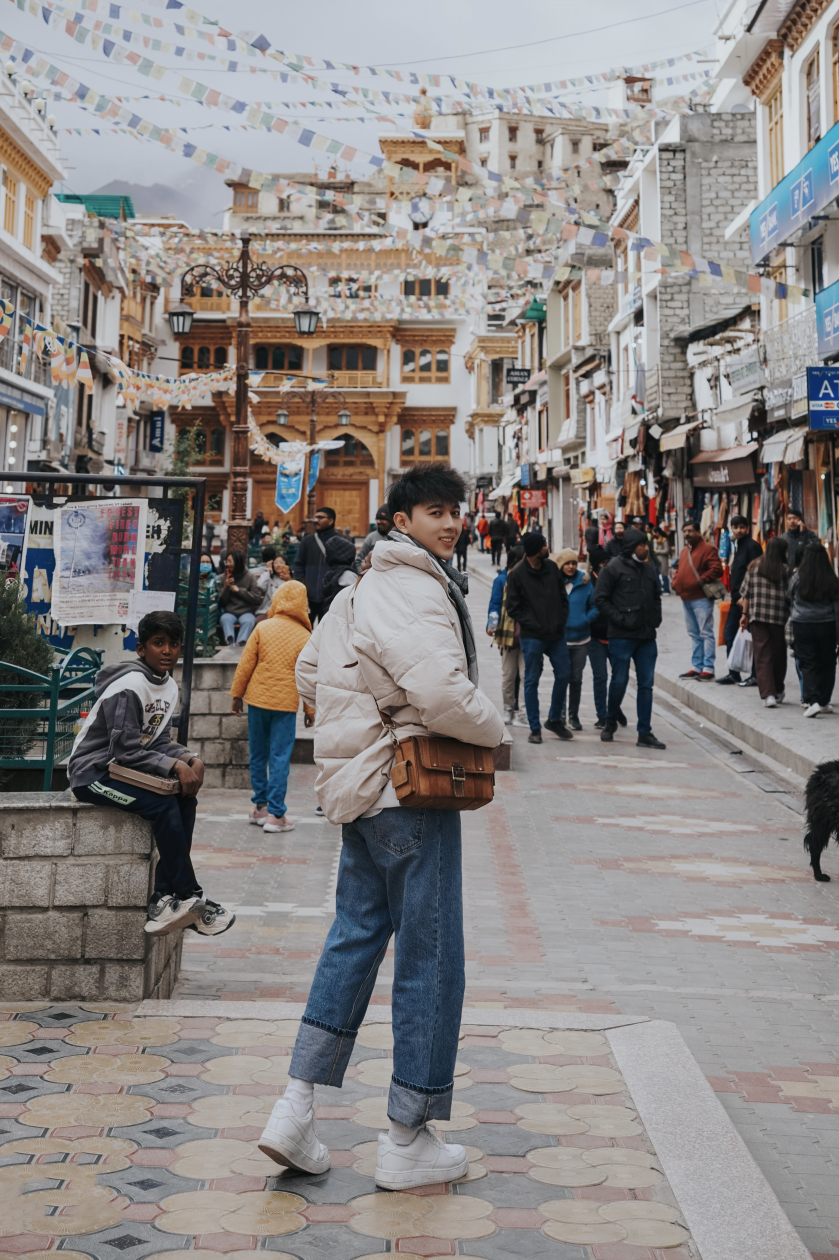
A detailed itinerary is necessary for a smooth and enjoyable trip to Ladakh.
But besides that, there were many difficulties on this trip to Ladakh. His group was one of the first to arrive in Ladakh after a long period since the end of the pandemic, so they lacked information and experience to prepare for the trip, resulting in very little preparation. Medicine, insulated bags, food and drinks, altitude sickness... and many other challenges.
Win Đi also shared: “Indian food is quite difficult for me to eat. There were days when I could only eat two packets of noodles or a few potatoes. Near the end of the trip, I discovered an Asian supermarket in Leh, and then I went in to buy ingredients and cook a really delicious meal. If I had known about this place beforehand, I would have stayed here for a whole month.”
Tourists should prepare plenty of clothing and medicine for this trip because the weather here makes it easy to get sick.
To ensure a smooth and enjoyable trip to Ladakh, Win Đi also offers some tips for Vietnamese travelers exploring this region. Travelers should prepare carefully with appropriate clothing and medicine for this special trip, as the terrain and weather are very different from Vietnam, making it easy to get sick and quite cold. The journey is long, so it's best to travel in a large group for a more enjoyable and safer experience. Maintain a relaxed and optimistic attitude, as the weather can sometimes be unpredictable. And importantly, when traveling by tuk-tuk or buying goods in India, bargaining is essential.
"If you have the chance, everyone should come here at least once in their lifetime to fully appreciate the magnificent beauty of nature in the Himalayas. This is a place well worth experiencing, and Win will definitely come here a few more times in the future," Win Di added.