VI
VI


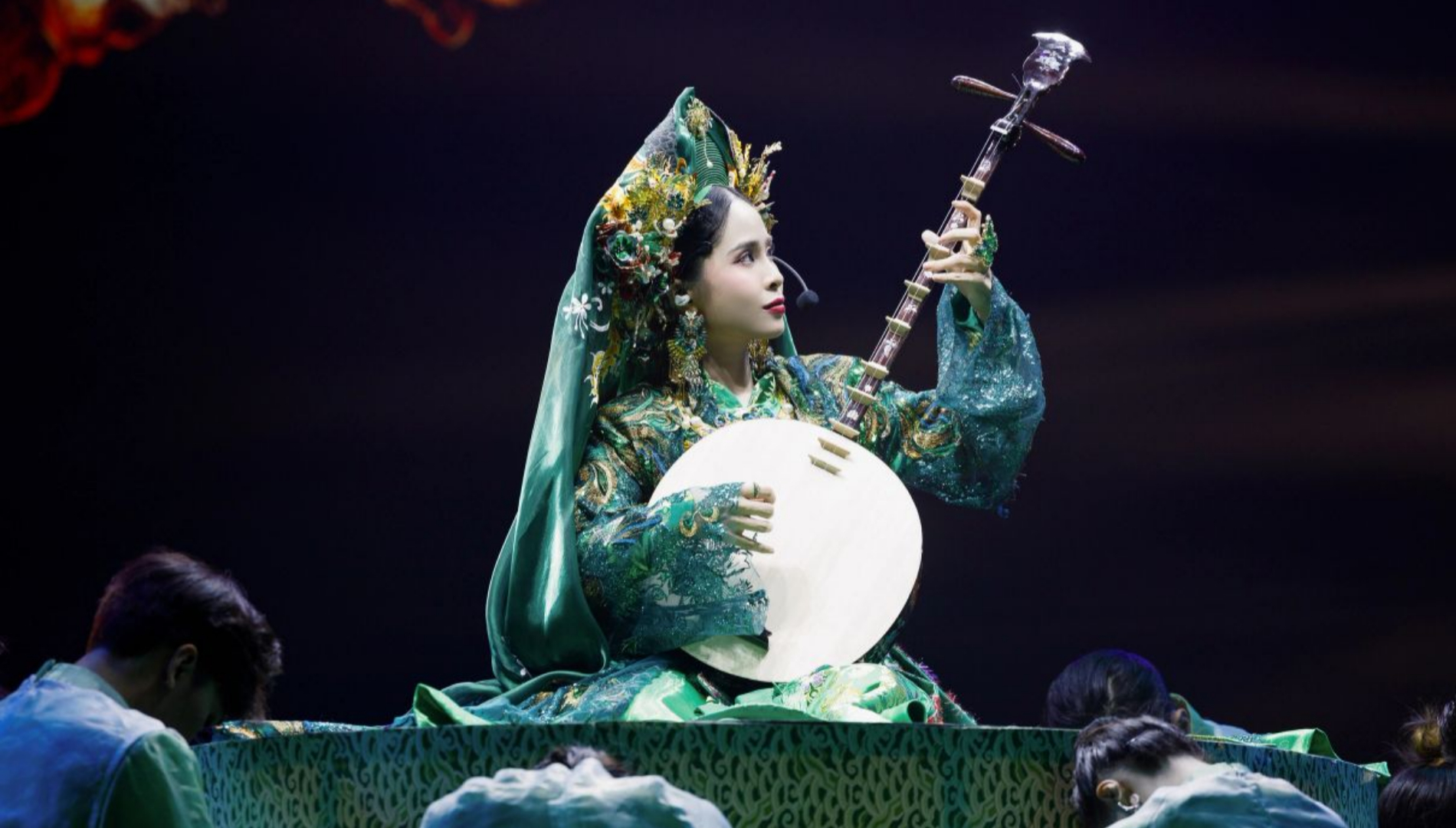
Performance 5 of the 2024 "Beautiful Women Riding the Wind" competition continued its explosive run with the Free Stage featuring the three team captains: Toc Tien, Kieu Anh, and Mie. The performance order in this segment was based on the total points from the previous two performances by each team. On the captain's stage, the three beauties were required to perform a challenge playing any musical instrument. Accordingly, Toc Tien chose the water drum, Kieu Anh played the moon lute and drums, and Mie played the three-stringed lute.
Kieu Anh responded to the audience's expectations since her appearance on the 2024 "Beautiful Sisters Riding the Wind" show by bringing the traditional folk song "Co Doi Thuong Ngan" to Performance 5: "Coincidentally, when it was my turn to be the team captain's solo performance, the theme was world music. I thought it was perfectly fitting, the right time, place, and circumstances for me to do something meaningful in the 'Beautiful Sisters' program."
Celebrating national culture in every gesture.
Transforming into Son Tinh – a princess descended to earth – Kieu Anh opens up a majestic horizon of rolling hills and swirling clouds. With a stunning stage setting, enchanting lighting, and a large troupe of dancers, "Phong Nu x Co Doi Thuong Ngan" vividly reflects the wild yet breathtaking and sacred beauty of Vietnam. Kieu Anh wears a costume that adheres to traditional attire but has been modified to suit the nature of the artistic performance.
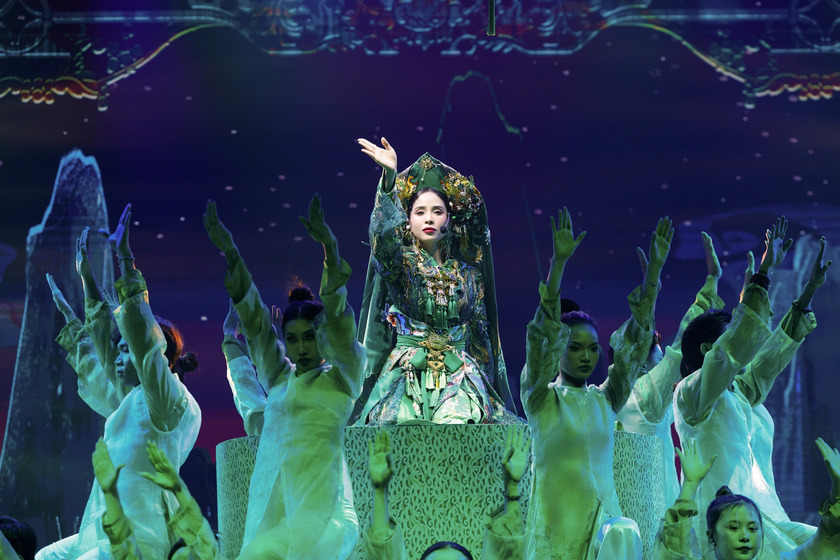
The details on the LED visual display also contribute to recreating the majestic mountain scenery of Nho Quan, Ninh Binh - the place where Co Doi resided in peaceful times.
Leveraging her expertise in "ca trù" (traditional Vietnamese folk singing), Kiều Anh captivated the audience with her enchanting, melodious voice, skillfully blending vocal embellishments with subtle nuances in the ancient "chầu văn" style. The singer not only played the moon lute and drums but also showcased her dance-break skills with a dynamic, spirit-infused dance. The latter half of the performance intensified with a more rapid rhythm, like a true "spirit possession ritual." Kiều Anh concluded the song with a magical, vibrant festival atmosphere. It's no exaggeration to say that this performance transcended the boundaries of a competition entry, deserving to be called a work of art.
Besides showcasing the beauty of the Mother Goddess worship tradition, Kieu Anh also performed the shamanic dance, played the moon lute and drums. The audience shifted from reverence to immersing themselves in the festive atmosphere with the vibrant and dazzling performance brought by the singer and her act. The new song "Phong Nu" was written by musician Ho Hoai Anh.

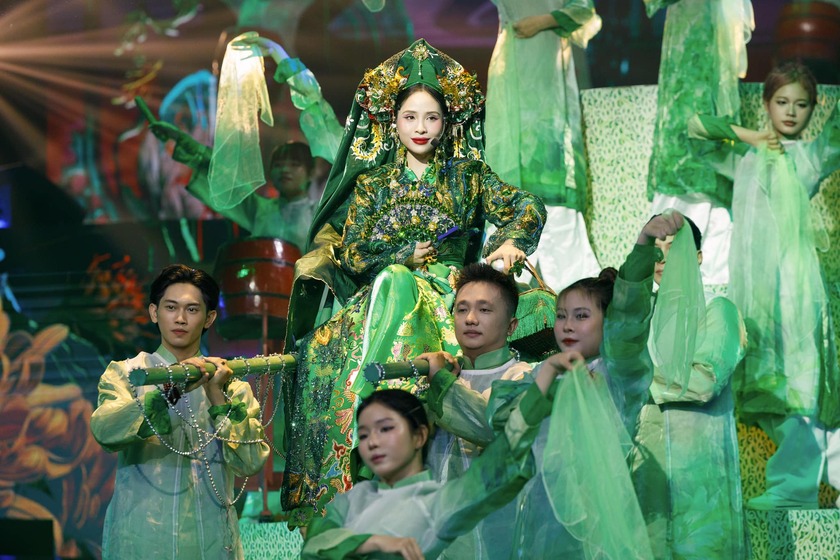
Starting with familiar lines from "Cô Đôi Thượng Ngàn," Kiều Anh surprised the audience by switching to the song "Phong Nữ."
Kieu Anh's performance of "Co Doi Thuong Ngan" was not only an outstanding artistic display but also a profound message about traditional cultural values. By subtly and emotionally recreating the image of "Co Doi Thuong Ngan," Kieu Anh contributed to honoring the Mother Goddess worship – a precious intangible cultural heritage of the nation.
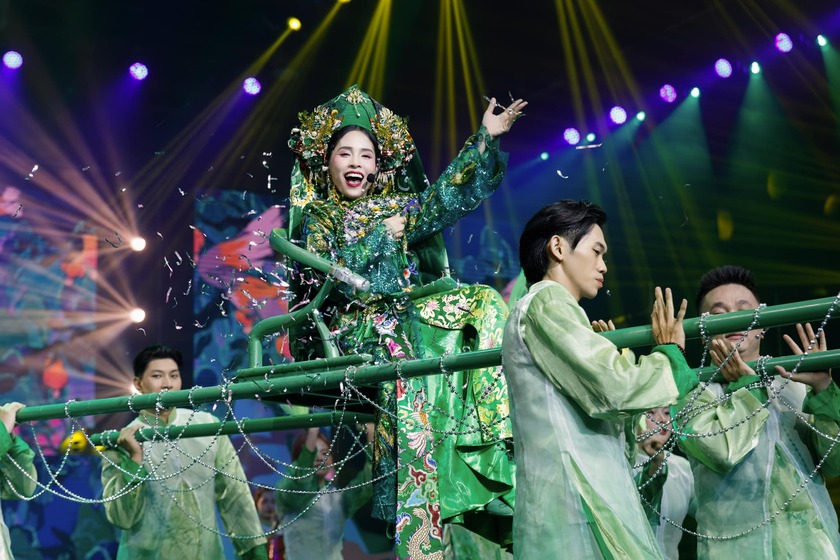
Bringing a mystical and enchanting atmosphere, Kieu Anh portrays the authority, mystery, and sacredness of a saint.
By employing modern performance techniques, she offered the audience a fresh perspective on a familiar folk cultural figure. At the same time, she preserved the core values of the Mother Goddess worship, creating a harmonious and impressive overall effect.
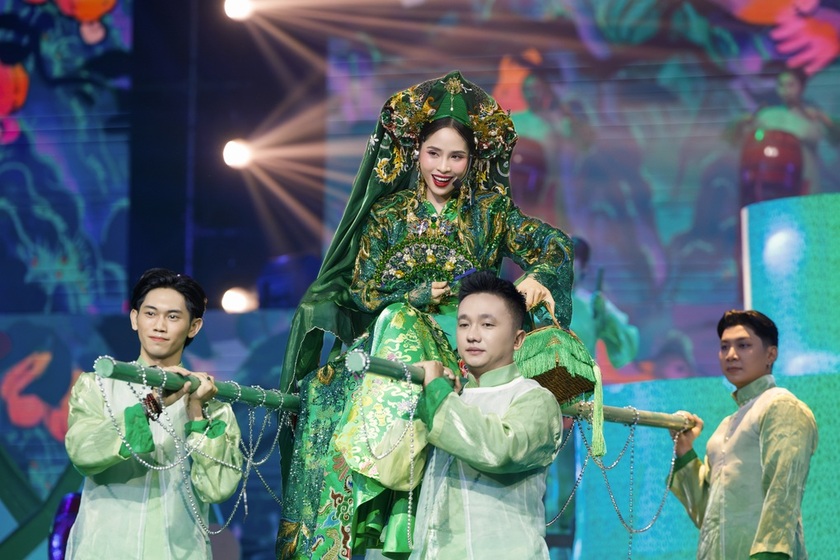
The legend of the majestic and glorious Co Doi is skillfully depicted by choreographer Manh Quyen through numerous layered formations, corresponding to each lyrical section of the song "Phong Nu".
On social media, many viewers have praised Kieu Anh's performance. "It gave me goosebumps, a feast for both the ears and the eyes"; "Nothing to criticize"; "Kieu Anh's voice and stage presence are amazing"; "Beyond the level of a competition, this performance was outstanding";... With her impressive performance from the beginning of the show, Kieu Anh is currently considered a strong contender and is expected to be part of the debut lineup of "Riding the Wind" Season 2.
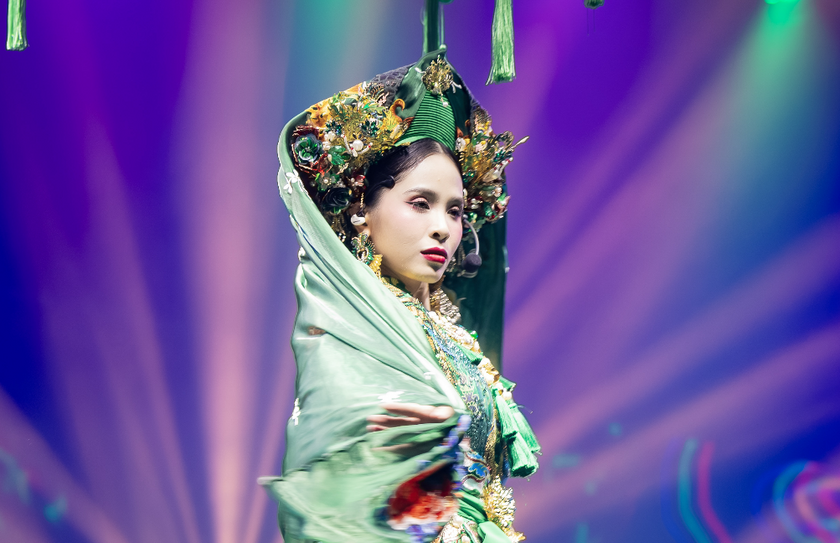
This is not a competition, but a performance showcasing the rich cultural heritage of our nation.
After her performance went viral, Nguyen Kieu Anh felt grateful and proud to be called a "traditional folk singer." She felt happy that audiences have been increasingly showing their love for traditional culture lately. "Born from a folk culture, this is not only my dream, but also the dream of many generations of artisans and artists who have diligently preserved cultural values that seemed to have faded away at times," the beauty queen confided.
The worship of Mother Goddess - a beautiful aspect of Vietnamese culture.
This is a form of belief based on the worship of goddesses, a form of worship of the mother figure embodied in the heavens, rivers, forests, and mountains, which has formed and developed strongly throughout history. Currently, the worship of the Mother Goddess is also known to the community through the concept of "spirit mediumship." Since the 16th century, the practice of this belief has become a cultural and religious activity with a profound influence on social life and the consciousness of the people.
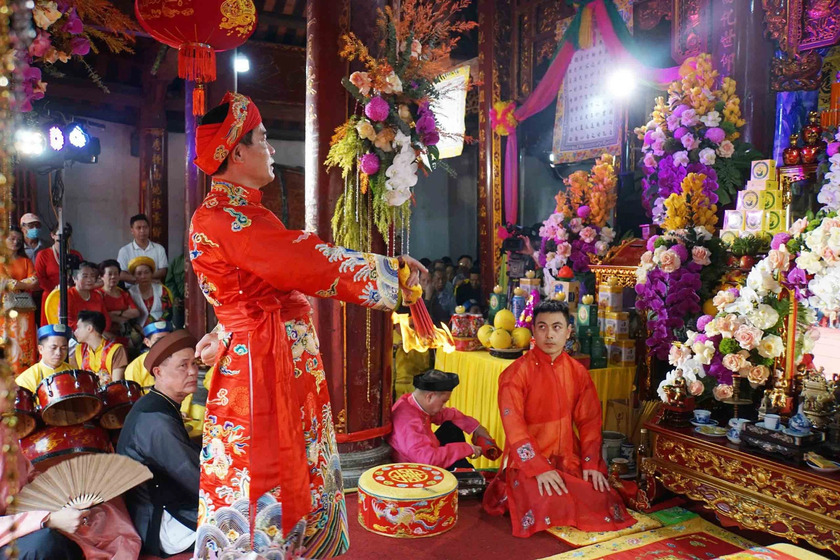
The Vietnamese practice of worshipping the Mother Goddess of the Three Realms has been recognized as a representative intangible cultural heritage of humanity.
The Holy Mothers and deities in the pantheon of the Three Realms originate not only from the Kinh people, but also from ethnic minorities in Vietnam such as the Muong, Tay, Nung, and Dao... reflecting cultural exchange, equal relations, and close ties between ethnic groups in Vietnam.
The practice of the Three-Realm Mother Goddess worship among the Vietnamese people is distributed across many regions: Northwest, Northeast, Northern, North Central, and Ho Chi Minh City, with Nam Dinh considered the center, boasting nearly 400 shrines dedicated to the Holy Mother. This practice acts as a "living museum," preserving the history, heritage, and cultural identity of the Vietnamese people. The strength and significance of this practice lies in fulfilling the daily needs and aspirations of people seeking wealth, prosperity, and health. Through folk cultural elements such as costumes, music, ceremonial singing, dance, and folk performances in spirit possession rituals and festivals, the Vietnamese people express their views on history, cultural heritage, gender roles, and ethnic identity.
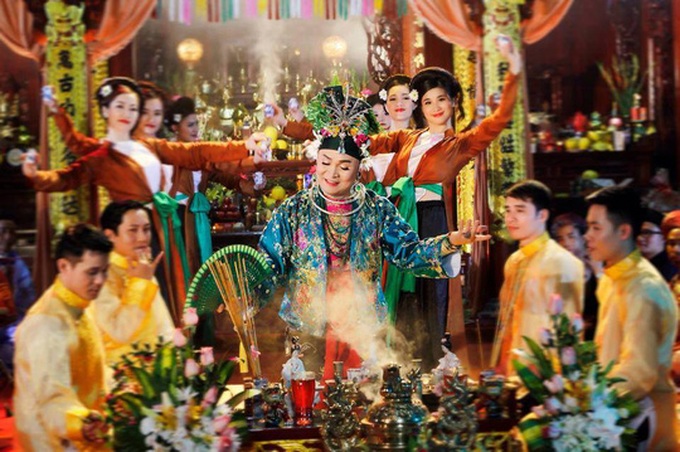
The Tam Phu Mother Goddess worship is a form of worship of the Mother Goddess incarnated in the heavens, rivers, and mountains, formed on the foundation of the Goddess worship.
Furthermore, the Mother Goddess worship tradition expresses reverence for ancestors, promotes national pride and community cohesion; it acknowledges similarities and respects cultural diversity. For the Vietnamese people, Mother Goddess worship is a sacred belief, a unifying force for the community, and a spiritual anchor that helps the nation overcome all the difficulties and challenges of history to survive and develop.