VI
VI


Even now, the true origin of the Mid-Autumn Festival remains a subject of debate among many scholars. Some believe it is a vestige of Chinese cultural influence, while others assert that it is a traditional festival originating from the rice-farming civilization of Dai Viet (Vietnam).
According to numerous studies, images of the full moon festival were found on the Ngoc Lu bronze drum, and the Mid-Autumn Festival has long been an important holiday for the Vietnamese people. It's not only a time for family reunions and expressing respect for ancestors, grandparents, and relatives, but also a special holiday for children with unique gifts and games.
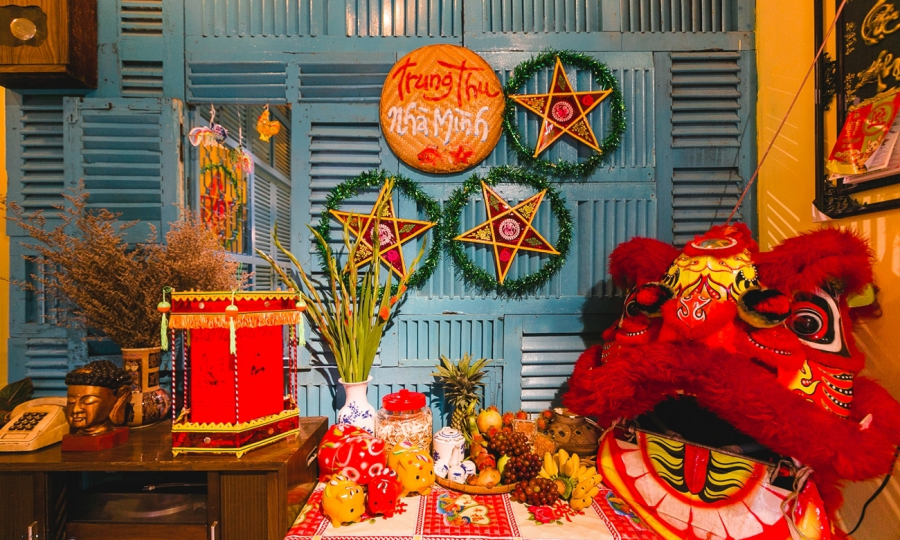
Depending on the region, with its unique climate, geography, and seasonal produce, the Mid-Autumn Festival feast in the three regions of Vietnam differs, but all convey the purest wishes of the Vietnamese people for good fortune, prosperity, peace, and fertility.
Mid-Autumn Festival feast in Northern Vietnam
Northern Vietnam is where one can feel the most noticeable change in climate. As autumn arrives, the sky seems bluer and clearer, the sun is no longer harsh but gentle and golden, and the wind is soft and cool.
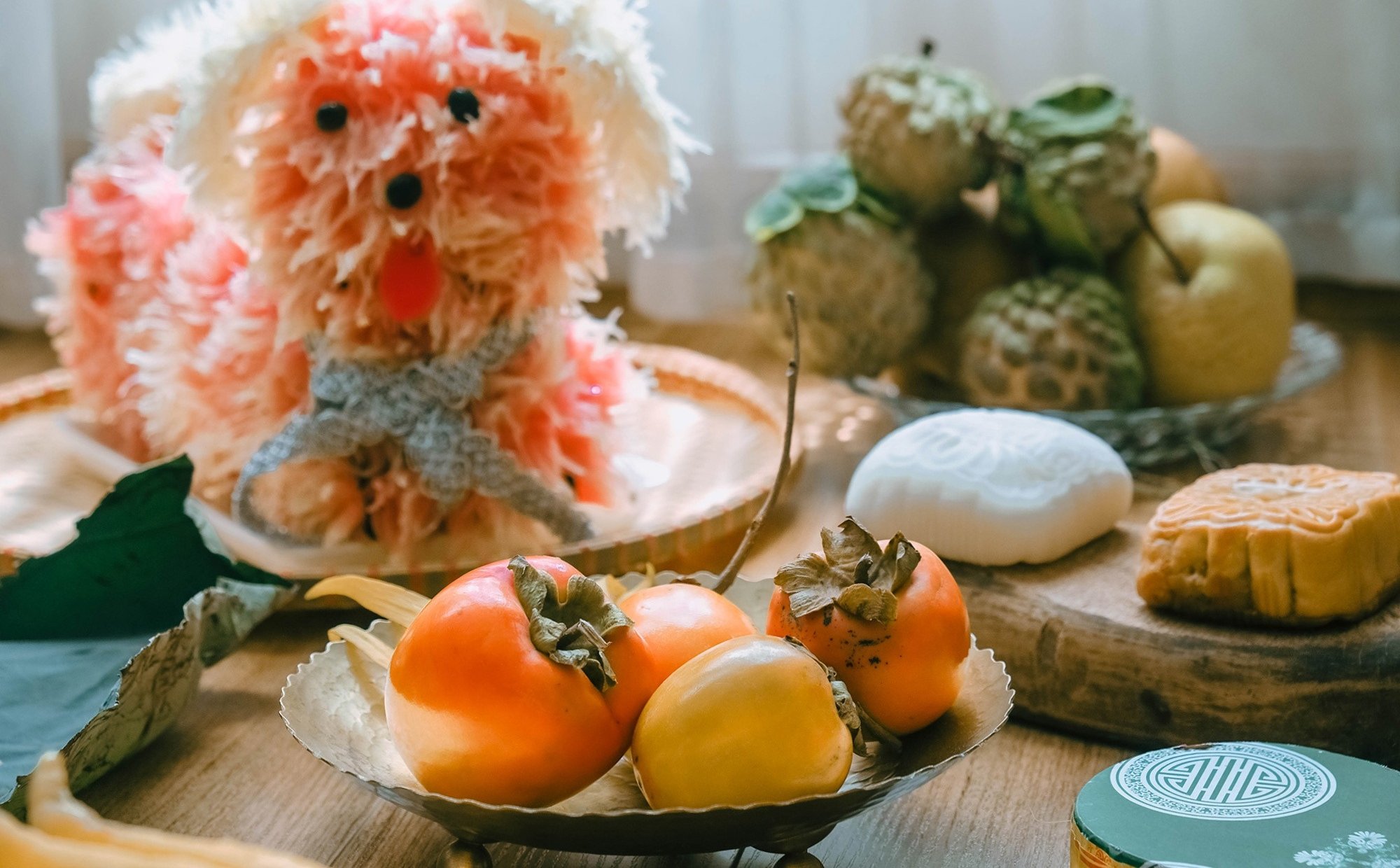
The Mid-Autumn Festival feast in Northern Vietnam is elegant and refined, associated with bountiful harvests and fragrant flowers and sweet fruits that are specialties of the Northern autumn, such as fragrant green sticky rice and ripe, juicy red persimmons.
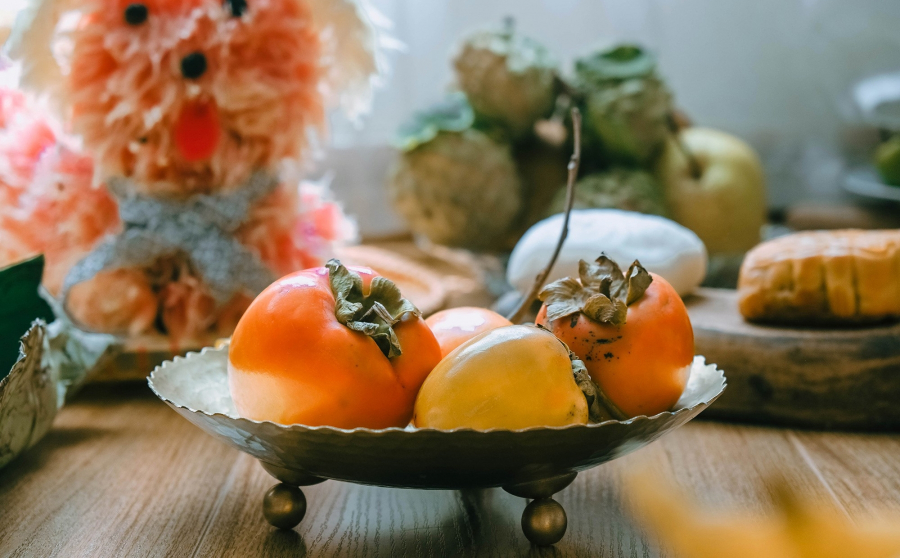
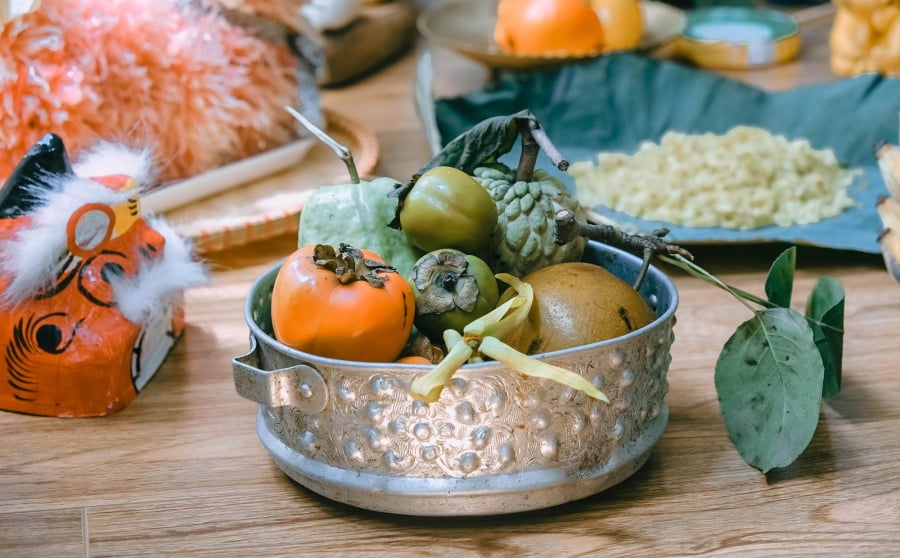
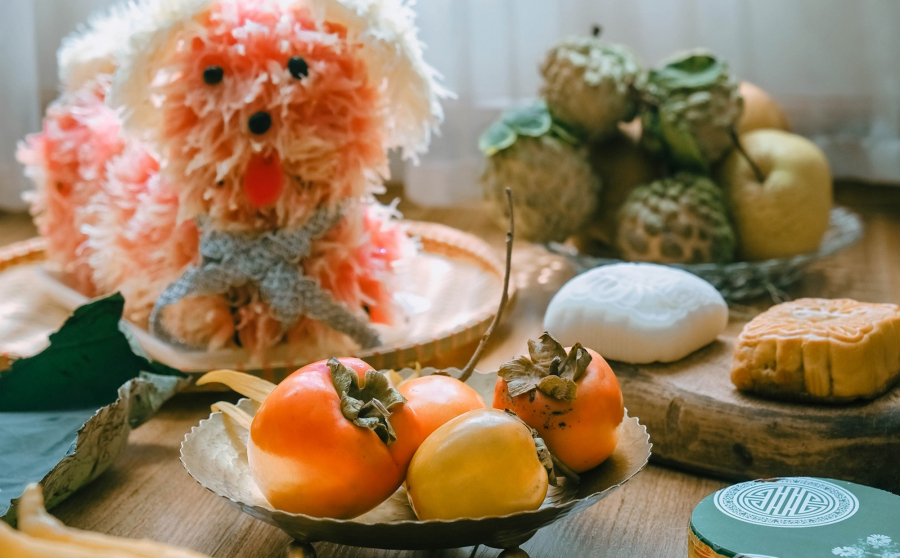
In Northern Vietnam, preparations for the Mid-Autumn Festival begin in early August. At that time, the streets are filled with treats, cakes, and colorful lanterns. Because it's a children's festival, the moon-gazing feast in the North is quite eye-catching, featuring whimsical creations like stuffed dogs made from pomelo segments, paper figures of scholars, and animals made from fruits and colored paper. The Mid-Autumn feast is much simpler now than it used to be, but it still includes essential fruits like ripe yellow bananas, red persimmons symbolizing hope, custard apples representing fertility, pomelos signifying good fortune, and pomegranates representing sweetness and luck. Generally, a complete and meaningful Mid-Autumn feast, according to Northern Vietnamese tradition, must include green and ripe fruits, and a balance of five colors and five flavors, symbolizing the balance of yin and yang in the universe.

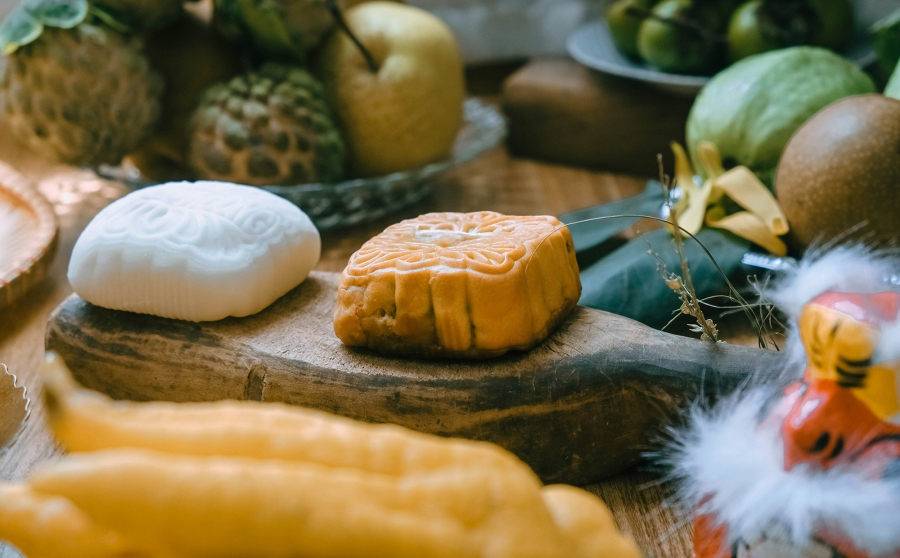
In addition, the Mid-Autumn Festival feast in Northern Vietnam cannot be without baked and glutinous rice cakes shaped in round or square forms symbolizing heaven and earth, or in the shapes of pigs, carp, etc., to be enjoyed with lotus-scented tea.
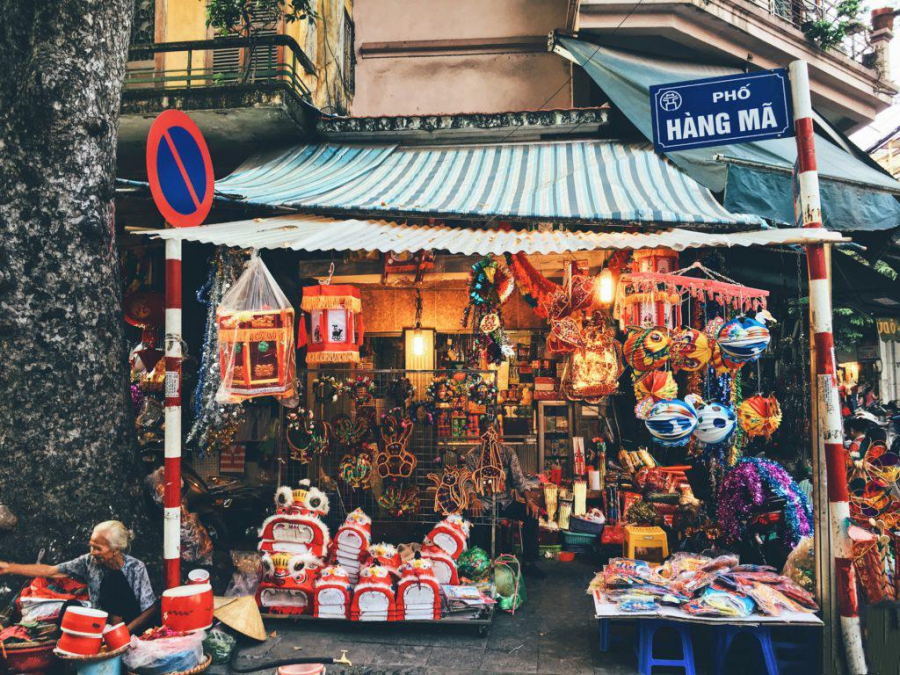
During these days, in Hanoi's main streets such as Hang Ma, Luong Van Can, and Hang Ngang - Hang Dao, competitions are often held to select the most beautiful and meaningful food platters for the Mid-Autumn Festival.
Mid-Autumn Festival feast in Central Vietnam
Unlike the North, which is blessed with favorable natural conditions, the Central region has a rather harsh climate and lacks abundant fruits and flowers. Therefore, the Mid-Autumn Festival feast in the Central region is quite simple and not overly concerned with formality.
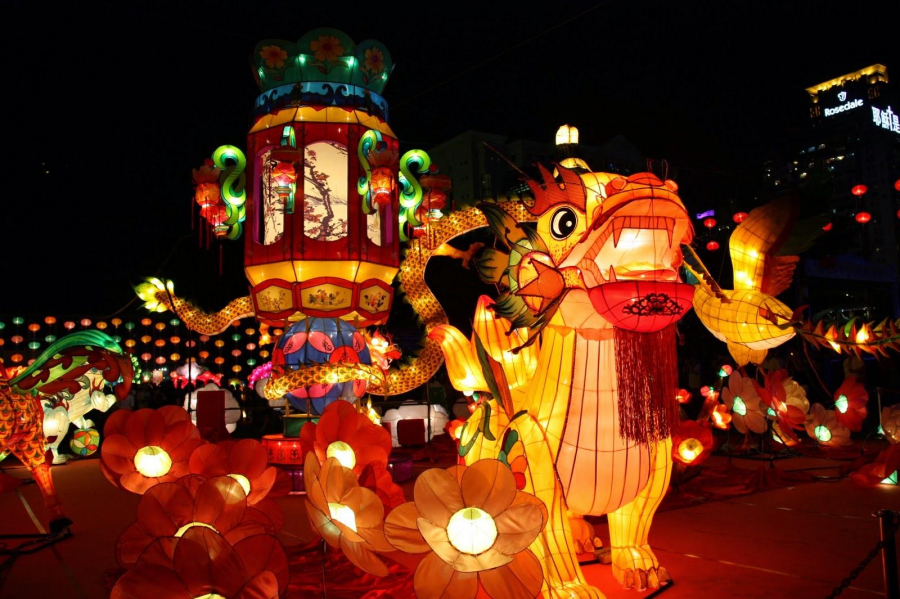
During the Mid-Autumn Festival, people in Central Vietnam usually offer whatever they have available, primarily as a sincere expression of respect to their ancestors. However, this does not mean that the full moon of the eighth lunar month in Central Vietnam becomes a simple celebration; on the contrary, it becomes an occasion for fun with many unique games and performances.
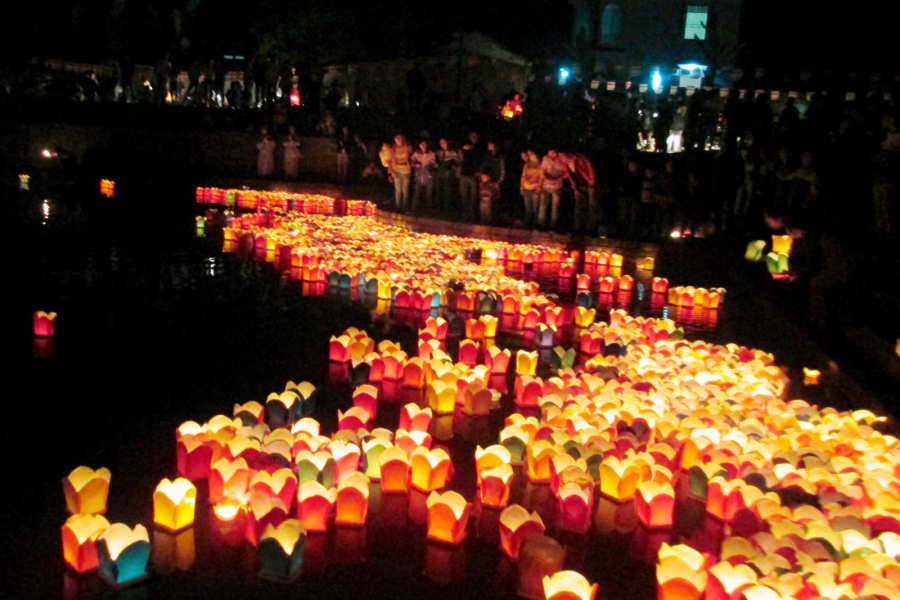
In Central Vietnam, the most spectacular places to celebrate the Mid-Autumn Festival are Hue and Hoi An. These cities host numerous lively activities that attract large numbers of tourists, such as lion dances, releasing floating lanterns on the Perfume River and Hoai River, and lantern festivals. Particularly on the night of the full moon, the ancient capital of Hue and the old town of Hoi An are often illuminated by hundreds of colorful lanterns, creating a dazzling and magical atmosphere.
Southern Vietnamese Mid-Autumn Festival Feast
With its mild climate, alternating rain and sunshine, and the fertile Mekong Delta with its abundant orchards, Southern Vietnam boasts a rich variety of fruits. Therefore, the Mid-Autumn Festival feast in Southern Vietnam, in addition to traditional mooncakes, cannot be without five fruits: custard apple, fig, coconut, papaya, and mango, symbolizing the wish for "enough to use." Furthermore, the feast also includes three pineapples as a base, representing stability and the desire for a large family with many children and grandchildren.
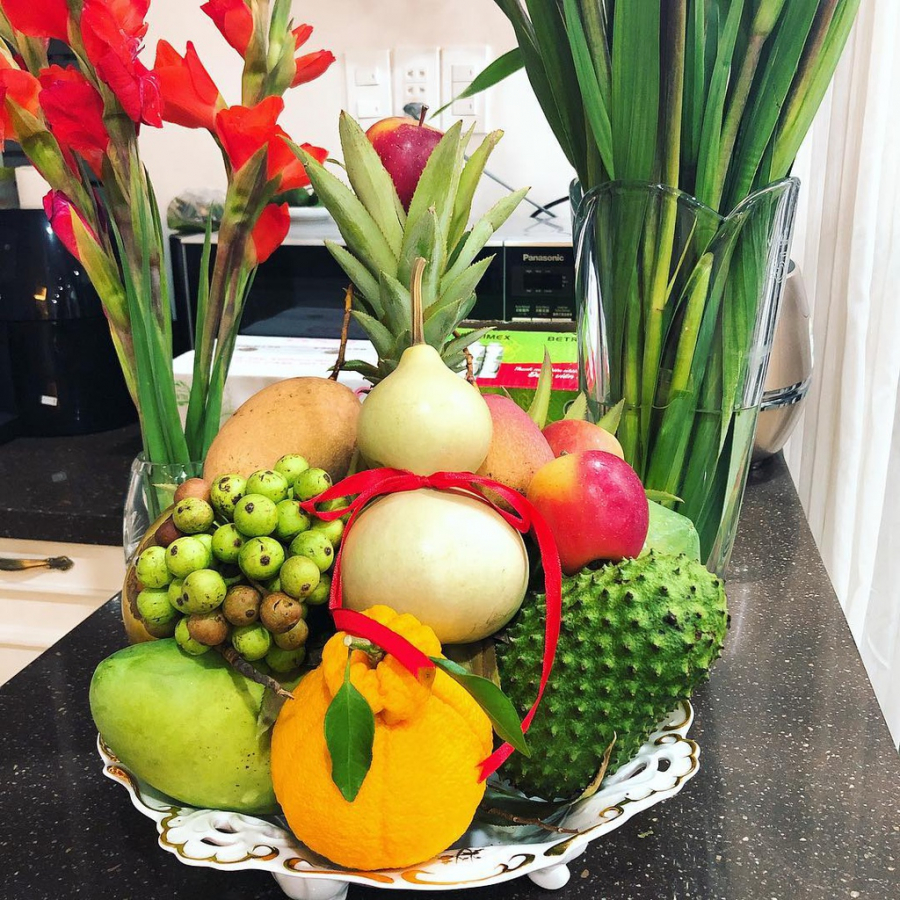
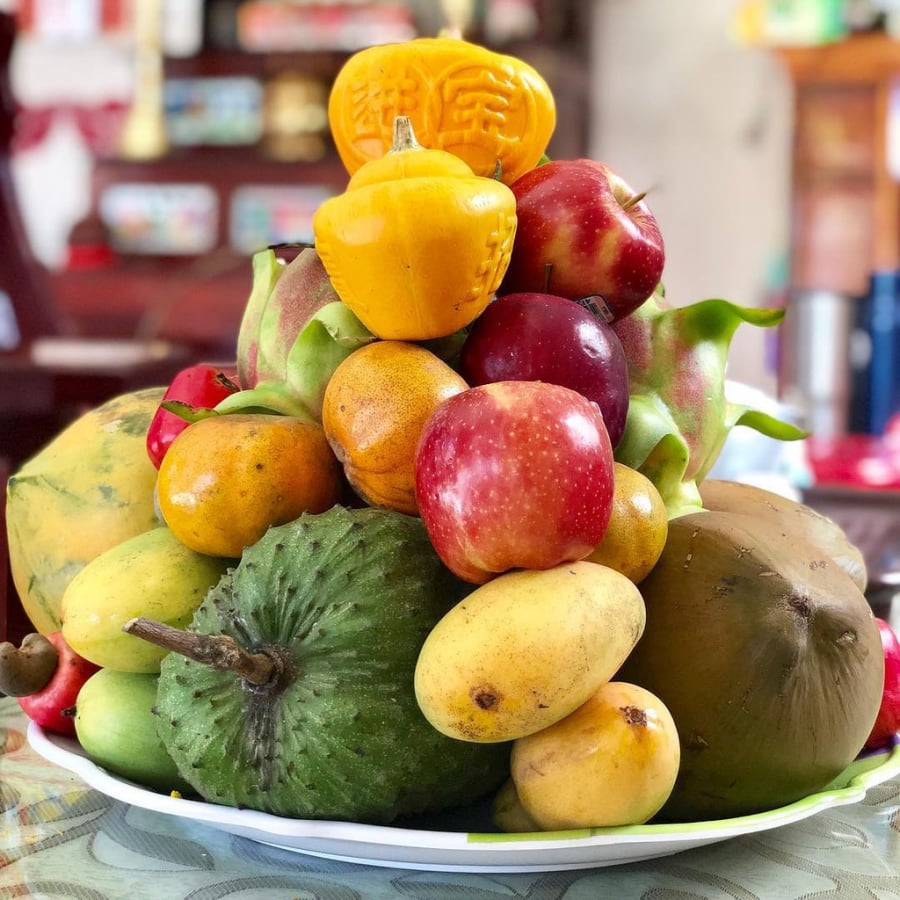
Although quite liberal and generous in their lifestyle, many people in the South also have certain taboos, such as not including fruits like bananas, pears, oranges, and tangerines in their offerings for the Mid-Autumn Festival.
Southern Vietnam also has a large Chinese population, so the Mid-Autumn Festival here is very special. In the Chinese neighborhoods, the full moon night is celebrated very enthusiastically with many activities such as lion and dragon dances, lantern displays, etc.
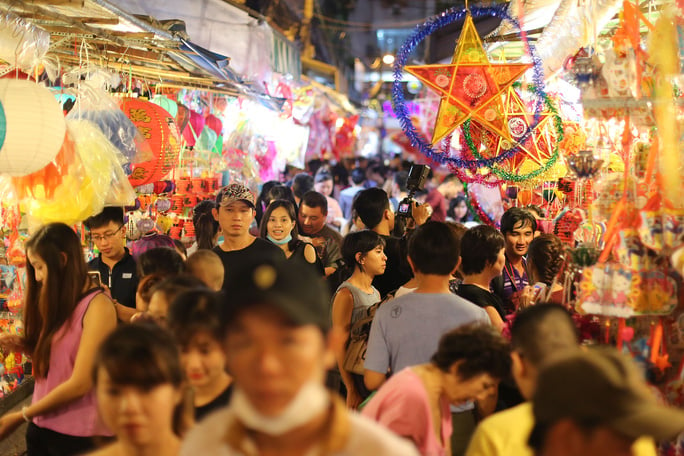
During the Mid-Autumn Festival, Luong Nhu Hoc lantern street (District 5, Ho Chi Minh City) becomes a popular destination attracting many tourists with its diverse cultural colors.