VI
VI


The appeal of "Brother Says Hi" and "Brother Overcomes a Thousand Obstacles"
"Brother Overcoming a Thousand Obstacles" and "Brother Says Hi" are two music-related reality TV shows that are taking Vietnam by storm. Each show has its own style; "Brother Overcoming a Thousand Obstacles" features experienced male artists in various fields such as music, acting, and sports, while "Brother Says Hi" brings a youthful atmosphere with young artists, some even making their reality TV debut. With their diverse and engaging approaches, both have quickly attracted a large fan base of all ages.
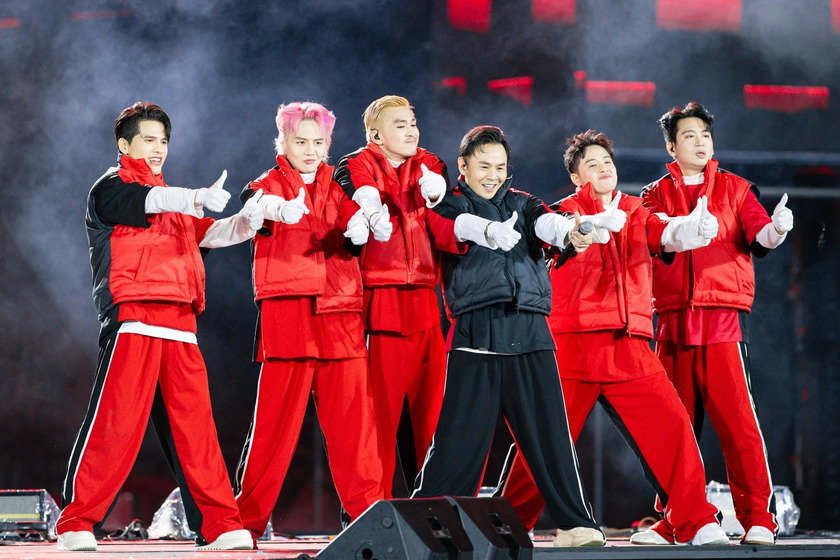
"Brothers Overcoming a Thousand Obstacles" is for male artists with extensive experience in various fields such as music, acting, and sports.
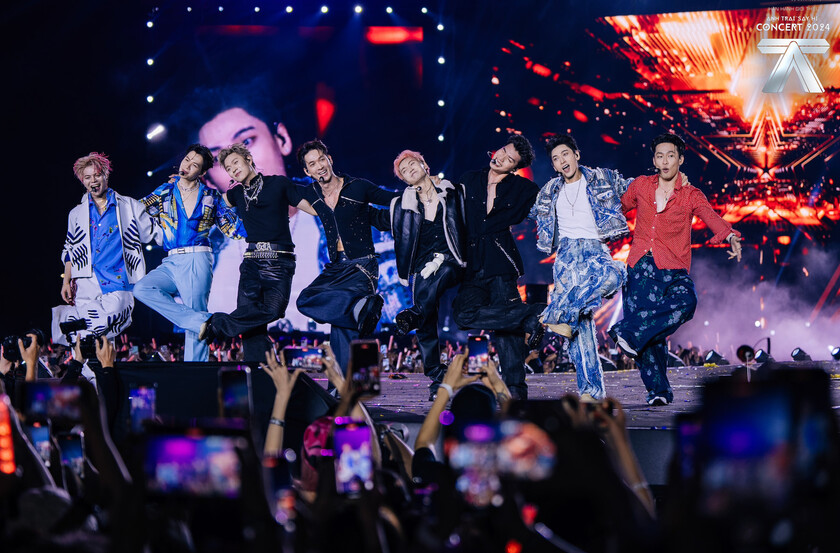
"Brother Says Hi" has a youthful atmosphere thanks to its young artists, some of whom are even participating in reality TV for the first time.
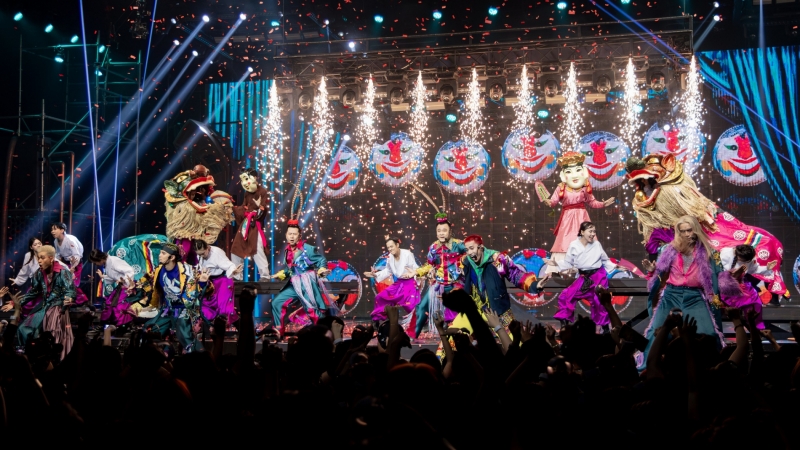
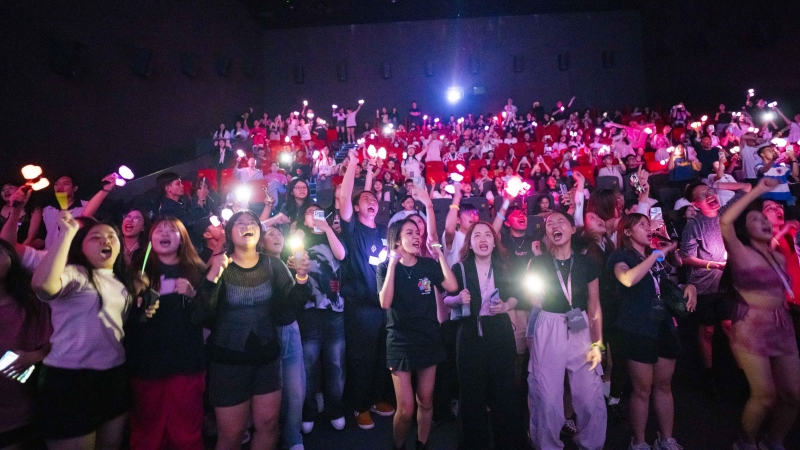
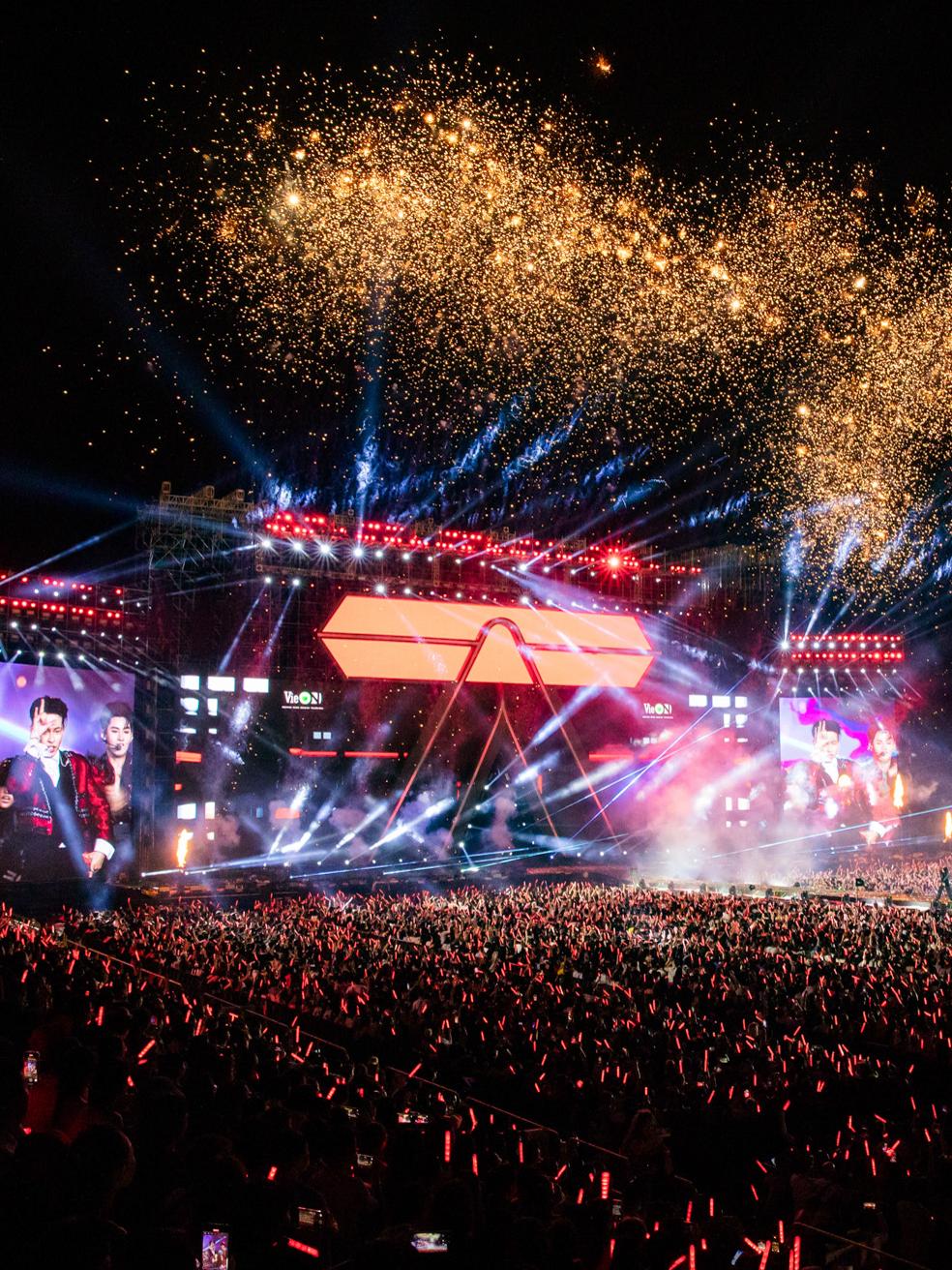
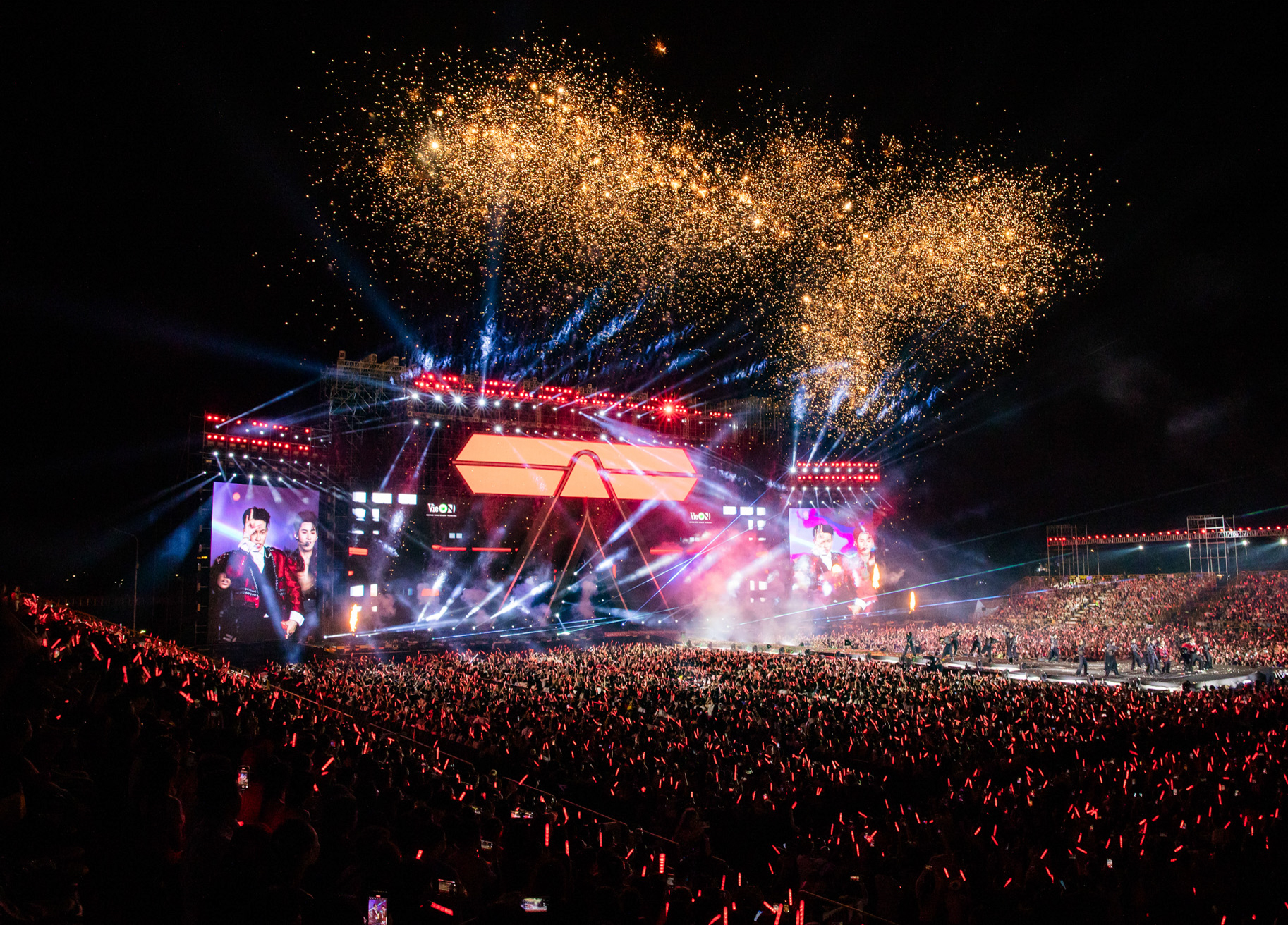
The concerts held in Ho Chi Minh City for both programs demonstrated this tremendous appeal. The first concert of "Brothers Overcoming Thousands of Obstacles" on October 19th brought together 32 artists and guest performers, all meticulously invested in from sound and lighting to choreography and staging. "Brothers Say Hi," not to be outdone, held two concerts on September 28th and October 19th, attracting over 78,000 live attendees.
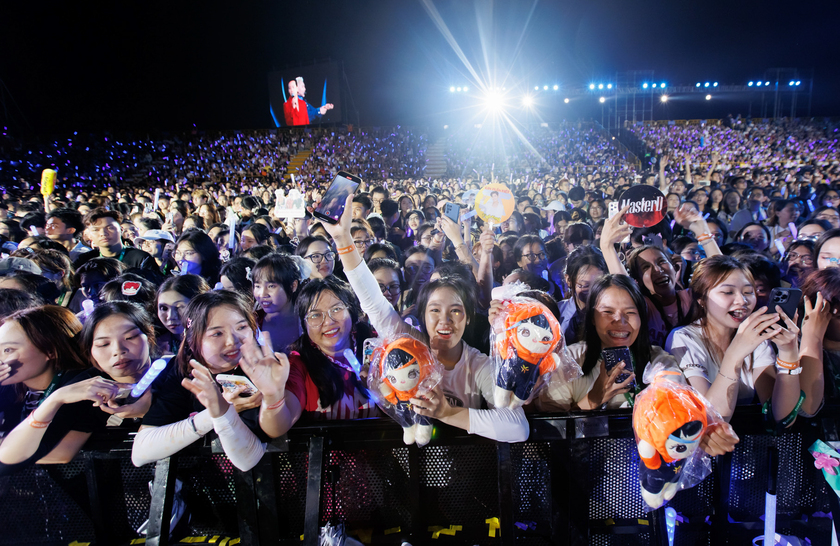
These two popular programs currently attract a large number of viewers.
When the organizers announced additional concerts in Hanoi, the audience continued to flock in without any decrease. The third concert of "Anh Trai Say Hi" will be held at My Dinh National Stadium on December 7th, followed by the second concert of "Anh Trai Vuot Ngan Chong Gai" on December 14th at Vinhomes Ocean Park 3.
Media expert Nguyen Ngoc Long commented that, besides the influence of social media, the quality of the programs and the participation of famous artists are the factors that create the strong appeal of both shows. "The sold-out tickets are understandable when both shows have been widely publicized on social media platforms such as YouTube, TikTok, Facebook, Threads... Each artist also has their own communication channel to interact with fans, making them willing to spend money to come and enjoy the shows in person," Mr. Nguyen Ngoc Long shared.
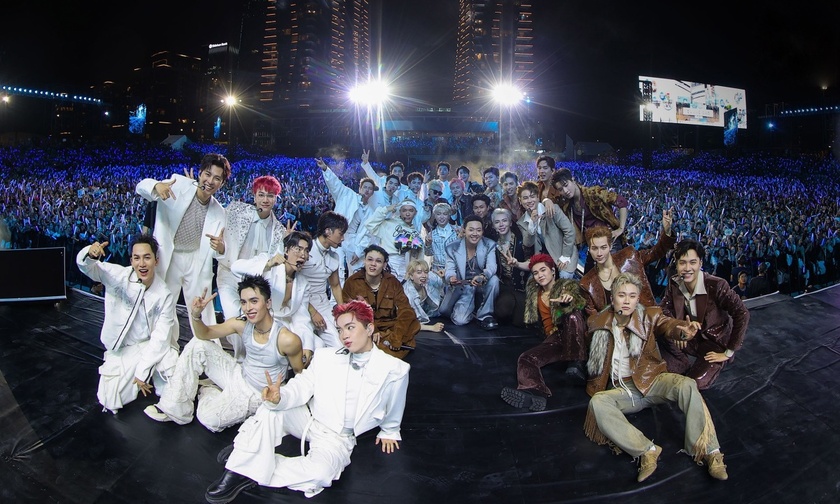
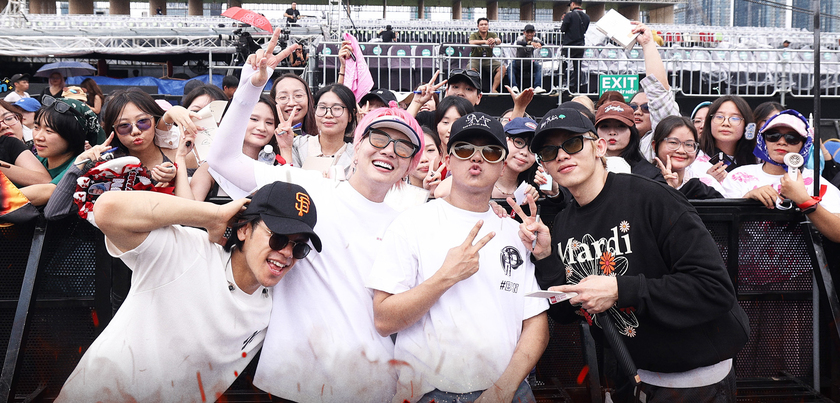
Artists interact with fans during the show.
The large-scale investment in these two programs has also elevated the level of entertainment event organization in Vietnam, fostering pride in "made in Vietnam" programs of international quality. Mr. Nguyen Ngoc Long further emphasized: "Previously, young people who wanted to see concerts by international stars had to spend money traveling to Thailand, South Korea, or Singapore, incurring significant costs. Now, having high-quality programs organized in Vietnam shows that the country's performing arts industry has reached a new level, attracting strong interest and support from young people."
The fierce battle for tickets
Beyond just media attention, the two events also sparked an incredibly fierce ticket-grabbing frenzy. The ticket sales for the "Anh Trai Say Hi" concert on November 7th saw 50,000 people flock to Ticketbox to compete for tickets, with prices ranging from 500,000 VND to 10 million VND. Just 45 minutes after registration opened, all ticket categories were sold out, forcing organizers to open an additional official sales round at 12 noon that same day. In less than an hour, all tickets were sold out.

On November 12th, when tickets for the "Brother Who Overcame a Thousand Thorns" concert in Hanoi went on sale, the Ticketbox website crashed immediately due to the overwhelming number of visitors. Although the system returned to normal after 10 minutes, the queue still stretched to over 160,000 people. Within 40 minutes, tickets ranging in price from 800,000 VND to 8 million VND were completely sold out.
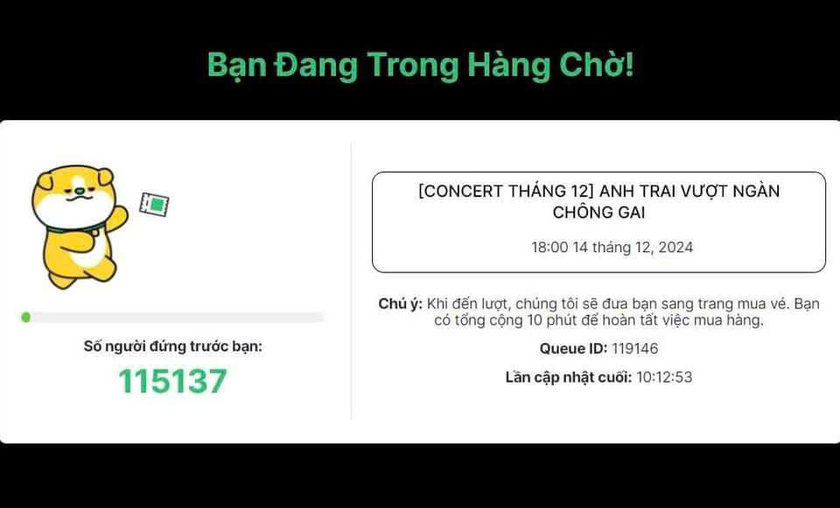
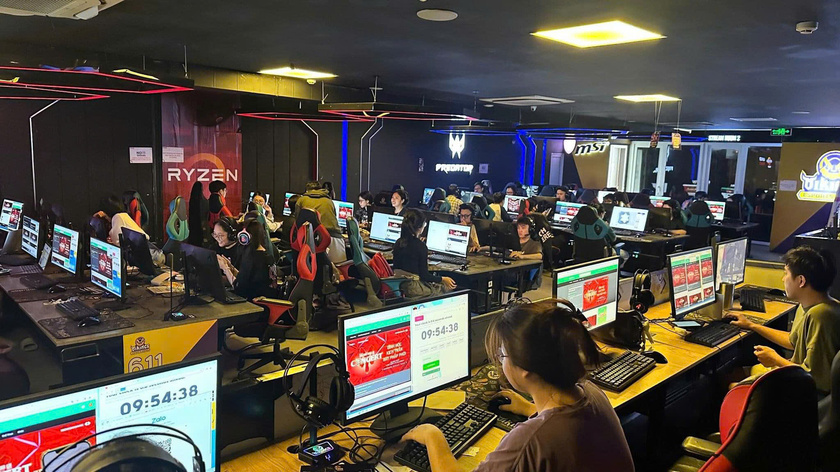
Many people even went to internet cafes just to access the ticket booking website.
Many fans, despite the difficulties, rented entire internet cafes to ensure faster access in order to secure the precious tickets. Some shared, "The internet cafe was full of computers, I had to pray while I hunted for concert tickets." However, despite their thorough preparation, many still failed due to fierce competition from automated bots – tools used by speculators to grab large quantities of tickets as soon as they went on sale.
According to a report by Imperva, 83.4% of traffic to event ticketing websites globally comes from automated bots. These bots are designed to bypass security measures and purchase tickets in bulk at a speed far exceeding that of human buyers. This puts immense pressure on genuine fans, forcing them to wait in long lines without being able to purchase tickets.
According to TechWire, bots typically use a "three-stage" strategy for each ticket sales round:
- In the initial stages, bots constantly scan ticket sales websites and social media platforms. This allows them to identify ticket sales opening times and upcoming events. They can also create numerous fake accounts to maximize their chances of purchasing tickets.
- Then, to ensure they can purchase large quantities of tickets without detection, the bots use proxy networks to bypass security barriers, bypass security checks like CAPTCHA, generate requests from multiple IP addresses, and make purchases whenever the opportunity arises.
- Finally, there's automated payment. Bots make payments using multiple methods, accounts, and credit cards to avoid detection.
Because they generate a large volume of transactions, these automated bots can easily overload, destabilize, and cause technical errors in the ticketing system. As a result, genuine audience members have to wait a long time and sometimes cannot buy tickets at all.
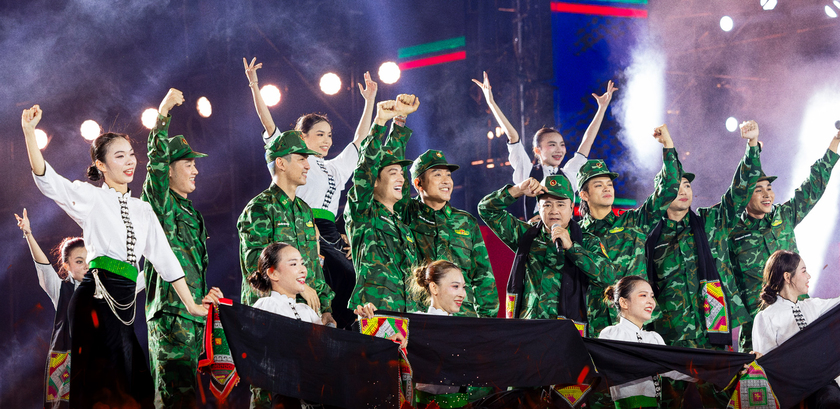
Despite being willing to pay for the concert, fans were still unable to get tickets.
Black market tickets drive up prices, fans face many difficulties.
The black market ticket problem has put fans in a dilemma. With official tickets completely sold out, those wanting to attend the "Brother Say Hi" and "Brother Overcoming Thousands of Thorns" concerts are forced to resort to the black market, but in many cases, the prices are inflated significantly, sometimes up to eight times the original price. Speculators are taking advantage of the ticket scarcity to profit from fans, making it difficult for genuine fans to attend the show.
With prices ranging from a few hundred thousand to several million dong higher than the original price, many fans had to resort to buying tickets from black market vendors to avoid missing the event. Duong Minh Hai, a fan of the show, said: "It's really frustrating that tickets are already hard to buy, and then the prices are inflated many times over. I waited in line and still got scammed."
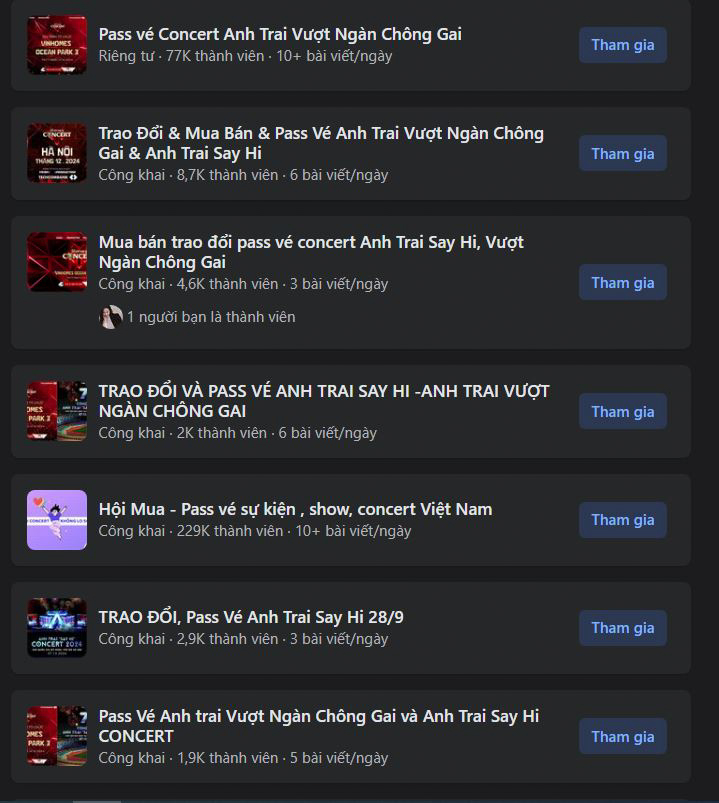
Ticket scalping groups are rampant on social media.
In addition, scams on online ticketing platforms are also on the rise. Ms. Nguyen An shared, "I'm so afraid of being scammed when buying online; I don't know if anyone will be selling tickets at the concert venue on the day of the event." This exposes fans to many risks when buying tickets on the black market.
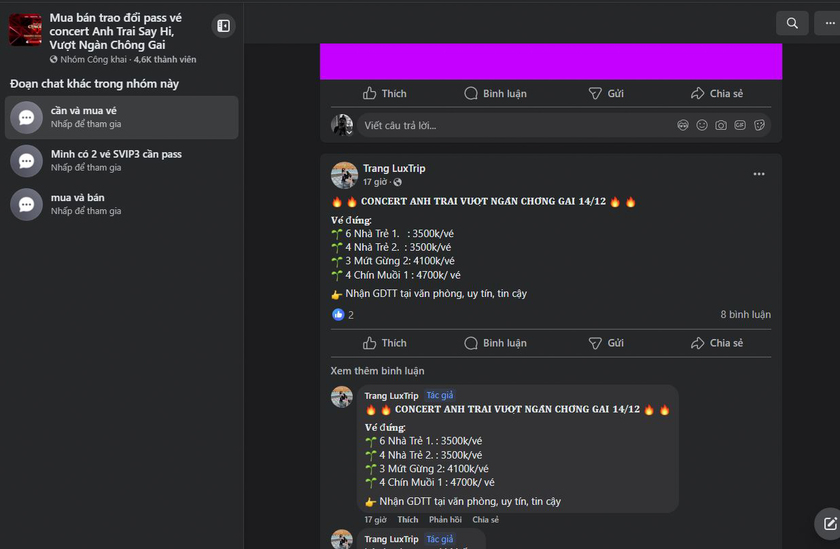
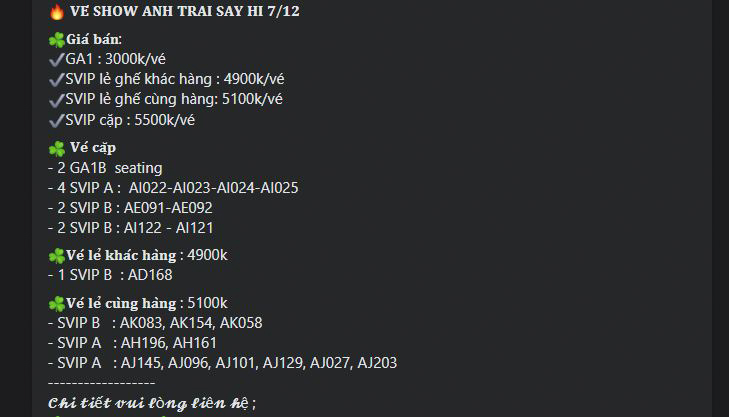
The practice of reselling tickets at exorbitant prices makes it difficult for genuine audience members.
Many fans of both shows are currently calling for a boycott of black market tickets and advising against buying from scalpers. Some artists, such as Quân AP, have also advised fans against buying tickets through unofficial channels to avoid the risk of losing money and getting ripped off. Many believe that organizers and ticketing platforms like Ticketbox should implement stricter controls, from requiring registration of personal information for each ticket to opening additional official ticket sales rounds, in order to reduce speculation, protect audience rights, and make it easier for fans to obtain tickets.