VI
VI


You won't know Chuon Lagoon until you've been there...
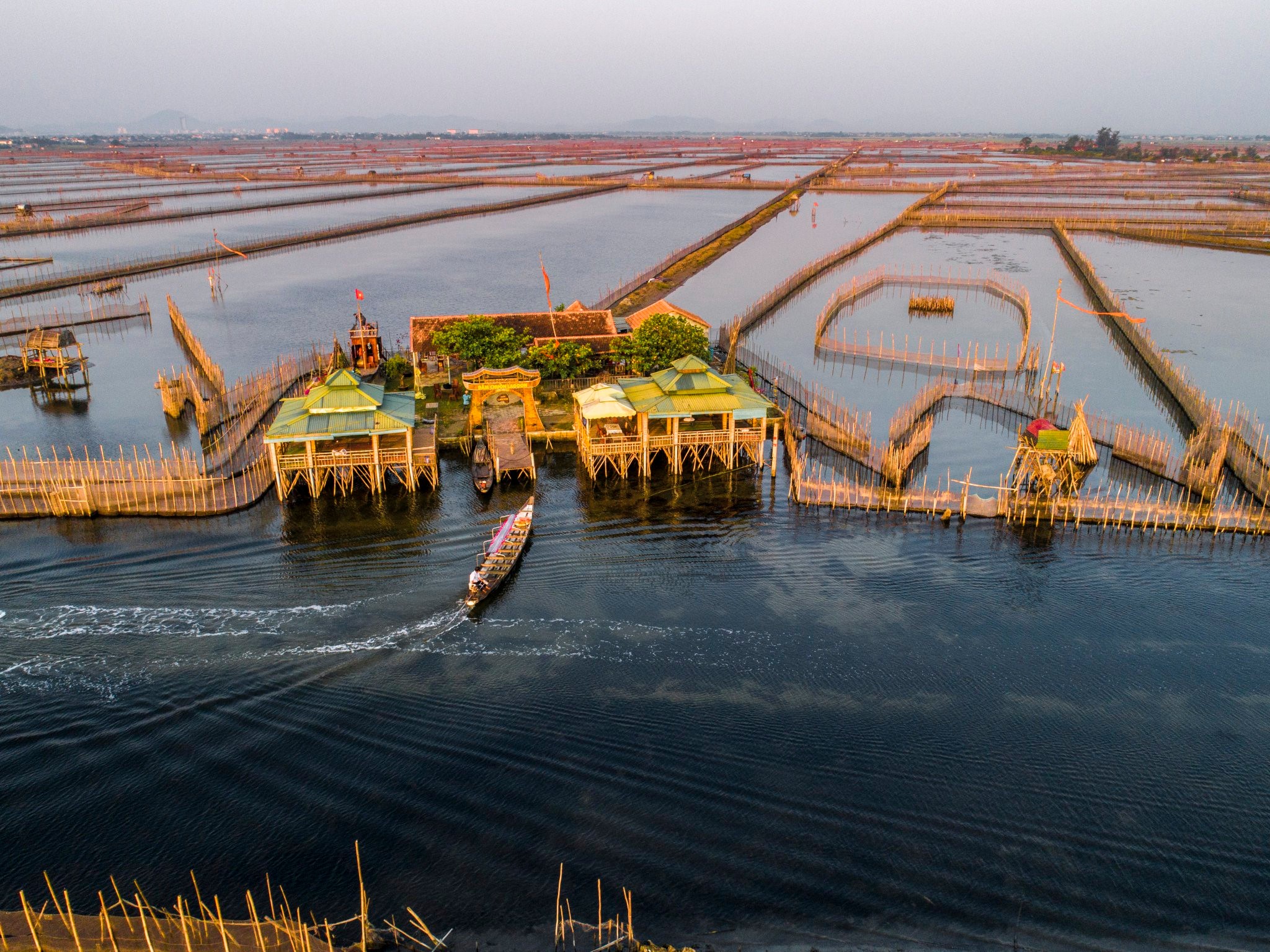
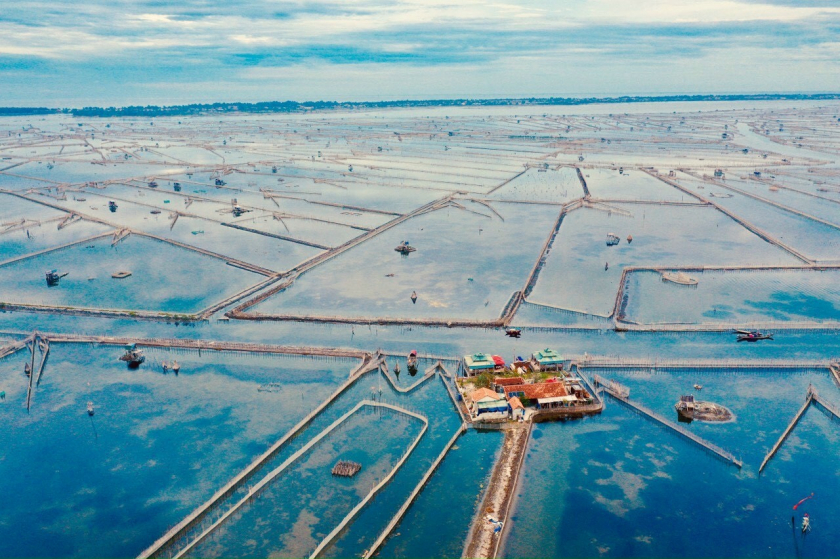
Chuon Lagoon, a community-based ecotourism destination, is located in Phu An commune, Phu Vang district, about 15 km east of Hue city center. The lagoon is in the Chuon village area, formerly known as An Truyen, but locals have traditionally called it Chuon village. (If you see the names of two villages in the same area on Google Maps, they are actually the same place!).
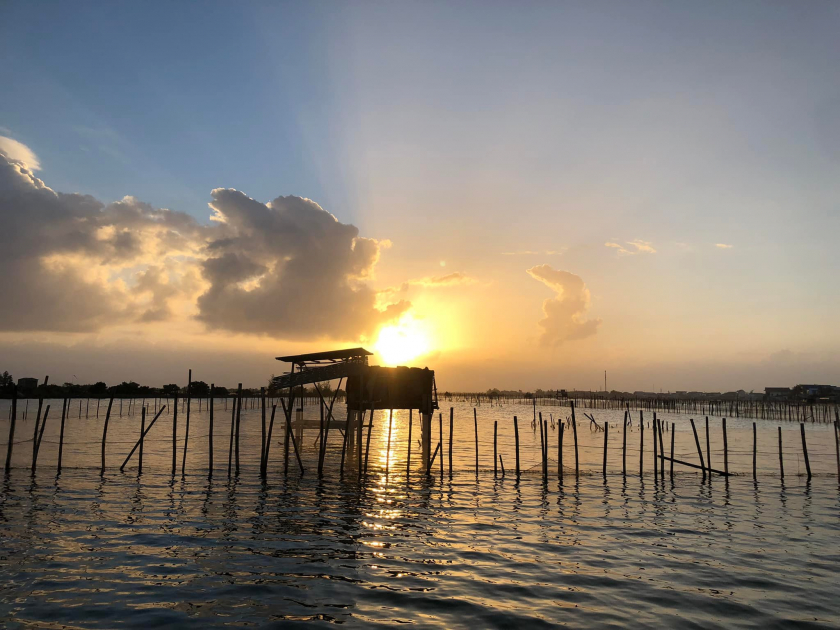
Before coming here, I was introduced by Mr. Tran Quang Hao - CEO of Huetourist and also the "king" of Dam Chuon Lagoon, owner of Chuon Lagoon restaurant, that Tam Giang Lagoon in Hue is beautiful at sunset, with its shimmering golden water and various shapes captivating travelers from afar. Dam Chuon is part of the lagoon area where, in addition to admiring the magical color changes of the waves, visitors can also experience being a fisherman with activities such as casting nets and setting traps... Then, in the evening, they can savor delicious fresh seafood dishes.
He further "advertised" that nature had bestowed upon Chuon Lagoon – in combination with Sam Lagoon, Ha Trung Lagoon, and Thuy Tu Lagoon – a lagoon system with a surface area of over 200 square kilometers.2, contributing significantly to the expansion of the Tam Giang - Cau Hai aquatic ecosystem, which stretches nearly 70 km and boasts the largest lagoon surface area in Southeast Asia.
Arriving at the pier to head to Chuon Lagoon, I was warmly welcomed by Mr. Son, an elderly fisherman from the area, who then took me on a speedboat tour around the lagoon. Amidst the sputtering of the engine, he thoughtfully shared that normally, after the floods in Central Vietnam, the area is bustling with tourists, but at this time, due to the pandemic, tourism at Chuon Lagoon has almost come to a standstill. It had been a long time since Chuon Lagoon had been so peaceful, so he was very pleased to have me as his first traveler of the year.
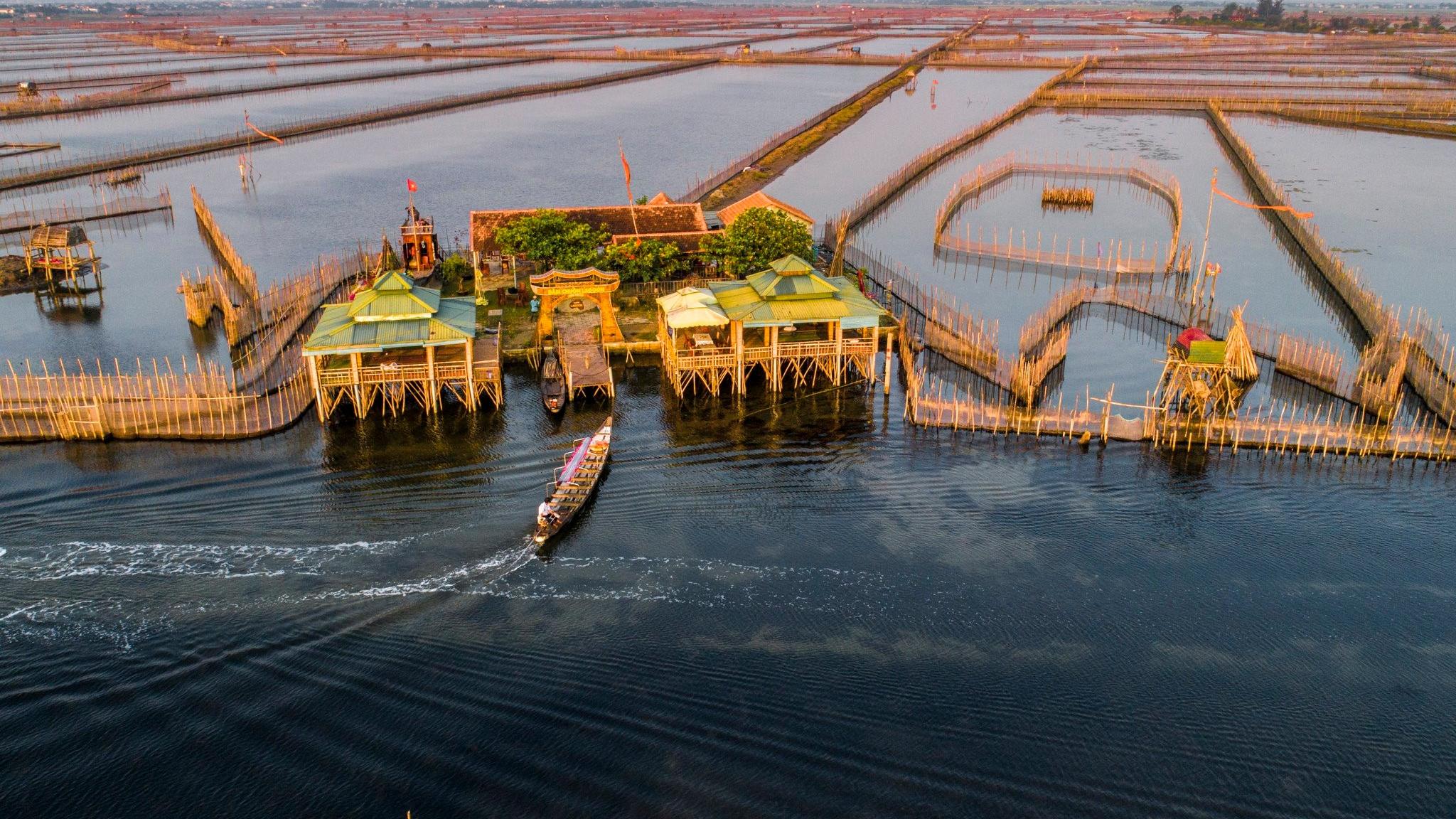
The boat glided smoothly through rows of bamboo stakes, dotted with stilt houses and bamboo screens – a system of fishing gear used by fishermen to raise seafood in the lagoon. The man explained to me that a stilt house is a small hut, a few square meters in size, built from bamboo, serving both as a living space for fishermen and a place for tourists to stay overnight, admire the moon and stars, and share meals with them. I learned about bamboo screens, also known as nets, what a fish trap is, and how to distinguish between different types of fish like gobies, freshwater shrimp, and other species. In the distance, the fishermen continued their work quietly on the lagoon, a place deeply intertwined with their lives.

Cuisine of Dam Chuon
Tourism at Chuon Lagoon is typically crowded from April to July each year, which is the beginning of the seafood harvesting season. Furthermore, the seventh lunar month also features a unique festival organized by the local people: the procession of the village's ancestral spirits.
Mr. Son took me to Chuon Lagoon restaurant – a mound of land rising from the lagoon, known as the Chuon Lagoon oasis. The restaurant has a colorful bridge and many unique photo-taking spaces. Mr. Tran Quang Hao, the owner, has invested quite a bit in the landscape for customers to take pictures and "live virtually," especially with a replica of a large fishing boat, a lonely tree in the middle of the lagoon, wind chimes made of wooden fish, a wooden swing under the sea almond tree, and a large hammock where visitors can lie down, listen to music, and admire the Tam Giang lagoon.

Tourists visiting Chuon Lagoon
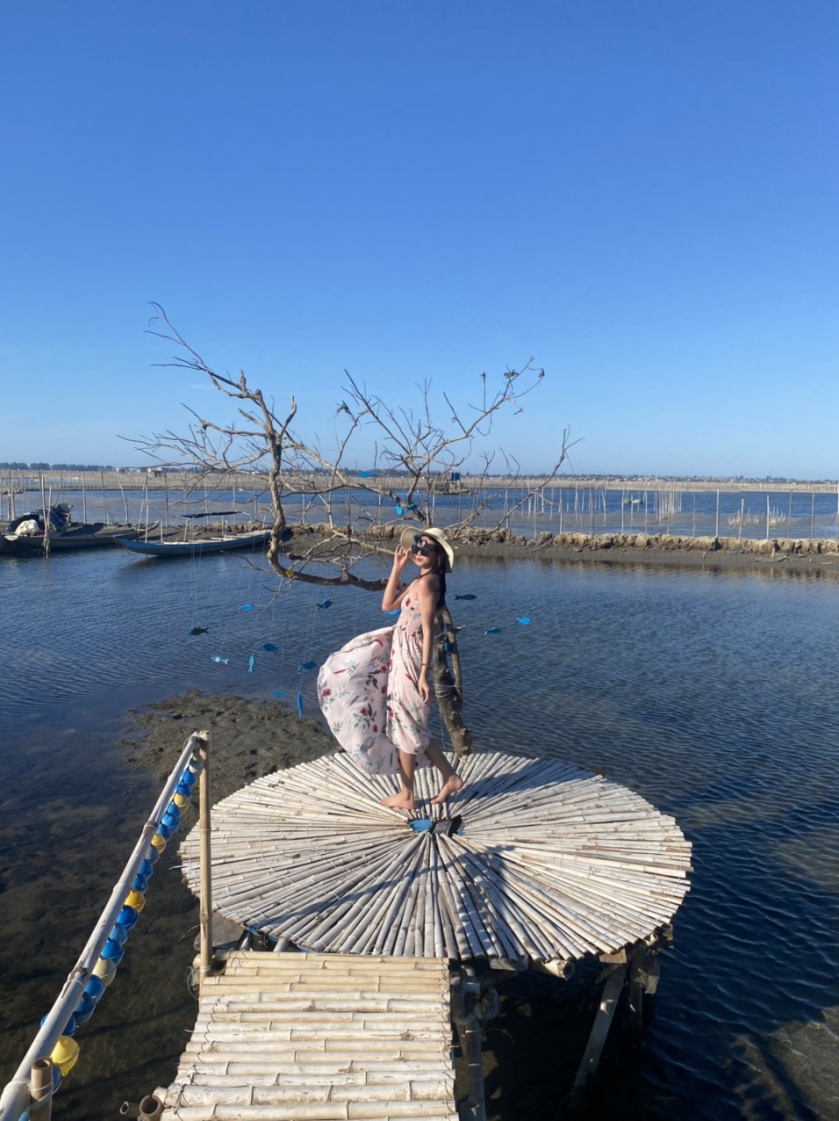
Guests check in at Chuon Lagoon.
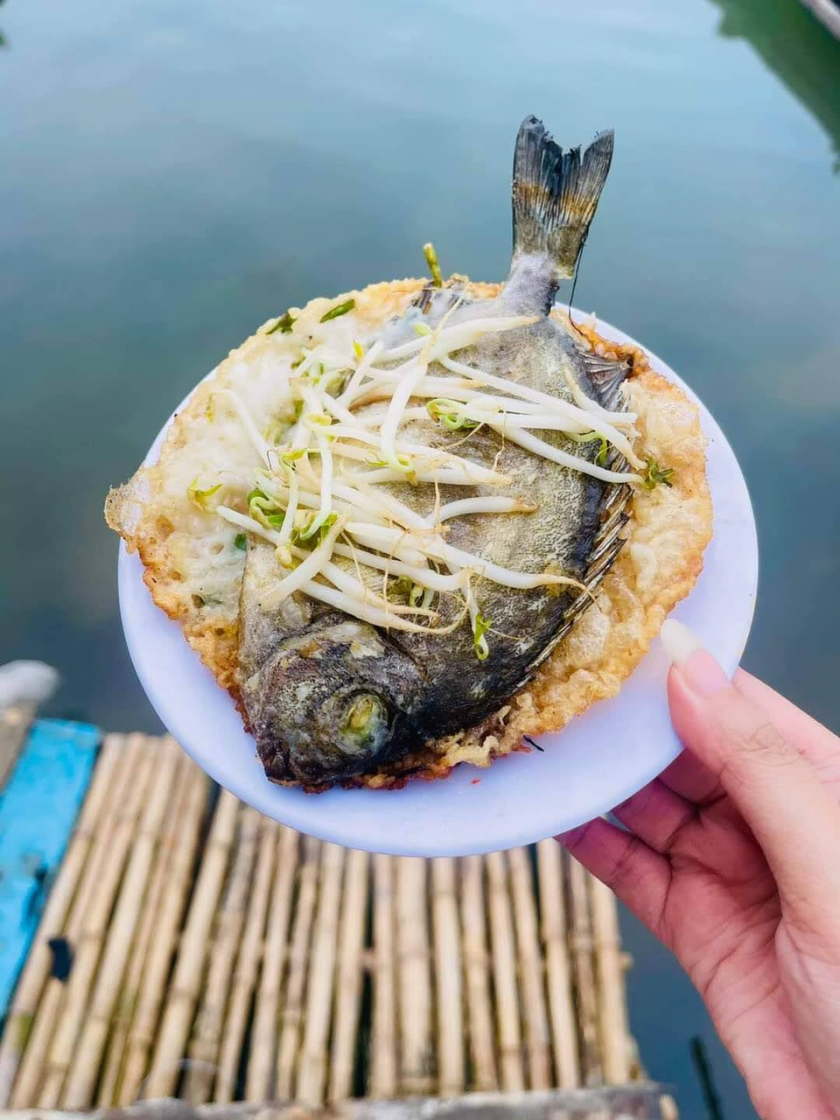
Mr. Son introduced the various seafood species of this lagoon area, such as kingfish, sea bream, grouper, snapper, tiger prawns, freshwater prawns, brackish water crabs, etc. The most famous specialty of Chuon Lagoon is kingfish. This is a type of flat-bodied, smooth-skinned fish that lives in schools and lays eggs in brackish water. The kingfish fishing season is from mid-April to June in the lunar calendar, when the fish are mature and breeding, so the meat is fragrant, fatty, firm, and the female fish can carry many eggs. From this fish, the people of Chuon village prepare local specialties such as kingfish pancakes (banh khoai/banh xeo), kingfish porridge, and kingfish sour soup. The deliciousness of the fish when prepared comes from its slightly bitter, fatty taste, and according to the locals, the fish's bile, although difficult to eat, is a miraculous "fish" medicine that helps diners sleep better.
I also had the chance to taste Thuan An seaweed dipped in a sauce made from crab meat. It was my first time trying this dish – and the feeling of experiencing this unique food will be unforgettable!
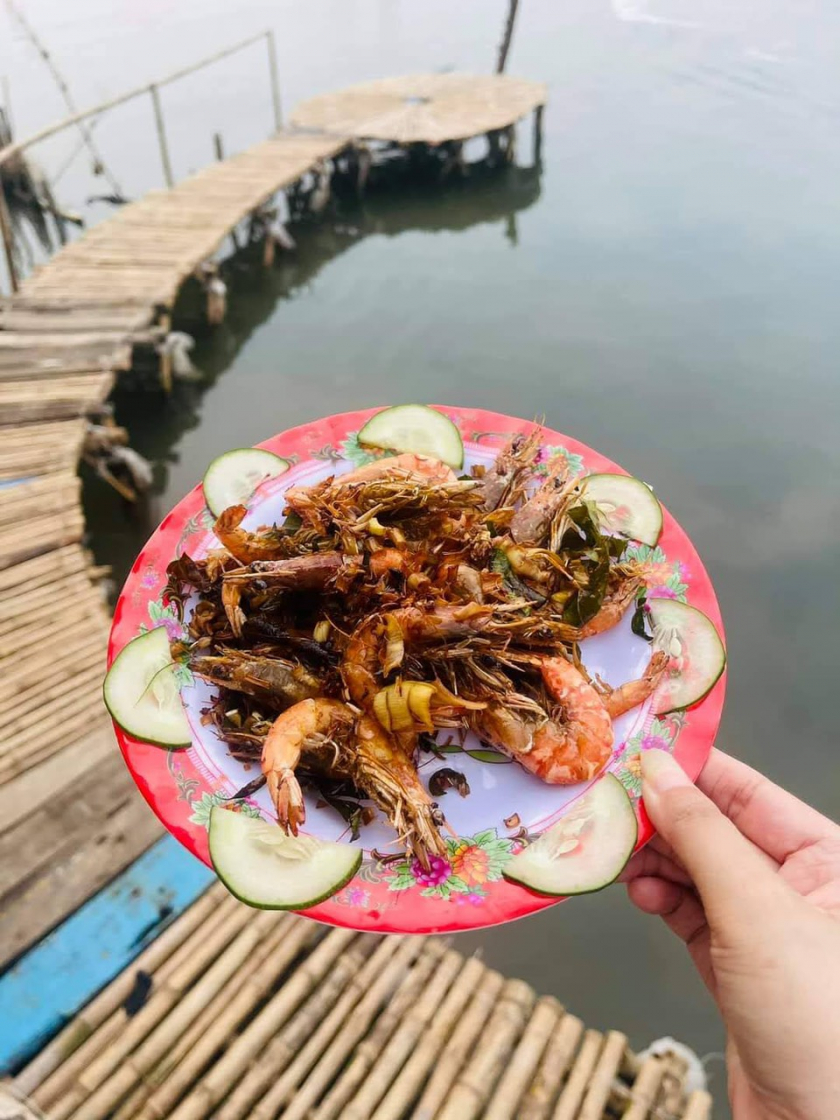
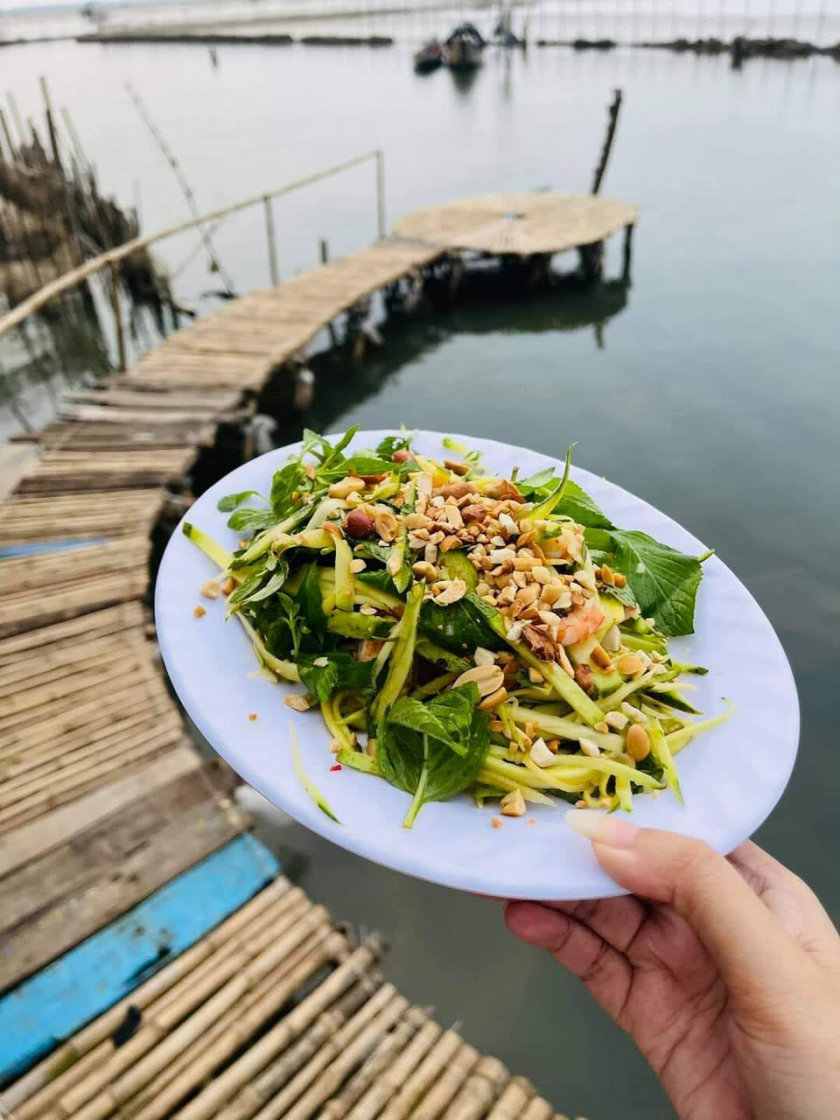
Chuon Village is also famous for a delicious type of wine that is highly recommended by diners from near and far. Chuon Village wine is a rare specialty that was once offered to the king. It is meticulously distilled using water from the Nhu Y River flowing through Chuon Village, local rice, specially processed yeast, and brewed in batches in copper jars, resulting in a pure, distinctive, and delicious wine worthy of its reputation as the royal wine of the ancient capital.
Taking a sip of Chuon village wine, biting into a whale fish pancake, and gazing out at the sunset over Chuon lagoon, surely any visitor would feel the same sense of ultimate relaxation as I did at this moment.
Contact details:
Chuon Lagoon Ecotourism Service: Con Phuong, Chuon Lagoon, Phu Vang District, Hue City
Phone number/Zalo: 0913458464