VI
VI


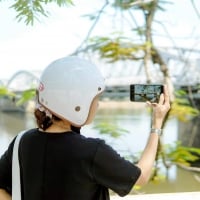
Ha Trinh, an IT Business Analyst, is currently working long-term in Australia. Due to the remote nature of her work, outside of work hours, she enjoys sharing her experiences living in different places, experiencing different cultures, and traveling to inspire herself and her friends.
Ha Trinh recently traveled to Bali, Indonesia, and experienced the cleansing bath at Tirta Empul Temple. She had the opportunity to visit and immerse herself in the impressive Hindu culture at Tirta Empul. This location is very popular with locals and tourists alike because only a few temples in Bali practice the Melukat cleansing bath ritual. Visitors of all religions and nationalities are welcome to experience it.
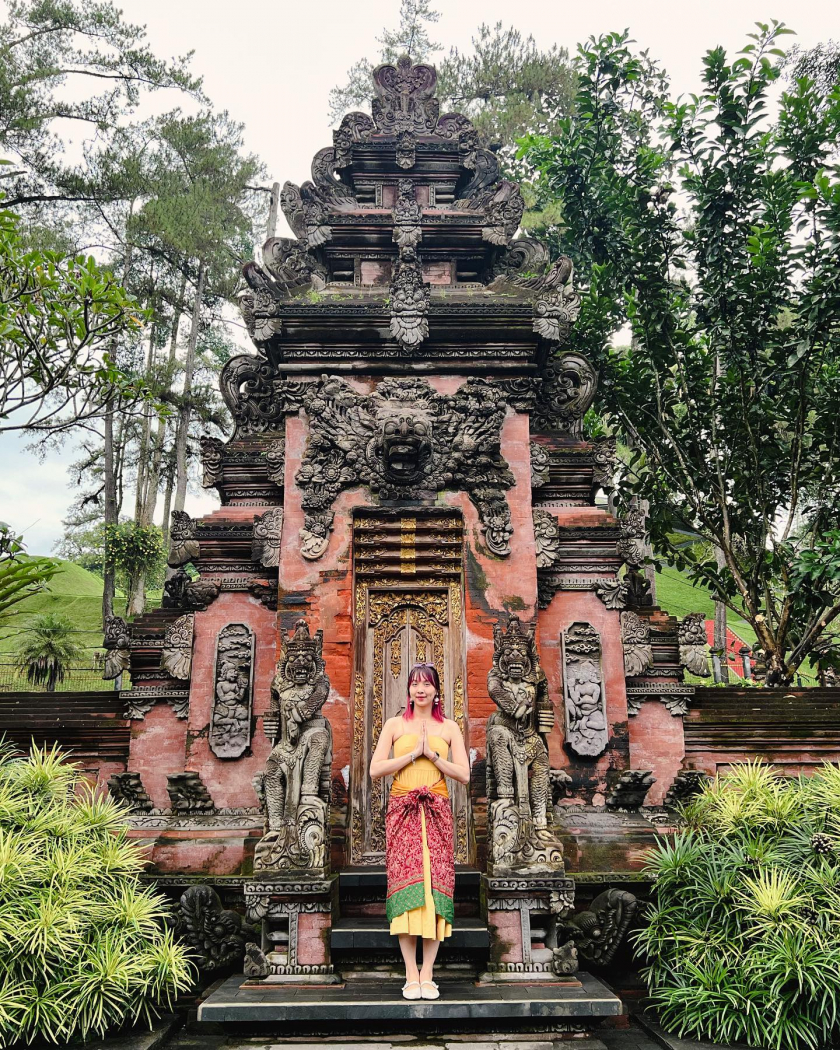
Ha Trinh recently traveled to Bali, Indonesia, and experienced the cleansing bath at the Tirta Empul temple.
Experience the purifying holy water bath of Melukat at Tirta Empul Temple, Bali.
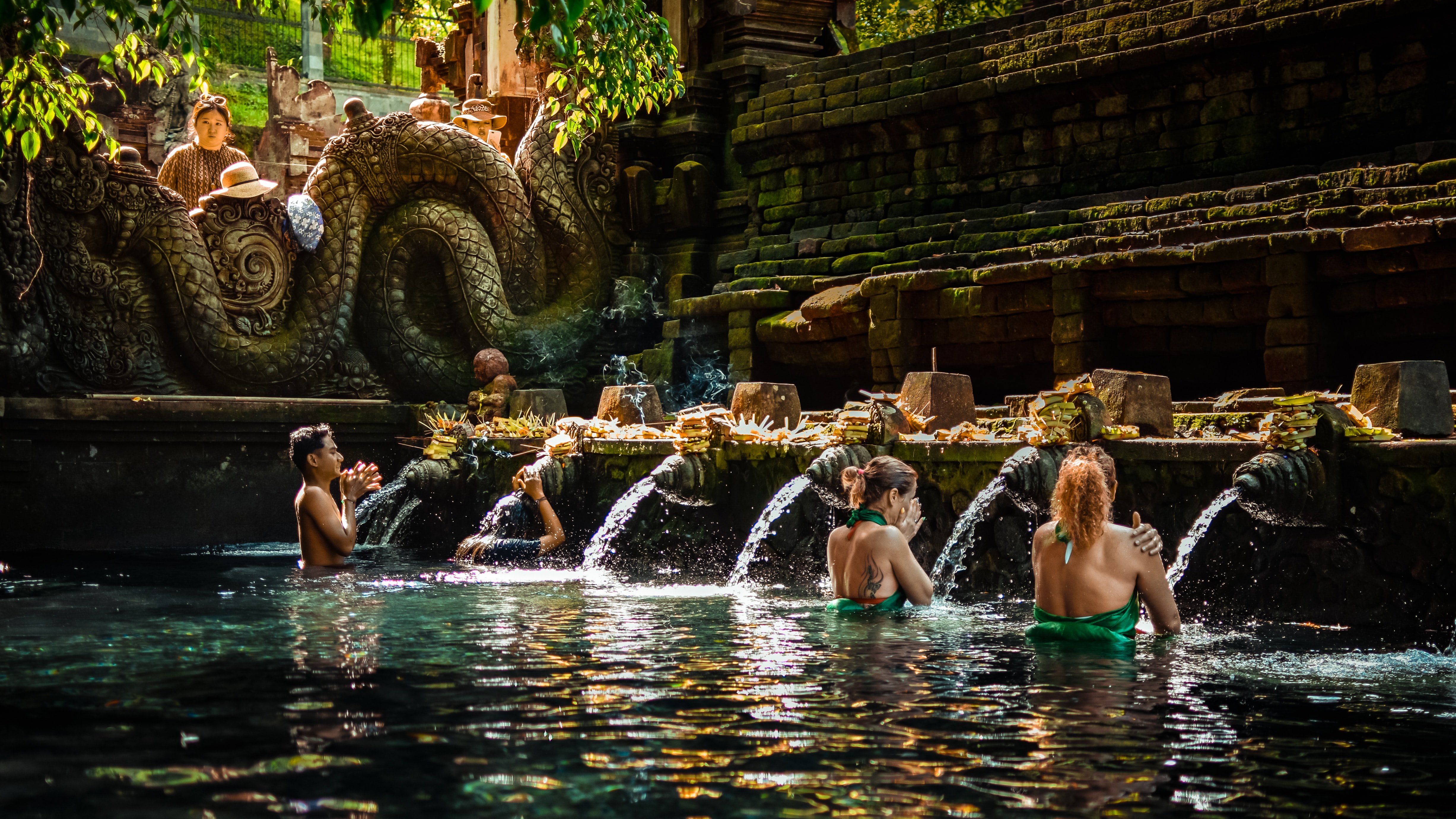
Tirta Empul is one of the most sacred temples on the island of Bali, Indonesia, located about 20 km from the center of Ubud. The temple's name in the local language means "holy spring." The spring water flows into two rectangular bathing pools in the outer temple grounds, through dozens of intricately carved spouts. These pools are usually the most crowded. Local Balinese people believe that the water from the spring leading to the temple and the pools can heal illnesses and cleanse the soul. According to legend, during a battle, the demon Mayadanawa poisoned the rivers and streams, causing people to fall ill. Therefore, the god Indra created this spring to heal everyone.
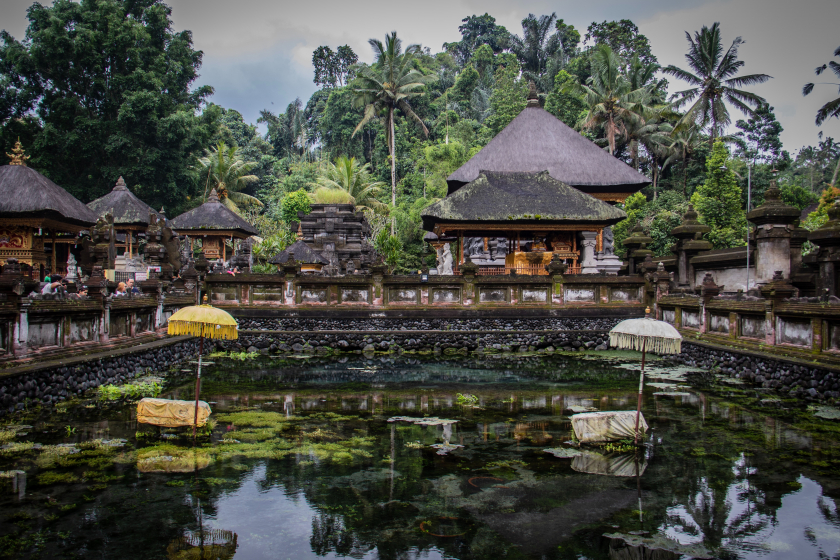
Tirta Empul is currently one of Bali's most attractive destinations, boasting unique architecture and numerous mystical legends.
According to Ha Trinh, visitors initially need to buy tickets at the gate, then enter the temple, go to the counter, and choose a sarong they like to wrap around their lower body. Whether wearing a skirt, long pants, or shorts, a sarong must be worn inside the temple to show respect for its solemnity. Local people usually offer prayers, but tourists often skip this step.
After touring the outer area, Ha Trinh proceeded directly to the main Jaba Tengah area of the temple, where the sacred water flows for the Melukat purification ritual. Before entering the water, tourists need to rent special ceremonial attire; locals who have already prepared their own clothing do not need to rent.

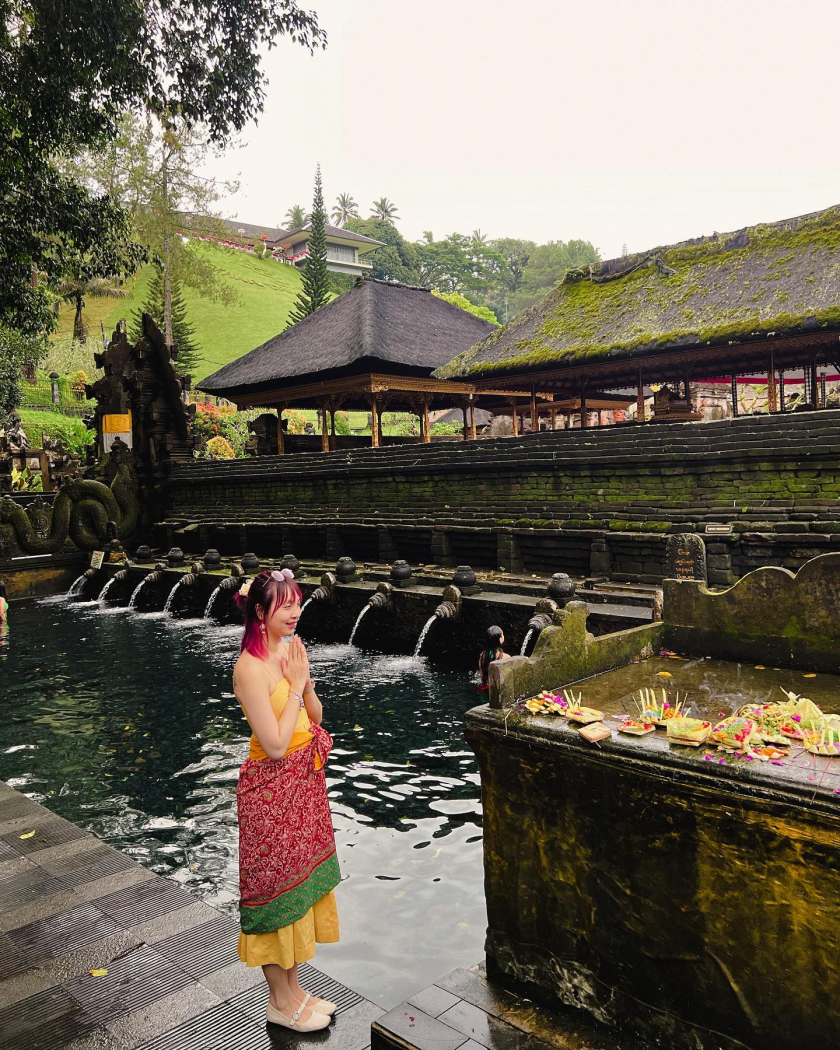
To participate in this ceremony, you must wear a sarong (which can be rented at the temple).
“Holy water will flow from the spring down through the taps in the bathing pool. Each person will line up and go through each tap from the left to the last tap on the right, scooping water onto their face three times and then onto their head three times at each tap. And importantly, they should only pray for one thing throughout the purification bathing process,” Ha Trinh explained.
After showering in the showers, visitors can leisurely observe the fish and enjoy the tranquility of the nearby lake, called Jeroan. Finally, visitors return to their personal changing rooms and return the rented sarong at the temple.
Ha Trinh said: “I really enjoy experiencing different cultures. So when I visited the temple and learned about the local culture in a place with such a large religious tradition as India, I was very enlightened. Playing the role of a local, I not only went to the temple to admire and explore, but also fully experienced and prayed, which was quite interesting. Furthermore, after bathing, if you are truly sincere, just like going to a temple in Vietnam even if you are not Buddhist, you feel cleansed of many negative things, fatigue disappears, and what remains is a feeling of comfort and joy.”
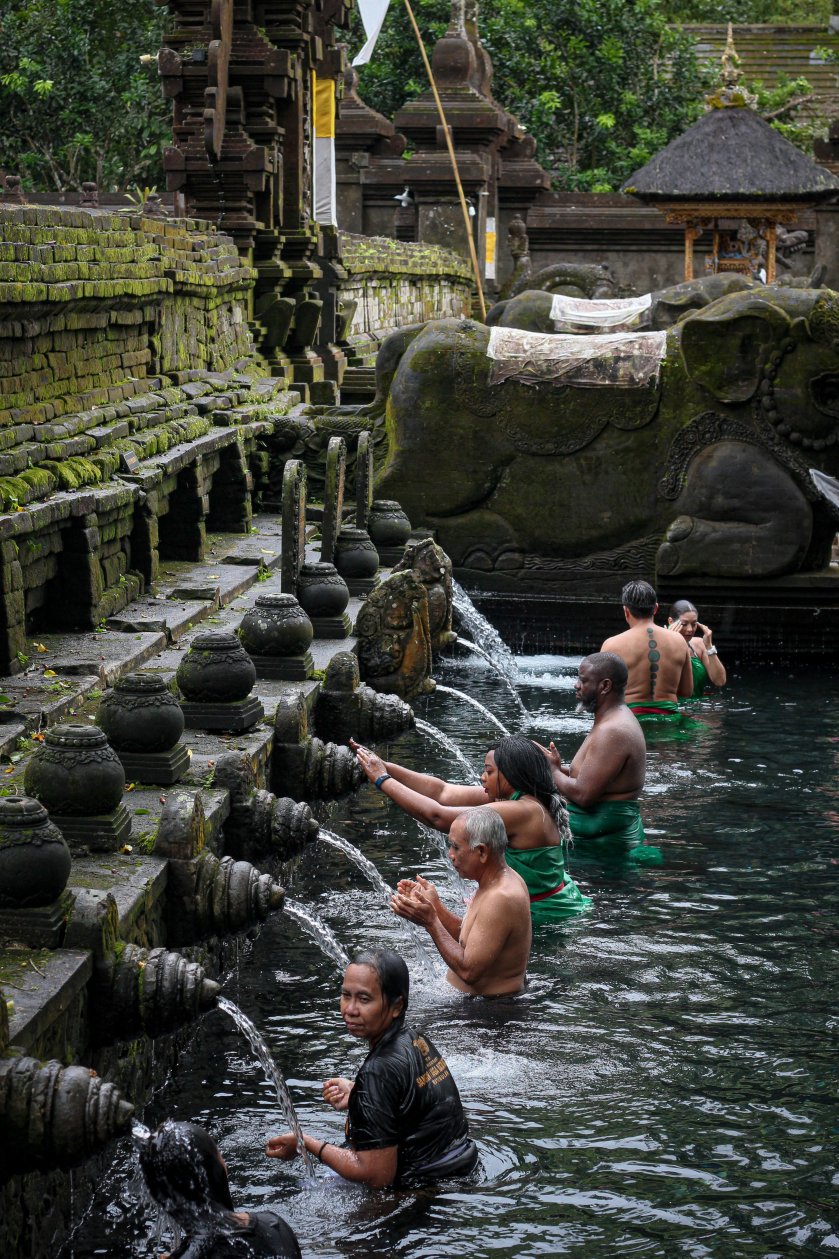
The people of Bali believe that bathing at this temple helps cleanse and purify oneself, bringing health and good fortune. For foreign visitors, it is a fascinating experience, a unique aspect of Indonesian traditional culture.
Experiences and things to note when taking a cleansing bath at Tirta Empul temple.
Regarding transportation:In Bali, there are three main and most popular areas that attract tourists: Kuta, Ubud, and Nusa Penida. Tirta Empul Temple is located in the Ubud area, so visiting the temple should be combined with other areas in the region for a day trip. It's recommended to stay in Ubud for at least 1-2 days to easily explore and experience the entire area.
The best time to visit the temple:The temple is open from 8 AM to 6 PM, so you can visit at any time. However, if you go closer to closing time, around 5 PM onwards, there will be fewer tourists and locals. This allows you to avoid the crowds and enjoy the peaceful atmosphere of the temple in a more relaxed and quiet way.
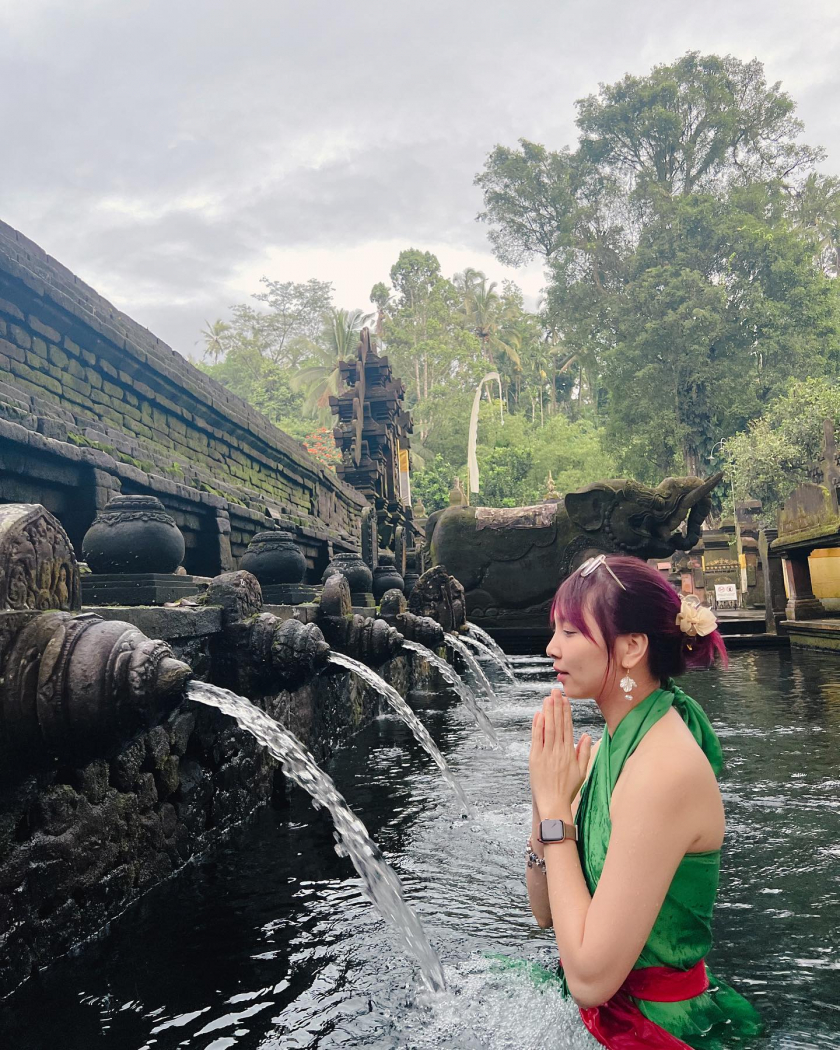
The water flowing from the sacred pool is always crystal clear. Visitors can step down and immerse themselves in the cool, refreshing water, treading on the gravel surface of the pool.
Expense:Entrance fee is 50,000 Indonesian Rupiah per person (approximately 79,000 VND). Using a sarong to enter the temple is free (if you don't want to swim in the pool, you don't need to rent one). Renting a sarong to swim in the pool costs 15,000 Indonesian Rupiah per person (approximately 24,000 VND).
Additionally, when bathing in the purification ritual at Tirta Empul, visitors should be aware of certain regulations. Babies with milk teeth and women during their menstrual cycle are not allowed in the pool. The pool is covered in slippery green algae, so be careful to avoid slipping and falling. Of the 30 water spouts, two are reserved for the deceased and are therefore forbidden from being used during the purification ritual; observe and avoid taking water from these two spouts (you can observe the locals or ask your guide).
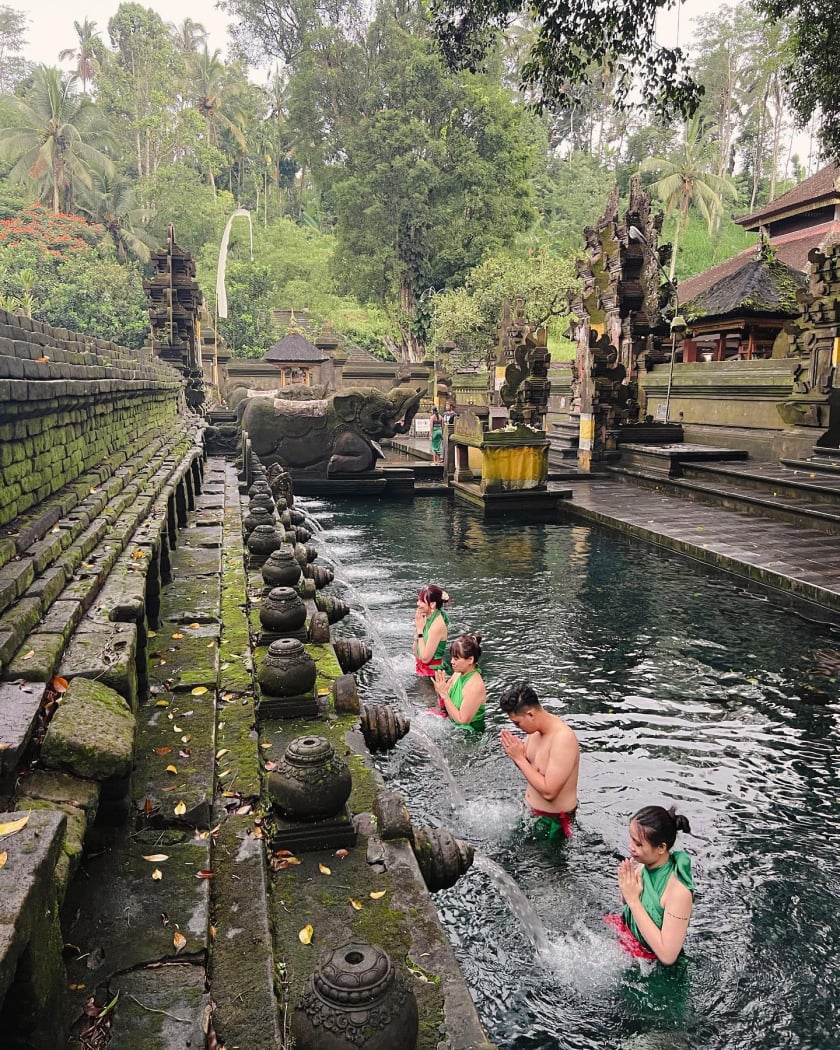
Every day, many locals and tourists flock to Tirta Empul to perform purification rituals in the spring water.