
 VI
VI


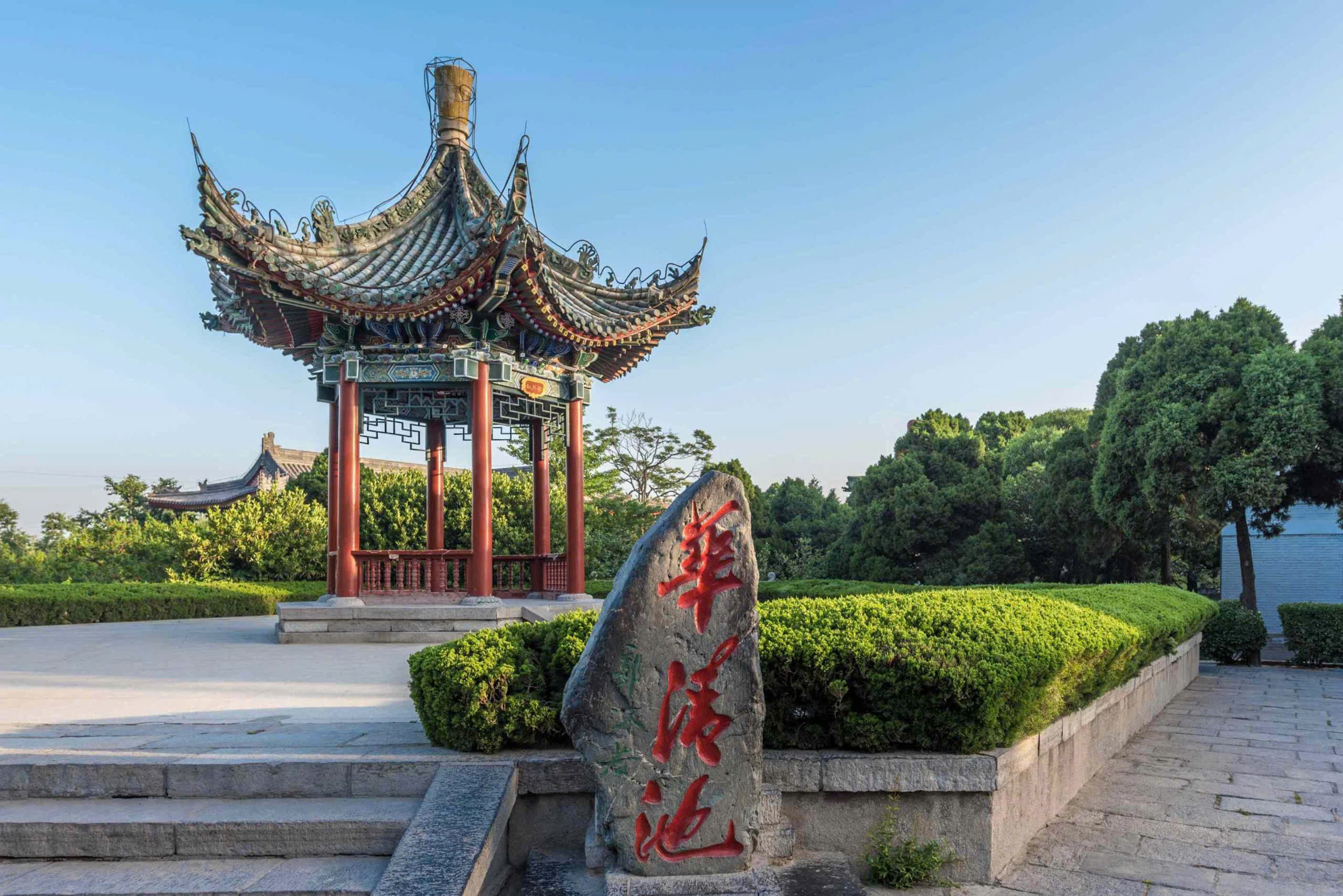
It can be said that Lishan is where the earliest documented methods of hot spring bathing therapy in Chinese history were found.
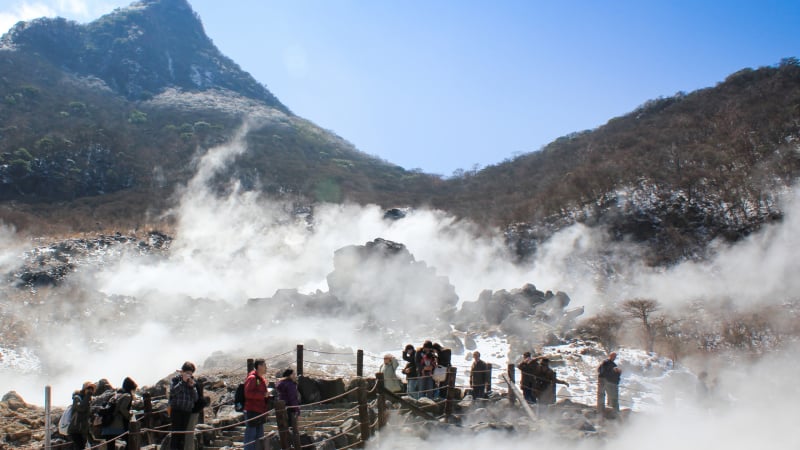
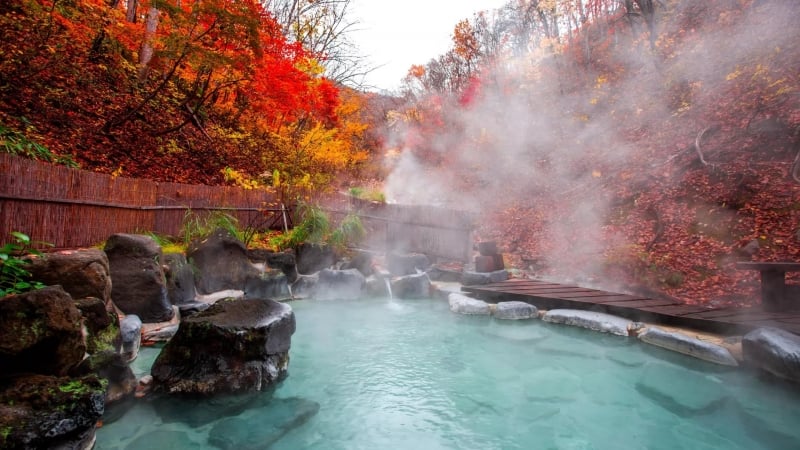
Hot spring therapy, like Yang Guifei
The hot springs at the foot of Mount Li were discovered during the Western Zhou Dynasty (11th to 7th centuries BC). Throughout the Western Zhou Dynasty, successive emperors sought refuge in these hot springs for rest and relaxation. King Zhou You built the Li Palace here, Qin Shi Huang constructed the Li Mountain Staircase, and Emperor Han Wudi expanded it into a royal residence. All of this was done to utilize the therapeutic properties of the natural hot mineral springs.
In the 18th year of Zhenguan (644), Emperor Taizong of Tang, Li Shimin, built a palace at the foot of Mount Li and named it Tangquan Palace. He also had a stele inscribed with the Wenquan inscription, mentioning the benefits of bathing in hot springs. Therefore, the palace was later renamed Wenquan Palace. The Wenquan inscription is also one of the earliest records about the benefits of bathing in natural hot springs here.
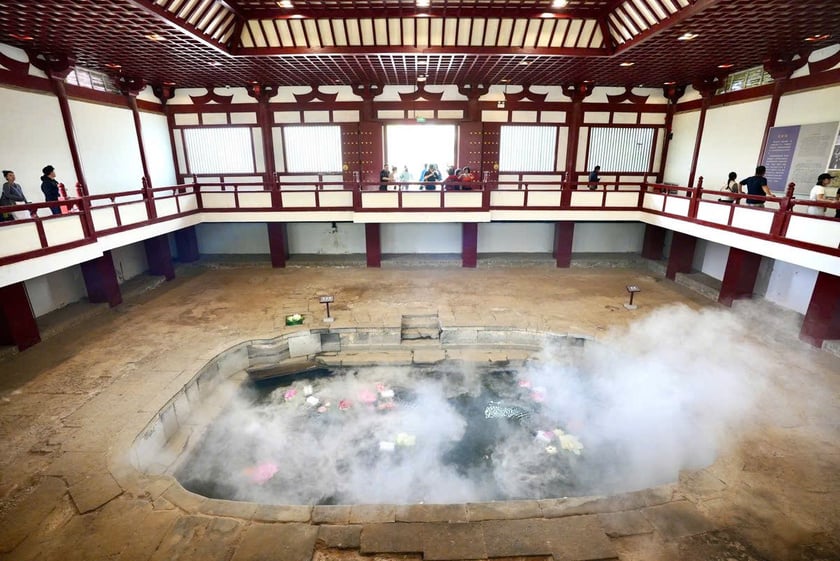
The Lotus Pond relic in the Royal Baths Relic Museum
Emperor Taizong of Tang suffered from rheumatism due to years of warfare. In his book "On the Hot Spring," he wrote, "Because of mental exhaustion, rheumatism has plagued me for a long time. Every time I bathe in this spring, the disease quickly disappears." He likened the water to "golden nectar and jade liquid," capable of calming the mind and prolonging life.
Emperor Ming of Tang, Li Longji, was the one who transformed the area into a major resort during the Tang Dynasty, and also renamed the Hot Spring Palace to Huaqing Palace. During Emperor Ming's reign, this place was not just a bathing pool but expanded into a second imperial palace. In 41 years, Emperor Ming visited Huaqing 36 times, each time lasting from the tenth lunar month to spring.
In stories about the love affair between Emperor Tang Minghuang and Yang Guifei, it's difficult to separate the setting of Huaqing Lake (Huaqing Pond). Yang Guifei particularly loved bathing there. Many legends claim that bathing there helped Yang Guifei maintain her fair, smooth, milky-white skin.
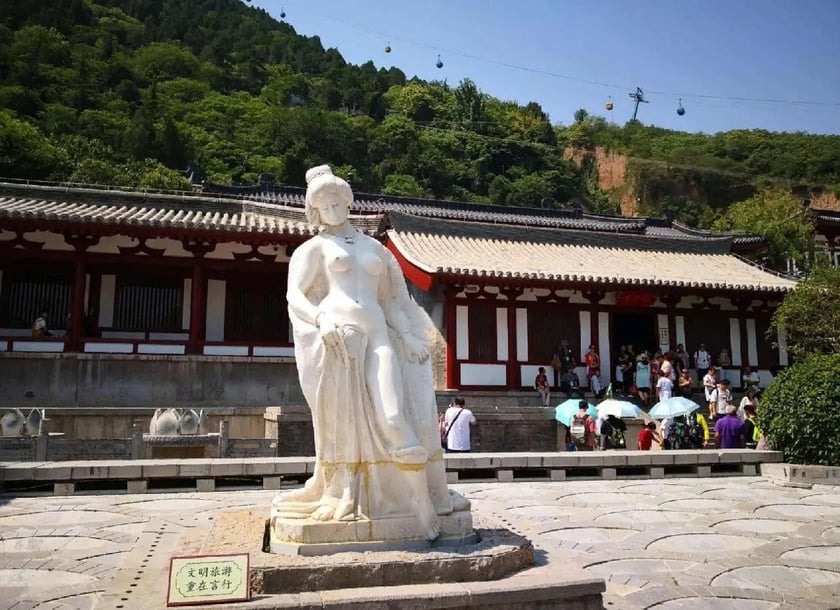
A statue of Yang Guifei emerging from the bath stands in front of the Royal Bath Museum.
One explanation for why emperors favored Huaqing so much is that most emperors at the time drank elixirs hoping for immortality. These elixirs caused the body to feel hot and itchy. They believed that soaking in hot mineral springs could neutralize the effects of the medicine.
Besides the bathing pools, there was also the Phi Suong Palace, a resting place for Emperor Ming and Yang Guifei; the Le Vien (pear blossom garden) where musicians lived and practiced, and it also had its own bathing pool for the artists. This was also the birthplace of the famous "Nge Thuong" melody, associated with Emperor Ming's dream of going to the moon.
Each of Emperor Tang Minghuang and Yang Guifei's bathing trips in the hot springs was a grand ceremony complete with banquets and singing and dancing. Emperor Tang Minghuang even built the "Long Staircase," a series of dozens of stone-paved bathing chambers adorned with ornate patterns, with precious wooden boats placed in the pools and artificial mountains constructed so that they could enjoy both bathing in the hot springs and the sensation of boating on a lake.

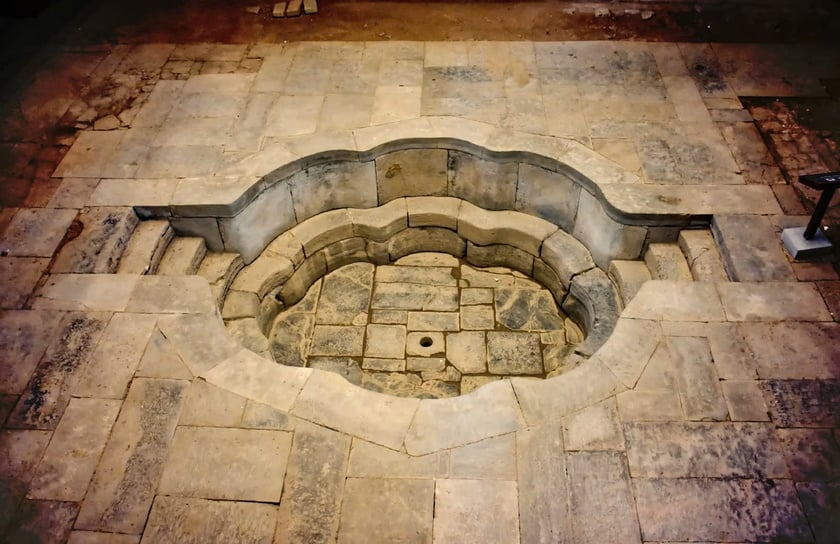
The Hai Duong pool site, where Yang Guifei used to bathe.
However, bathing in hot springs in ancient China was a privilege reserved for royalty. Only the Liyuan artisan troupe or high-ranking officials were allowed to enter. And the pools they used drew water from the Lotus Pond – the emperor's bathing place – to symbolize the emperor's benevolent favor.
The most beautiful song of the mythical creature, reaching the heavenly peak.
In 1982, extensive archaeological excavations were conducted in the Huaqing area. Here, traces of five bathing pools from the Tang Dynasty were discovered. According to Tang Dynasty records, each pool had its own name, categorized according to rank. The Lotus Pool (Lianhua Chi) was reserved for the emperor, with the entrance to the pool carved with two white jade lotus flowers. The Begonia Pool (Haitang Chi) – also known as the Imperial Concubine Pool – was for Yang Guifei (Yang Yuhuan), and featured carvings of begonia flowers.
Additionally, there are the Crown Prince's pool and the Imperial Court pool (for officials). The Spirit Pool, without a roof, was built during the reign of Emperor Taizong of the Tang Dynasty, where one can bathe while gazing at the starry sky.
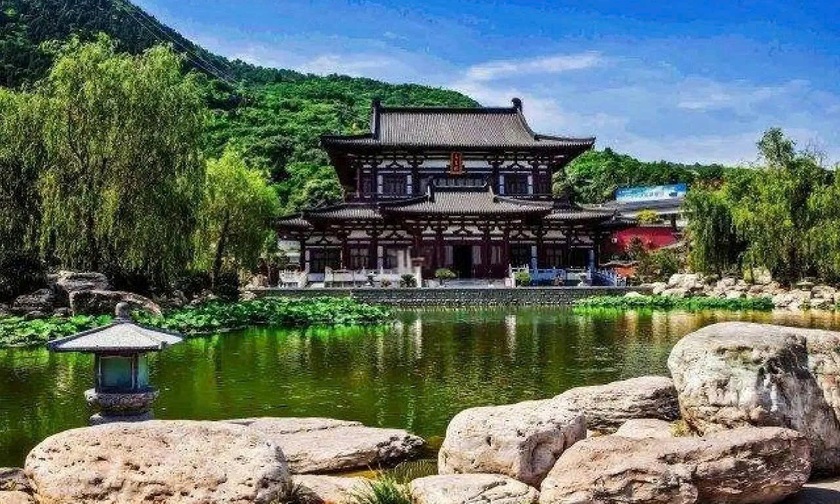
The current space of Hoa Thanh Palace
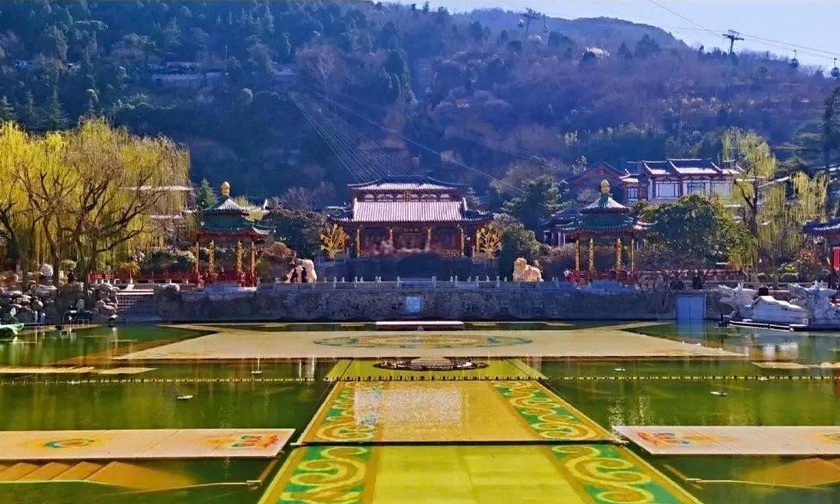
The current space of Hoa Thanh Palace
Currently, Huaqing Lake is a major tourist area, including the Tang Dynasty Imperial Bath Relic Museum (opened in 1990) which displays five excavated baths and a large grounds at the foot of Mount Li.
Showerhead-shaped fountains were constructed so visitors could try washing their hands and faces with hot spring water from Lishan. A small stream of hot water flows around the exhibition area. If visitors wish to soak their feet in the hot water to experience the feeling of the Tang Dynasty, they need to pay about 20 yuan.
The Huaqing spring complex has four springs, rich in minerals, and its temperature has remained at 43 degrees Celsius for thousands of years. Therefore, bathing in the mineral-rich water of Huaqing Pool feels not unlike that of the Tang Dynasty emperors. The places where Yang Guifei once bathed and enjoyed herself are now accessible to ordinary people, with consistent mineral content and temperature.
Not so long ago, when the ancient baths were first excavated, the number of tourists coming to try the royal mineral springs increased dramatically. Locals competed with each other to dig wells to find water sources and start small-scale bathing businesses.
In 1992, one of the four springs here dried up, forcing the authorities to pump water from outside to preserve the landscape. It wasn't until 2009, after many efforts to restore the spring and limit exploitation, that this spring began to gush water again, but the flow rate was only one-tenth of what it was more than half a century earlier.
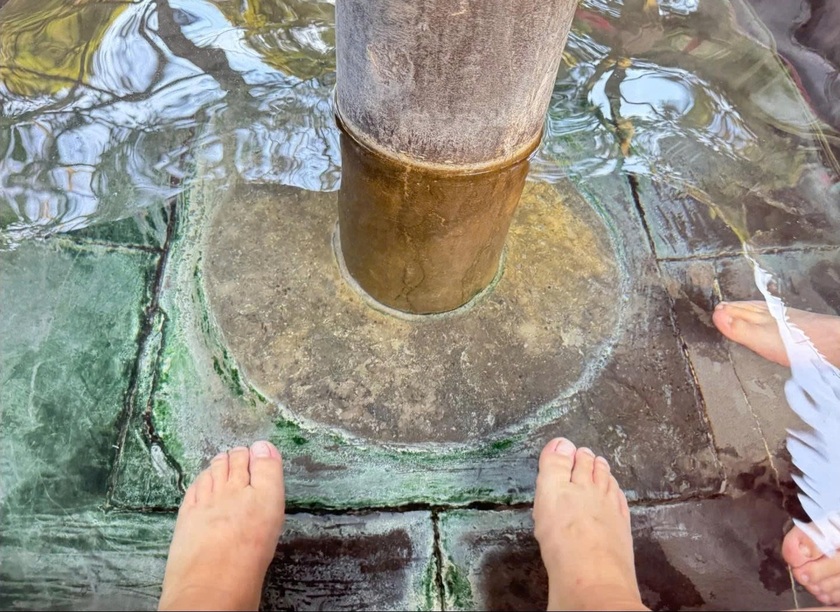
Soak your feet in the mineral spring at Hoa Thanh Palace.
Right next to the Huaqing Pond historical site, two Tang Dynasty-style palace bathhouses have been built, each with over 20 pools, capable of serving more than 100 people at a time. In addition, there is a high-end resort with 16 private pools. Currently, this tourist area welcomes over 6 million visitors annually, generating over 10 billion yuan in revenue and becoming a major revenue generator for Xi'an's tourism industry.
To further enrich the experience, a tour of Huaqing Pool, in addition to soaking feet or bathing in the hot springs, also includes enjoying the live performance of "The Song of Everlasting Sorrow," based on the poem by Bai Juyi, about the love affair between Emperor Tang Minghuang and Yang Guifei.
Du Mu, a poet of the late Tang Dynasty, upon visiting Huaqing Palace, wrote several poems titled "Passing Through Huaqing Palace." These poems express his admiration for a place that witnessed the brilliance and decline of one of China's most prosperous dynasties.
Now, relaxing in the hot springs while enjoying the reenactment of the Neishang music, one might feel like Du Mu did back then, when "a Neishang melody echoed across the mountain peaks."
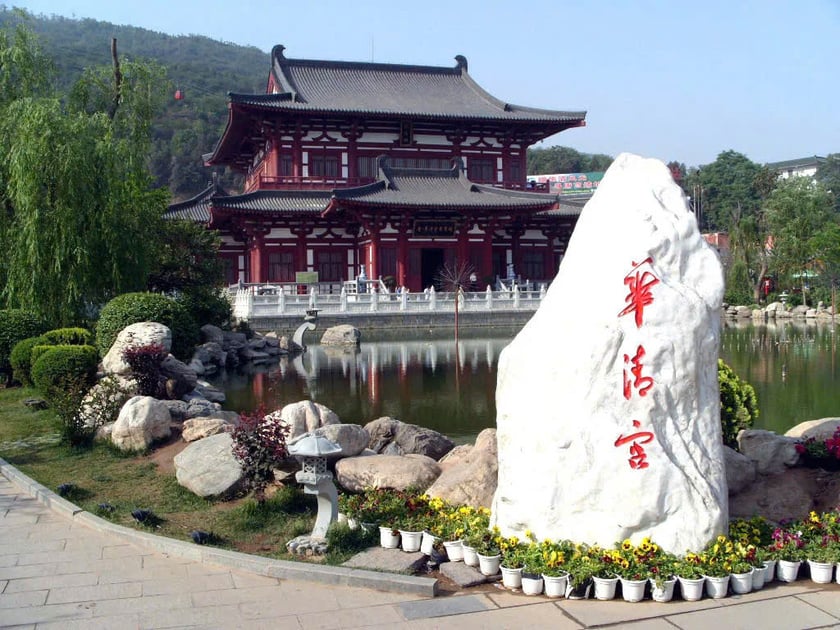
A corner of Huaqing Palace
Getting there: Huaqing Lake is located at the foot of Mount Lishan, about 25 km east of Xi'an city center. There are two common ways to get there: Take the Metro (Line 9) from Xi'an city center to Huaqing Lake station, exit through Gate B and walk about 300m; There are many taxi services available from Xi'an train station or the airport. It's recommended to call Didi to avoid taxis that might distract you by taking you to shopping areas; Or join a day tour, usually visiting the Terracotta Army, Huaqing Lake, and enjoying the "Song of Eternal Sorrow" show.
Accommodation: The Huaqingchi Conservation Area only offers hot spring foot baths or hand and face washing services. However, a surrounding hot spring resort belt has been established, comprising many high-end hotels, all utilizing the same Ly Son hot spring source.
Recommended: An ideal itinerary includes: soaking in a hot spring bath overlooking Mount Li in the morning, taking a cable car up Mount Li to admire the panoramic view of Xi'an, passing the beacon tower where King You once lit fires to please Bao Si, visiting Huaqing Pool in the afternoon where Emperor Tang Minghuang and Yang Guifei once bathed, and watching the "Song of Everlasting Sorrow" show in the evening. Relaxing overnight in the thousand-year-old Huaqing hot springs.












