
 VI
VI


In the culinary landscape of Southeast Asia, papaya salad is not an unfamiliar dish. Cambodia has Bok l'hong, Laos has Tam Mak Hung, and Thailand has Som Tum. In Vietnam, Bok l'hong has been adapted into the pounded papaya salad of the Khmer people in Tri Ton.
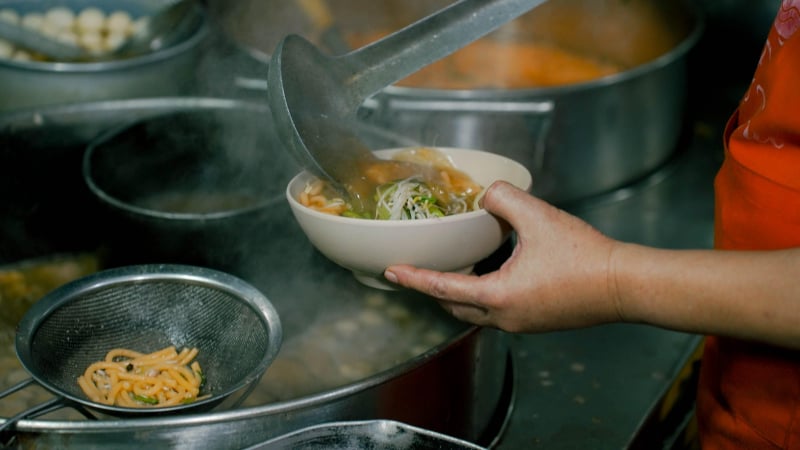

They all share a basic preparation method: using force (from a mortar and pestle) to crush the papaya and accompanying vegetables, mixing them with spices.
The first place where papaya salad appeared was Phnom Pi hamlet (Tri Ton, An Giang), a Khmer village at the foot of Nam Quy mountain. Most vendors learned the recipe from Bok l'hong and added their own unique spices from the Bay Nui region.
While Som Tum – an intangible cultural heritage of Thailand – uses Plara fish sauce, An Giang's pounded papaya dish uses fermented fish paste as its seasoning. Locals here choose papayas that have just turned yellow instead of green ones, which are still crunchy but chewy enough, and have a slightly sweet taste that differs from the sourness of Som Tum.

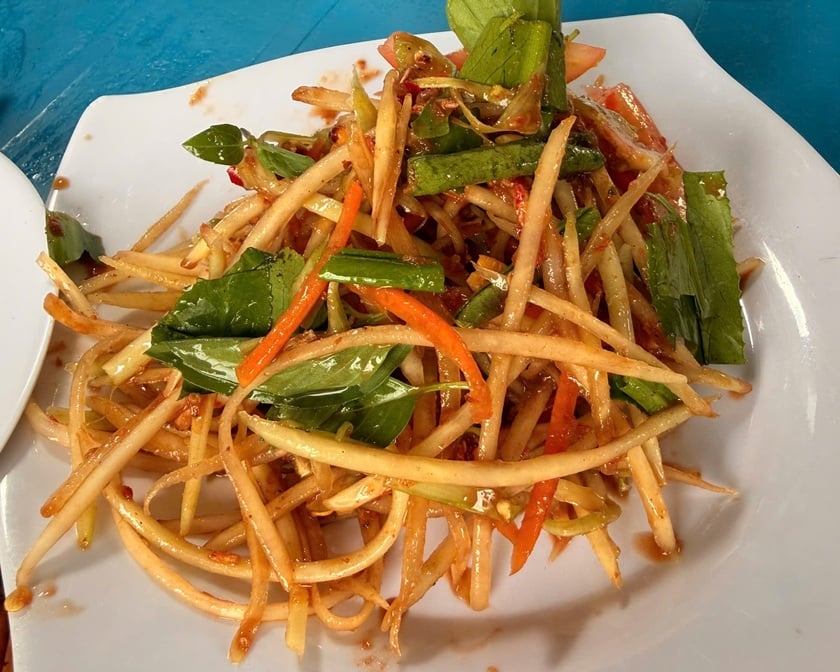
They also proactively adjusted the recipe to soften the strong smell of river fish, making it more palatable to Vietnamese tastes. Besides the main ingredient of papaya, the papaya salad also includes shredded water spinach, a little basil, sawtooth coriander, tomatoes, and long beans.
The cook will first put the fish sauce, sugar, garlic, and chili peppers into a mortar and pound them until smooth, then add the papaya and vegetables and mix well. Because the papaya is already ripe, the cook must hold the pestle skillfully while using a spoon to stir continuously so that the salad absorbs the seasoning without becoming mushy. The fermented fish paste, along with a little lemon juice and palm sugar, is placed in the mortar and pounded gently until just right.
Papaya salad was originally just an appetizer. However, over time, it gradually became a signature dish of Phnom Pi. At a papaya salad restaurant, grilled beef, grilled chicken, and scrambled duck eggs turn out to be the side dishes.

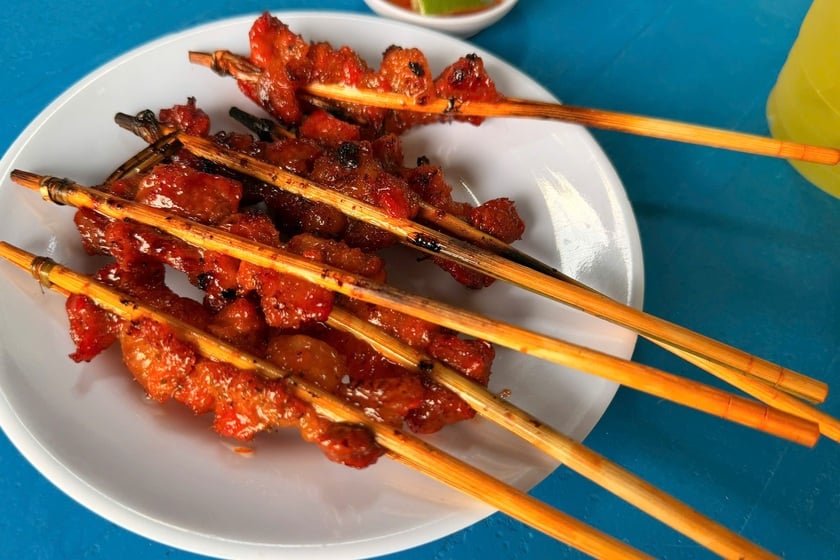
Papaya salad, when eaten raw, must be paired with grilled beef skewers from Bay Nui. The beef is from a local breed, thinly sliced, marinated with spices including palm sugar and lemongrass, then grilled over charcoal. Bay Nui beef has a perfectly balanced fattiness, neither tough nor greasy, and when eaten with the refreshing, sweet and sour papaya salad, it's incredibly addictive.
In the old days, papaya salad was a dish for the poor. Those who were wealthier would add small shrimp to the mix. Now, people also add crab and various herbs for variety. From a homemade dish, people started selling it, and then entire villages formed with more than a dozen bustling papaya salad stalls. Each stall may have its own variations in the recipe to retain customers.
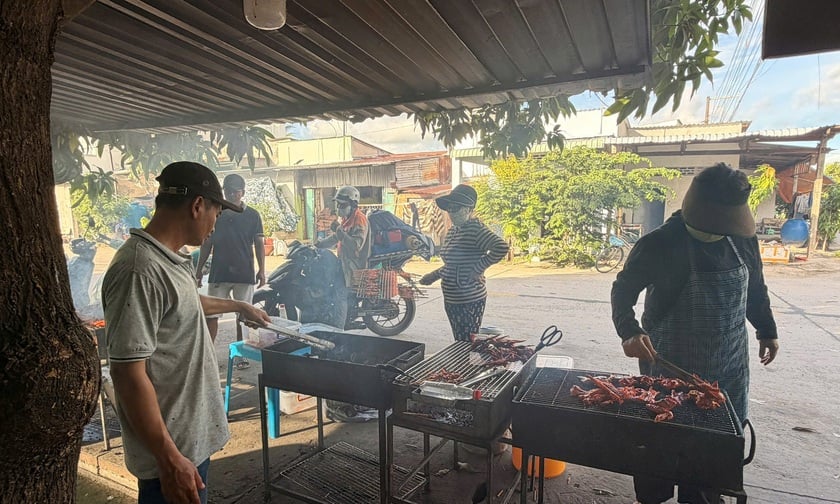
Rina seems to be the most popular papaya salad stall in the area. In just one afternoon, the stall was packed with customers sitting down and cars lining up for takeout. The owner kept pounding the papaya non-stop, saying that on a typical day, the stall could sell a thousand servings of salad and several hundred skewers of grilled beef.
As a result, a plate of salad costs just over twenty thousand dong, and skewers of meat cost five thousand dong, but it can be a source of livelihood and even wealth for many families. Like Rina, who started with a small stall but now has a spacious and well-equipped space, with several assistants working tirelessly all afternoon. The grills of meat are constantly being flipped, in sync with the rhythmic pounding of the pestle used for making the salad.












