VI
VI


"People's war, the tunnels are people's war. You guys have no way of winning."


In 1967, the Binh An Dong battlefield in Cu Chi district became the epicenter of a firestorm as the American army frantically prepared for its largest offensive to date. Unlike previous swift deployments, which involved searching, destroying, and then withdrawing, this time the skies over Cu Chi were shaken by the roar of aircraft, and the ground trembled under the tracks of American tanks. They surrounded the area, raining bombs and bullets down day and night, seemingly determined to launch a thorough attack on the legendary Cu Chi tunnel system, with the sinister goal of cutting off the vital communication route of our army and weakening the resistance of the revolutionary forces.
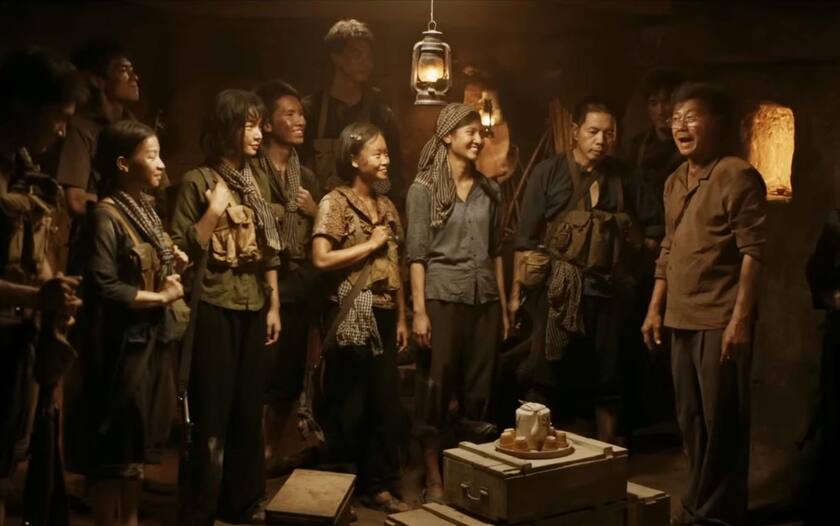
The film "The Tunnels" has been praised by directors, actors, businesspeople, and others for its grandeur and emotional impact, creating a tunnel system with character and soul.
In that brutal context, a life-or-death mission was entrusted to 21 Cu Chi guerrillas – simple, gentle farmers who had now taken up arms to defend their homeland. The heavy responsibility placed upon them was to ensure the absolute safety of intelligence agents carrying out an extremely dangerous mission: transmitting top-secret documents of the American military. Twenty-one men, armed with rudimentary weapons, courage, and fervent patriotism, faced a powerful, highly skilled force, equipped with the most advanced weaponry in the world.
This seemingly "small" story is skillfully portrayed in the film "Tunnels: The Sun in the Darkness," a moving piece in the grand picture of our nation's long and arduous but proud resistance struggle, ultimately leading to the regaining of independence, freedom, and national unity on the historic day of April 30, 1975. The story of the 21 Cu Chi guerrillas is not just a specific battle, but also a symbol of the indomitable strength, solidarity, and unwavering will of an entire nation in its just struggle.
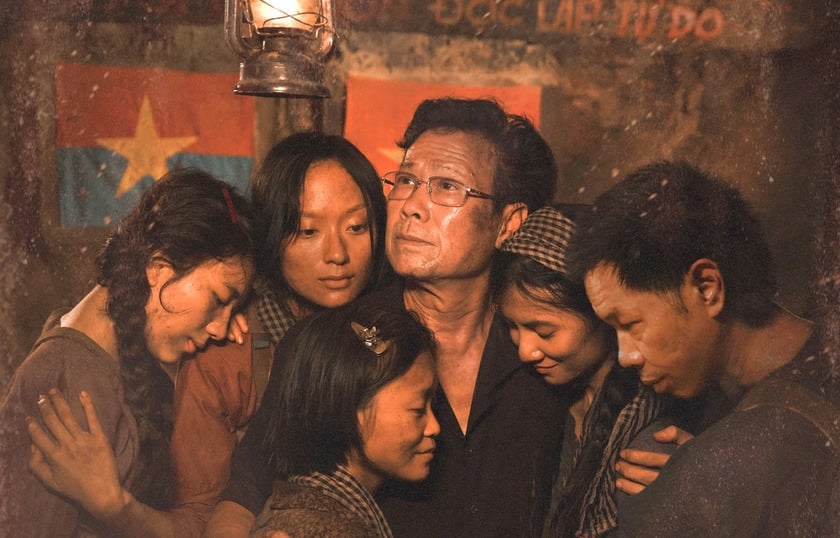
"The Sun Tunnel in the Darkness" shows the world just how resilient Vietnam is.
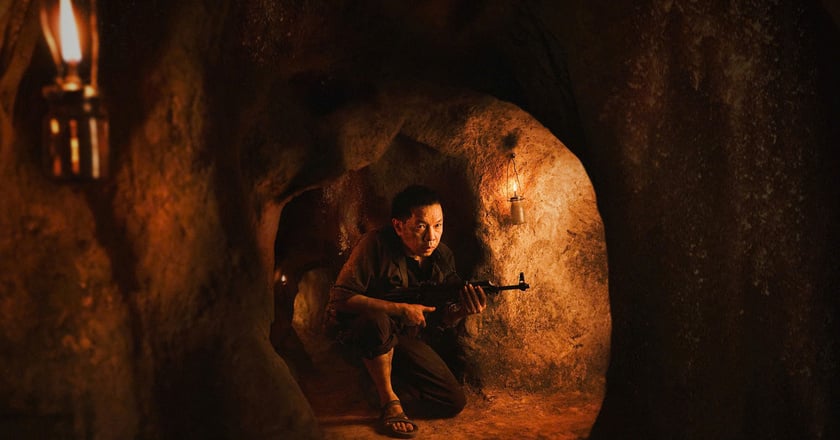
From the very first moments, "Underground: The Sun in the Darkness" powerfully draws viewers into a gruesome scene where grief and death engulf the brave soldiers. At the same time, the film realistically portrays the suffocating, dark space underground – once a battlefield of life and death, a secret base for our army and people.

The brilliant director Bui Thac Chuyen rejected a glamorous, idealized storytelling style, opting instead for a direct approach, drawing the audience into cramped, perilous battles. Viewers are left breathless as they witness soldiers navigating narrow, damp tunnels, facing enemy bombs and bullets every second, with death lurking nearby. In that dark space, the rare light filtering through cracks in the ground becomes a fragile yet powerful symbol of hope, of the yearning for a brighter tomorrow amidst the harsh darkness of war.
As viewers follow each scene, they not only feel the ferocity of the war on the surface, with its sweeping operations and fierce clashes, but also gain a deeper understanding of the hardships and silent sacrifices of the soldiers of Cu Chi as they had to survive underground in extremely suffocating conditions, lacking everything. The images of sleepless eyes, tossing and turning in the deep darkness, the hurried, choked breaths upon hearing the enemy's footsteps searching overhead, or the sound of bombs and bullets shaking the intricate tunnel system—all send shivers down the viewer's spine, conveying the ultimate harshness of the circumstances.
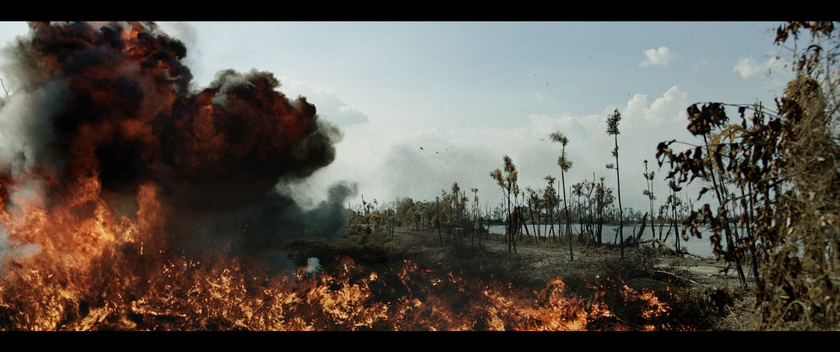
"You guys have no way of winning."
The film's emotional impact stems not only from its deeply moving historical content but is also amplified by the selfless dedication of its talented cast. Quang Tuan, who plays Tu Dap – a character inspired by the real-life figure, People's Armed Forces Hero To Van Duc – delivered an astonishing performance. He didn't hesitate to lose 14kg to match the emaciated physique of a soldier during the brutal war. Furthermore, Quang Tuan personally sought out historical witnesses, those who had lived and fought in the tunnels, to gain a deeper understanding of the military knowledge, the indomitable fighting spirit, and the unwavering will of their ancestors.
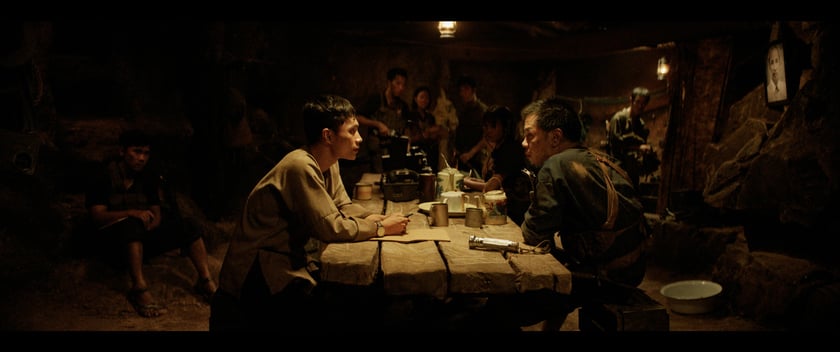
"You can defeat an army, but you can't destroy a nation" - businessman Hoang Nam Tien drew this conclusion from the film "The Underground Tunnels".
With skillful and humane writing, director Bui Thac Chuyen portrays the character Bay Theo without shying away from his everyday, even somewhat "rough" personality traits: he often swears, is easily angered, clumsy in repairing broken guns, and bears many scars. However, interspersed among these flaws are humorous and witty moments, creating a relatable and authentic character.
The way he developed the character of Bay Theo is similar to how he portrayed the personalities of Tu Dap (Quang Tuan) with his bravery hidden behind a somewhat scholarly appearance, Ba Huong (Ho Thu Anh) strong but still harboring her own anxieties, or Ut Kho (Hang Lamoon) innocent but resilient.
All these diverse personalities together convey a profound message: they are ordinary Vietnamese people, utterly ordinary, people accustomed to the fields and simple lives. But when the sacred call of the Fatherland resounded, they did not hesitate to set aside all personal worries, firmly taking up arms. Leaving behind their humble homes that sheltered them from rain and sun, they readily ventured deep into the earth, accepting years of life in the suffocating Cu Chi tunnels, where darkness and danger constantly lurked, to contribute to the revolutionary cause, striving towards peace and independence for the nation.
The film not only recreates a painful yet heroic part of the nation's history, but also conveys powerful messages about patriotism, sacrifice, the aspiration for peace, and the humanistic beauty of the Vietnamese people.
One element that cannot be overlooked in "The Tunnels: Sun in the Darkness" is the stunning cinematography, even though most scenes were filmed under the limited light of flashlights, oil lamps, and faint natural light. The tunnel setting is recreated with breathtaking realism, accurately reflecting its harsh nature, where danger lurks and can strike at any moment, threatening the lives of the resilient guerrillas.
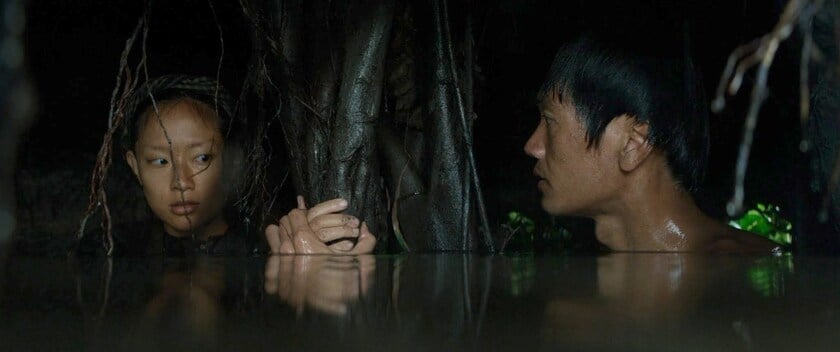
Ordinary people become extraordinary.
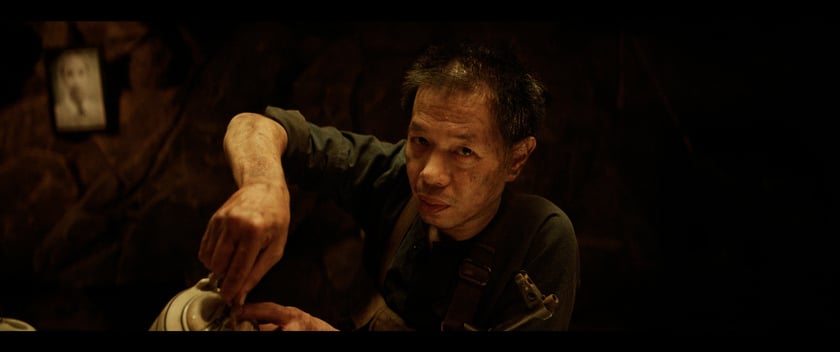
The film's soundtrack and sound design are also meticulously crafted, creating a tense and dramatic atmosphere while maintaining subtlety and avoiding overtly manipulative emotional manipulation. Above all, perhaps the highlight is the design of the Cu Chi Tunnels: both majestic and realistic down to the smallest detail, providing viewers with a vivid image of this magnificent tunnel system—not just a military structure, but also a living space, a symbol of the will and strength of the Vietnamese people.
The powerful line, "You guys have no way of winning," resonates throughout the film, affirming the strength of will and determination. And the most profound message that director Bui Thac Chuyen wants to convey is that "The tunnels are a people's war," expressed with pride and emotion through the death of a key character in the storyline. This sacrifice is not only a personal loss but also a testament to the immense strength of the entire nation, to a just war based on the people's power.