VI
VI


NOODLES ORIGINATE FROM NORTH KOREA
In Korea, noodles are a type of starch that has been around for a very long time, even before the invention of bread. Since the Chosun period, noodles have been adapted and transformed into refreshing, cold dishes, served at banquets and royal meals during the hot summer months.

However, according to historical records, Korean cold noodles originated in North Korea (present-day Korea). The dish's origins trace back to Pyongyang during the Goryeo Dynasty.
However, according to historical records, Korean cold noodles originated in North Korea (present-day Korea). The dish's origins trace back to Pyongyang during the Goryeo Dynasty.
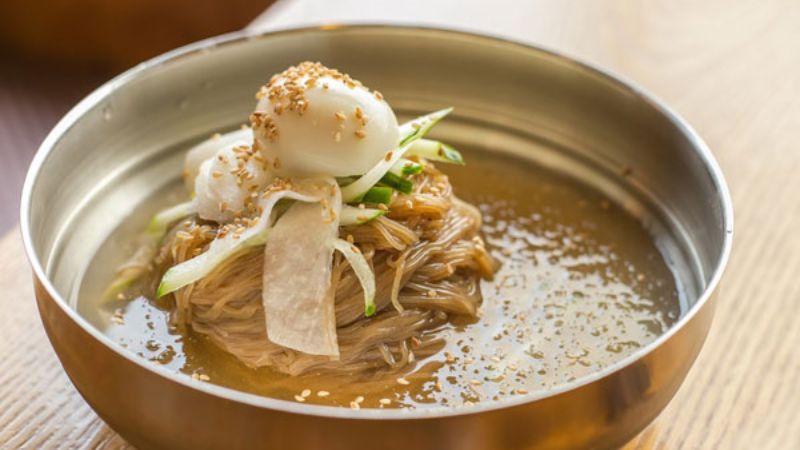
The most famous summer dish in Korea originates from North Korea.
Cold noodles are not simply noodles served chilled, but rather a general term for noodle dishes eaten in the summer, to distinguish them from hot noodle dishes called guksu jangguk, which are usually eaten in winter. Cold noodle dishes can be made with noodles or vermicelli, stir-fried or served with broth, but they all share the common characteristic of being served with cooling and refreshing ingredients such as bean sprouts, cucumber, boiled eggs, and green vegetables.
HOW TO MAKE REFRESHING NOODLES
Korean cold noodles can be stir-fried glass noodles, stir-fried noodles, dry noodles, or noodles with a cool, refreshing broth. However, they all share the common characteristics of thin noodles, a light and refreshing taste, and are not heavy on the stomach. They are served with cooling ingredients such as mung beans, black beans, bean sprouts, thinly sliced lightly pickled Korean white radish, and may include boiled eggs or cold boiled beef slices, or both.
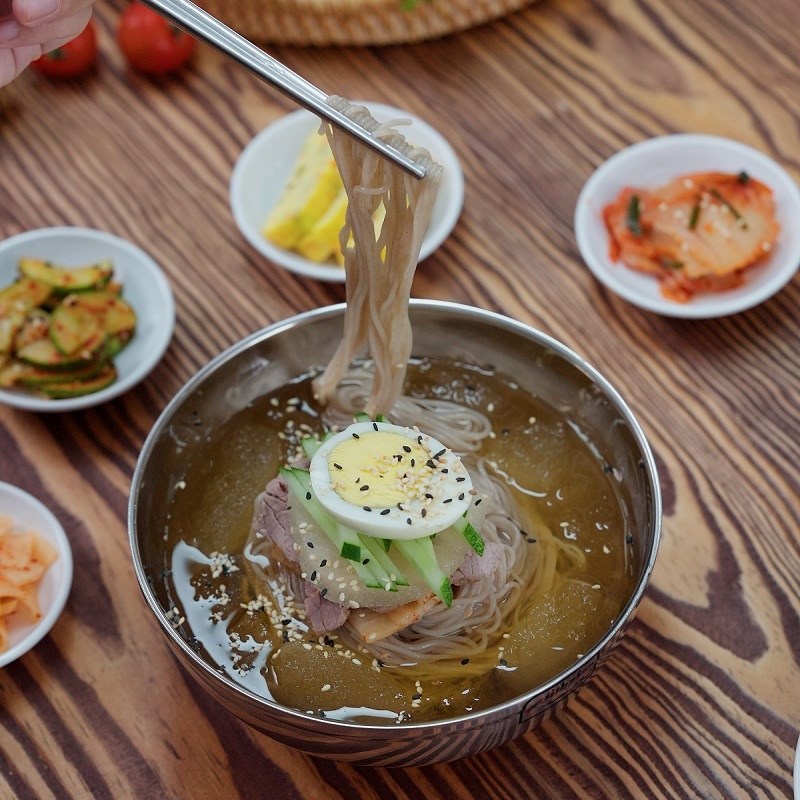
Beat the summer heat with this famous Korean cold noodle dish – you'll be hooked after just one bite!
Spicy mustard sauce (or mustard oil) and vinegar are often added before eating. Traditionally, the long noodles are eaten uncut as they symbolize longevity and good health.
This dish is quite simple to cook, and the secret lies in the broth. First, wash the beef and soak it in cold water for about 20 minutes, then remove and rinse it. Next, boil the beef with sliced ginger and onions. Once cooked, remove the beef, let it cool, and cut it into thin slices.

Next, strain the broth from the previous cooking process once, then season to taste. Add 1 tablespoon of soy sauce, 1 teaspoon of salt, 1 tablespoon of vinegar, and 1 teaspoon of white sugar, stir well, and adjust seasoning. Then let it cool and store it in the refrigerator. For the noodles, boil them for 2-3 minutes. Rinse with cold water, gently rub, and squeeze dry, then soak the noodles in ice water.
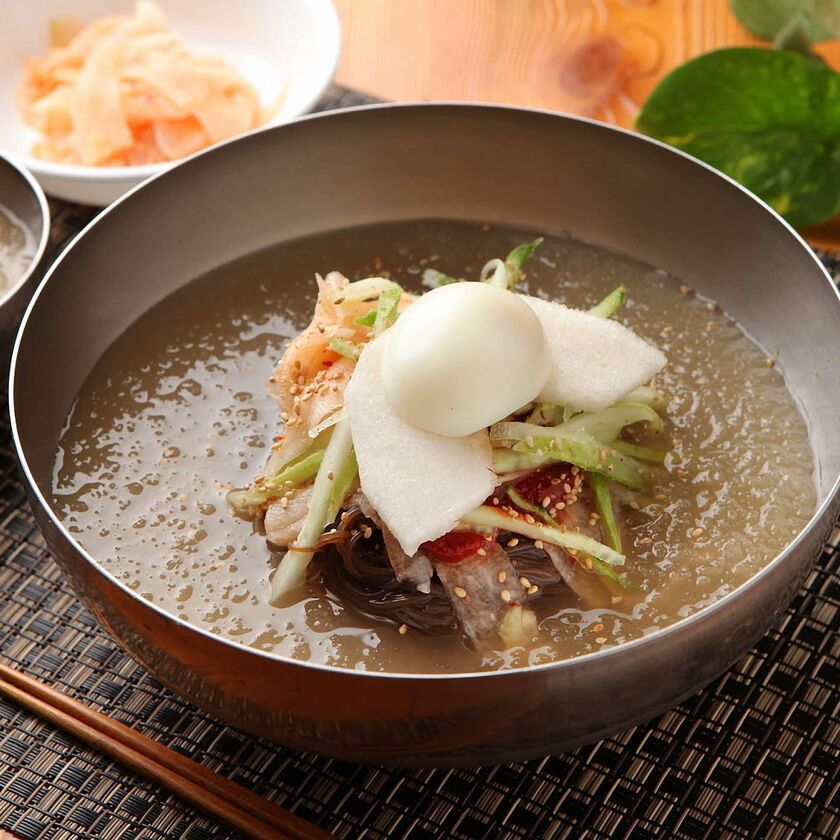
Summer cooling dishes in Korea
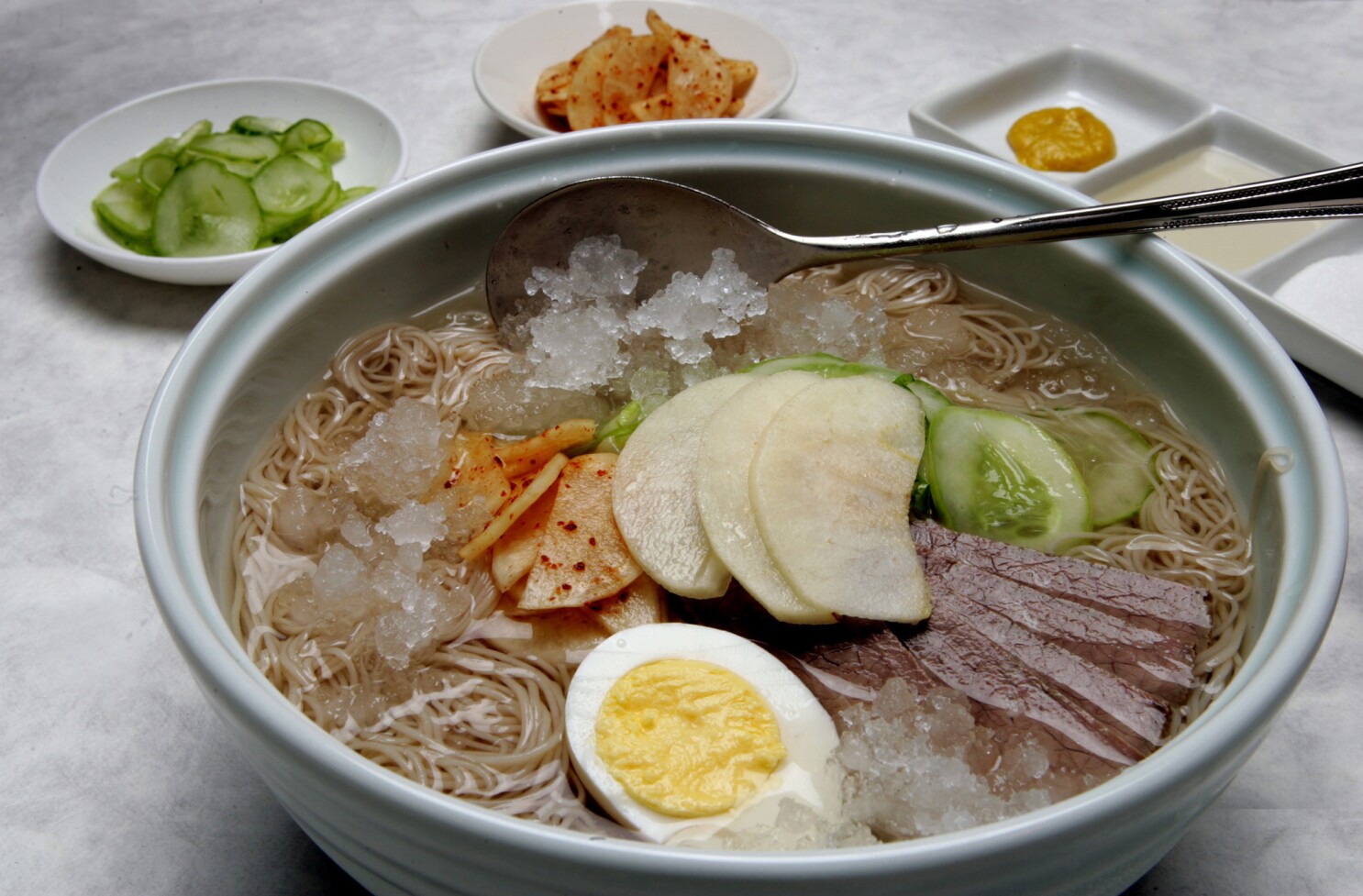
Finally, wrap the cold noodles in a bowl, arrange the shredded cucumber, pear, kimchi, halved egg, sliced beef on top, pour in the cold broth, and enjoy.
EAT AUTHENTIC KOREAN COLD NOODLES
When you start enjoying cold noodles, don't eat the noodles first. Eat the egg first so that its flavor spreads in your mouth, balancing the taste of the noodles later. Next, add mustard and vinegar to the bowl of noodles in a 1:1 ratio and mix well. The mustard will warm you up and reduce the coldness of the noodles. The vinegar will stimulate your taste buds and help cleanse the cold noodles.
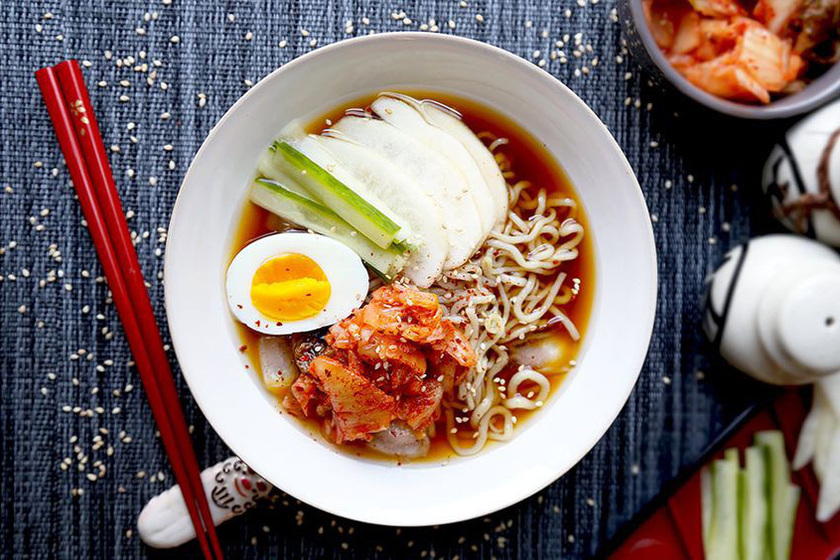
The appealing colors of cold noodles
Before eating the noodles, sip a little of the cold broth after mixing it with mustard and vinegar. However, when you start enjoying the noodles, absolutely do not cut them into smaller pieces if the noodles are too long. Pull the noodles up high while eating and enjoy them with a piece of grilled meat to enhance the flavor. Koreans believe that pulling the noodles up high to clearly see the long strands symbolizes longevity, a good life, and good health.
Popular Korean Cold Noodle Dishes
Although now widely popularized in everyday life, naengmyeon has not lost the sophistication and elegance of the ancient Chosun palace dining tables. Today, Koreans have also created many unique and creative variations of naengmyeon.
Mul Naengmyeon
When talking about cold noodles, Mul Naengmyeon is a must-mention – a dish with a chilled broth. Mul Naengmyeon is meticulously prepared and presented: the noodles must be round and firm, maintaining their shape when dropped into the broth without becoming mushy or falling apart. The broth has a light and refreshing flavor, made from bone or beef/chicken, with a touch of seaweed, enough to moisten the noodles without making them soggy. The noodles are topped with a filling of radish, green onions, pork, and a perfectly cooked boiled egg. All ingredients are finely chopped and arranged elegantly.
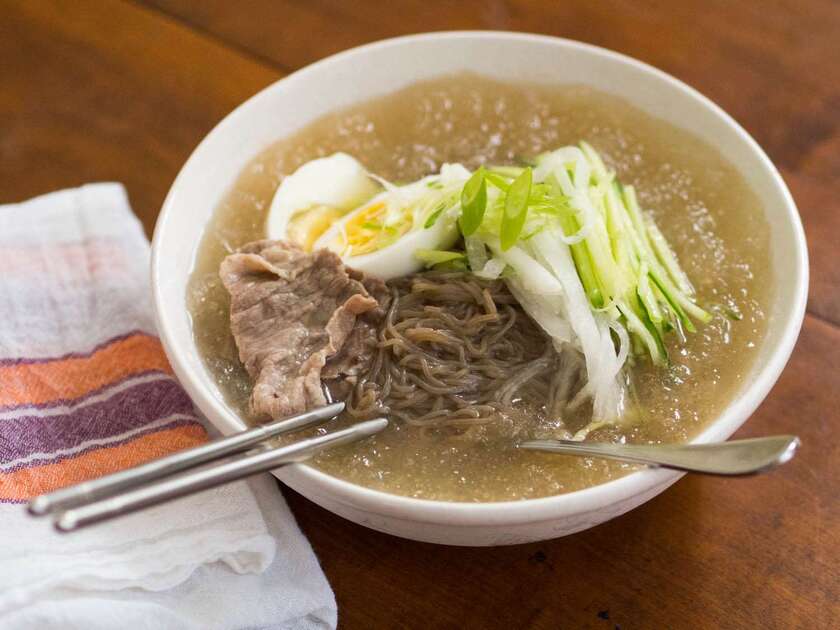
When talking about cold noodles, Mul Naengmyeon must be mentioned – a noodle dish with a chilled broth.
Bibimnaengmyeon
Simply put, it's a cold noodle salad. After soaking in ice water, the noodles become even chewier, tastier, and more refreshing. While the toppings are the same, the spicy sauce is what makes this cold noodle salad stand out, creating its distinctive flavor.
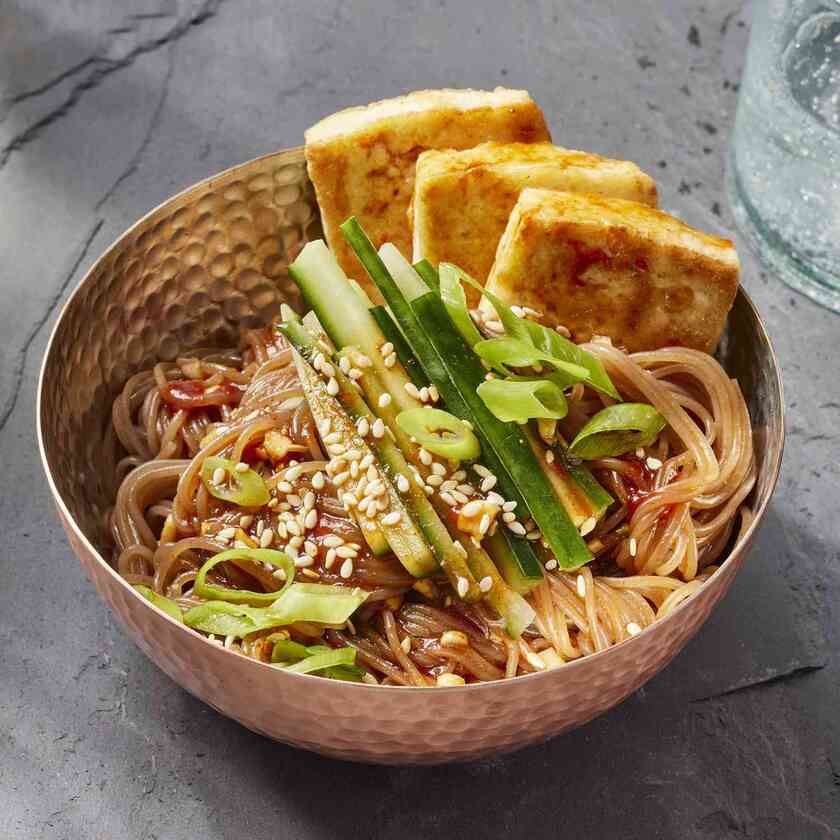
After soaking in ice water, the noodles will be even chewier, tastier, and cooler.
It's basically quite similar to Mulnaengmyeon but without the broth; instead, it's served with a spicy kimchi sauce. This sauce is what gives Bibimnaengmyeon its natural and eye-catching red color.
Kongguksu
Among the various variations of Korean cold noodle dishes, Kongguksu is perhaps quite special. Kongguksu originated from Kae-guksu, meaning sesame seed noodles. Starting in the 19th century, sesame seeds were replaced with soybeans, creating a refreshing, nutritious, and detoxifying summer dish. Kongguksu noodles are made from pure wheat flour and are pure white, becoming even more visually appealing when dipped into the smooth soybean broth.
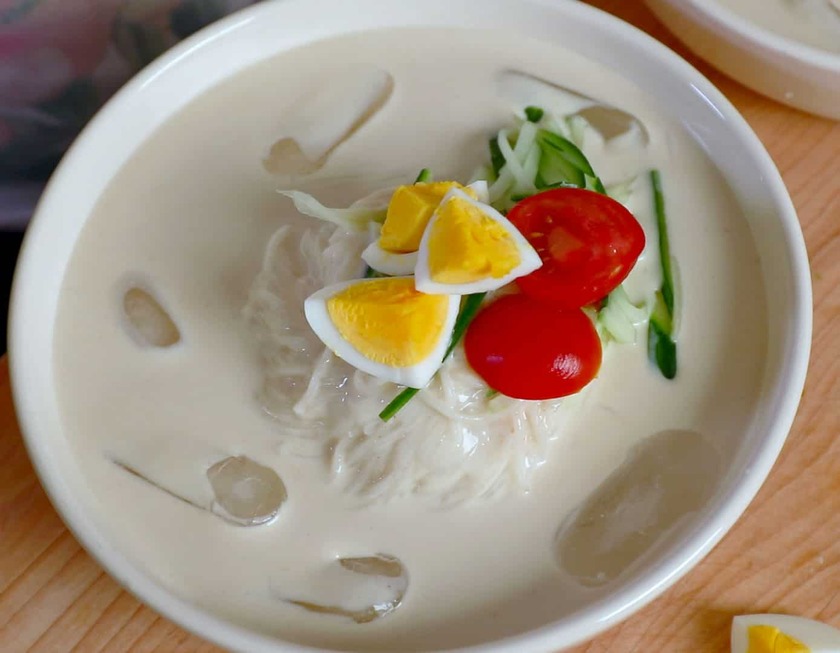
Kongguksu is a rather unique dish.
This dish features a broth made entirely from ground soybeans and salt. Therefore, Kongguksu cold noodles are a light, refreshing vegetarian dish with a perfectly natural flavor. The noodles are usually eaten with radish or cucumber kimchi. Depending on the chef, some restaurants make the broth mild and cool, and sprinkle it with sesame seeds.
As can be seen, with its vibrant colors and delicate, easy-to-eat flavors, cold noodles have played a significant role in dispelling the sweltering summer heat in Korea, while also enriching the country's culinary scene.