VI
VI


*This article is a memoir by author Le Hong Lam, about Tet (Lunar New Year) in his childhood memories in the rural North of Vietnam.
This year, Tet (Vietnamese New Year) is coming early. It's barely the beginning of the Gregorian New Year, and Tet is already looming. Usually, it's around the end of January (in the countryside, we call it the "upper calendar"), when winter is almost over, when most of the old year's affairs are settled, when:
"I can feel the biting cold in the wind."
The ferries are now deserted.
Only then will Tet (Vietnamese New Year) arrive leisurely and calmly to every home.

Tonight, after coming home from work, my mother cooked me a bowl of braised carp with pickled mustard greens, sprinkled with some scallions and a few slices of fresh chili peppers, served with jellied meat. The scent of my distant hometown mingled with the chilly weather of late winter, and I suddenly felt: Tet (Lunar New Year) has arrived at our doorstep.
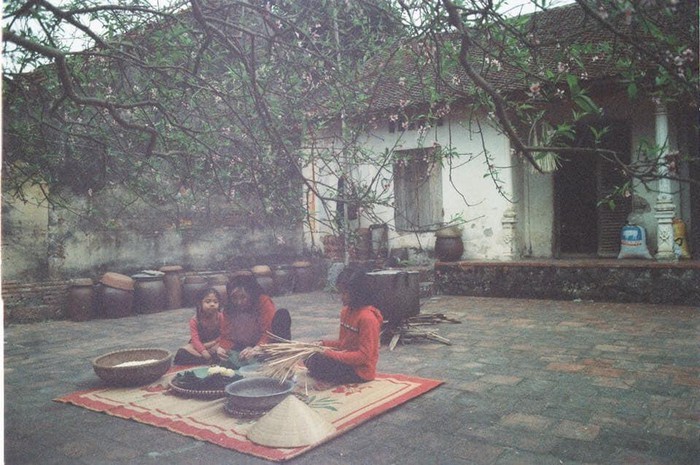
Tet is a busy time, but also a warm and joyful time for family reunions.
My poor, low-lying village in the North Central Delta truly embodies the spirit of the region. The twelfth lunar month (December) is usually the time for planting the rice crop. If, before the Kitchen God Festival, the fields are sufficiently watered, the seedlings have been pulled up, and the rice has been planted, then the Tet (Lunar New Year) celebrations are complete. The villagers leisurely buy beans and sticky rice, select banana leaves, and dry thorny leaves (the kind of leaves mixed with sticky rice flour to make thorny cakes) to prepare for Tet. However, if a year brings severe cold spells, causing the rice seedlings to rot and not sprout, requiring repeated incubation until the seedlings have enough leaves, or if the fields are not yet sufficiently watered and planting isn't finished by the 27th or 28th of Tet, then that Tet is considered anxious and less festive.
I remember one year, on the morning of the third day of Tet (Lunar New Year), my cousin came to visit and found my mother tidying up the kitchen after the holiday. We greeted each other, and my mother asked if he hadn't gone to transplant rice seedlings yet, but was finishing planting the remaining rice paddies. He laughed and said, "The atmosphere of Tet is still so strong on the third day, Auntie, so I'm enjoying it a little longer." Speaking of Tet now, the third day is sometimes the "peak" of the holiday, with all the greetings, visits, feasting, and revelry still in full swing. That just goes to show how hardworking and diligent people were in our poor hometowns in the past.
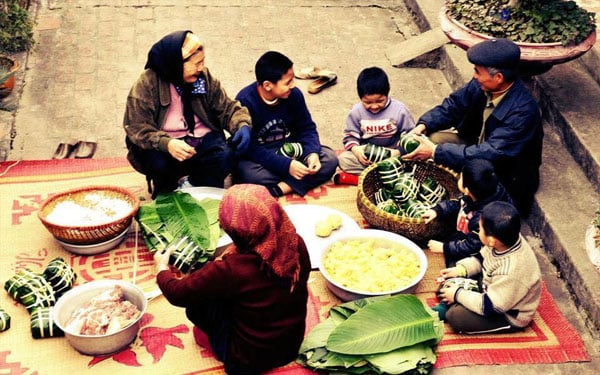
Family members gather together to prepare for a prosperous and joyful Lunar New Year.
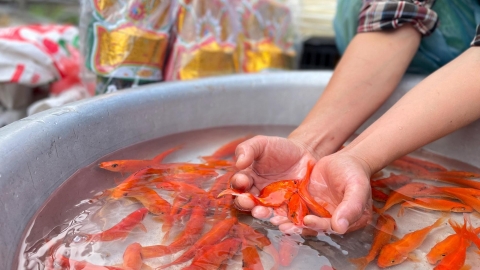
In front of my house was the largest pond in the village, situated opposite the village communal house, perfectly aligned with the feng shui principles of the old Lý and Chánh families: stepping out of the communal house and wading into the pond, you could dip your hand in the water. Around Tet (Lunar New Year), a team would come back with their nets (probably hired by the Cooperative), sweeping up all kinds of fish and shrimp, big and small, from the pond and distributing them to the cooperative members. The day of the fishing and distribution in the communal house was a festival for the whole village and commune. Every household was bustling with excitement; even children, bundled up in their winter clothes, would skip and jump to watch. Even if they didn't get a share, they'd still be thrilled to see the carp and catfish, glistening white and wriggling, just pulled out of the baskets. Some lucky children would find a few leftover fish or shrimp when the cooperative leader, a member of the group, was distributing them, and would grab them and give them to the children gathered around: "Take these and grill them!" The whole group cheered as if they'd won the lottery, and those nearby, seeing a "bargain," rushed over. A chaotic scene unfolded: people scrambled to find the smoldering embers (rice husks, sawdust, and crushed straw) or quickly gathered firewood, cleaned the fish and shrimp they'd been given, and grilled them. The most delicious seafood I'd ever tasted still seemed to retain the flavor of home, the sweet, savory taste that permeated the air.
This fishing season, where the catch is divided, usually takes place in the days leading up to Tet (Vietnamese New Year), and often during freezing cold days. My house was right next to the pond, and after each round of pulling in the nets, the fishermen would take turns, or at mealtimes, they would run in to ask for shelter by the blazing wood-burning stove, waving their hands frantically over the fire, their mouths trembling from the cold. I don't know if it was from that time that the rhyme originated in my village:
"I want to marry the fisherman who pulls the nets."
"He's dark-skinned but has plenty of money to spend."
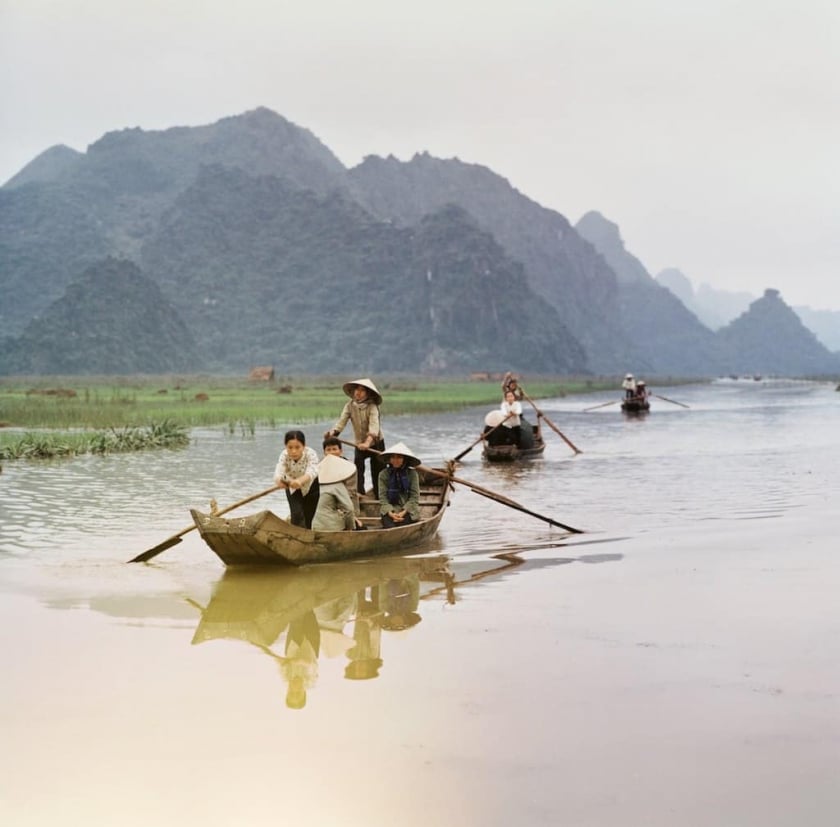
When we think of our hometown, we remember a time when we would roam freely by the rivers and lakes.
I wonder if, through those hours of pulling nets that forged strong, muscular physiques, or those nights warming my hands and shivering by the crackling fire in the old countryside, any of those "net-pulling guys" ever managed to "cast their nets" and abduct any village girls from my hometown.
The fish from the pond were distributed by the Cooperative, and my mother would "process" them into different parts: the largest ones were cut into four pieces, the two middle pieces were fried until crispy and put into a large pot to be used for ancestral worship and for the Tet holiday. The tail and head, along with the smaller fish and the shrimp and small minnows, would be stewed, fried, or boiled with pickled vegetables for the whole family to eat gradually while waiting for Tet. However, in my memory, and the feeling that still lingers now, the plates of fish heads stewed with pickled vegetables, the small fish stewed with salted eggplant sprinkled with fresh onions, dill, and chopped chili... are still the most delicious, flavorful, and fragrant dishes, imbued with the bustling and intoxicating atmosphere of the days leading up to Tet in the countryside. Just thinking about it makes me feel nostalgic and eagerly anticipating it.
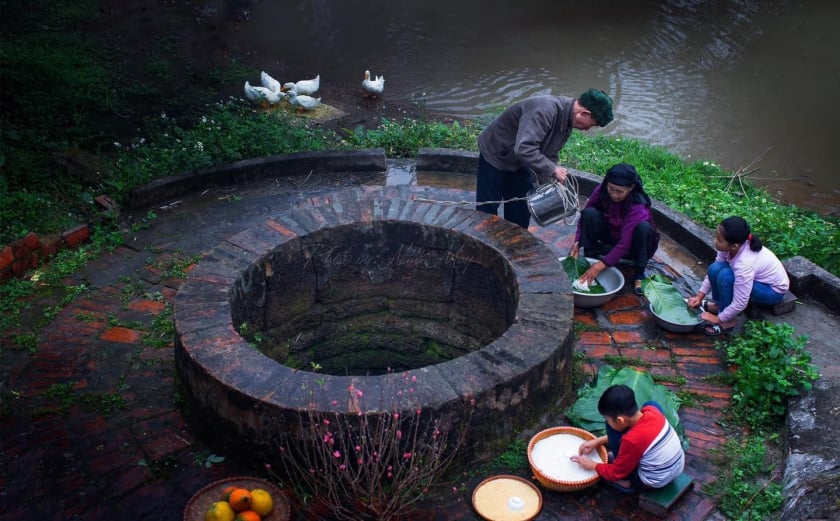
The bustling and enchanting atmosphere of the days leading up to Tet in the countryside evokes feelings of nostalgia and eager anticipation.