VI
VI


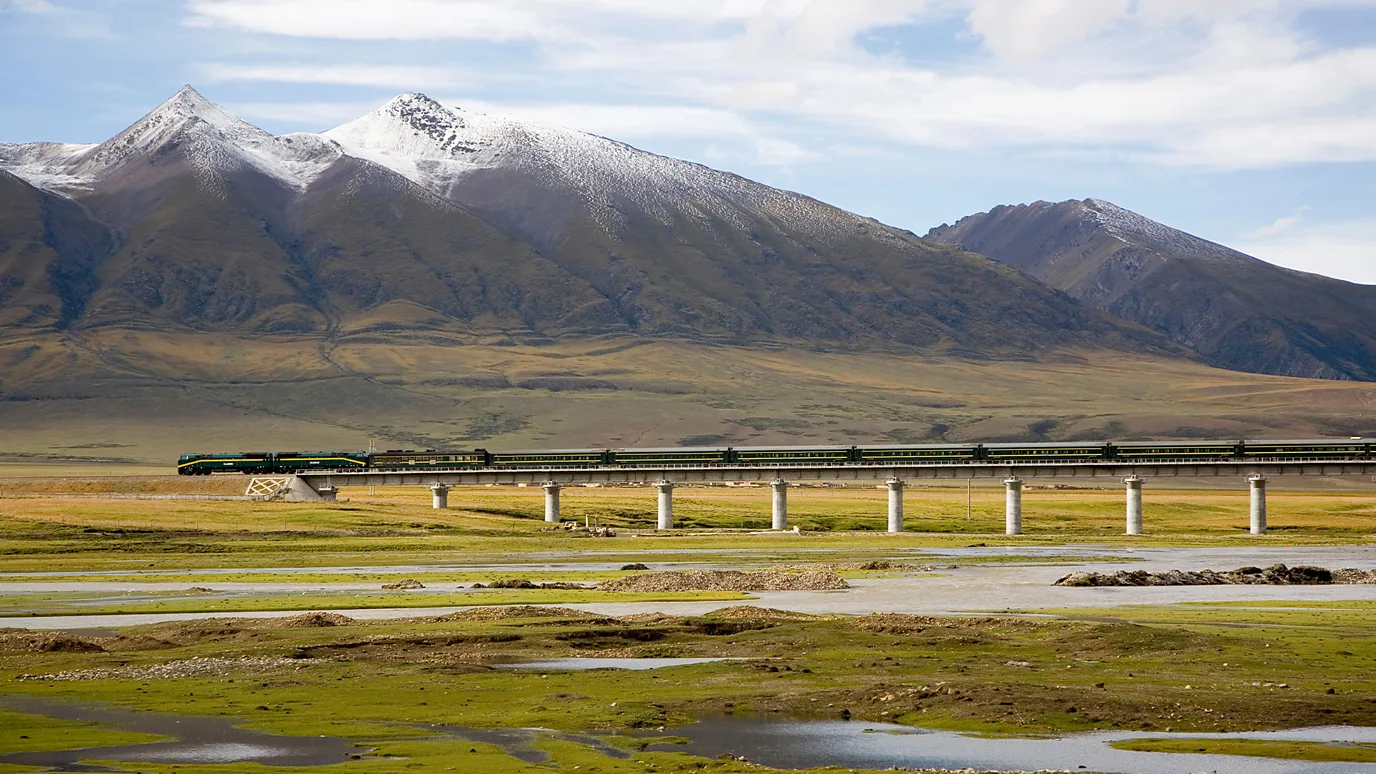
Despite such a long and magnificent journey, outside the window there was virtually no sign of human presence, only golden meadows stretching across the roof of the Earth, undulating to the horizon, where mountain peaks rose like crocodile teeth.

The Qinghai-Tibet Railway, construction of which began in 2001 and was completed in 2006, serves as a vital link connecting Tibet, one of the most isolated regions, with mainland China. The project is an incredible feat of engineering. To achieve this railway line, thousands of workers toiled in harsh weather conditions and faced some of the greatest challenges in railway construction history, including permafrost and thin air. Because of this, passenger trains to Tibet are equipped with oxygen supply systems, making it more comfortable for passengers in the oxygen-deficient environment of the plateau.
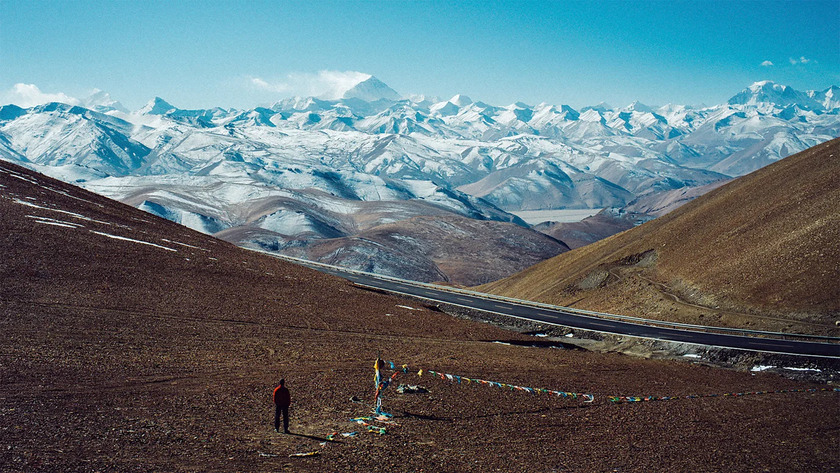
For many years, no one thought it was possible to have a railway line connecting Lhasa to the outside world.
I boarded a train from Xining, the capital of Qinghai province, to begin my long journey across the Himalayas to Lhasa. Departing from a crowded station, the train slowly entered the vast desert, beginning a 20-hour journey. The landscape changed rapidly, from sprawling fields to barren, rocky mountain areas.
The ship sails past Qinghai Lake – China's most beautiful saltwater lake, situated at an altitude of 3,205-3,260 meters above sea level in the basin of the Tibetan Plateau, surrounded on all sides by mountains: Datong Mountain to the north, Sun Moon Mountain to the east, Xiangpi Mountain to the west, and Qinghai Nanshan Mountain to the south.

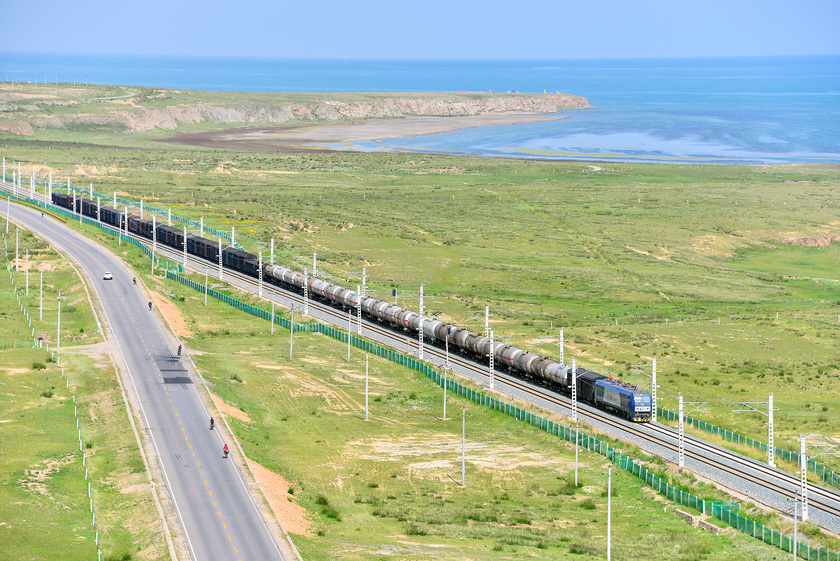
The boat sails along the vast, deep blue Qinghai Salt Lake.
From the train cabin, one can also see the Kunlun Mountains, a sacred mountain range famous in Chinese mythology, known as the "Ancestor of Ten Thousand Mountains" and the "Ancestor of Dragon Veins." The mountain range stretches over 3,000 km from Pamir (Afghanistan) in the west through Xinjiang to Qinghai in the east, with an average altitude of 5,500-6,000 meters. The Shangri-La Monastery is also located within this mountain range.
The highlight of the journey is when the train crosses the Tanggula Pass, located at an altitude of 5,072 meters above sea level, confirming that the Qinghai-Tibet railway is the highest in the world. Passengers must use oxygen masks to cope with altitude sickness. The scenery here is majestic and magnificent, with snow-capped mountains year-round and vast valleys. The Tanggula Pass is also the source of many large and famous rivers such as the Yangtze and Yellow Rivers.
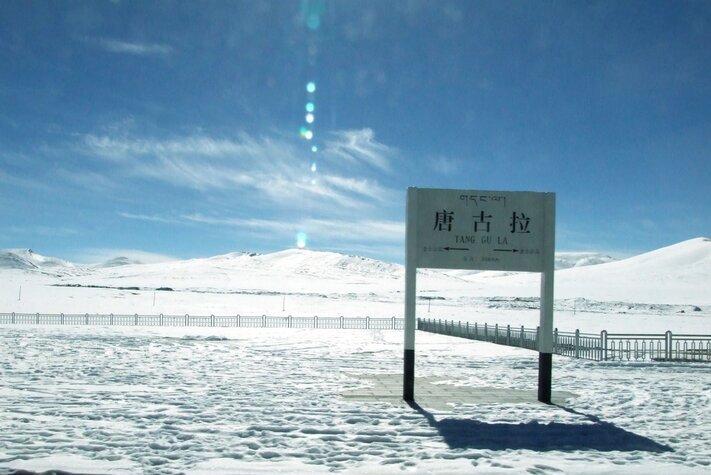
Tanggula Pass Railway Station, located at an altitude of 5,068 meters, is the highest railway station in the world.
Every time I pass through the villages, I think about the transformation of Tibet since this train began operating. Young Tibetans are gradually learning Mandarin and moving to the big cities to find work and a new life. Buddhist monasteries are still there, but some argue that they are becoming increasingly symbolic. The Tibetan Plateau, with its majestic landscapes and towering mountains, has left a deep impression on me. Tibet today is a land caught between two worlds: on one side, a cultural heritage of thousands of years, and on the other, a powerful modern transformation spreading throughout.
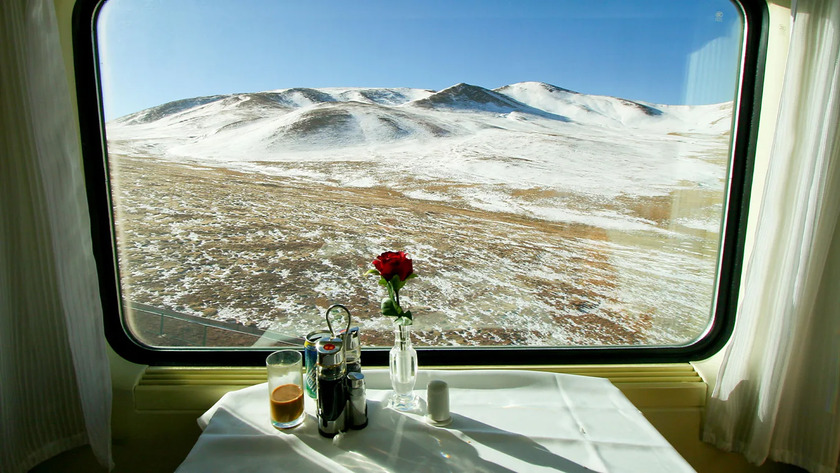
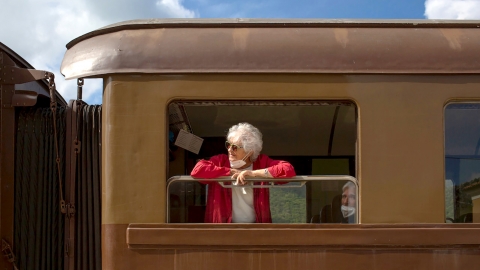
The train window offered breathtaking views.
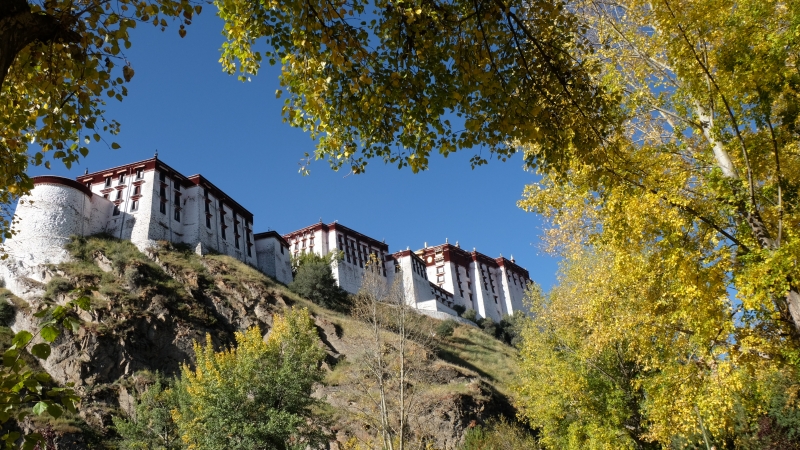
Lhasa today is a developed city, with high-rise buildings rising alongside ancient monasteries. The square in front of the Potala Palace, once the residence of the Dalai Lama, is now a large public space featuring fountains and LED screens. For those who come to Lhasa seeking a sacred place, they might feel that the city has lost some of its soul.
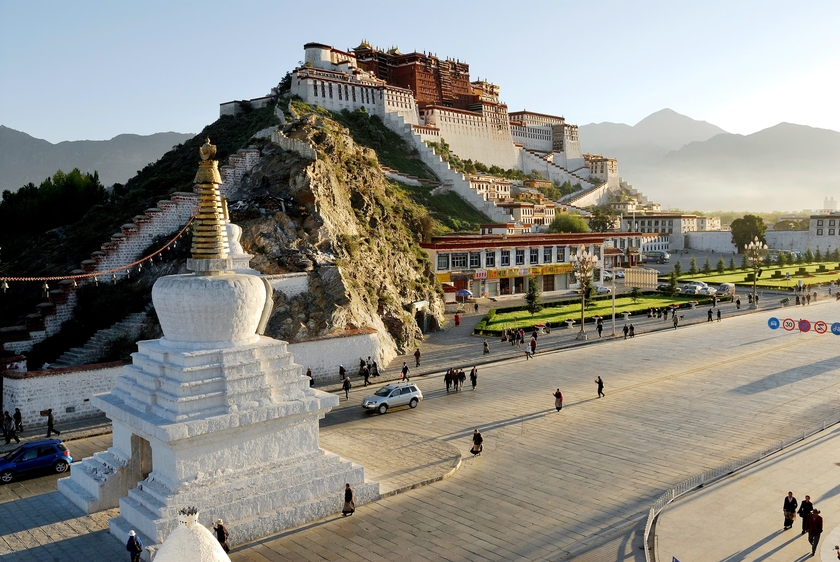
Tibet today is a land caught between two worlds: on one side, its millennia-old cultural heritage, and on the other, the powerful and pervasive transformation of modernity.
Nevertheless, Tibet remains a special land. I cannot help but admire the spiritual strength of its people, who have lived through so much turmoil yet still held onto their faith. The Qinghai-Tibet Railway may be a marvel of engineering, but the Tibetan people are living witnesses to the resilience of their culture and spirit.