VI
VI


Text and photos: Le Thang
We had traveled for half a day, through enchanting yet somewhat frightening mountain passes. The sharp bends along the mountainside lifted us higher and higher, the temperature dropping, and the weather becoming colder. I saw the first snow-capped peak in the distance on the horizon, where the winding road stretched endlessly into the vast expanse of light and shadow. My friends' eyes lit up, and the car sped along, filled with excitement.
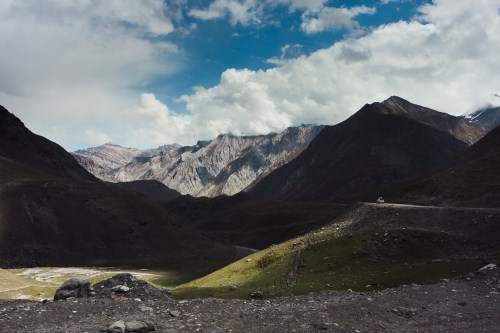
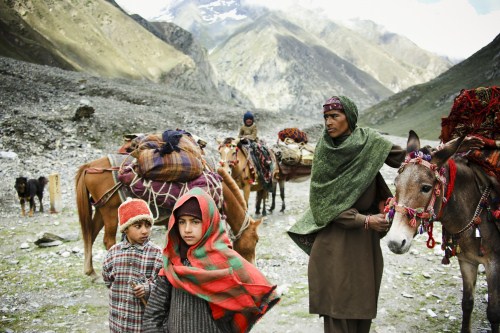
The local driver stopped the car by the roadside, in the middle of a rare green valley in this region. We got out excitedly, after a long half-day of bumping through countless hills and mountains. The steppe was beautiful and picturesque. I came across a nomadic family traveling on horseback, another man tending a flock of goats on the grassy slope; they all looked incredibly endearing. The unfamiliar appearance, language, customs, and traditions sparked our great curiosity. I took many photos with them and individually before enjoying a cup of tea by the roadside and continuing our journey across the steppe.
The journey from Srinagar to Leh takes two days. We arrived at the town of Kargil, marking our entry into Ladakh. Kargil is a large town that divides the route between Srinagar and Leh. In 1999, Kargil was a battlefield during the brief war between India and Pakistan. We heard that Kargil wasn't very safe, so we decided to travel another 60km to the peaceful village of Mulbek to spend the night and continue our journey the next morning.
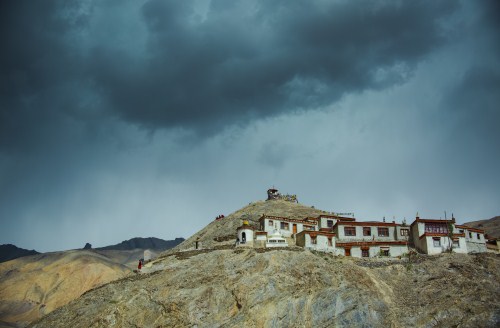

In Mulbek at twilight, the wind was howling, a thunderstorm loomed on the distant horizon, creating a mysterious scene. We had a plan back home: to cut each other's hair upon arriving in Ladakh, and there couldn't have been a more opportune time to do so. One by one, we shaved our heads, in the cold wind and as darkness gradually enveloped the valley at an altitude of nearly 3,000 meters.
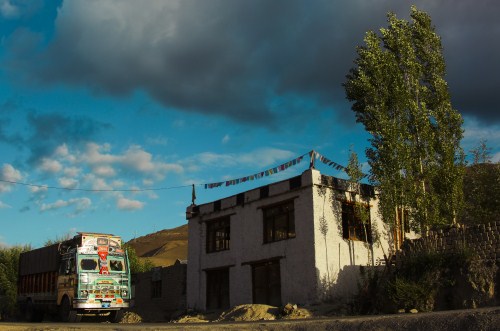
I woke up while everyone else was still fast asleep. Mostly because it was difficult to sleep at such a high altitude, and partly because of the anxious anticipation of the first rays of sunlight falling into the valley. And when the sun finally rose above the mountaintop, that mesmerizing light left me speechless. Each ray of sunlight piercing through the clouds created incredibly magical interplay of light and shadow. I can't remember how I took those photos or for how long. I only know that they were the most magical images I've ever seen and captured.
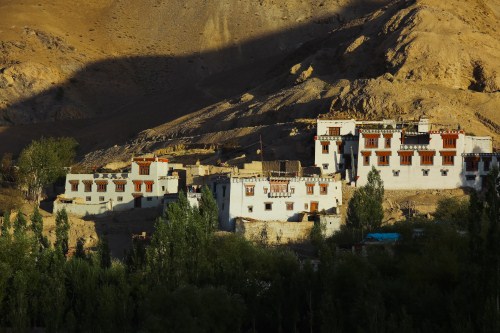
We were crossing a mountain pass at 4,300 meters after leaving Mulbek. It was a bit unsteady experiencing that altitude for the first time, and the dry, cracked air was a bit harsh. As we approached Leh, the terrain became less vegetated, with only vast stretches of rocks and snow-capped mountains. Ladakh is a Buddhist land, and I began to see more colorful flags and monasteries on the mountaintops. We were heading towards Lamayuru – the large and famous monastery of Ladakh, a must-visit on this trip.
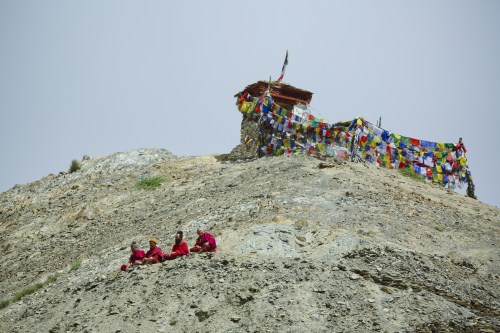
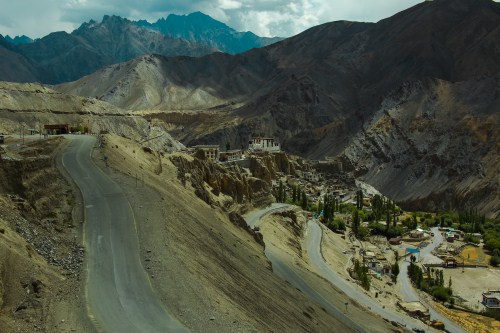
Lamayuru is considered the oldest monastery in the Ladakh region, built around the 10th century by a great master named Napora. Located in a beautiful spot on a mountainside, the surrounding landscape is incredibly unique and interesting. We stopped our car and admired the ancient temple from afar, where winding roads led to it. Then we continued on to the monastery, exploring the architectural complex, admiring the scenery, and interacting with the monks and the Ladakhi people living there.
We left Lamayuru with regret after lunch at a charming little restaurant outside the monastery. If only we had more time to stay and watch Lamayuru at sunset. But there was still a long way to go to reach Leh before dark. We continued our journey, leaving Lamayuru behind. The roads were still breathtakingly beautiful. We experienced many surprises and wonders, with the scenery constantly changing, no two stretches alike. At times, I felt like I was traveling through the terrain and geology of Mars, Jupiter, or the Moon, if only there weren't a road there.
The car sped along in the golden afternoon sun. The roads had become less winding, with occasional stretches of seemingly endless straightness, guided by clouds and rocks to the horizon. And as the snow-capped mountains gradually appeared in the distance, I knew it was the Himalayas, and the city we were heading to, at its foot, was very close. And then we entered Leh, like travelers, as the sun set behind the mountains.
| Additional information: But The Srinaga – Leh Highway is 434km long. The road is in good condition with breathtaking scenery. As a major tourist route in Ladakh, it has plenty of rest stops and restaurants. But The route features many attractive sights, such as: Lamayuru Monastery, Anchi Monastery, the Zanskar mountain range, Tibetan villages, etc. But Transportation: A 7-seater vehicle is best, hiring both the car and driver for a 2-day, 1-night trip costs $300 (18,000 rupees). |