VI
VI


The opportunity to explore the "mysterious land in the Himalayas" is back!
Ladakh is a region in the state of Jammu and Kashmir, re-established as a Union Territory in India in August 2019. It is the second least populated region in India, with a population of only about 250,000 people. With a culture and history closely linked to Tibet – earning it the reputation of being the "Little Tibet of India" – this destination is renowned as a "mystery land in the Himalayas," captivating visitors with its unique and breathtaking beauty of the remote, rugged highlands.
After years of being almost completely isolated from the outside world, Ladakh's "doors" to tourism gradually opened since 1974 and quickly transformed it into a globally renowned adventure tourism destination.
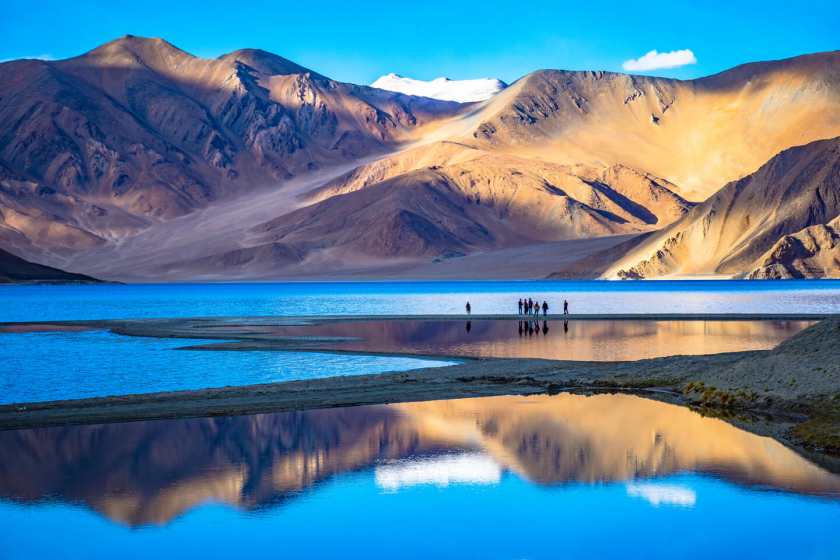
Ladakh, a renowned destination known as the "mystery land in the Himalayas," captivates tourists with its unique and exotic beauty of remote, rugged highlands.
Despite the harsh climate, remote roads, and rugged terrain, Ladakh captivates both domestic and international tourists with its diverse landscape, including cold deserts at high altitudes in the Great Himalayas (the Himalayan mountain range, home to the 14 highest peaks in the world, including Everest, the "roof of the world"), and countless pristine, fairytale-like locations.
The summer months are peak tourist season, offering unique and perfect vacations for visitors to experience Ladakh. Ladakh's winter, however, lasts from the end of October to February, with harsh weather conditions and heavy snowfall often causing road closures. But for mountaineering enthusiasts and those who enjoy adventurous sports amidst the pristine, cold landscape, winter tours exploring the magical Ladakh are even more appealing. They often choose tours to Ladakh by air and train in December.
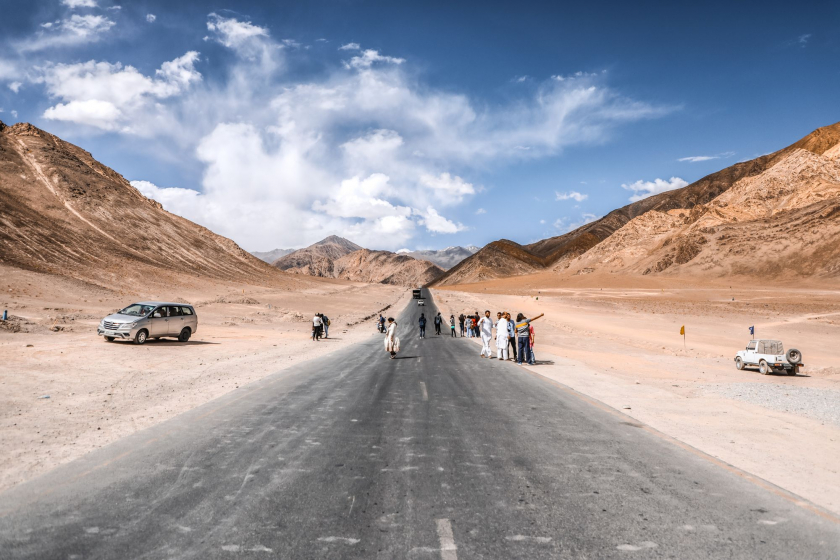
Winter tours of Ladakh are always appealing to adventure-loving travelers.
One issue highlighted by travel experts is the need for careful planning for a trip to Ladakh – from choosing the right tour to selecting accommodation in cozy homestays or luxurious, well-equipped hotels… Don't forget to bring altitude sickness medication and a PCR test certificate (rapid antigen test). Hotels in Ladakh are quite strict with health and safety procedures for tourists, especially given the increased risk of the new Omicron variant spreading rapidly.
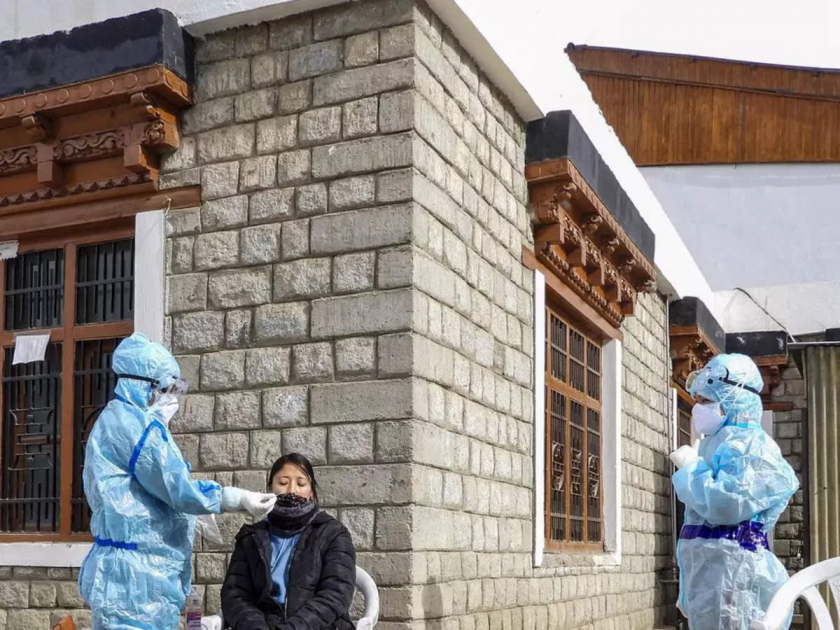
Covid-19 testing is strictly enforced in Ladakh.
According to experts, Indian and foreign tourists share a common interest in experiencing the spiritual atmosphere and enchanting beauty of the monasteries perched precariously on the cliffs of Ladakh, as they give the feeling of being transported back to the Ice Age.
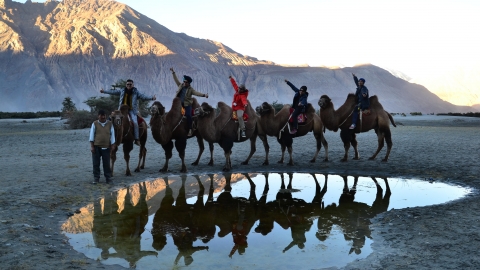
But while many domestic tourists choose tours to see the frozen lakes high in the mountains, beautiful like giant blue crystal blocks, foreign tourists often choose to combine trekking and mountain climbing tours with conquering dangerous mountain passes, even those dubbed "death routes".

Top 5 most popular destinations for experiencing winter in Ladakh.
Khardungla Pass is the world's highest motorable mountain pass (at an altitude of 5,602 m), nicknamed the "road of death" or "road to heaven," challenging the nerves of even the most experienced drivers. Khardungla Pass also serves as the gateway to the Nubra Valley – a lush "fruit garden" in summer and a breathtakingly beautiful landscape in winter.
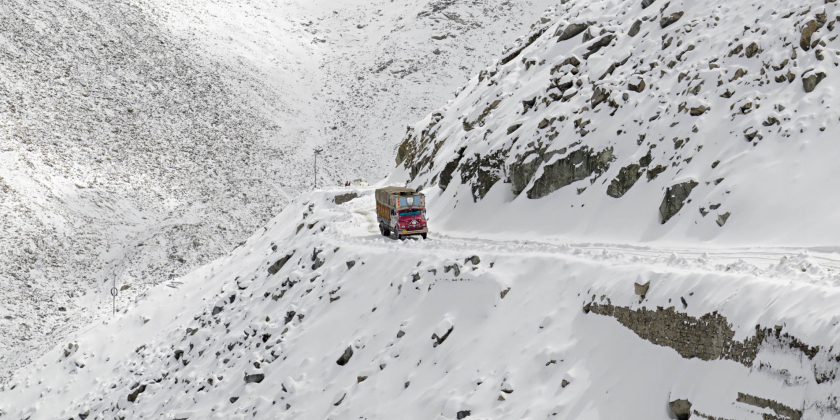
Khardungla Pass, dubbed the "road of death" or "road to heaven," tests the nerves of even the most experienced drivers.
With their crystal-clear blue waters standing out against the surrounding sparkling snow-capped peaks, the unique landscapes of Pangong Tso (a picturesque salt lake) and Tsor Moriri, recognized as World Heritage Sites since 2002, give visitors the feeling that time stands still in the face of their magical beauty.
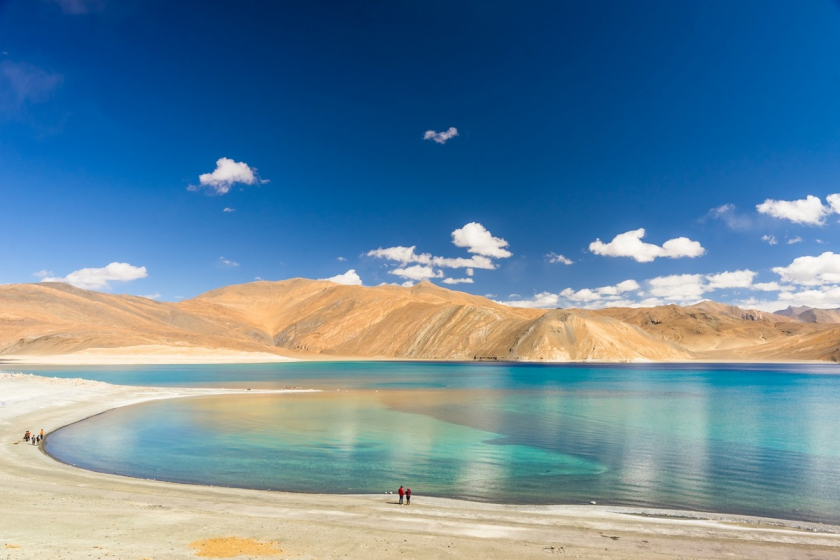
Pangong Tso Lake is a picturesque saltwater lake, set against a backdrop of breathtaking surrounding mountains.
Leh is the largest town in Ladakh and was once the capital of the Kingdom of Ladakh in the Himalayas. Two of the most famous destinations in Leh are Leh Palace – the former palace of the Ladakh royal family, and Shanti Stupa – a Buddhist stupa with a striking white dome atop a hill.
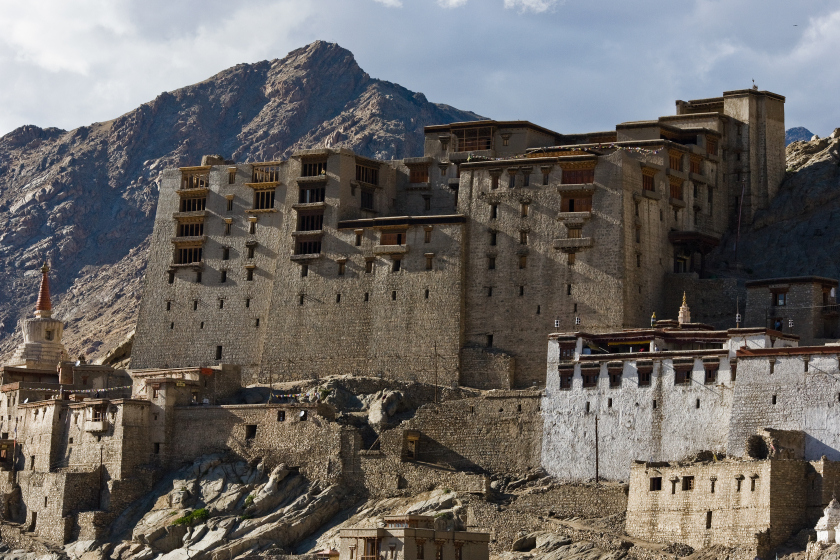
Leh Palace – the magnificent palace of the ancient Ladakh royal family, now abandoned. From its summit, you can admire the stunning panoramic view of the town of Leh below.
Trekking to Hemis National Park, visitors have the opportunity to photograph the rare snow leopard, known as the "king of the snow mountains." Snow leopards typically only descend from the high mountain peaks to lower areas in December.
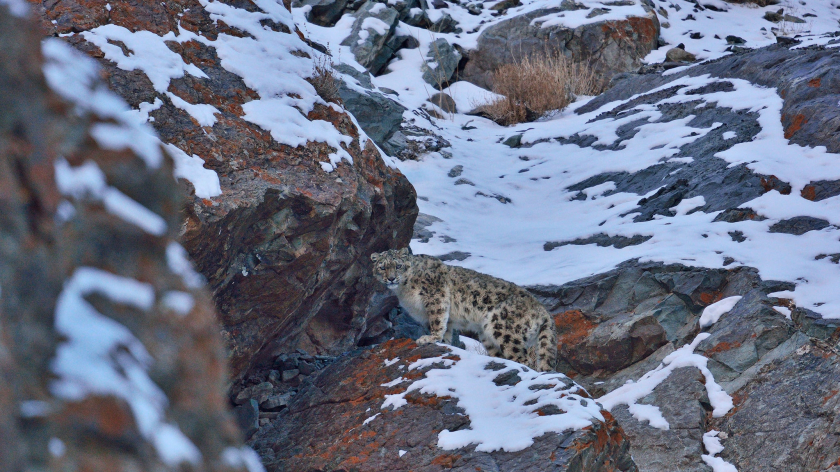
The mysterious snow leopard has always attracted photographers from all over the world who come to "hunt" for its image.
Finally, one of the most attractive activities for tourists visiting Ladakh is trekking through snow and ice to conquer high mountain peaks, or visiting beautiful monasteries such as Hemis, Alchi, Lamayuru, Shey, Thiksay…
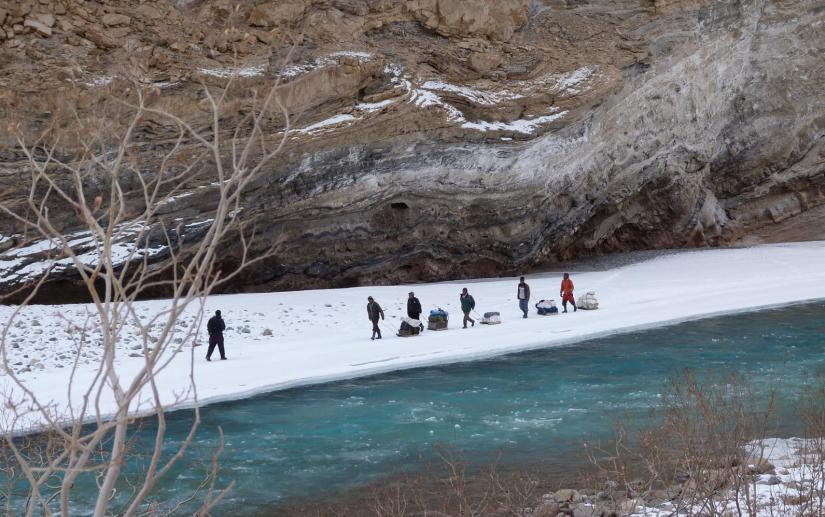
Chadar Trek is one of the most popular trekking routes in Ladakh, often referred to as "Little Tibet of India."
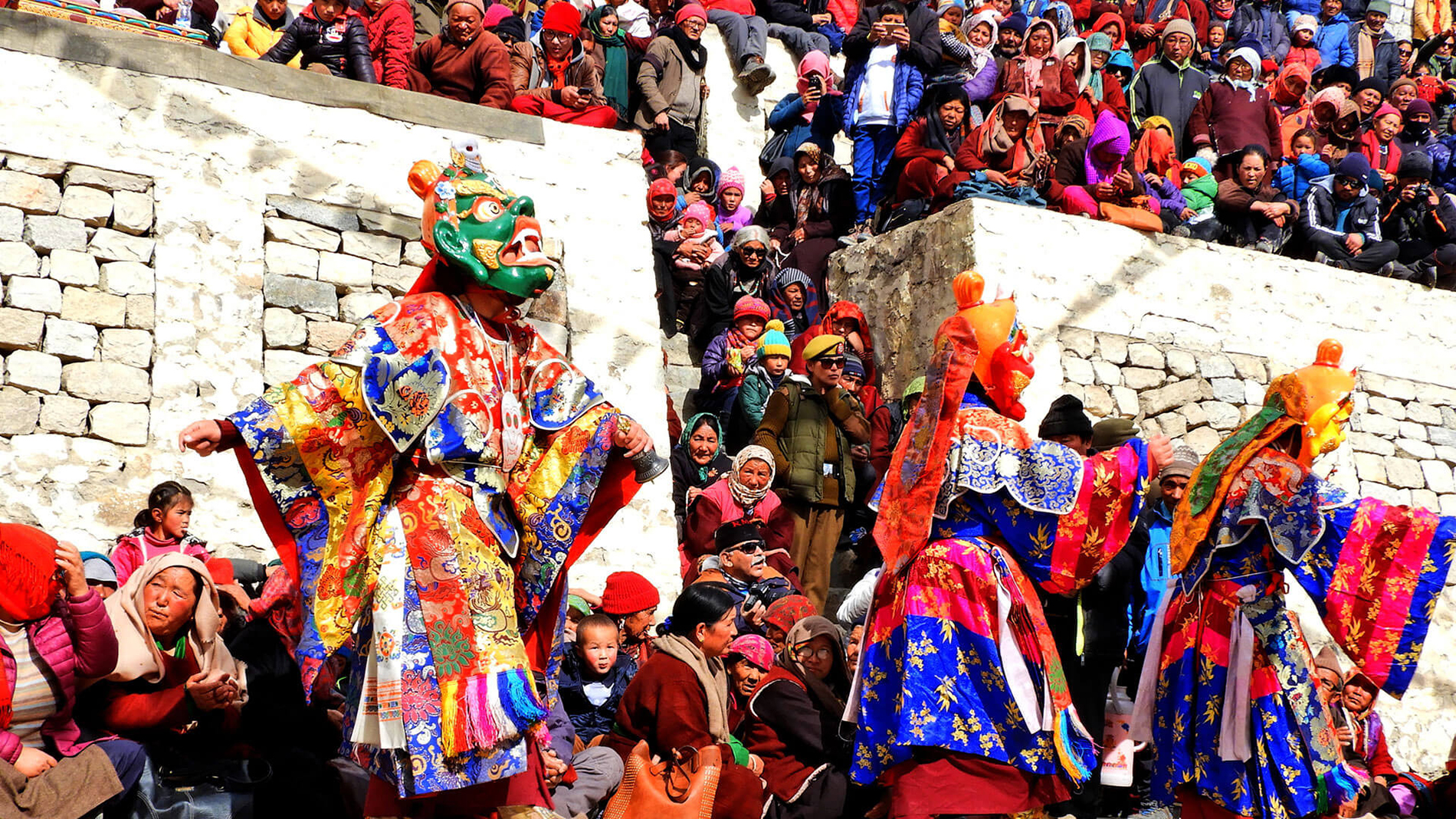
The festival season is steeped in spirituality throughout the monasteries of Ladakh.
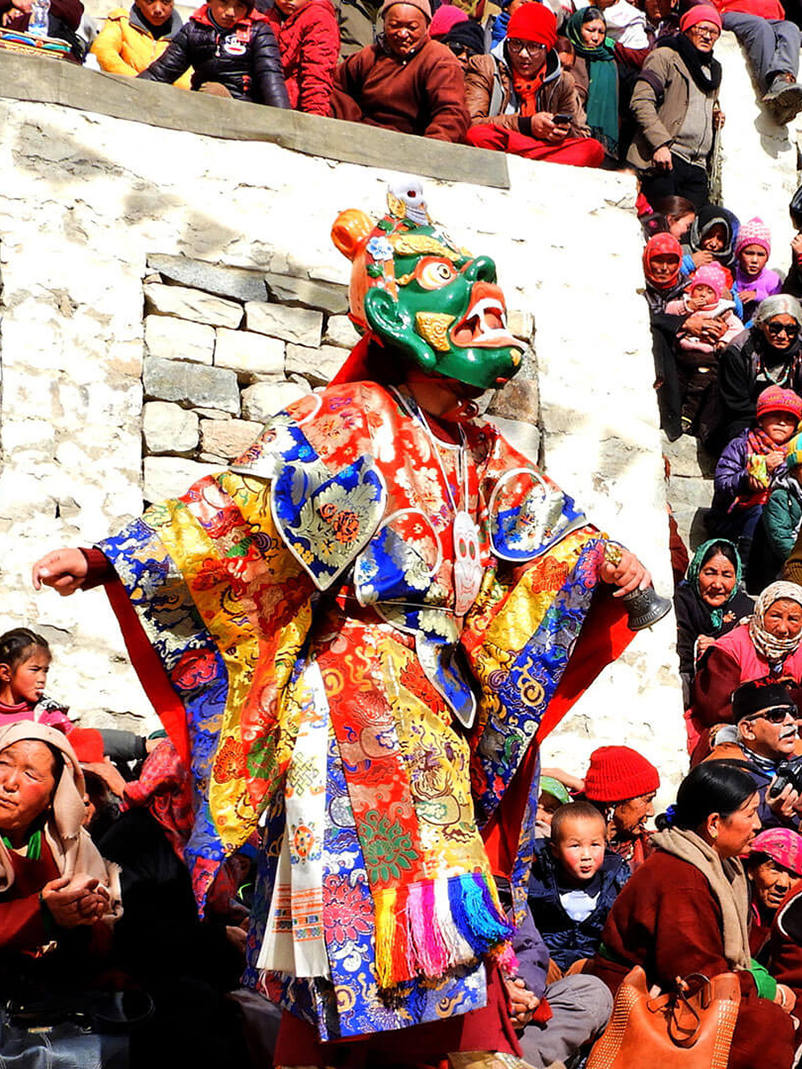
Ladakh is not only famous for its enchanting, fairytale-like scenery, but also for its rich cultural heritage and vibrant festivals. These festivals are often held in the courtyards of Buddhist monasteries throughout Ladakh, with monks dressed in brightly colored traditional costumes and masks performing Cham dances (sacred mask dances – symbolizing the purification of the mind and representing the victory of Good over Evil).
The most famous events in December are the three main festivals, which attract people from all over Ladakh to the monastery, including:
The Khelo India Winter Games: featuring a multi-sport winter grassland game from India. This festival is considered the Khelo Youth Olympics – named after the Khelo India program, which was established to revive sports culture at the grassroots level.
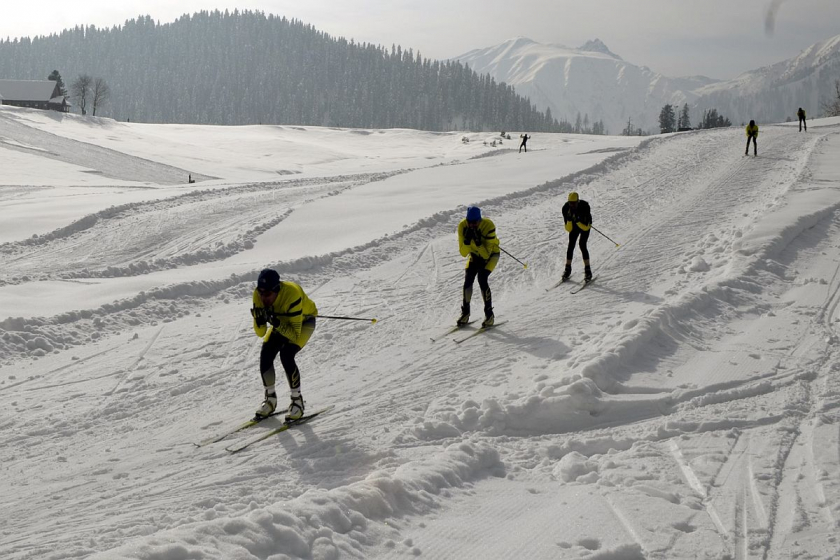
The Khelo India Winter Games is a national festival in India.
Galdan Namchot Festival: commemorates the birth, as well as the passing into Nirvana and enlightenment of Je Tsongkhapa (1357-1419 AD), a renowned Tibetan Buddhist scholar.
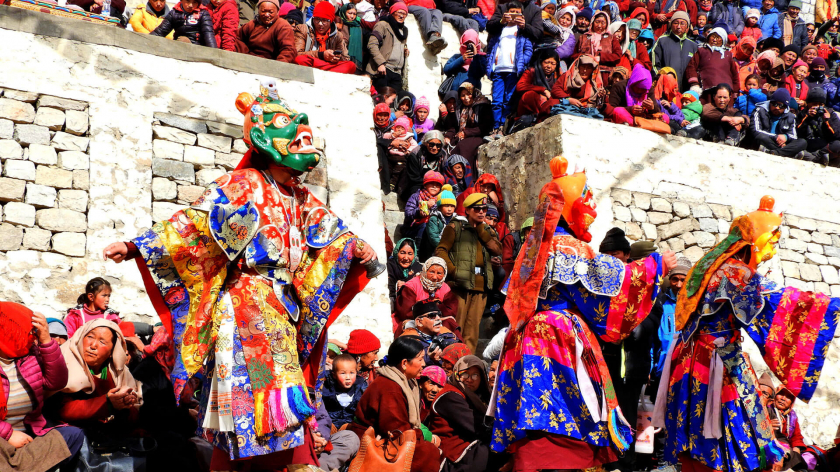
The Galdan Namchot festival marks the beginning of the Losar festival (New Year festival) in Ladakh.
Losar Festival: This is a very important New Year festival in Ladakh, marking the beginning of the new year for the Buddhist community. The Losar Festival originated as a tradition under the supreme authority of the 9th King Jamyang Namgyal of Tibet in the 17th century, when King Jamyang Namgyal decided to lead a winter war that ended before the later Losar festival.
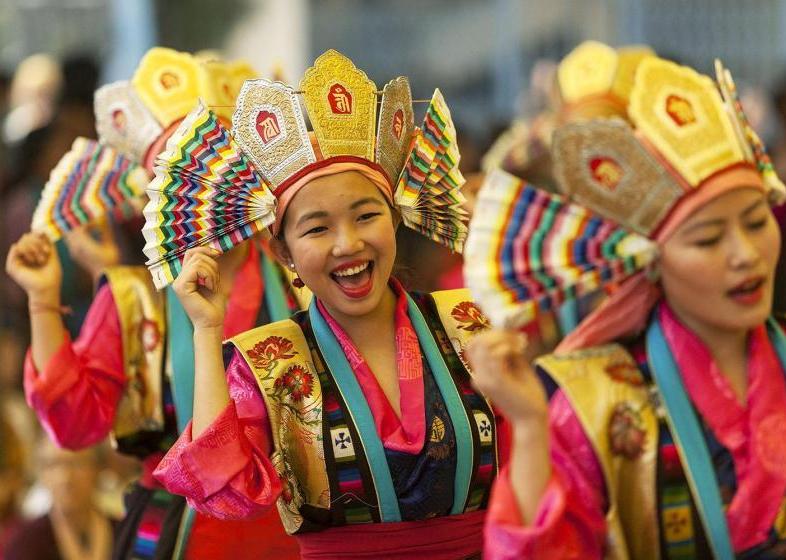
The Losar festival lasts for 15 days around the winter solstice, from approximately December 8th to 30th.
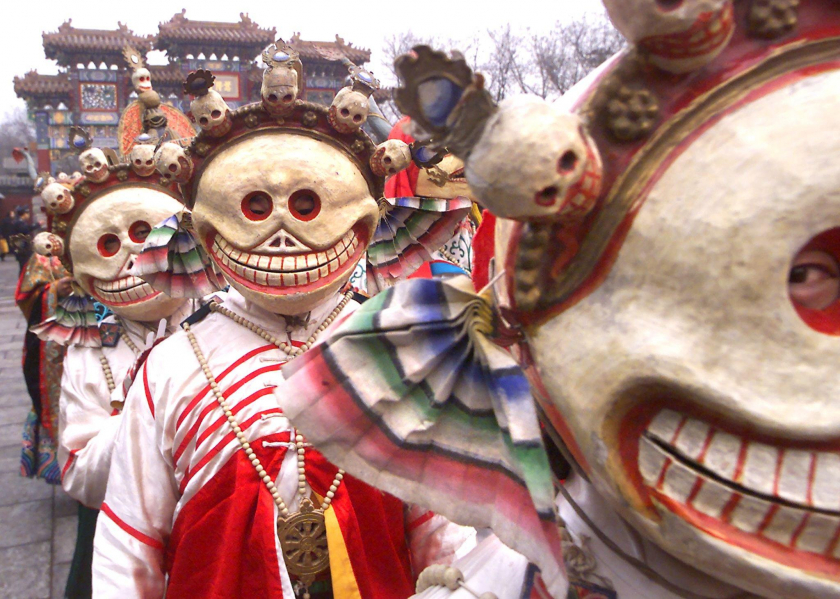
This year, the Losar festival begins on December 24, 2021, coinciding with Christmas worldwide.
Tourism plays a vital role in the economy, accounting for half of Ladakh's GDP. Before Covid-19, the "Little Tibet of India" welcomed 279,937 tourists in 2019 (including 241,285 domestic and 38,652 international visitors). In 2020, up to June, the number of tourists to Ladakh had decreased to 6,079 (including 5,019 domestic and 1,060 international visitors), with revenue reduced.investindia.gov.inEstimated at $84 million. In 2021 and 2022, Ladakh is hoping for a significant increase in the number of tourists visiting the "Little Tibet of India".