VI
VI


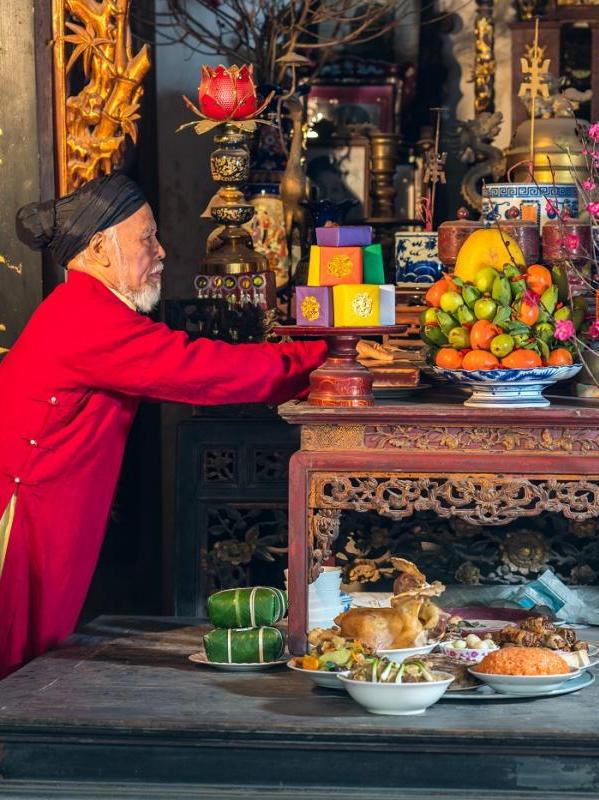
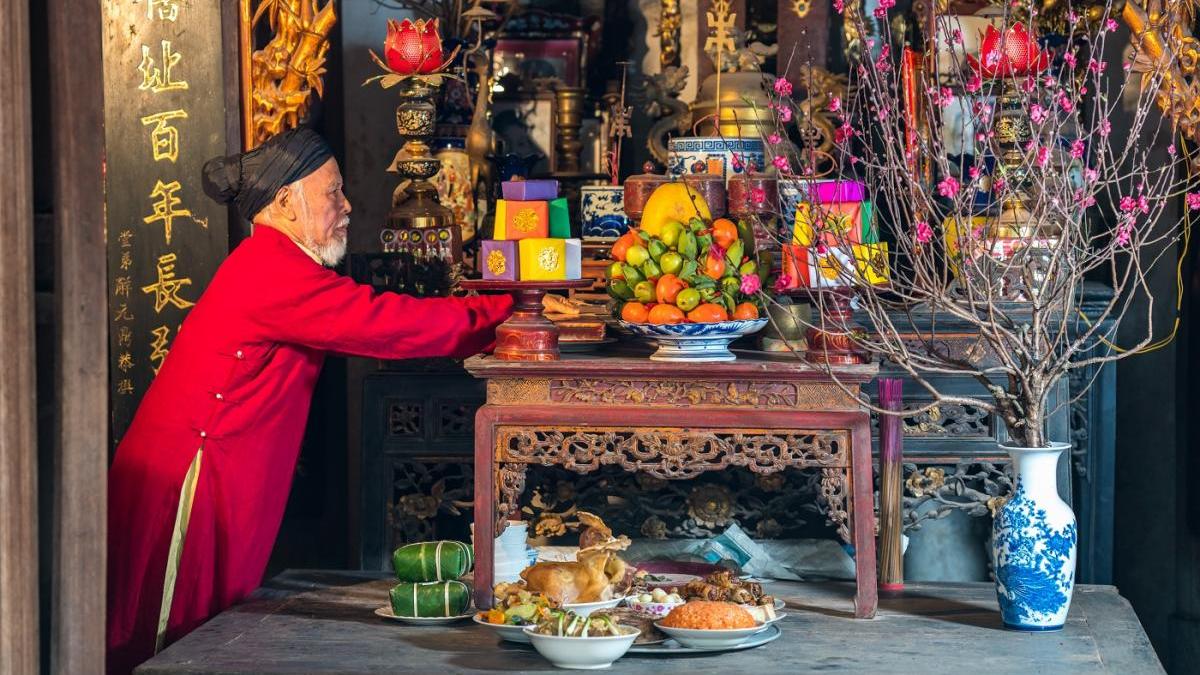
The five-fruit offering consists of five different types of fruit, chosen to represent the five fruits offered to ancestors during Tet (Vietnamese New Year), a traditional custom of the Vietnamese people for generations. Through their names or colors, the five-fruit offering expresses the wishes and desires of the family for the new year.
According to ancient beliefs, the year corresponds to the five elements, which in turn correspond to a person's destiny. Odd numbers belong to the yang principle; specifically, the number 5 represents birth, symbolizing growth and prosperity. Furthermore, the number 5 also symbolizes the "five blessings": wealth, prestige, longevity, health, and peace.
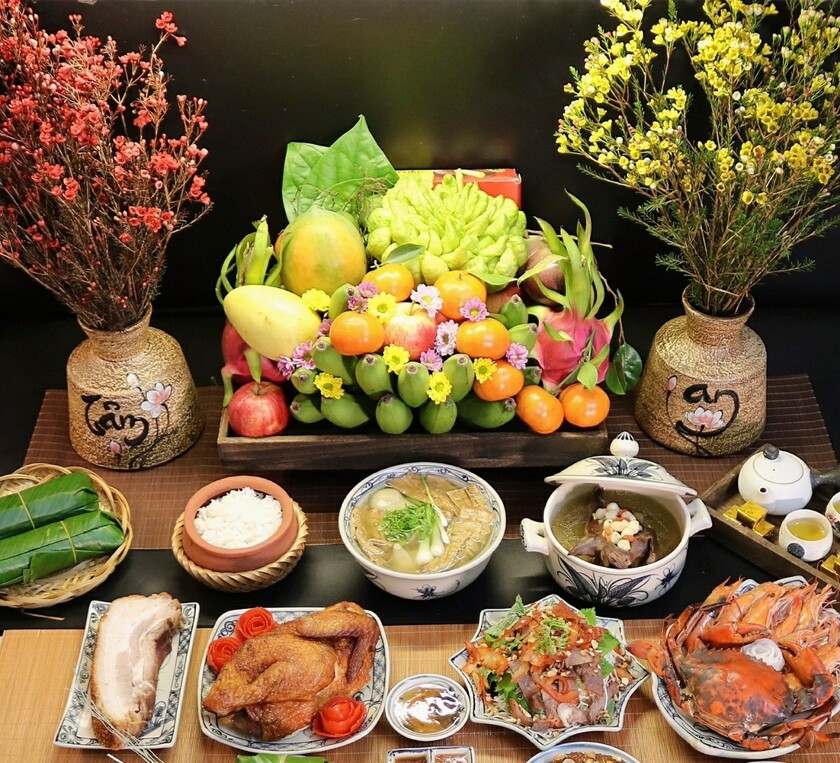
The five-fruit offering typically consists of five different types of fruit. The selection of these fruits to represent the five fruits offered to ancestors during Tet (Vietnamese New Year) is a long-standing tradition of the Vietnamese people.
Due to cultural, geographical, and weather characteristics, the five-fruit offering tray in each region of Vietnam (North, Central, and South) has different forms and meanings.
The exquisite arrangement of the five fruits according to the Yin-Yang and Five Elements principles of Northern Vietnam.
In Northern Vietnam, people arrange the five-fruit tray according to the Five Elements theory in Eastern culture, symbolizing the harmony of all things with heaven and earth. Therefore, the five-fruit tray is arranged according to five colors: Metal (white), Wood (green), Water (black), Fire (red), and Earth (yellow).

In Northern Vietnam, people arrange a tray of five fruits according to the Five Elements theory in Eastern culture, symbolizing the harmony of all things with heaven and earth.
The arrangement and color-coordinated display of different fruits creates an aesthetically pleasing display that aligns with feng shui principles for Tet (Vietnamese New Year). The fruits displayed on the five-fruit tray are usually chosen in odd numbers and arranged in a staggered pattern. During Tet, everyone prepares a full offering of various fruits according to their symbolic meanings to present to their ancestors.

In Northern Vietnam, the traditional five-fruit offering typically includes a bunch of green bananas symbolizing the Wood element; a yellow pomelo or Buddha's hand fruit symbolizing the Earth element; a red chili pepper symbolizing the Fire element; a peach or pear symbolizing the Metal element; and black grapes symbolizing the Water element. Notably, people in Northern Vietnam avoid displaying fruits with strong odors, sharp thorns, or rough skins, believing that these will bring bad luck in the new year.
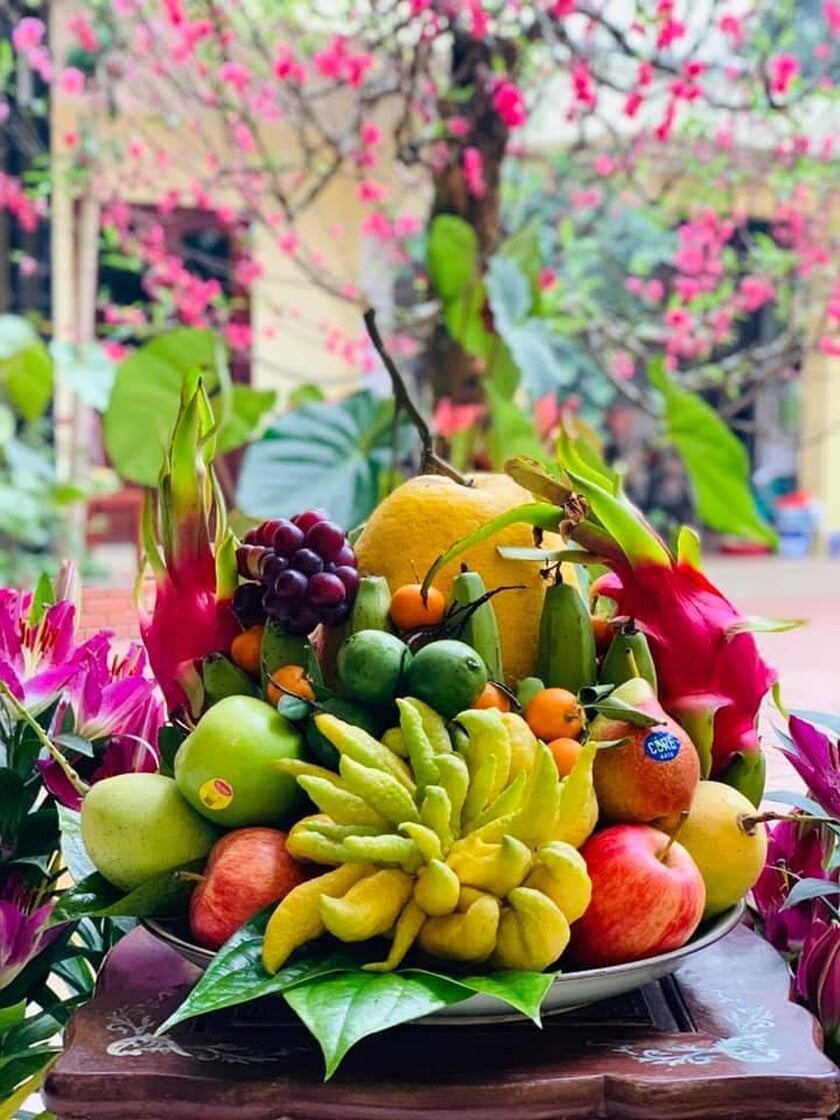
The arrangement and color-coordinated display of each type of fruit creates an aesthetically pleasing display that aligns with feng shui principles for the Lunar New Year.
Unique seasonal delicacies from the sunny and windy Central region.
Due to harsh climatic conditions and barren land, Central Vietnam has fewer fruits than other regions. Therefore, the people here are not too particular about the traditional five-fruit offering during Tet (Lunar New Year); they mainly offer whatever they have available, sincerely showing respect to their ancestors.
In Central Vietnam, each family's five-fruit offering is different and typically features fruits grown locally. Common fruits found in the five-fruit offering include dragon fruit, bananas, watermelon, custard apple, pineapple, figs, oranges, and tangerines.

Due to harsh climatic conditions and barren land, the Central region of Vietnam produces fewer fruits than other regions.
People in Central Vietnam have a fairly simple way of arranging and decorating the five-fruit tray, similar to the five-fruit tray in Northern Vietnam. They also use large, heavy fruits in the center as a base, such as bananas, pomelos, custard apples, and watermelons, and use smaller fruits like tangerines, apples, grapes, and mangoes to fill in the empty spaces around them.
The wish of people in Southern Vietnam: "to have just enough to live on."
In contrast to the North, people in the South pay less attention to the number and color of fruits, often choosing them based on pronunciation. The five-fruit platter in the South includes custard apple, fig, coconut, papaya, and mango, corresponding to the pronunciation "cầu sung vừa đủ xài" - wishing for a prosperous and abundant new year.
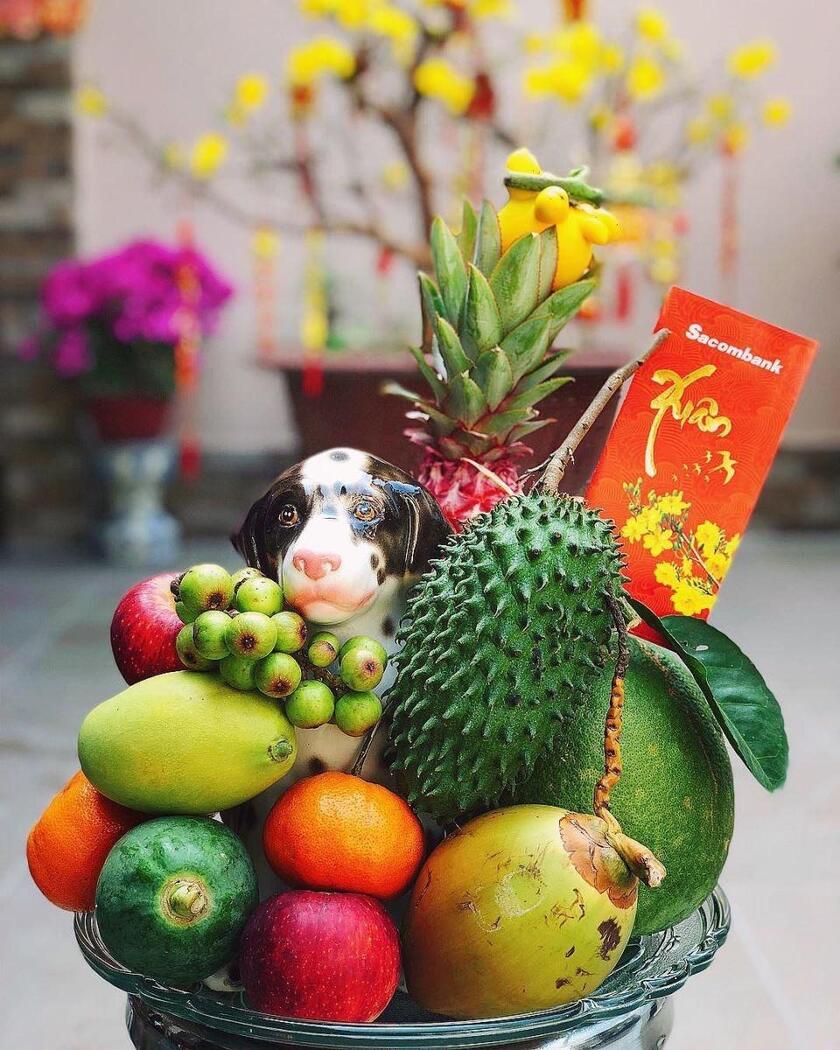
In Southern Vietnam, the five-fruit tray corresponds to the pronunciation of "cầu sung vừa đủ xài" - wishing for a prosperous and abundant new year.
The arrangement of the five-fruit tray begins with larger fruits like custard apples, papayas, and coconuts placed at the front to provide a base. Next, smaller fruits are arranged on top, carefully positioned to form a pyramid shape.
Besides the five-fruit platter, a pair of watermelons is always present on the ancestral altar of people in Southern Vietnam. The plump, round watermelons with green rinds and red flesh symbolize fullness and fulfillment at the beginning of the year. Nowadays, many families have innovated by adding yellow and square watermelons to make the five-fruit platter for Tet (Lunar New Year) even more abundant. In addition, some families also add pineapples, hoping for a large family and good fortune.
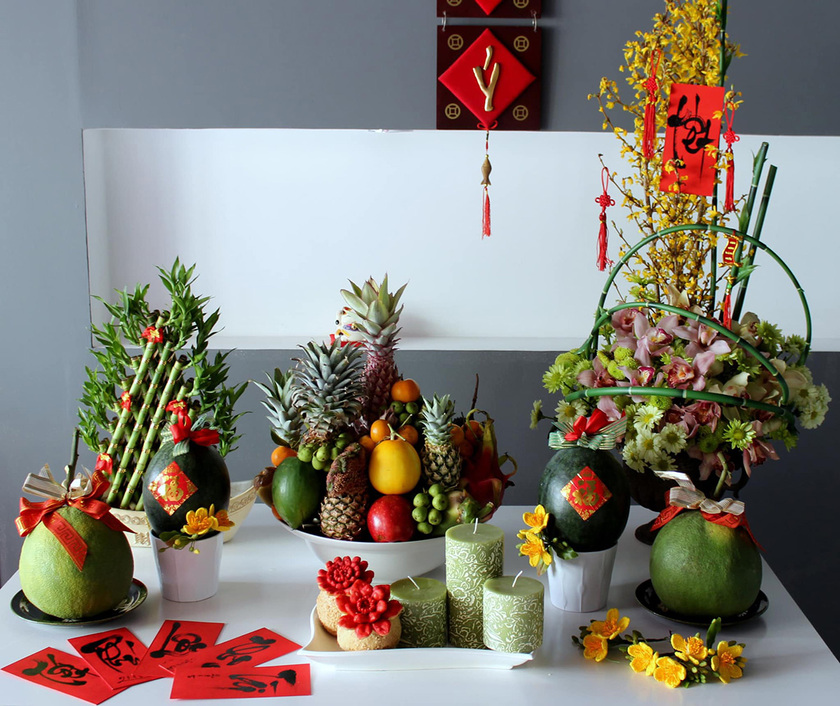
In contrast to the North, people in the South pay less attention to the number and color of the fruit and often choose fruit based on pronunciation.
Another difference is that people in the South don't offer oranges and tangerines as offerings like in the North. In the South, they believe that oranges and tangerines are unlucky fruits and shouldn't be displayed for worship because they are associated with the saying "the tangerine causes the orange to suffer." Besides that, some fruits are also not included in the five-fruit offering in the South, such as bananas (symbolizing misfortune and lack of success in business); pears and apples (symbolizing failure and setbacks)...