VI
VI


Tho Ha - A purely Vietnamese village in Northern Vietnam.
Located about 50 km north of Hanoi, in Van Ha commune, Viet Yen district, Bac Giang province, Tho Ha village has long been known as a land of "spiritual and talented people," famous for its traditional crafts. In the past, Tho Ha was renowned for its pottery making. However, over time, the pottery craft gradually declined. Instead, Tho Ha village transformed itself by focusing on making spring roll wrappers from the 1990s to the present day.
Having graduated with a major in multimedia photography from the University of Theatre and Film, Hoang Kim Hung is passionate about capturing everyday moments, from landscapes to architecture. During a chance visit to Tho Ha village, he confided: “Since I was a child, I’ve heard that Tho Ha is a famous village for making rice paper for spring rolls. As I grew older, I also had the opportunity to see some photos of Tho Ha village. I planned to explore this village and document life there with photographs I took myself.”
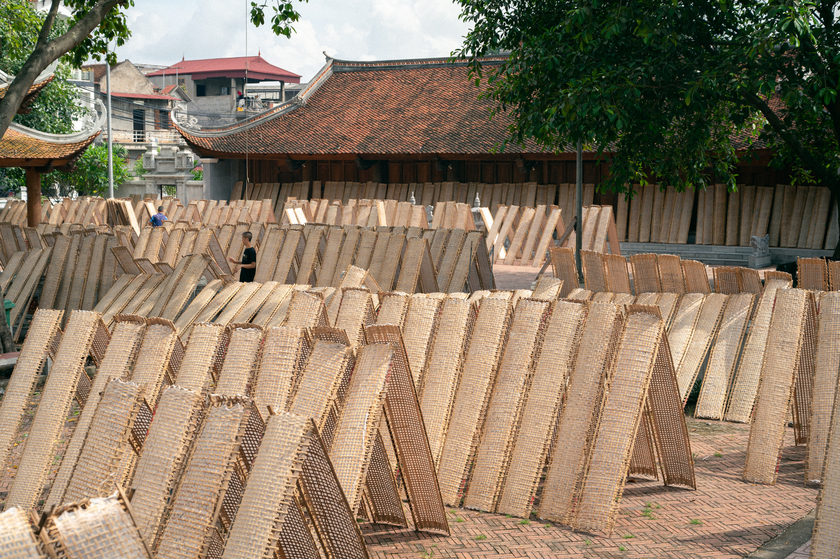
Located about 50 km north of Hanoi, in Van Ha commune, Viet Yen district, Bac Giang province, Tho Ha village has long been known as a land of "spiritual and talented people," famous for its traditional crafts.
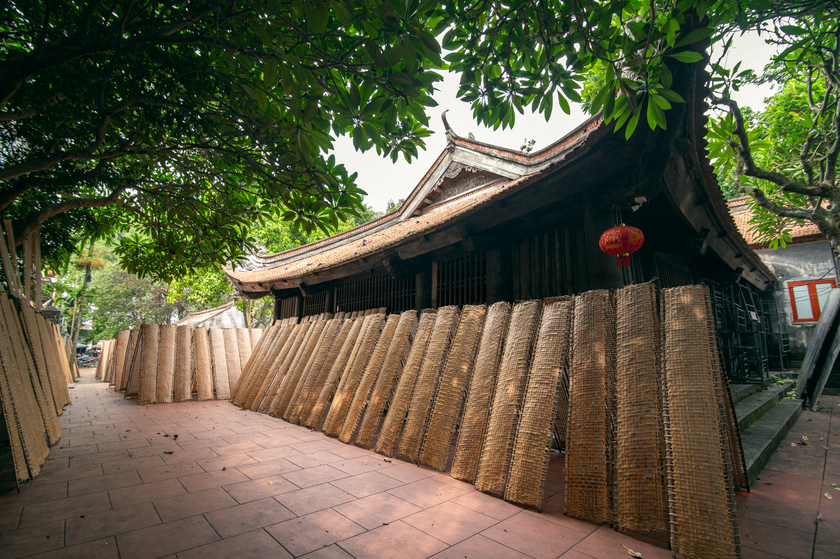
Tho Ha village has been famous for its spring roll wrapper making craft from the 1990s to the present day.
Tho Ha village bears the distinct cultural imprint of the Northern Delta with its collection of purely Vietnamese ancient architecture. What's even more special is that the village is surrounded by rivers on three sides, like an island. To leave the village, residents must travel by ferry. This unique feature has created a special attraction for Tho Ha, drawing tourists to visit and experience the traditional cultural beauty of a Vietnamese village.
"Taking the ferry from Bac Ninh across the river to the village only takes a few minutes, making it a popular mode of transportation because it's convenient and saves time. Traveling by ferry across the river is also a rather new experience for some young people," Kim Hung said.
Right by the ferry landing, an ancient banyan tree casts its cool shade, becoming the gathering place for a bustling makeshift market. Next to it, the majestic village communal house stands tall, serving as a common space for cultural activities and production. All these elements blend together to create a picture of a simple, rustic, and familiar Vietnamese village.

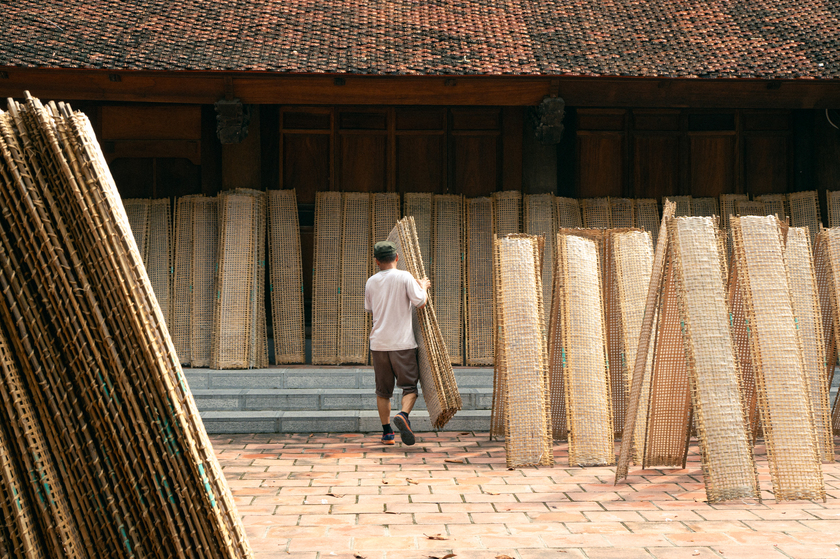
Tho Ha village bears the strong imprint of the Northern Delta culture with its complex of purely Vietnamese ancient architecture.
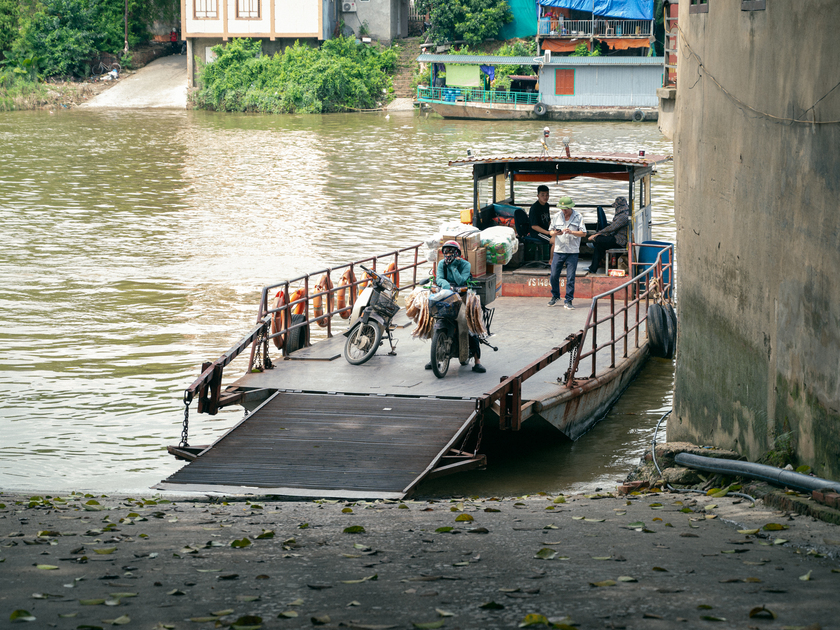
To leave Tho Ha village, the locals have to travel by ferry.
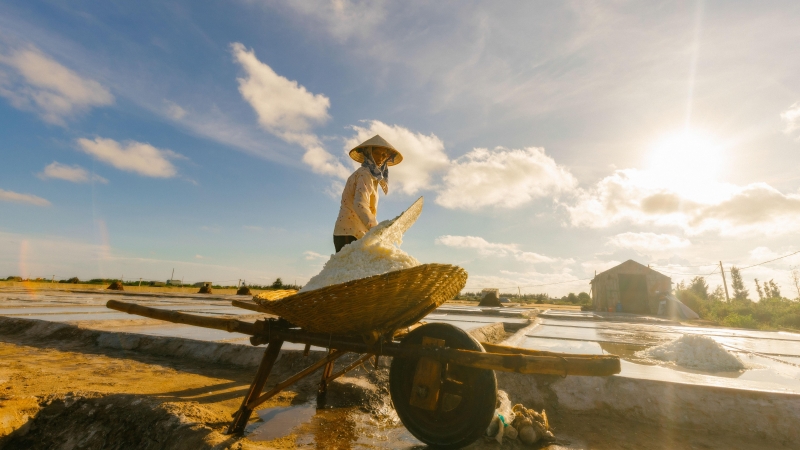
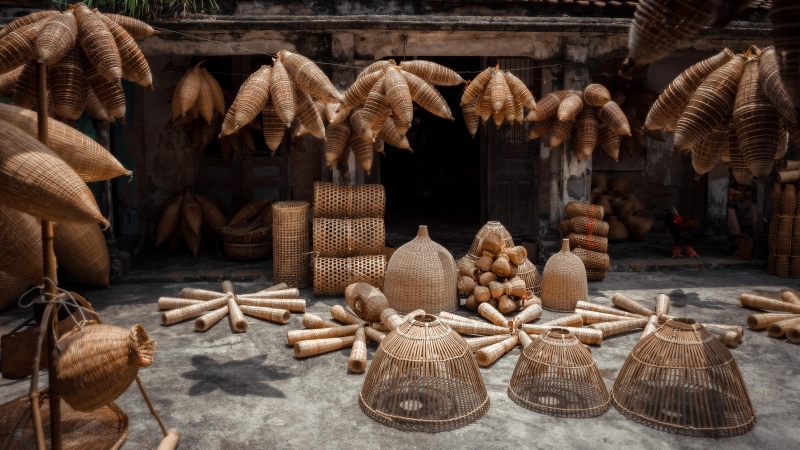
This area is famous for its traditional spring roll wrapper making village.
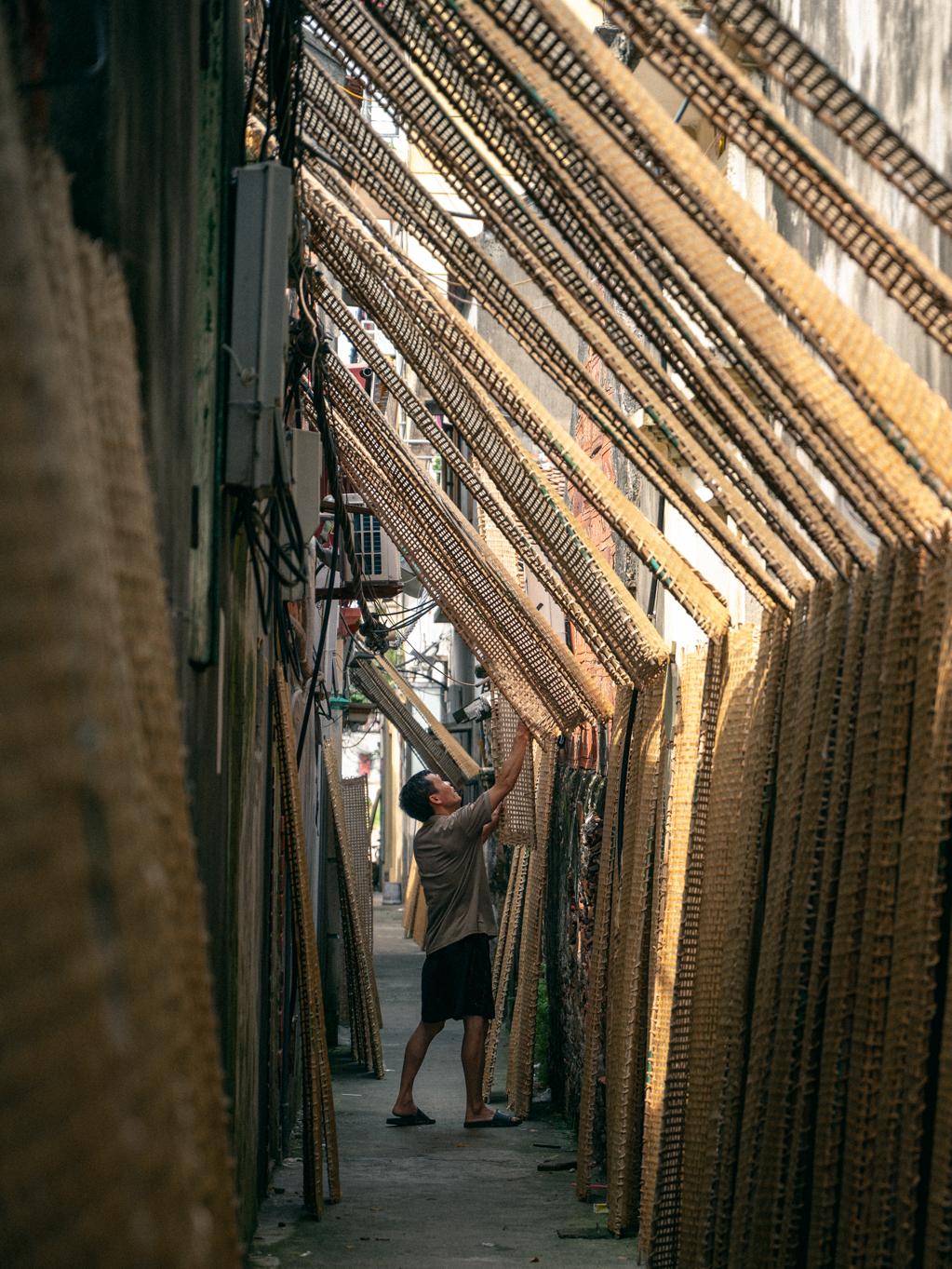
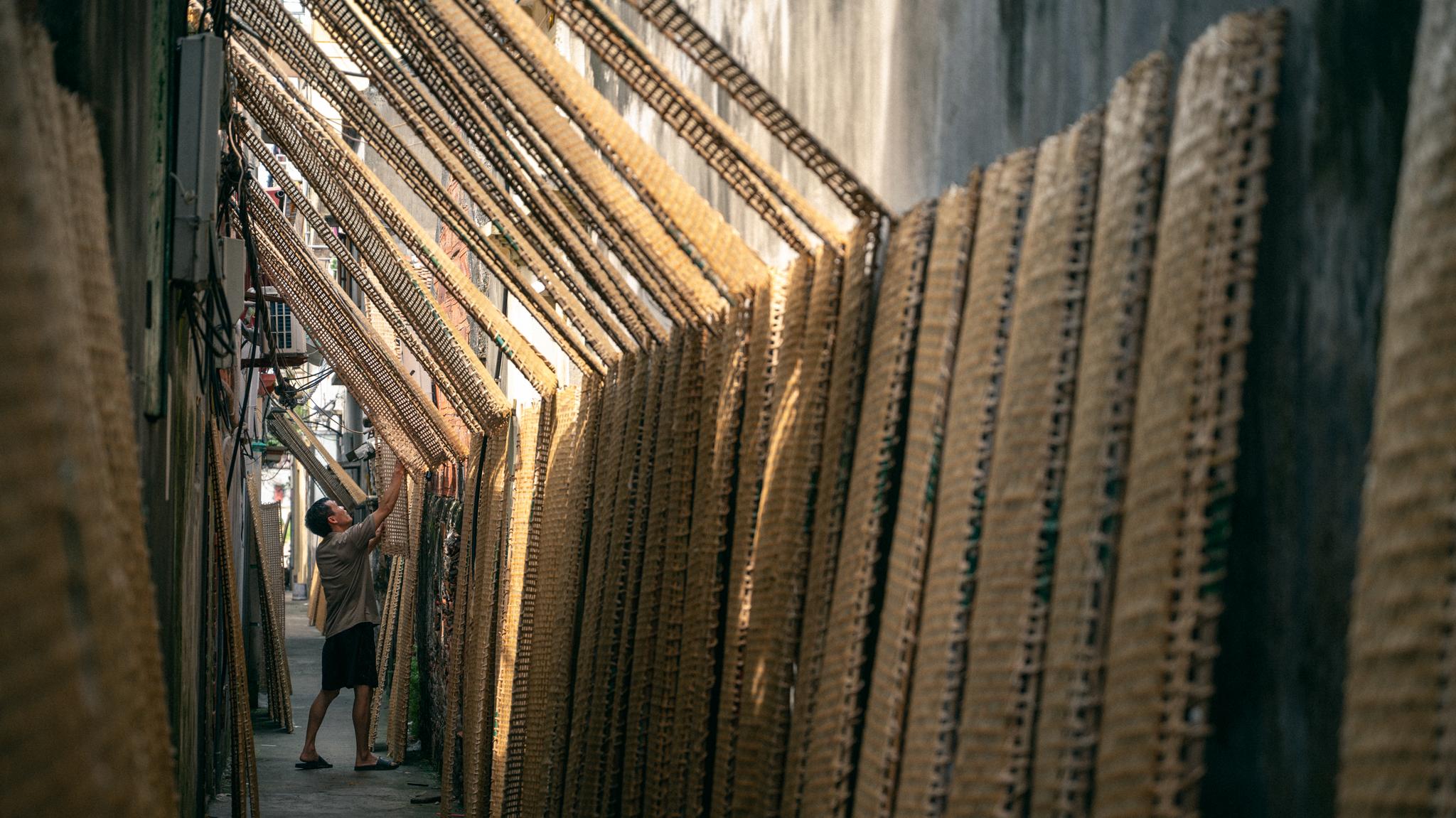
If you visit Tho Ha in the morning, you will be impressed by the sight of rice paper sheets drying everywhere in the village. From the wide, airy streets to the small alleys, you can find these sheets of rice paper drying neatly under the golden sunlight. Particularly striking amidst the fresh air is the gentle aroma of rice flour mixed with the smell of wood smoke spreading throughout the village.
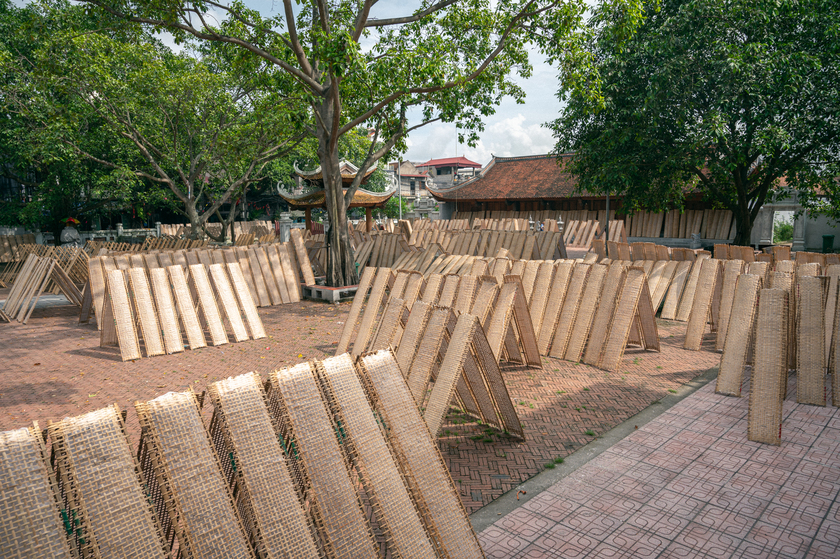
Sheets of rice paper for spring rolls are spread out to dry all over the village.
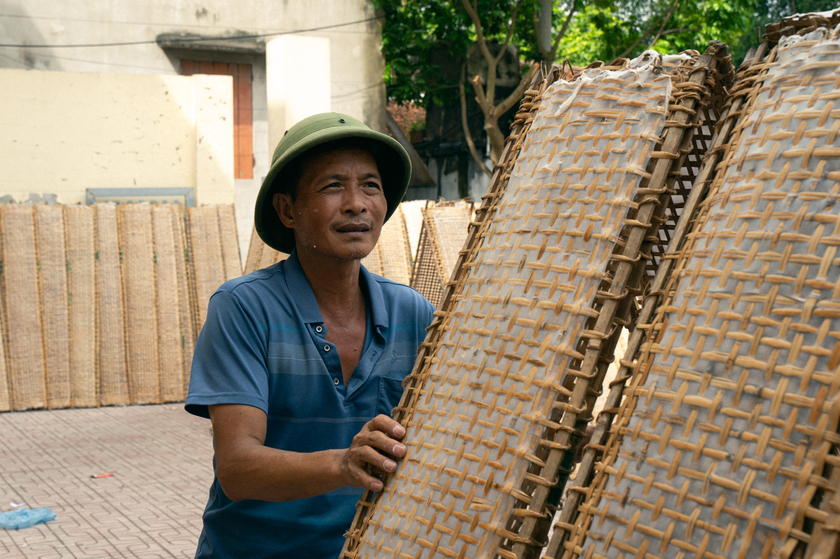
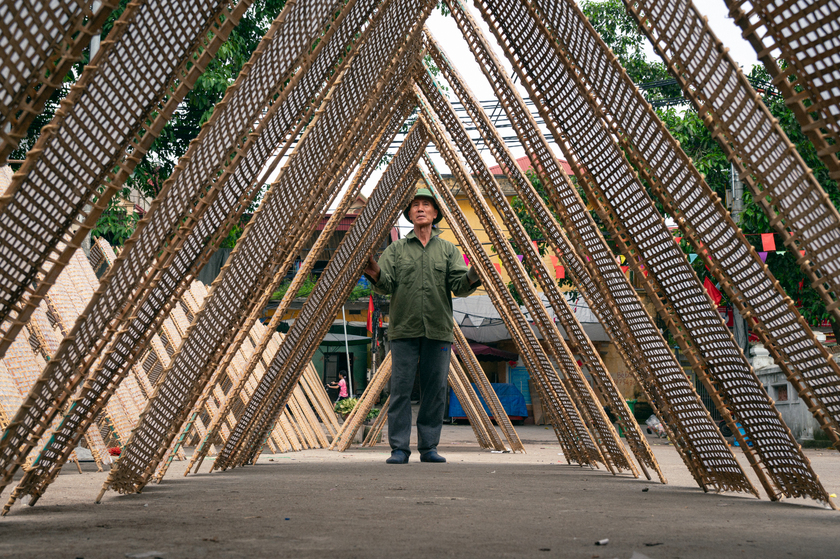
The sheets of rice paper are spread out evenly under the golden sunlight.
The main ingredient that makes up the renowned Tho Ha spring roll wrappers is pure white rice. This rice is carefully selected to ensure the best quality, creating the chewy, fragrant, and delicious texture of the wrappers. The rice is milled manually using a stone mortar to create the perfect binding, making the spring roll wrappers easy to roll and maintaining their soft, chewy texture during cooking.
After obtaining the right quality rice flour, the craftsman proceeds with the pancake-making process – one of the most important steps determining the success or failure of this specialty dish. The pancakes must be spread thinly and evenly across the surface, ensuring the appropriate thickness. This process requires meticulousness, skill, and finesse from the craftsman. They must adjust the hand pressure, spreading speed, and temperature so that the pancakes are cooked perfectly without being crushed or burnt.
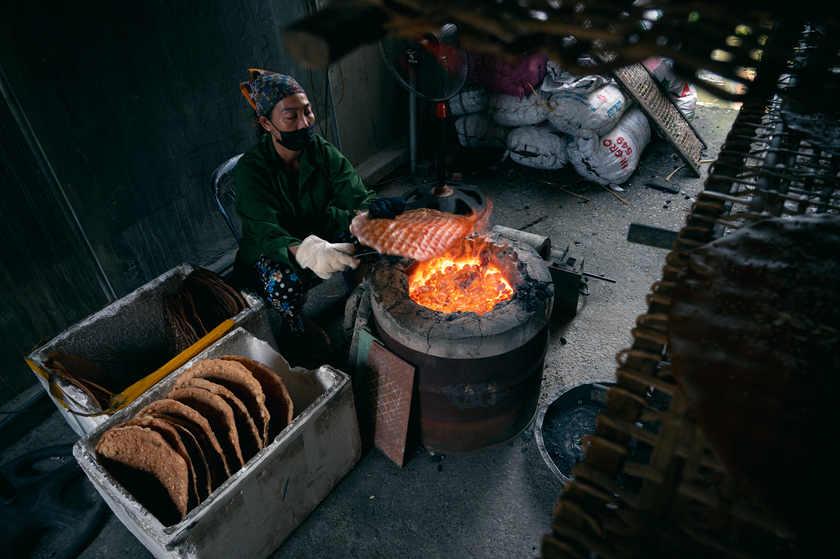
A process that requires meticulousness, skill, and finesse from the craftsman.
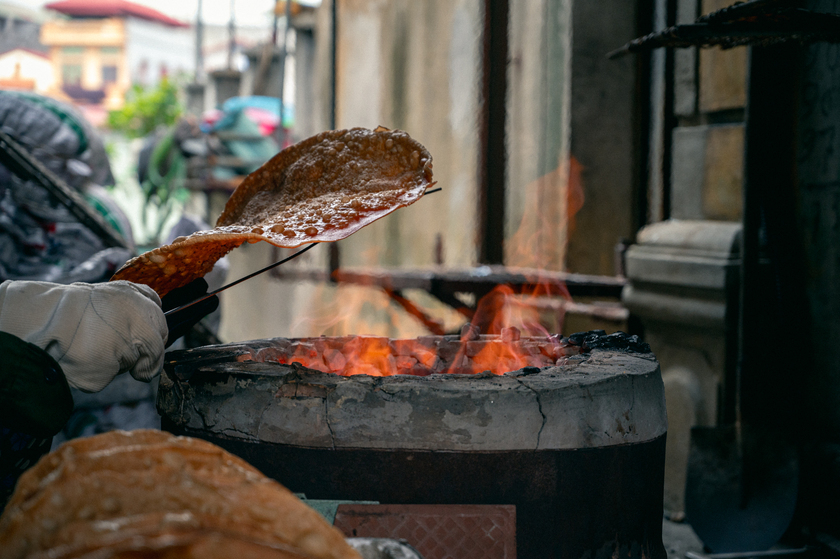
The cake is perfectly cooked, neither mushy nor burnt.
Besides the technique of making the rice paper wrappers, the people of Tho Ha also pay attention to drying them. After being made, the rice paper wrappers are dried in the sun or exposed to dew at night to ensure their chewiness and crispness. The drying process also needs to be done carefully to prevent the wrappers from becoming moldy or covered in dust.
To fully appreciate the simple beauty of Tho Ha's traditional rice paper making village, visitors should choose to visit in the morning. The ideal time is from early morning until before 11 am. This is because at this time, the people of Tho Ha are busy drying the rice paper. The pristine white sheets of rice paper are stacked closely together, creating a truly impressive scene.
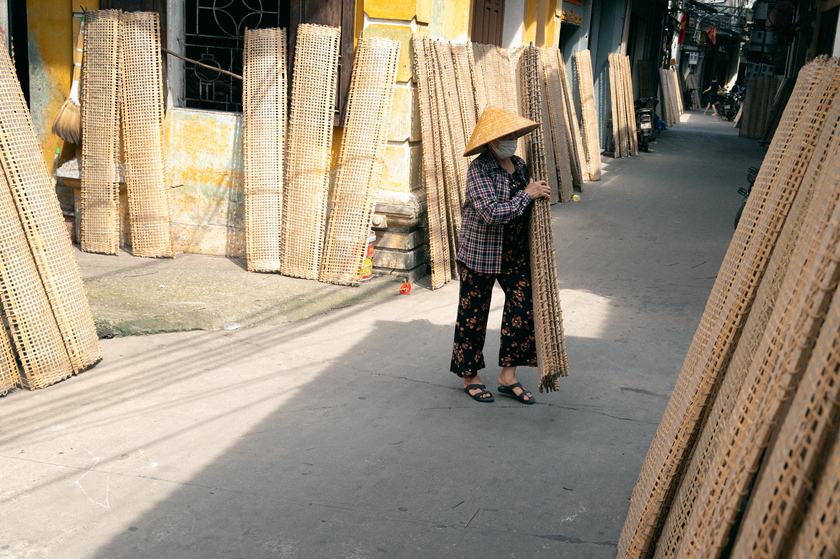
The people of Tho Ha also pay attention to drying the cakes.
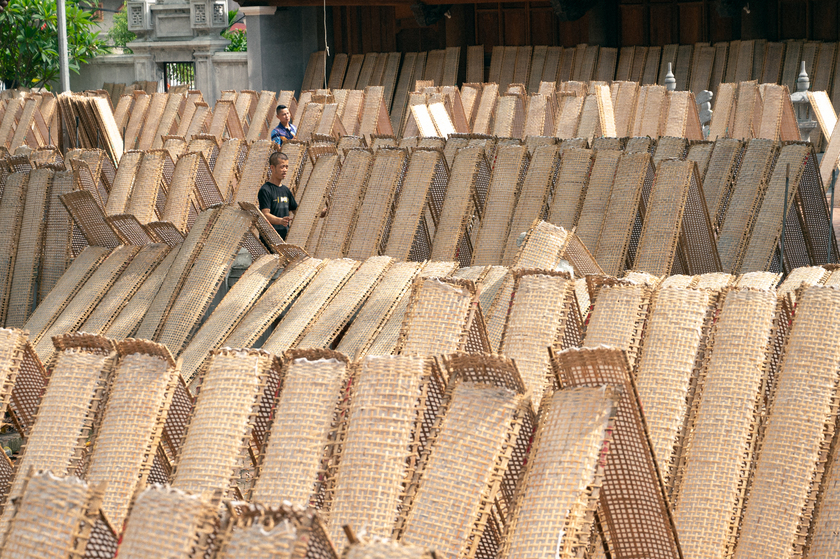
After being made, the spring roll wrappers are dried in the sun or exposed to the night dew.
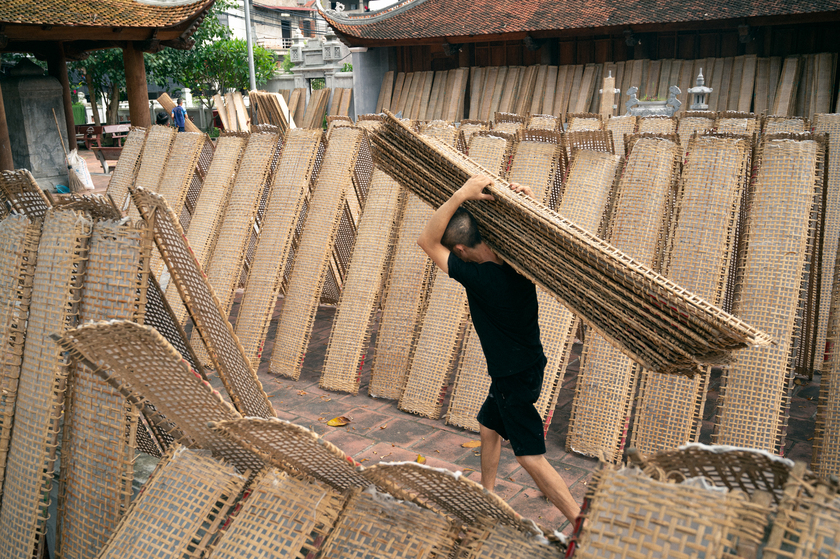
The drying process also needs to be done carefully to prevent the cakes from getting moldy or covered in dirt.
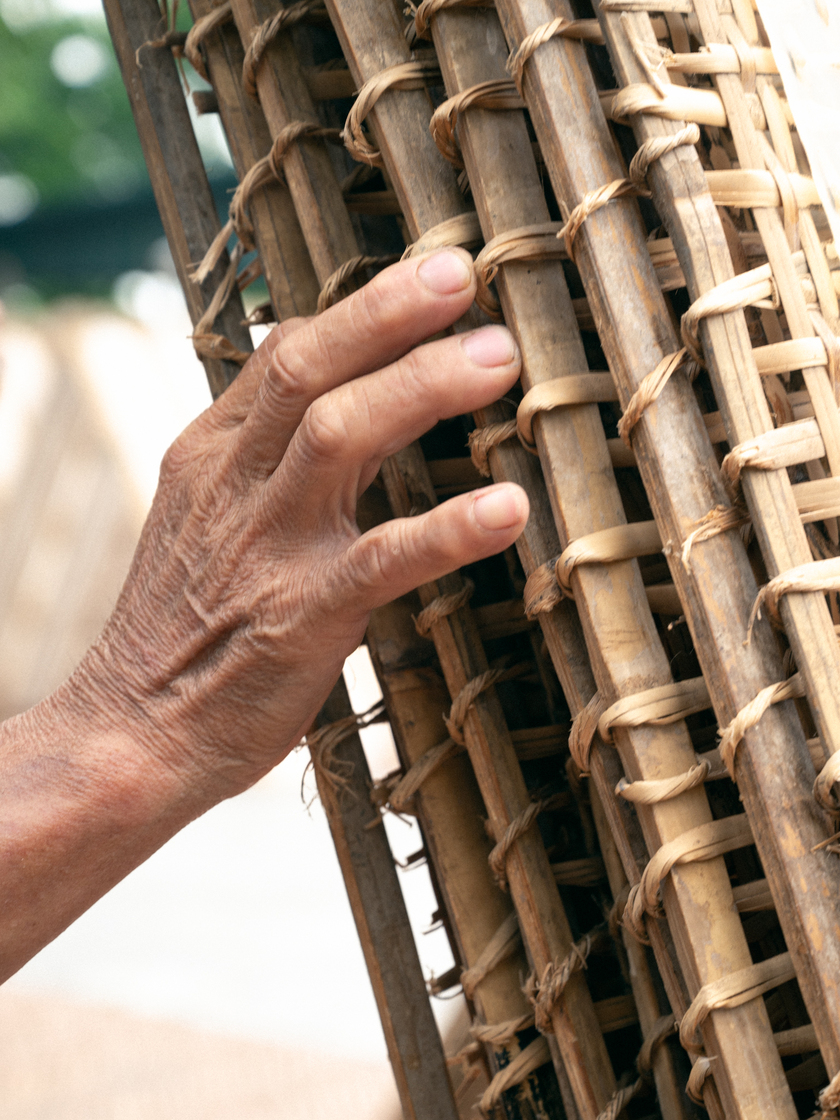
The pristine white cakes are stacked closely together.
"One thing I noticed was that if you stand close to the rice cake racks and listen, you'll hear a gurgling sound as the cakes shrink due to the evaporation of water. This is a very special sound because it makes these rice cake racks seem much more 'dynamic'," Kim Hung shared.
The harmonious combination of premium ingredients, exquisite craftsmanship, and unique drying techniques has created the renowned Tho Ha spring roll wrapper brand. Each Tho Ha spring roll wrapper is the culmination of meticulousness, dedication, and pride of the local people.
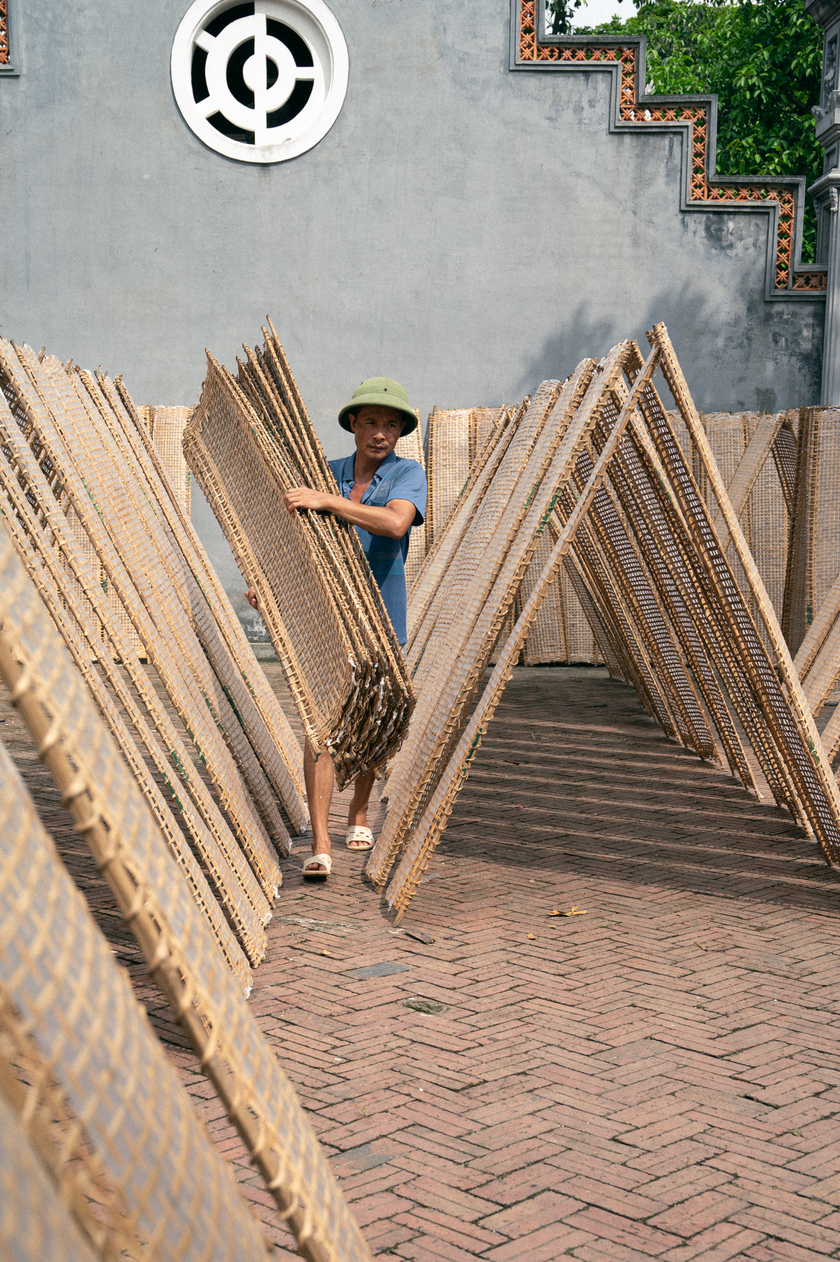
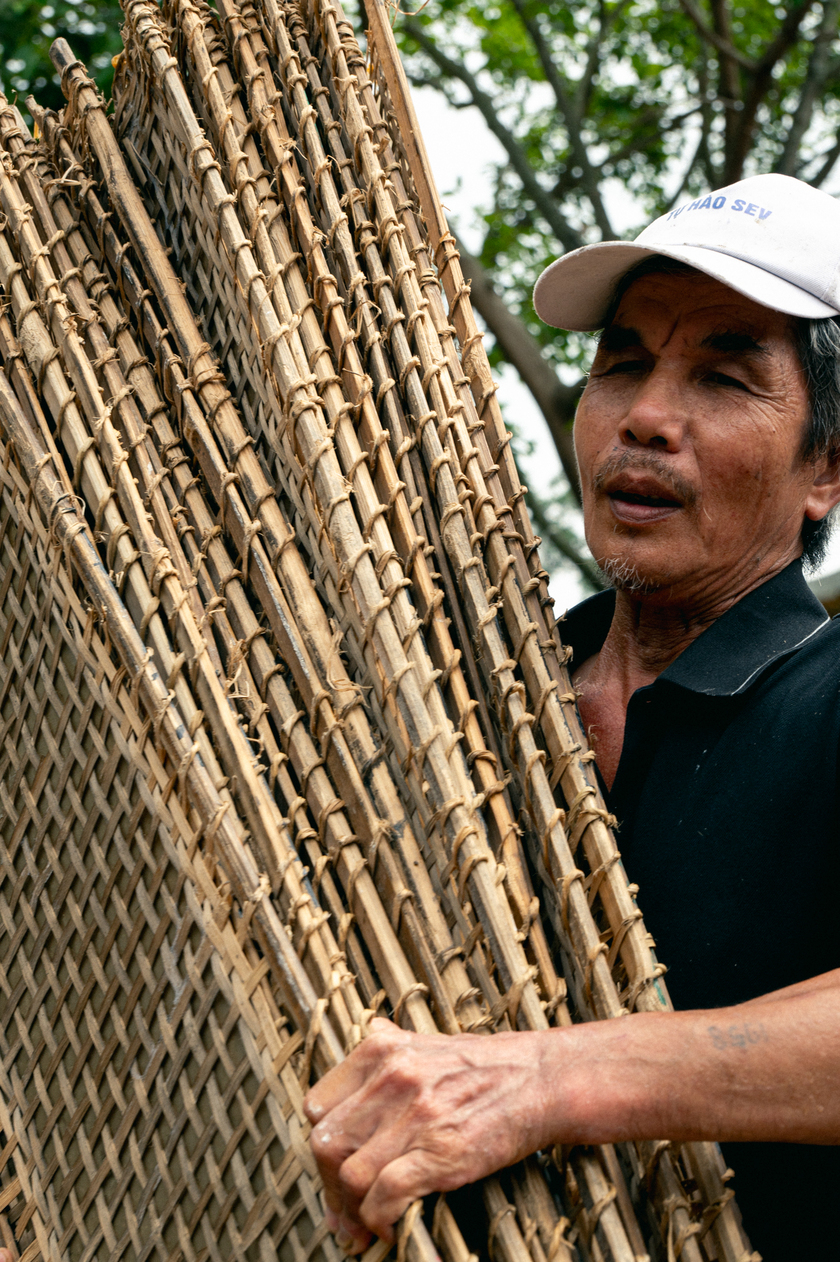
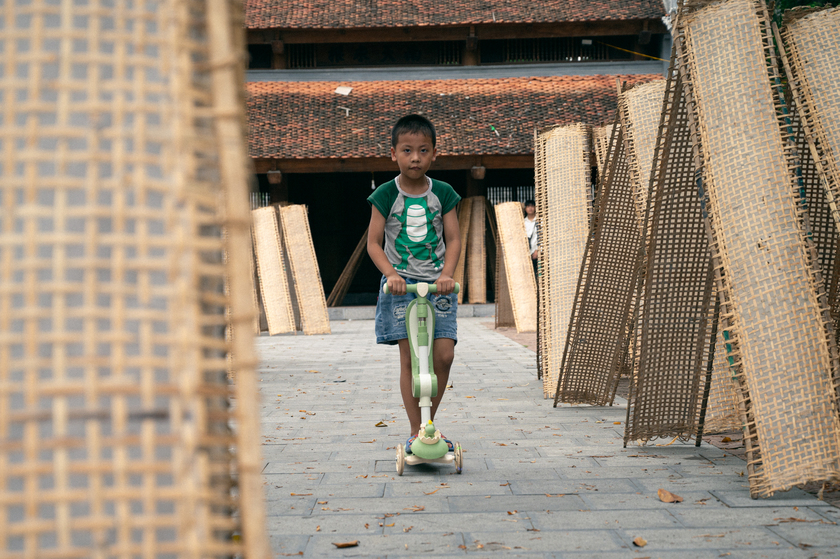
To fully appreciate the simple beauty of Tho Ha rice paper making village, visitors should choose to visit in the morning.
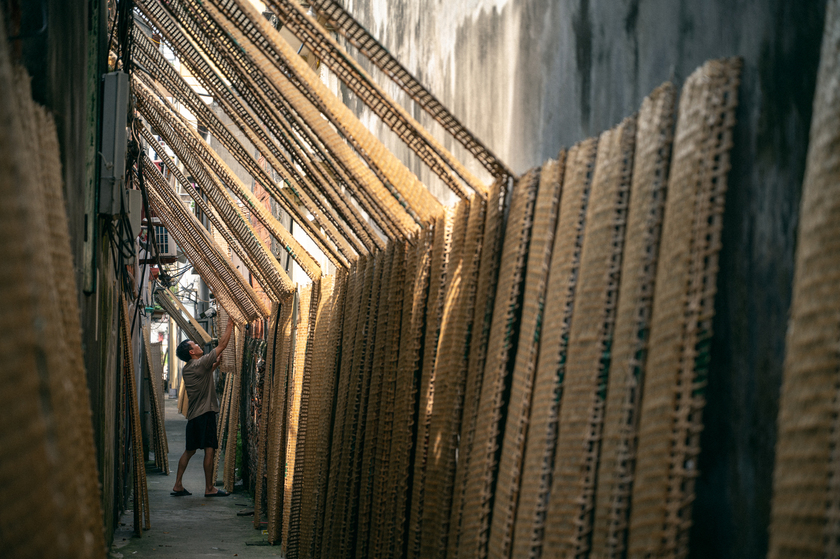
The people of Tho Ha are busy drying spring roll wrappers.
“The scenery in Tho Ha is already full of material for photography, so you just need to point your camera and you can get beautiful pictures. The temple courtyard is a very large area, and you can use the repeating structure of the rice cake racks to create interesting images. Going deeper into the small alleys, I like to take advantage of the space to create pathways, waiting for the light to shine through the roofs onto the alleys to create contrast, and the pictures will turn out beautiful,” Kim Hung added.
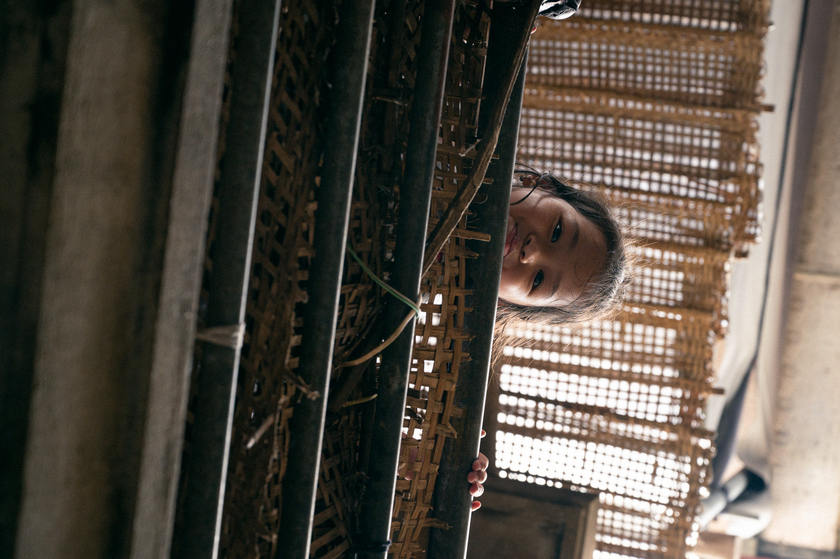
The harmonious combination of premium ingredients, exquisite craftsmanship, and a unique drying secret has created the renowned Tho Ha spring roll wrapper brand.

Each Thổ Hà spring roll wrapper is the culmination of the meticulousness, dedication, and pride of the local people.