VI
VI


Post:To Viet
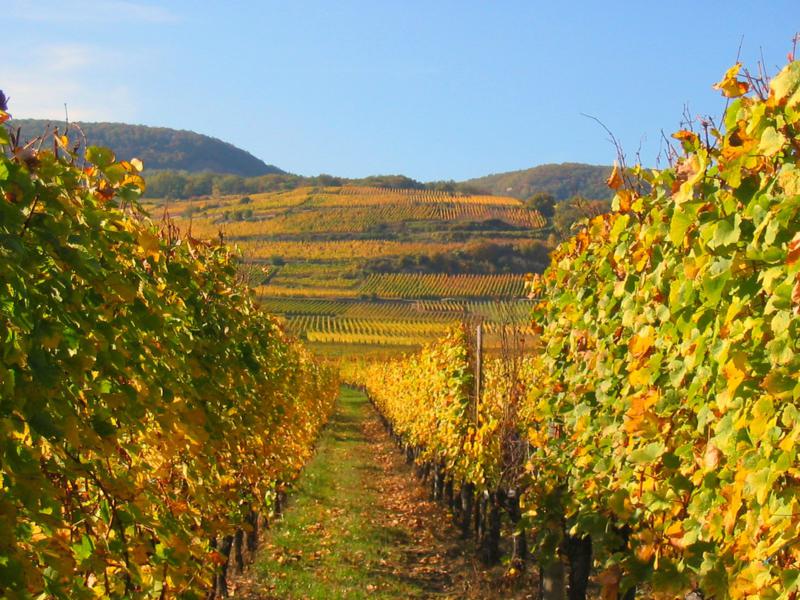
Later, when I went to France to study, I fell in love with autumn, with its quiet forests overflowing with golden leaves, only a few magpies wandering in search of food on the leaf carpet, or a few brown squirrels searching for fallen chestnuts on the paths. Autumn is the season for walks in the forest, mushroom picking, organizing trips to mountain villages by VTT bicycle, mountain climbing, and picnicking in nature… Of all the activities mentioned above, I still remember most fondly the memories of mushroom picking trips in the forest.
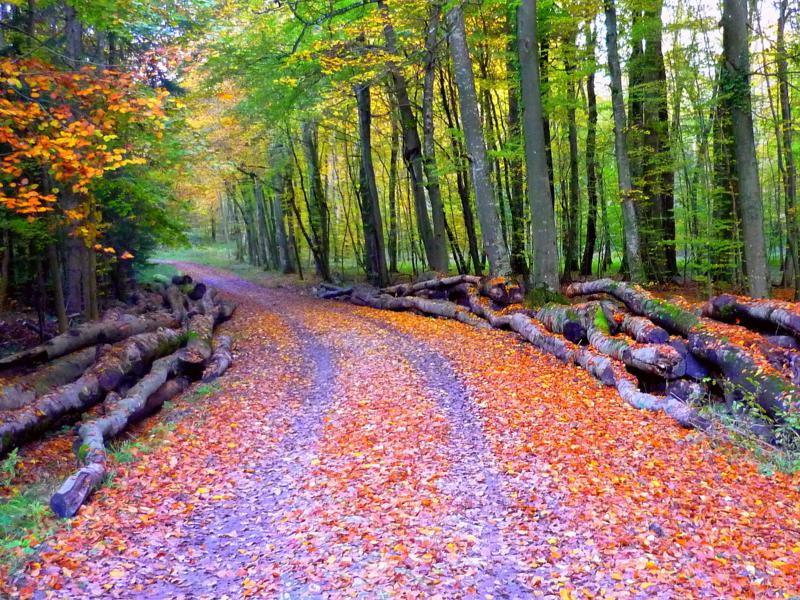
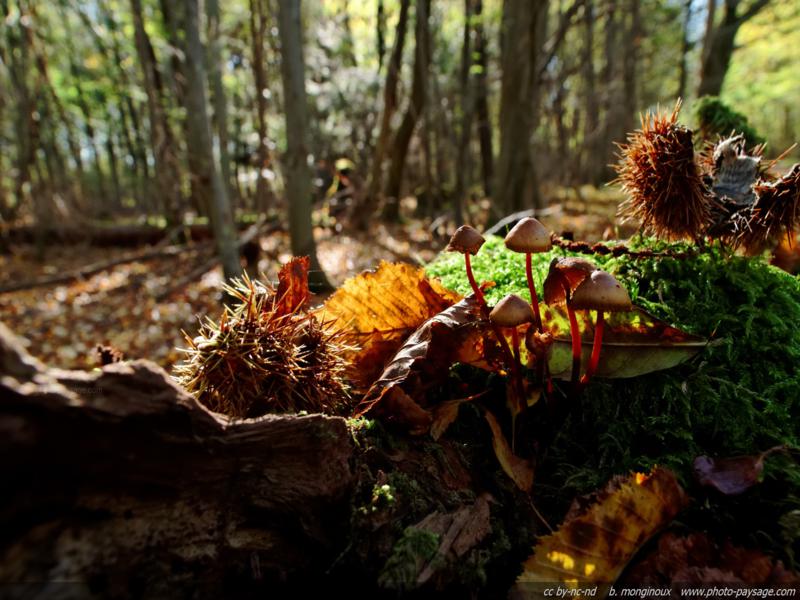
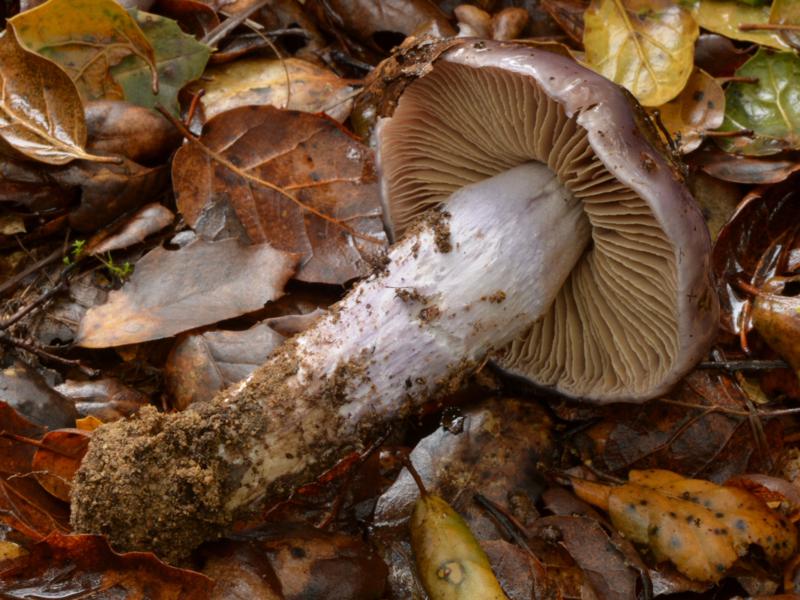
Nice, the city where I live, is less than 30 km from the famous mushroom-filled forests of the Luceram-Peira Cava pass, about 70 km from Lantosque, and about 120 km from Turini. Around the end of August and beginning of September each year, with the persistent nighttime rains, various types of mushrooms sprout and flourish under the decaying leaves. Some are edible, but most are poisonous. Therefore, every time we go mushroom hunting, we bring along the Larousse Mushroom Dictionary to compare pictures of edible mushrooms with the ones we've collected. This may sound unbelievable, but many people have had to be rushed to the hospital after eating poisonous mushrooms, and some have even died from eating the poisonous Amanites Phalloïdes.
To prepare for our mushroom-picking trip on the Turini Pass early Saturday or Sunday morning, we woke up at 4 a.m. Our close friend Bernard from La Colle-sur-Loup picked us up at exactly 4:30 a.m. The trunk of his Land Rover was already laden with baskets of mushrooms, snacks: sausages, cheese, and a few bottles of red Côtes du Rhône or rosé Côtes de Provence wine. The mushroom baskets were lined with newspaper. Bernard said we absolutely shouldn't use plastic bags, as the mushrooms would rot very quickly. We planned to buy bread along the way, as bread made in the mountain villages is always tastier than bread in the city. Apparently, like beer, pure water is one of the factors that contributes to the deliciousness of the bread.
After more than an hour, we stopped at a mountain town called Lantosque, about 70 km from Nice. The new town is located at an altitude of over 1,000 meters above sea level, on a rocky outcrop overlooking a stream and a deep gorge. The old town was next to a large lake, but it had been destroyed by an earthquake in the Middle Ages. It was still dark, and the sound of rushing water could be heard in the gorge below. Only one bakery was open. The baker was surprised to see a group of Asians who had somehow come up the mountain so early, but he happily led us in through the back door and personally selected for us croissants, chocolate pastries (Pain au chocolat), and two warm round loaves of bread.

After about another hour's drive, we reached the summit of Turini Pass. The sun was slowly rising above the horizon, casting streaks of light across the autumn forest with its golden and red leaves, a truly spectacular sight. However, after only a few hundred meters into the forest, the sunlight was obscured by large trees, and swarms of mosquitoes began buzzing around us.
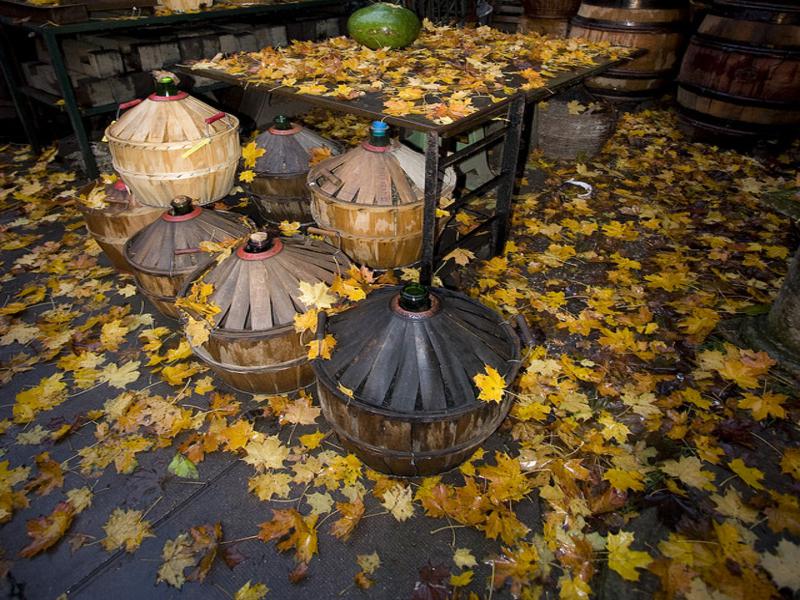
Our excitement at finding our first edible mushrooms made us forget about the bushes, thorns, and flies. Luckily for us, there weren't many snakes in Europe; occasionally, I would encounter a venomous European viper, about 20cm long, basking in the sun on a rock, but upon hearing footsteps approaching, it would quickly disappear into the grass at the foot of the rock.
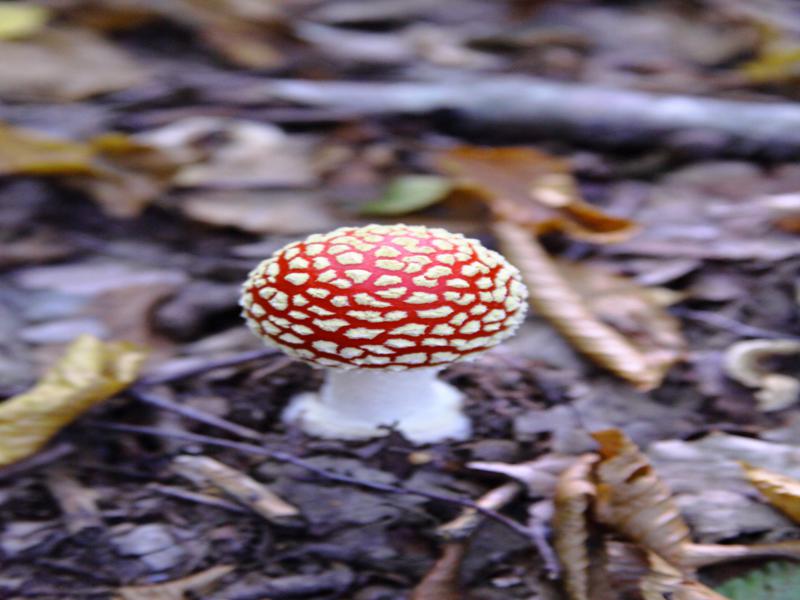
Having been mushroom-gathering for so long, I knew Sanguin mushrooms usually grew along shallow stream beds, as that's the wettest place. Usually, we'd find the most Sanguin mushrooms, and they're also my favorite, stir-fried with potatoes and parsley. Less common were Cepe mushrooms, which grew under decaying pine needles. When picking them, we had to carefully use an opinel knife to dig around the base of the mushroom and then pull the whole plant up, instead of cutting the stem like with other mushrooms. I heard that cutting the stem of a Cepe mushroom would allow bacteria to eat the remaining stem and roots, as well as the surrounding Cepe mushroom population.
_800x600.jpg_8.jpg "N_mSanguin(2)_800x600.jpg_8.jpg")
There were dozens of different types of mushrooms in the forest, but most were inedible. Therefore, mushroom picking was quite hard work, not easy at all. Around midday, we stopped to rest under an ancient pine tree. Bernard used his Opinel knife to slice the bread, spread butter, opened a jar of pâté, cut the sausage, and divided the food equally among the group. We drank wine from plastic glasses, but amidst the vast mountain scenery, with its lush greenery and bright sunshine, we were overwhelmed with an indescribable happiness.
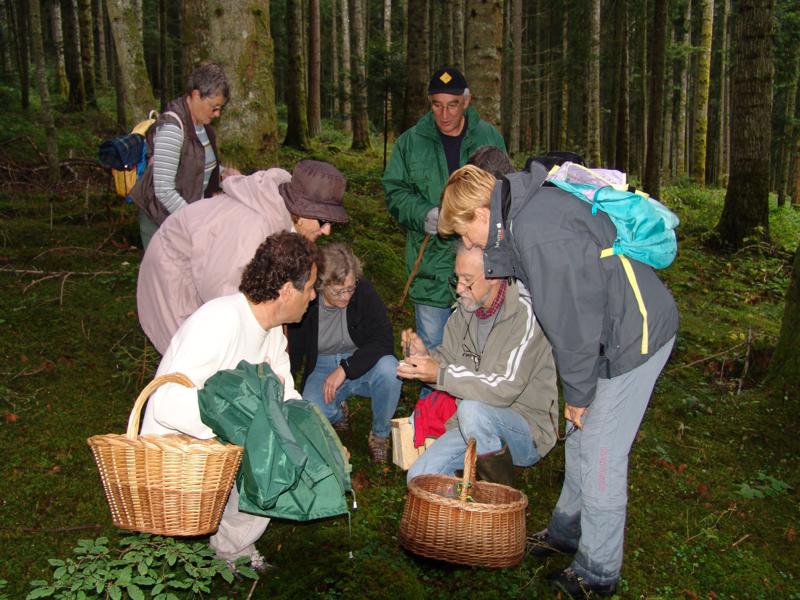
After lunch, everyone showed off their catch, and Bernard was the one who checked which mushrooms were edible and which were poisonous and needed to be discarded. We arrived back at La Colle sur Loup around 4 p.m. We spread newspaper on the floor and meticulously used knives to trim the stems of the mushrooms, discarding any parts eaten by insects. Then we brushed off the moss and dirt before washing them. Bernard let the mushrooms drain for about 15 minutes before slicing them thinly. The cook was Jeanne, Bernard's mother.
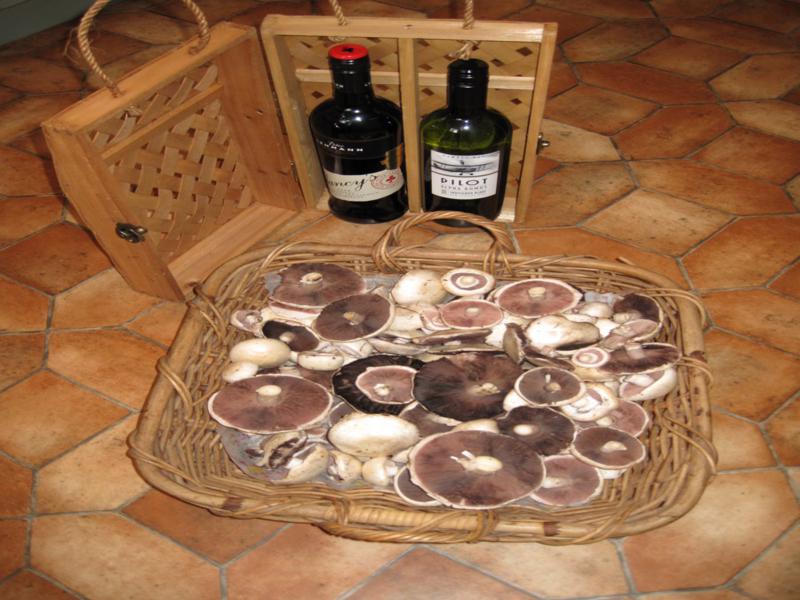
We paired our sautéed Sanguin mushrooms with potatoes and parsley with a bottle of Côtes de Provence rosé "Les Valentines," a rich blend of strawberry, cherry, mineral, and dill notes. Our Pied de mouton omelet was served with a bottle of Smith-Haut Lafite Pessac-Leognan white wine, full of aromas of golden apple, cypress, and toasted almond.
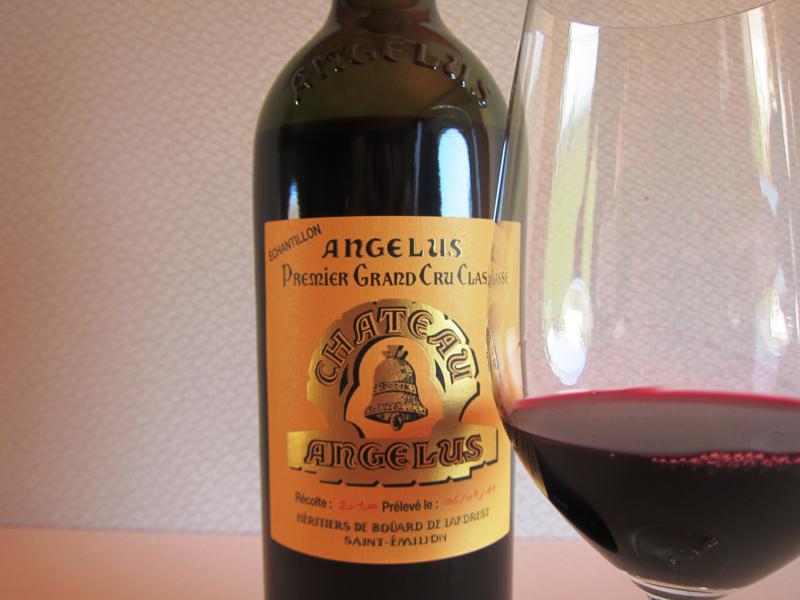
The final course, Cepe mushrooms cooked with venison in red wine sauce, was served with a bottle of Angelus St Emilion Premier Grand Cru A, a sophisticated, powerful, and elegant pairing.
As we finished our meal, the mountain peaks overlooking the town of Vence faded into the hazy evening mist rising from the small river.«"The Wolf - Le Loup." It is said that in the Middle Ages, in the autumn, packs of wolves would descend from the mountains into this valley, and on moonlit nights, they would chase the falling golden leaves while tilting their heads back and howling wildly at the sky…