VI
VI


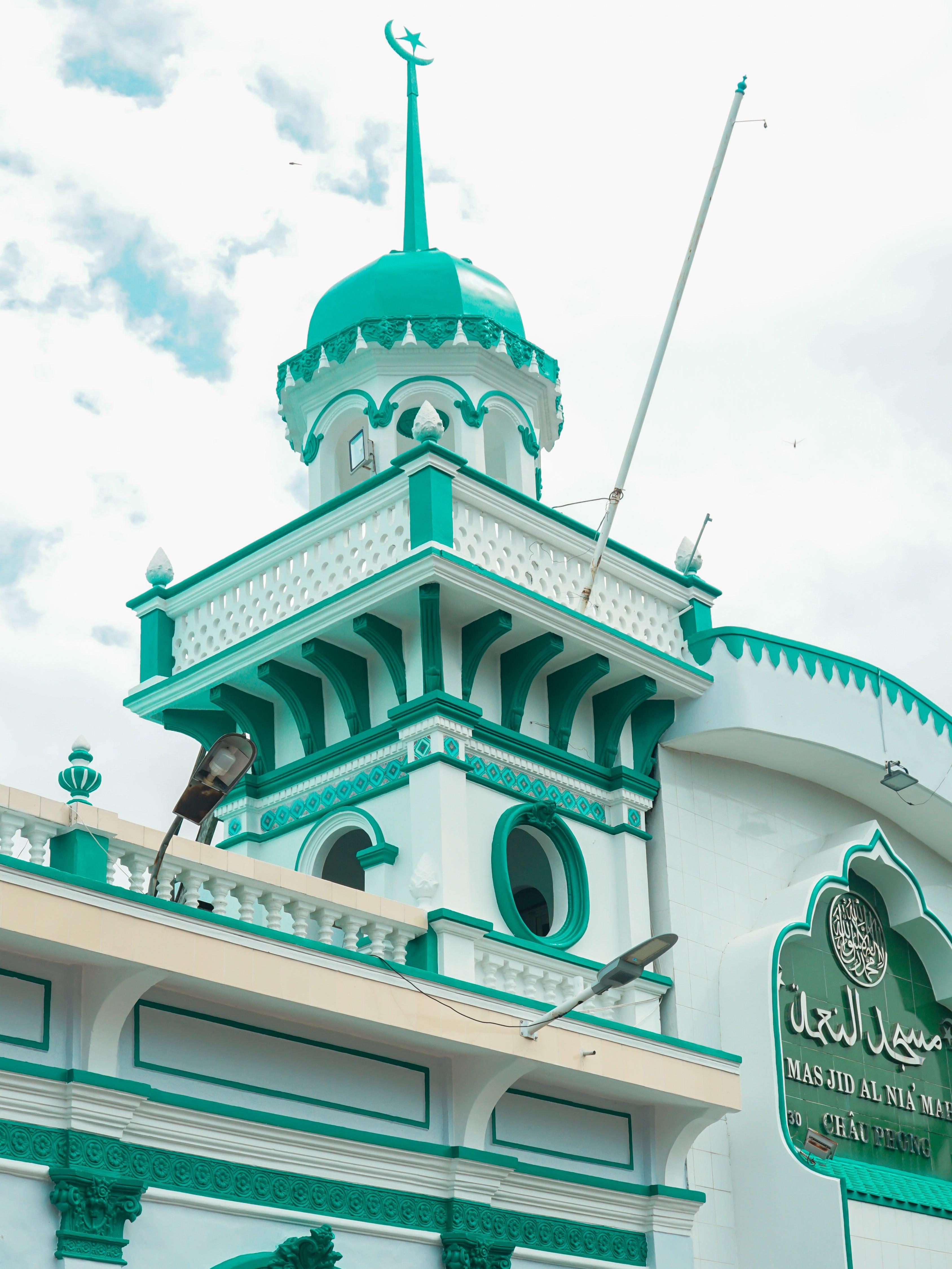

Nestled among Cham houses, the Masjid Nia'mah mosque in Tan Chau, An Giang, stands majestically, exuding an aura of mystery and enchantment that captivates visitors the moment they arrive.
The Masjid Nia'mah mosque, located in the Cham village of Chau Phong, was built in 1930. It serves not only as a place of prayer but also belongs to the An Giang Islamic community representative board and houses an Islamic school. Compared to other mosques in An Giang, this one is relatively simple. The outer gate is a typical fence, but the interior architecture retains the characteristic arched doorways and oval minarets of the mosques in the area.
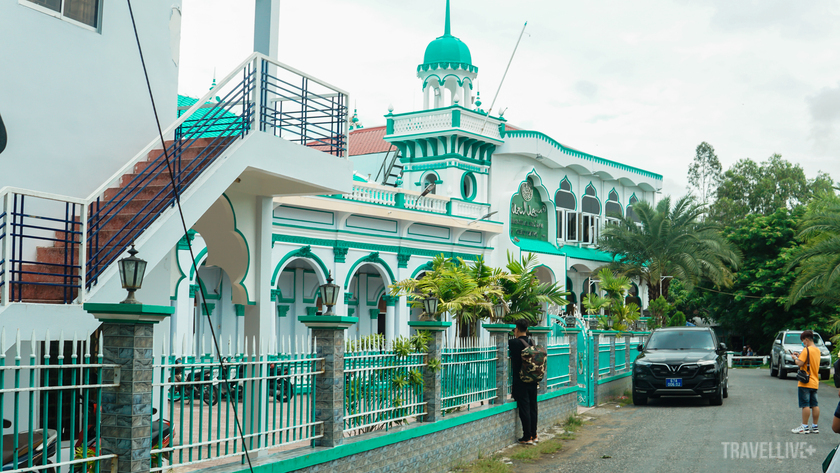
Masjid Nia'mah is one of the most popular tourist destinations in Chau Phong Cham village.
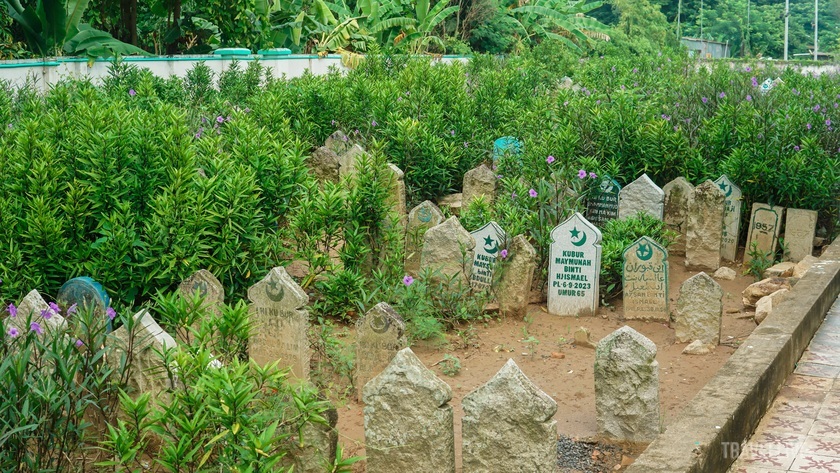
Inside the mosque, visitors will find a small cemetery with rows of simple tombstones. This cemetery has existed for a long time; according to locals, it is the burial place of many Muslim believers from all over Vietnam.
The Masjid Nia'mah mosque stands out against the sunny sky of An Giang with its white color scheme, accented by turquoise trim, Roman columns, and curved dome. A unique yet captivating blend, harmoniously combined with the blue sky and white clouds, creates a beautiful scene that everyone longs to admire.
Above, there is only a single mosque tower, its pointed peak adorned with a crescent moon (symbolizing the moon goddess Ay Ata) and a star (symbolizing the sun goddess Gun Ana). Visitors here not only get to admire the architecture of the mosque but also have the opportunity to immerse themselves in the religious life of the Cham people in Tan Chau.
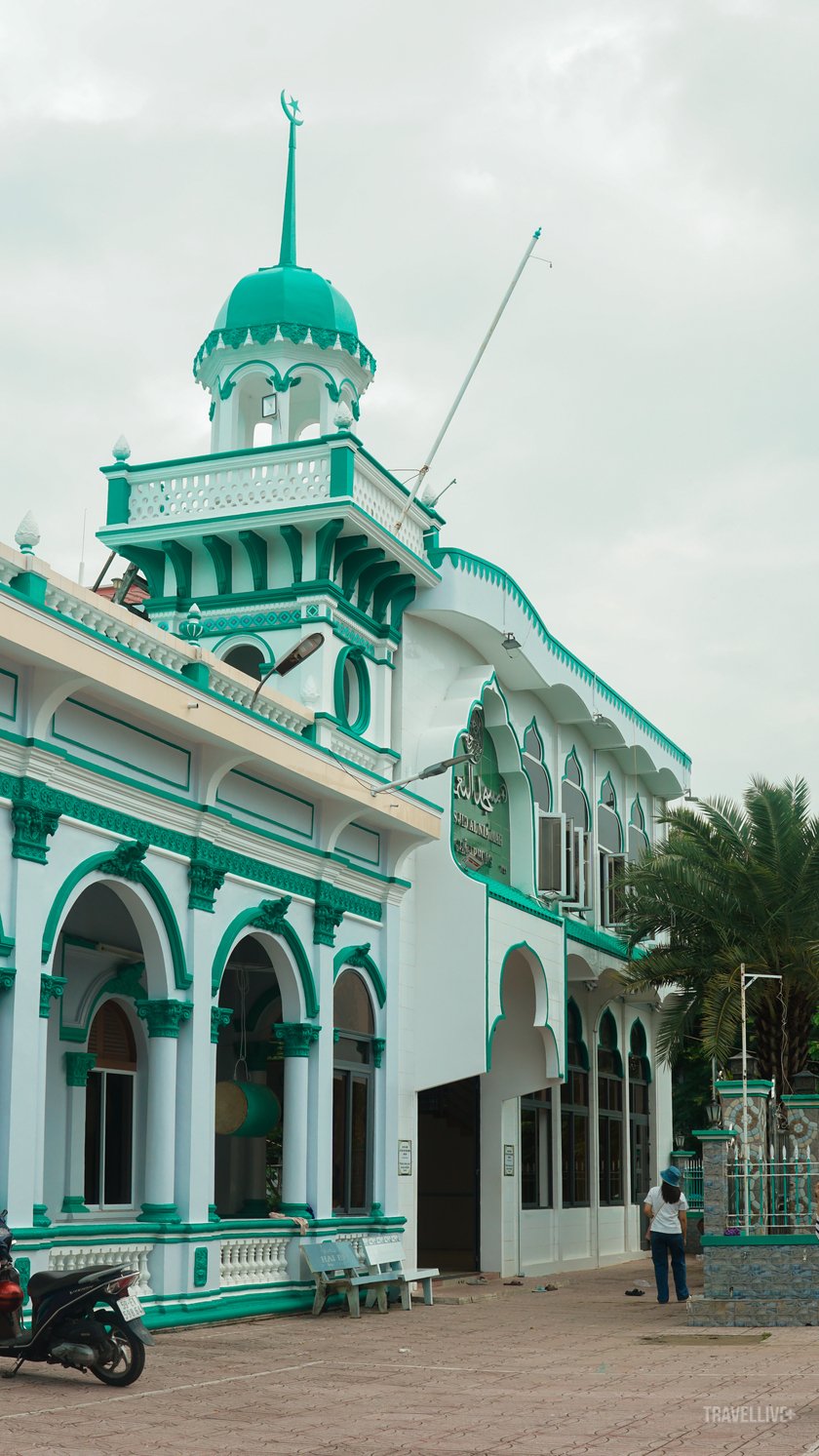
According to Islamic belief, the crescent moon symbolizes the Islamic lunar calendar (also known as the Islamic calendar), and the star symbol represents devotion and sincerity to Allah – the Almighty, the one and only God.
One distinguishing feature of the Masjid Nia'mah mosque is the influence of contemporary European architecture and Vietnamese residential culture. The mosque's exterior impresses with its elegant classical architecture and unique colors.
Tour guide Ly Thien Phong (TikToker "Going with Phong") said: "Muslims say no to eating pork. Because they believe that pigs are animals that carry many diseases and are dangerous. They also don't eat dog meat or any animals that live both in water and on land. After slaughtering an animal, Muslims will recite the Quran so that its soul may find peace. That is one of the very special cultural aspects of Muslims."

According to Islamic rules, the Cham people in Chau Phong pray five times a day, either at home or at the mosque. On Fridays, they are required to be present at the mosque for five prayers. During mosque services, the young people in the village are carefully taught Cham religious laws and their own language and writing system. During the day, the children learn about culture, and at night they learn their language. The Cham villagers highly value the mosque area as it is where important rituals take place. Every year, the Cham people observe Ramadan, a fasting month.
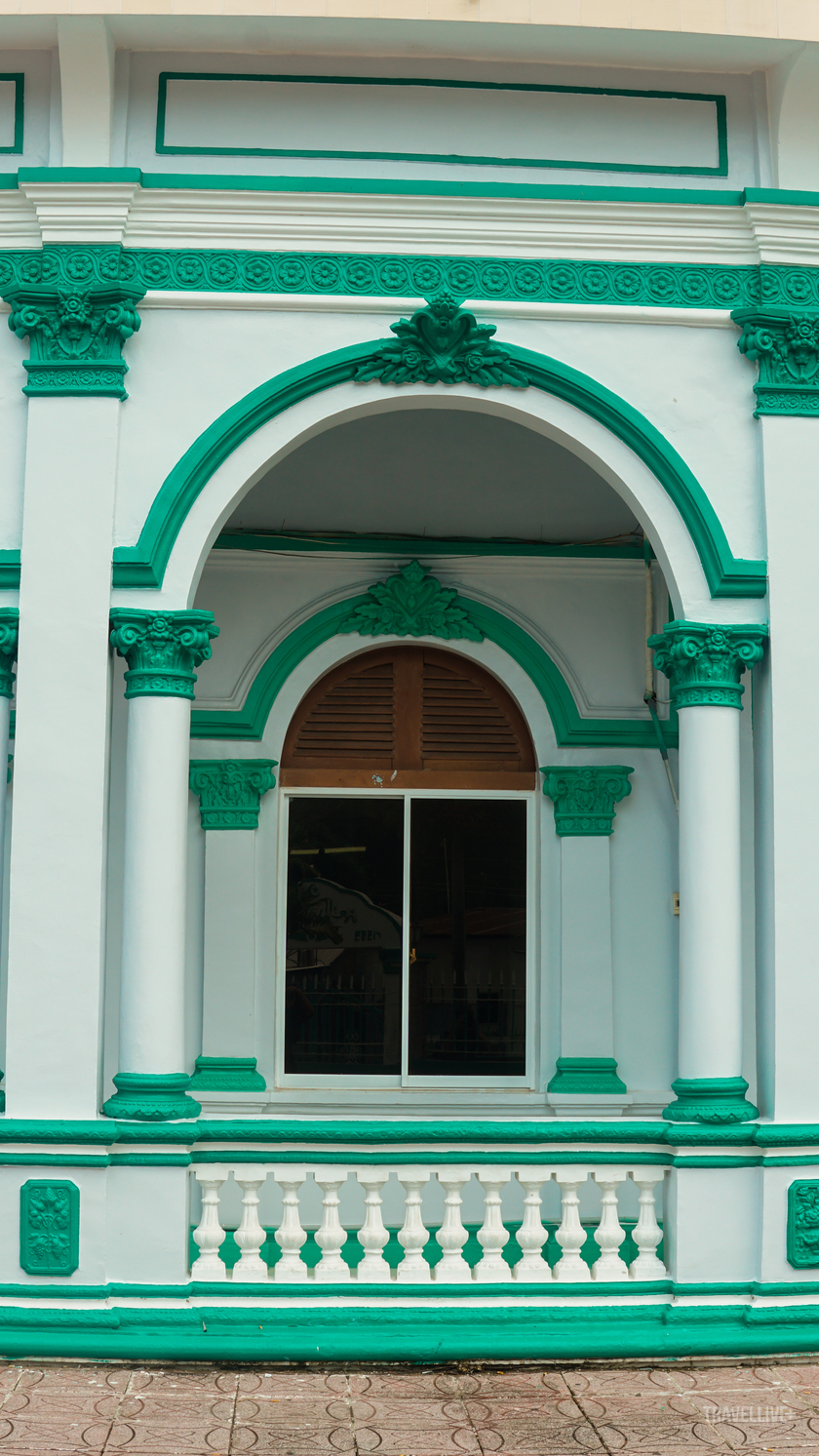
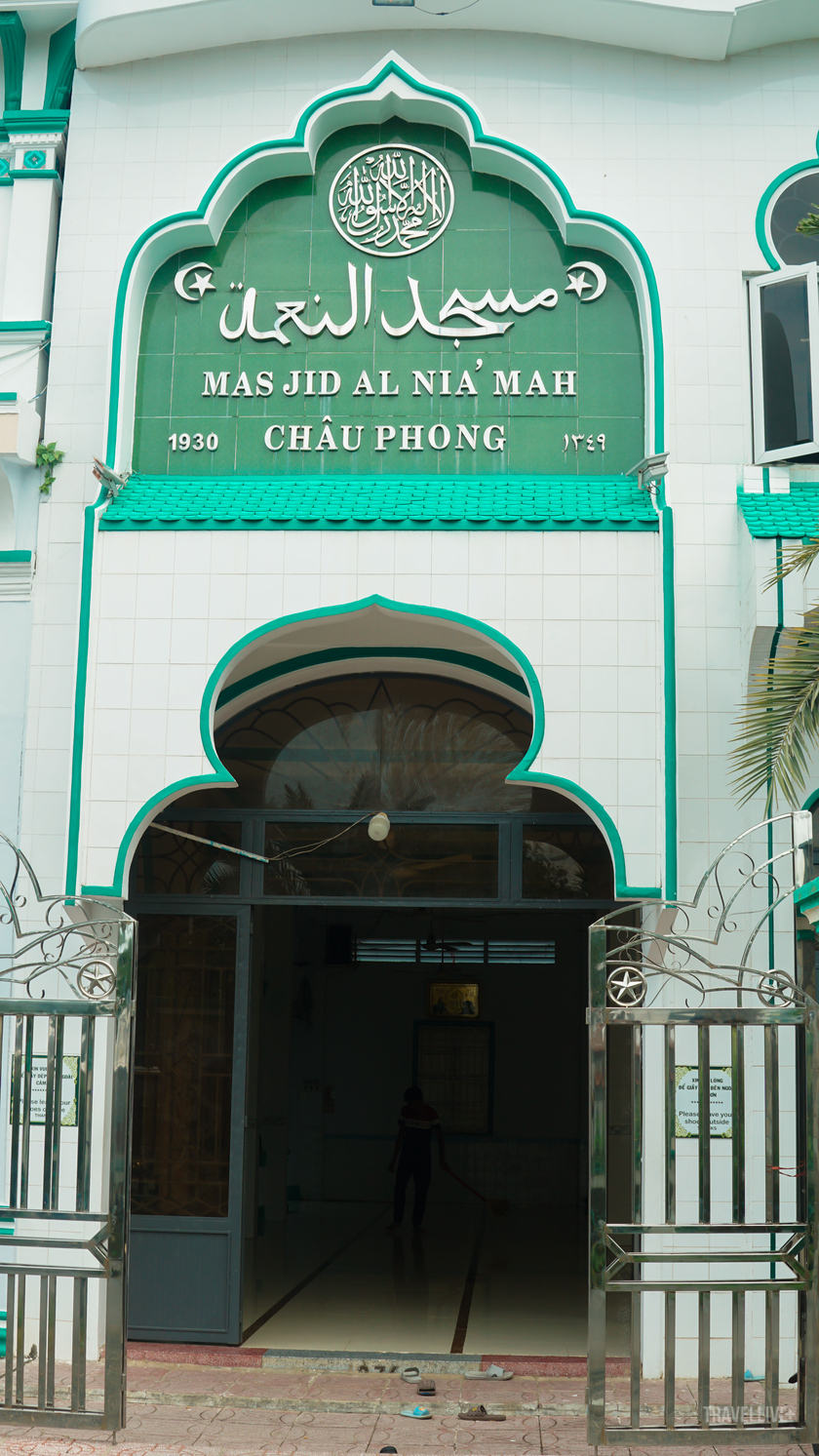
French architectural style is evident in the columns, arches, and window frames.
Along the roads winding through that small village, you can easily encounter local residents wearing traditional clothing in their daily lives; men wear sarongs, women wear abajas and hijabs... all are unique aspects of the Cham culture, preserving traditions from ancient times to the present day.
Today, the traditional culture of the Cham people here is still preserved, such as maintaining the traditional brocade weaving craft and the custom of living in stilt houses. The people here follow Islam with very unique customs and cultural characteristics. In addition, when visiting Chau Phong Cham village, tourists should not miss the grilled palm sugar rice cake and the ha nam can cake, made from rice flour and young coconut, with a subtly sweet taste and unique preparation method.
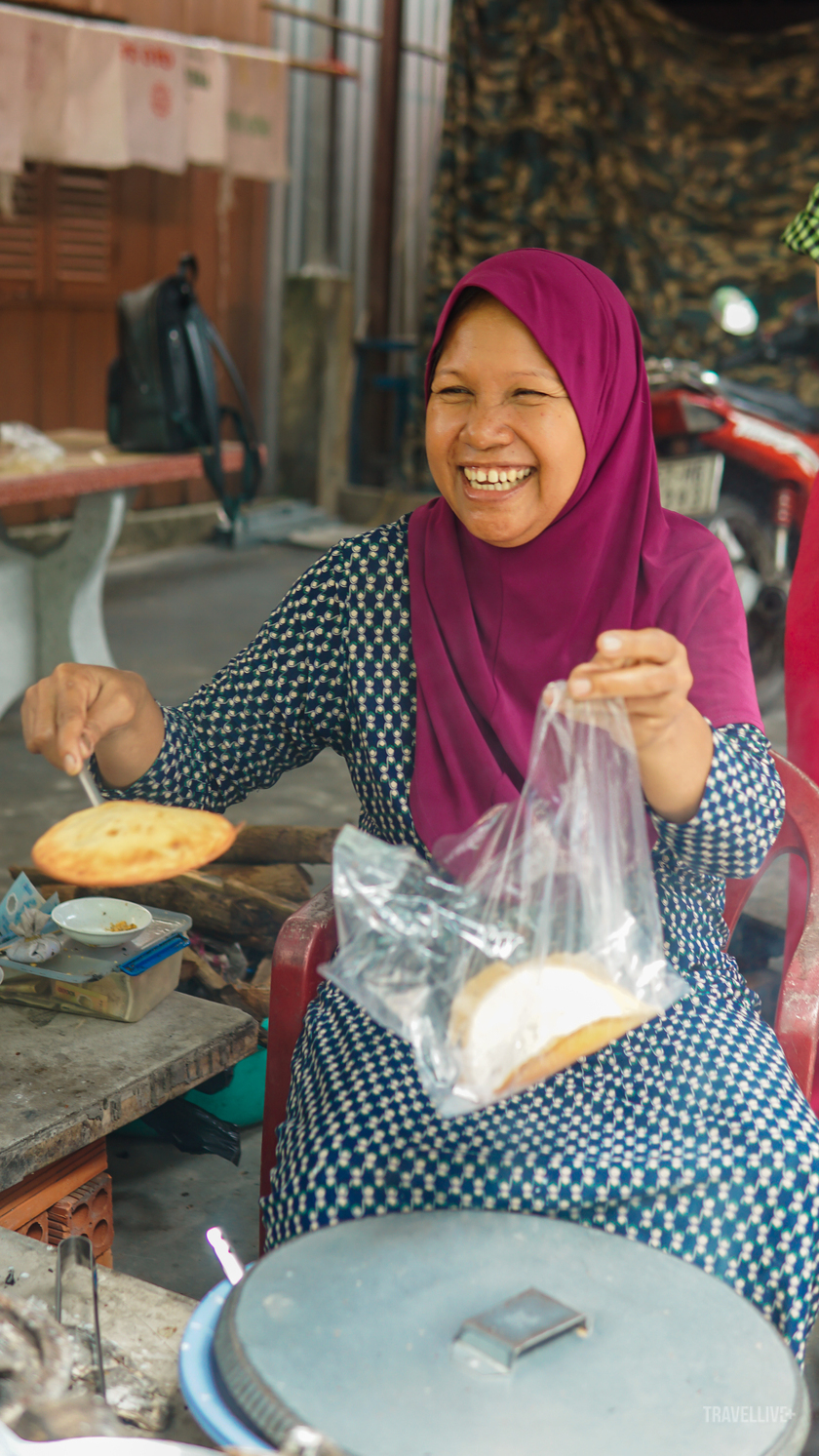
The ha nam can cake is palm-sized, round, and has a pointed top thanks to the shape of the earthenware lid made by Ms. Rofiah.
Ms. Rofiah, one of the renowned artisans in Chau Phong village, said: "Cham rice cakes are different from those of the Khmer and Kinh people, from the way the flour is mixed and the spices to the cooking method. After pouring the batter into the pan, quickly cover it with a clay lid heated over a charcoal fire. When the cake is cooked, it puffs up and has a very distinctive flavor. Every day, I prepare the ingredients from 3-4 am and open for sales from 6-10 am. One cake costs 10,000 VND, and on average, I sell about 80 cakes a day."
The An Giang region has been home to a harmonious community of ethnic groups for generations, especially the Cham people who follow Islam. Through many generations, the Cham have preserved their ethnic identity and unique cultural space through their concentrated village lifestyles. Besides using the Cham language in daily communication, most people here are fluent in Vietnamese, and many also know Khmer. Contrary to the image of a closed community, the Cham people of the Hau River region are very open and cherish and preserve their long-standing cultural heritage.
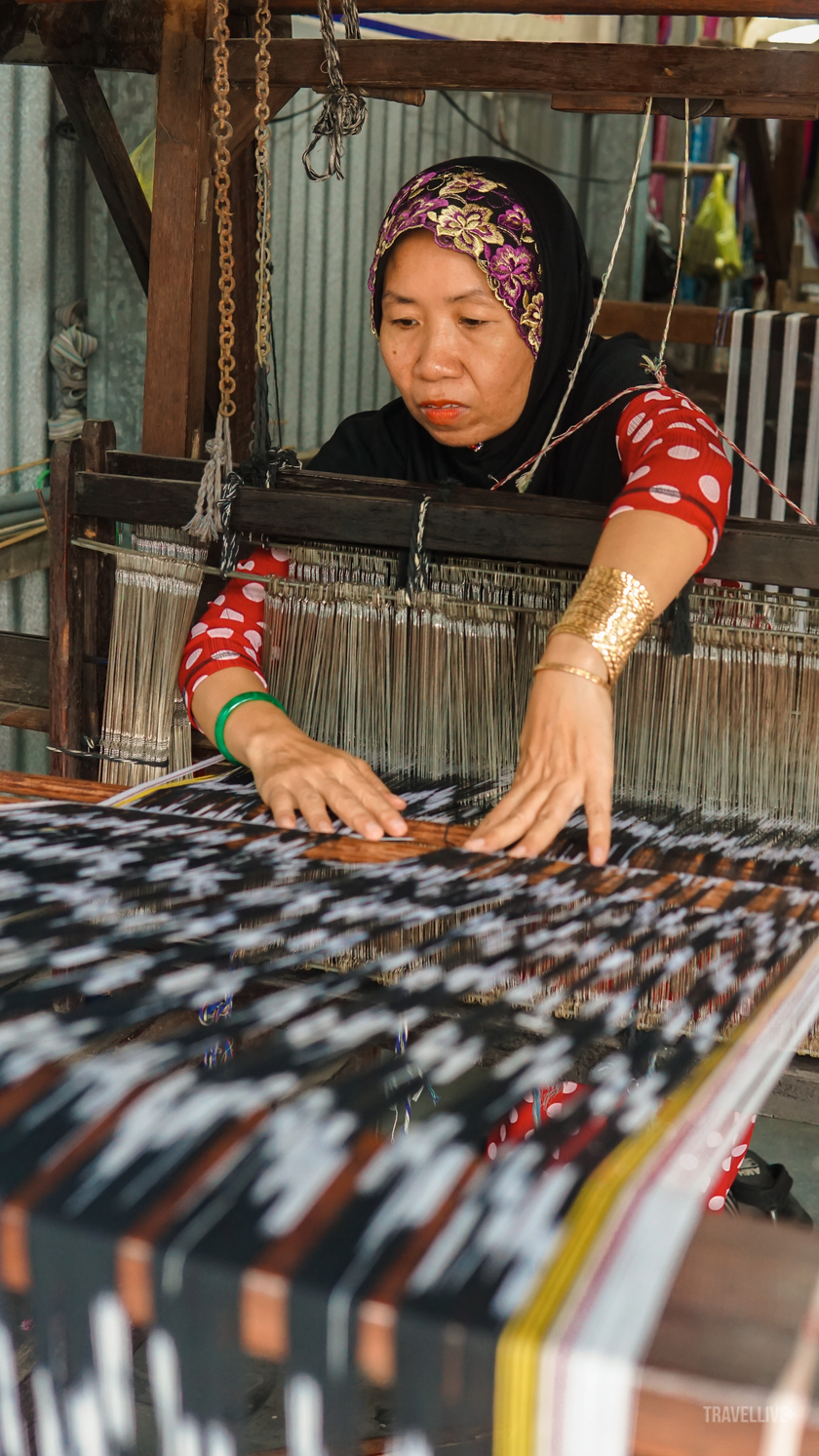
Traditional brocade weaving of the Cham people of Chau Phong
Currently, An Giang's tourism attracts visitors primarily through the promotion of its natural beauty, people, and local culture. Tourist visits contribute to increased income for local communities. The majestic Islamic mosques, the exquisite brocade weaving villages, and the distinctive Cham cuisine all contribute to An Giang's unique character, unlike any other place in the Mekong Delta.
Things to note when visiting Masjid Nia'mah:
For Muslims, there are five times of day for prayers: before sunrise, before noon, in the afternoon, in the evening, and before bedtime. They are required to make a pilgrimage to Mecca at least once in their lifetime, according to religious teachings. However, for Muslims in Vietnam, due to circumstances, they can make a pilgrimage to major mosques in An Giang province.
Visiting Masjid Nia'mah gives tourists the opportunity to learn about the prayer customs of Muslim believers and the daily life of the Cham people. Because it is a sacred place for worship, the mosque's interior is always kept clean. Before entering, you must leave your shoes outside and wash your hands, face, and body thoroughly in the lobby.
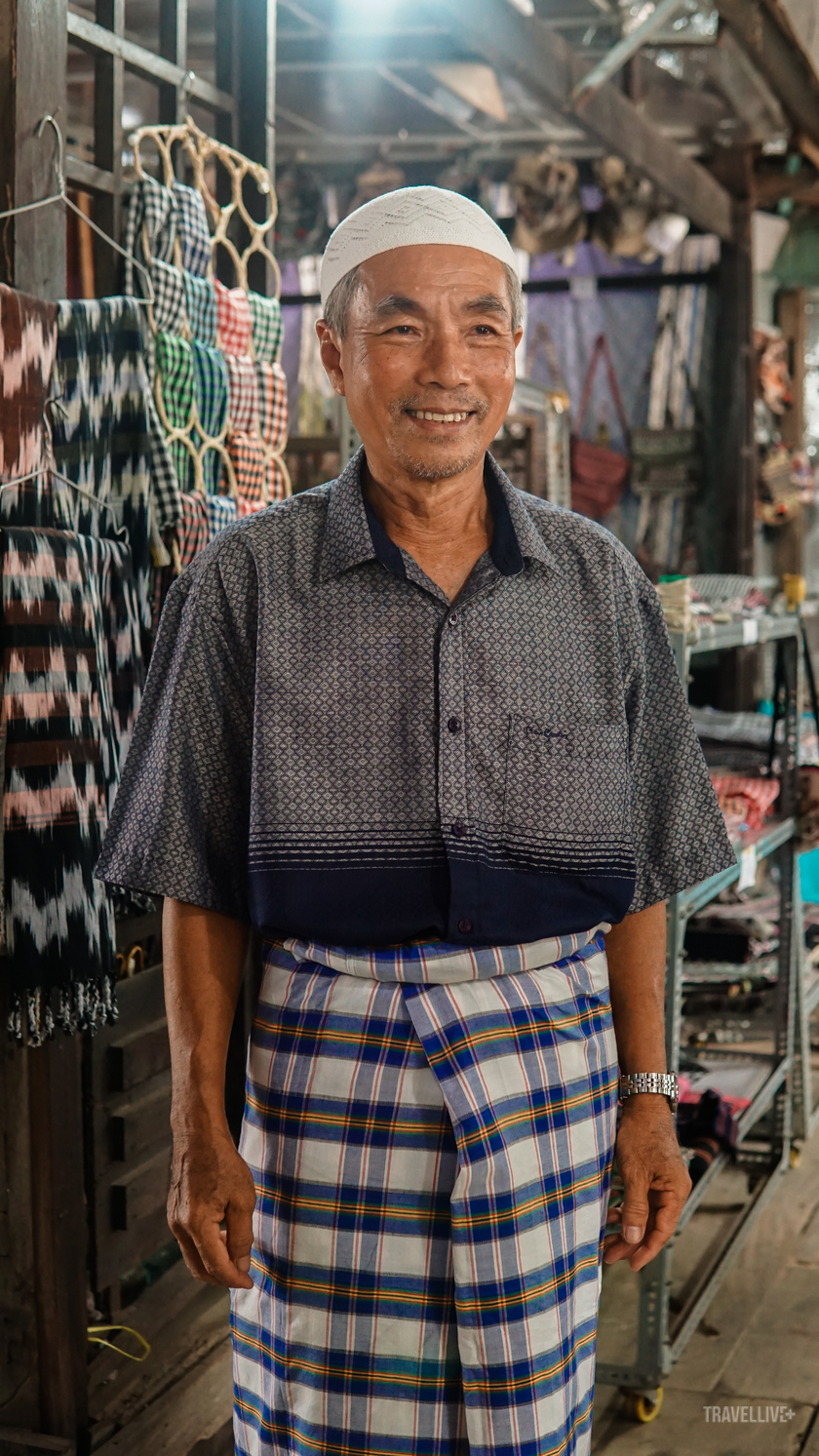
Cham people guide you on how to wrap a sarong.
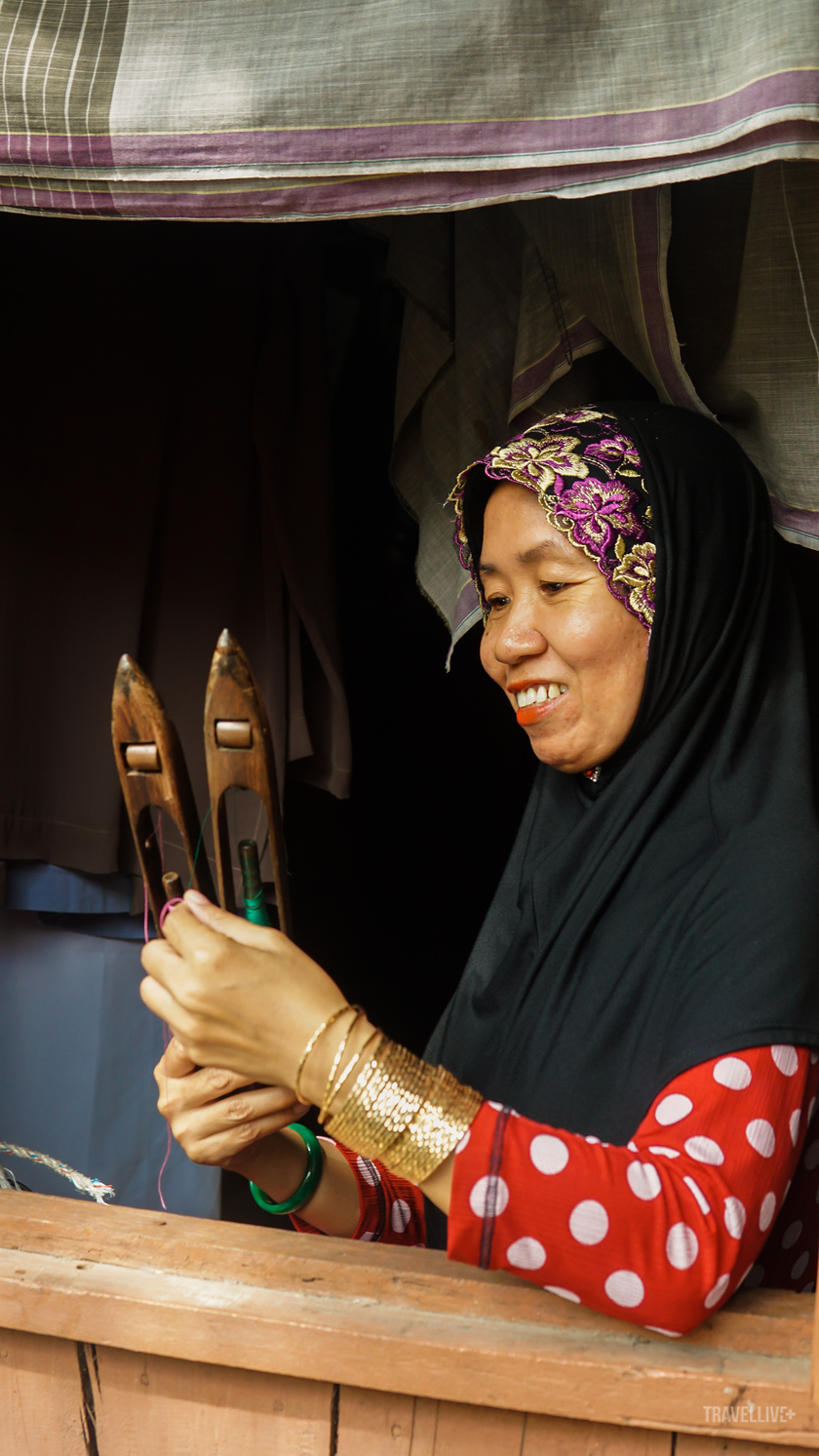
The beauty of Cham women
The Cham people consider mosques sacred areas, so they pay very close attention to dress code. When entering mosques, visitors should wear appropriate clothing, such as trousers or skirts that cover the knees or ankles.
In addition, some unique customs of the Cham people in An Giang include: men perform rituals at mosques and smaller shrines, and they are required to purify themselves before the ceremony by washing their hands, face, and feet. Women, on the other hand, perform rituals at home. The wedding ceremony of the Cham people is also very lavish and distinctive...