VI
VI



A Taiwanese proverb says, "First, Fuzhou; second, Lugang; third, Mengjia," to describe Taiwan's three most prosperous trading ports: Tainan, Lukang (Lugang) in Changhua City, and Monga (Mengjia) in Taipei.
In 1784 (the 49th year of the Qianlong reign), Lukang was designated a "main port" by the Qing dynasty, meaning a commercial port designated by the government for trade activities. Therefore, the port city of Lukang held an extremely important position in history during the 1600s and continued to be a prosperous commercial center until 1895 when the Japanese took control of the area.
During the Dutch colonial period, Lukang was the main port for exporting deer hides, and the name Lukang, or "Deer Port," originated from this. Through many historical changes, the appearance of this ancient town seems to have been given a modern makeover, covering up its ancient simplicity and tranquility after the passage of time. When visiting Lukang, tourists will be given suggestions by locals on how to explore the town. You need to proceed at a leisurely pace. The more relaxed you are, the easier it will be to discover the rich historical values hidden within this small town.
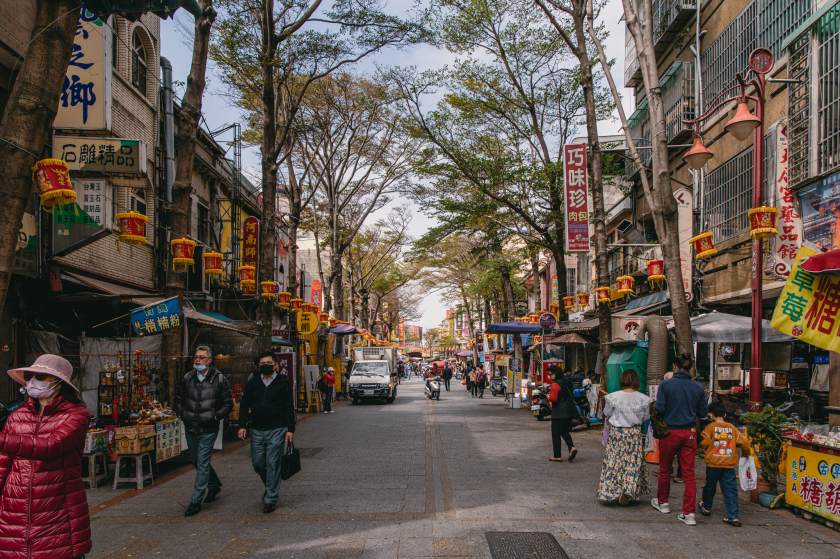
Having weathered countless historical upheavals, the appearance of this ancient port city seems to have been given a modern makeover, overshadowing its ancient simplicity and tranquility after the passage of time.
Lukang was once famous for its "Three Unseen": the sky, the earth, and women. "The sky is invisible" refers to the fact that the shops lining Zhongshan Street never closed their awnings. The people of Lukang conducted their business regardless of rain or shine, so much so that passersby couldn't see the sky even if they looked up. This anecdote illustrates the flourishing street trade of Lukang at that time. "The earth is invisible" because the road was paved with red bricks, so no mud was visible. "Women are invisible" because the custom of foot binding still existed, making it inappropriate for women to appear in public.
Today, apart from the old town which still retains its red brick streets after restoration, this place no longer has the "three things you don't see" characteristic. Lukang now has to be described using the "three things you have in abundance": many historical sites, many street food options, and many artisans specializing in handicrafts.

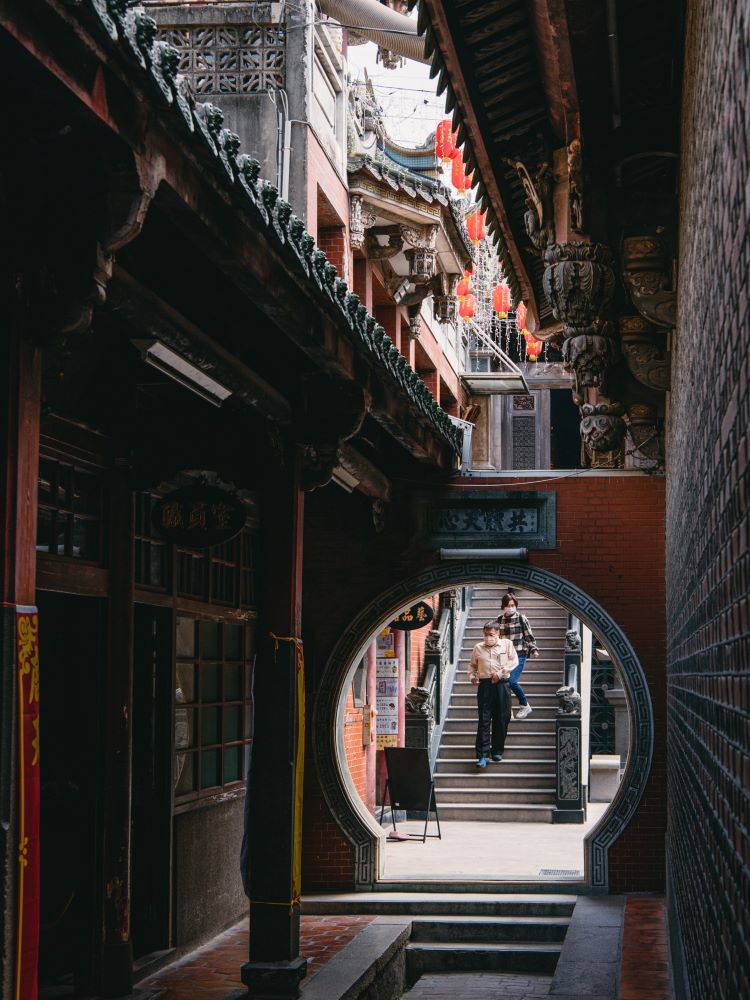
Lukang Old Town is filled with traditional Taiwanese-style houses featuring intricately designed doorways and windows, ornate arches over the main entrances, thin red brick walls and red brick paving, as well as retro green mailboxes hanging outside the houses. Walking through the winding alleys of Lukang Old Town, one can still find glimpses of the town's former glory. Many old houses are still used for local businesses, while some have been renovated but are preserved as part of its remaining heritage.
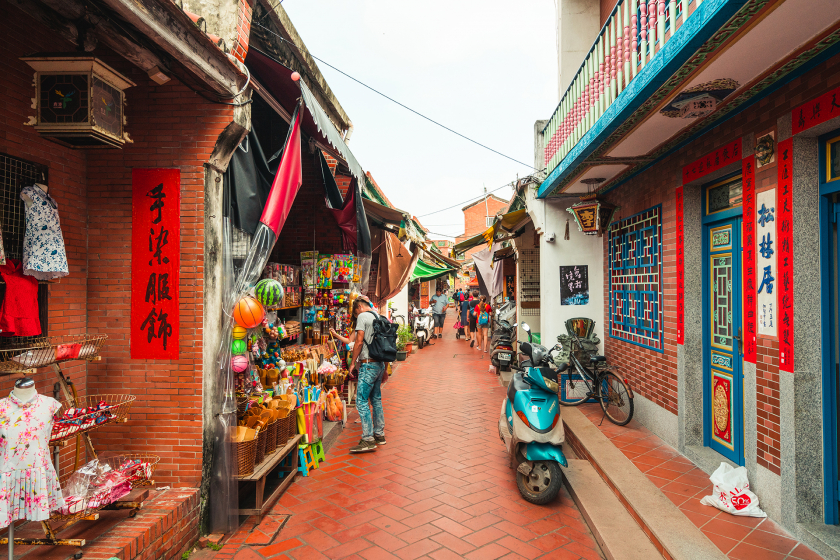
Lukang Old Town is filled with traditional Taiwanese-style houses featuring intricately designed doorways and windows, ornate arches over the main entrances, thin red brick walls and red brick paving, as well as retro green mailboxes hanging outside the houses.
Singer La Dai-you, author of the famous song "Mythology," fell in love with this port city and composed the song "Lukang Town." Anyone who has heard the song longs to find their way to the red-brick-paved streets of the old town, which perfectly preserve the cultural and historical heritage of this place. Just follow the red brick path, and you're guaranteed never to get lost—this is the guide the locals give to tourists from afar.
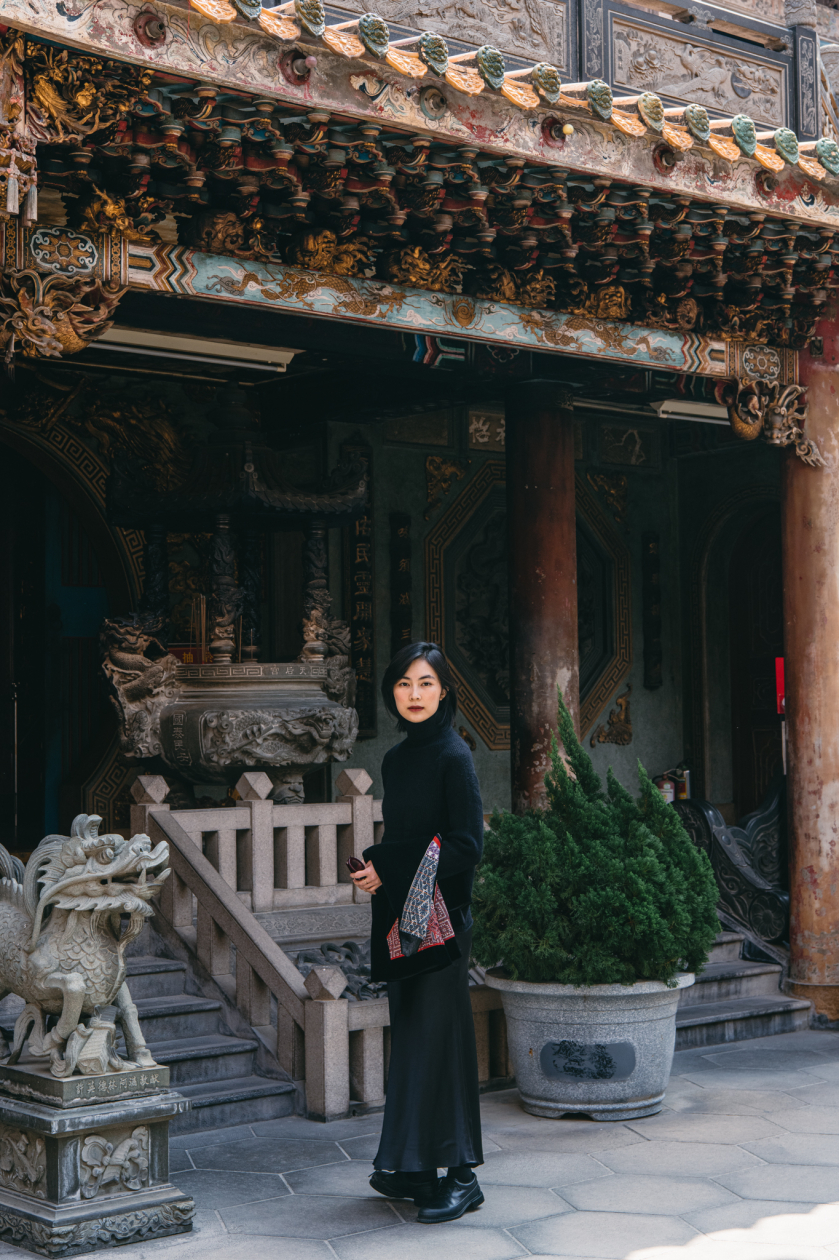
Anyone who has ever heard the song longs to find their way to the red-brick-paved streets of Lukang's old town, which perfectly preserves the cultural and historical heritage of the region.
One of Lukang's most famous destinations is the over 200-year-old alley known as the "Chest-Touching Alley." This narrow alley is so named because it's so tight that only one person can pass at a time. If two people are walking from opposite ends of the alley, they're likely to bump into each other. Therefore, a man always has to wait for a woman to pass first. Local scholars have renamed the "Chest-Touching Alley" to "Gentlemen's Alley" for this reason.
Walking along Zhongshan Road, connected by the red brick road of Jiuqu Alley in the old town, visitors will encounter Longshan Temple, an ancient relic that has existed for three centuries. This temple was built at the end of the Ming Dynasty and the beginning of the Qing Dynasty. In 1786, Longshan Temple was moved to its current location. The temple, covering approximately 890 square meters, is dedicated to the Goddess Tian Hou. Its architecture clearly reflects an East Asian style, with carvings of dragons, carp, elephants, and yin-yang symbols on the roofs and pillars, creating a sense of solemnity and reverence for visitors.
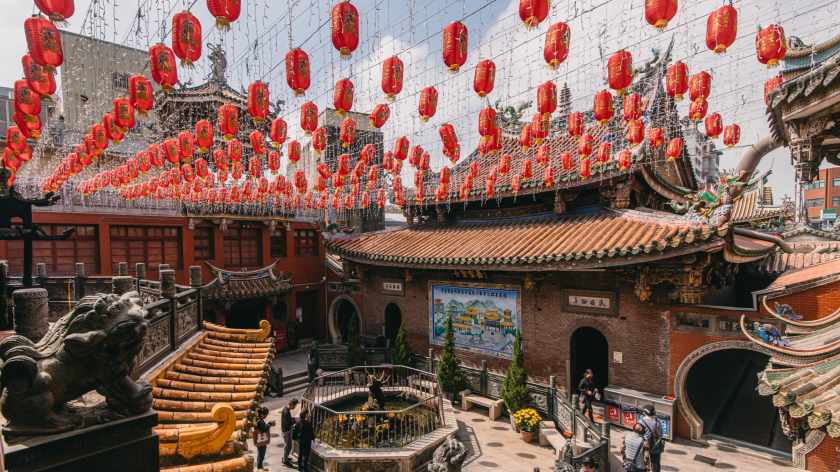
This temple was built at the end of the Ming dynasty and the beginning of the Qing dynasty, and was moved to its current location in 1786.
Every coat of paint, every delicate carving on the stone and wood at Longshan Temple has been preserved in the most intact form. The vaulted ceiling of the main hall of the temple, known as the "Earth Star Eight Trigrams," is one of the most exquisite and oldest architectural sculptures in Taiwan. This spatial layout has been preserved from the 18th century to the present day.
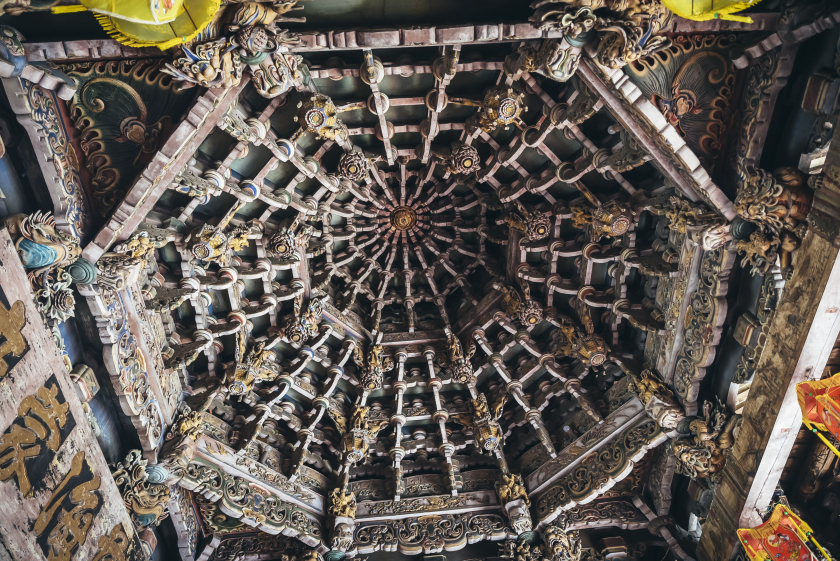
The main hall's vaulted ceiling layout, known as the "Earthly Star Eight Trigrams," is one of Taiwan's most exquisite and oldest architectural sculptures.
Following the red brick path to Jiuqu Lane, you can't help but stop to admire the Yi Pavilion nestled in a picturesque garden, or the Shiyi Pavilion, a place where refined literary figures of yesteryear frequently gathered.
Furthermore, the various types of pastries are also one of the reasons for the charm of Lukang Old Town. Different regions have their own unique pastries, reflecting the characteristics of each area...the most notable being the phoenix eye pastry, which originated here. The phoenix eye pastry is thin and shaped like a phoenix's eye, and has since become a trademark of many pastry shops in Lukang.
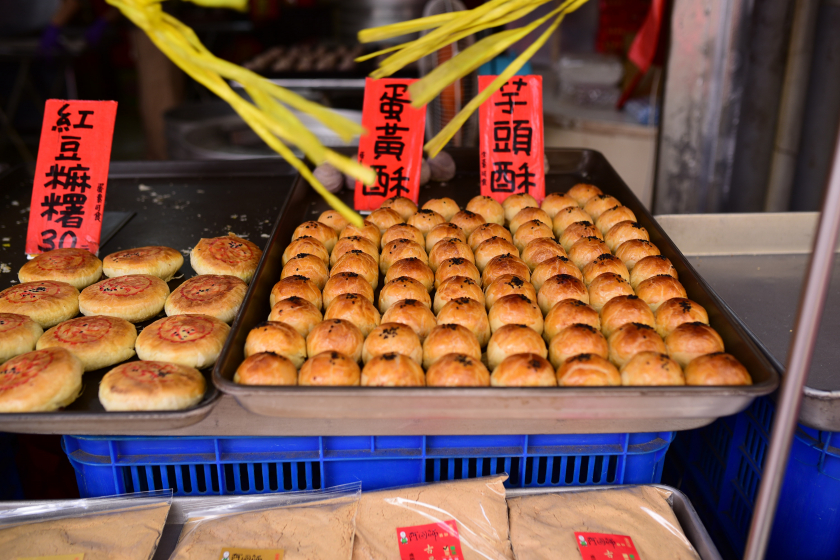
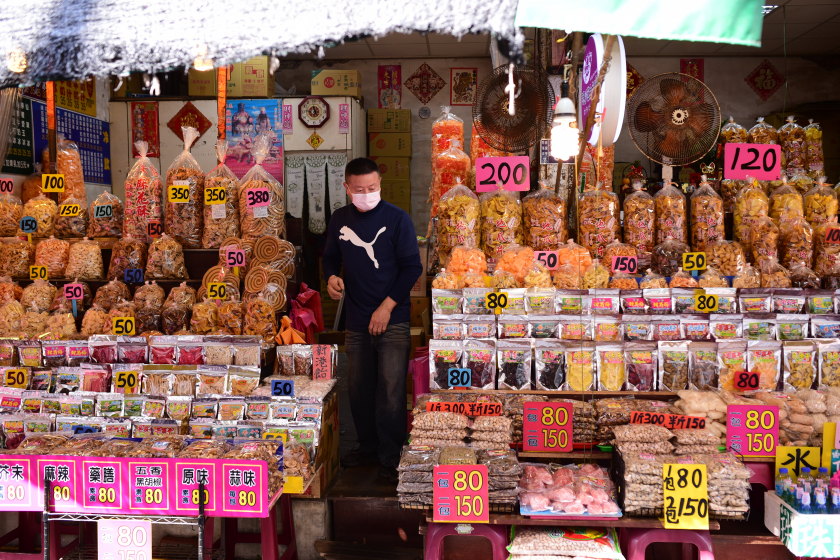
Besides phoenix eye buns, ox tongue buns are also considered a national delicacy of Lukang. Unlike Yilan ox tongue buns, which are thin and crispy, Lukang ox tongue buns have a thick crust, are soft and fluffy, and are filled with strawberry, taro, and other unique flavors.
In addition, each traditional stall, such as those selling handicrafts, antique toys, and paper lanterns, tells a story. Preserved within a nostalgic setting, they become a memorable part of Taiwanese tourism.
Additional information:
Amazing Tour is a series of destination promotion tours initiated by Travellive Media Group since 2013. To date, Amazing Tour has collaborated with international tourism promotion agencies such as South Korea, Malaysia, the Philippines, Indonesia, and Türkiye, successfully organizing experiential tours to promote tourism and quickly making a strong impression.
Entering 2023, Amazing Tour returns with a fresh program format, aiming to inspire travel enthusiasts to explore the world. Each program will include practical activities designed to provide information on services and destinations based on the real-life experiences of celebrities, influential figures in the travel industry, and photographers.
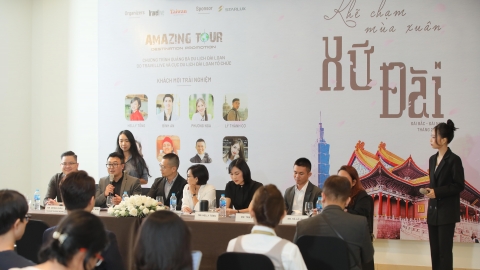
The Amazing Tour in February 2023, a travel and tourism promotion event focusing on culture and cuisine, titled "Taiwan - Gently Touching the Spring in Taiwan," was organized by Travellive Media Group and the Taiwan Tourism Bureau, with sponsorship from STARLUX Airlines.