VI
VI


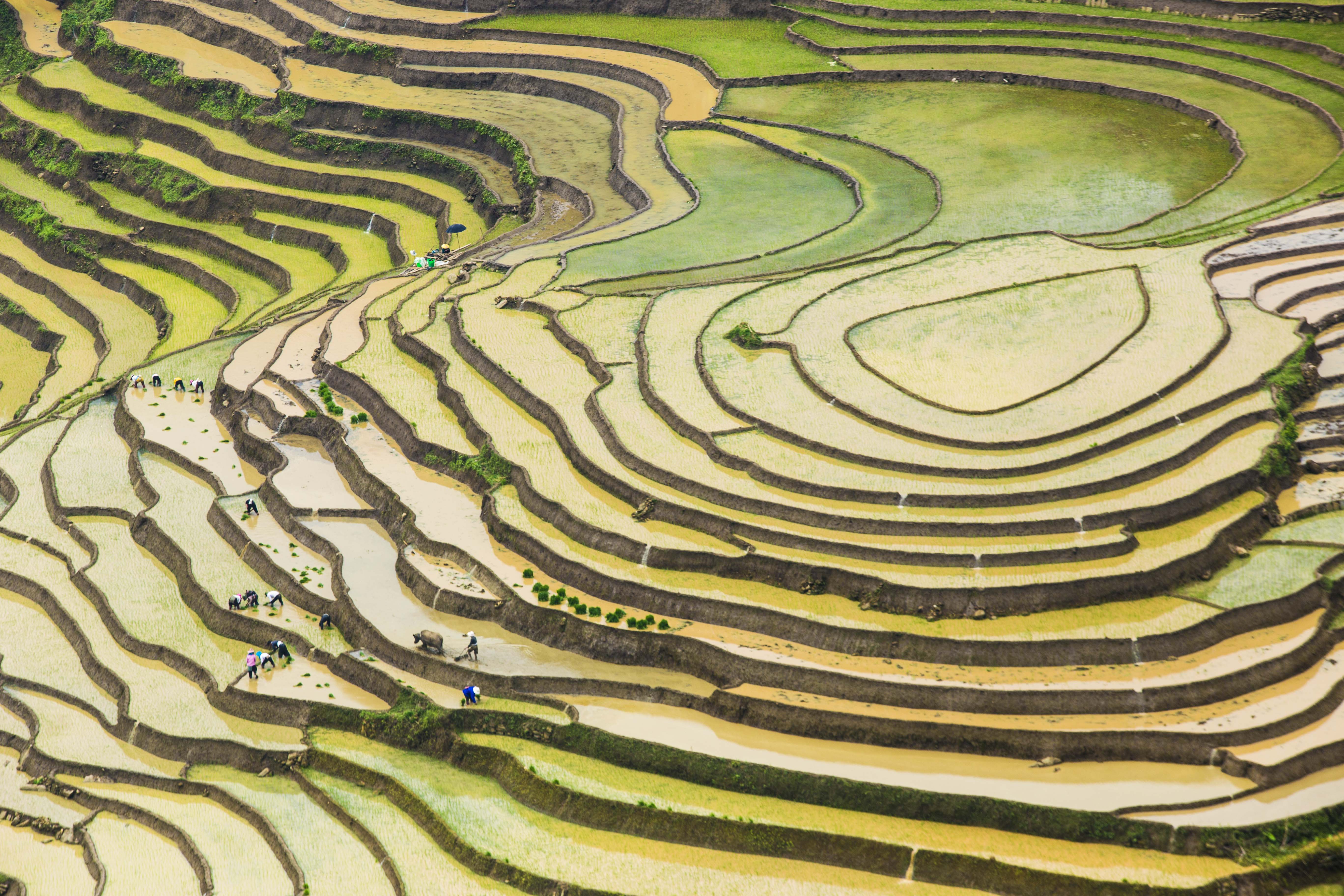
Northwest Vietnam captivates adventurous hearts not only with its undulating mountain ranges, majestic waterfalls, and vast green forests, but also with the breathtaking beauty of its terraced rice fields.
Terraced rice fields stretch in layers, one after another, to the horizon, covering hillsides, valleys, and winding roads. Anyone who has ever been captivated by the vibrant golden hues of Northwest Vietnam in autumn will also be enchanted by the shimmering colors of the terraced rice fields during the rainy season, also known as the irrigation season.
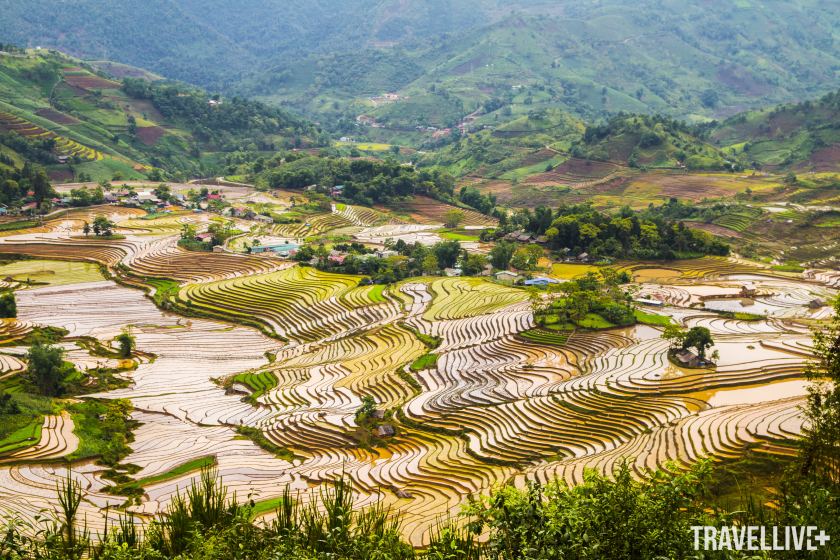
Terraced rice fields during the rainy season
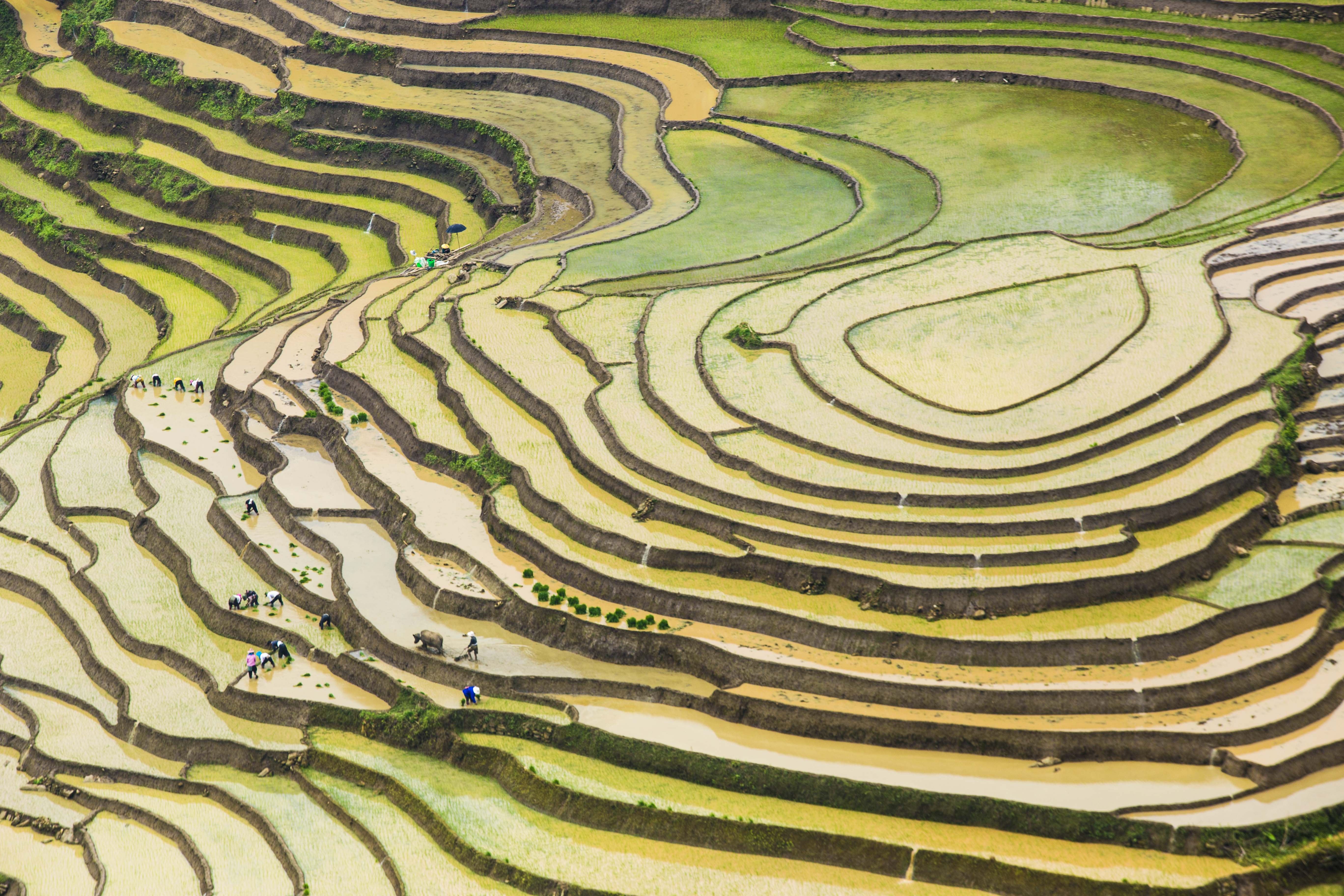
Around May and June, when the first summer rains fall, people in the highlands begin to go to the fields, plowing the land, channeling water, building embankments, and planting rice seedlings to start the new season. Around this time, water is channeled from the streams, flowing from the higher fields down to the lower ones, filling the hillsides. On the terraced fields, the atmosphere is as bustling as in other rice-growing regions. Buffaloes plow the land, adults plant rice seedlings, and children play.
On sunny days, the sky reflects on the water's surface, making the terraced rice fields shimmer like a mosaic of mirrors. Different colors intertwine, with the brown of the soil, the vibrant green of the rice seedlings, and in some places, the blue sky and white clouds are reflected.
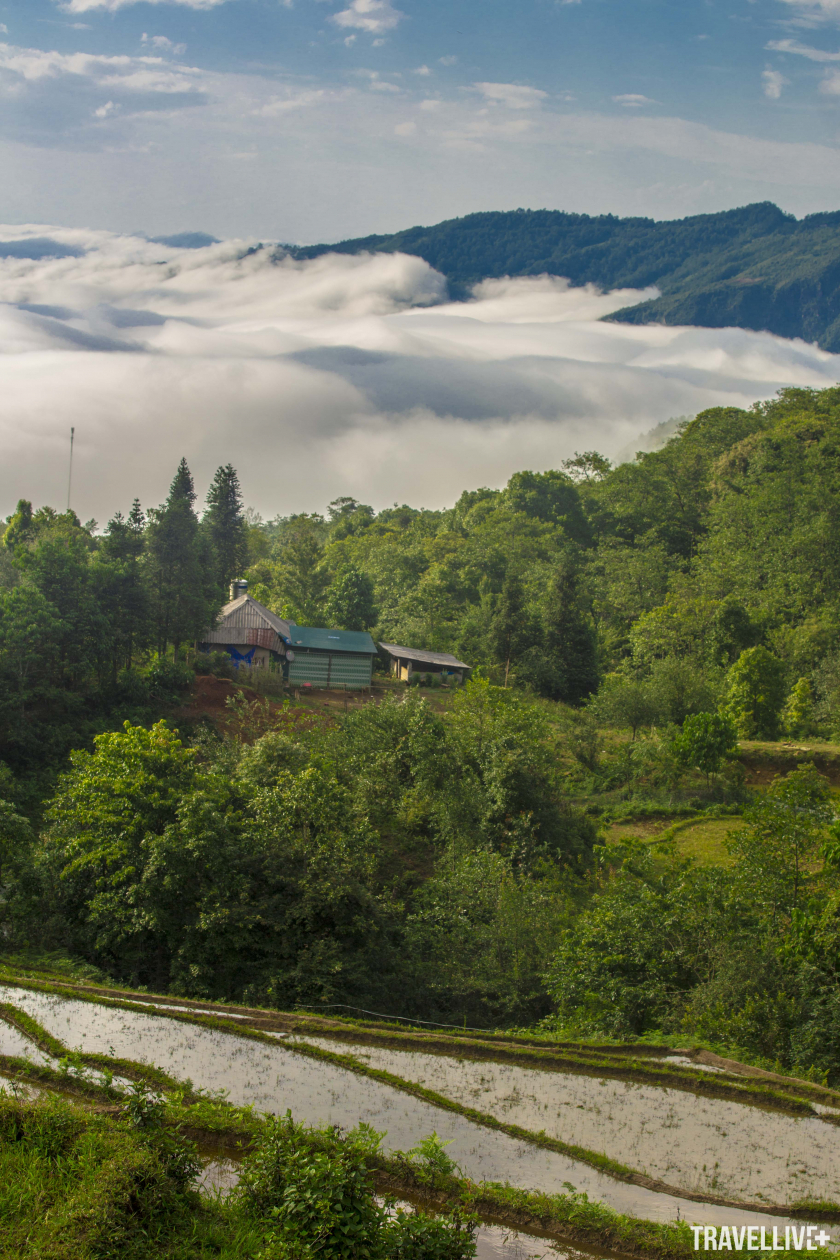
On foggy days, the terraced rice fields appear and disappear mysteriously in the hazy white clouds.

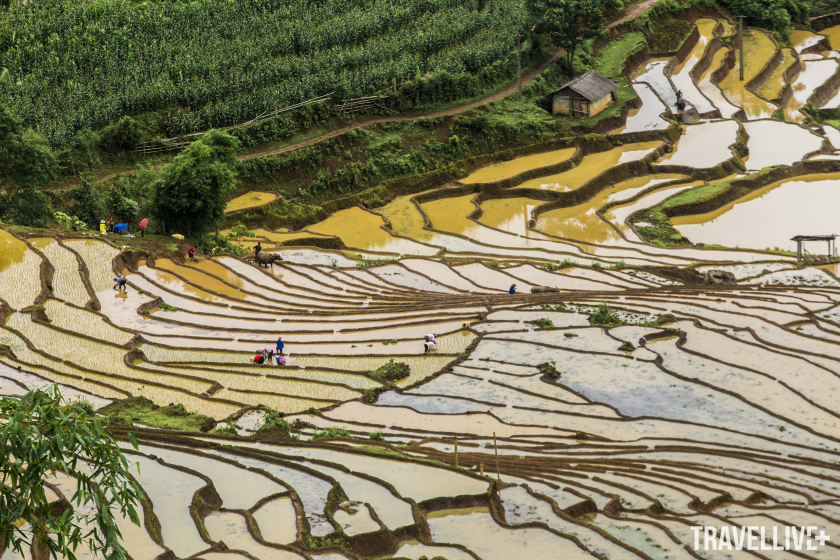
A bustling morning across the fields.
It's no exaggeration to say that the terraced rice fields of Northwest Vietnam are a masterpiece of nature and human ingenuity. A magnificent work of art with harmoniously blended colors that stir the hearts of wanderers. At the intersection of heaven and earth, amidst fluffy white clouds, the terraced fields resemble stairways to paradise, appearing and disappearing in the clouds like a beautiful painting.
Beyond creating a magnificent natural landscape, terraced rice fields are also a treasure trove of folk knowledge and long-standing farming culture, reflecting the harmonious lifestyle of people in the highlands and demonstrating their persistent and diligent labor.
The hilly terrain, heavily dissected by streams and ravines, and the easily eroded soil are unsuitable for cultivation. For generations, people have persistently reclaimed barren land, built embankments, and channeled water to the fields, transforming rocky hillsides into fertile rice paddies that yield abundant harvests. Due to the unique topography, the rice varieties grown on these terraced fields must be drought- and frost-resistant.
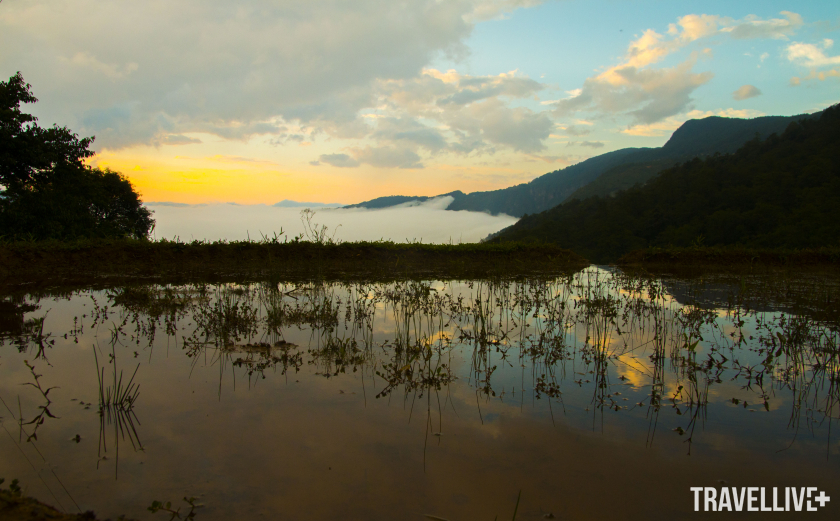
Sunset over the terraced rice fields
The process of terraced rice cultivation has been preserved and passed down from generation to generation by the people of the highlands. To create these lush rice fields, the people diligently go through several steps: selecting the land, establishing the right to cultivate it, carrying out the cultivation, and building the field embankments.
In spring, the cool, dry climate is favorable for reclaiming wasteland. People seek out hills with moderate slopes and water sources. After selecting a suitable plot of land and establishing their right to cultivate it, they clear the bushes and level the ground with hoes and shovels. April and May are the months for irrigating the fields. To retain water, the field embankments are built high with earth and stones. Notably, the irrigation system is entirely handcrafted using bamboo and reeds.
For cultivation, the fields must be flat, with an upper and lower plot spaced 1-1.5m apart, and have embankments to retain water and gates for water to flow from the upper to the lower plot.
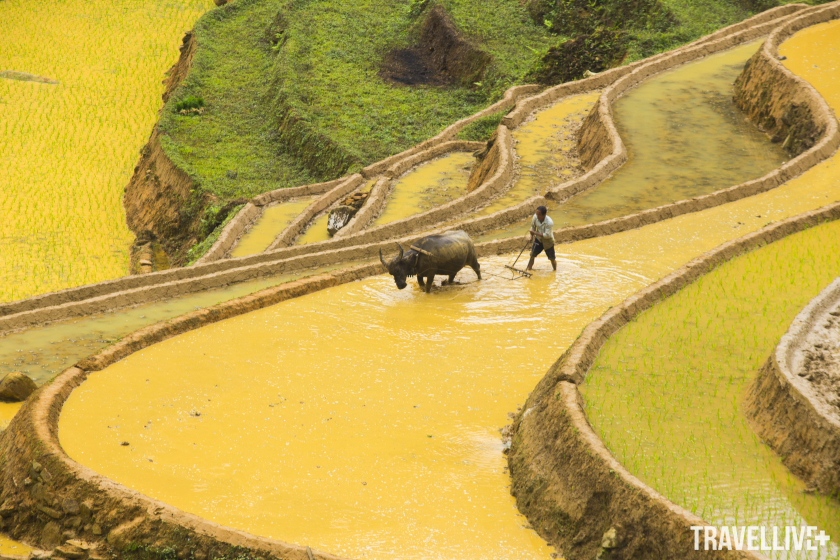
Spring is favorable for land clearing and cultivation.
In Northwest Vietnam, the most beautiful and abundant terraced rice fields are found in Sa Pa, Bat Xat (Lao Cai), Mu Cang Chai (Yen Bai), and Hoang Su Phi (Ha Giang), which have been recognized as national monuments by the Ministry of Culture, Sports and Tourism. Vietnam's terraced rice fields are also among the most beautiful in the world. Sa Pa's terraced fields were once ranked among the top 7 most beautiful terraced rice fields in Asia and the world by Travel and Leisure magazine (USA). Meanwhile, the Y Ty mountain region was identified by the online travel information site Thrillist (USA) as one of Asia's "most mysterious and in need of preservation treasures".
The photos in this article were taken by the author in Bat Xat district, Lao Cai province in May 2022. The terraced rice fields in Bat Xat receive water from the Ngoi Phat River, Lung Po stream, and Quang Kim stream. Bat Xat district (Lao Cai) currently has more than 3,000 hectares of terraced rice fields, mainly distributed in the communes of Muong Hum, Sang Ma Sao, Den Sang, Y Ty, Ngai Thau, etc.