VI
VI


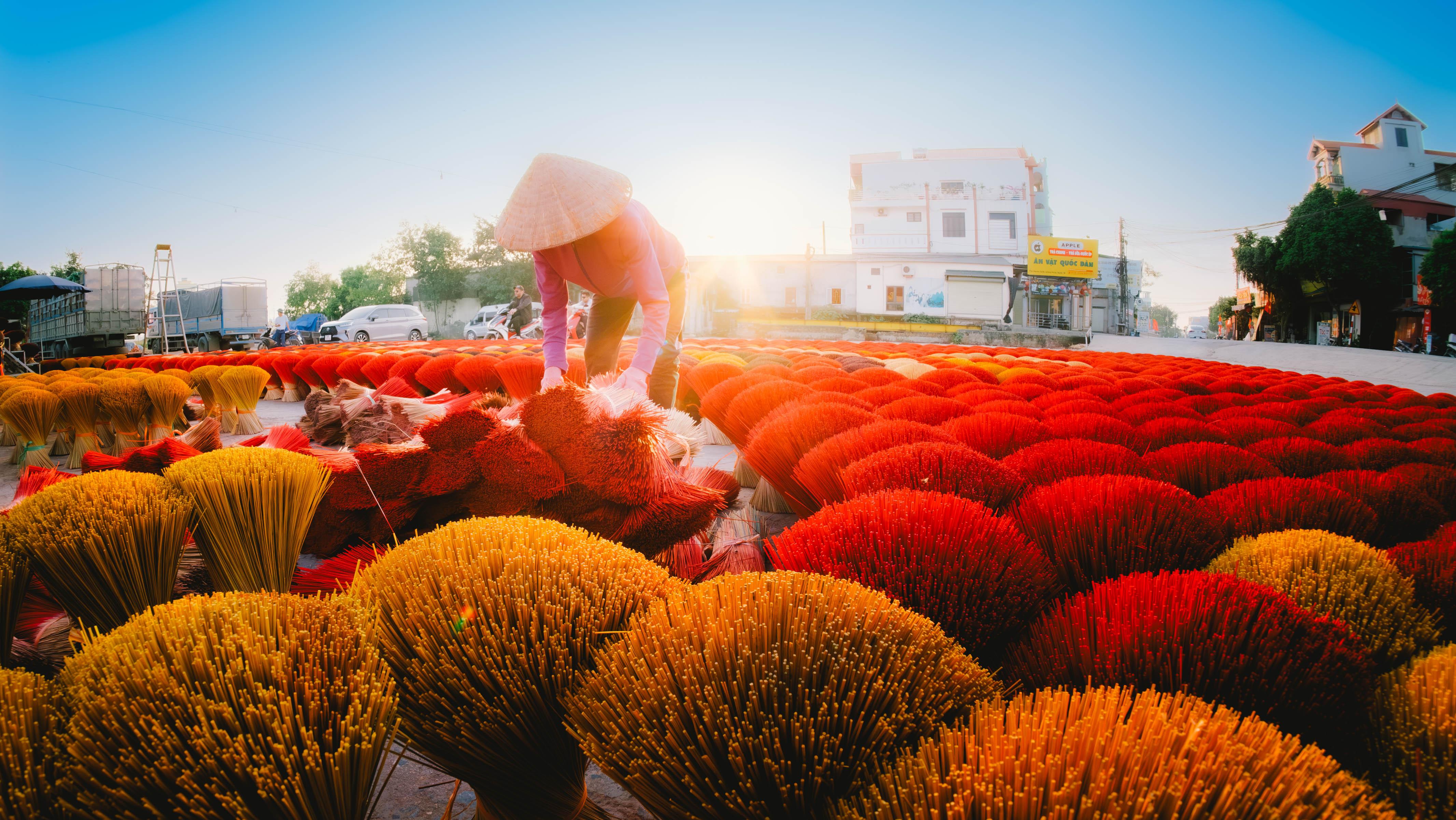
Located 35 km from the center of Hanoi, Quang Phu Cau incense village, also known as Xa Cau incense village, is a popular check-in spot on the outskirts of Hanoi. With a history spanning over a century, the Quang Phu Cau incense-making village is situated in Quang Phu Cau commune, Ung Hoa district, Hanoi. To this day, Quang Phu Cau incense village continues to exist and has become one of the unique features that clearly portray the culture of the Northern Delta countryside.
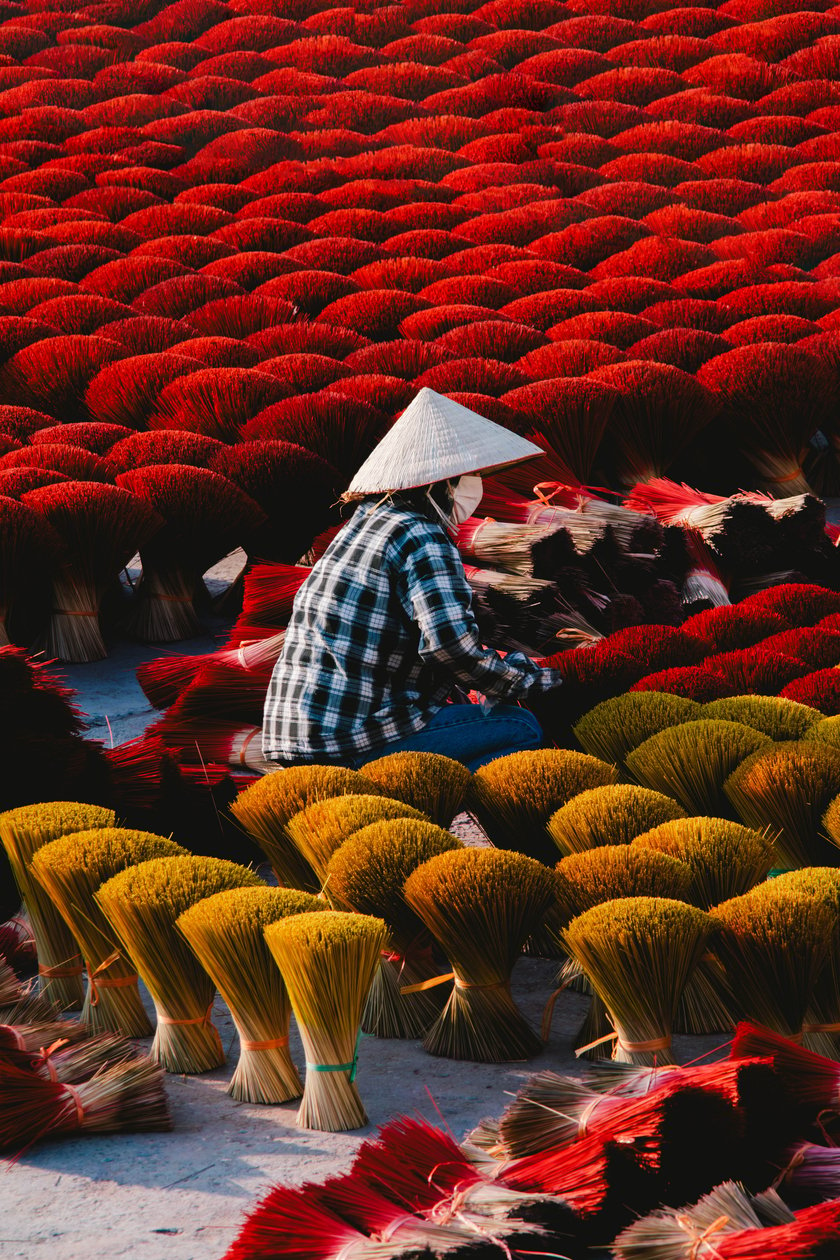
With a history and tradition spanning over a century, the incense stick making village of Quang Phu Cau is located in Quang Phu Cau commune, Ung Hoa district, Hanoi.
Previously, the craft of making incense sticks was mainly found in Phu Luong Thuong village. Word spread, and the craft gradually spread throughout Dao Tu and Cau Bau villages. Without knowing exactly when, Quang Phu Cau commune has become one of the most prominent incense stick making villages in the suburbs of Hanoi. It retains the beauty and charm of a traditional Northern Vietnamese countryside village, yet blends it with modern elements.
Having the opportunity to visit Quang Phu Cau incense village, Mr. Thanh Phong (43 years old, Hanoi) was able to directly experience the incense-making process and learn about the place because he is participating in several projects on preserving traditional craft village culture in Vietnam.
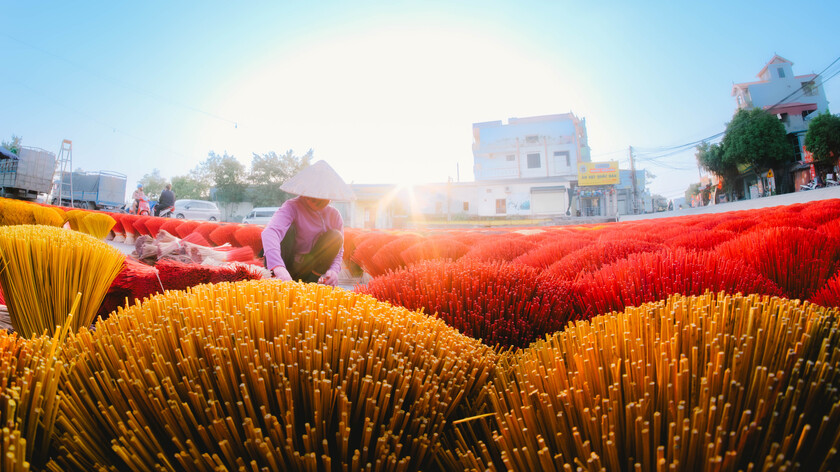
The incense-making village of Quang Phu Cau still exists and has become one of the unique features that clearly portray the culture of the Northern Delta countryside.
From the very first moment he stepped through the village gate, Thanh Phong seemed to sense the bustling, hurried pace of life of the people here. Following the winding path leading into the village, it wasn't difficult to spot vehicles, both rudimentary and modern, lined up one after another, transporting bundles of incense to be sold everywhere.
On sunny days, a stroll through the incense-making village reveals the sight of villagers diligently drying incense sticks. Bundles of red incense sticks, resembling giant flowers, are spread across courtyards, village squares, and even open spaces, creating a vibrant scene against the clear blue sky. A gentle fragrance of incense sticks wafts through the air, adding to the sense of relaxation and comfort for visitors.

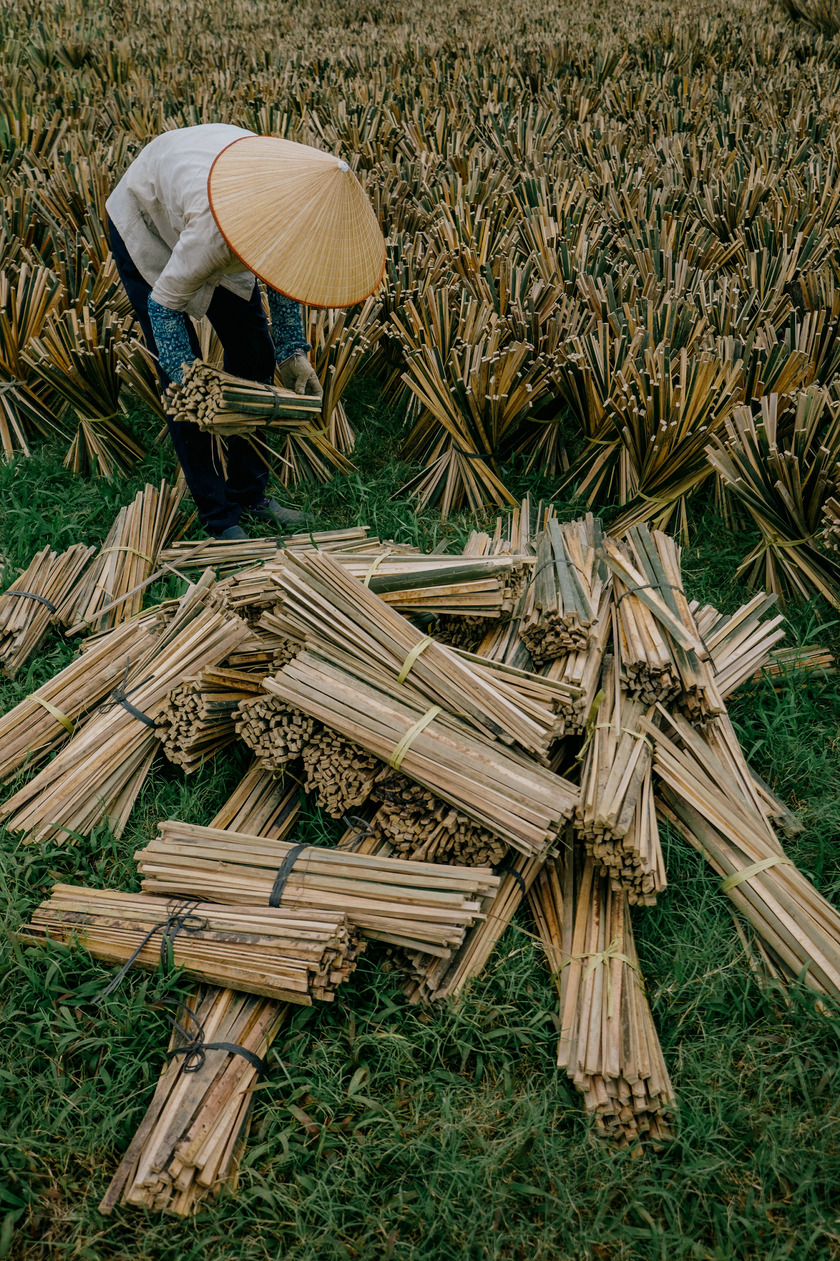
The incense sticks are made from carefully selected raw materials.
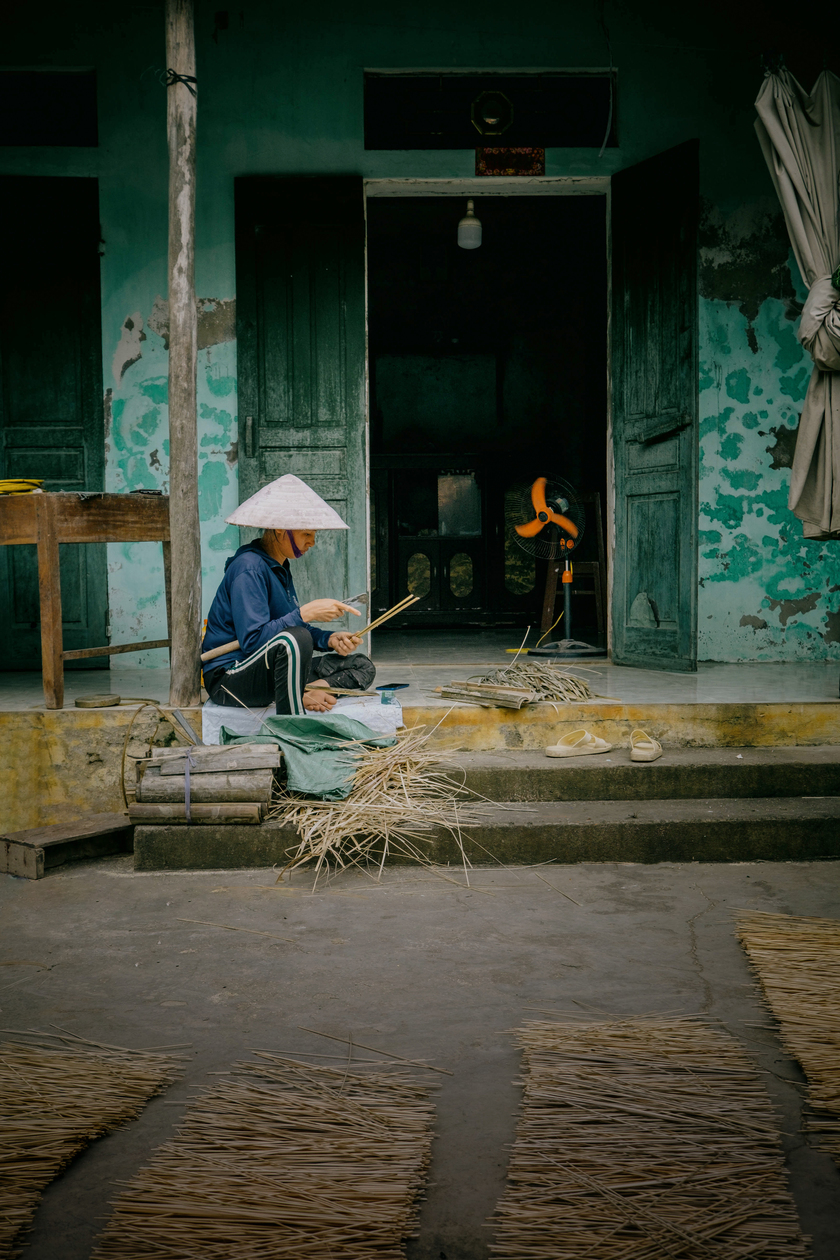
Everyone has their own task, it seems to have become a habit.
During his trip to explore Quang Phu Cau incense village, Thanh Phong had the opportunity to sit down and chat with the locals, listening to their stories about how they create perfect bundles of incense. “If you want to see the villagers drying and dyeing the incense, you have to go early. To catch the early morning sun, the villagers start dyeing the incense from 5 a.m. until around 6 or 7 a.m., then they start drying. Around 10 a.m., everyone stops dyeing. At that time, the production facilities only make incense sticks or roll incense indoors. In the afternoon, around 2 p.m., they will dye or dry another batch and collect the morning's batch,” Thanh Phong explained.
Each person has their own task, seemingly by habit, their nimble hands expertly splitting bamboo, bundling sticks, dyeing, and rolling incense. Every step in incense making requires meticulousness and care. The clattering of splitting bamboo, bundling sticks, the sound of the machines splitting and rolling incense, the hushed conversations, and the pungent aroma of the incense sticks create the distinctive character of Quang Phu Cau incense-making village.
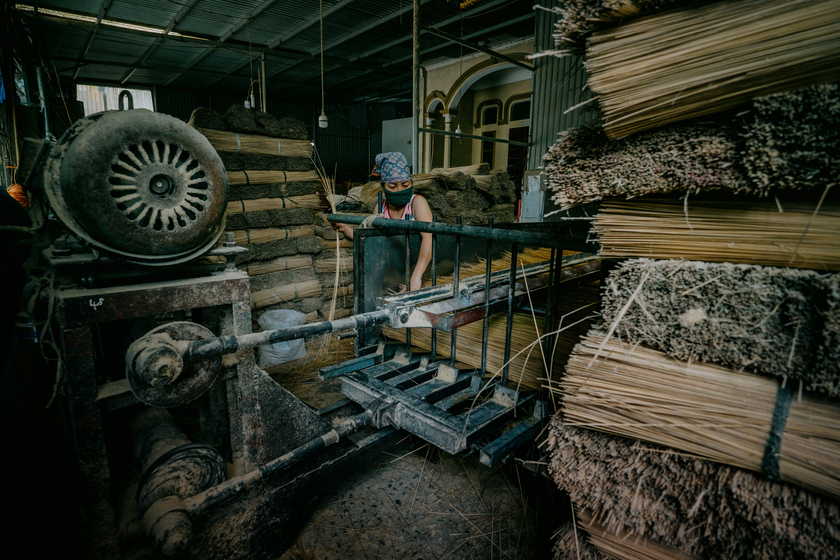
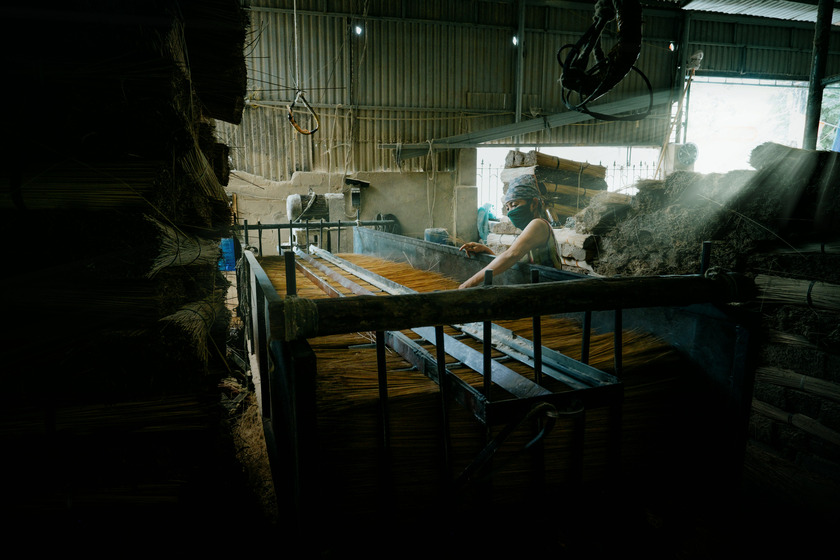
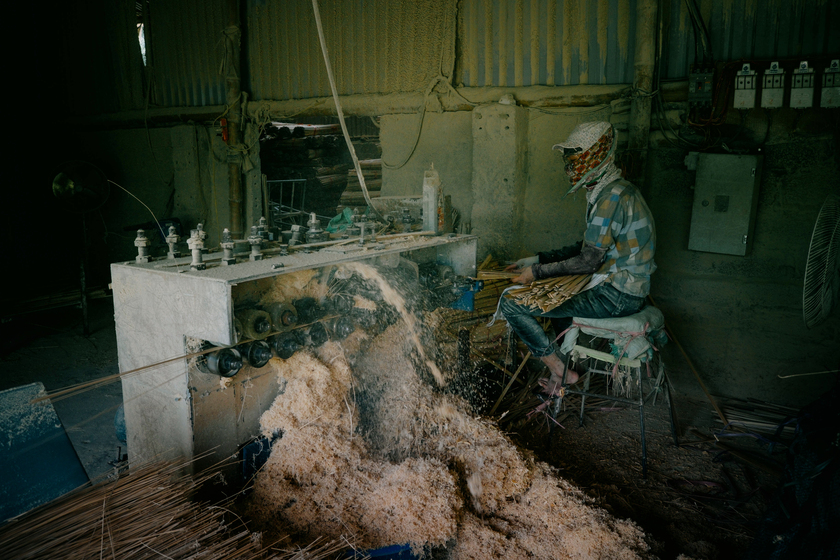
Previously, people had to split bamboo by hand, but now, with the help of machinery, productivity has increased.
The bamboo used to make incense sticks must be of sufficient "age" and undergo a rigorous screening process before being processed. While in the past, people usually whittled the bamboo manually, nowadays they use machinery to increase productivity.
Traditionally, incense sticks require the craftsman to roll them gently and firmly to ensure the powder adheres evenly. Nowadays, with modern technology, workshops invest in machinery to speed up this process, significantly increasing productivity. After rolling, the incense sticks must be dried in the sun to prevent mold and ensure longevity. Therefore, to create a perfect finished product for the consumer, each incense stick is crafted with the utmost dedication and skill by a professional artisan.
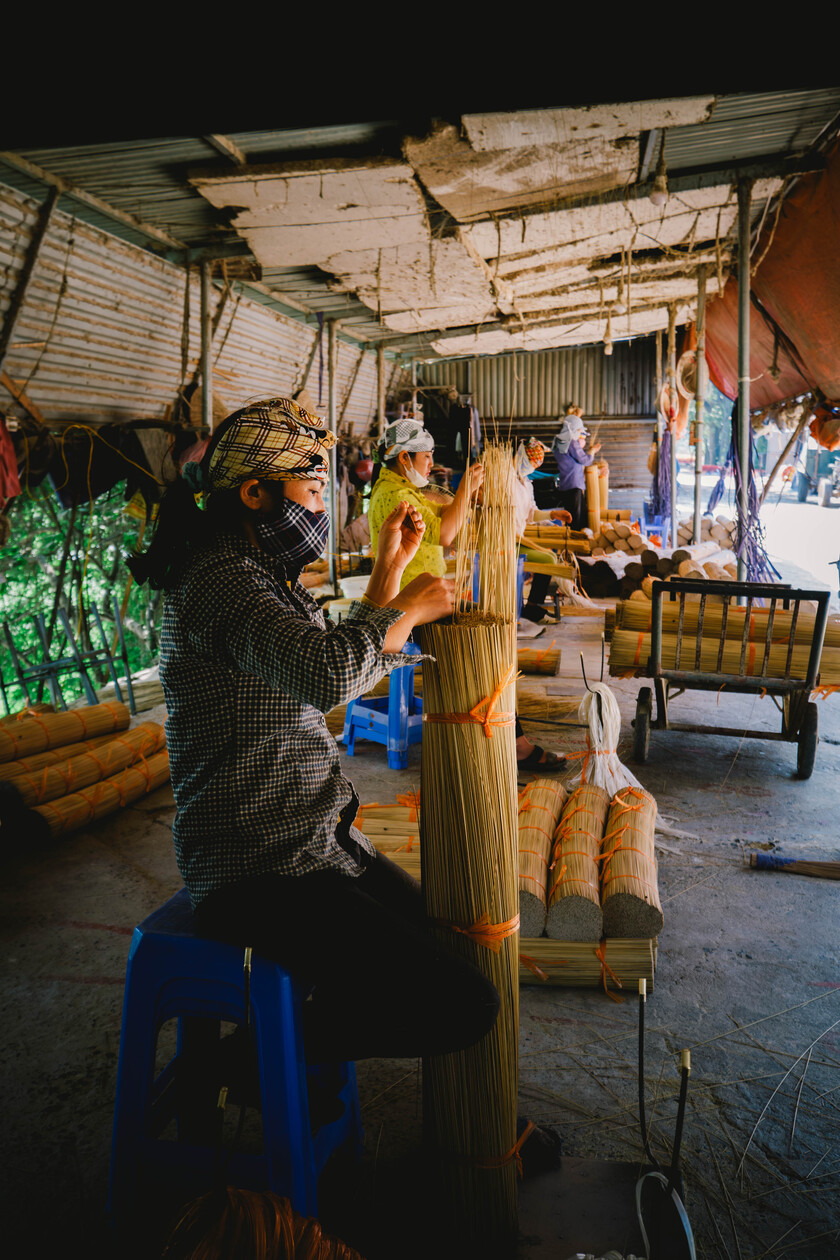
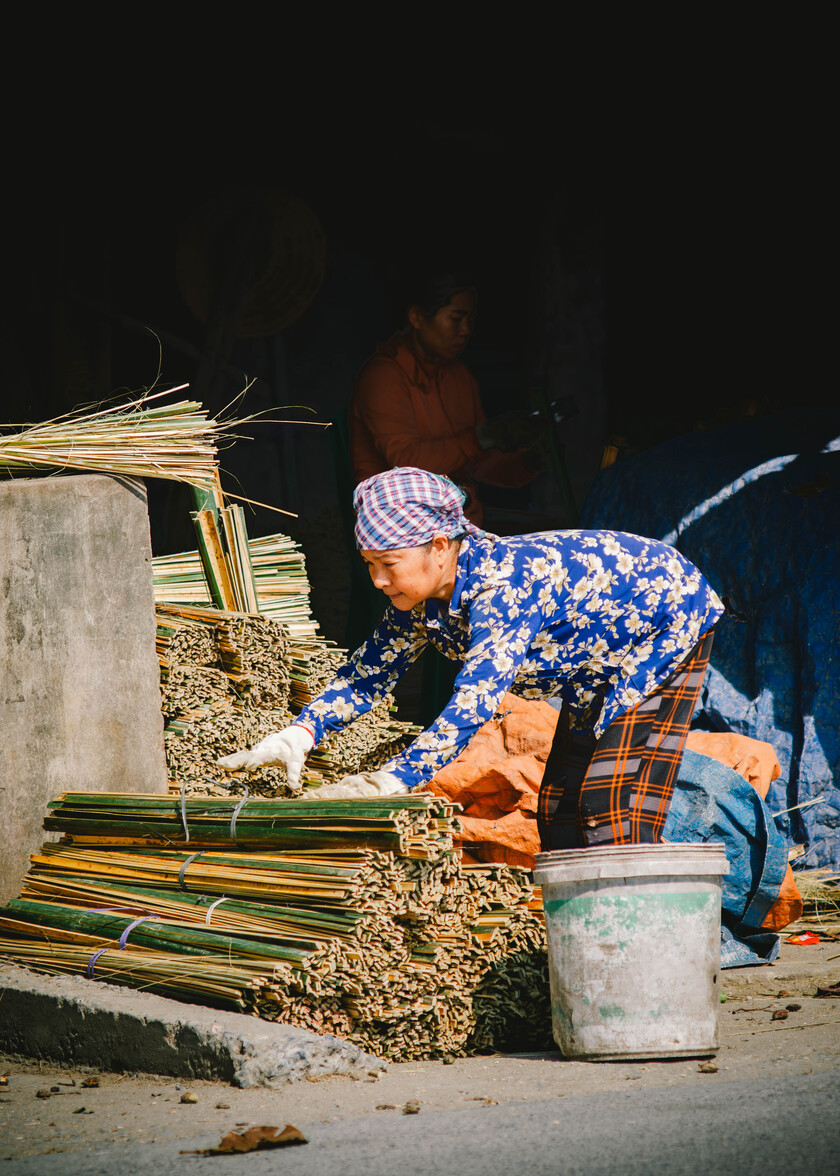
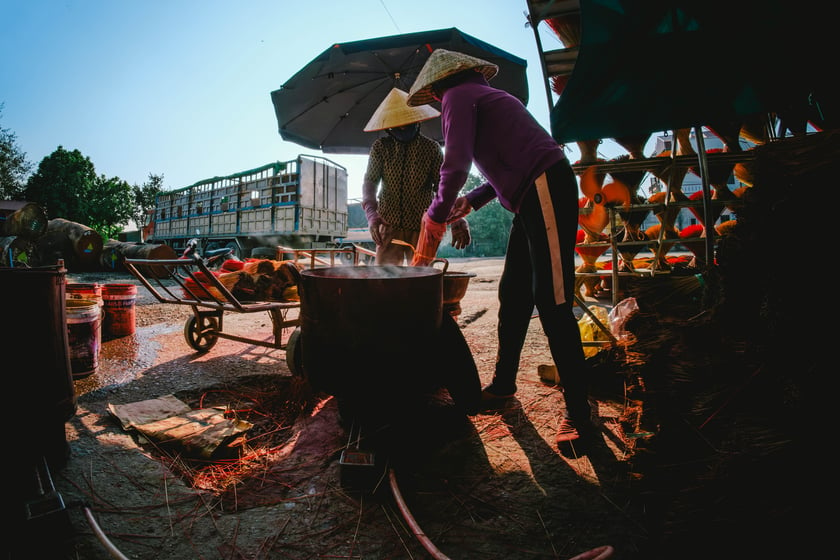
The process of dyeing incense sticks
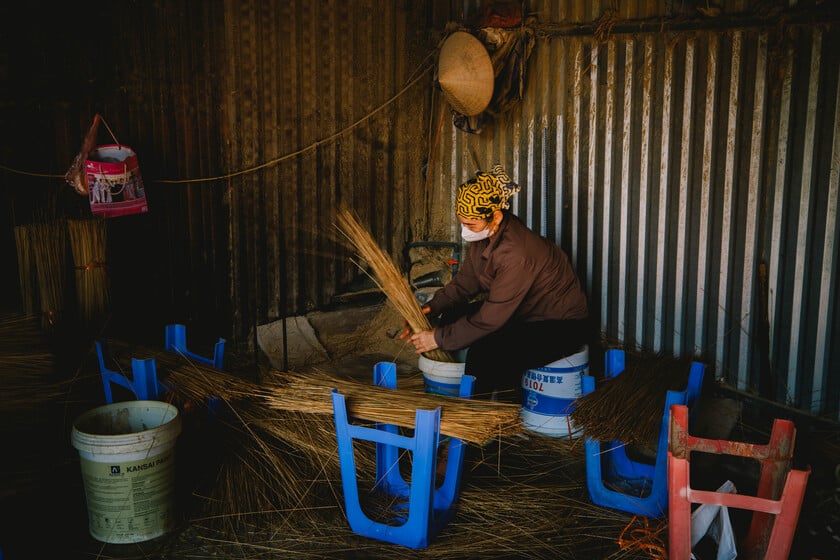
The incense sticks, after being blended with a unique local formula, offer a distinctive and fragrant aroma.
Depending on the type of incense, the craftsman will choose the appropriate ingredients. The ingredients used to make incense must be carefully selected because this craft has many spiritual elements, so people dare not make it carelessly or superficially. The ingredients for incense are usually made from agarwood, pine, cypress, angelica, patchouli, star anise, cinnamon, resin from the Terminalia catappa tree, roots and tubers of the fragrant wood plant, charcoal from the Xoan tree, etc. With herbal ingredients, a unique blending secret, and meticulous attention to detail in each step, the incense from Quang Phu Cau always has a long-lasting fragrance, vibrant color, and beautiful appearance.
The incense sticks from Quang Phu Cau village are large, with their tips clustered together and their bases flared out in a round shape. Using predominantly yellow and red colors, they are very eye-catching and striking. This vibrant "forest" of incense becomes the perfect "studio" for social media enthusiasts to capture countless beautiful photos.
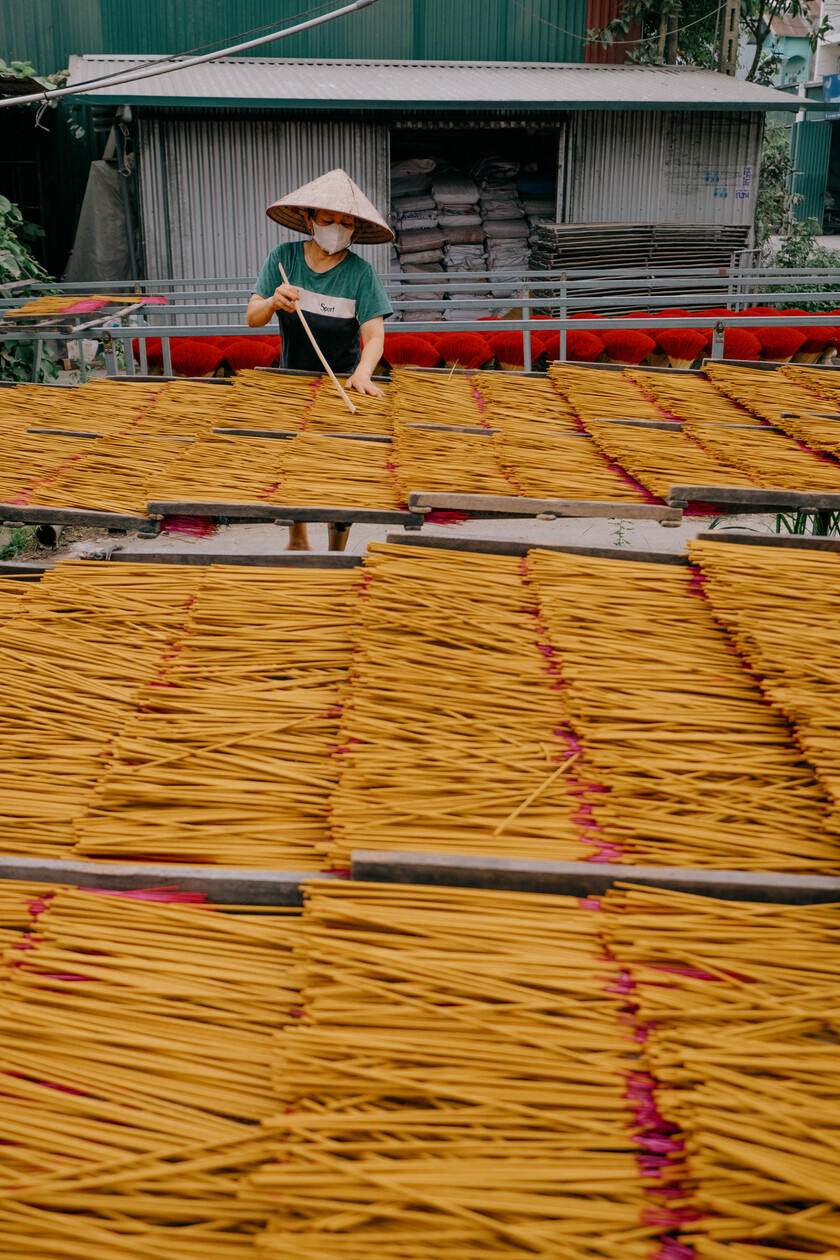
The bundles of bamboo are dried by the locals in the midday sun.
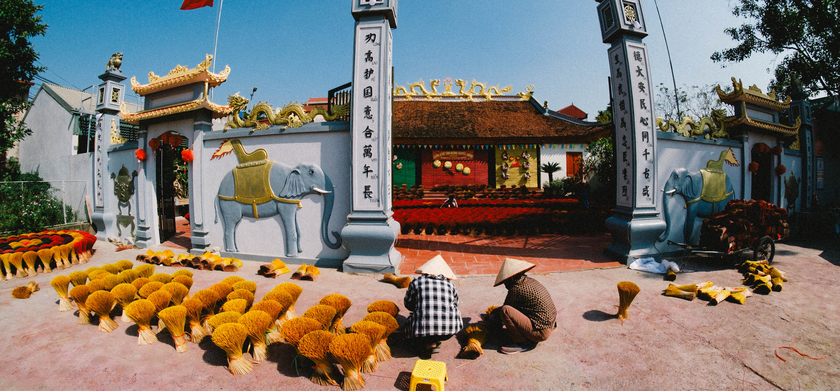
The incense sticks will be bundled by the locals into large piles, with the base converging at the bottom and the top spreading out like a blooming flower.
Sharing with Travellive readers, Thanh Phong suggested: “There are two major tourist attractions: the village square and a nearby facility. Because they cater to tourism, the displays and arrangements are very beautiful, making it easy for people to take photos and check in without needing any experience. You can also ask the locals to take pictures for you, as they are used to it. The entrance fee is around 50,000-100,000 VND.”
"You can easily get to Quang Phu Cau village by motorbike or bus if you're coming from central Hanoi. If you like sightseeing on the bus, take bus number 91 from Yen Nghia bus station; it will be easier to reach this beautiful village," Thanh Phong advised.
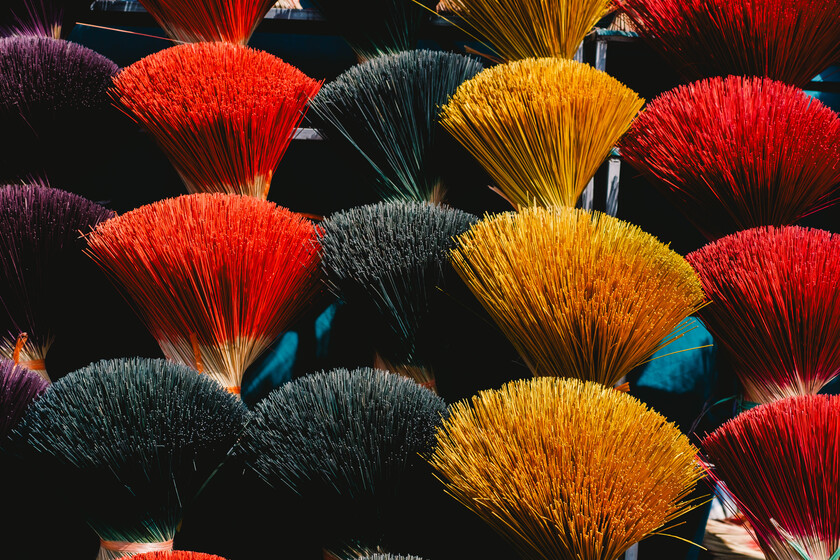
Bundles of incense sticks with their subtle, pleasant fragrance captivated many, leaving them mesmerized.
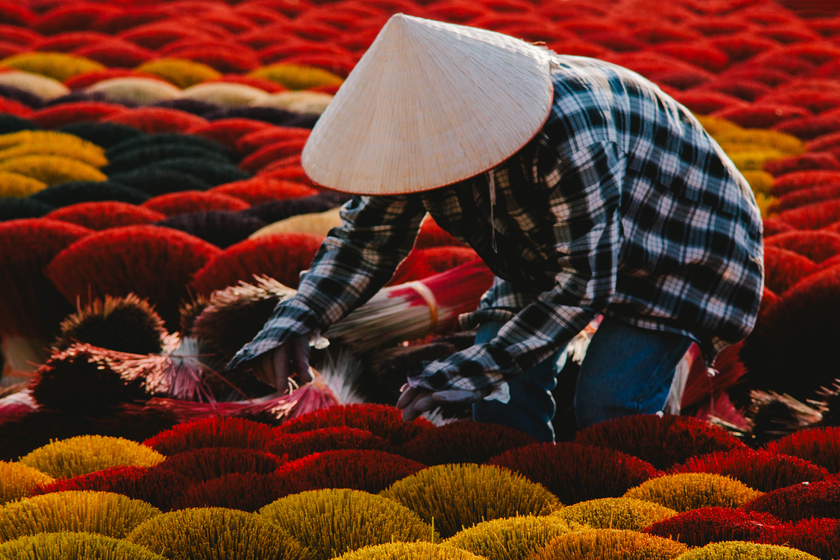
On sunny days, it's common to see locals arranging and drying bundles of incense sticks in their yards.
Currently, Quang Phu Cau incense village is not only selling products in the traditional way as before, but the village's establishments are also striving to improve product quality, build their own brands, and apply technology to production and business. Incense sticks from Quang Phu Cau village are not only popular with consumers in Hanoi but are also a familiar product in many other domestic and international markets.
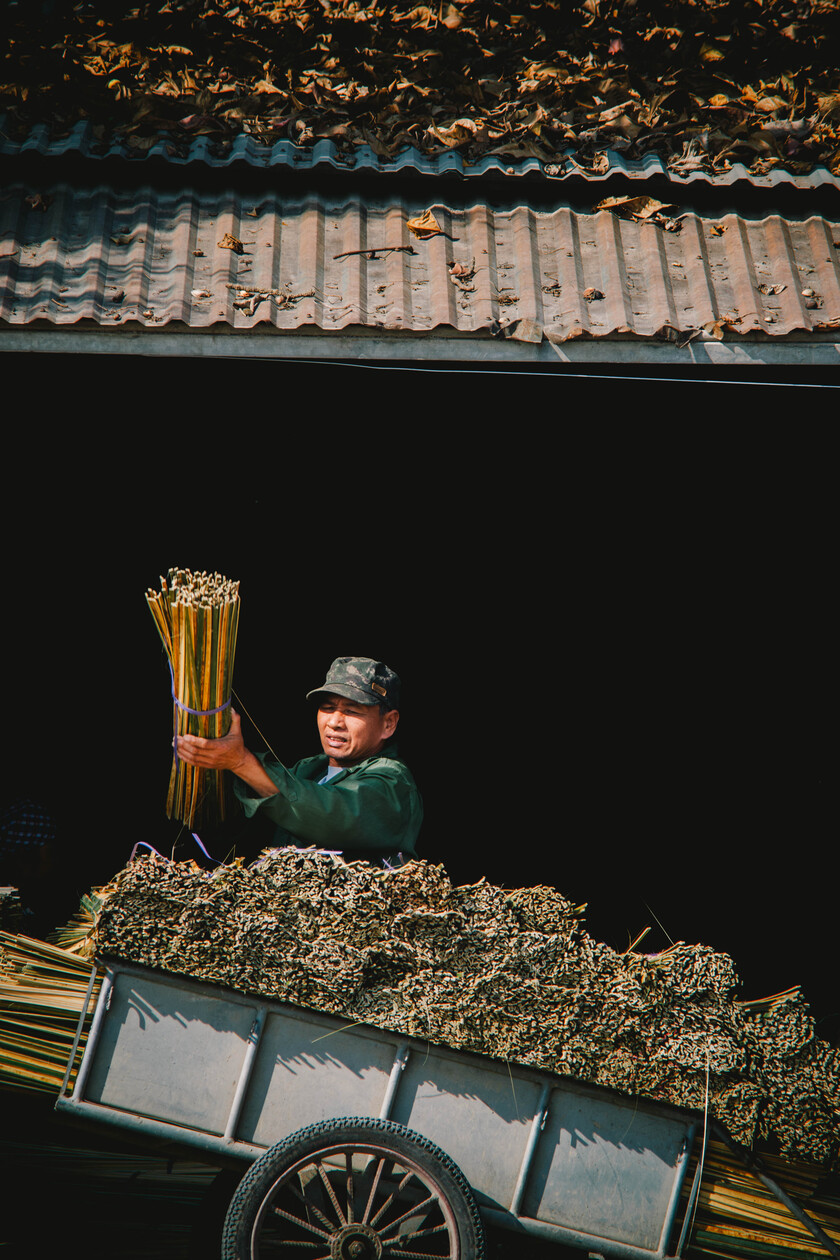
Incense sticks from Quang Phu Cau village are not only popular with consumers in Hanoi but are also a familiar product in many other domestic and international markets.