VI
VI


Post:Son Nguyen
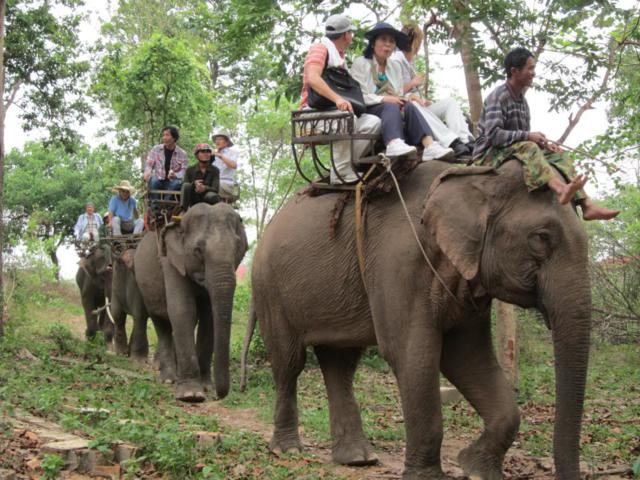
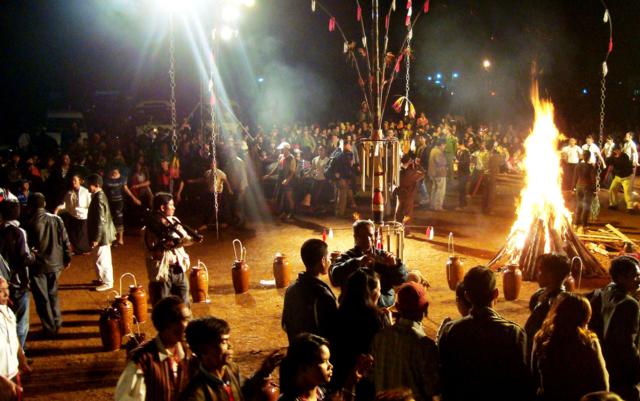
Join the festival with bonfires and the sound of gongs.
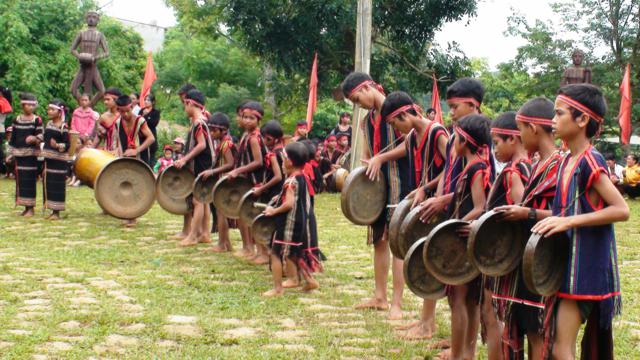
Gongs are an intangible cultural heritage of the ethnic groups in the Central Highlands. Gongs are intimately connected to the lives of the people of the Central Highlands, serving as the voice of their spirituality and soul, expressing joy and sorrow in their daily lives, work, and activities. Gong performances are often held on occasions such as: the Gong Festival (held annually on a rotating basis, not on a fixed schedule, in the five provinces of Kon Tum, Gia Lai, Dak Lak, Dak Nong, and Lam Dong); the Elephant Racing Festival in Buon Don (usually held in March of odd-numbered years in Buon Don – Buon Ma Thuot); and the Central Highlands Spring Festival: lasting from January to March in the villages of the Central Highlands.
The Buon Ma Thuot Coffee Festival is held in Buon Ma Thuot city, Dak Lak province. This is a major festival in the Central Highlands, celebrating the coffee plant, a crop that has brought prosperity and abundance to this highland region. During the festival, you will have the opportunity to sample many delicious varieties of coffee from the Central Highlands.
Visiting Buon Ako Dhong
Ako Dhong, also known as Co Thon or Ma Rin village, is an Ede ethnic minority village located at the end of Tran Nhat Duat street in Buon Ma Thuot city. It is a large village with a long history and many preserved traditional values. Currently, it is an attractive tourist destination in the city. Visiting the village will give you a better understanding of the lives of the people in the Central Highlands, a region blessed with sunshine and wind year-round and living in the characteristic mountain and forest atmosphere.
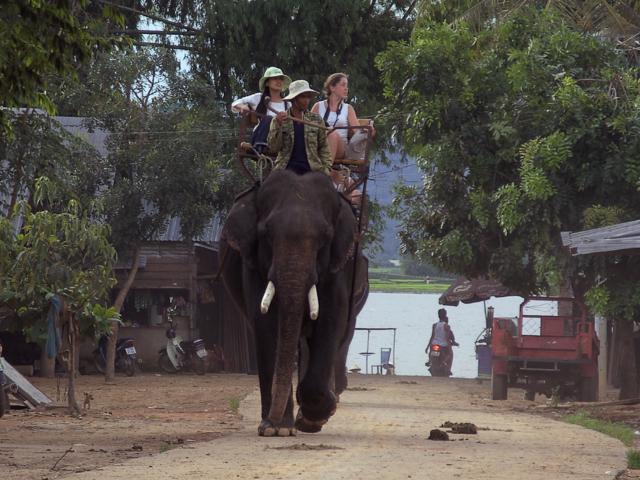
Elephant riding in Buon Don
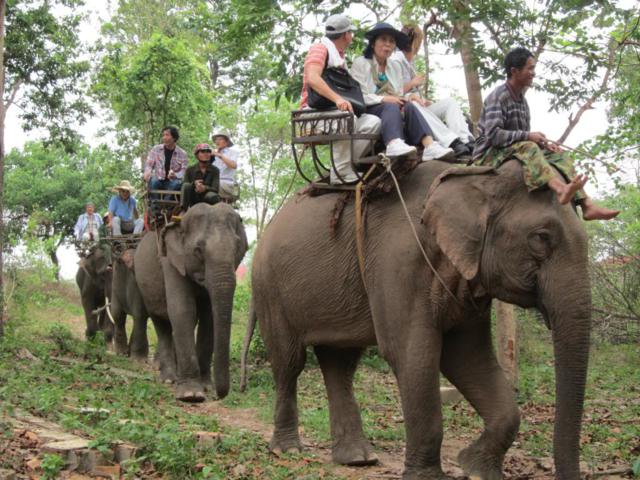
Riding elephants through YokDon National Park, or paddling a dugout canoe on Dak Min Lake, are unique experiences. The wooden houses, the expressive eyes of the ethnic people, the leisurely herds of cattle and goats, the melancholic Serepok River... will make your trip to Dak Lak worthwhile.
Conquering the Indochina Crossroads
The Bo Y border gate, where "a rooster's crow can be heard in all three countries," is a must-see if you have the chance to visit this region. As the tri-border junction between Vietnam, Laos, and Cambodia, it is a crucial national landmark.
Central Highlands - Seasons of Flowers

From the beginning of January, the entire Central Highlands transforms in the green hues of rubber forests. This economic crop of the region, after nine months of stretching and producing white sap, enters a period of rest to regain strength. During this season, rubber trees don't yield latex; there are no new cuts on the trunks, no streams of hot white sap flowing around the branches. The rubber trees shed their leaves, shaking off their weariness one last time in the year, burning their remaining remnants into vibrant yellow and red colors on the branches before finally falling to the earth.
By March, the beautiful coffee blossoms begin to bloom. Each flowering season usually lasts for 2-3 waves until the end of spring. The flowers bloom and fade quickly; within a few days, the carpets of blossoms transform into lovely little fruit buds on the branches. This is also the busiest time of year for tourists in Buon Ma Thuot.
Enjoy a cup of fragrant Ban Me coffee.
Nowhere else can you enjoy coffee as delicious as in the Central Highlands. Perhaps it's because sitting in the space of this red basalt soil, amidst the sun and wind, in the wonderful atmosphere of this land, that a cup of coffee brewed from the coffee beans of this region truly tastes rich and flavorful. Most appealing to tourists are the cafes with a Central Highlands style, such as Pơ Lang, Thung Lũng Hồng, Đá Xanh, Chuông Đá…
Rice wine, the spicy yeast of the mountains and forests.
Visiting the Central Highlands without drinking rice wine is like not having visited the Central Highlands at all. But even more interesting is discovering how the wine is made and how it's enjoyed by each ethnic group. Rice wine in the Central Highlands is an indispensable drink in festivals. Besides being drunk during ceremonies, people also share it during celebrations, and when friends and family meet after a long time.
Making delicious rice wine requires quite a lot of work, such as preparing the yeast, earthenware jars, and other winemaking materials. They usually make their own yeast. They use a type of plant (leaves, bark, roots) that is dried, then ground into a powder, mixed with rice flour, a little water is added, and then it's wrapped into a large ball the size of a bowl and left to ferment until white mold appears.
The way of drinking depends entirely on the form of the ceremony. If it's a religious offering, people usually use one straw, and then take turns drinking, from oldest to youngest, from women to men, in a continuous sequence. The first drinker must not put down the straw until someone else takes their place. This symbolizes the continuity of the family and lineage from generation to generation. In cases of joyful drinking, such as when long-lost friends meet, multiple straws may be used simultaneously.
Things to avoid while drinking rice wine include breaking the jar or the straw, as this is considered bad luck. It's especially important not to let go of the straw until someone else is there to replace you. In the Central Highlands, especially at the beginning of the year, you'll witness crowds of people going to festivals, hear the sounds of gongs echoing throughout the villages, and you'll certainly get to enjoy the sweet, fragrant, and spicy rice wine of the Central Highlands mountains.
The leaf salad is absolutely delicious.
If you ever visit the mountain town in the northern Central Highlands (Kon Tum), we invite you to enjoy the Central Highlands' specialty, "Goi La" (leaf salad), with the local people. The salad is made from over 40 different types of leaves, many of which are familiar, but some can only be found in the forests of the Central Highlands.
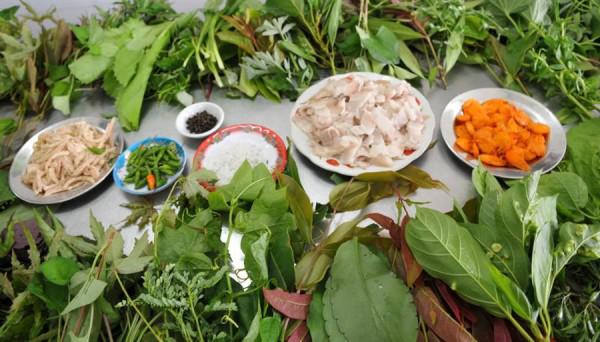
A "forest" of leaves, with a variety of familiar and exotic types such as Barringtonia leaves, ground ginseng, ruby leaves, apricot leaves, mustard greens, guava leaves, Centella asiatica, fig leaves, Piper betle leaves, Eugenia caryophyllata, Plantago major, Houttuynia cordata, serrated dogwood, cinnamon, mint, and other herbs... Each type has a different medicinal use. These leaves are rolled into a funnel shape to hold various foods. Dishes served with the leaves include pork belly, stir-fried shrimp, and thinly sliced pork skin mixed with roasted glutinous rice flour.
The dipping sauce is made from rice wine lees, sautéed in cooking oil, and mixed with duck eggs to create a thick sauce. Whole peppercorns, coarse salt, green chili peppers, and onions are essential seasonings. Various leaves are used to wrap the meat, shrimp, pork skin, and seasonings, then eaten together. The more thoroughly you chew, the more flavors you'll notice – a combination of astringent, sweet, sour, and rich, savory tastes from the meat and shrimp.
After each meal, take a sip of the aged herbal wine made from the roots of the *Dinh Lang* plant. Finally, a hot bowl of snakehead fish porridge is the perfect finishing touch. According to many locals in the mountain town, eating leaf salad is very good, as most of the leaves are medicinal herbs with therapeutic effects. People suffering from cardiovascular and digestive problems may find relief by eating it.
Conquer the majestic waterfalls.
The Central Highlands of Vietnam boasts countless stunning waterfalls. Yaly Waterfall, located in Ya Tang commune, Sa Thay district, Kon Tum province, is a beautiful waterfall on the Se San River. Its ideal location features numerous large pools and islands. Due to its spectacular scenery and ideal natural conditions, Yaly Waterfall has been chosen as the starting point for many tours in the Central Highlands tourism program.
Thuy Tien WaterfallLocated about 7km from Tam Giang town, Krong Nang district, Dak Lak province, the waterfall has many tiers, with water cascading down in a white foam. The waterfall consists of three levels with many rocks piled on top of each other. The first level has a gentle slope with easy steps, calm water flow, and a narrow waterfall basin. The second level is wider with many rocky steps, and in some places the water flows rapidly, creating a large area of white foam and shallow pools, ideal for visitors to soak in. The third level, where water plunges straight down from above, forms fairly deep pools before merging into the gentle stream amidst the vast forest.
Dieu Thanh WaterfallLocated on the Dak Tit stream, winding through the two communes of Nhan Co and Quang Tan in Dak R' Lap district, Dak Nong province, Dieu Thanh Waterfall consists of one large waterfall cascading down from a height of about 30 meters and many smaller waterfalls. The waterfall roars day and night like an epic symphony of the ancient forest.
Three-Tier WaterfallLocated in Dak Glong district, Dak Nong province, about 8km from Gia Nghia provincial capital towards Buon Ma Thuot, this waterfall is a fascinating outdoor tourist destination in southern Dak Lak. It's called the Three-Tiered Waterfall because the water flows through three tiers before reaching the stream below. The tiers are interconnected, reaching a height of approximately 40m. The stream bed is quite wide, with many ancient trees along the banks and a flat, open area perfect for camping and relaxing amidst nature.
In addition, Dak Nong and Dak Lak share three majestic and famous waterfalls: Dray Sap, Dray Nur, and Gia Long. Around Dray Sap waterfall (Dak Nong), there is still a lush green natural forest, filled with the melodious chirping of birds. Resting by the waterfall, you can listen to the locals tell the love story of the beautiful H'Mi and enjoy the breathtaking mountain scenery, the roaring sound of the waterfall, and the swirling mist around you. About 3 km from Dray Sap is Gia Long waterfall, also in Dak Nong province. The forest trail here can be considered one of the most beautiful in the country, with lush green forests on both sides and thick vines covering the precious trees. Gia Long waterfall lies quite quietly amidst the old forest. Here, there is a large bathing pool, hundreds of square meters in size, with clear water flowing from a mountain stream.
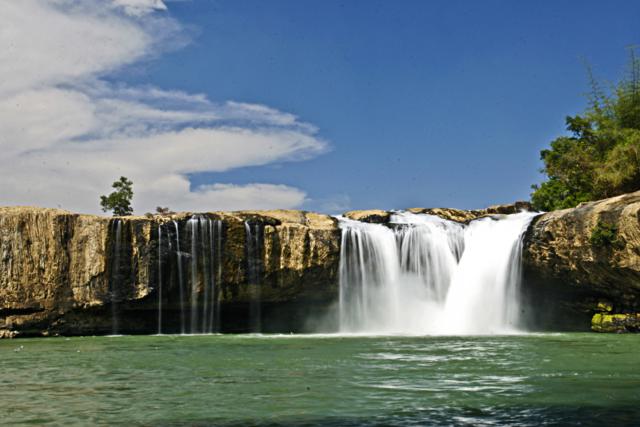
Dambri Waterfall in Bao Loc, Lam Dong, means "waiting" in the K'Ho language. The waterfall is associated with a beautiful legend about the unwavering devotion of a young woman to her beloved. It is the highest waterfall in Lam Dong, reaching over 40 meters in height, forming two majestic streams of varying heights. There are three ways to conquer the waterfall: walking up approximately 138 steps, taking the elevator, or experiencing the thrill of the 1,650-meter-long waterslide.
Additional information
Time:
In the Central Highlands, the rainy and dry seasons are distinctly separated. The rainy season usually lasts from May to October. During this season, travel is difficult, especially on unpaved roads. For tourists, it is not a suitable time to visit.
For most people, the dry season, especially the early months of the year when the sun isn't too harsh and the air isn't too dry, is the ideal time for a short trip to the Central Highlands.
Vehicle:
Buon Ma Thuot is approximately 350km from Ho Chi Minh City. The journey takes about 7-8 hours by car and about an hour by plane. From Ho Chi Minh City, you can travel to Buon Ma Thuot by road or air. Currently, Vietnam Airlines operates flights from Hanoi and Ho Chi Minh City to Buon Ma Thuot, Pleiku, and Da Lat (Lien Khuong Airport).
Hotel:
- Thien Ma Hotel, 50-52-54 Hai Ba Trung Street. Tel: 050.3853963/3850397
- Dam San Hotel, 212-214 Nguyen Cong Tru Street. Tel: 050.3851234/3850123
Thang Loi Hotel, 1 Phan Chu Trinh Street. Tel: 050.3857615
- Cao Nguyen Hotel, 65 Phan Chu Trinh Street. Tel: 050.3855960
- Nam Nguyen Hotel, 30 Tran Quang Khai Street. Tel: 050.3.955 255
Food and drink (in Buon Ma Thuot):
- Huong Vi Viet Culinary Garden – 135 Nguyen Tri Phuong: Beautiful and spacious setting, delicious food, reasonable prices, and enthusiastic service. When eating at this restaurant, you should order the grilled wild game, steamed chicken with fish sauce, grilled swordfish with green peppercorns, and grilled suckling pig with pork belly.
- Four Million Garden Restaurant – No Trang Gu Street: This restaurant is smaller than the one mentioned above, also very pretty, but the prices are a bit expensive. The best dishes are the banana stew dishes.
- Dak Me Box Restaurant – Ngo Quyen Street: delicious food, reasonable prices, enthusiastic service.
- Tuan Dat Restaurant – Tran Nhat Duat Street: a rather upscale restaurant. They have a very delicious grilled pork ribs dish.
Other information:
The Central Highlands have many long-standing and unique customs and traditions of its ethnic groups. The New Year's festivals alone are enough to attract tourists for months, from one region to another, from the twelfth lunar month of the previous year to the second or third lunar month of the following year.
The Central Highlands have many steep, mountainous roads. When traveling, tourists should bring low-heeled, soft shoes with good grip for climbing. When hiking, you should wear two pairs of socks: one thin, sweat-wicking pair inside and one pair of long socks outside to cover your pants and protect against mosquitoes. Using two pairs of socks will reduce friction between your shoes and feet, preventing blisters. Tourists should also choose clothing that is breathable and comfortable for movement.