VI
VI


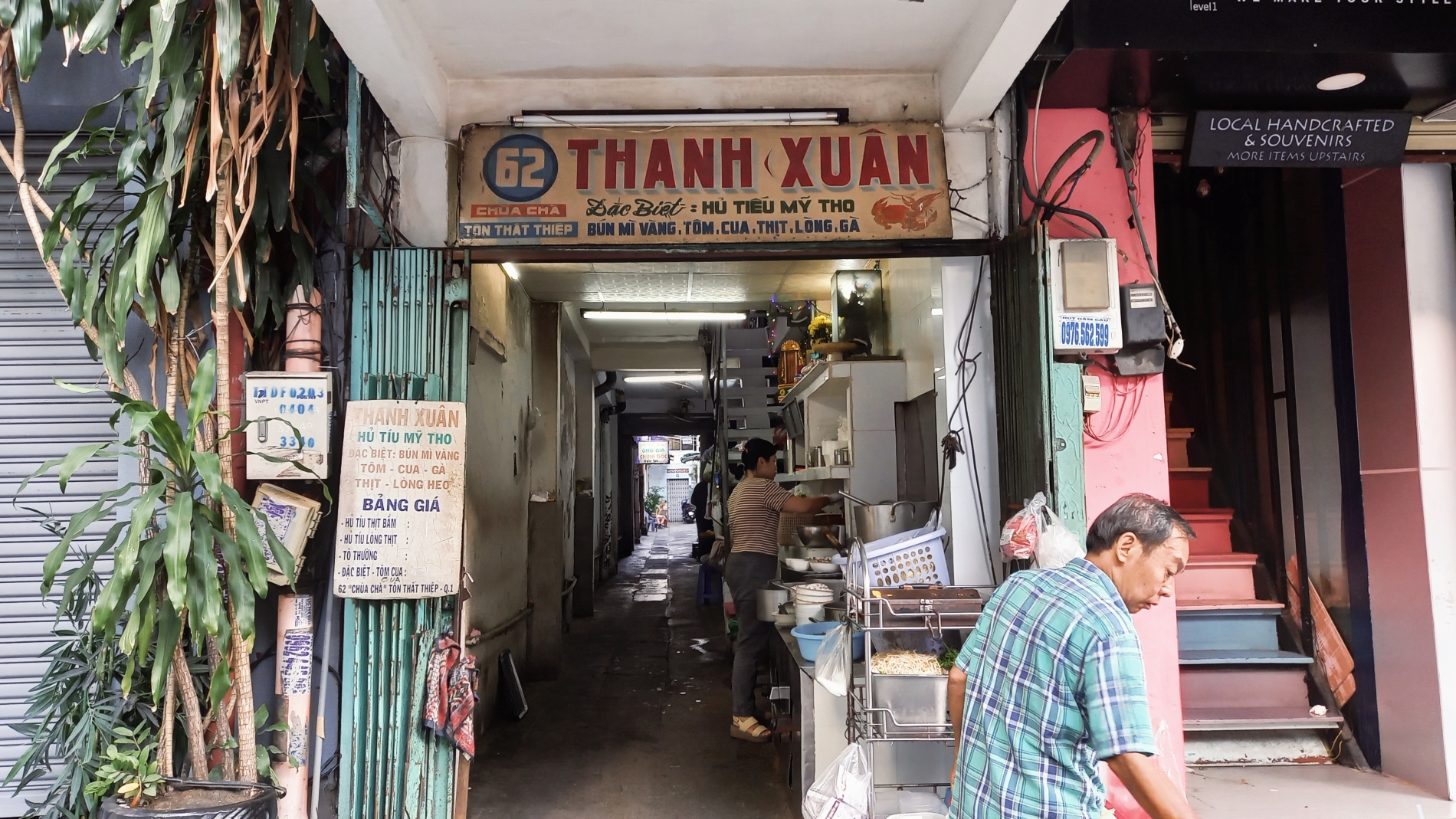
To find the authentic Saigon scent within Ho Chi Minh City, you have to seek out the small carts and stalls overflowing with food and drinks, carried by the wind during the year-end season, right to the noses of passersby. Thanh Xuan noodle shop at the corner of 62 Ton That Thiep Street, District 1, is just like that.
A noodle shop with no fancy sign or glittering lights. Just a few tables and chairs, along with old-fashioned charm, yet it remains popular to this day.
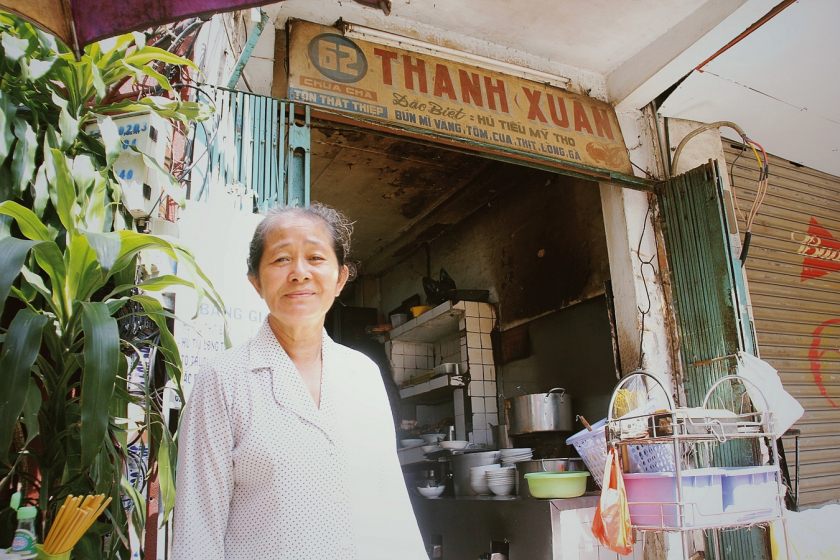
Ms. Vo Thi Tuoi next to her noodle shop with a traditional handwritten sign.
The noodle shop of the past.
Mr. Thanh (63 years old, the owner) said that the restaurant was founded by his maternal grandfather, Do Van Khue, in 1946 after he moved to Saigon. Relatives call the restaurant by a more colloquial name, "Chua Cha Noodle Soup," because it is located next to a Hindu temple built by the Javanese community.
Mrs. Tuoi, Mr. Thanh's wife and the owner of Thanh Xuan restaurant, said: "The name Thanh Xuan comes from my husband's name. Back then, he was the most loved in the family, so my father named him Xuan Thanh, which, when reversed, becomes Thanh Xuan, the name of the restaurant."
Later, when he was old and frail, but seeing that his profession could provide enough to support his family, Mr. Khue passed the trade down to his daughter. His daughter then continued the tradition to her youngest child, Mr. Thanh and Mrs. Tuoi. To date, Thanh Xuan noodle soup has been sold by four generations.

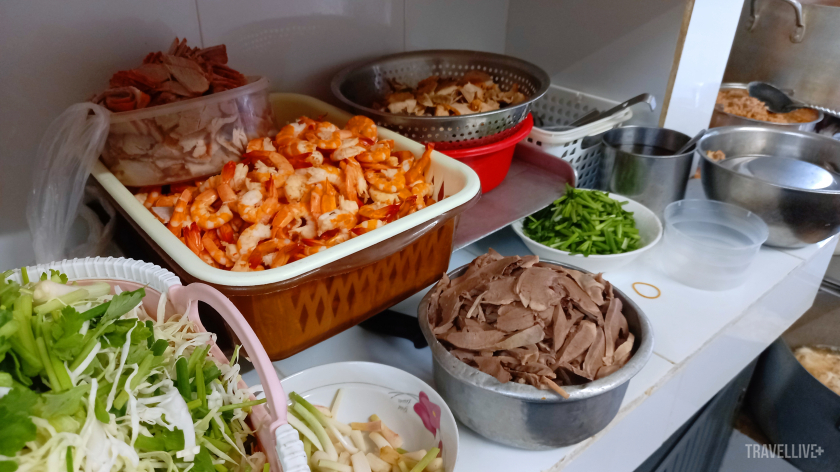
Ingredients that make up a bowl of the famous Thanh Xuan noodle soup.
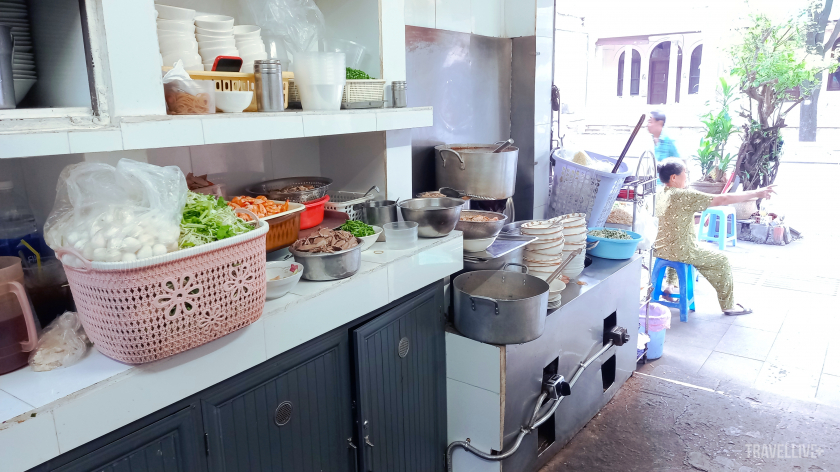
The small, tidy kitchen is located right at the entrance of the alley.
Mr. Khue's shrimp and crab noodle soup with its unique sauce was a fusion of traditional My Tho noodle soup with the modern culinary tastes of Saigon. The "Pearl of the Far East" (Saigon) was then confined to a few inner-city districts, so for civil servants to gather for noodle soup, the only place to go was Thanh Xuan noodle soup.
Back then, the restaurant had tables stretching all the way down the alley and out onto the street, yet there still wasn't enough room for all the customers. The first generation of customers still eat the noodle soup today; some are nearly 90 years old. Then there are families who have eaten My Tho-style noodle soup at Thanh Xuan restaurant for generations, from grandfather to grandson.
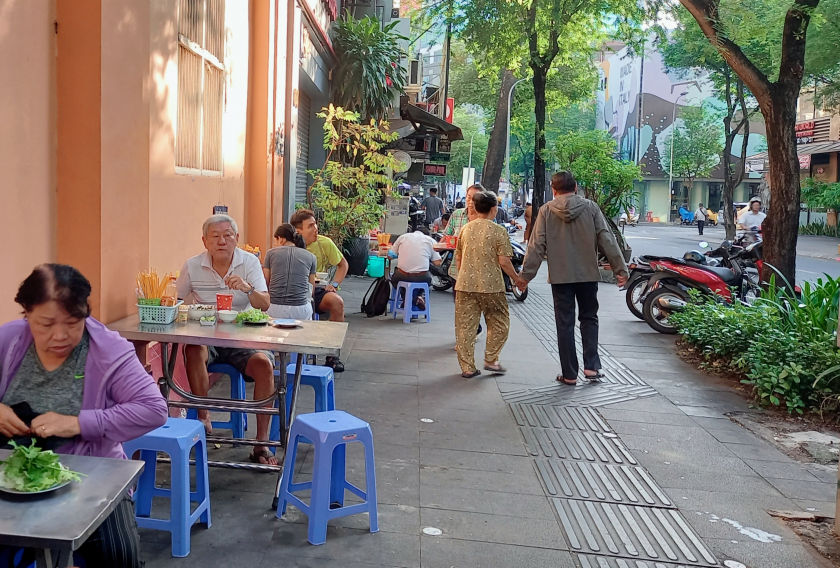
Regular customers from previous generations continue to support this long-standing noodle shop.
77 years of preserving a unique flavor.
Nearly 77 years have passed, yet the flavors here remain unmistakable. First and foremost is the restaurant's famous My Tho-style dry rice noodle soup. Thanh Xuan's dry rice noodle soup is different from the Chinese dry rice noodle soup in Cholon. The owner pours a special tomato-based sauce over the noodles, making them even more flavorful. The noodles here are made with added tapioca starch, resulting in a translucent and chewy texture when cooked. Many customers come here simply to experience firsthand how meticulously the noodles are made.
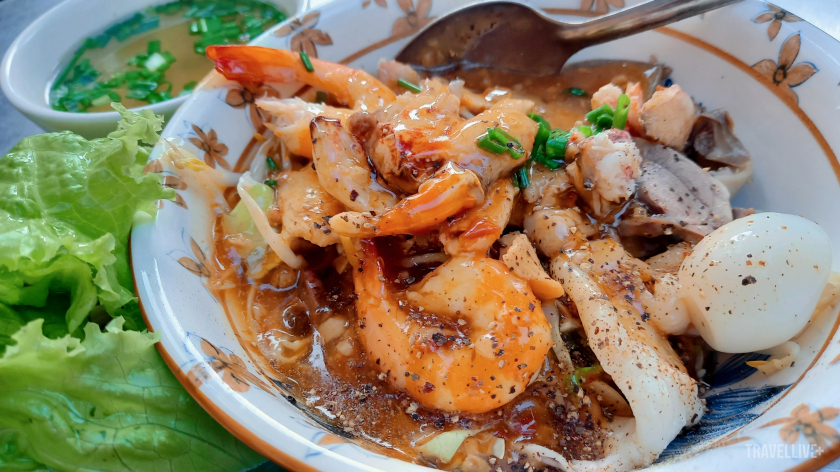
The soul of this bowl of noodle soup lies in this special sauce.
Most notably, there's the Pate Chaud pastry served with rice noodles, an extremely rare culinary combination. What few people know is that Pate Chaud, though of French origin, is a Vietnamese culinary creation. It's a variation of the French Pâte feuilletée, with a puff pastry crust and a filling of pâté made with minced meat, pork liver, onions, spices, and a pinch of pepper. Vietnamese people often pronounce it "Pateso." "Pate" here simply refers to the filling, giving it a fragrant pâté aroma, and "so" is the pronunciation of "chaud" from French. "Chaud" means hot. Perhaps that's why the pastry tastes best when freshly baked.
The pate chaud served at the restaurant has been modified and adapted to suit the taste of Saigon residents. The bread is torn into small pieces and mixed with rice noodles, a fairly common dish among Saigon's civil servants in the past.
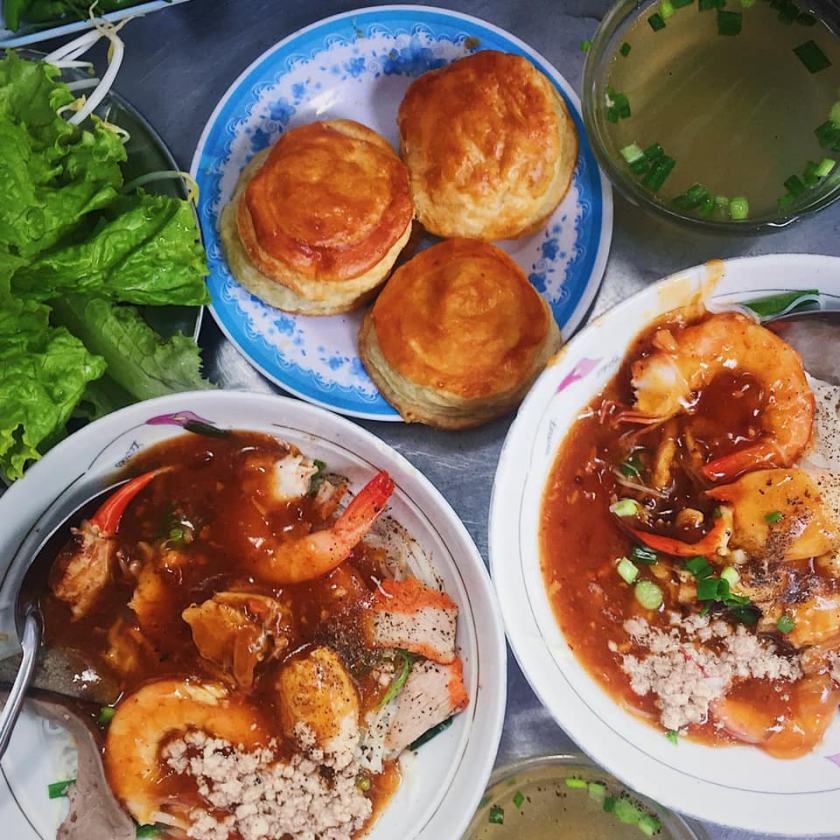
Pate Chaud bread served with rice noodles is a very unusual combination.
According to the owner, they only make exactly 100 pieces a day and sell them all out on the same day, so anyone who wants to try them should come early.
On weekdays, the shop is open from 6:30 AM to 1-2 PM, and on weekends, it stays open until late at night. Ms. Tuoi recounted: "I sell like this, but I don't dare take a break. Many times, regular customers from abroad come looking for it. They've only been in Vietnam for a few days, and they're so sad they can't eat our noodle soup."
"The youth" of an old Saigon
Nowadays, with the fast-paced and bustling life, old values are often unintentionally forgotten. But at Thanh Xuan shop, the charming image of Saigon is still present. Mrs. Tuoi pointed to the faded handwritten sign: "The sign looks old, but back then, a foreigner kept trying to buy it, but I refused. I kept it as a memento, from my grandparents and parents; how could I sell it? Besides, where can you find someone who can draw the same style of calligraphy as before?"
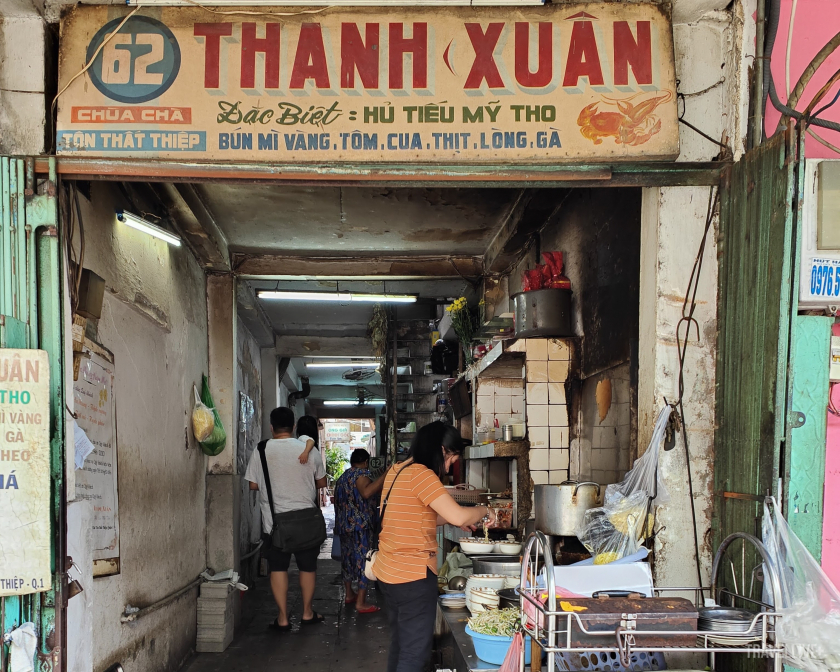
Ms. Hoa Cúc (Ms. Tươi's daughter) will be the next generation to preserve the family's traditional flavors.
Ms. Hoa Cúc, Mrs. Tươi's daughter, still helps her mother sell noodles every day, skillfully following the steps to make a delicious bowl of dry noodle soup just like her mother used to. Surely, in the future, she will be the one to continue preserving the unique flavor of this dry noodle soup. And so, from one generation to the next, a distinctive feature, a traditional culinary tradition of Saigon, will be preserved.