VI
VI


Once ranked as the happiest country in Asia (2017), Bhutan, nestled in the Himalayas between India and China, has a population of approximately 770,000. This East Asian nation, situated in rugged mountains with remote villages and extreme weather conditions, presents significant challenges for healthcare workers in delivering COVID-19 vaccines to its people.
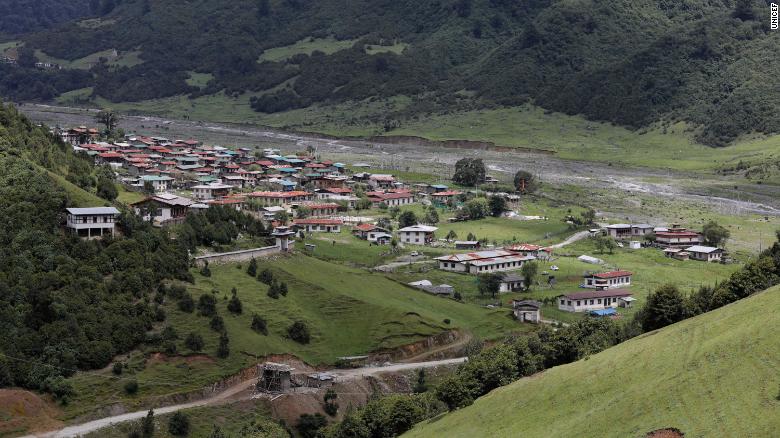
The rugged terrain poses a significant challenge in ensuring timely access to healthcare services for the population.
RAPID VACCINATION CAMPAIGN
The plan to rush the second round of vaccinations began on July 20th and took months to prepare. To reach the country's remote areas, the national government had to use helicopters and needed thousands of volunteers to transport the vaccines by road along mountain slopes.
Bhutan received approximately 500,000 doses of AstraZeneca vaccine from India in March and April. However, when vaccine production in India stalled, Bhutan had to find new sources of supply to complete its vaccination campaign.
Bhutan's appeal was quickly answered, with the country receiving 500,000 doses of Moderna from the US through the COVAX vaccine sharing program. Denmark donated 250,000 doses of AstraZeneca and China contributed 50,000 doses of Sinopharm. An additional 100,000 doses of AstraZeneca from Croatia and Bulgaria were also promptly delivered to Bhutan.

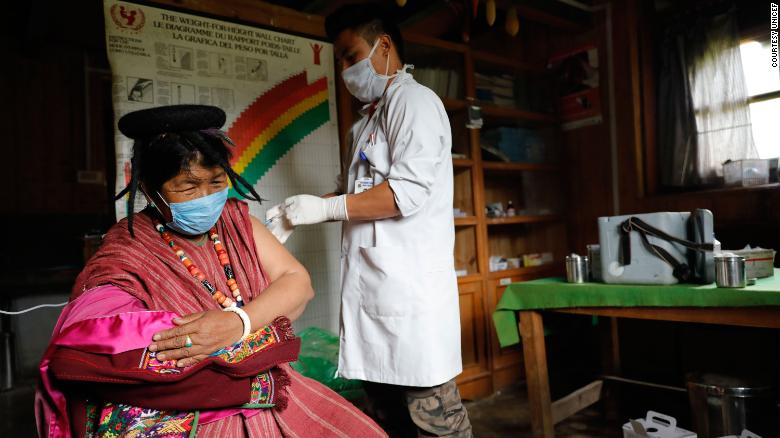
Bhutan was fortunate to receive timely support from countries around the world in the form of vaccines.
In Bhutan, all citizens over 18 years of age are eligible for vaccination. Those receiving the vaccine can choose between Moderna or AstraZeneca. Additionally, children aged 12-17 in two districts bordering India are also eligible for the Pfizer vaccine.
The national government has also ordered 200,000 doses of Pfizer vaccine to complete nationwide childhood vaccinations as soon as possible. These vaccines are expected to arrive by the end of this year.
The vaccine transportation process is challenging.
To ensure that vaccines reach the people in a timely manner, Bhutan mobilized more than 2,400 healthcare workers and 22,000 volunteers, reaching even the most remote areas of the country.
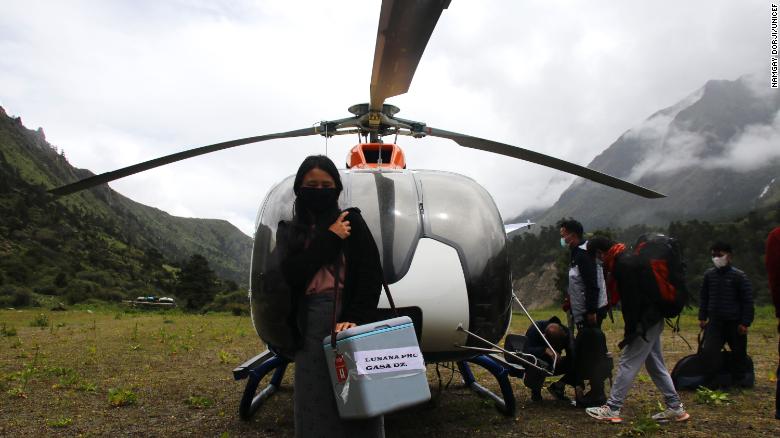
Volunteers receive vaccines from helicopter.
Volunteers receive vaccines from helicopters, then travel along treacherous mountain roads to vaccination centers, while ensuring the vaccines are stored at the correct temperature.
Air transport also presents a significant challenge. The flight carrying half a million doses of Moderna was operated by an Indonesian crew flying from Kentucky (USA). However, Bhutan's Paro International Airport has a rugged terrain, making it one of the most inaccessible airports in the world. Only about 20 pilots are qualified to land at this airport.
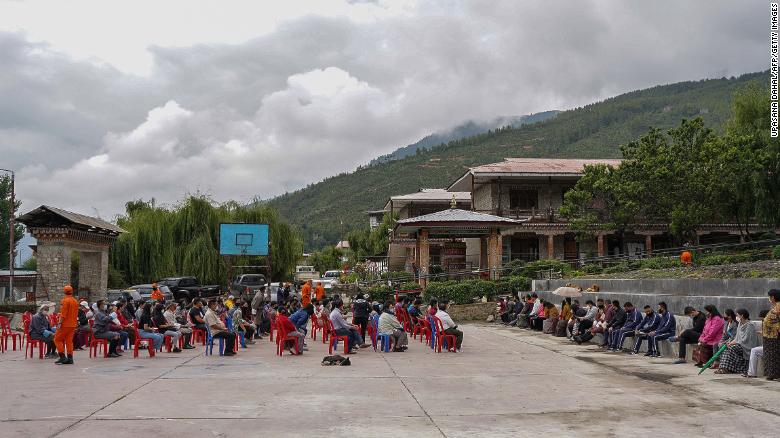
To date, 90% of adults in Bhutan have received both doses of the vaccine.
By July 27th, approximately 480,000 out of 530,000 adults had been fully vaccinated. Will Parks, UNICEF representative for Bhutan, assessed this as potentially the fastest vaccination campaign during the pandemic.