VI
VI


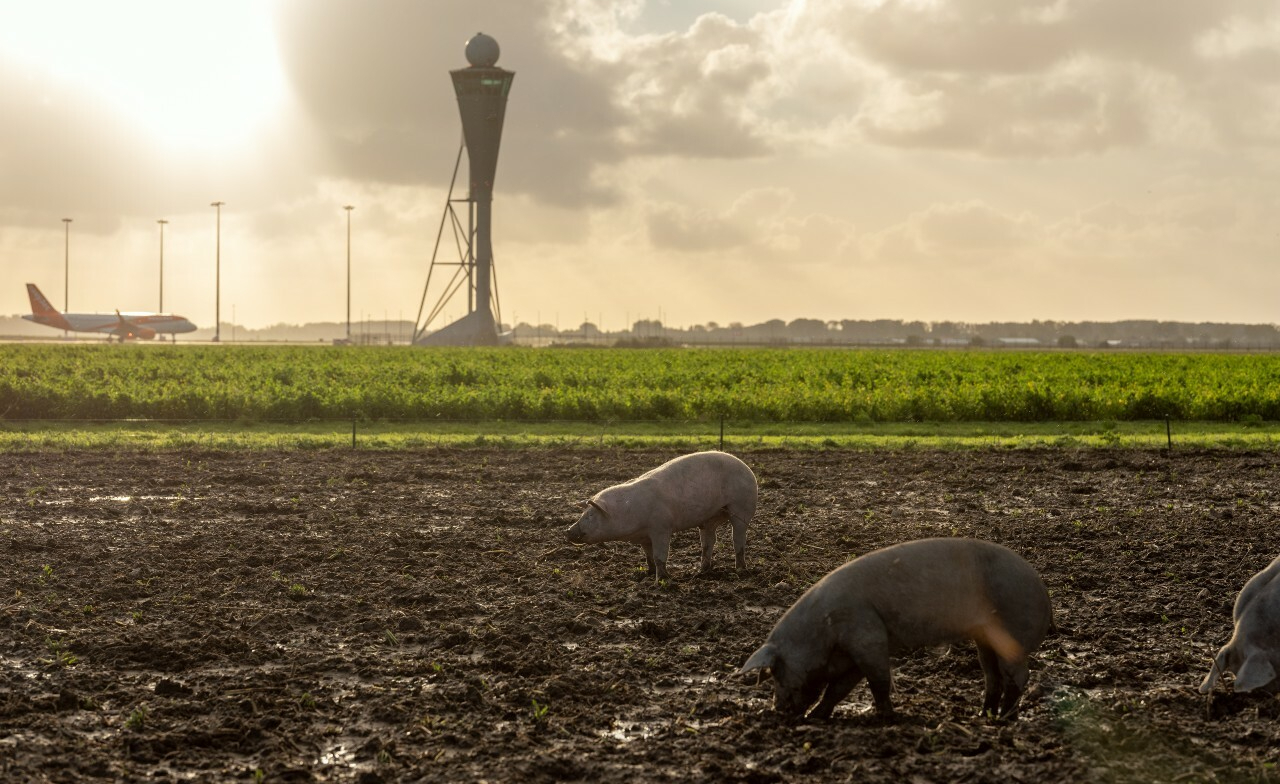

Specifically, a herd of 19 pigs was released onto a 2-hectare plot of land between the two runways of Schiphol Airport (Amsterdam) to transform the abandoned, muddy field into a pig farm. Previously, this land had attracted many birds and geese to feed on leftover root vegetables that were not cultivated, such as beetroots.
The frequent presence of birds significantly impacts aircraft movement on the runway, as well as takeoffs and landings. They can accidentally collide with aircraft, or even be sucked into the engines, rendering flights unsafe and harming passengers.
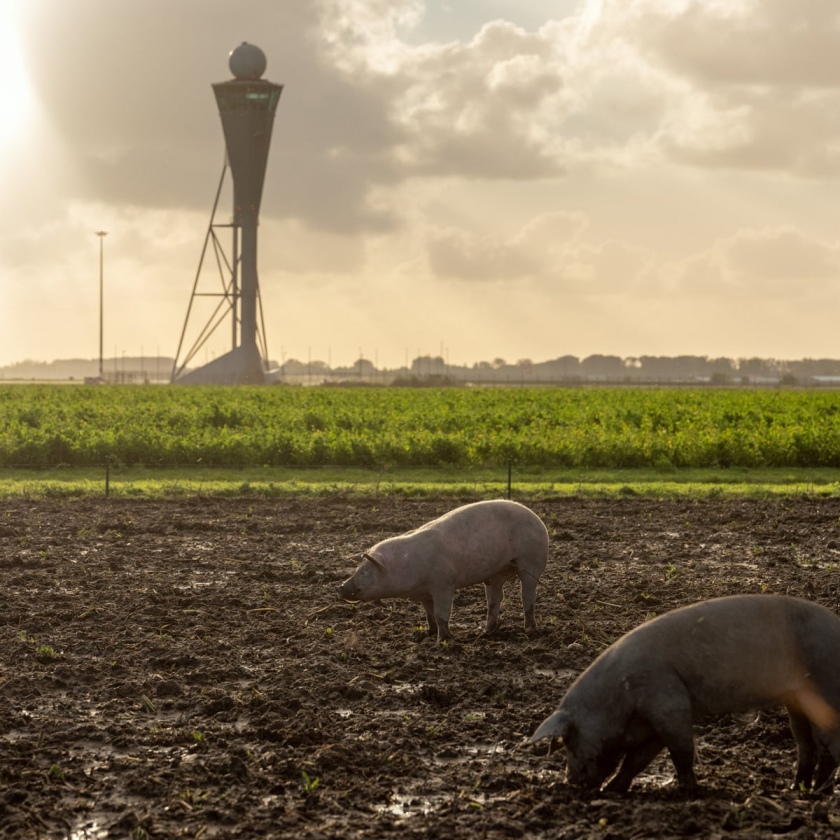
The pigs will eat up all the leftover food from the crops, so the birds and geese will no longer have a reason to fly into the field by running across the runway. - Photo: Roger Cremers
Two years ago, a Boeing 747 was hit by a sudden bird strike and had to return to the airport immediately. This nearly caused a plane disaster when both engines on a US Airways Airbus A320 suddenly lost power, forcing the pilot to make an emergency landing on the Hudson River.

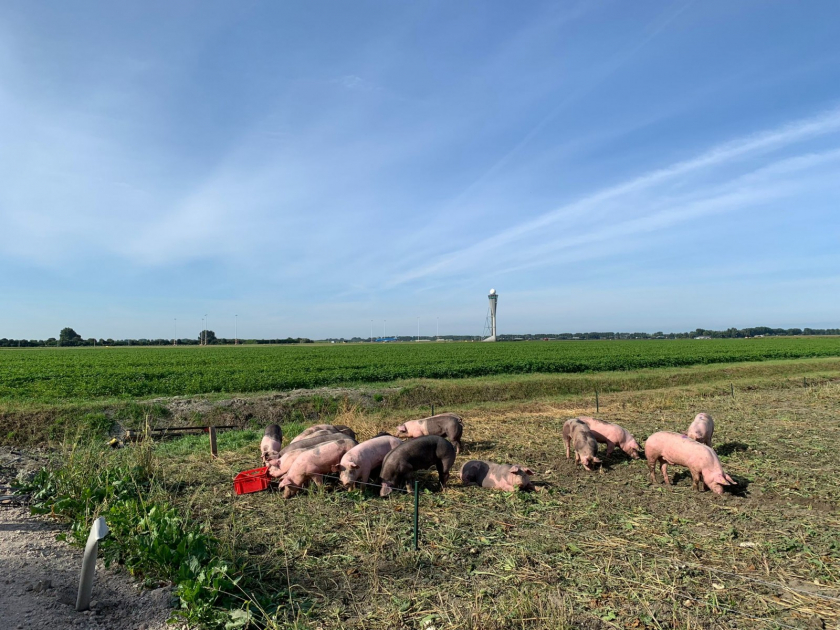
Previously, the airport had hired 20 staff members to monitor activity and deter the birds, but they still had to implement additional measures such as hiring pigs to minimize the risk. - Photo: Amsterdam Schiphol Airport
Initially, the project will begin as a trial on 2 hectares, where the airport will monitor whether releasing pigs into the land can deter birds and geese. If successful, the airport will use this pig farming model on other fields in the surrounding area.
According to a spokesperson for Royal Schiphol Group, after a trial period, the number of geese and other birds has significantly decreased around the airport area. However, this is only an assessment based on visual observation and bird tracking systems; further specific assessments will be analyzed by the group in the coming months.
Although the noise of aircraft during takeoff and landing is loud and frequent, there is currently no evidence to suggest that pigs are bothered by it. Herman Vermeer, a pig researcher at Wageningen University & Research Institute, said that while he hasn't investigated the outdoor impact of noise on pigs, the sounds are likely modulated.
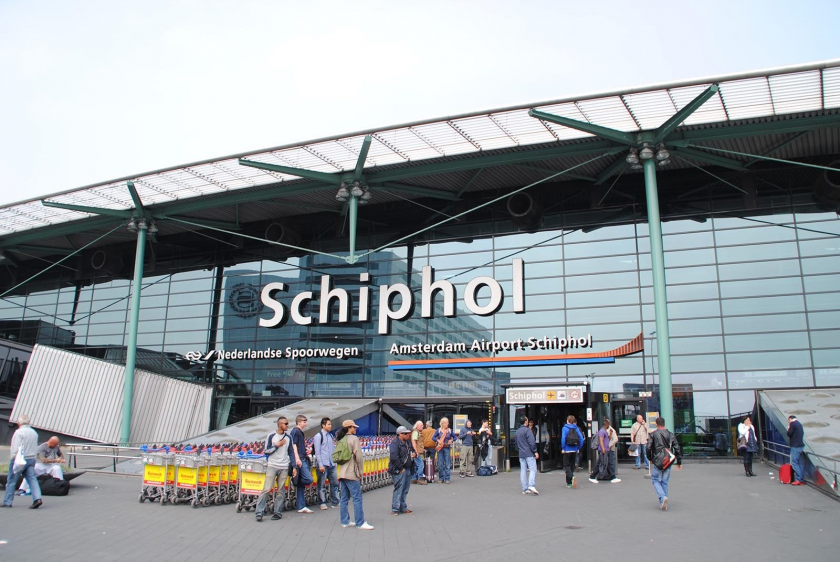
Schiphol Airport (Amsterdam, Netherlands) is one of the busiest airports in Europe. - Photo: Internet