VI
VI


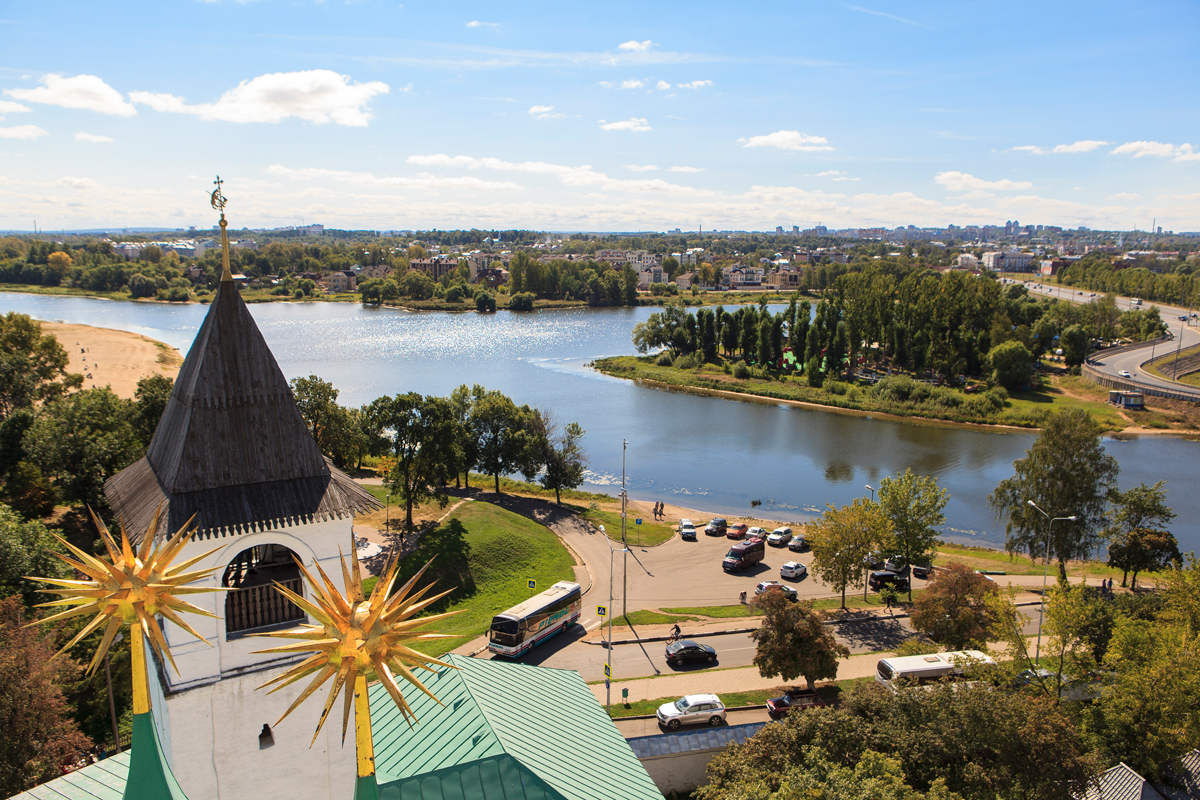
This is the final leg of my two-week journey through the land of the white bear, as I wanted to reflect on everything about Russia in this land symbolized by the majestic bear.
The sacred land of the Russians
When I was a child, reading the Russian comic book "The Blonde Girl and the Three Bears," I was always surprised that bears, so large and ferocious, were depicted as such lovable creatures for children. The story revolves around a blonde girl who gets lost and stumbles upon the home of a warm and loving bear family in a snow-covered birch forest. Russian fairy tales have long depicted such connections between bears and humans.
The practice of "befriending" bears dates back to the time of the Finno-Ugric tribe in ancient Eurasia. They acknowledged the dominance of this predator in the forest and considered it a good thing. The ancestors of the Russians greatly respected bears, viewing them as the embodiment of the mighty Slavic god Veles of ancient times.
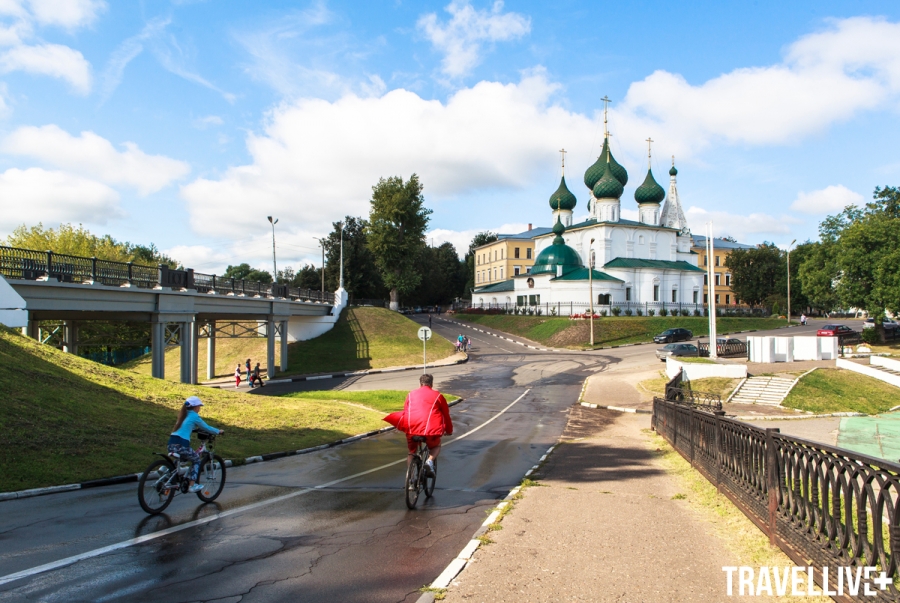
The simple life of the people of Yaroslavl
But after the adoption of Orthodox Christianity, things gradually changed. Conflict arose between humans and bears, and war began. Bears were seen as a symbol of polytheism in this vast land. Ultimately, the war ended with the defeat of the bears. The "bear empire" was officially overthrown. Bears were domesticated and became objects of amusement for humans, and were a common sight on the streets of Russia at that time.
In the historic city of Yaroslavl, bears also have their own legends. A historical milestone is the year 1010, when Rus-Kiev was torn apart by tribal wars. Bandits ran rampant, plundering the Russian fields and enslaving the people. This land was once inhabited by a pagan tribe who worshipped the "Sacred Bear."
To stop the bandits, Duke Yaroslav personally killed the "Sacred Bear," built a small wooden fortress on a high mound by the Volga River, and named it Yaroslavl. Perhaps that's why the image of the bear with its axe has entered history and become a symbol of the city. On the streets of Yaroslavl today, I see the symbol of the "Sacred Bear" everywhere. From window decorations and flowerbeds in the parks to large bronze statues in the streets and squares, all depict the image of this magnificent bear.
Ancient cities on the Golden Ring
I chose a guesthouse located within the old town, just a few hundred meters from the Volga River. I liked staying there partly because the guests were mostly young Russian students and professionals who came to Yaroslavl to relax, study, or work. They could communicate in basic English and were quite friendly to foreign tourists. This helped me understand more about the city and people of Yaroslavl.
Not as grand and imposing as Saint Petersburg, nor as bustling as Moscow, Yaroslavl is a charming, picturesque ancient city that evokes strong emotions in anyone. It's considered the starting point for exploring Russia's famous Golden Ring. Cities along this ring, such as Pereslavl, Alkeksandrov, Ivanovo, Sergiev Posad, Vladimiar, and Suzdal, each possess their own unique beauty and historical value.

For Yaroslavl, the unique architectural structures and historical monuments associated with ancient Russia have been recognized by UNESCO as a World Heritage Site. Russians consider this region a place that perfectly preserves the long-standing cultural heritage of their country.
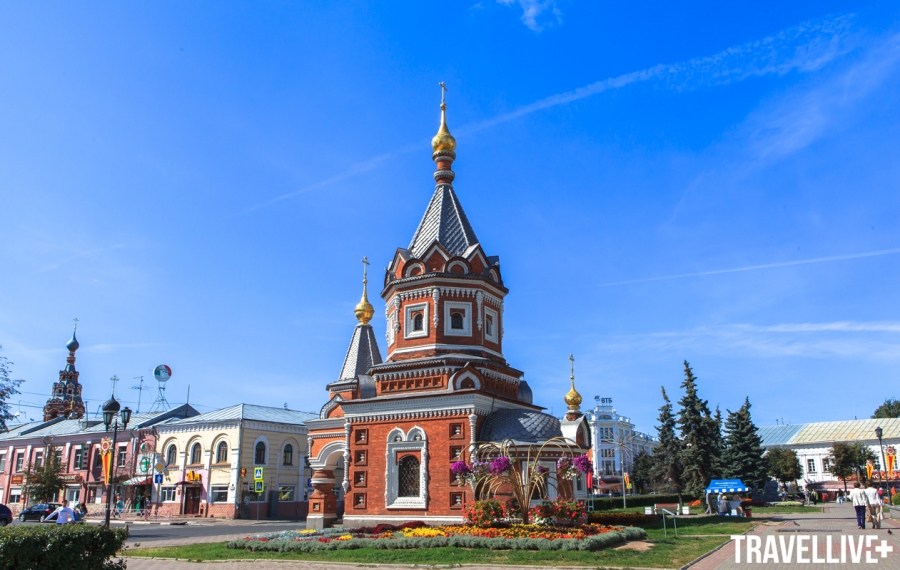
The unique architecture of a church in the heart of the old town.
Before immersing myself in the magnificent architecture of the old town, I strolled along the Volga River while the sun was still hidden in the clouds. A light mist hung over the river like a soft silk ribbon draped across the city.
History records that Yaroslavl was once a bustling commercial center from the late 16th century. The conquest of the Kazan and Astrakhan kingdoms opened up trade routes with the East along the Volga River.
With its advantageous location at the confluence of rivers, Yaroslavl was chosen by the British as a port for distributing goods to downstream areas. Later, the Dutch, Germans, and French also transported many valuable goods here.
Yaroslavl's exports included animal hides, freshwater fish, flax seeds, and works of art. Dozens of churches, large and small, with intricate sculptures, stand as testaments to Yaroslavl's past importance, wealth, and prestige.
I strolled to one of the most beautiful buildings in Yaroslavl, as recommended by my Russian friends – the Church of the Prophet Elijah. Built between 1647 and 1650, Elijah is one of Yaroslavl's best-preserved and most complete monuments. Located in the heart of the old town, the church boasts a unique architectural style and is considered a masterpiece of ancient Russian architecture. With its two tall, intricately carved main towers and five mushroom-shaped domes, it forms a balanced and harmonious whole with the city's architecture.
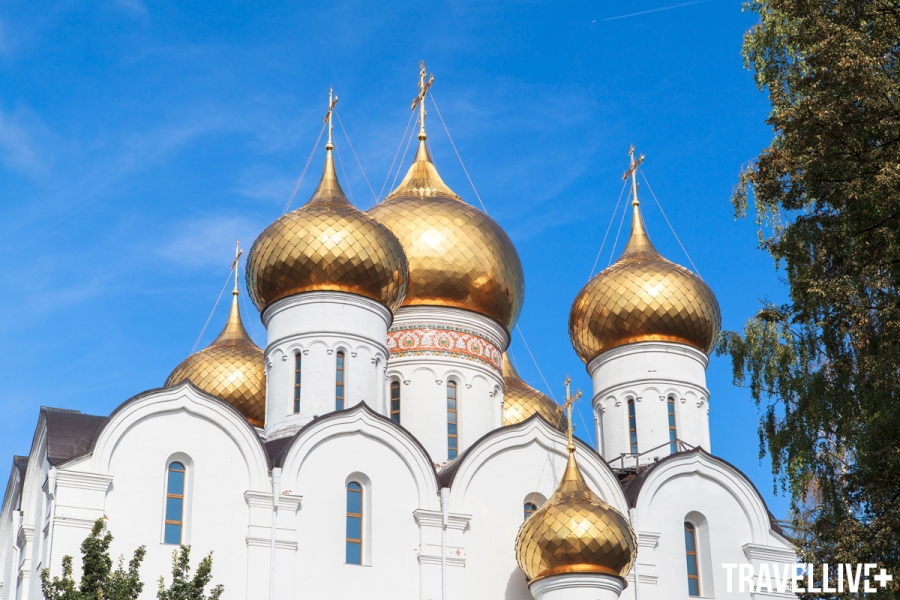
Classical vaulted architecture of Orthodox churches in Yaroslavl
Five interesting things to do in Yaroslavl
- Cruising on the Volga River
- Visit the "Sacred Bear" Memorial
- Take a stroll in the central old town.
- Enjoy panoramic views of Yaroslavl from the Transfiguration Monastery.
- Explore the architectural art of the Orthodox church system in Yaroslavl.
It can be said that the exquisite frescoes are one of the defining features of Orthodox churches in Russia, and Elijah Church is no exception. Besides the paintings inside the main sanctuary, the gate is also covered with square ceramic tiles depicting various animal symbols from stories about the region. The colors and patterns, meticulously crafted by Russian artisans using natural materials, have allowed these religious structures to retain their original appearance from hundreds of years ago.
A stopover for football fans.
Located 270km from Moscow, 420km from Nizhny Novgorod, 700km from Saint Petersburg, and 770km from Saransk, Yaroslavl is centrally situated between major cities hosting key matches of this summer's World Cup finals. All these stadiums are accessible by comfortable and clean trains.
However, Yaroslavl was not among the eleven cities chosen by the Russian government as official venues for the tournament. Perhaps they wanted to preserve its inherent tranquility for tourists? Indeed, it is a purely cultural tourism destination for football fans seeking to better understand the Russian spirit after watching exciting matches.
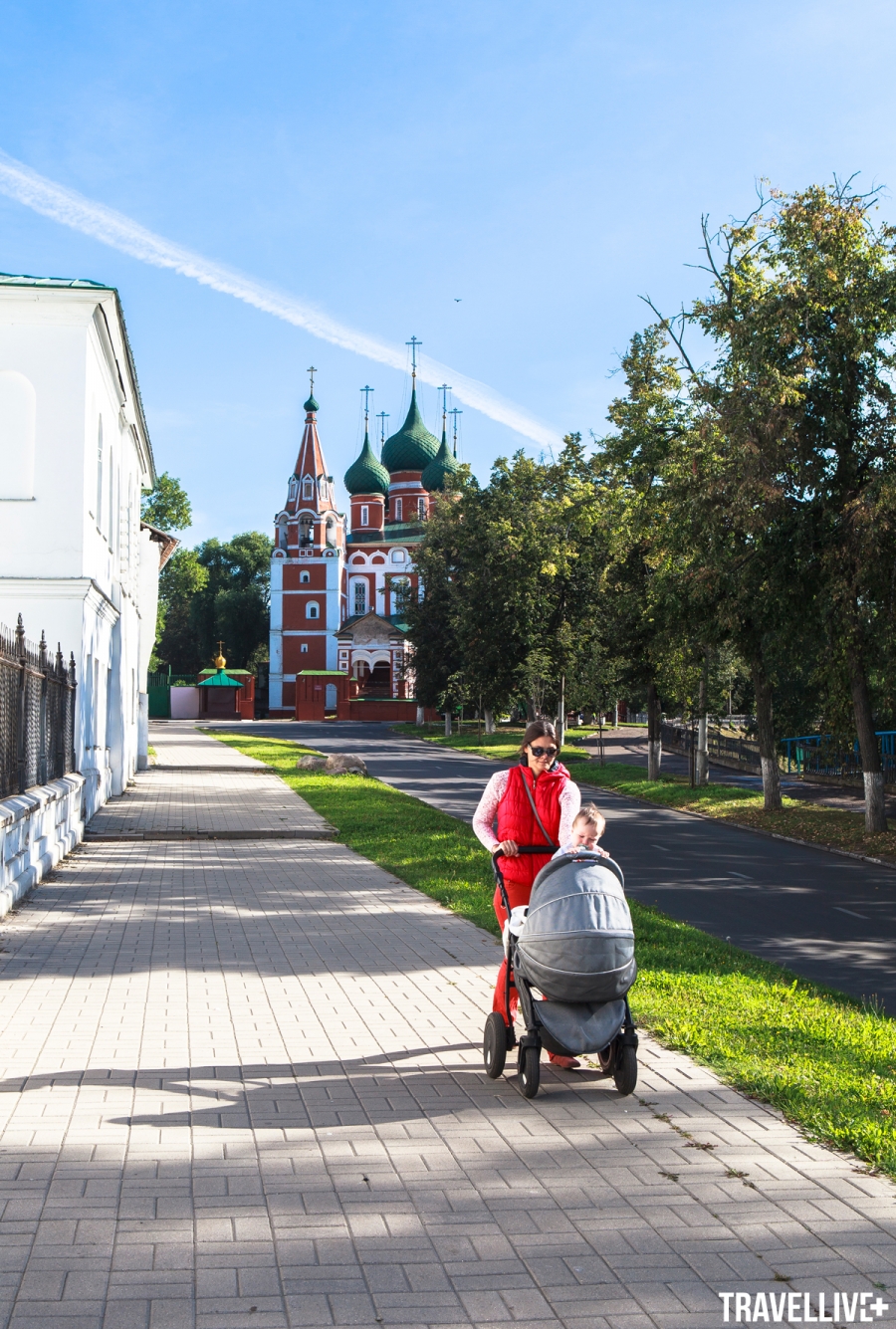
A peaceful corner in Yaroslavl
During my slow-paced days in Yaroslavl, I felt that spirit very clearly. Besides their sincerity and simplicity, the Russian character is always strong and unyielding. In the West, people compare Russians to the character of a bear! But the reason why Russians are called "Russian Bears" remains unclear.
The argument that foreigners might encounter bears walking on the streets seems unconvincing, because we know that in India, elephants also appear on the streets, but the British have no intention of comparing elephants to the people there! This demonstrates the spirit of the Russian people clearly revealed through that magnificent bear.
The Russians are eager to showcase their strong resurgence to the world through football matches on home soil. But if you want to know what the "Russian Bears" are like, you can easily find out through the character of the people of Yoraslavl.
If you're planning a backpacking trip to Yoraslavl, thenFind the information you need here..






.jpg.jpg)