VI
VI


My first visit to A Lưới was over 15 years ago.
Back then, I rode my Minsk motorcycle alone all the way to A Hưa village – a village of the Ta Oi ethnic group nestled beneath the old forest, half a day's walk from Hamburger Hill.
I brought along some essential supplies I bought with my scholarship to donate to the children in that village, the same village where my Dean had previously visited to guide the villagers in developing community tourism.
I was met by a Ta Oi police officer on the way to the village that afternoon. After a lengthy and thorough questioning, I learned that as a border area (with Laos), ensuring border security meant that entry to A Luoi or other villages in the district previously required complete documentation. I gave the name of my teacher, so the police officer led me directly to the village's stilt house, where he went to call the village head to... receive me!
The village chief appeared, and before I could say anything, he smiled from afar. Hearing that I was a student of the teacher who had come to the village to teach vocational skills, he greeted me warmly, as if we had known each other for a long time. Then, the kind-hearted village chief went to the corner of the yard in front of the stilt house and rang the gong to signal to the villagers that the village was welcoming guests to stay overnight.
That evening, the children from the village were brought by their parents to gather at the stilt house. The youth group helped me distribute supplies to the children. Then, late at night, the children all went home with their parents, while the youth were assigned the task of sleeping in the stilt house with me. The boys slept in one row, the girls in another, facing each other, giggling and chatting in the Ta Oi language like a lullaby, lulling me to sleep in the characteristic chilly mountain air.
The next morning, I woke up around 7 a.m. and found breakfast already prepared in the middle of the stilt house. A Zich, a girl from the performing arts group, had prepared the meal for me: sticky rice, grilled meat wrapped in leaves, and Ta Oi dipping sauce. Wearing a traditional Zèng (brocade) outfit she had woven herself, A Zich shyly introduced me to the specialties of her people. Only much later did I learn that to prepare that breakfast, A Zich had walked nearly 10 kilometers to the market to buy pork for me.
That trip to A Hưa village that year left a deep impression of the hospitality and kindness of the local people. Returning many times, sometimes alone, sometimes with friends, or sometimes with tourists, I'm always excited to come back to this mountainous region.
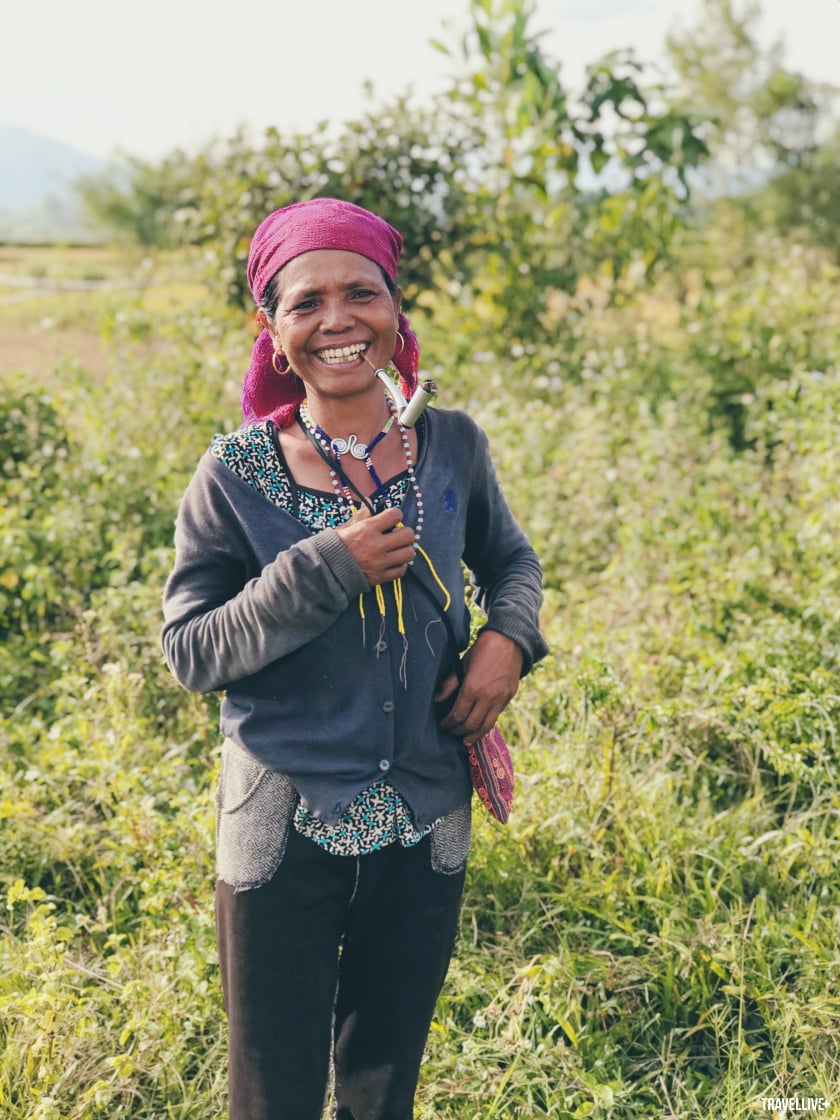
A Ta Oi mother
Post-pandemic trip
Recently, when travel restrictions were eased after the pandemic, I took three families from Hue to A Luoi for a trip. Army's family, Lily's family, and Bao Bao's family were all excited, partly because they had been stuck at home during the pandemic, and partly because they had occasionally heard me talk about A Luoi and wanted to experience the beauty of their hometown, Thua Thien province. A Luoi, located about 70 kilometers from the center of Hue city, is a place full of interesting aspects of the life and culture of the people living along the western Truong Son mountain range.
At around 9 am, after a relaxing meal, the whole group left the city, each family driving their own car. The road from Hue city to A Luoi, following National Highway 49, was very smooth after being rebuilt. After about two hours of driving, crossing three mountain passes, winding along several streams and villages, we arrived at the Bot Do intersection.
The place I chose for the whole group to stay this time was nearby, at a house called Hachi.
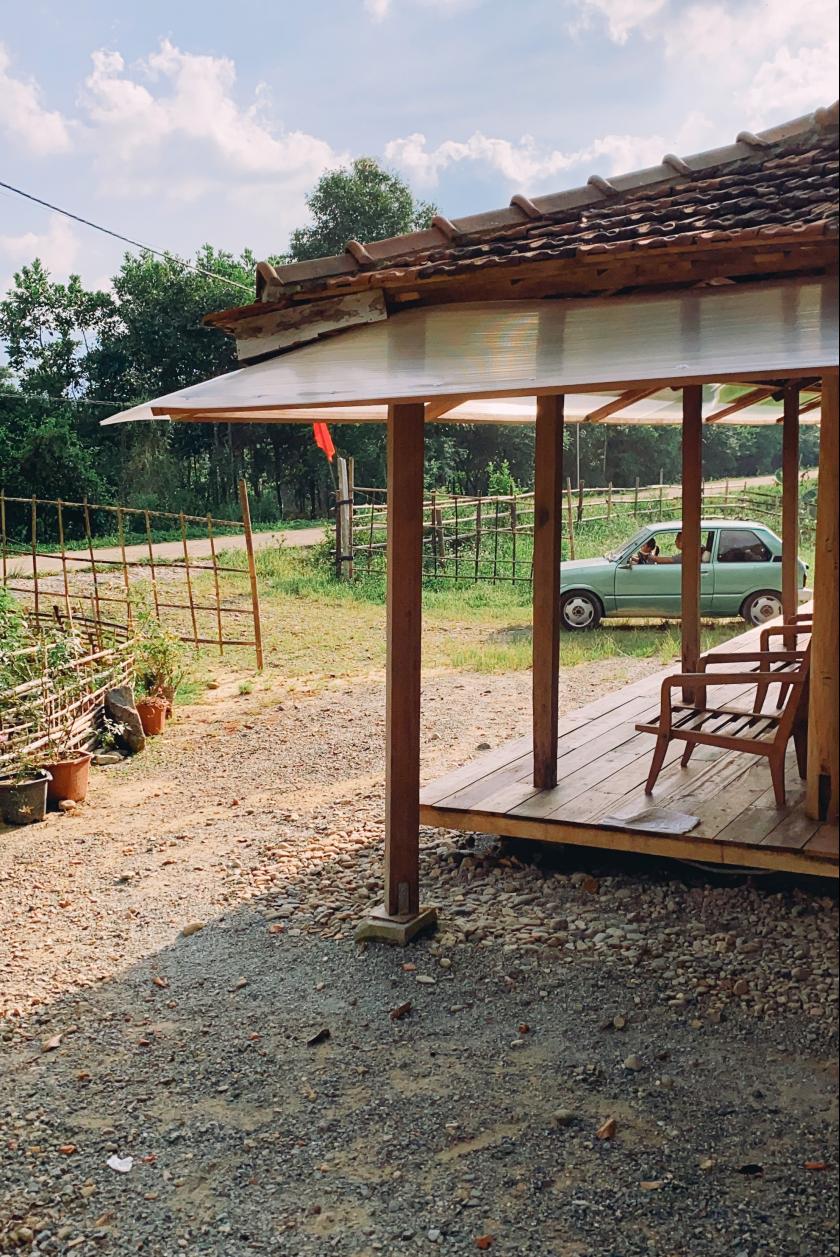
Hachi's porch
Originally a wooden house belonging to the Ta Oi ethnic minority in the village, Hachi was transformed and given new life by the SiLaa Architecture team through a combination of old wooden materials and creative architectural thinking, promoting local cultural elements.

The house has enough space for a group of less than 10 people, with a kitchen that has a window overlooking the airy garden, and a bathroom with a water heater. The veranda surrounding the house is bathed in the morning sun or the evening sunset, perfect for reading or enjoying a cup of coffee and chatting – both shared and private spaces are available. The wooden floors create a very cozy and rustic feel. Many fruit trees such as pomelo, persimmon, and jackfruit are planted around the garden, providing shade and serving as a gift from the host to guests visiting Hachi's house. Our group got to eat ripe, delicious persimmons this time.
Valley of sorrow at sunset.
After lunch featuring local specialties like A Lưới beef bone hotpot and stir-fried dried buffalo meat with shallots, I let everyone relax before starting our exploration in the mid-afternoon.
It was past 3 PM, and the sun was shining brightly. I briefed the fathers—the drivers from each family—on the route we were taking, and then, following the Ho Chi Minh Trail, the whole group headed straight towards the A Sầu Valley.
This place was once an important military base for the US Army during the Vietnam War. The A So airfield remains, with a few sections of the runway now covered in green grass, but the traces of that era still resonate for those interested in learning about the country's history.
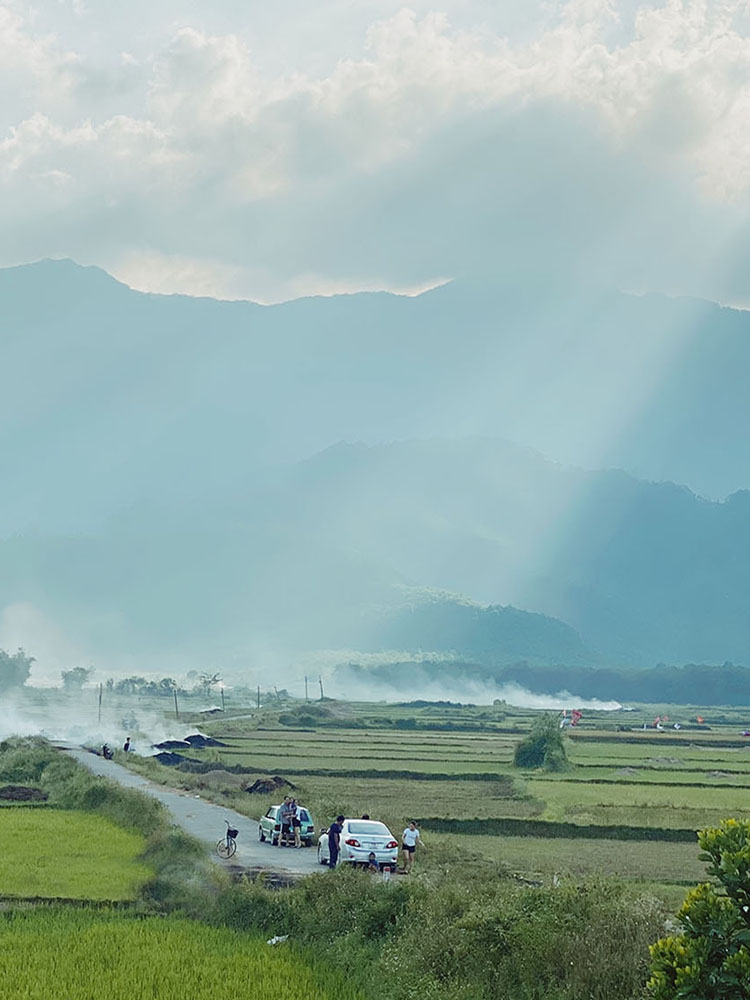
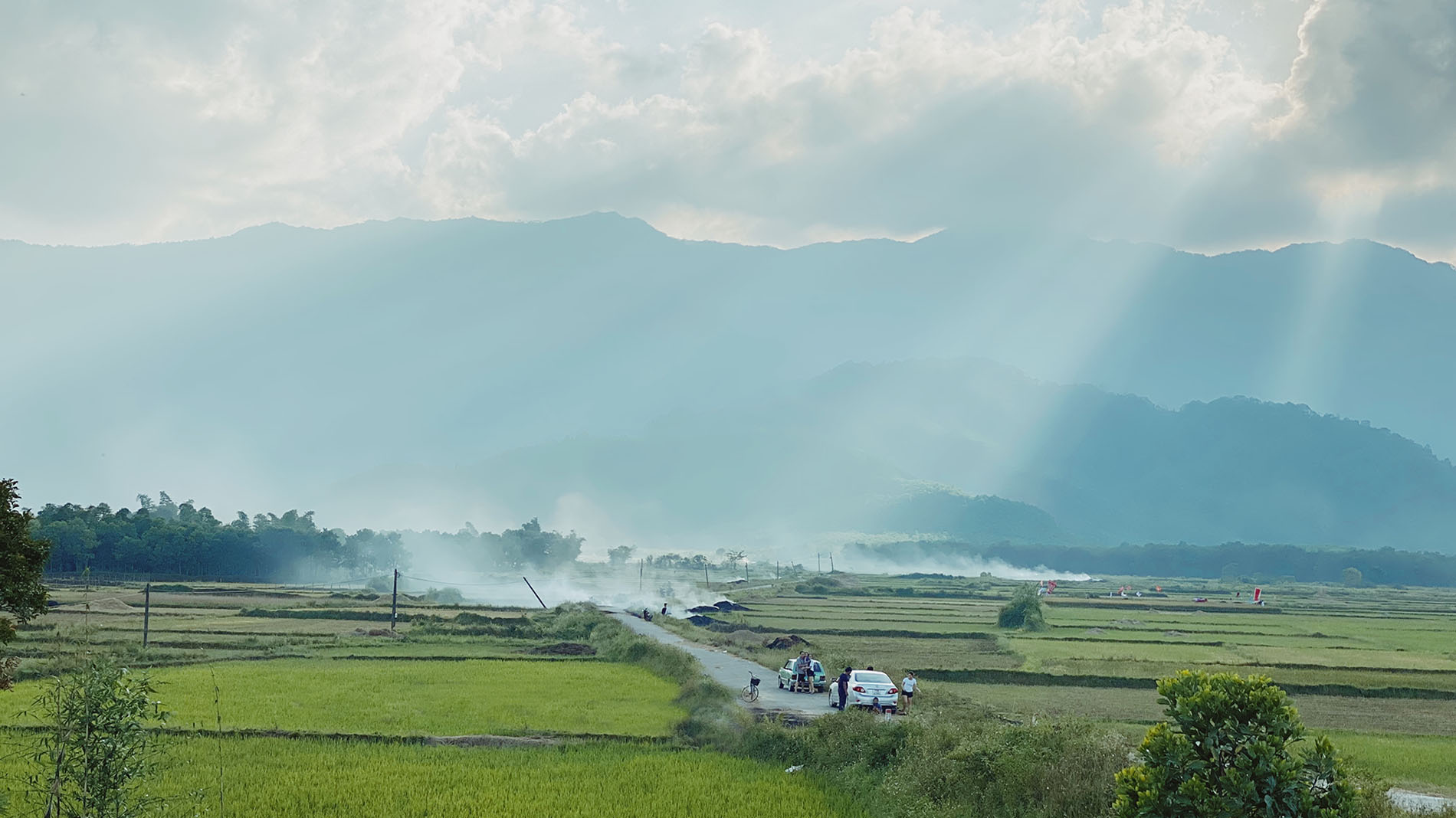
We arrived in A Sầu at dusk, as the sun was setting. Rays of sunlight pierced through the drifting clouds, spreading across the valley, which was surrounded by hills and mountains as a backdrop, and the rice fields in harvest season in front, along with the winding A Sáp River, creating a breathtaking landscape.
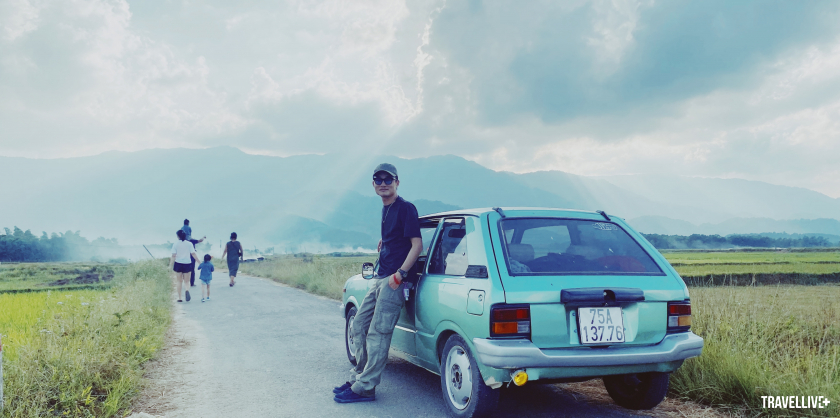
...This is the author
Here, the Ta Oi people still have houses where they are harvesting their summer-autumn rice crop. Stopping on the bridge over the A Sap River, I showed the group how the Ta Oi farmers build rectangular sections of stone along the stream, then place a tarpaulin underneath and pour the harvested rice on top. Afterward, they open the ends of the rectangular sections to allow the water to flow through. The broken or damaged rice grains float to the surface and are carried away by the water; the firm, good grains sink and are retained by the tarpaulin. Once finished, they grab the four corners of the tarpaulin, pull it up, put the rice into sacks, and transport it home to dry. They then store it for later consumption or as seeds for the next season. This is a unique characteristic of the rice farmers here, different from how the Kinh people in the lowlands harvest their crops, and it's a fascinating sight for everyone to watch.
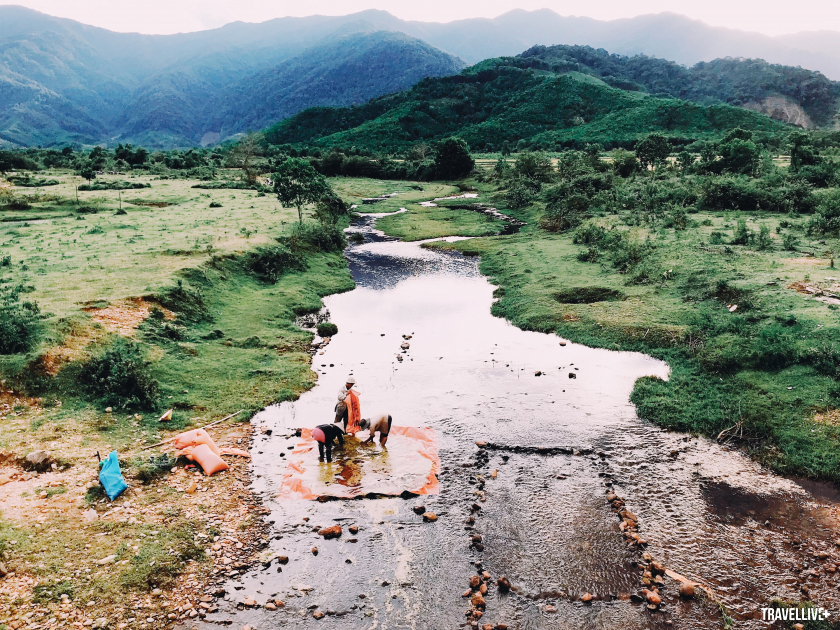
The Ta Oi people select rice after harvest.
The A Sap River has a section with a rather beautiful rocky area, so I took the whole group across the fields to swim in the river. The children really enjoyed it. Army and Lily, clinging to their parents' inflatable floats, excitedly splashed into the cool water. The fathers even picked up stones and threw them around, much to the amusement of their wives' laughter and encouragement.
As the setting sun cast its light over the western mountains, we left the A Sầu valley. From inside the car, I looked back at the white smoke rising from the straw burned by the villagers in the harvested rice fields, feeling a pang of nostalgia as I recalled the history this beautiful valley had once experienced.
Night and morning in Hachi homestay
Dinner at Hachi's house tonight was a barbecue. A group of the hostess's regulars joined in, making it quite lively.
The whole group gathered around the area where the men and boys were building a fire to grill meat. Some women were arranging sticky rice, others were setting out wild vegetables on tables and instructing the children on how to eat. The younger members of another group were playing soft music and adding a few lights, creating a very cozy atmosphere in the mountain night.
Under the starry sky and by the crackling fire, we chatted until late at night. I told him about my visit to A Hưa village years ago and how I've been connected to A Lưới ever since, for sure.
The other children went to bed first, leaving Lily alone, still hugging the puppy that had become her companion that day, sitting beside her mother by the glowing embers, occasionally turning to listen, though she wasn't sure she understood everything the adults were saying.
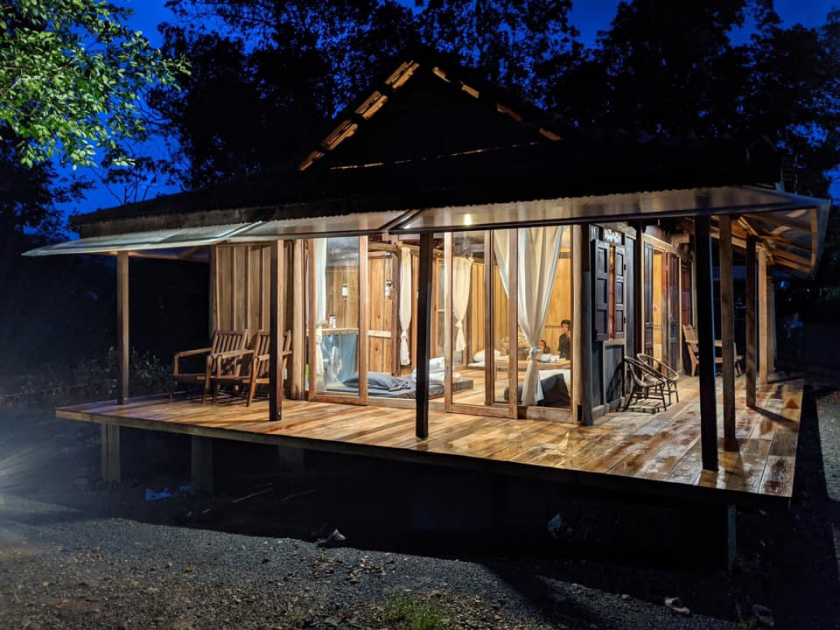
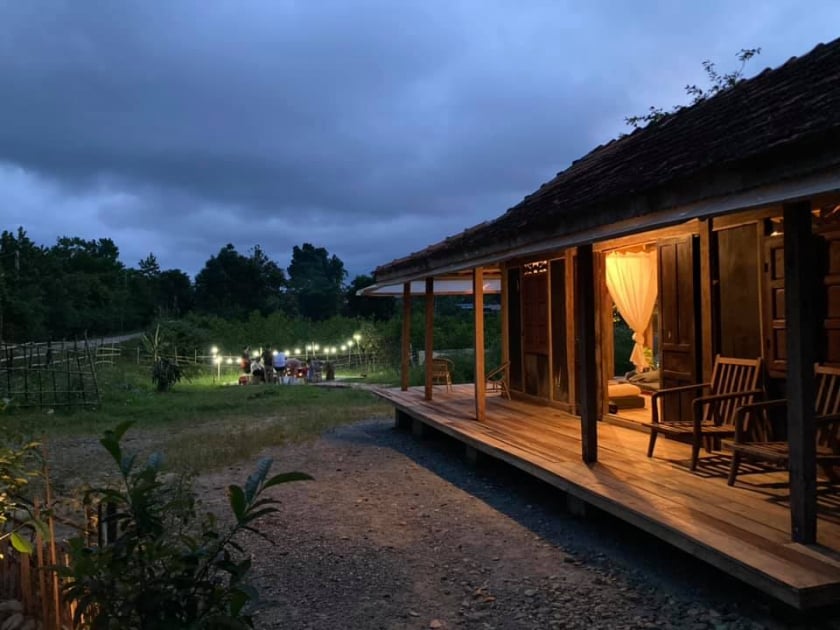
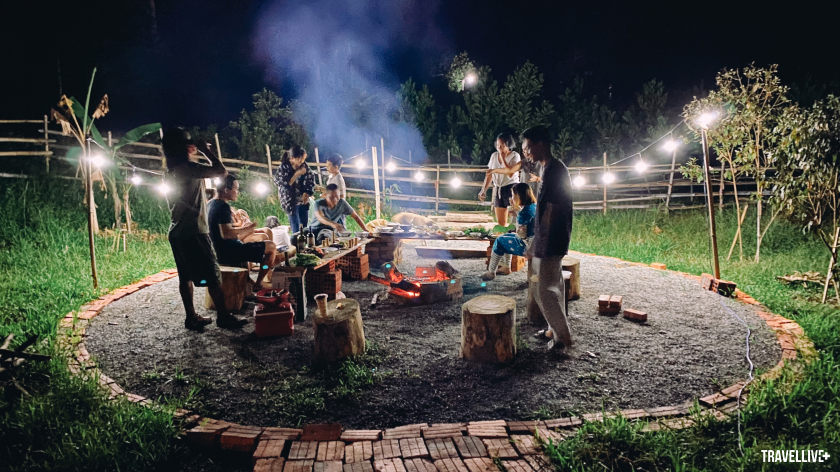
Guests at Hachi House experience the characteristic cool mountain air, along with the sounds of insects.
The morning was filled with sunshine. Not wanting to miss the early rays, I gently left my warm blanket and went out into the garden. The sunlight filtered through the leaves of the persimmon tree, making the persimmons look even plumper and more beautiful than yesterday.
Army had also woken up and followed his mother out to sit on the porch, where the early morning sun was gradually falling upon them. Suddenly, a street vendor passed by the house, and Army's mother bought two bags of mung bean sweet soup for the two of them. So, while waiting for the rest of the group to wake up for breakfast, Army and I ate the two bags of sweet soup, gazing at the golden sunlight shining on each other's faces, even though neither of us had washed our faces yet. Army's father woke up earliest and went for a jog to the far end of the village. In that direction, the morning mist still lingered around the mountains.
The landlady cooked a steaming pot of chicken porridge and spread it out on the wooden floor behind Hachi's house for the whole group to gather for breakfast. After Lily and Army's father finished eating, he went to pick more persimmons. I set up the coffee maker on the porch and ground coffee for the whole group.
K'Ho coffee brewed with honey, a few avocados and persimmons arranged alongside it, along with homemade cakes brought by a friend in the group – we all sat there, along the sunny porch of Hachi's house, enjoying the morning in A Lưới. Lily, of course, was still holding the puppy from yesterday. And Army was drawing the scene. Army and Lily are both in preschool.
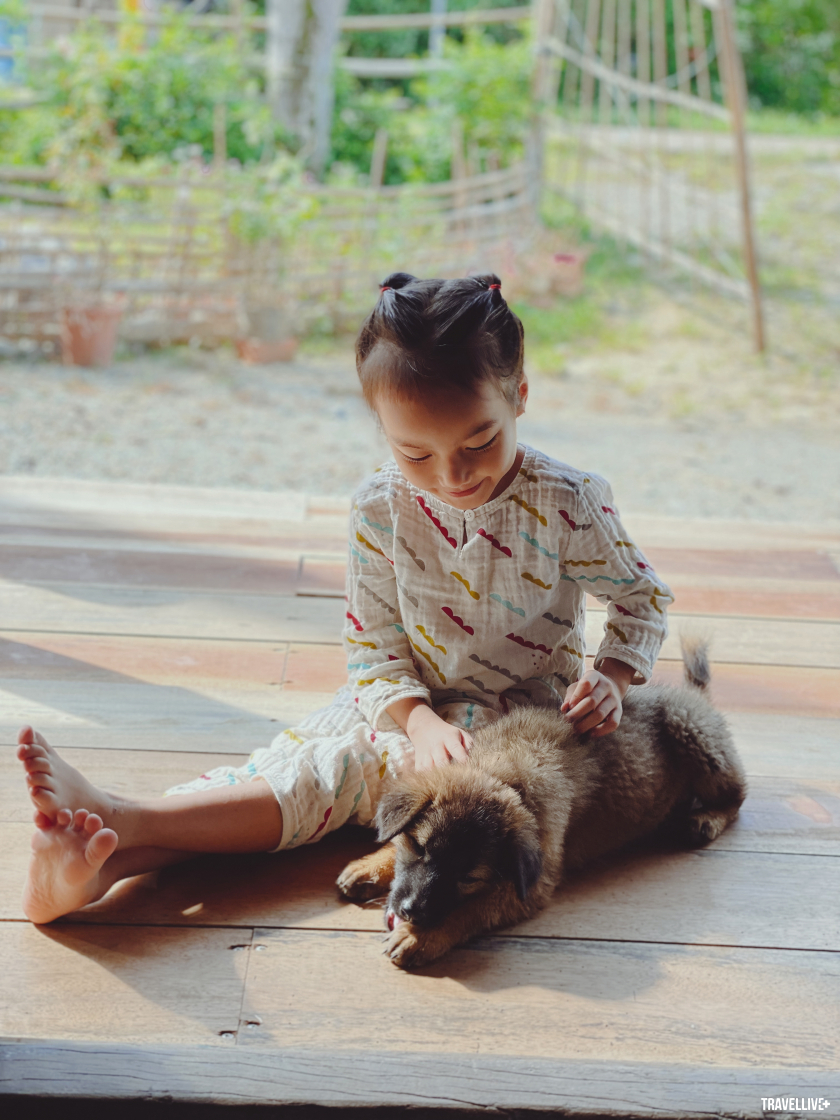
Lily and her puppy
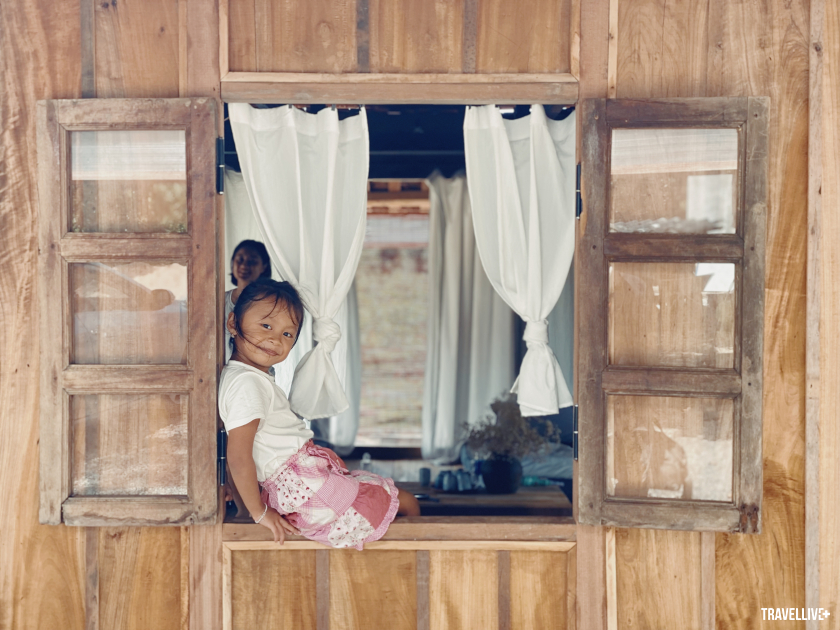
Army poses at the window of Hachi homestay.
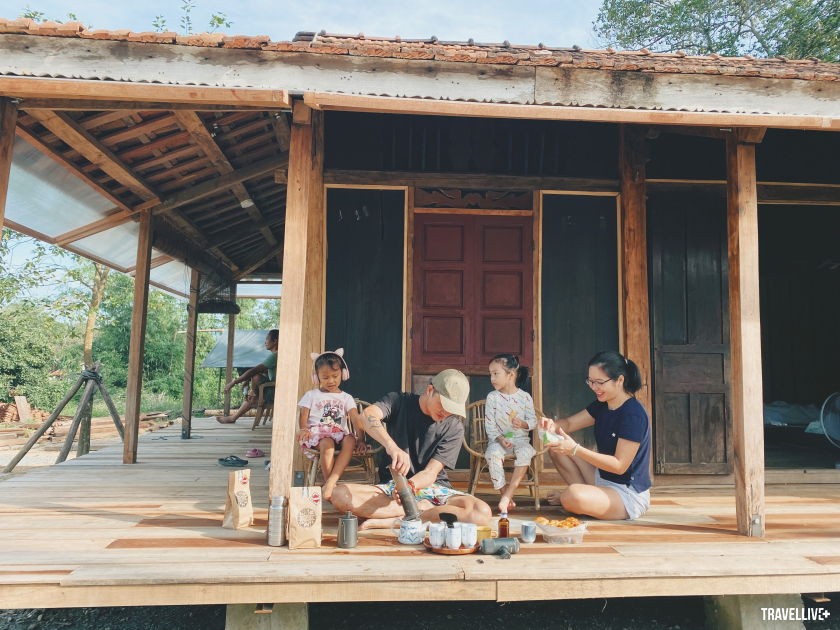
Make morning coffee for everyone on the porch.
In the heart of the Truong Son mountain range
Seeing that the dew on the leaves in front of the house had evaporated, I told the group to prepare to leave Hachi's house to continue their journey. This morning, the group visited a Pa Co village and bathed in the majestic Anor waterfall.
Beyond the town of A Lưới lies a village inhabited by the Pa Cô ethnic group. The villagers have been developing community tourism for several years now, with many households offering homestay services or providing food, drinks, and entertainment for tourists staying in the village.
Nearby is Anor Waterfall. The waterfall has three tiers, is over 100 meters high, and cascades down in a white torrent, creating a famous "wonder" in the area. At the foot of the waterfall is a crystal-clear pool. The water falling from above creates a cool breeze that blows around the pool. Occasionally, I also brew coffee there for my friends to enjoy.
Today was sunny, so everyone in the group, from children to adults, confidently jumped into the water, swam around, and enjoyed the wonderful nature amidst the mountains and forests of the Truong Son range. Lunch consisted of Paco specialties such as grilled meat wrapped in five-leafed ginseng, stream fish grilled in bamboo tubes, wild bamboo shoots, purple sticky rice, and even A Quat cake...
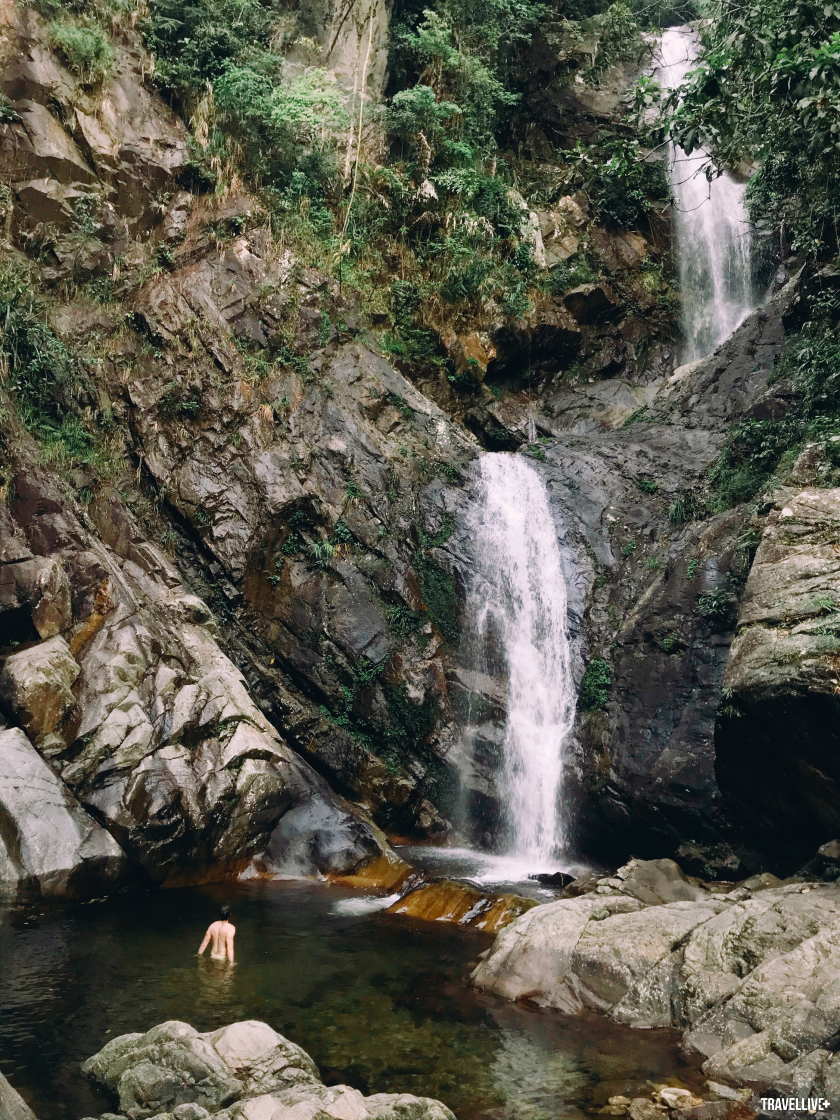
Anor Falls
Before heading back to the city along the same scenic route they had taken the previous day, the group strolled around the central market of A Lưới – where the Ta Oi, Pa Co, Pa Hy, and Van Kieu ethnic minority people sold their local specialties. Along the way, the group stopped briefly to let the children rest. With their eyes fixed on the mountains, everyone praised the experiences they had had the day before.
Additional information
- Hachi Homestay & Spa is a new homestay that opened in September 2021 and is still relatively new (and not yet very crowded with guests). Contact Hachi directly viaFacebookOr phone number: 090 587 95 89.
- If you would like to experience tours with Shi Jang, you can contact us to book a tour via phone number: 098 5555 827.