VI
VI


Gia Hung Bakery
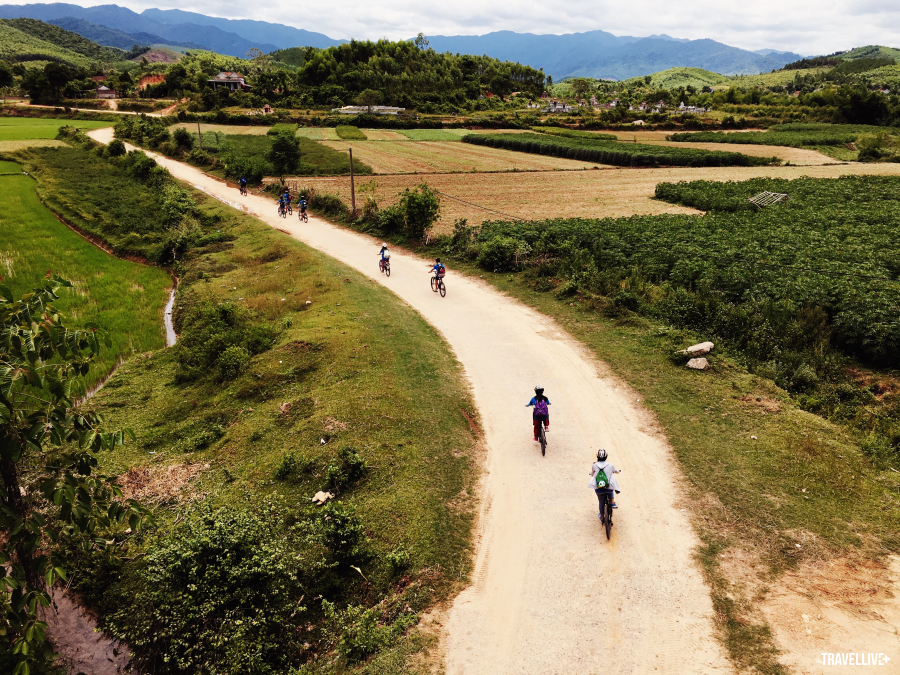
From the center of Phong Nha, cycling along the Son River, past the alluvial plains formed by the sediment from the previous season's flood, now planted with corn and peanuts by the locals, the landscape is a vibrant green. I passed through Gia Hung village.
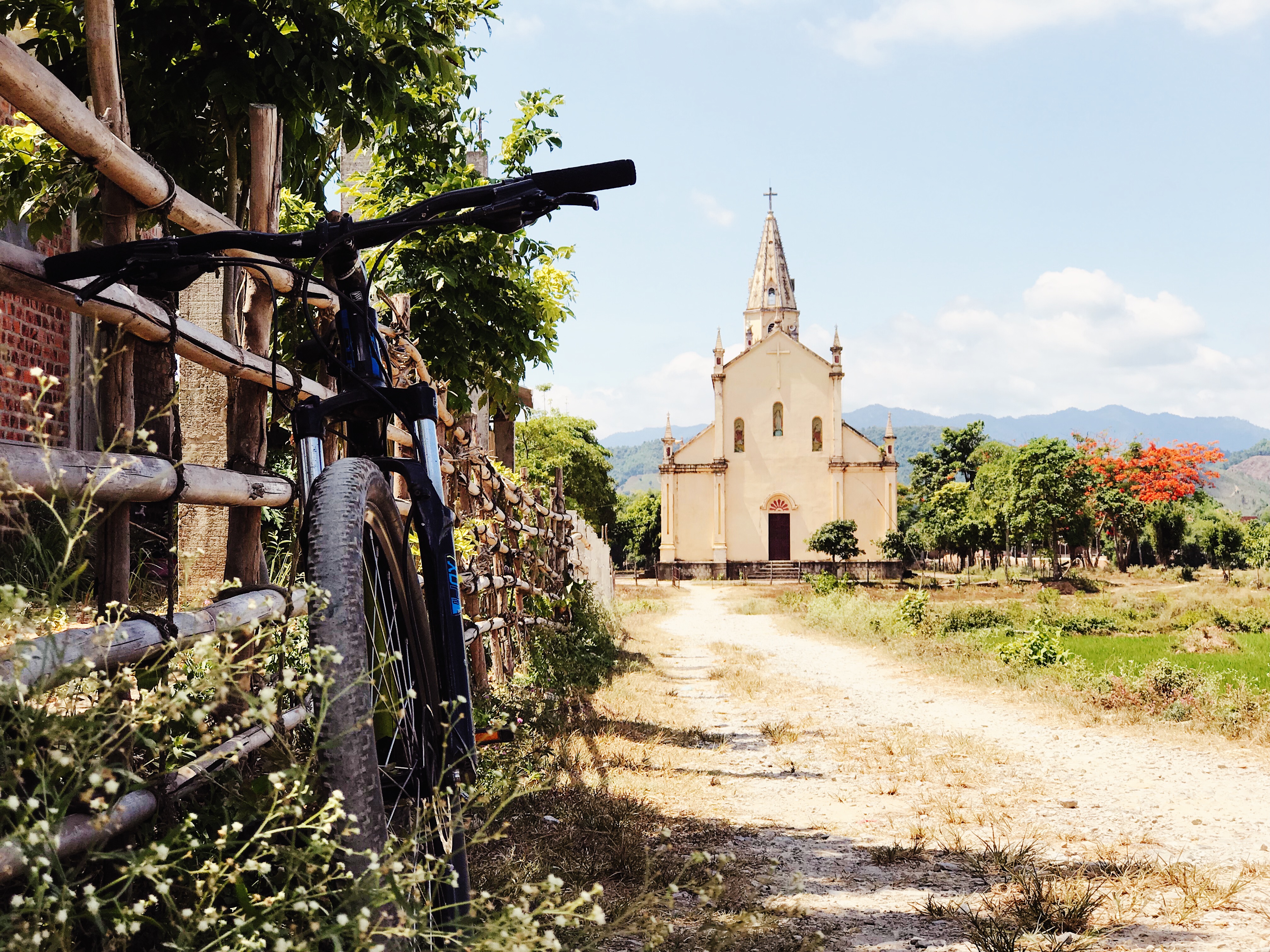
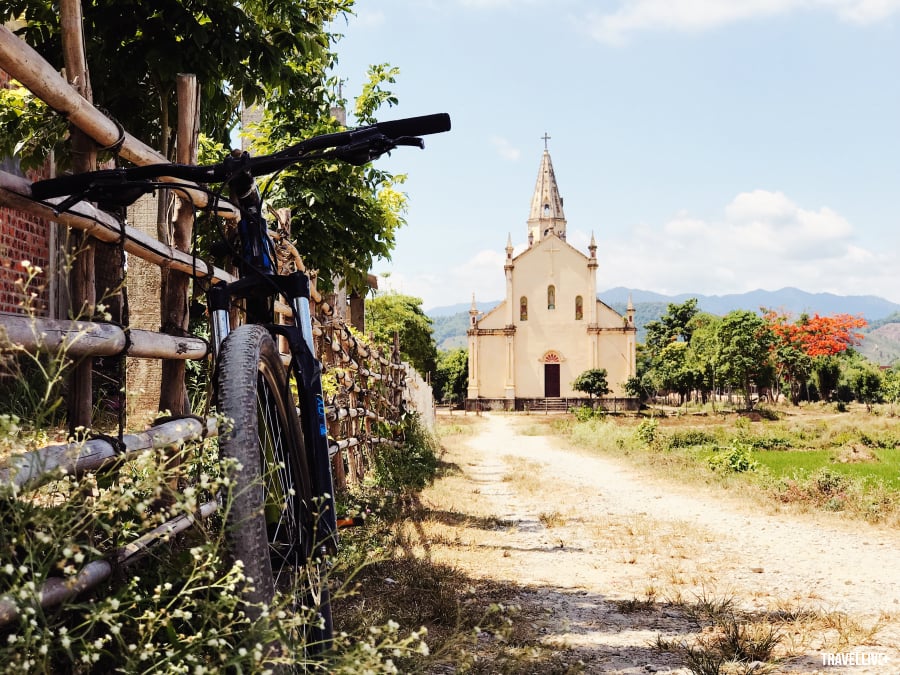
The village is famous for its beautiful wooden church, the most beautiful in the region. The people living on the outskirts of Phong Nha Ke Bang National Park used to rely on the forest for their livelihood, so a large amount of timber was harvested and used to build houses. The parishioners voluntarily contributed their accumulated timber along with the priest to construct the magnificent church as it stands today. Young people and children often gather to play at the church, so it's also very interesting to stop there while cycling and chat to learn more about the lives of the local people. And during one such conversation, I discovered an interesting place: Gia Hung's banh beo and banh xeo (Vietnamese savory pancake) shop.
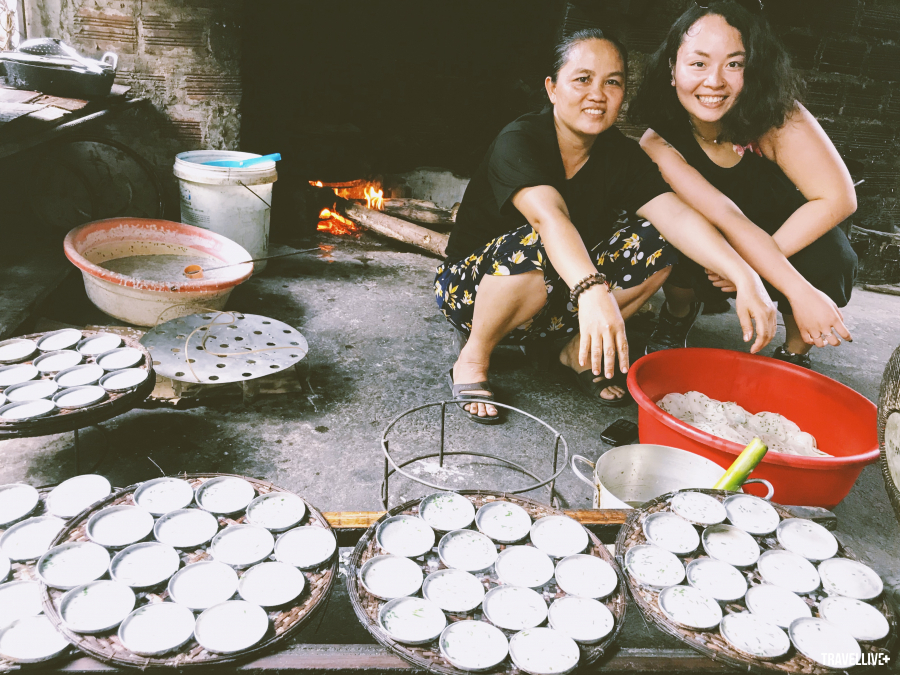
It's called a shop to sound fancy, but in reality, it's where Ms. Lai and Mr. Son's family live and make their cakes. Ms. Lai learned the cake-making trade from her grandmother when she was only 8 or 9 years old. Just after turning 17, Ms. Lai married Mr. Son, and two years later, they had their first child. In 1997, she officially inherited the family's traditional rice cake and pancake making business, becoming the fifth generation.
My aunt makes rice cakes in two shifts a day, regularly. If she makes them in the late afternoon, she takes them to the market to sell early the next morning. If she makes them at noon, she sells them at home to villagers who come to eat and watch her make the cakes, like watching a "show."
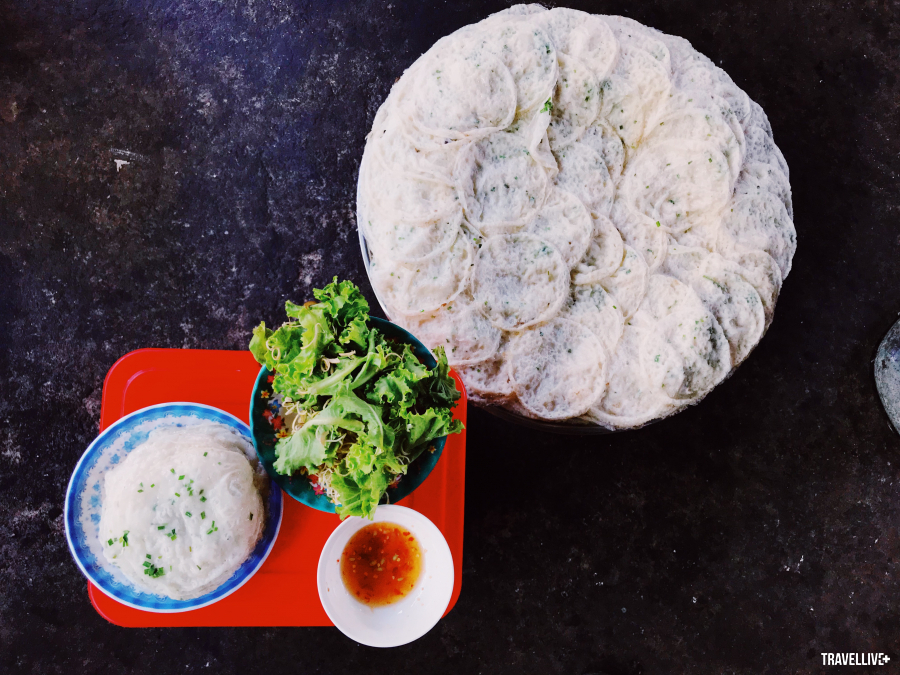
The cakes are made from regular or red rice, soaked in water and then ground, mixed with chives, and poured into molds recycled from bomb casings or flare boxes that locals collected from the war. The cakes are then fried or steamed over a wood fire, served with fresh vegetables and dipped in fish sauce, a delicious dish that locals can eat all day long.
Termite Farm
From this side, to cross the Son River, I cycled across a floating pontoon bridge. This gave me the opportunity to see the Son River up close, and appreciate the beauty of this river, known as the source of many villages along its more than 50-kilometer stretch from inside Phong Nha Cave to the sea. The water was so clear you could see the bottom – truly delightful.
Crossing to the other side of the river, I cycled a little further and encountered a slope. Not steep, but long, this slope became a challenge for any cyclist. Climbing to the top of the slope, I caught a glimpse of the Bong Lai valley, making all the effort I had put into conquering the long slope worthwhile. Taking a sip of water, I gazed into the distance, admiring the scenery. The green of the rolling hills surrounding me. The green of the rice paddies. The green of the cassava fields and rows of banana trees. Houses with red tiled roofs, faded by rain and sun, were interspersed among this green carpet.

At the very center of that scene, the Bong Lai Church stands out, with its red-painted bell tower and yellow walls, situated beside the winding Rao Con River, making the valley even more harmonious, like a still-life painting of a beautiful landscape.
As we began to descend the slope, getting closer to what we had just seen from above, my excitement grew. The rows of pepper plants on either side of the road were a delightful sight. Pepper is also a local product, usually harvested by the locals around May or June – a convenient time for drying and preservation. The sign pointing to "Mối Mối Farm" beckoned me to turn the steering wheel.
The termites that fly up after every rain in this area were chosen as the name for the farm. The farm is owned by an elderly couple, Mr. and Mrs. Vi, both veterans. I first met Mr. Vi by chance five years ago while cycling around the area. Seeing him in his military uniform walking with an unusual gait, I knew there would be many interesting stories to hear. And that's exactly what happened. He gripped the handlebars of my bicycle tightly as he enthusiastically introduced: "My farm has everything. It just doesn't have anyone to talk to!"
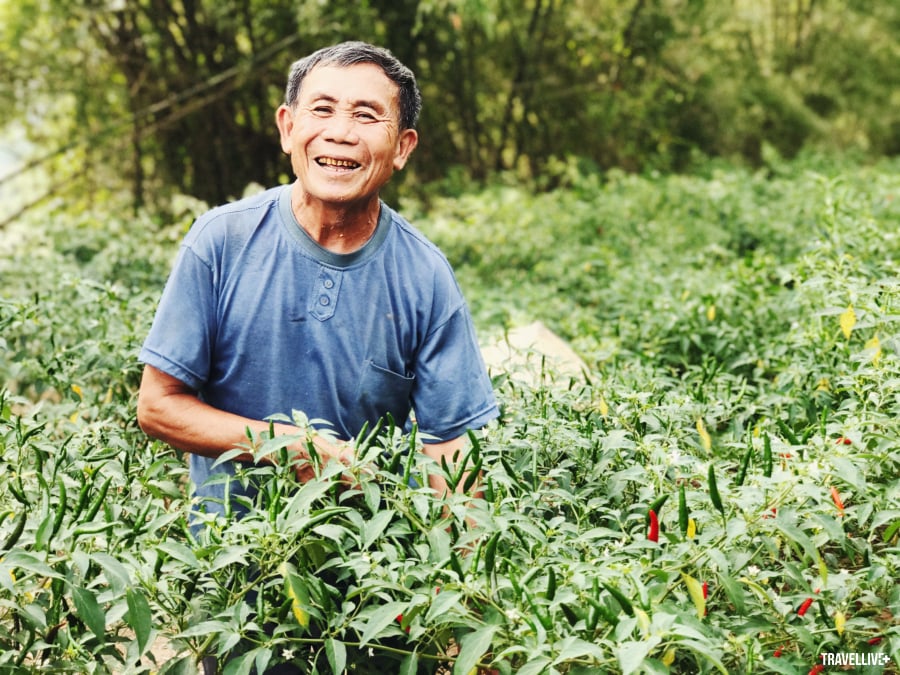
Walking alongside the old man, I arrived and found that the farm truly had everything: pigs in pens, chickens running around the hillside, grapefruit trees, pepper plants, guava trees, tea plants, cassava plants, corn, watermelons, pumpkins, and spinach… Even the wildflowers were carefully tended by the couple, making the farm look like a miniature prairie I had seen in movies.
A walk around the farm will broaden anyone's agricultural knowledge under the guidance of the cheerful and hospitable Mr. Vi. I also had the opportunity to share the knowledge I had learned from my maternal and paternal grandmothers in my childhood.
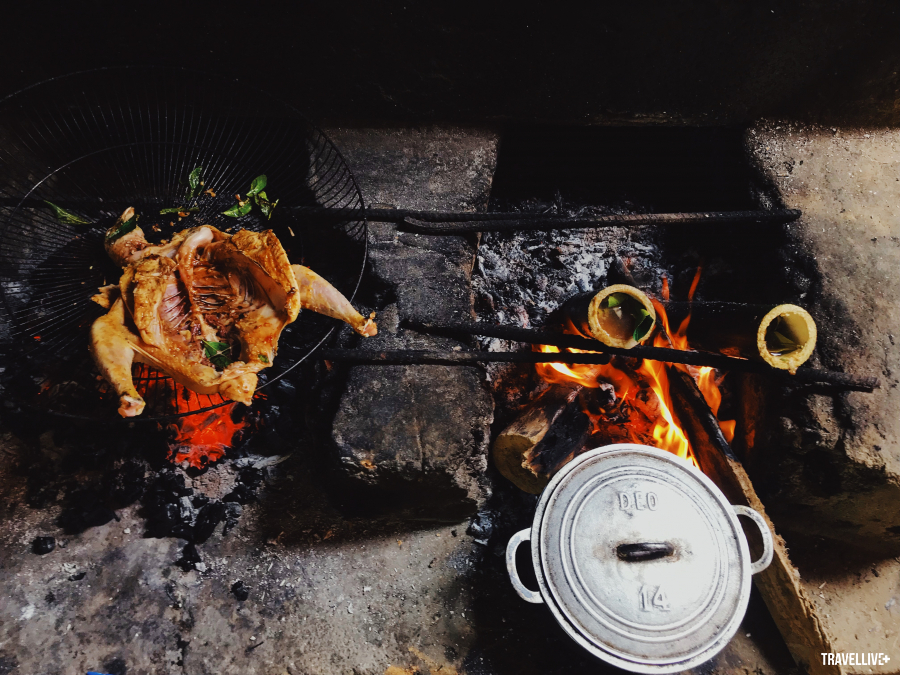
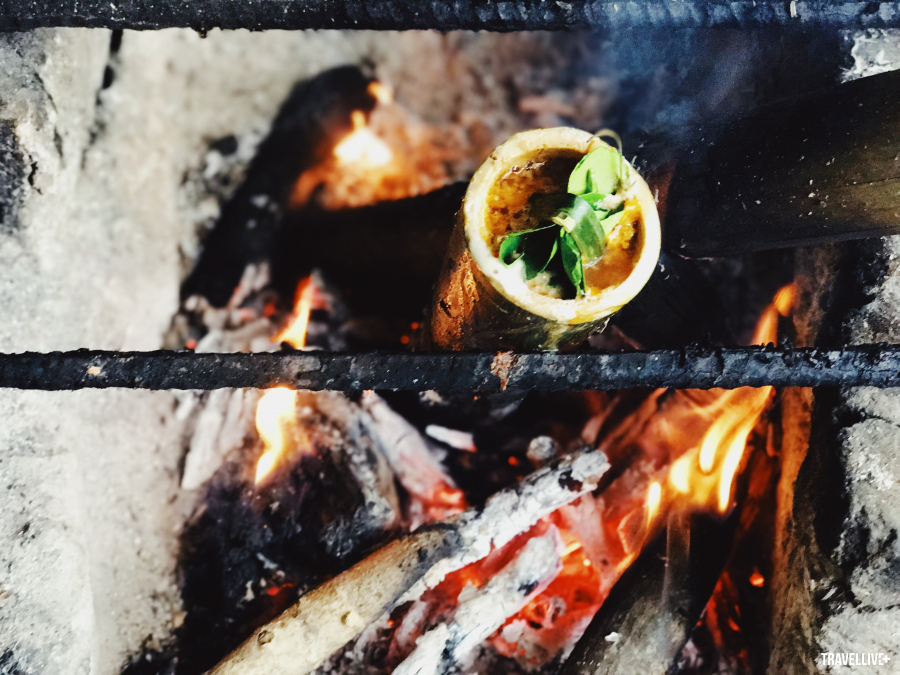
Later, the couple started cooking for guests who came to visit and chat. The husband would tell stories about his time in the army, peacetime, or about the farm while his wife prepared the food. Their son rebuilt the wooden house, added some hammocks, and set up an open kitchen next to it so that the wife and her daughters could showcase their cooking skills for guests to enjoy. Grilled pork in bamboo tubes and free-range chicken stewed with turmeric were two dishes I particularly liked here.
Wild Boar Farm
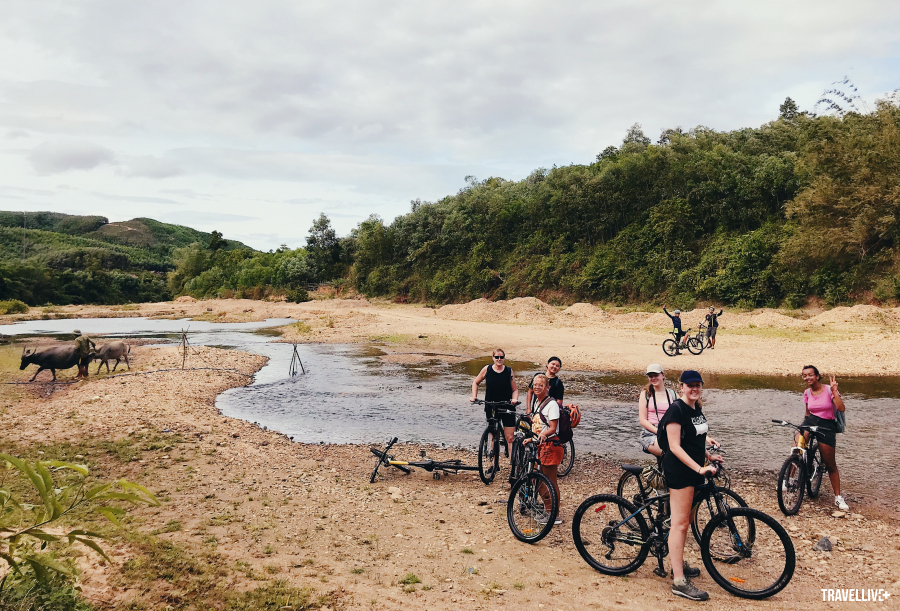
Leaving the Mối Mối farm, after cycling along a few winding bends and uphill and downhill sections, I reached the banks of the Rào Con River. Rào is the local name for the river. Rào Con means "small river," to distinguish it from the main river where it flows into. Finding a shallow section of water, I cycled across. The beauty of cycling is that choosing the right type of bike and riding on terrain suited to that type of bike makes the experience even more enjoyable. My mountain bike seems to belong in the Bồng Lai valley.
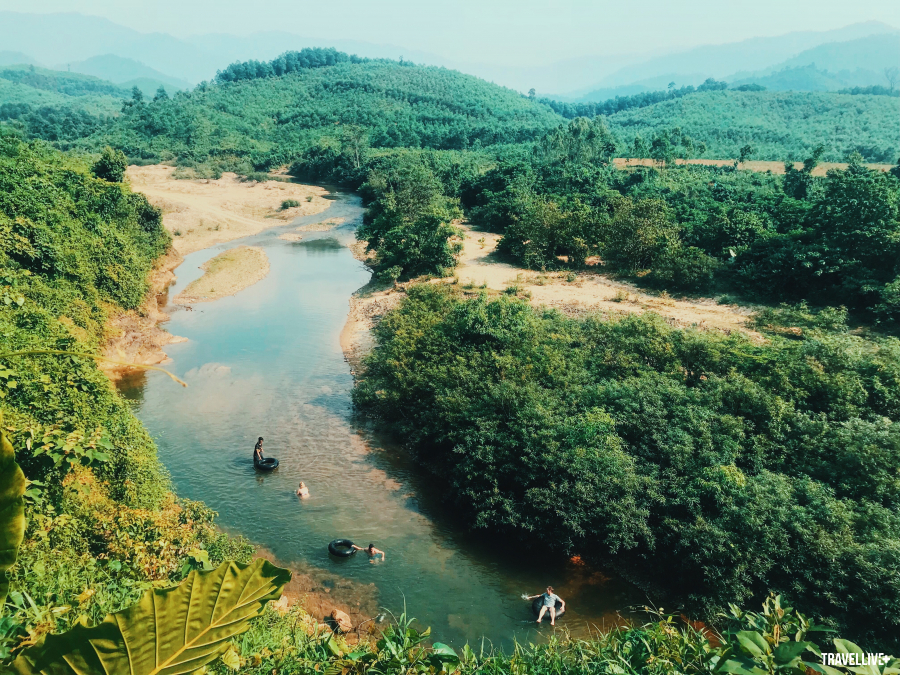
After crossing the river, I arrived at the edge of the village, where Mr. Cuong and his wife live: Bong Lai Ecofarm, a wild boar farm. After graduating from university in Hue, Mr. Cuong worked various jobs before deciding to move his family to the edge of the village, next to Rao Con, to establish a farm. His family is well-known for raising wild boars – a practice that originated from a boar he rescued from local foresters a few years ago.
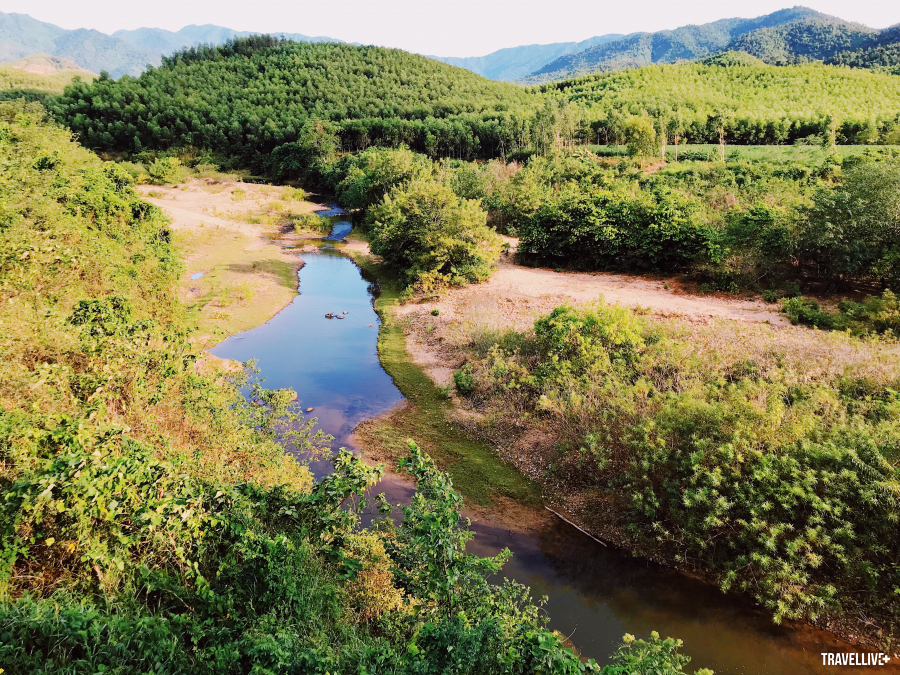
From that one pig, the family built a farm with many herds of pigs, providing income for the whole family. Last year's flood swept away the herd, so the couple stopped raising wild pigs. Now, they raise crickets – a source of clean, nutritious food for people in the area, offering them another culinary option to enrich their diet.
Mr. Cuong also cleverly created an additional experience for visitors, giving them the chance to learn about crickets in a very interesting and humorous way with his conversational skills. I call him by the nickname Jackie Cuong because his appearance is quite similar to martial arts star Jackie Chan. Recently, his family even built a swing set so that those who like thrill-seeking can admire the beautiful Bong Lai valley from a new perspective.
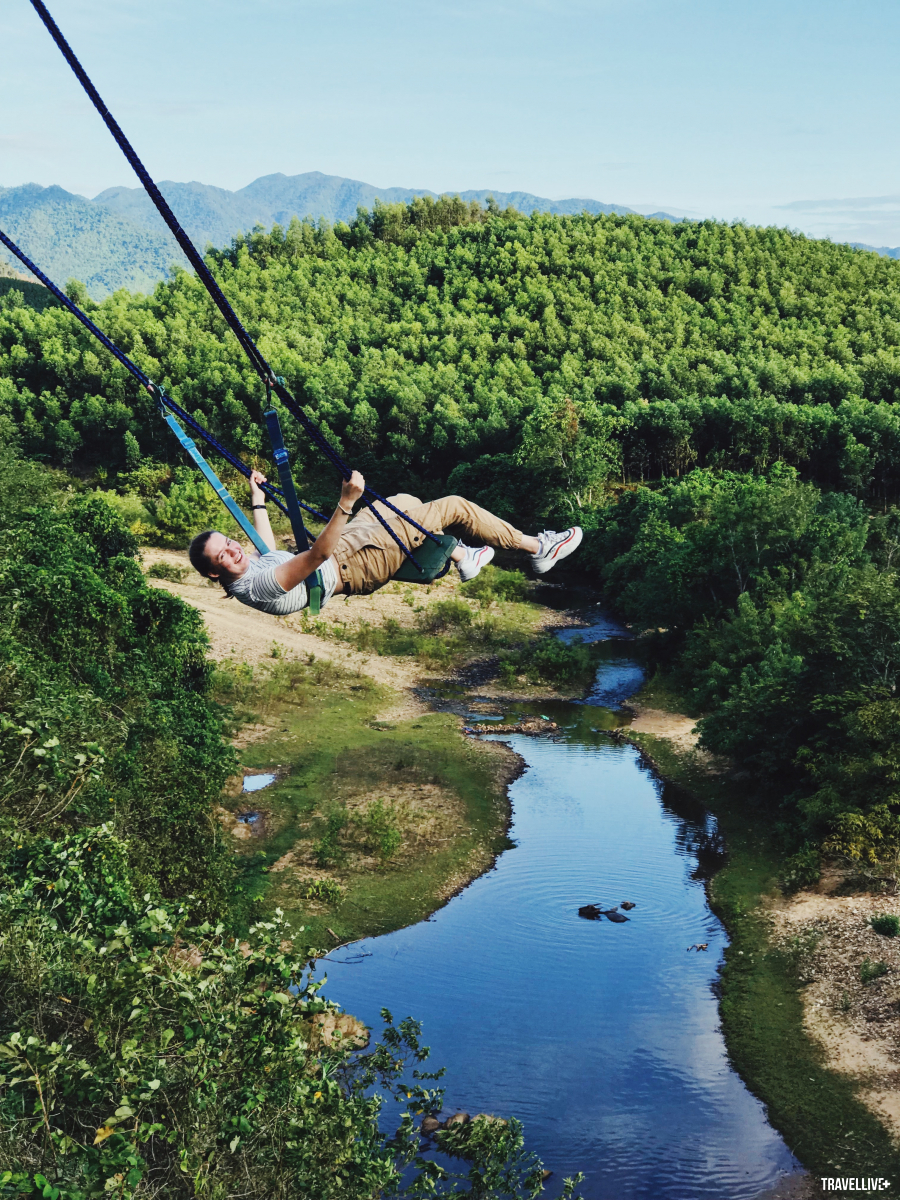
On sunny days when I visit, I usually go down to Rao Con, where there's a deep pool of water, to soak myself and cool off, listening to the birds singing and the stream flowing – nothing could be more delightful. If it's a cool day, I'll lie in a hammock and take a nap, truly feeling like I'm in a heavenly paradise.
Leaving the valley, the cycling route also passes by other famous places, as mentioned at the beginning of the article, such as the Pub with cold beer owned by the "Chicken lady" couple Quy Nhat and his wife, or "Duck stop" - a friendly duck farm run by a young man in the village, where tourists can have more interesting and rustic rural experiences.
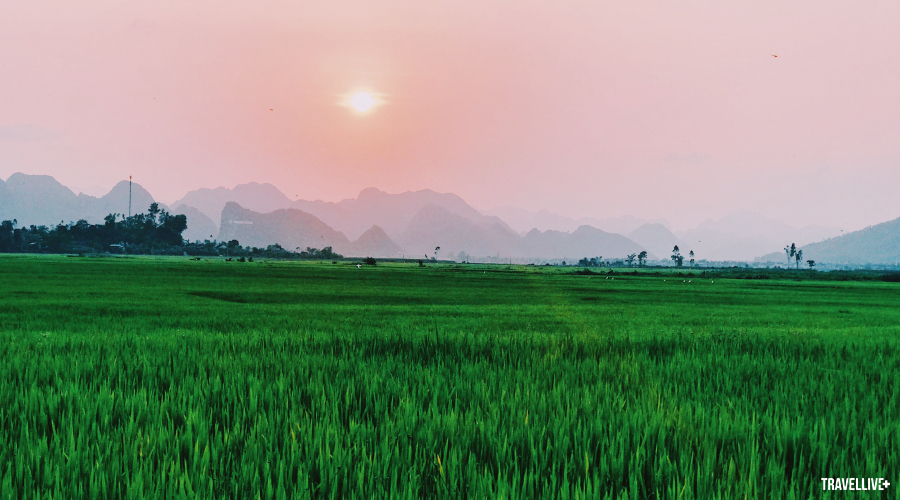
On the way back, cycling through several rice fields at sunset behind the limestone mountains left me in awe. I stopped to admire the magnificent scenery for a while. And I was once again eager for my upcoming return to Bong Lai.
Additional information:
- Bong Lai Valley is located in Hung Trach commune, Bo Trach district, Quang Binh province.
- From the center of Phong Nha, follow the Ho Chi Minh Highway towards Dong Hoi for about 6 km until you reach Bung Bridge. Turn right and continue for another 2 km to reach Moi Moi Farm, located on the right side of the valley. During the rainy season (October to December), the road to "Pub with cold beer" or "Bong Lai Ecofarm" is quite difficult. Motorbikes can access these locations, but cycling offers more interesting experiences (such as cycling across the river) and allows you to reach more destinations in the Bong Lai valley.
- Mối Mối Farm and Bồng Lai Ecofarm are open from early morning until around 6 PM, selling local food and drinks. Bồng Lai Ecofarm specifically offers cricket viewing tours, dishes made from crickets, swing rides, and one drink for 150,000 VND per person. However, to comply with Covid-19 prevention regulations, these services are currently temporarily closed.






.jpg.jpg)