VI
VI


Legends of the Qixi Festival in China
The Qixi Festival, also known as the Eastern Valentine's Day, takes place on the 7th day of the 7th lunar month every year and is associated with the legend of the Cowherd and the Weaver Girl.

Google's Tanabata Day Doodle
The legend has many variations, but all agree that Niulang was a kind and gentle cowherd who won the heart of Zhinv, the youngest daughter of the Queen Mother, who wove the five-colored clouds in the sky. However, their love was forbidden and they were separated by the Milky Way, the boundary between the mortal and immortal realms. They wept by the river. Finally, moved by their love, the Queen Mother ordered her flock of crows to form the Magpie Bridge across the river, allowing the couple to meet once a year on the Seventh Day of the Seventh Month.
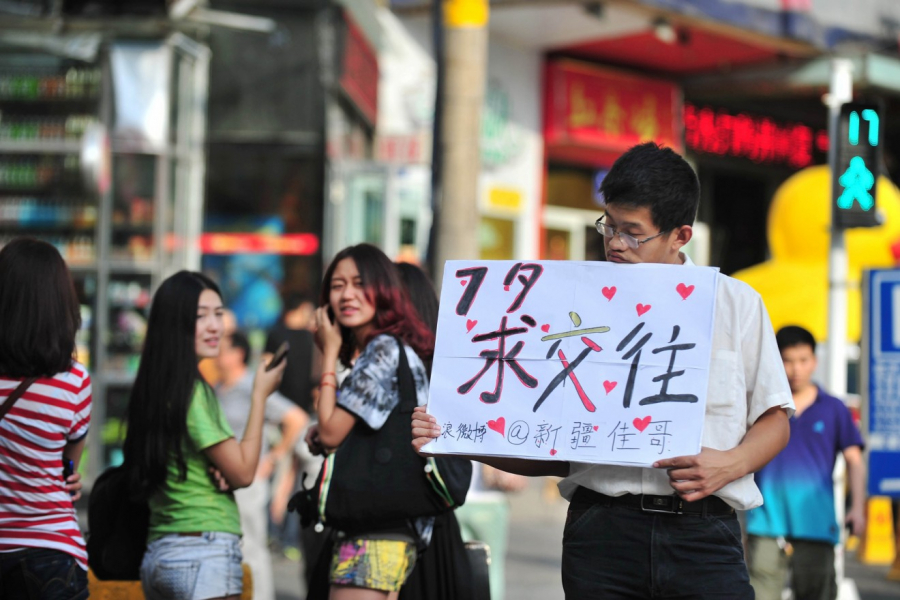
A young man displays a sign seeking a girlfriend on the Qixi Festival (Chinese Valentine's Day) in Ürümqi, Xinjiang, China.
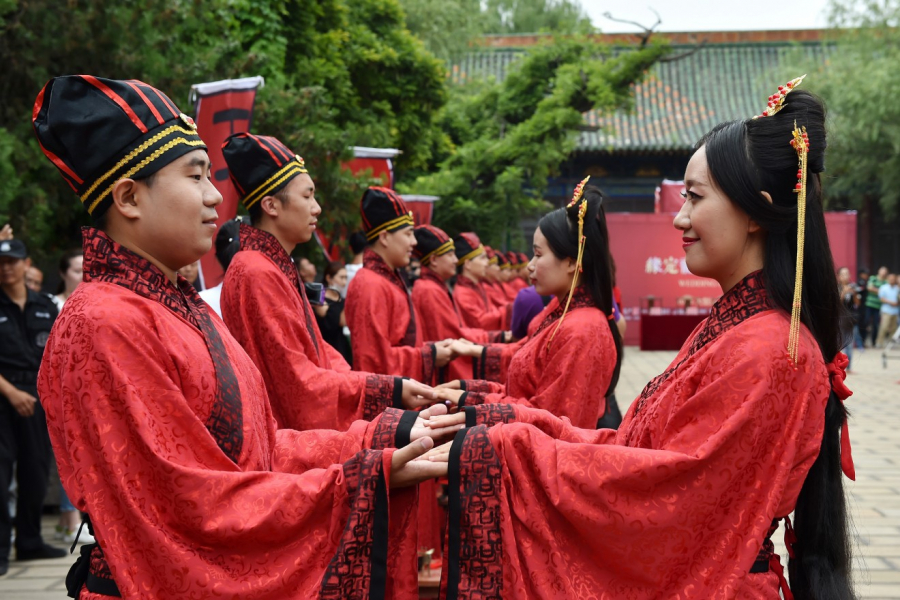
A mass wedding ceremony took place at the Confucius Temple in Taiyuan City, Shanxi Province, China, on the Qixi Festival in 2016.
Qixi Festival is an important Chinese festival, also known as the Qixi Festival, the Day of the Clever Craftsman, or the Double Seventh Festival. There are many ways to celebrate Qixi Festival in China. However, the most popular custom is for young women to display their self-made crafts and pray for a good husband, thus it is also considered a festival of domestic skills for women.
Tanabata, the Tanabata festival in Japan.
Tanabata, also known as the Star Festival, also originates from the Eastern Tanabata festival. The date of Tanabata varies by region in Japan, but it is always celebrated according to the Gregorian calendar, usually on July 7th.

Today, Japanese people often celebrate Tanabata by writing wishes, sometimes in the form of poetry, on tanzaku (short books), small pieces of paper, and hanging them on bamboo branches, sometimes with other decorations. The bamboo and decorations are often floated on the river or burned after the festival, around midnight or the following day, similar to the custom of floating paper boats and burning candles on the river during the Obon festival.
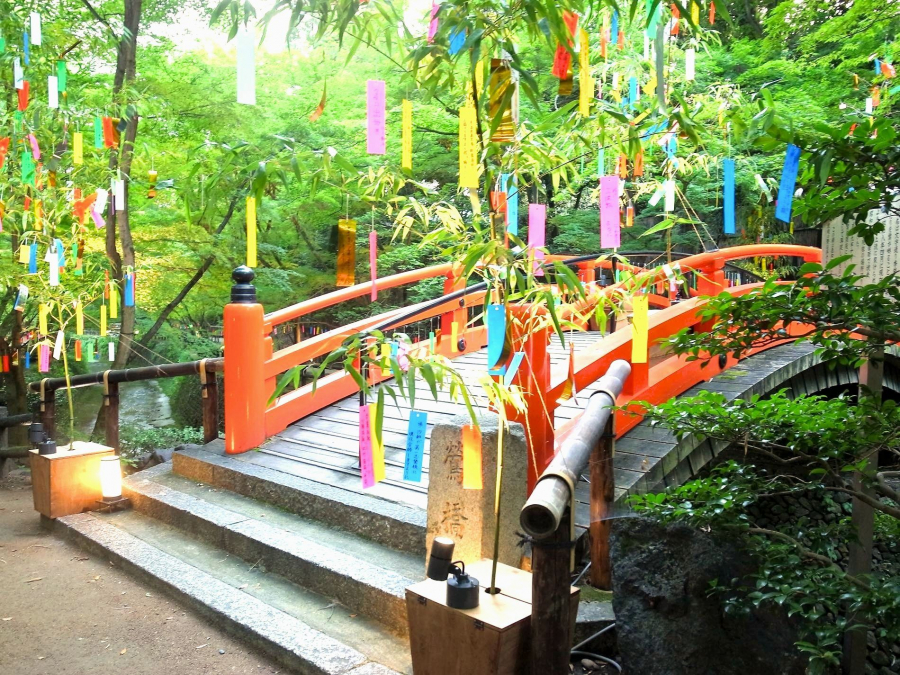
The Japanese often celebrate Tanabata by hanging wishes on bamboo branches.
Large-scale Tanabata festivals are held in many places throughout Japan, mainly along shopping malls and streets, decorated with large, colorful displays. Events include parades and Miss Tanabata contests. Like other Japanese festivals, many outdoor stalls sell food, offer festival games, and add to the festive atmosphere. Tokyo Disneyland and Tokyo Disney Sea often hold Tanabata festivals with parades featuring Minnie as Orihime and Mickey as Hikoboshi. The Tanabata festival has also been incorporated into Japanese schools, where, in addition to writing wishes, students can decorate their classrooms and compose poems.
"Mr. and Mrs. Ngau" in Vietnam
In Vietnam, it often rains on the Qixi Festival, a day known as "Ngâu rain." There's a folk saying: "It's said that in the seventh month, there's Ngâu rain, even the Son of Heaven marrying a cowherd is troublesome." Legend says the rain is the tears of the Cowherd and the Weaver Girl when they meet, and the Qixi Festival is also called the "Ngâu Festival" for this reason.
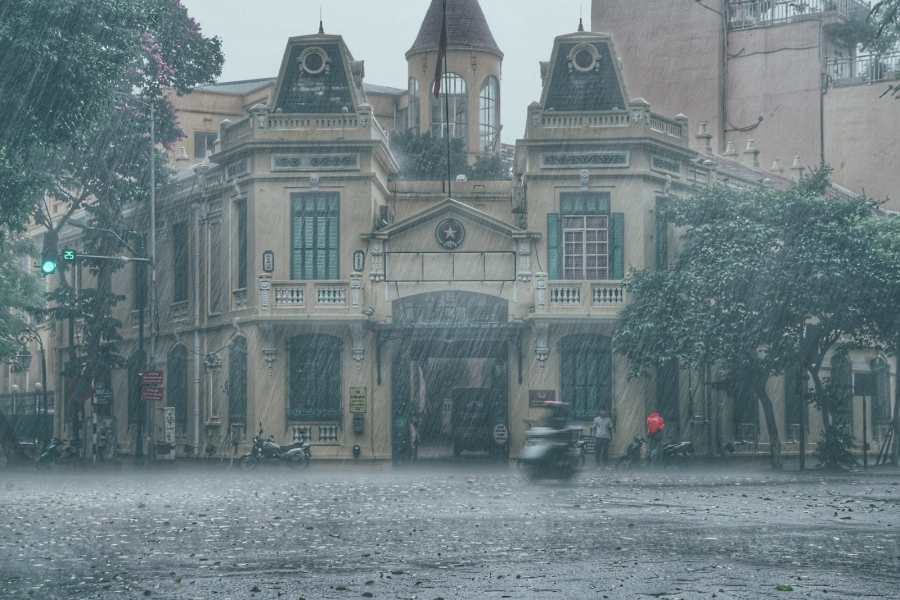
In Vietnam, it often rains on the Qixi Festival (the seventh day of the seventh lunar month).
If it doesn't rain, lovers often go to temples to pray for lasting and unwavering love, gaze at the stars of Altair and Vega together, and make vows. On the night of the Seventh Day of the Seventh Month (Qixi Festival), the star Vega shines exceptionally brightly. People believe that if two lovers gaze at the stars of Altair and Vega together on the night of the 7th, they will be together forever.
The love story of the buffalo herder and the weaving fairy has also inspired many contemporary Vietnamese musical works, such as the song "Mưa ngâu" by composer Thanh Tùng, or "Chuyện tình Ngưu Lang - Chức Nữ" by Mạc Phong Lĩnh with the lines: "Heartbroken that their love was unfulfilled, both weep and lament their fate, but why does the rhythm of suffering not reach the heavens?" When separated from his lover, composer Lam Phương also borrowed this story to write the song "Thu sầu" with the lines: "A person returns from a thousand miles away carrying sorrow, the bridge of the Magpie Bridge leads to the future..."
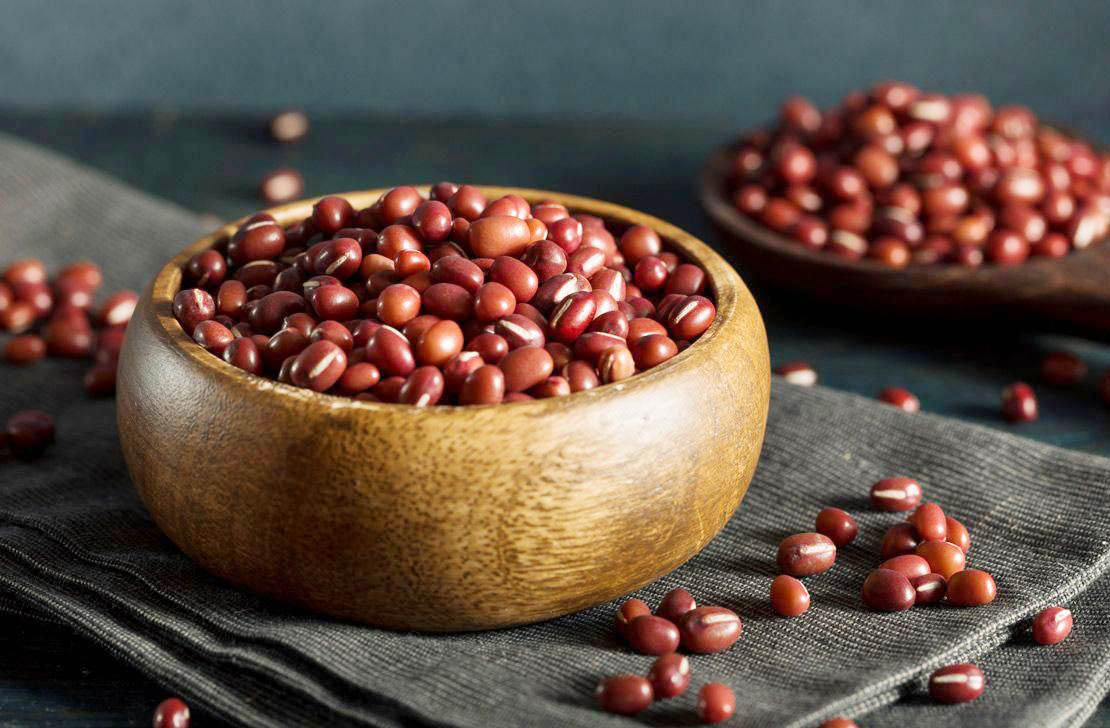
The custom of eating red beans on the Qixi Festival (Chinese Valentine's Day).
On this day, it is also said that eating red beans is a way to pray for good luck in love, to soon meet one's soulmate or to be with the person one is in love with. And for those who are already in a relationship, eating red beans will help you stay together for a long time and have a lasting love.
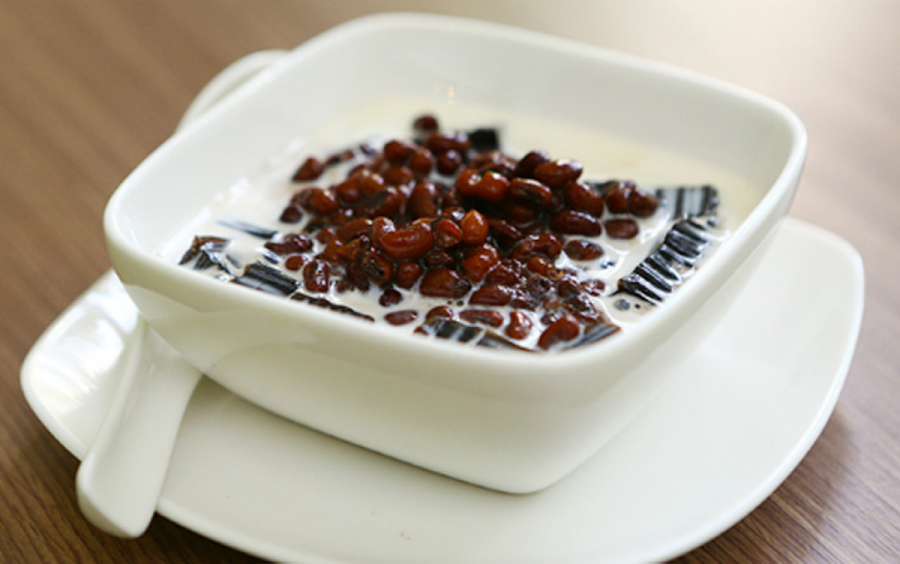
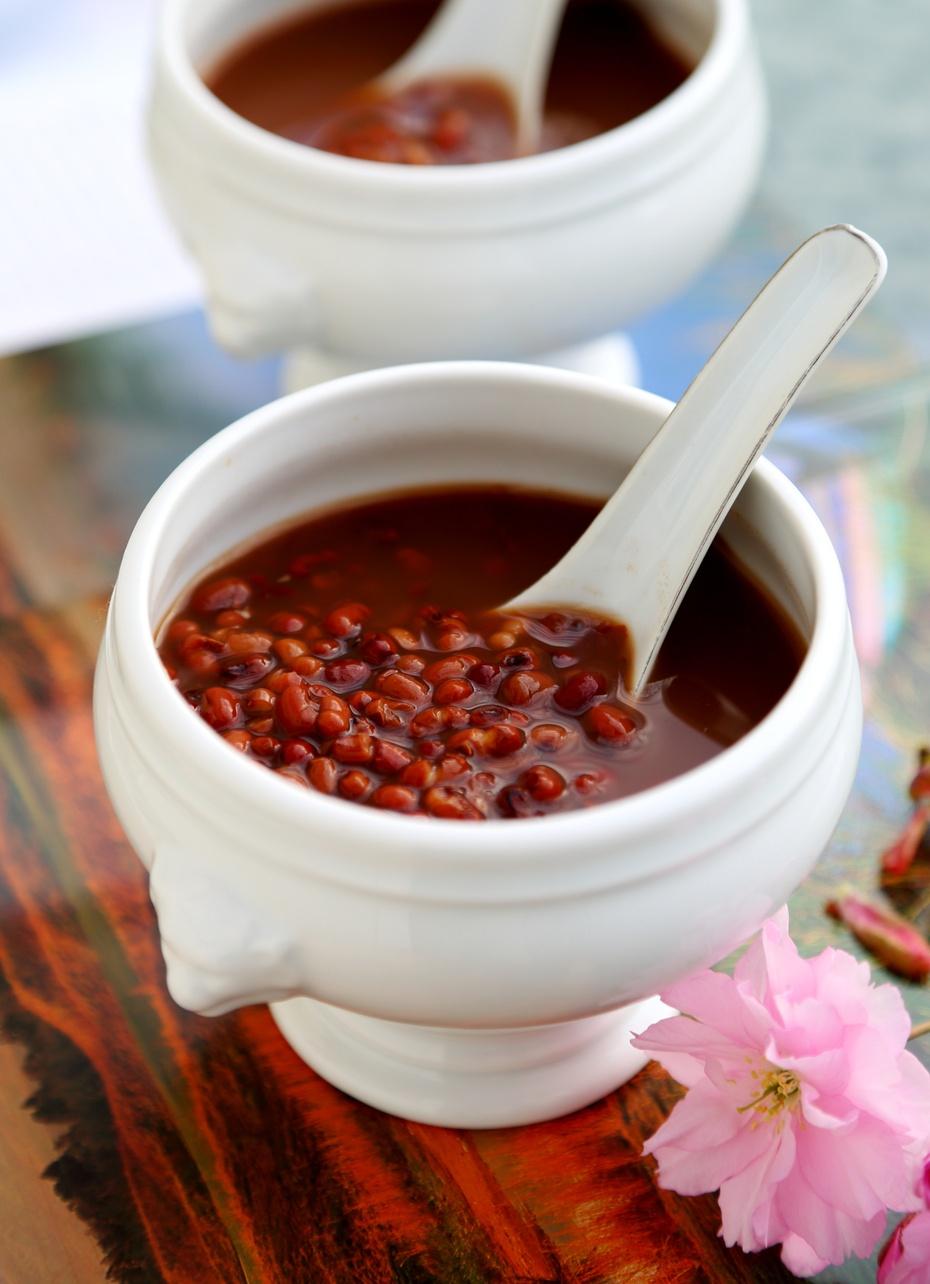
Red bean sweet soup is considered a lucky dish on the Qixi Festival (Chinese Valentine's Day).
There are many dishes made from red beans, such as red bean sweet soup, red bean buns, red bean dorayaki, red bean sticky rice, red bean porridge, etc. If you can't make them yourself, you can visit places selling red bean sweet soups and choose from a variety of red bean flavors. For example, mixed red bean sweet soup, red bean yogurt sweet soup, red bean milk tea, red bean bingsu... On this day, red bean sweet soups and drinks are guaranteed to be extremely popular. Although it's unclear whether eating red beans actually brings good luck to those who are single, the delicious and appealing flavor of red beans is definitely worth trying.