VI
VI


Unique traditional cultural features of the White Plateau
During the sunny summer days, when the hillsides of the Bac Ha plateau are laden with clusters of ripe red plums, it is also the time when pack horses, the "barefoot riders," temporarily set aside their daily farming work, eagerly preparing to participate in the traditional horse racing competition - a sporting event deeply rooted in the traditional culture of the ethnic groups in the border region of Lao Cai.
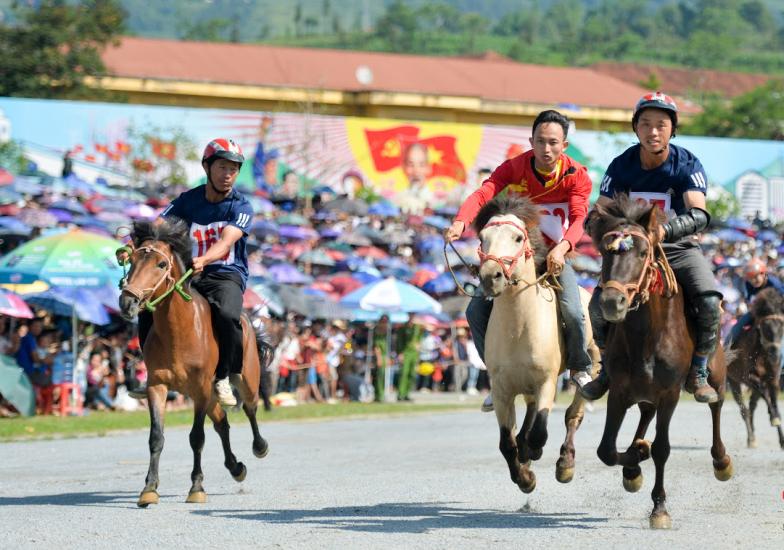
In the mountainous districts of Lao Cai, horses are both an important means of daily transportation and a close companion. The mountain roads are winding, steep, and rocky, but these "indispensable helpers" continue to assist the Hmong people day after day, supporting their journeys to the fields to plant corn and rice on the mountaintops.
Horses are companions in everyday life but also sacred animals in the religious beliefs of the Hmong people. According to Ms. Chu Thi Duong, Vice Chairman of the People's Committee of Bac Ha district, maintaining the traditional Bac Ha Horse Racing Tournament is one of the local efforts to honor the beautiful cultural values of the ethnic minorities in the highlands.
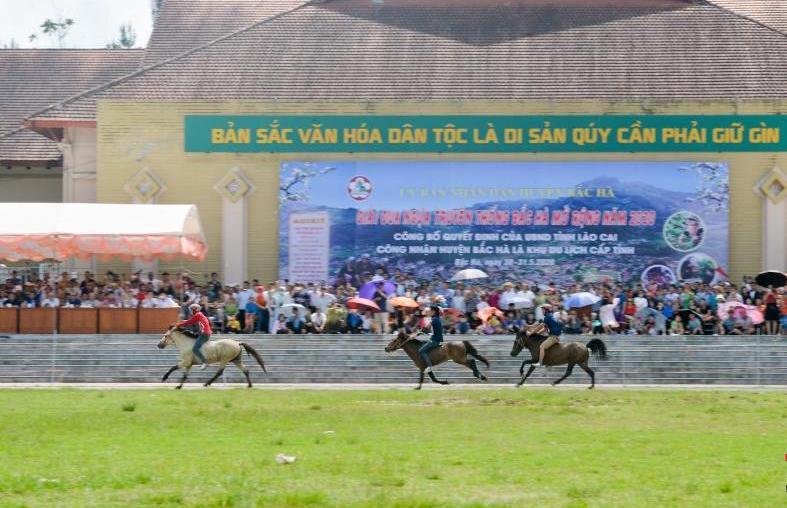
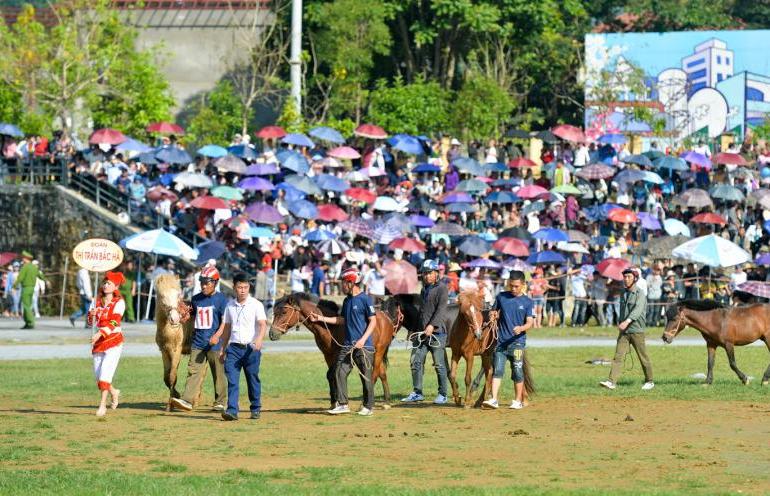
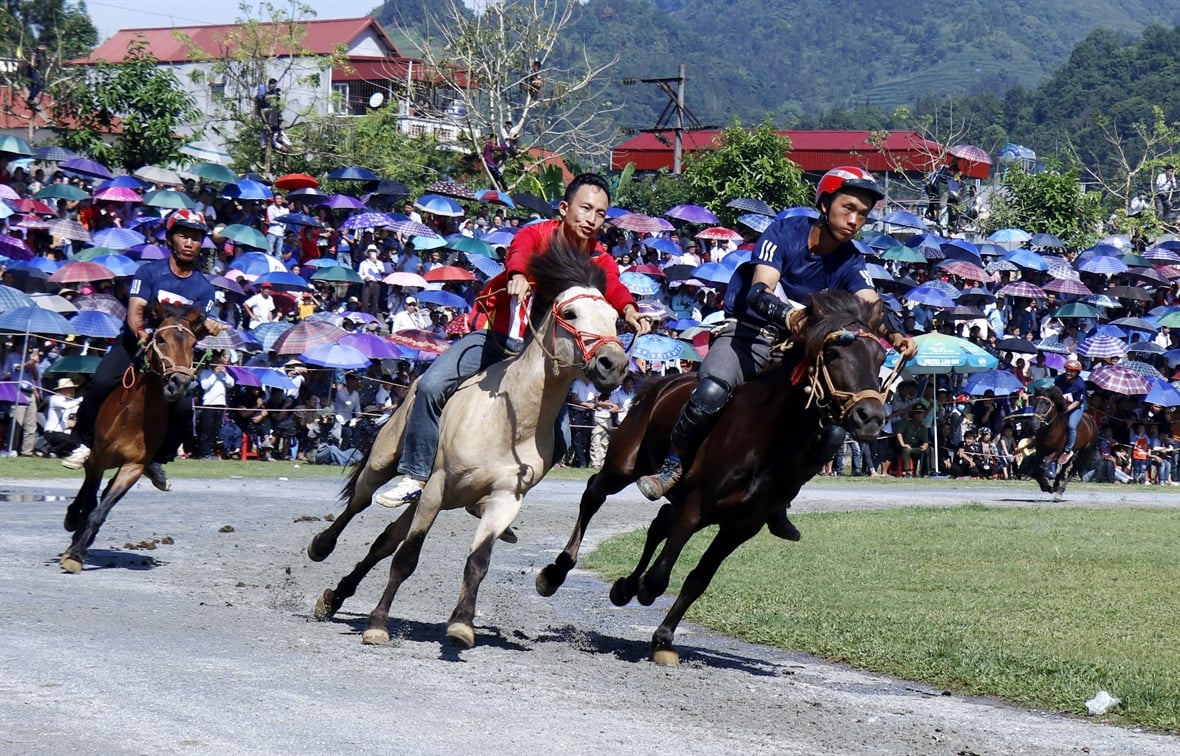
In the past, horse racing festivals often combined shooting contests and the snatching of a red ball; whoever raced the fastest horse and hit the target the most times would be the winner. However, nowadays, horse races in Bac Ha no longer include shooting contests to ensure safety, and the riders have their own dedicated race arena. The races are now organized in a more professional and attractive way for spectators.
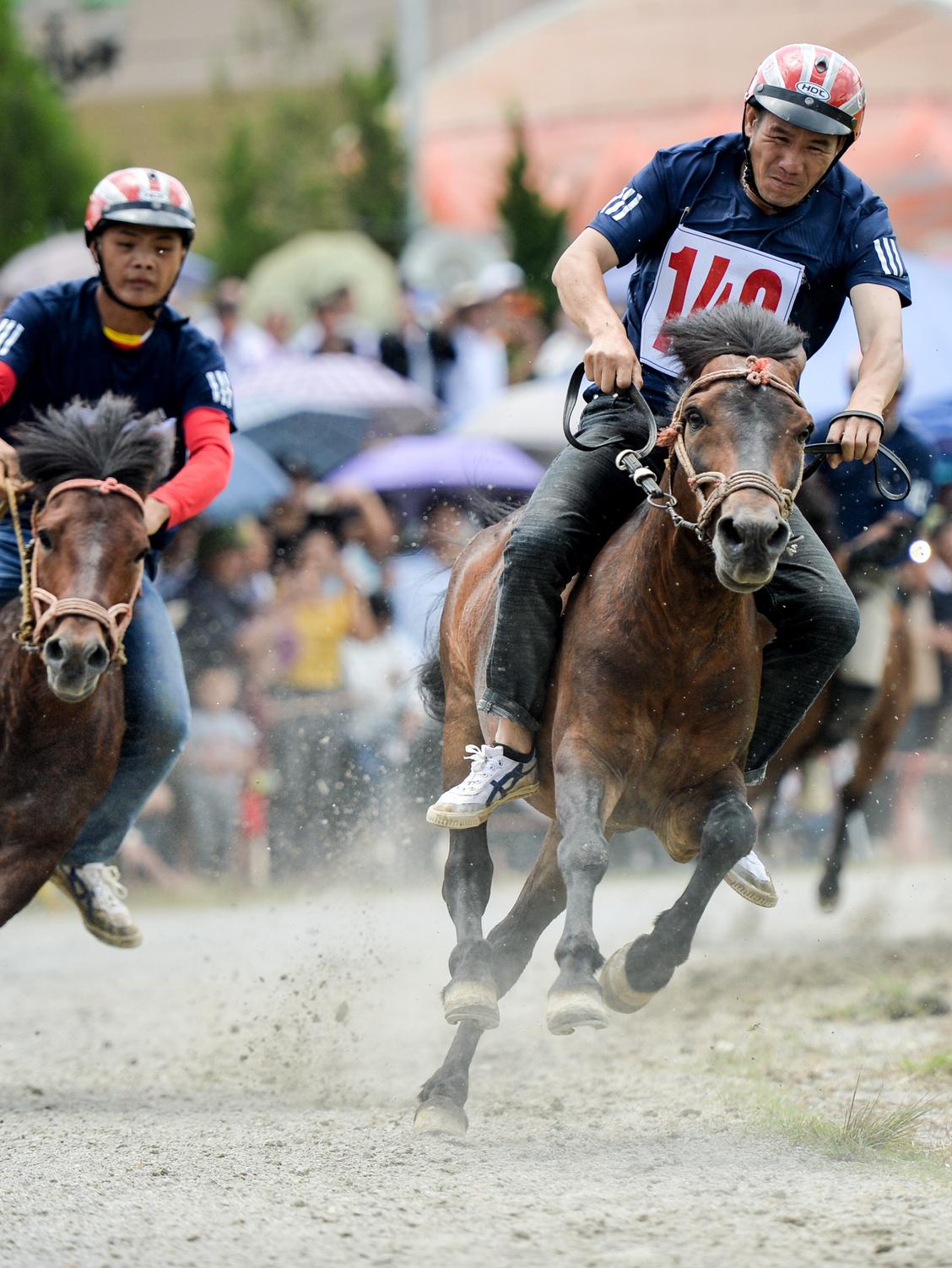
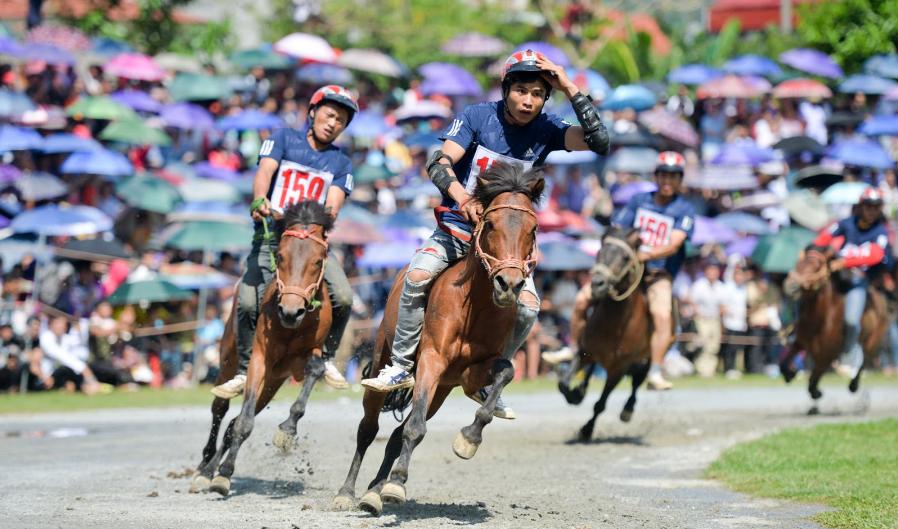
Not commercial in nature, nor a professional race, horse racing in Bac Ha is a race for farmers, and the racehorses are essentially pack horses. Notably, horse racing in Bac Ha is "barebone racing," where riders ride on horseback without saddles or stirrups, using only a harness and two iron hooks attached to ropes on either side of the horse's jaw for control.

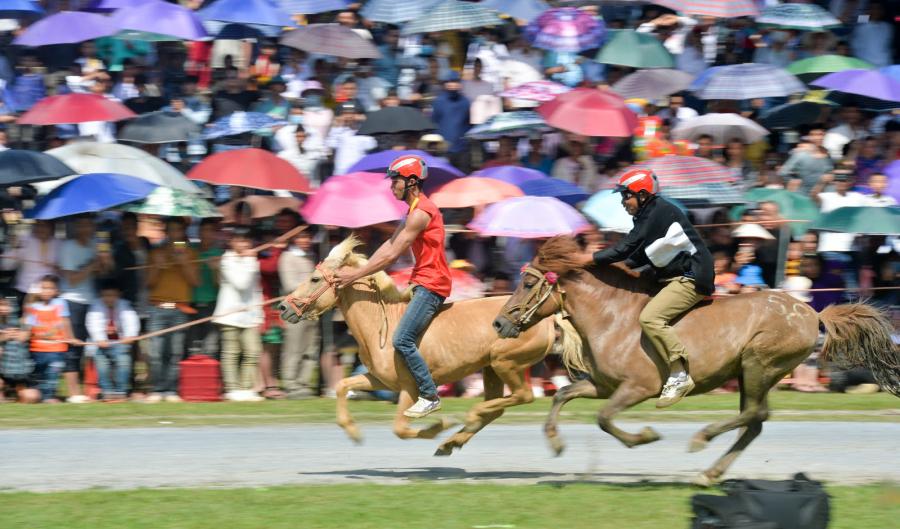
During the competition, watching the jockeys hunched over the backs of their galloping steeds revealed the difficulty and courage of the riders on the racetrack. Vang Van Huynh, a jockey who won two consecutive championships in 2012 and 2013, shared: "During the competition, it's crucial to observe your opponent's horse to control your own, maintaining distance and avoiding collisions that could easily lead to accidents."
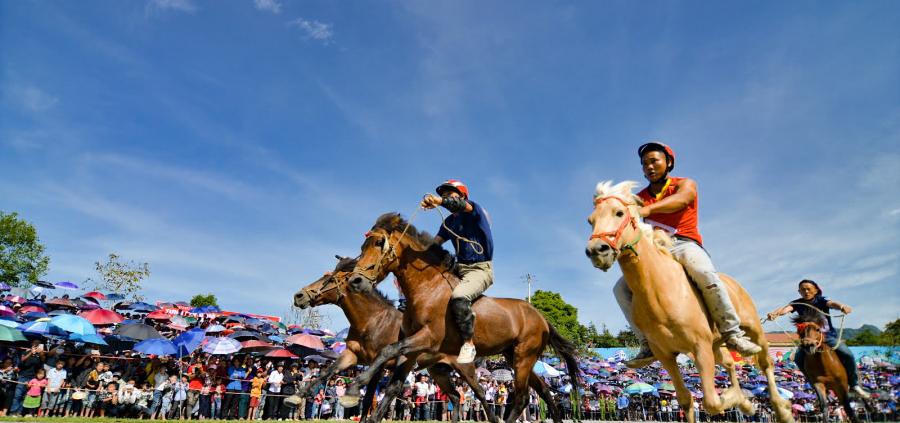
The Bac Ha horse racing festival is organized on an increasingly professional scale, making the preparations for the race between the jockeys more elaborate. Mr. Sung Seo Dung, from Su Man Khang village, Ta Van Chu commune, Bac Ha district, a renowned horse breeder in Bac Ha, said: "Good horses for racing must be male horses with a tall, large build, long, straight hooves, long, smooth coat, sharp eyes, broad chest, slender belly, and a long, even stride. Horses with splayed hooves like duck feet are poor runners."
Highlights of the 2020 horse racing festival
The 14th expanded traditional Bac Ha horse racing event, organized by the Bac Ha District People's Committee, took place from May 30-31, 2020. However, this year's race was significantly impacted by the Covid-19 pandemic, so the most important aspect of organizing the event was ensuring safety measures and disease prevention.
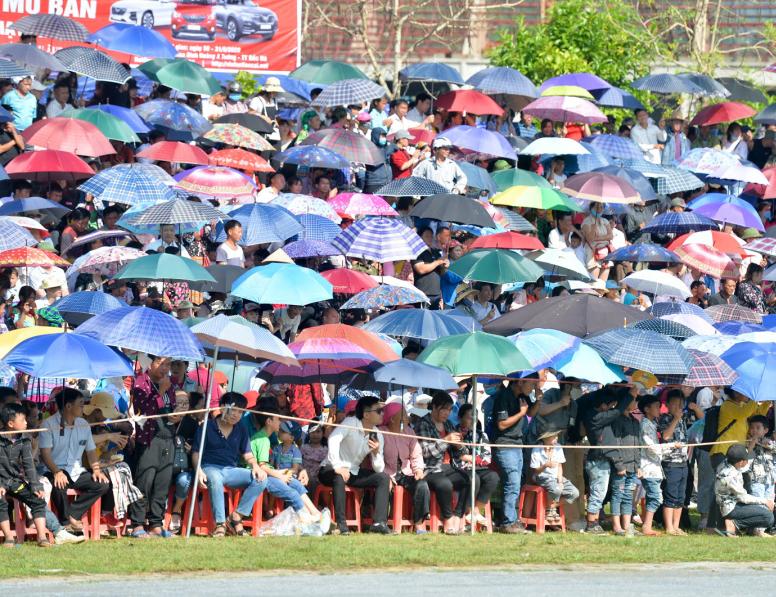
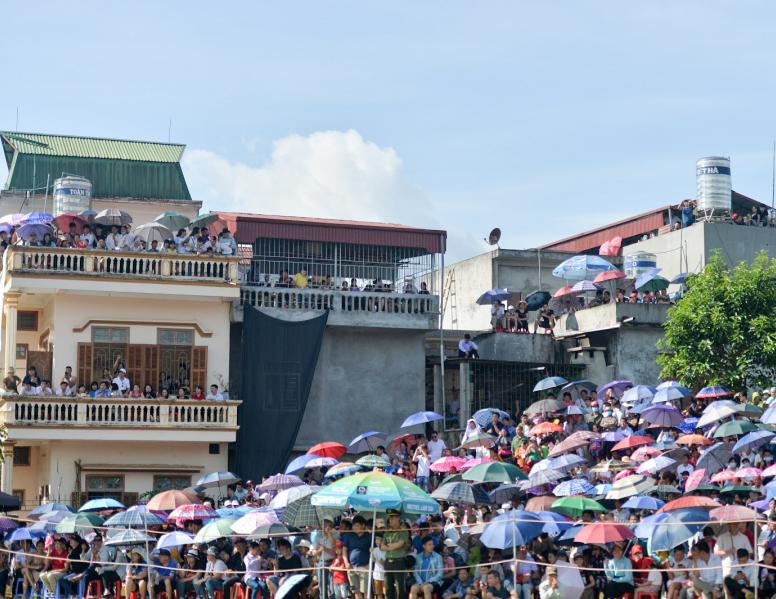
Every year, the traditional Bac Ha horse race attracts a large number of domestic and international tourists. However, according to information from the District's Department of Culture and Information, due to the impact of the Covid-19 pandemic, the number of tourists visiting Bac Ha from the beginning of the year until now has only reached about 60,000 (a 60% decrease compared to the same period last year). Therefore, Bac Ha district hopes that organizing the horse race and related activities will help tourism grow again.
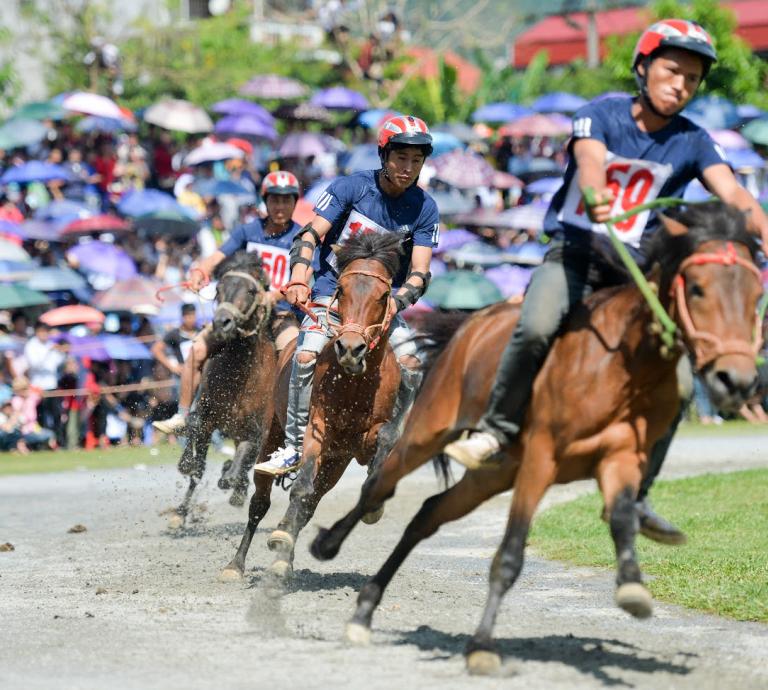
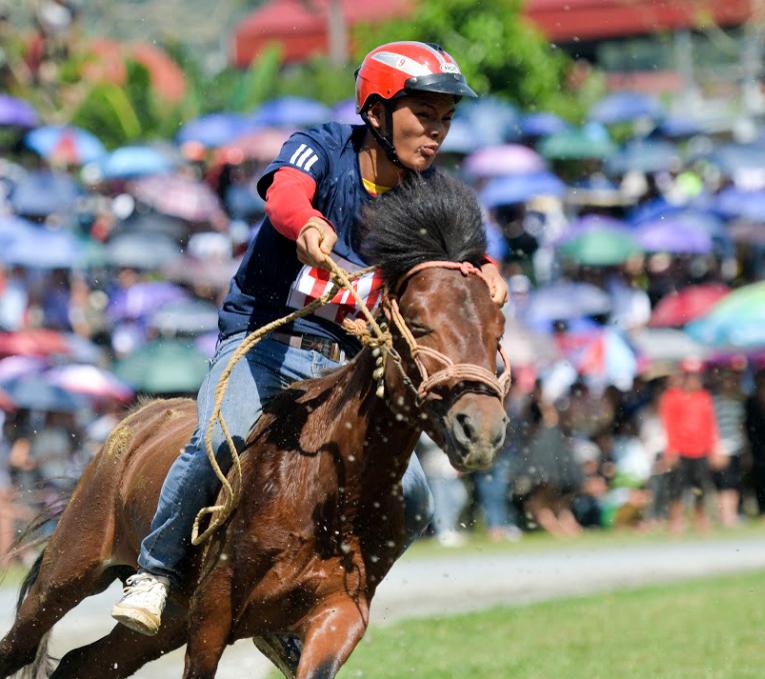
This year's horse race attracted 67 athletes from various highland villages in Lao Cai province, including Si Ma Cai and Bac Ha. The qualifying round on May 30th covered a distance of 1,900 meters, divided into 18 knockout heats to select the top 16. The semi-finals on May 31st selected the four strongest jockeys for the finals, competing for first, second, third, and fourth place. A special highlight of this year's race was the first-ever participation of a female jockey. The presence of Hoang Thi Tuyet, a Tay ethnic woman from Ta Ho village, Ta Chai commune (Bac Ha), added to the excitement of the event.
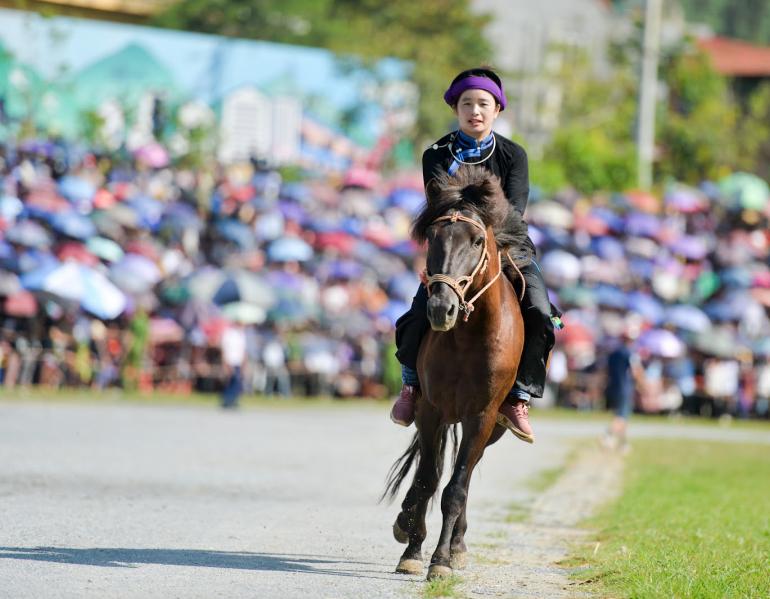
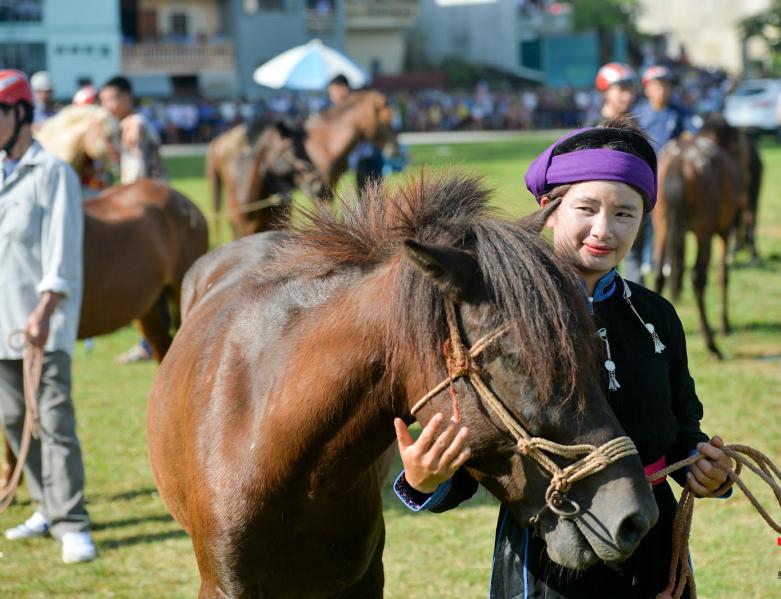
After the final round of the race concluded, the Organizing Committee awarded the first prize for the team competition to the jockeys from Na Hoi commune, and the second and third prizes to those from Ban Pho commune. Regarding individual achievements, the Organizing Committee also awarded first prize to jockey number 148, second prize to jockey number 123, and third prize to jockey number 144.
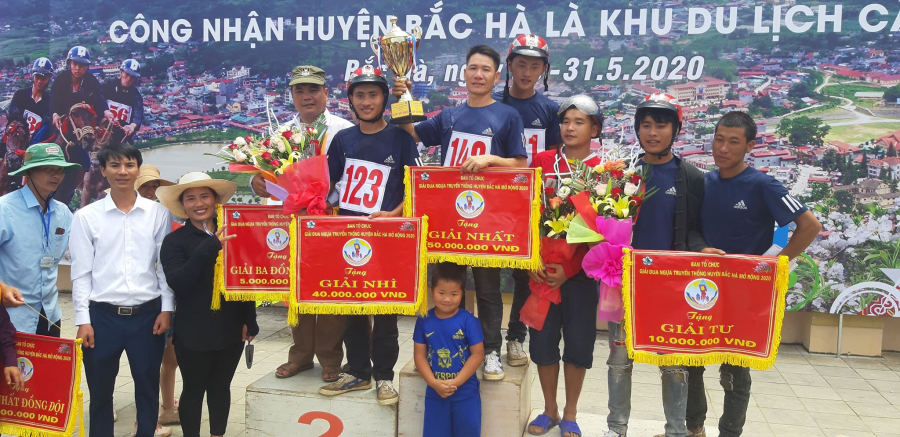
On the tracks of the traditional Bac Ha horse race, visitors are always left with a feeling of exhilaration and admiration for the simple, courageous Bac Ha jockeys and their resilient, powerful amateur racehorses.