VI
VI


Hanoi is entering autumn. To put it simply, as the people of Hanoi often say, this is the most beautiful season of the year because of the pleasant weather and picturesque scenery. I chose a beautiful day to visit Cuoi Ngo after almost a year since I last set foot there.
Nestled in the narrow alley at 68 Cau Giay Street, Cuoi Ngo Cafe often leads first-time visitors astray. It's no surprise that first-time visitors are often surprised by its small yet intimate and peaceful atmosphere. Leaving behind the hustle and bustle of the city, Cuoi Ngo Cafe transports you back to a slower pace of life. Here, you'll be immersed in a familiar yet strange blend of the colors of bygone days.
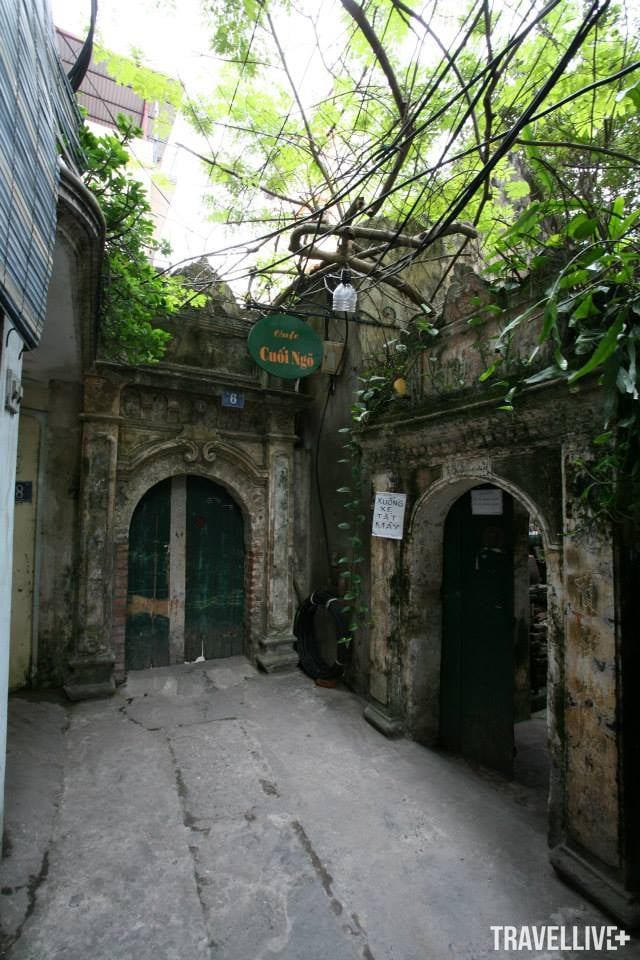
The gate, about two meters high, resembles a miniature version of the old village gates.
"The rain continues to fall on the ancient tower."
Long sleeves, how many seasons have passed with pale blue eyes?
Listening to the autumn leaves rustling in the rain, wearing down little heels.
The long, winding road makes the eyes even more captivated…”
Stepping into the cafe, Trinh Cong Son's music filled the small room. I ordered my usual drink, the one I used to order often. And then a conversation ensued between me and the owner, Mr. Nguyen Dang Khai.
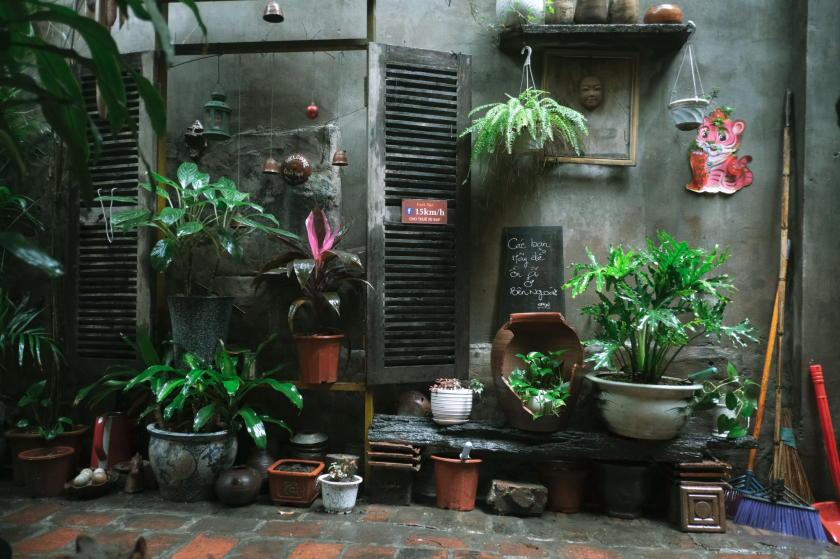
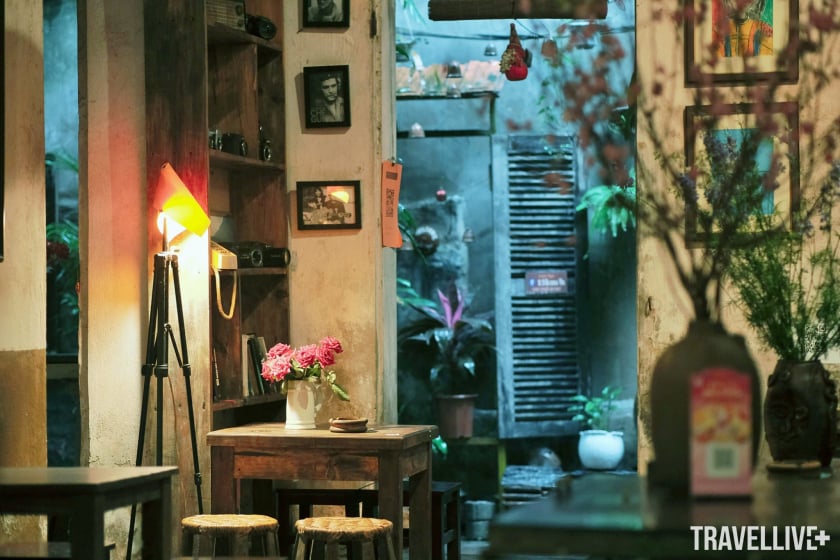
The house truly evokes the feeling of "a place to return to" for many generations of people who have lived in Hanoi.
Cuối Ngõ has been around for almost 20 years. The space is bathed in warm yellow light, and the low-roofed, single-story house, along with the old-fashioned dark brown wooden tables and chairs, creates a warm and peaceful atmosphere. Over the past 20 years, Cuối Ngõ has welcomed countless customers with their own stories; things have changed many times, but that familiar, soft yellow light remains as it was from the beginning.
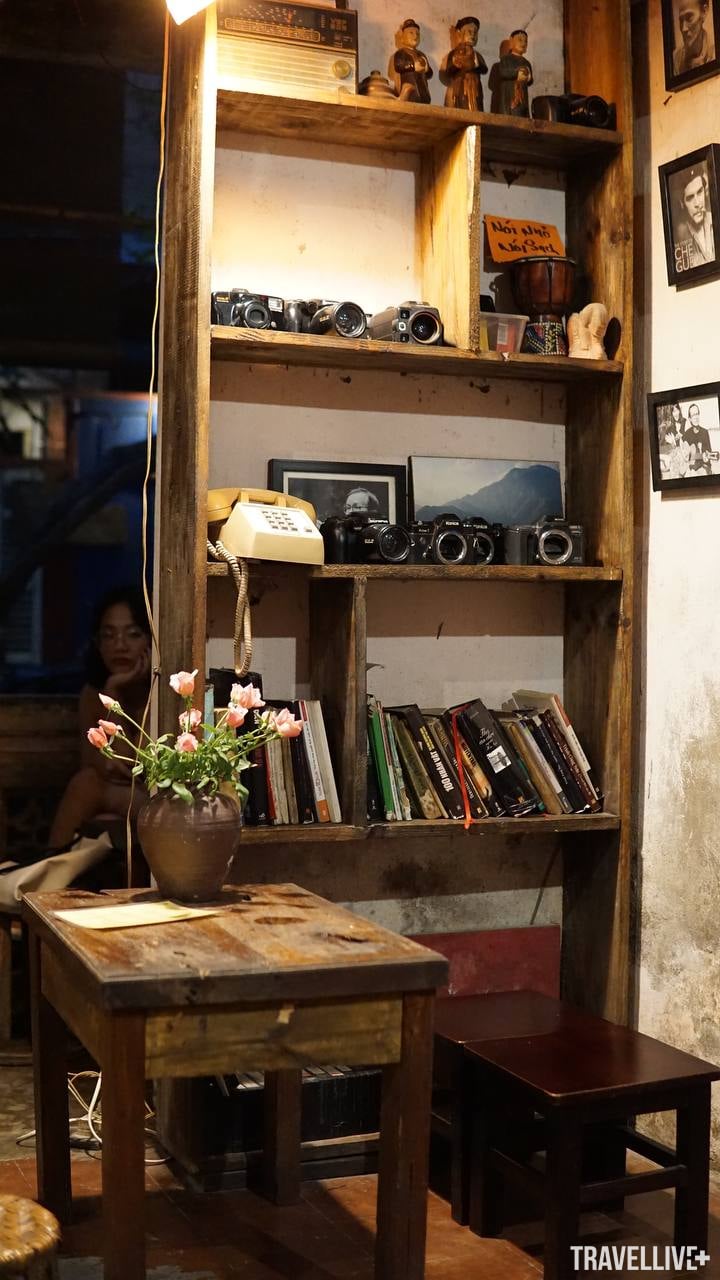
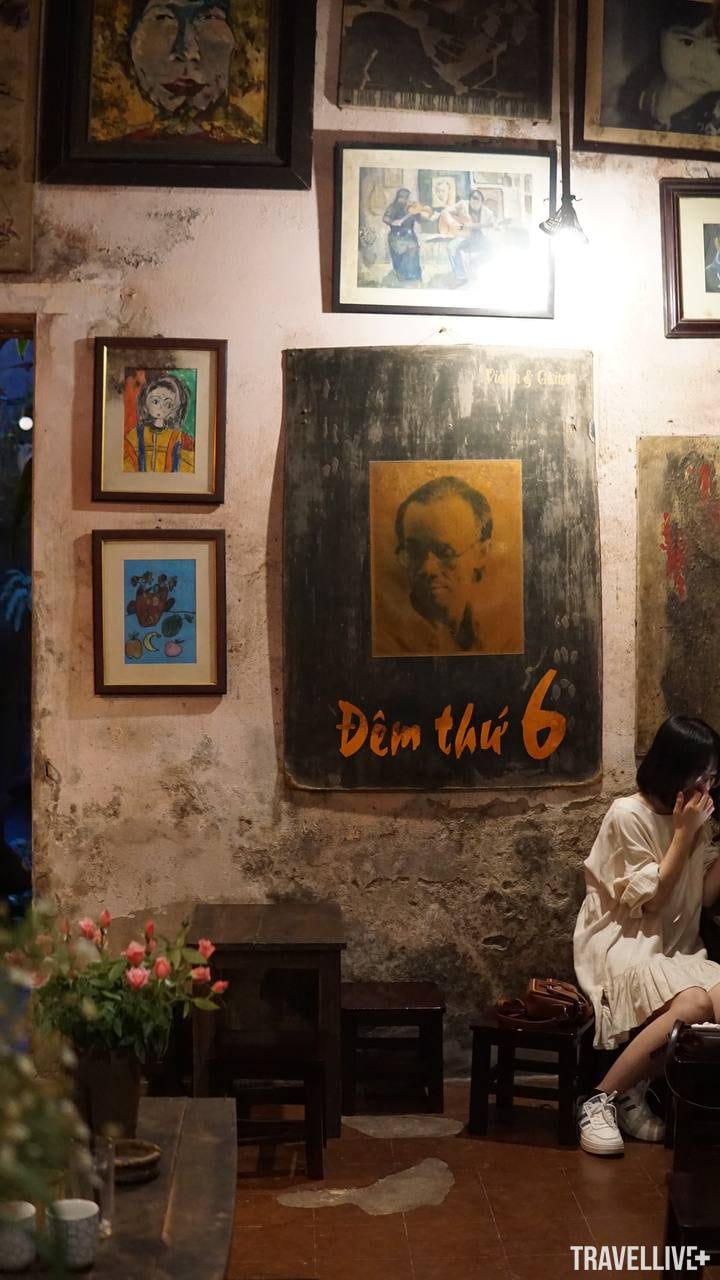
When I asked Khai about the idea behind the creation of Cuoi Ngo and the story that followed, he burst out laughing.

He recounted: “For me, 'End of Alley' represents both work and life. Some might feel disappointed and find this illogical given the space, but that's the reality. Of course, even though it's my job, why I chose this location to open the cafe is another matter entirely. I personally prefer quiet. It was different 20 years ago compared to now. 20 years ago, there was no social media or smartphones; people only communicated using old-fashioned mobile phones. Making the decision to open a cafe was quite difficult back then. Gradually, with the influence of media, things became much easier. When I first opened, it was mainly artists and mostly my friends, people who liked quiet corners. And the customers who frequented it were usually those who appreciated tranquility.”
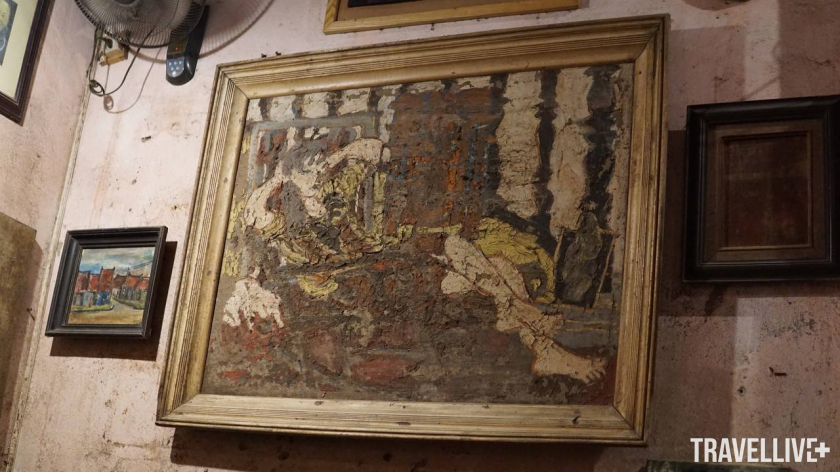
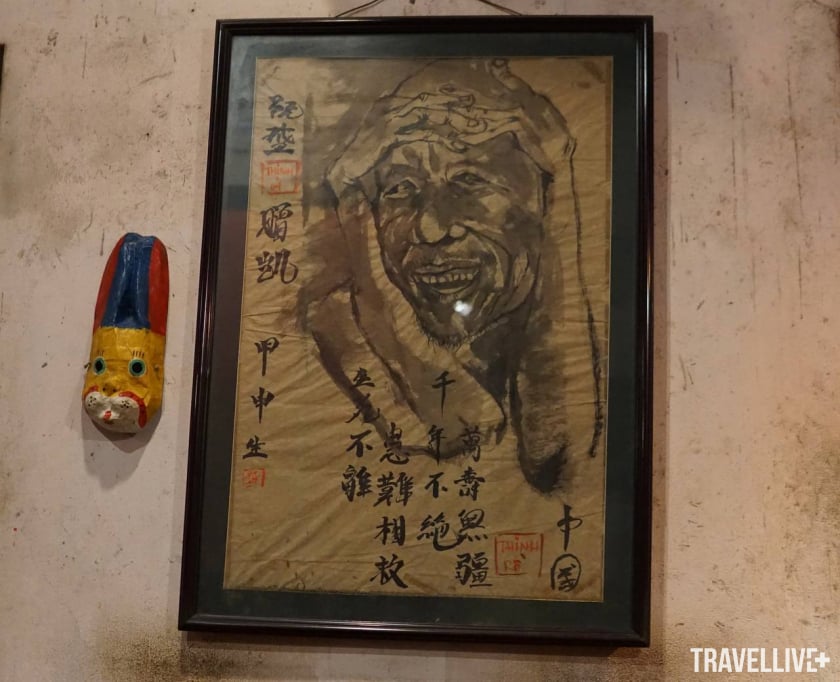
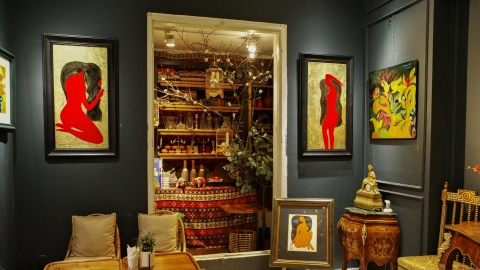
Some of the paintings are old and quite significant.
Every Friday evening, Cuoi Ngo will dedicate its space to timeless Trinh Cong Son songs performed with warm, mellow guitar and violin melodies, or songs about old Hanoi that bring a uniquely elegant and refined atmosphere.
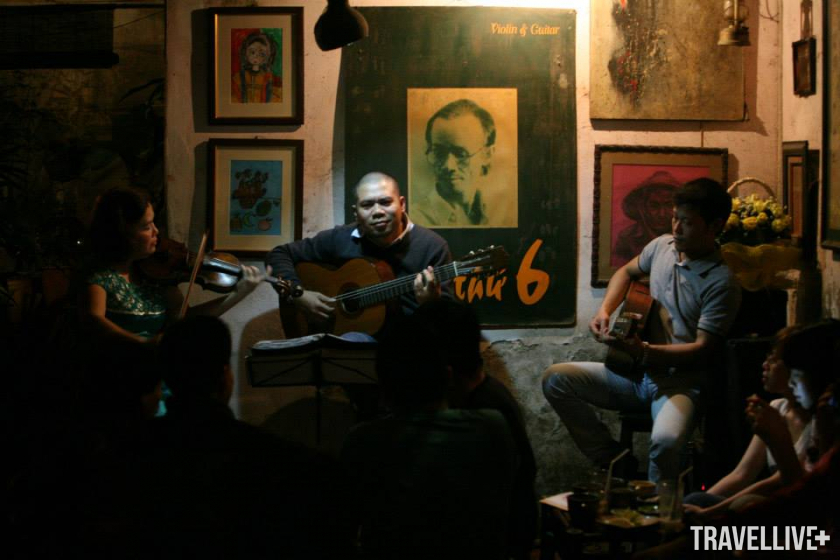
A Trinh Cong Son music performance on Friday night at Cuoi Ngo Cafe.
Mr. Khai believes that the musicians who perform are true connoisseurs of Trinh Cong Son's music. If they don't like Trinh Cong Son's music but still perform, they're no different from "workers playing instruments."
Choosing Trinh Cong Son's music as the highlight of "Cuoi Ngo" (The End of the Alley) probably came to him by chance and intuition.
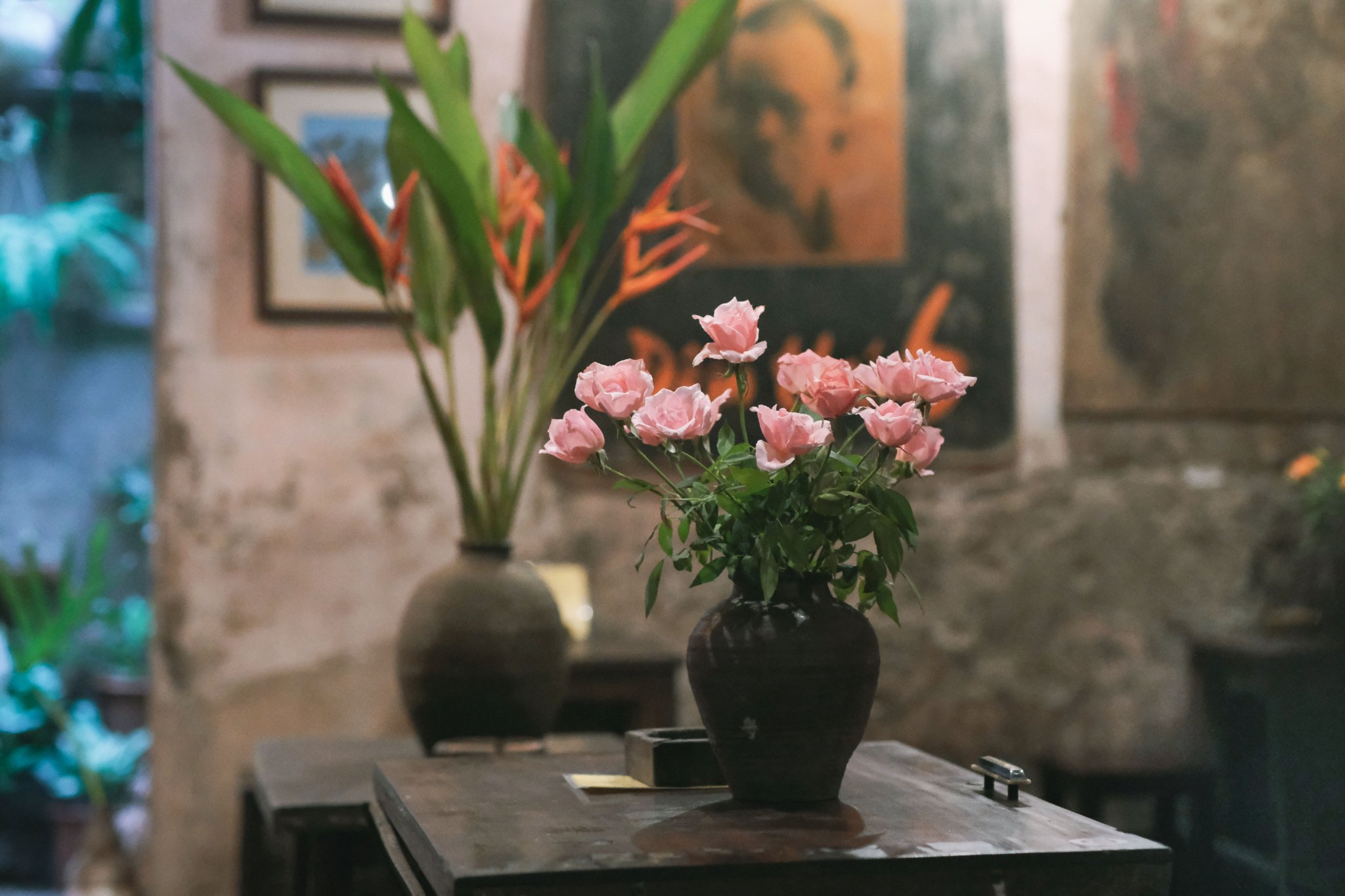
From its early days to the present, Cuoi Ngo has maintained one consistent habit: the flowers are changed very frequently. Day after day, the first thing that comes to mind when I come here is: what flowers will there be today? Obviously, going to a cafe to chat and listen to music is commonplace. But coming to Cuoi Ngo to admire the flowers is also considered a refined pleasure.
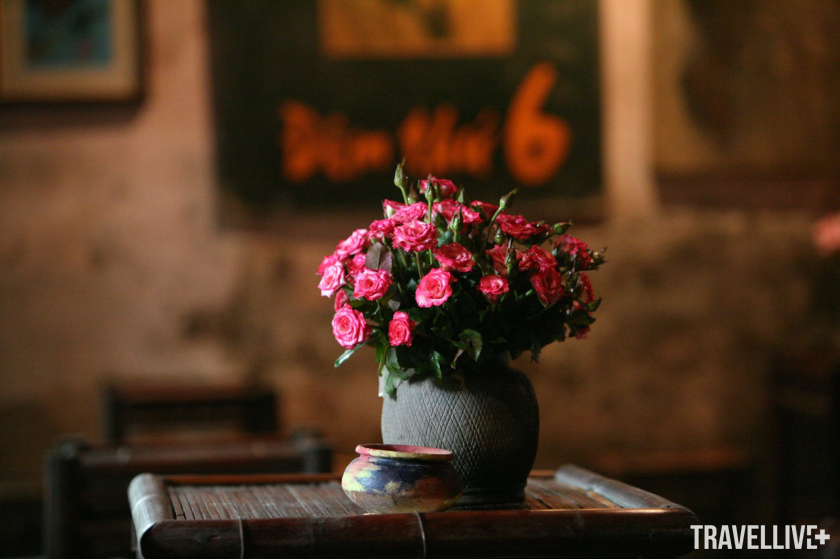
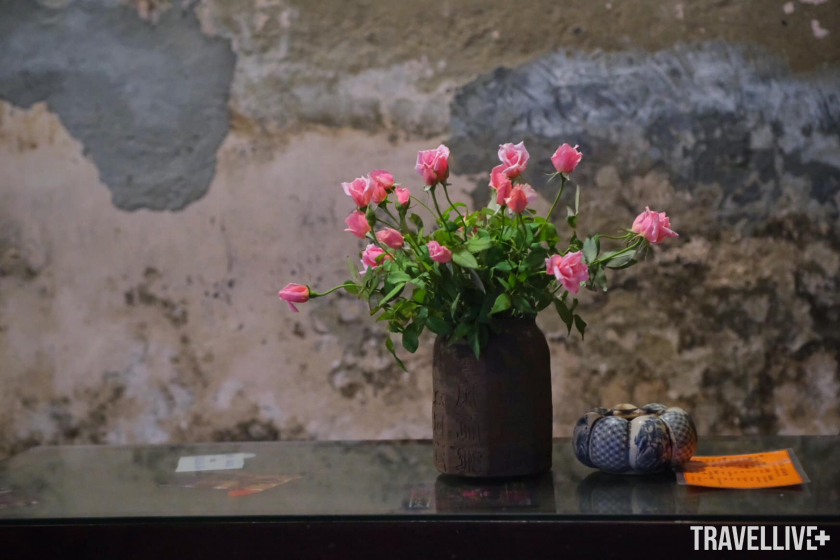
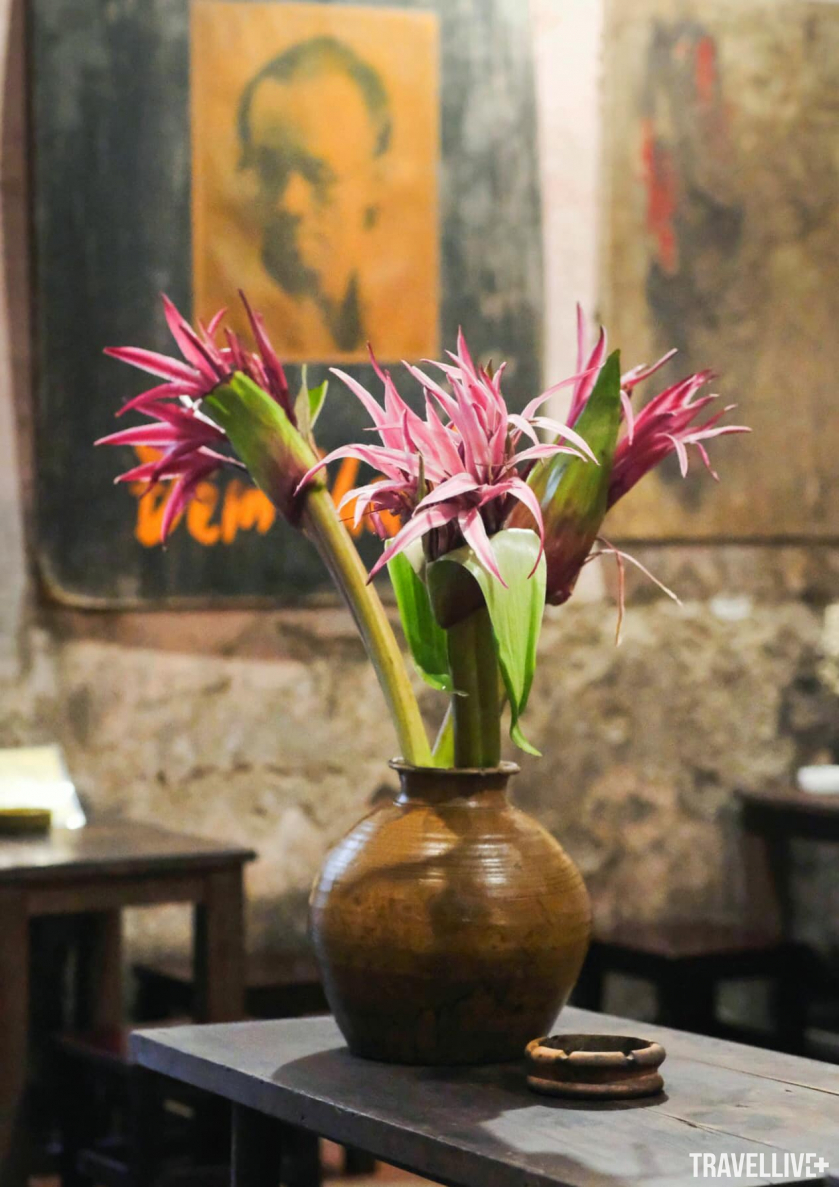
The flowers arranged at Cuoi Ngo usually follow the seasonal trends.
Diners often assume that the flower arrangements displayed on the tables must have been created by a young woman. But few know that Mr. Khai meticulously selects each flower to suit each vase. Each type of flower is usually chosen according to the season. There are lotus flowers, crape myrtle, roses, daisies, and more...
I asked Mr. Khai if, in today's increasingly modern society, young people still "prefer" stylish cafes like Cuoi Ngo. He readily shared: "Customers exist in every era. Cuoi Ngo wasn't created as a trend or a fad. It's been around since its 'beginnings.' To describe Cuoi Ngo, it's mainly about two words: peaceful and intimate. Even after just one visit, there's an 'invisible connection' between people."
Visiting Cuoi Ngo (End of the Alley) is not only about enjoying the classic atmosphere but also about listening to stories and the gentle, soothing melodies of a bygone era. Some believe that in such a setting, one can only truly appreciate the beauty of Cuoi Ngo with a loved one or soulmate.
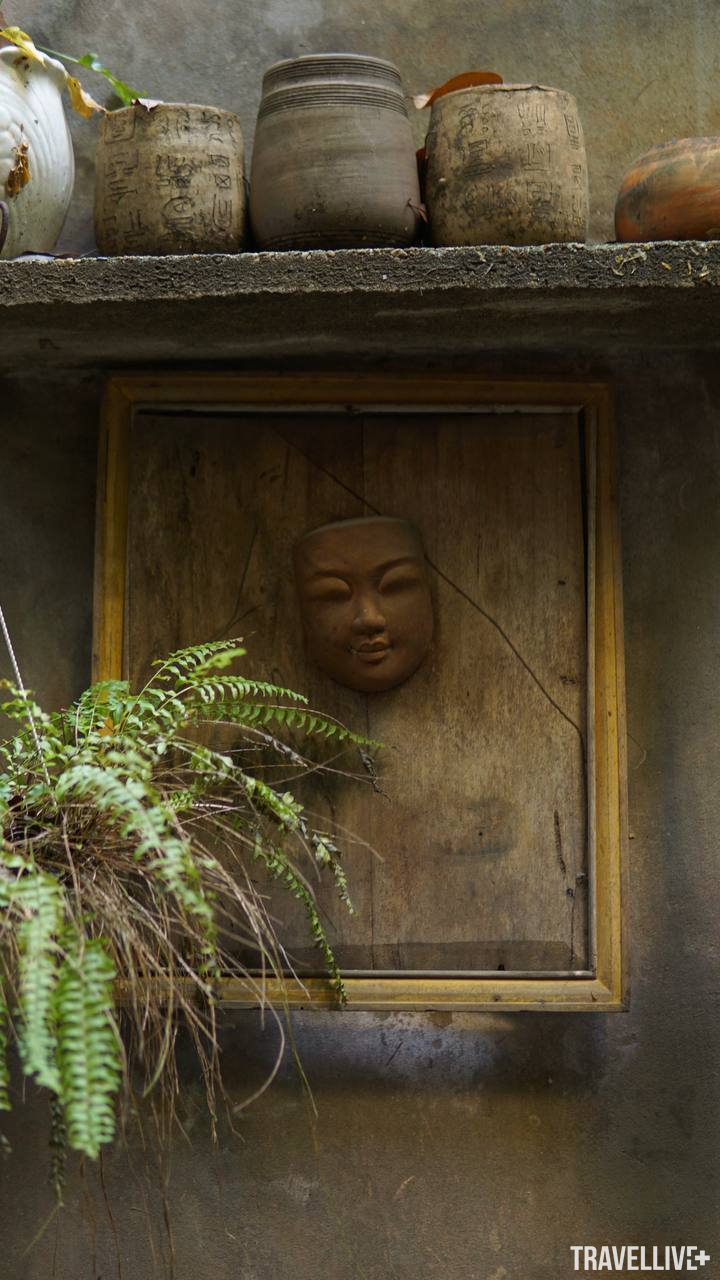
These decorative items are "as natural as breathing."
To be honest, I don't know every word of Trinh Cong Son's music. But whenever the melody plays at Cuoi Ngo (End of the Alley), it has a strange allure. It's not easy to preserve such a simple, unpretentious Hanoi in the heart of the city. Cuoi Ngo creates a sense of the past in the most natural way, not ostentatious, but simply a special little cafe for its patrons.
I once heard that "The End of the Alley" is for those who love Trinh Cong Son's music, for those who silently observe the changing tides of human life, for those who love life with the heart of a despairing soul… Some will find solace here, but others will shed tears because the melodies resonate with their souls.
A few drinks like smoothies, coffee, tea, and wine, along with snacks like roasted peanuts and sunflower seeds, are the main beverages at Cuoi Ngo, as simple as its name suggests.
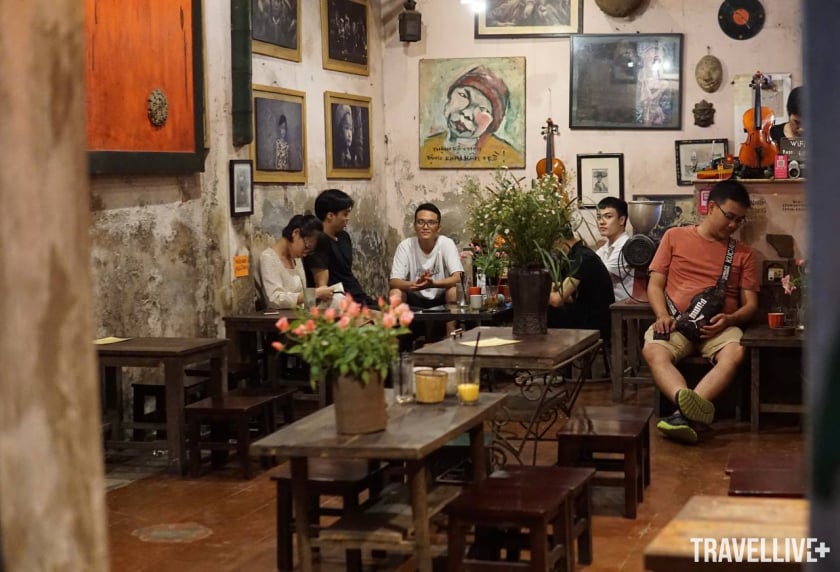
Customers frequent Cuoi Ngo because they love the familiar and cozy atmosphere.
If you're looking for a quiet, classic café for a relaxing weekend and to enjoy some Trinh Cong Son music, Cuoi Ngo is definitely a place worth trying.
"After so many years, you're still just leaving."
Why wander around aimlessly, making life so tiring?
"Shining throughout a century, a realm of coming and going..."