VI
VI


Amidst the constant rotation of Hollywood blockbusters and commercial films released in rapid succession, the fact that Studio Ghibli's animated works, many of which were released decades ago, are being re-screened and still maintain a stable audience is a remarkable phenomenon. This appeal doesn't stem from novelty, but from their ability to bring viewers back to the true spirit of cinema: where the story, images, and emotions are experienced fully within the theater setting.


Generational memories and an expanded theatrical experience.
In Vietnam, Ghibli is deeply intertwined with the memories of many generations of viewers. For those born in the 80s and 90s, it's about watching films on television or old DVDs. For younger audiences, Ghibli is accessible through cinemas, digital platforms, and accompanying cultural activities. When the films are re-released, cinemas become meeting places for multiple generations: parents taking their children to see Totoro, groups of young people experiencing Howl's Moving Castle on the big screen for the first time.
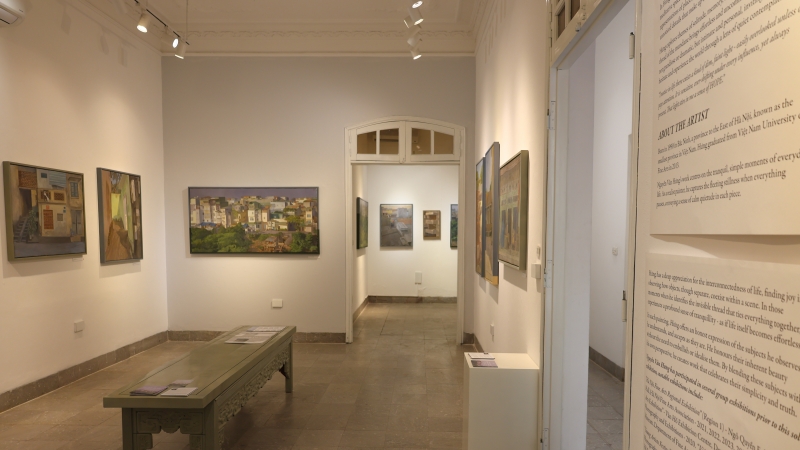
The appeal of the film series is further enhanced by expanded experiences. Many theaters organize exhibitions of Ghibli paintings and photographs, recreating familiar spaces and characters, creating photo opportunities for viewers. Accompanying items such as Ghibli passports and visas for early viewers are collectible, increasing the feeling of "stepping into Ghibli's world" rather than just buying a movie ticket.

Ghibli passports and visas (limited quantity) will be given away to the first people to purchase tickets.
The list of films being re-screened currently includes 9 notable titles:Howl's Moving Castle, Spirited Away, Whispers of the Heart, The Cats' Gratitude, The Wind Still Blows, My Neighbor Totoro, Caligostro Castle, Arrietty and Princess MononokeThis selection encompasses various creative periods, showcasing the diversity of styles and themes at Studio Ghibli.
The appeal of the re-release series is not only demonstrated through box office revenue, but also through the stories of the audience members who have followed this entire journey. Nguyen Tran Hieu and his girlfriend (Ho Chi Minh City) are two of many people who have collected the passports and visas for all nine Ghibli films that will be released in theaters between 2024 and 2025. Hieu said he doesn't consider himself a loyal fan, but the re-releases in theaters give him the opportunity to access works he had never seen before.Whispers of the Heart, The Cat's Gratitude, Cagliostro Castle or Arrietty.

A space showcasing four Ghibli films set to be released in late 2025.

The Arriety movie screening area allows viewers to transform into the tiny girl in the tunnel amidst the flower garden.
Meanwhile, Hieu's girlfriend shared that she had seen almost all of Ghibli's films before, but still chose to go to the cinema to watch them again. Partly to reminisce about the beautiful films that were linked to her memories, and partly to collect the visas as a souvenir, while also having the opportunity to check in at the exhibition spaces organized alongside each screening season. For them, watching Ghibli in the cinema is not just about watching a film, but about participating in a cultural experience that repeats annually.

Nguyen Duy Luong (Hanoi) is also a long-time fan of Studio Ghibli. Immediately after watching Princess Mononoke, the film that concludes Ghibli's special film screening series in Vietnam in 2025 (released in theaters from January 9, 2026), he believes it's a perfect and memorable ending to his journey of watching Ghibli on the big screen.
Speaking to Travellive, Nguyen Duy Luong said: "WatchingPrincess MononokeThe experience in the theater felt completely different, like stepping into a world that was both wild and intense. The director embedded many layers of meaning about war, the environment, gender equality, and the relationship between humans and nature. This isn't an easy film to watch, but the more you watch, the more you understand. The film has a very unique Ghibli quality: powerful yet humane, dark but not despairing, leaving viewers with more questions than answers. But there were also moments that made me want to stay longer, just to watch and feel."


Ghibli returns to its true cinematic space.
Watching Ghibli on the big screen is not simply rewatching an old film. It's a revival of the original cinematic experience that small-screen viewings can hardly replace. Ghibli's world is built on a slow, detailed narrative, where each frame has a life of its own. When projected onto the big screen, the movements of wind, clouds, water, and nature are clearly visible, creating an immersive feeling that the theater space provides.

Sound is a powerful element that reinforces this experience. Joe Hisaishi's music, with its simple yet emotionally rich piano melodies, becomes an inseparable part of the story when it resonates in the theater.Land of SoulsThe sounds of footsteps, flowing water, and strategically placed silences create an atmosphere that transports viewers into the spirit world alongside Chihiro.Princess MononokegoodThe wind is still blowing.The sounds of nature and background music blend together, emphasizing the scale and depth of the film's space.

The poster for the Princess Mononoke movie, scheduled for release in early 2026, is also available.
It is the combination of the big screen and cinematic sound that makes many viewers willing to go to the theater to rewatch Ghibli, even if they already know the story by heart. For them, it's not about rewatching the content, but about reliving the feeling of touching that world for the first time.
Timeless artistic value
Ghibli films are not appealing because of special effects or cutting-edge technology, but because of their enduring artistic value. The studio's works focus on storytelling, character development, and universal themes: the relationship between humanity and nature, war and its consequences, the journey of growing up, loneliness, and compassion. These themes are not limited by the time of their release, but continue to engage viewers at various stages of their lives.


Ghibli's hand-drawn animation style also contributes to its enduring appeal. The soft, expressive brushstrokes don't chase visual trends, thus avoiding a sense of obsolescence. Classic scenes—Totoro waiting for the bus in the rain, the flying castle suspended in the sky, the colorful flights—have transcended the boundaries of a film to become iconic visual hallmarks of Japanese animation.
It's noteworthy that each time audiences rewatch Ghibli films, they often discover new layers of meaning. As children, they are gentle fairy tales; as adults, reflections on responsibility, loss, and personal choices gradually emerge. It is this ability to accompany viewers through time that has allowed Ghibli to maintain its special place in the world of cinema.

Many scenes in Ghibli films have become "legendary".

Fictional characters in films like Totoro become beloved companions for all ages.
Ultimately, the fact that audiences continue to regularly return to theaters to rewatch old films shows that the value of a cinematic experience doesn't lie in fleeting novelty. For Ghibli, each screening is a meeting between memory and the present, between the viewer and imaginary worlds that have become a part of time.