VI
VI


In mid-2023, Tung and his wife spent nearly three weeks exploring new things in Nepal. He had heard about Nepal's mountain trails but often doubted his physical condition could handle climbing mountains 5,000-6,000 meters high. Then, after watching the documentary "14 Peaks" on Netflix, which recounted Nimsdai Purja's journey to conquer 14 of the world's highest peaks, over 8,000 meters, in six months, the majestic snow-capped mountains in the film overwhelmed him. He told himself, "If not now, then when?"
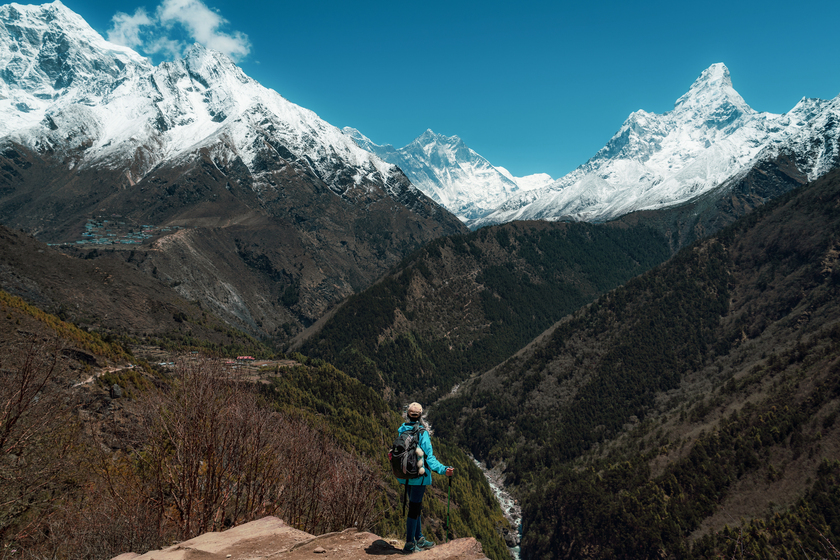
In mid-2023, Tung and his wife spent nearly three weeks exploring new things in Nepal.
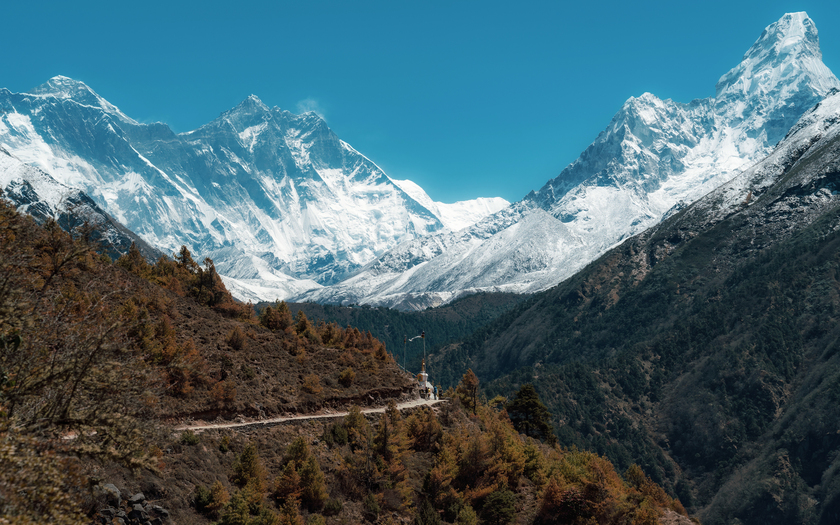
“That same week, I researched information online and contacted a company in Kathmandu, Nepal, to prepare for the trip five months later. Initially, my wife and I only planned to climb to Everest Base Camp at 5,364 m, but after doing some research, we decided to add a route to Gokyo Peak at 5,483 m. From this peak, we would have a beautiful view of the 8,000 m peaks, most notably Everest at 8,848 m,” Tùng shared.
As passionate experiential travelers, Tùng and his wife had previously explored the culture, cuisine, and nature of several locations in short trips of three to four days, using their own transportation. Tùng recounted: "The highest altitude I've ever reached is 4,900 meters in the Potosi Plateau, Bolivia, home to the world's largest salt flat, Uyuni."
17 days of effort to overcome oneself.
The trip to Everest Base Camp and Gokyo Ri was the longest solo mountaineering expedition Tùng and his wife had ever experienced: 17 days, covering over 150 km from an altitude of 2,800 m to 5,483 m under various harsh weather conditions and lacking basic amenities.
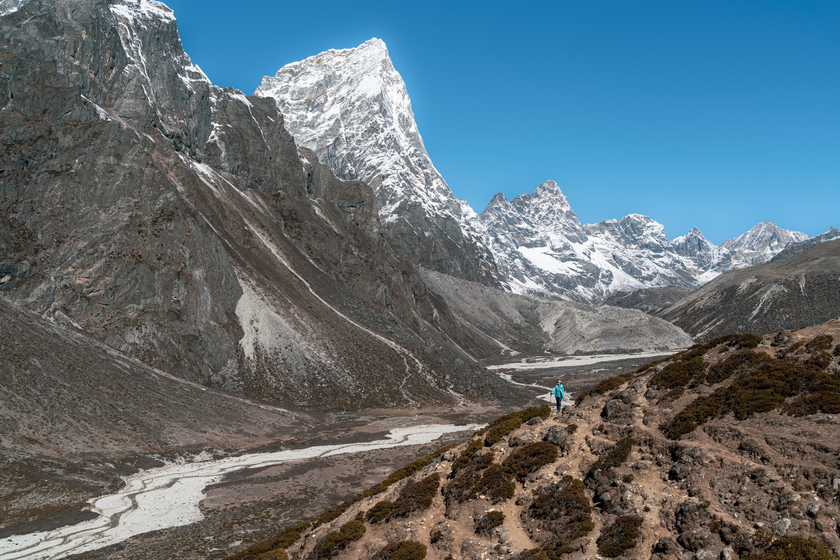
As avid experiential travelers, Mr. and Mrs. Tung had previously explored the culture, cuisine, and nature of several locations in short trips of three to four days, provided they had their own transportation.
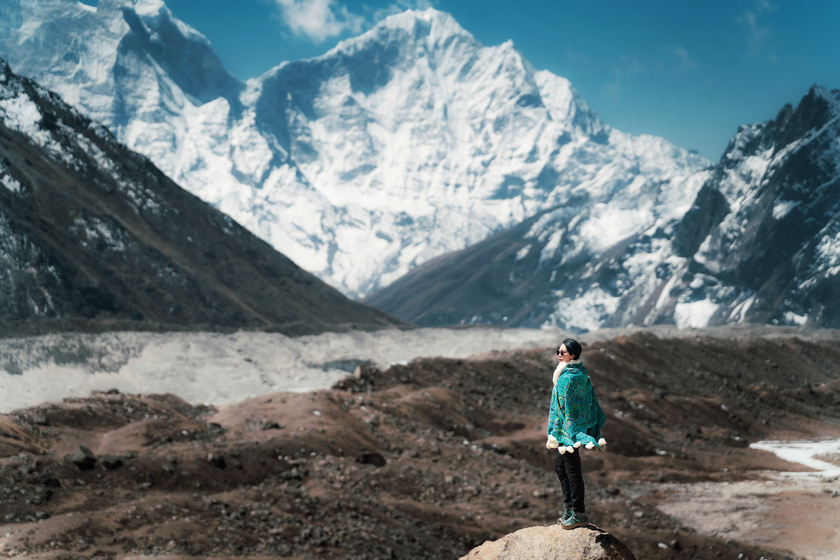
The trip to Everest Base Camp and Gokyo Ri was the longest solo mountaineering expedition that Tung and his wife had ever experienced.
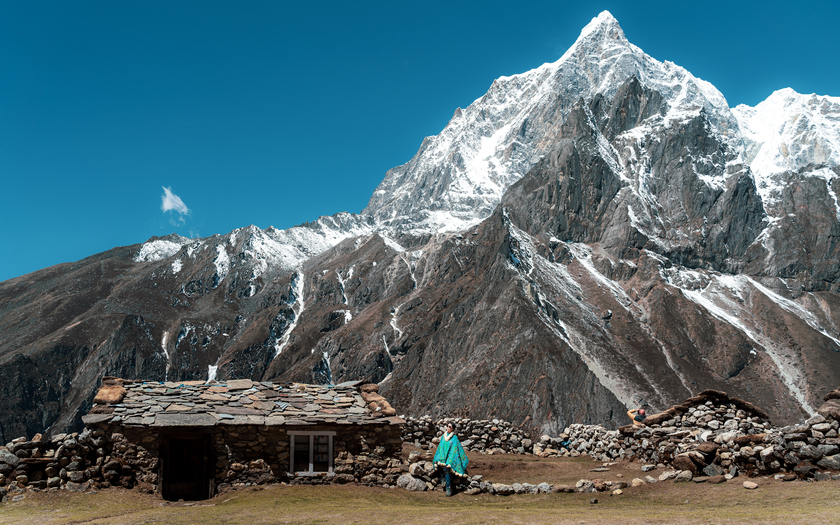
17 days, covering over 150 km from an altitude of 2800 m to 5483 m under various harsh weather conditions and lacking amenities.
The 17-day journey began in Kathmandu at 1 AM, a five-hour drive to Ramechhap Airport to catch a flight to Lukla. According to Tung, this is one of the most dangerous flights in the world because Lukla Airport is nestled in a valley at an altitude of 2,860 meters in the Himalayas. Although the flight time is only 40 minutes, any mistake during takeoff or landing would cause the plane to plummet into the abyss below.
To reach the Everest Base Camp at an altitude of 5,364 meters, Mr. Tung and his wife spent 8 days traversing the route, which included numerous ascents and descents across mountain peaks and passes, as well as rest stops to acclimatize to the altitude. The Everest Base Camp is the base camp for mountaineers when they begin the challenge of conquering the world's highest peak, Everest.

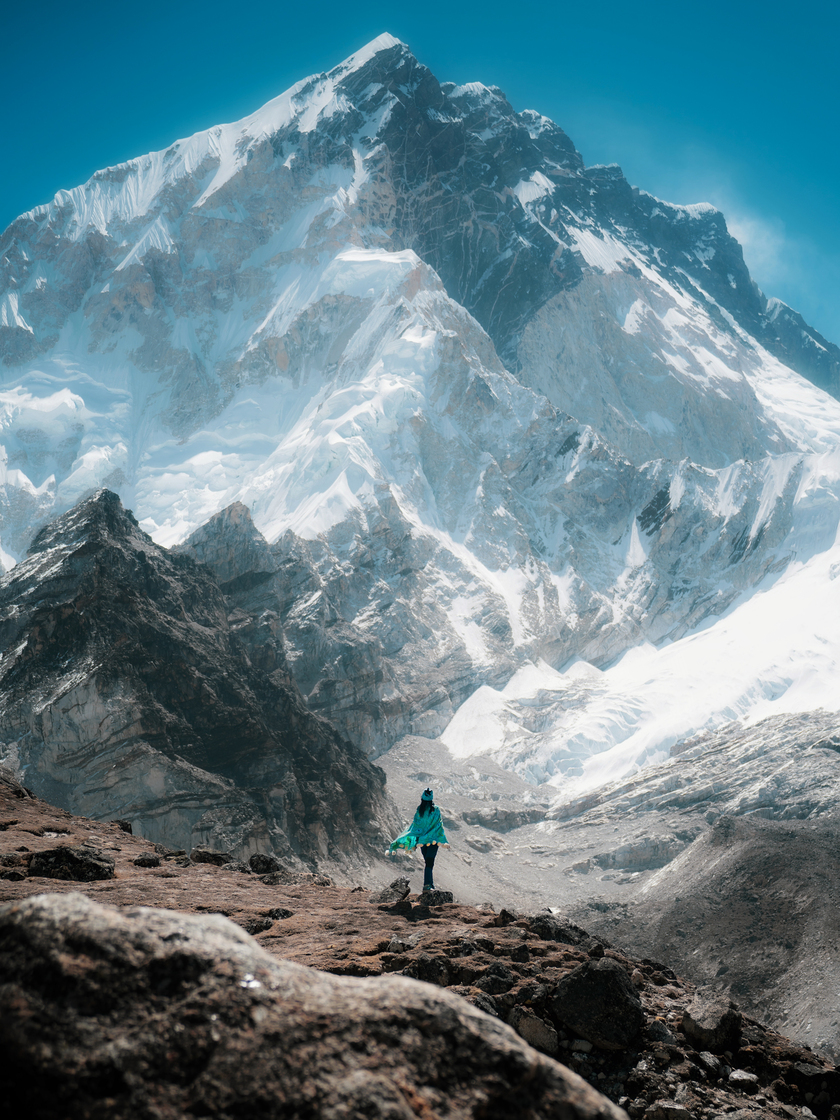
Everest Base Camp is the base camp for mountaineers as they begin the challenge of conquering the world's highest peak, Everest.
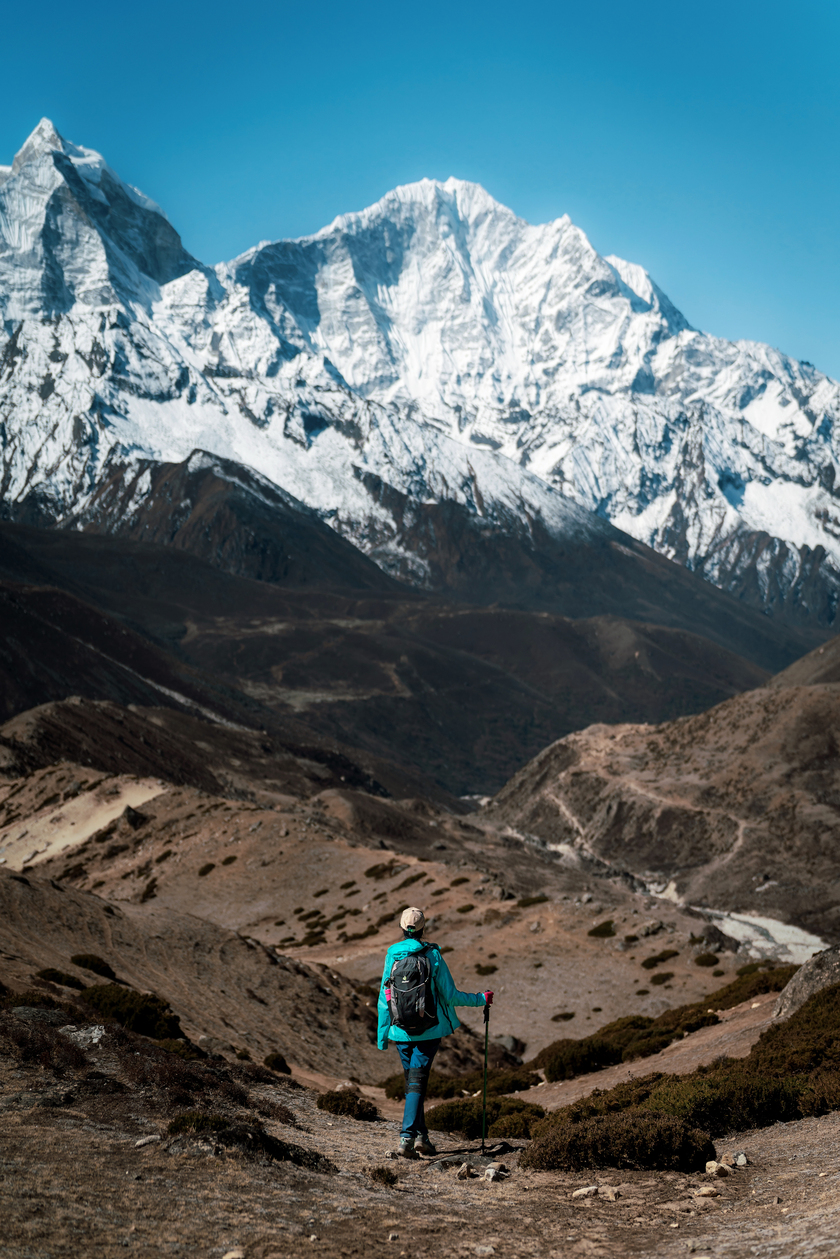
Upon arriving at the campsite, travel enthusiasts have the opportunity to experience camping in tents, practicing crossing glaciers, climbing ice mountains, and more.
“This is a famous and popular route every climbing season. You will meet many fellow trekkers from various countries and age groups, including people in their 60s. Some come here to find inspiration for more challenging adventures, while others see trekking to Everest Base Camp as a journey of self-affirmation in the face of challenges or to mark the final milestone of their lives,” Tùng said.
The adventure continued with a four-day journey to conquer Lake Gokyo, challenging himself by crossing the Chola ice pass. Tung recalled, "When we went, there was a snowstorm, so the Chola pass was closed. My wife and I had to rent a helicopter to fly to Lake Gokyo, which shortened the journey by two days."
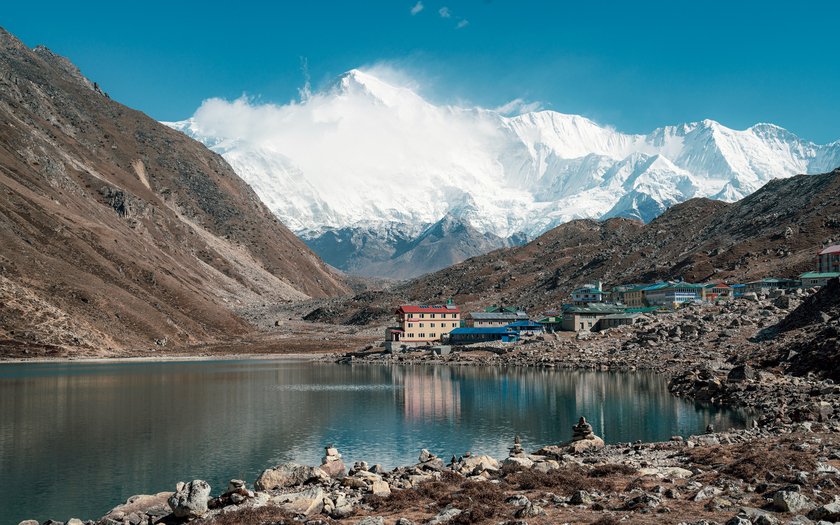
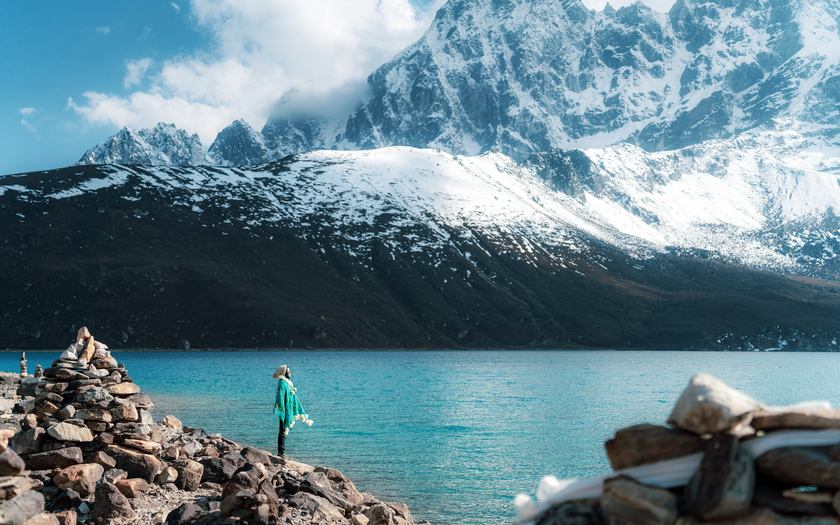
The experience continues with a four-day journey to conquer Lake Gokyo, culminating in the challenging crossing of the Chola mountain pass.
Upon arrival, Mr. and Mrs. Tung rested for half a day before continuing their conquest of the 5,483m Gokyo Ri peak that same night. This was the most challenging part of the entire journey, requiring trekking up a steep slope in temperatures of -15 degrees Celsius. The route to Gokyo Lake was quieter, with villages far apart, creating a sense of tranquility and solitude amidst majestic nature. Here and there, they might even spot yaks resting by the roadside, wild goats and deer, or the rare Himalayan pheasant.
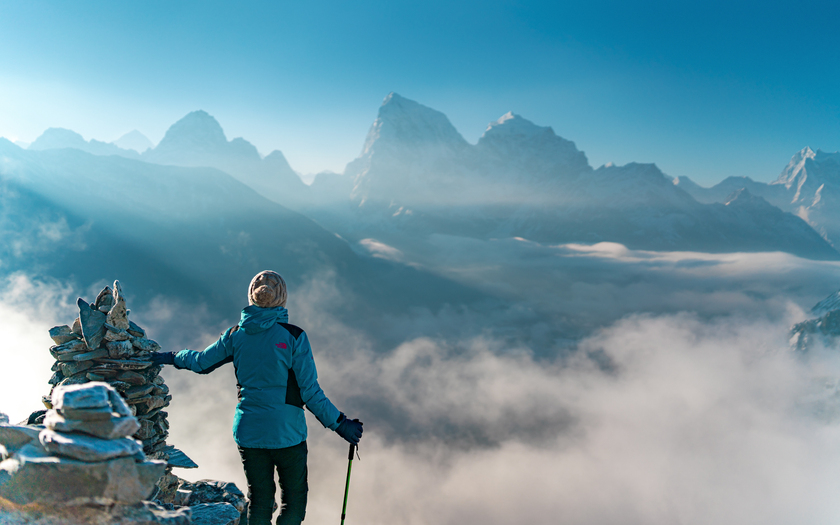
This was the most challenging part of the entire journey because it involved trekking up a steep slope in temperatures of -15 degrees Celsius.
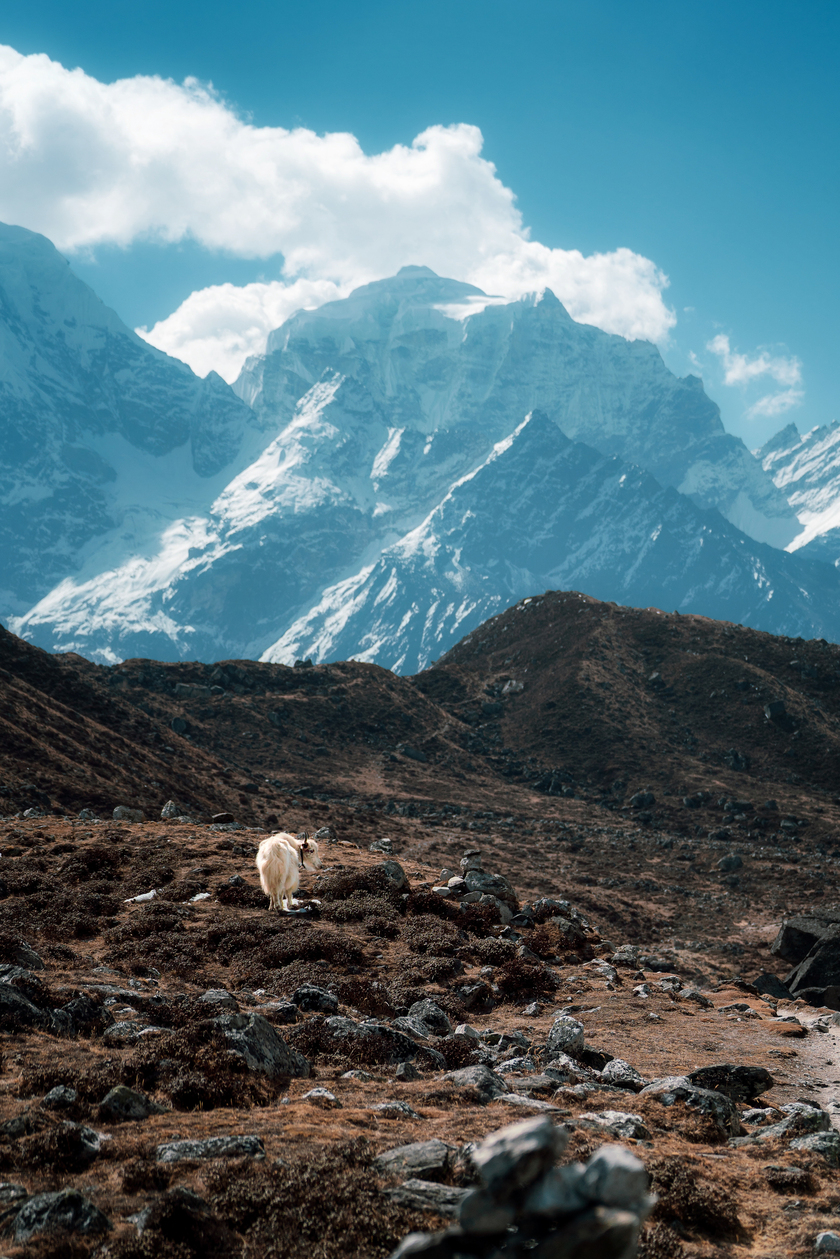
The road to Gokyo Lake is quieter, with villages far apart, creating a tranquil feeling of solitude amidst majestic nature. Here and there, you might even spot yaks resting by the roadside, wild goats and deer, or the rare Himalayan pheasant.
The journey of accepting your own limits.
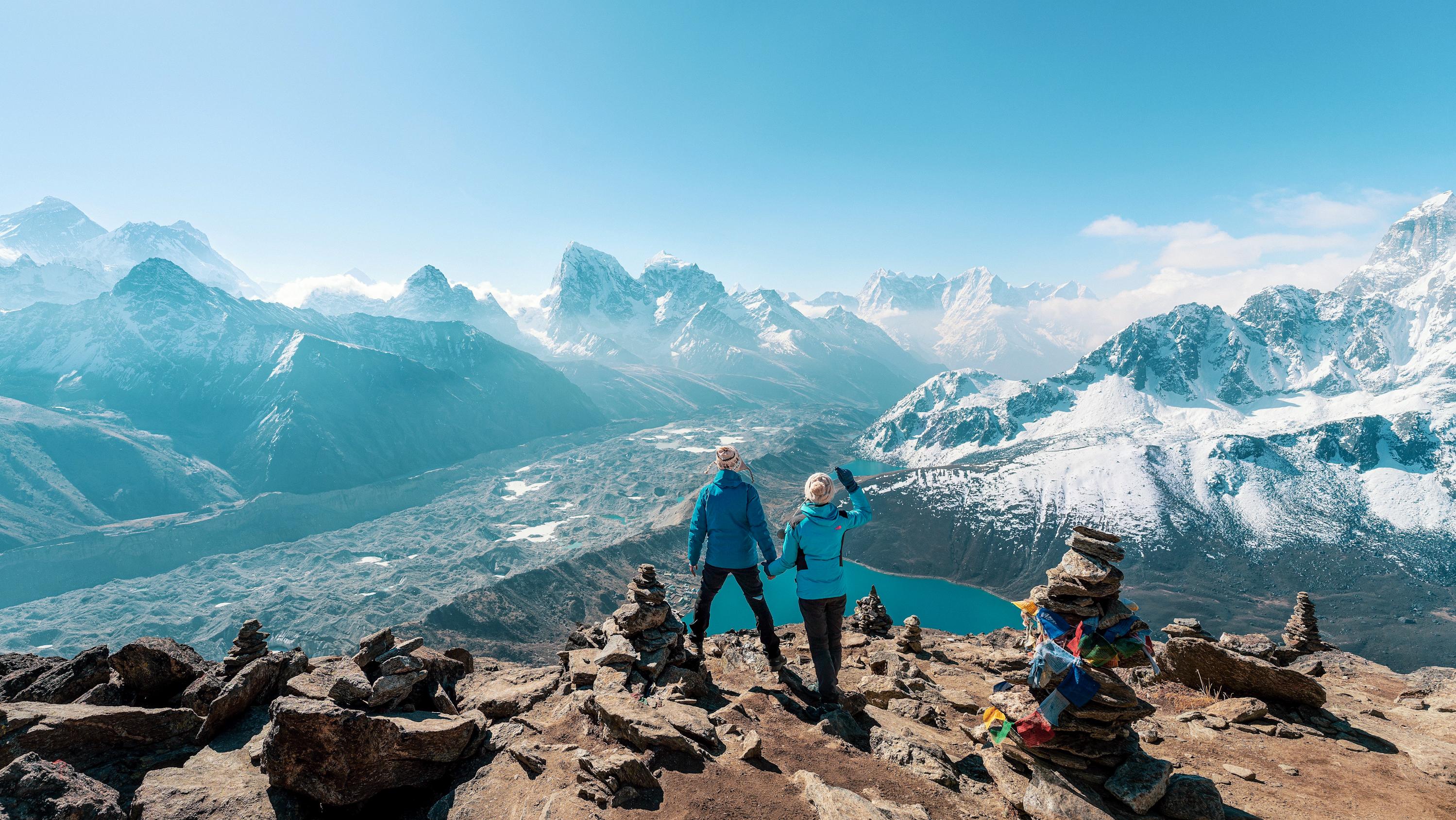
According to Tùng, the most memorable moment of the entire journey was when he and his wife watched the sunrise together on the mountain peaks. “To admire the image of the sun casting its first golden rays onto the mountaintops against the deep blue sky is an experience that can be breathtaking. Especially at Gokyo Ri, when we set off around three in the morning, the valley around Gokyo Lake was covered in a layer of ice. Upon reaching the summit, we observed a sea of clouds covering the valley until the sun rose behind Everest, casting its first rays of light and illuminating the entire valley. Snow-capped peaks were hidden behind the rising clouds. Only when the sun was high in the sky did Everest emerge prominently, the highest peak in the Himalayas,” the architect recalled.
Creating these precious memories was a challenging and arduous journey, but well worth it. According to Tùng, the biggest difficulty was adapting to the high altitude in harsh weather conditions and with limited amenities. In spring, the weather gradually changes from humid in the pine forests at altitudes of 2,800-4,000 meters, then to dry, cold, or snowy. From 4,000 meters and above, or after 5,000 meters, trekkers will encounter frost, possibly snow cover, with temperatures dropping from 16 degrees to -10 degrees at night, and on the mountain peaks, strong winds can cause temperatures as low as -15 degrees.
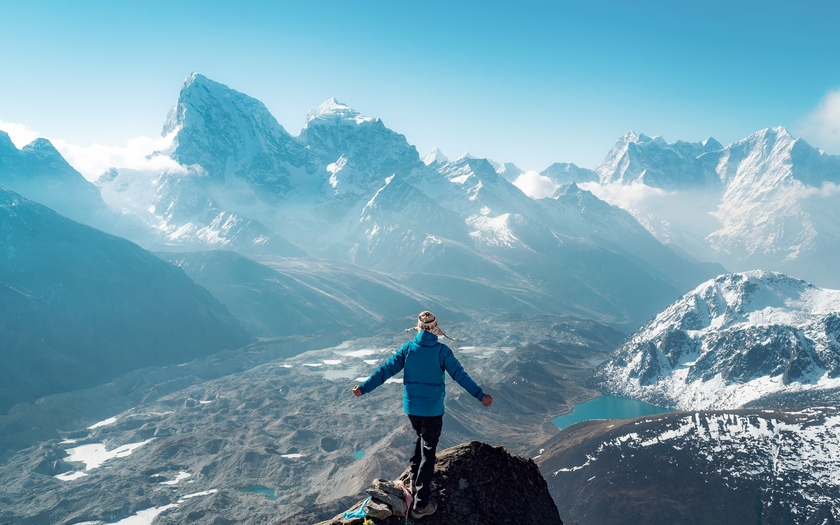
According to Tung, the most memorable moment of the entire trip was when he and his wife watched the sunrise together on the mountaintops.
At the end of each day, there are only "teahouses," simple guesthouses with stone walls, rooms partitioned by plywood, and beds that are sometimes just mattresses placed on a wooden or brick platform. Daily meals are also very simple, mainly fried rice, traditional Nepalese rice, stir-fried noodles, traditional Sherpa soups, potatoes... the ingredients are mostly starch, eggs, vegetables, and very little meat. With such conditions, coupled with the fatigue after a 10-15 km daily mountain climb, the body struggles to adapt and may experience altitude sickness (AMS), which in severe cases can cause brain edema or pleural effusion, leading to death.
Architects share that the best times to visit Everest Base Camp and Gokyo Ri are spring and autumn. Spring, from March to mid-May, offers cool weather with little rain, mostly in the afternoons. Autumn, from September to mid-November, is drier and clearer, but temperatures are lower than in spring. However, the weather in the Himalayas is always unpredictable; many people who go in late spring still encounter snow or even blizzards, so journeys in the Himalayas always carry weather risks.
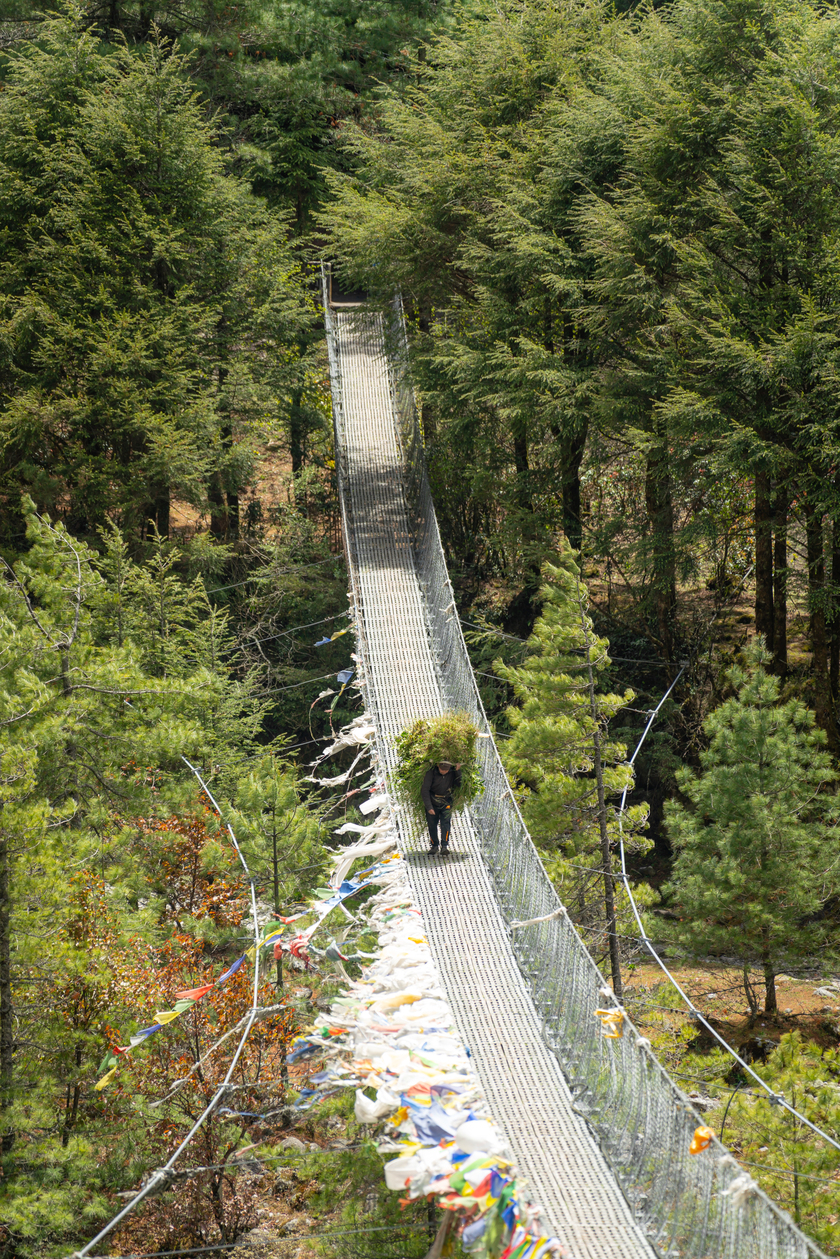
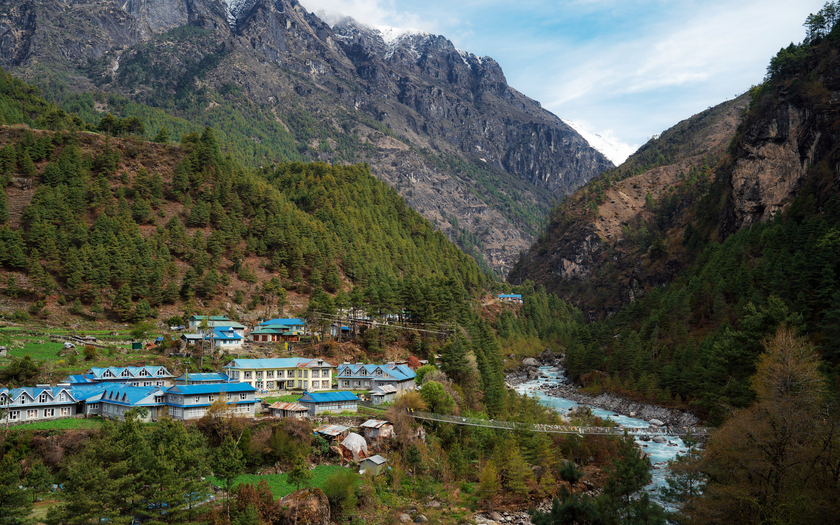
The architect shared that the best time to visit Everest Base Camp and Gokyo Ri is during spring and autumn.
The Vietnamese ao dai (traditional dress) flutters across the five continents.
As avid travelers, Tùng and his wife experience many different countries each year. Since 2018, on each of their trips, Tùng and his wife have taken photos wearing traditional Vietnamese ao dai dresses. This serves both to preserve memories and to spread the image of Vietnamese traditional clothing on their journeys of exploring the world.
Tung said: “My wife and I started the ‘Ao Dai 100 Destinations’ project with our first photoshoot location in Vatican City. The goal of the project is to complete a collection of photos of Vietnamese ao dai at 100 famous locations, focusing on historical heritage, culture, nature, or the most distinctive architectural landmarks of countries around the world.”
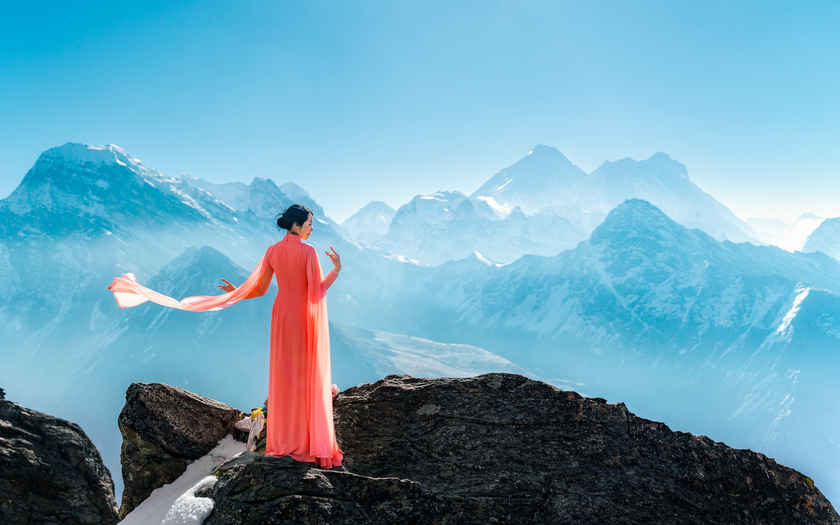
Since 2018, during each of their trips, Mr. Tung and his wife have taken photos wearing traditional Vietnamese ao dai dresses.
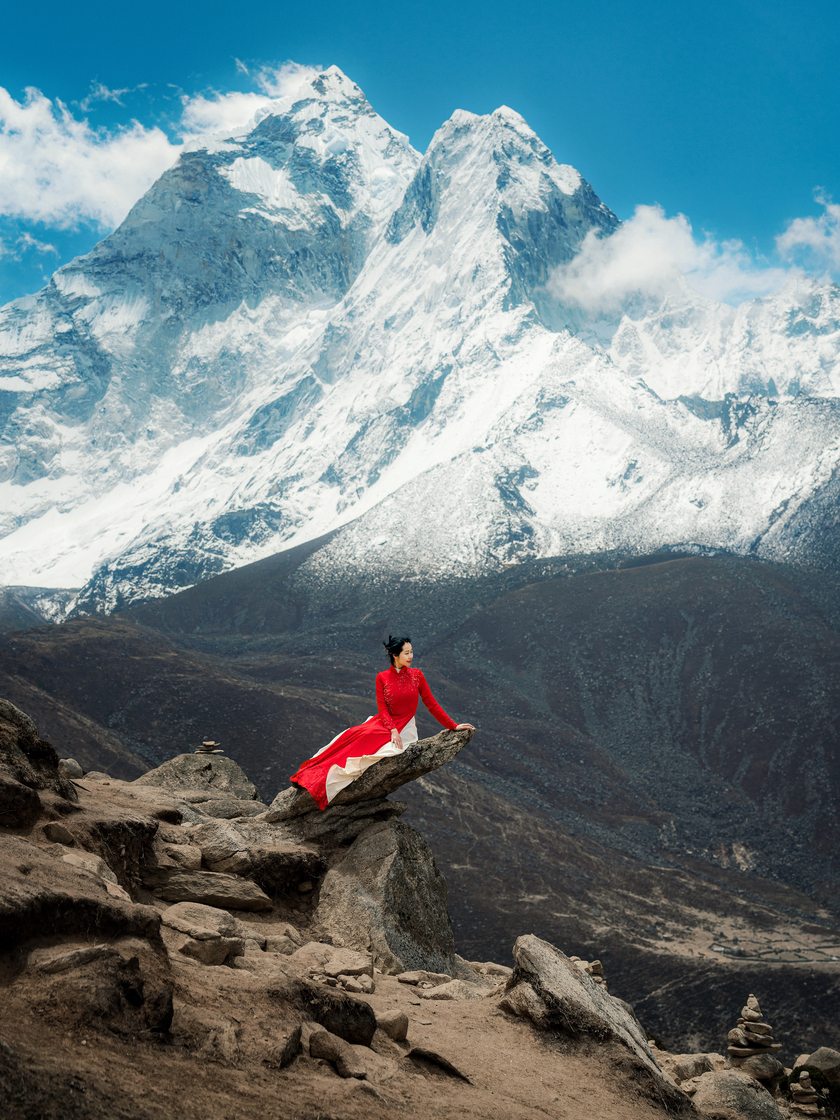
This activity serves both to preserve memories and to spread the image of traditional Vietnamese clothing on the journey of exploring the world.
There are stories from mountaineers that once you stand on a mountaintop and gaze upon the majestic beauty of nature, a passion for mountains will emerge within you. “After our journey to Everest Base Camp and Gokyo Ri, my wife and I realized that, so we are preparing for a new challenge at an altitude of 6,500 meters, possibly next spring,” Tùng added.
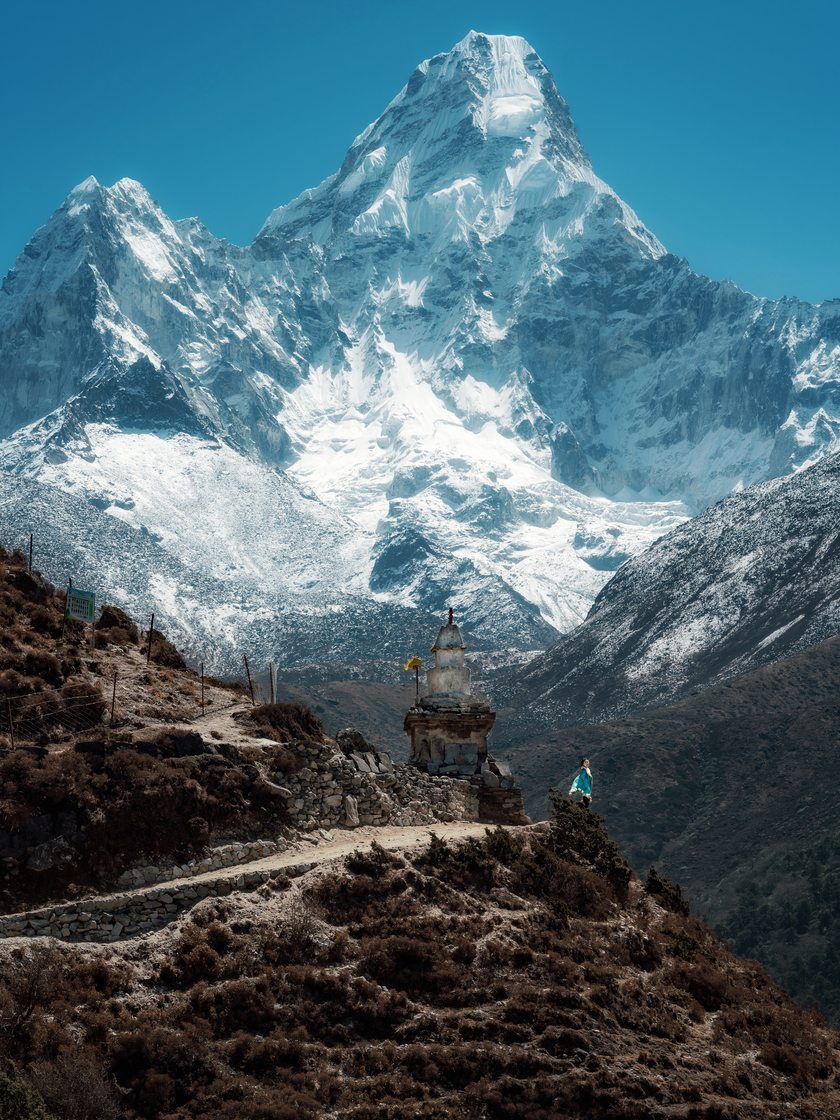
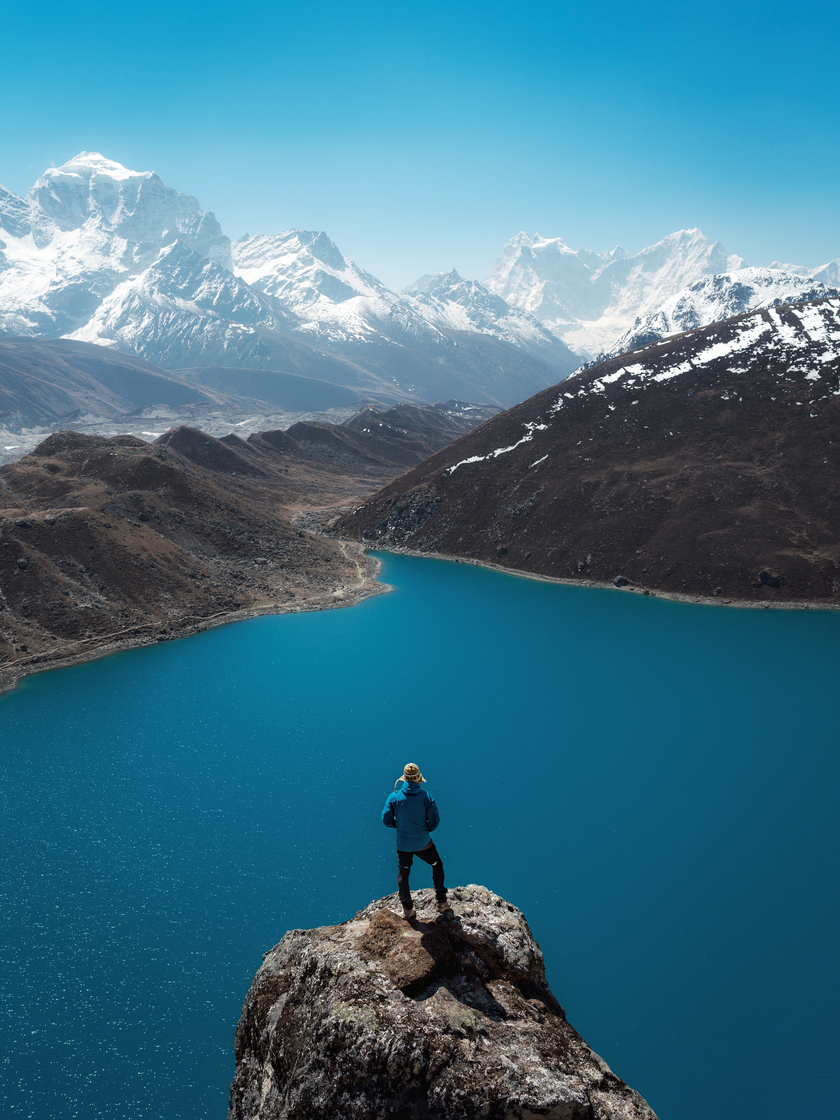
There are stories told by mountaineers that once you stand on a mountaintop and gaze upon the majesty of nature, you will develop a passion for mountains.
Here are some tips for trekking Everest Base Camp and Gokyo Ri:
- Train your physical fitness well for at least a month before the trip, mainly practicing climbing stairs while carrying a load of 7-10 kg, prioritizing endurance and hamstring strength.
- To prevent and combat altitude sickness, you should drink plenty of water, eat bananas, and consume plenty of carbohydrates and vegetables during your trip. Many people, due to extreme fatigue or difficulty eating, do not ensure adequate nutrition, which is very dangerous. Always keep altitude sickness medication on hand, as well as other medications for headaches, diarrhea, and colds.
- Make sure you get 8-9 hours of sleep each day to allow your body to recover after a long day of traveling.
- Avoid going too fast; at high altitudes, maintaining both breath control and speed is essential for endurance.
- Always allow 1-2 extra days due to weather conditions.
- Prices along the journey are very expensive, increasing with altitude, especially for food and bottled water, power bank charging, phone charging or internet access, and even hot showers can cost you $8-12 each time.
- Dress in layers so you can remove layers when the sun is high and add more when it gets cold, paying particular attention to keeping your feet warm as they are prone to numbness in very cold temperatures.
- Always wear sunglasses to avoid eye burns from UV reflections from snow, and always apply sunscreen because the amount of UV radiation is very high at high altitudes, even in cold weather.