VI
VI


Rice flour cakes
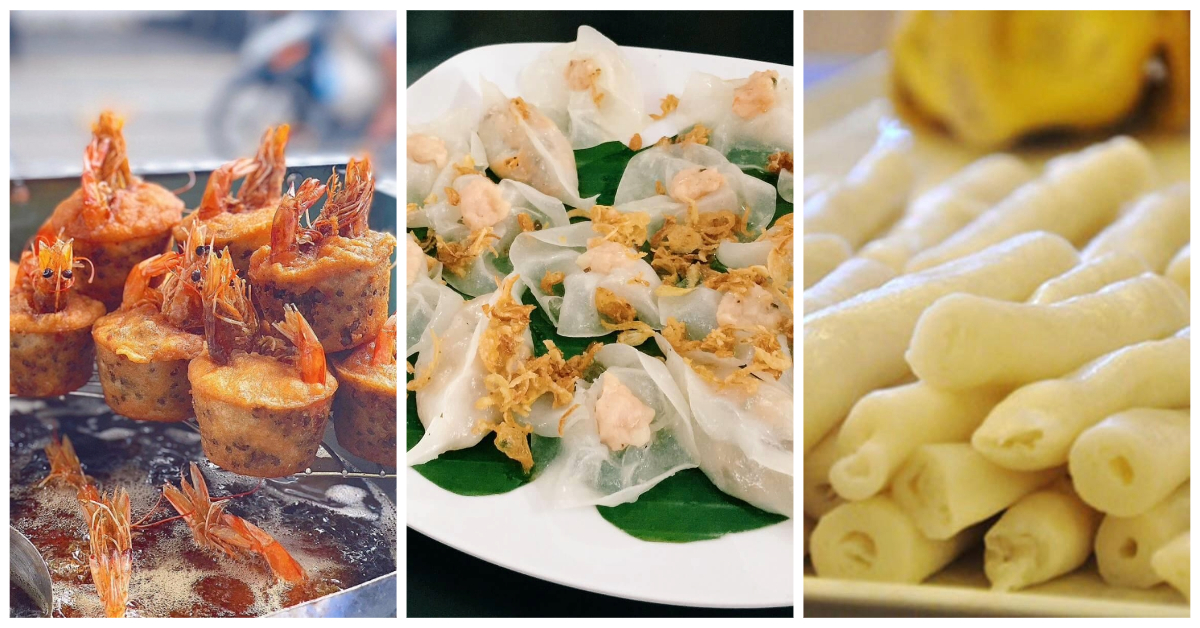
Banh quai vac, also known as Bach Hong (white rose), is a unique and charming culinary delight often found in Hoi An. With its pretty shape, resembling a white rose, banh quai vac is an indispensable part of the menus of many eateries and restaurants there.
The main ingredient for making banh quai vac (a type of Vietnamese dumpling) is rice starch. The process of making this cake requires meticulousness and skill. The rice starch must be filtered multiple times to ensure perfect smoothness and elasticity.
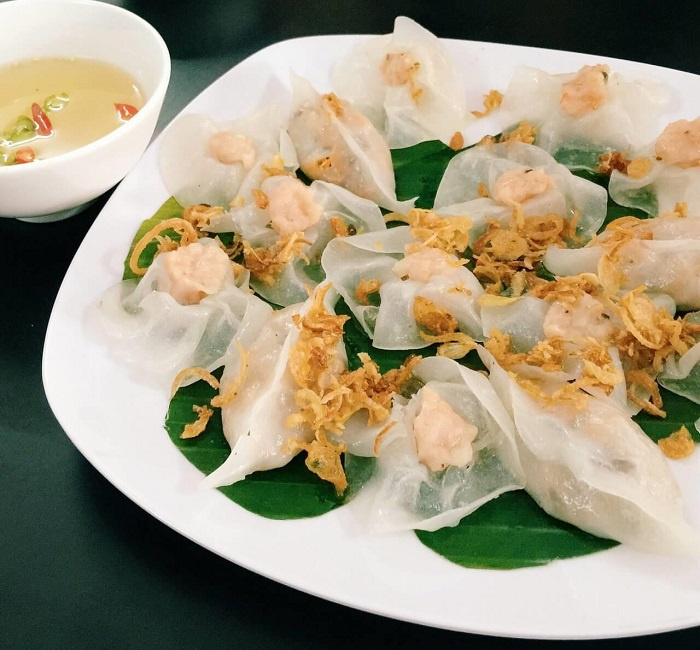
With its charming shape, resembling a white rose, the crescent-shaped cake is also known as the white rose cake.
The filling is mainly made from fresh shrimp and finely ground vegetables, mixed thoroughly with spices such as pepper, onion, mushrooms, salt, and fish sauce. Finely chopped scallions are sprinkled on top of each dumpling, adding to its aroma. Taking a bite of the dumpling, you'll experience the sweetness of the shrimp, the crispness of the crust, the fragrance of the onion, and the spicy and salty flavors of chili and fish sauce, creating a perfect combination that makes this dish an indispensable part of Hoi An cuisine.
Banh Cong
Bánh cóng, also known as bánh cống, is a specialty originating from the Khmer region of Southern Vietnam, particularly famous in Đại Tâm commune, Sóc Trăng province. Initially, this dish was called bánh sển or sài cá nại in Khmer.
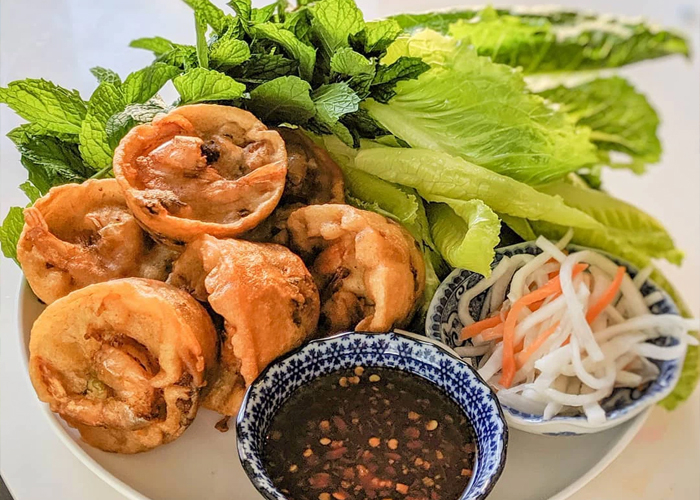
Bánh cóng - a specialty of the Khmer region of Southern Vietnam.
However, because the original name was difficult to remember, the dish was later renamed "banh cong," referring to the way the batter is poured into a cong – a utensil resembling a coffee filter. After frying, banh cong usually has a dark color and a delicious crispy texture.

Typically, bánh cóng is enjoyed with fresh greens and sweet and sour fish sauce, creating a unique and delicious dish characteristic of this region.
Rice cakes
When talking about the famous specialties of Nguyen village, Nguyen Xa commune, Dong Hung district, Thai Binh province, one cannot fail to mention banh cay (rice cake). The main ingredients of banh cay include glutinous rice, gac fruit, malt syrup, coconut jam, sesame seeds, and fragrant roasted peanuts.
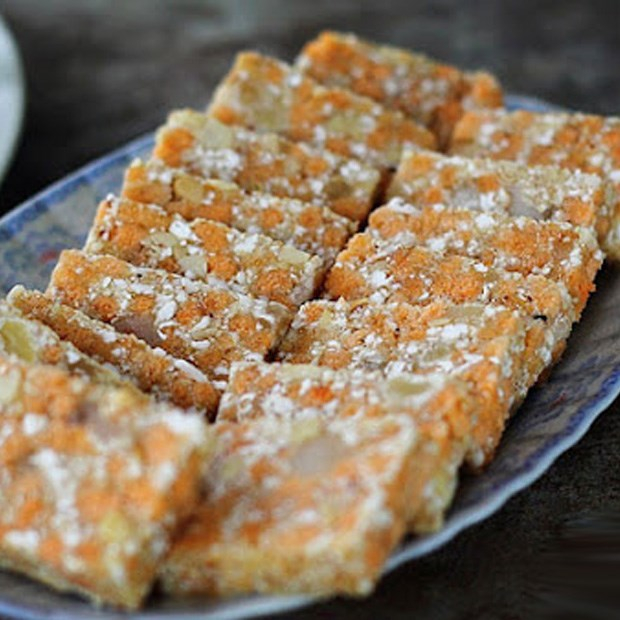
Visit Thai Binh to enjoy the famous specialty dish, Banh Cay.
This cake is named "bánh cáy" (crab cake) because its color resembles the eggs of a red crab. Another legend says that, due to its delicious taste, bánh cáy was chosen as an offering to the king on a special occasion. When the king tasted it, the rich, sweet, and slightly spicy ginger flavor prompted him to ask the name of the dish. An official replied that it was "bánh cay" (spicy cake). However, due to a small misunderstanding, the name "bánh cáy" has been maintained and remains popular to this day.
Uoi cake
Bánh uôi, a specialty and source of pride for the Muong people in Hoa Binh province, is often called "peẻng uôi" in the Muong language, although this word doesn't have a clear meaning in Vietnamese. Besides its original name, this cake is also known by many other names such as love cake, couple cake, husband and wife cake, or unity cake.
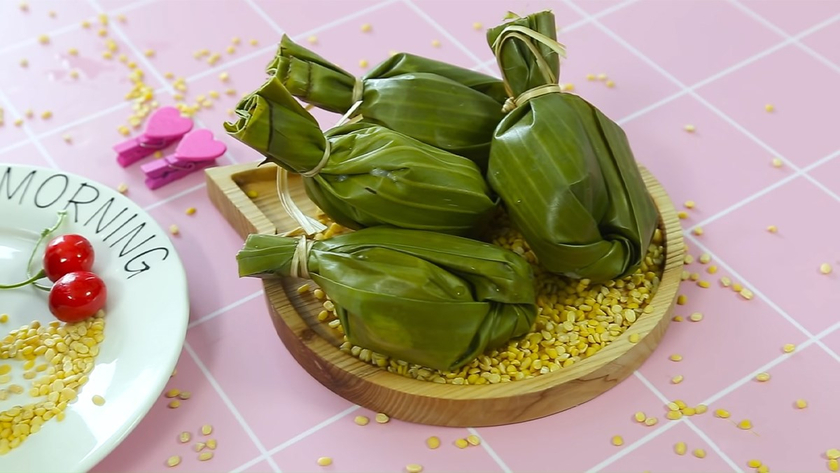
Uoi cakes are made primarily from glutinous rice flour and come in two main types: savory and sweet fillings.
Uoi cakes, primarily made from glutinous rice flour, come in two main types: savory and sweet fillings. The savory filling is usually made from pork marinated in flavorful spices. Meanwhile, the sweet filling can be made from nho nhe seeds, a special local seed, or from mung beans. Uoi cakes showcase the diversity and creativity in ingredients and geographical location, forming an indispensable part of the Muong people's culinary culture.
Nodding Cake
Gật gù cake, a specialty of Tien Yen district in Quang Ninh province, is made from rice flour. This cake has an appearance quite similar to pho noodles or spring rolls.
Locals in this region have passed down the story that in the old days, when enjoying these rich, fluffy, and chewy cakes, people would nod in approval, praising their deliciousness. From that, the name "nodding cake" was born and has become popular to this day.
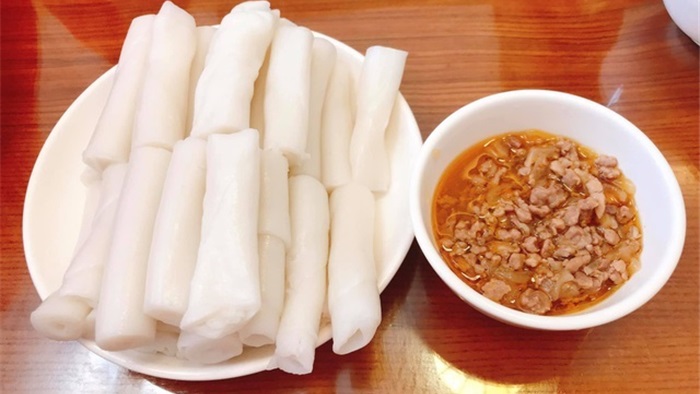
Gật gù cake looks quite similar to pho noodles or spring rolls.