VI
VI


Every year, Vietnam welcomes millions of international tourists who come to explore its diverse and unique beauty. However, with a distinct culture and lifestyle, many first-time visitors often make mistakes that can negatively impact their experience. Based on his 12 years of experience living and working in Hanoi, and having compiled 10 Vietnam travel guides, travel expert Joshua Zukas of Business Insider has identified 7 of the most common mistakes tourists should avoid to have a fulfilling and meaningful trip.
The ambition to "conquer" Vietnam in a short trip.
Many foreign tourists often mistakenly believe that Vietnam, being a small country, can be easily explored in just one or two weeks. In reality, with a length of over 1,650 km from North to South, Vietnam's land area is comparable to larger countries like Japan or Italy. Traveling between cities, especially to mountainous regions, can take hours or even entire days, wasting tourists' time and energy.

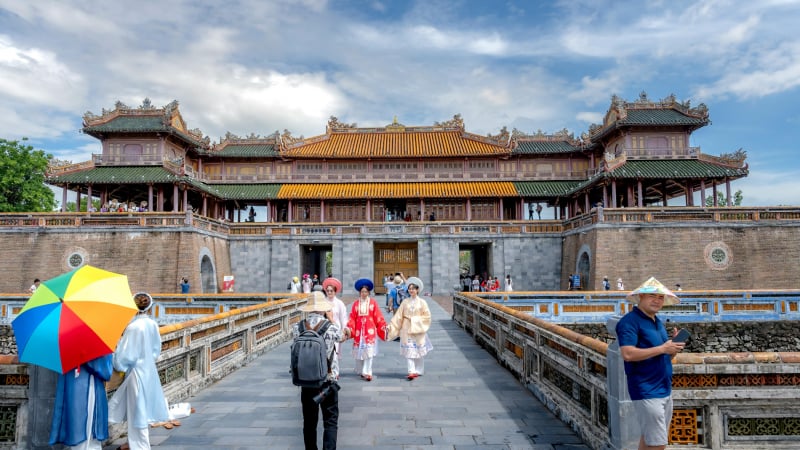
Instead of trying to "cover" the entire country in a short trip, Joshua Zukas advises travelers to focus on exploring a specific region, such as the North with Hanoi, Sapa, and Ha Long Bay, or the Central region with Da Nang, Hoi An, and Hue. This way, travelers will have the opportunity to experience the culture, history, and people of each locality more deeply, rather than just quickly skimming through destinations.
Let your emotions be controlled by the unpredictable weather.
Vietnam's climate varies greatly from region to region, which can be unpleasant for unprepared travelers. The northern mountainous regions can be bitterly cold in winter, while the Mekong Delta is hot and humid at the end of the dry season. Furthermore, the central region experiences frequent typhoons in the autumn.

Instead of getting frustrated by bad weather affecting their vacation, travelers should prepare themselves mentally and pack accordingly, viewing it as an integral part of the experience. Checking the weather forecast for their destination beforehand and having flexible contingency plans will help travelers enjoy their trip more fully.


Follow the list of suggested destinations on social media.
In the age of social media, many travelers tend to rely on widely shared lists of "hot" destinations. However, trying to crowd into popular spots, especially during peak season, both diminishes the personal experience and puts pressure on infrastructure and local communities.

According to Zukas, the most meaningful experiences often come from choosing destinations that suit personal preferences, rather than following trends. A meaningful trip isn't about how many places you visit, but about what you feel and experience in each place you set foot in.
Over-reliance on content from KOLs (Key Opinion Leaders)
Joshua Zukas emphasized that "the algorithm prioritizes glamour and drama, not authentic content." Many tourists have been disappointed when their actual experience is nothing like what is portrayed in the dazzling videos of KOLs (influencers) on social media.

Instead of blindly trusting this content, he advises tourists to seek out content creators who live and work in Vietnam, who have real-life experiences and can provide more useful and authentic information.
Avoid street food due to hygiene concerns.
Some international tourists are concerned about hygiene and therefore often choose only restaurants that cater specifically to tourists with "internationalized" menus. However, according to Joshua Zukas, this means they are missing out on the essence of Vietnamese cuisine.


The essence of Vietnamese cuisine lies not in fancy restaurants, but in small eateries specializing in a single dish, from pho and bun cha in Hanoi to fresh snail dishes prepared in various ways in Ho Chi Minh City. Finding a reputable eatery and trying street food will provide the most authentic and memorable culinary experience.
Reluctant to use local SIM cards.
Many tourists rely on free Wi-Fi, while mobile data in Vietnam is both cheap and reliable. For a small fee, tourists can easily purchase a SIM card at phone stores or through eSIM apps, making it much more convenient to search for information, communicate, and use maps, avoiding unnecessary hassles.
Skip the traditional travel guidebooks.
In an age where the internet is flooded with anonymous articles and unsubstantiated reviews, reputable travel guidebooks remain a reliable source of information. Compiled from long-term research and practical experience, these guidebooks offer a clear perspective, helping travelers understand and connect more deeply with Vietnamese culture and people.
Reading a travel guide before a trip not only provides information but also helps travelers prepare as best as possible, allowing them to explore the beauty of Vietnam more fully and deeply.