VI
VI


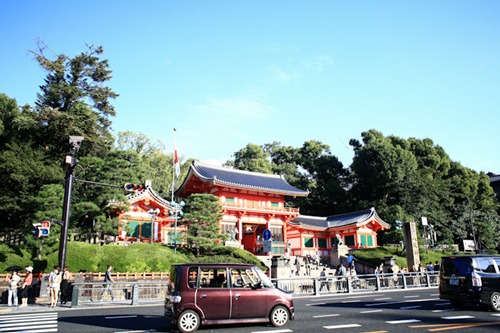
The facade of Yasaka Shrine is located on the central street of Kyoto. Photo: Lady Ironchef.
The Shinto shrine, built in 656 AD, faces Shijo-dori Avenue in the Gion district (the center of Kyoto). Adjacent to it is Maruyama Park, where a cherry blossom viewing festival is held every spring.
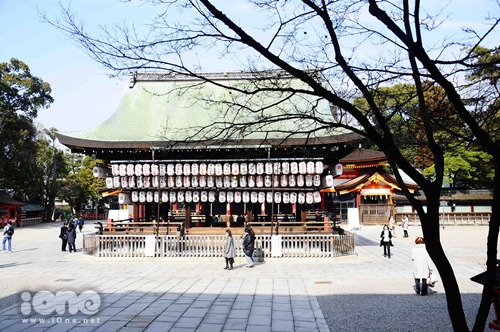
Tourists often stand in front of this small temple to pray for good fortune. Photo: Gà Con (Little Chicken).
Additionally, Yasaka is famous for its traditional geisha dances and the New Year's bean-throwing ritual during the Setsubun festival, which is believed to ward off evil spirits and bring good luck.
Delicious dessert shops
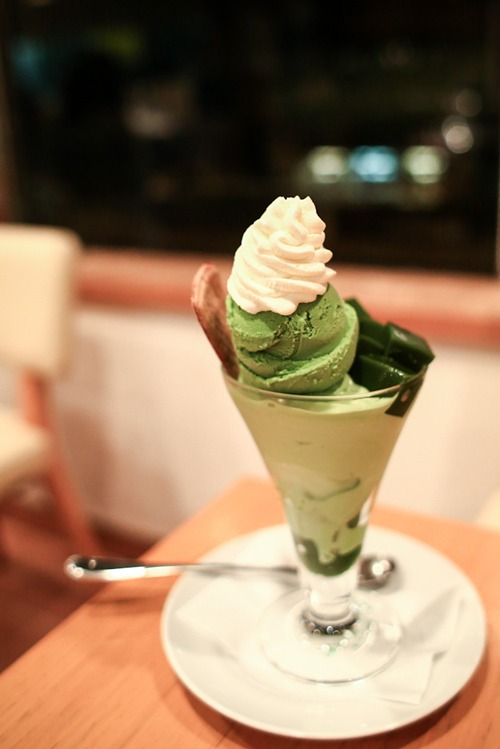
Photo: Lady Ironchef.
Kyoto, the former capital of Japan, is considered home to some of the best matcha (green tea) desserts. Visitors can find both traditional flavors and sophisticated creativity in each dessert they sample. You'll regret missing out on this if you visit Kyoto.
Toji Temple
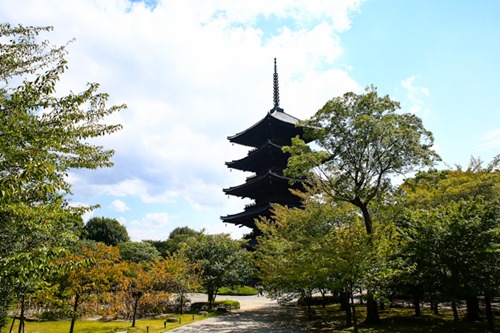
Toji Temple is the tallest temple in Japan, standing at 57 meters with five stories. Photo: Lady Ironchef.

Toji Temple, a symbol of Kyoto, stands 57 meters tall across five stories, making it the tallest temple in Japan. Built in the 700s, it is a UNESCO World Heritage site.
Nishiki Market
Centuries ago, this place was considered the largest retail market in Japan, with long rows of stalls offering a wide variety of goods to meet everyone's needs.
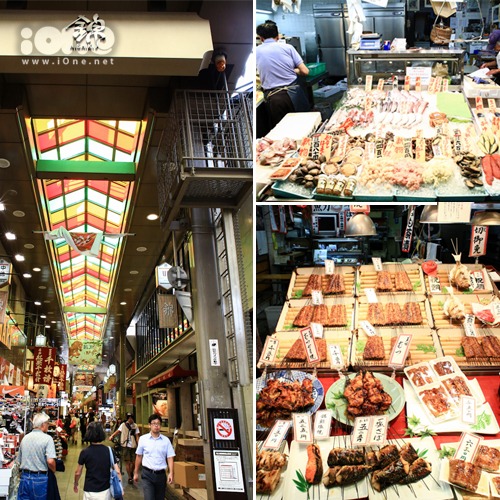
Nishiki Market offers a wide variety of goods. Photo: Lady Ironchef.
Even today, with its same diversity, Nishiki Market is affectionately known as "Kyoto Kitchen," meaning you can find almost anything there. Visitors to the market also have the opportunity to enjoy sweet traditional Japanese desserts, various types of tsukemono (pickled vegetables), and fresh, delicious sushi.
Gion neighborhood
This is the only remaining geisha district in the "Land of the Rising Sun." Geishas are beautifully dressed, meticulously made-up girls trained to provide relaxation for their clients through singing, playing musical instruments, or sitting with guests, chatting, preparing drinks, and pouring tea.
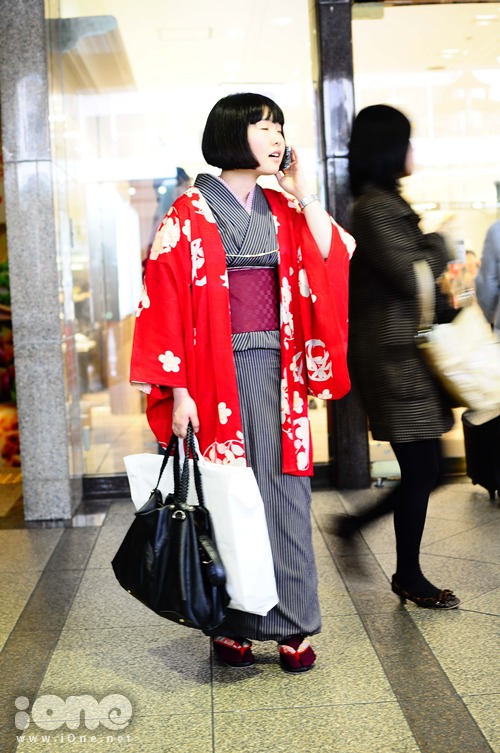
Pictured is a maiko—a future geisha—currently undergoing her apprenticeship. Photo: Gà Con.
This neighborhood features old-fashioned, traditional houses blending seamlessly with the shimmering lights of signs and lanterns. Don't miss Gion and the chance to take memorable photos with the geisha girls.
Pontocho District
Like Gion, Pontocho is a place that still preserves the ancient charm of Kyoto in every street, corner, and house. Visitors can also spot geisha strolling along the streets.

Visitors will have the opportunity to experience traditional cuisine in Pontocho. Photo: Gà Con.
Here, you can enjoy traditional Japanese cuisine by sitting on an outdoor wooden terrace or by the river, although the prices aren't cheap. Nevertheless, Pontocho still attracts a large number of tourists.
Fushimi Inari Shrine
This is one of the most important Shinto shrines dedicated to the sacred goddess of rice, Inari. Fushimi Inari Shrine is famous for its thousand red-painted torji gates, forming a beautiful path leading into the forest and sacred mountain. Visitors can stop at roadside eateries on the way to the summit and enjoy unique local dishes such as Unari sushi and Kitsune Udon noodles, a favorite food of foxes, the sacred animal of the goddess Inari.
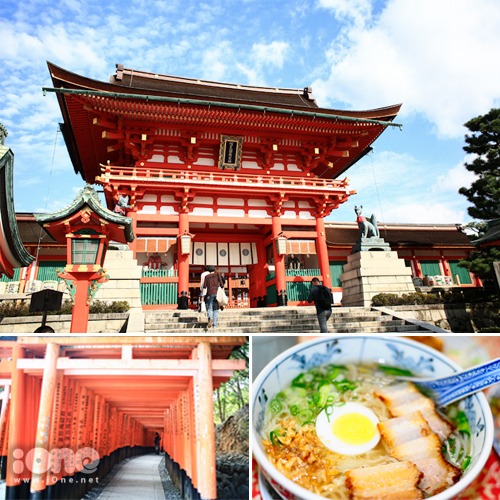
Inari shrines are famous for their thousand red-painted torji gates. Photo: Gà Con, Lady Ironchef.
The vibrant red image of this Thousand Gates Road once appeared in scenes from the film.Memoirs of a GeishaIt was a hugely popular film that once featured Zhang Ziyi, Gong Li, and Michelle Yeoh.
Golden Pagoda
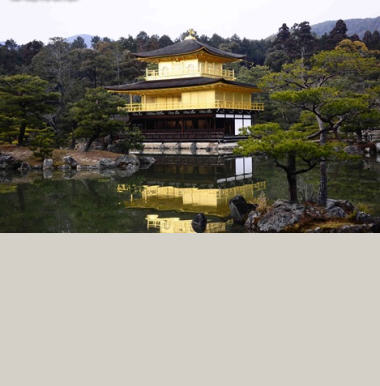
Also known as the Pavilion or Kinkakuji, it is a UNESCO World Heritage site. However, the current image of the temple is a completely new structure built in 1955, after it was previously burned down by a young monk.
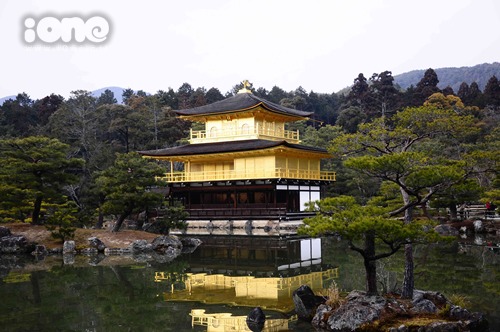
The temple shines brightly in a picturesque setting. Photo: Gà Con (Little Chicken).
The temple is impressive because it is covered in pure gold leaf. The surrounding scenery is like a painted picture, adding to the charm of Kyoto.