VI
VI


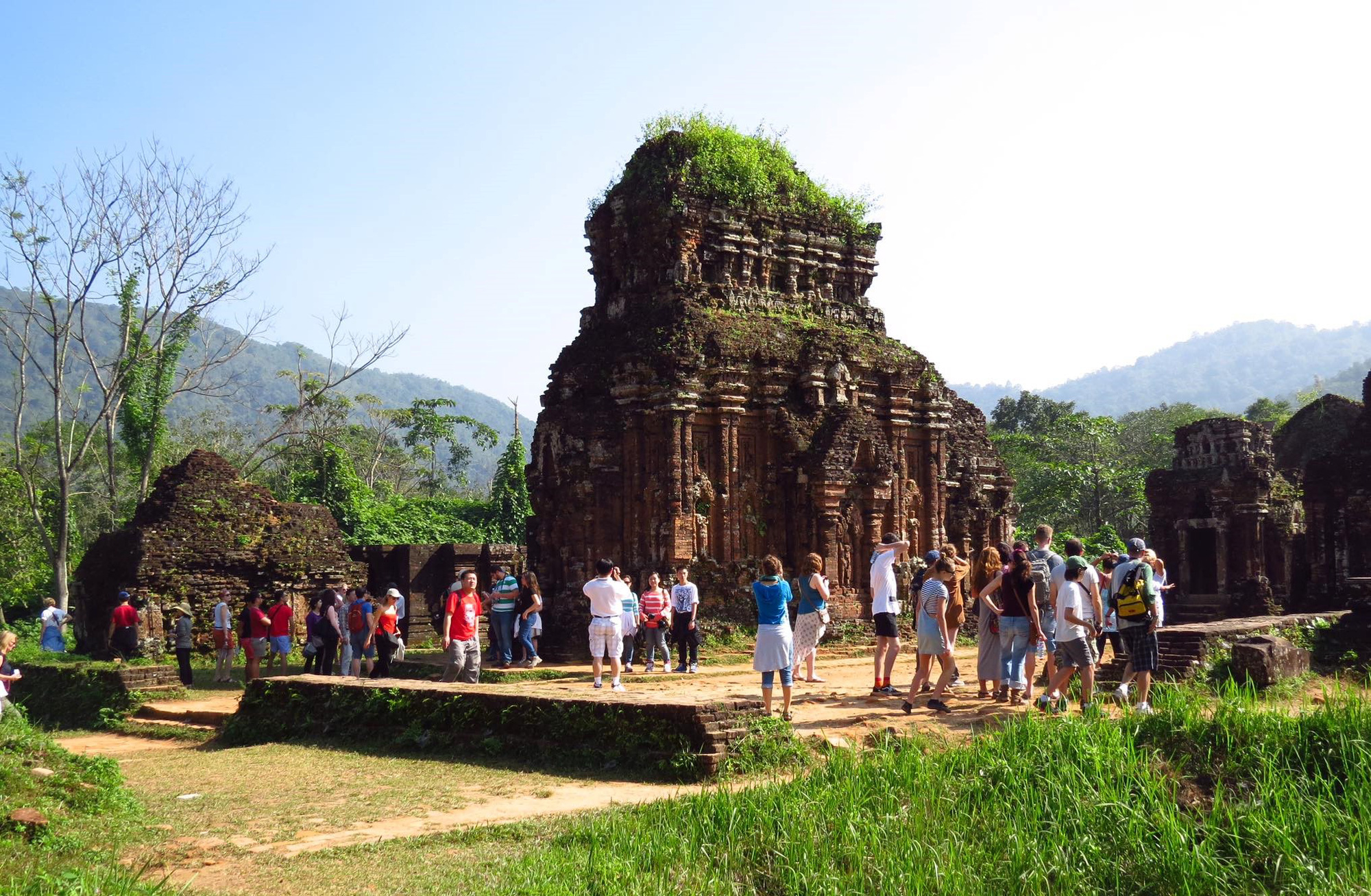
On April 28th, Mr. Phan Ho, Director of the My Son World Cultural Heritage Management Board, announced that after many days of restoration work, Indian and Vietnamese experts had accessed Group A of the towers – considered the center of the heritage site. Group A covers an area of nearly 3,000 square meters.2, surrounded by brick walls more than 1 meter thick. This is the most intact temple complex in the My Son World Cultural Heritage site.
Here, experts continue to carefully restore the details of towers A1, A8, A10, A11, A12, and A13 according to the principle of preserving the ancient values of the heritage as intact as possible.

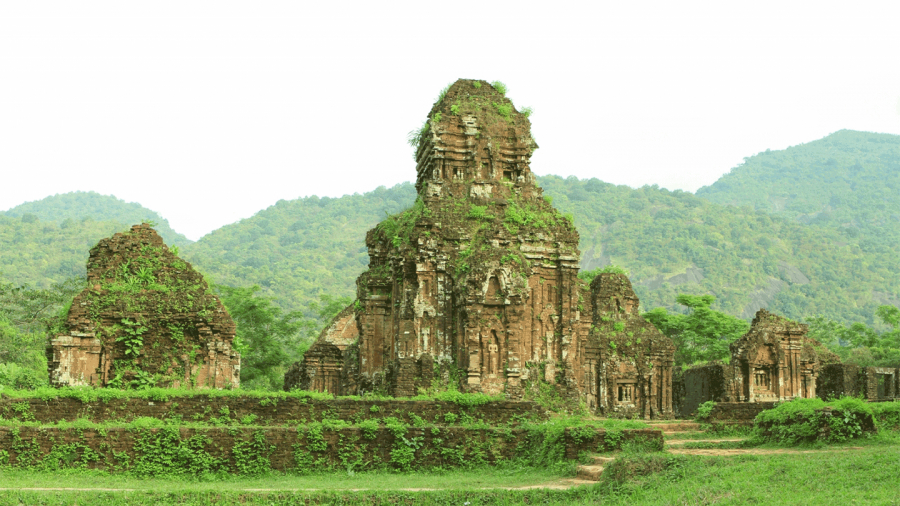
During this restoration of tower group A, experts expect to discover more mysterious artifacts at the base and inside the towers.
Due to the effects of time and many other factors, the temples and towers in area A, especially tower A1, have suffered serious erosion and deterioration at the base. Therefore, in this restoration project, along with rebuilding the four pillars in front of the gate, tower A1 will be reinforced and its foundation restored to help it stand firm and majestic as it originally was, Mr. Phan Ho added.
During the restoration of the K and H tower complex in 2017, Indian and Vietnamese experts discovered an ancient road and retaining wall buried underground, believed to be a route formerly used by royalty and religious dignitaries when visiting the temple complex for ceremonies.
Experts also found many valuable artifacts such as two stone statues with human bodies and lion heads, along with other architectural details made of terracotta, buried beneath the ancient towers. Experts determined that these artifacts date back to the period when Tower K was built, approximately the 11th to 12th centuries.
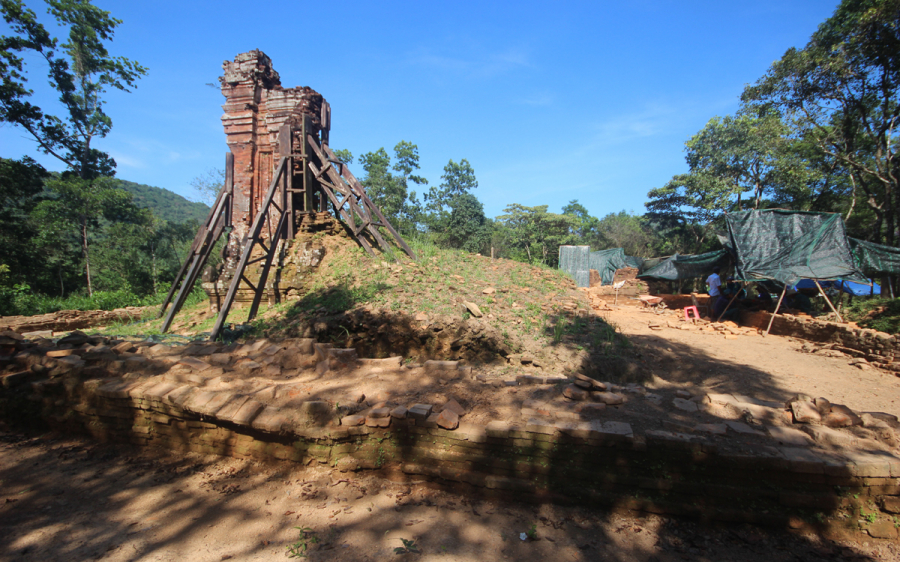
In 2017, Indian experts excavated four outer walls of Tower H.
additional information
Located nearly 70 km from Da Nang city, in Duy Phu commune, Duy Xuyen district, Quang Nam province, My Son Sanctuary is an architectural complex comprising numerous Champa temples and monuments with incredibly unique architecture. Forgotten for centuries, it was only rediscovered in 1885 and selected by UNESCO as a World Heritage Site in 1999, serving as a unique testament to a vanished Asian civilization.
The My Son Sanctuary was once a site for religious ceremonies and a burial ground for kings, officials, and royal family members of the ancient Champa dynasties. The architectural styles here are divided into six types: ancient style, Hoa Lai, Dong Duong, My Son, PoNagar, and the style of the people of Binh Dinh. Most of the architectural works and sculptures at My Son are influenced by Hinduism.